Sad end to search for missing hunter as 25-year-old’s body found, SC coroner says
Reply

Jo Barnes
Sat 2 November 2024 at 10:00 pm GMT-7·2-min read
A film about the life of animal ethics pioneer Professor Andrew Linzey is set to be shown at one of the most prestigious film festivals in the world – the St Louis International Film Festival.
‘The Animal Thing’ charts the struggles of animal theologian Andrew Linzey, as explored by his filmmaker son.
Prof Linzey founded the Oxford Centre for Animal Ethics, and was co-creator of the centre’s Annual Oxford Animal Ethics Summer School. He is author and editor of more than 40 books.
Today, Prof Linzey considers himself a failure. But despite the price he has paid for confronting the cruelty of animal exploitation, he has also had an enormous and, until now, largely unheralded impact on the modern animal movement, which is why ‘The Animal Thing’ is seen as such an important film.
The film. ‘The Animal Thing’ will be shown at The Public Library venue in St Louis on November 9.
The director Adam Linzey, and producer Jesse Fox, will be at the event and taking part in a Q&A straight after the screening.
The 33rd Whitaker St Louis International Film Festival takes place from November 7 to 17.
It will feature 271 films from more than 30 countries.
The film’s director Adam Linzey said: “While interviewing Joyce Tischler, a trailblazing animal rights lawyer, she said, ‘Animal people are often broken people’.
“As soon as she said that, I realised she might as well be describing my Dad.
“Most people who know my father, Andrew Linzey, regard his life as a great success. But Dad sees his life rather differently, as a series of failures.
“Now in his 70s and with his health deteriorating, I wanted to finally tell his story: to explore his ideas and hopefully prove that he’s not a failure.”
Gaige Zook, 20, is asking a judge to dismiss an involuntary manslaughter charge in the fatal shooting of a 19-year-old. He says the gun fired accidentally while both he and the victim were on a duck hunt.
November 04, 20246 min read
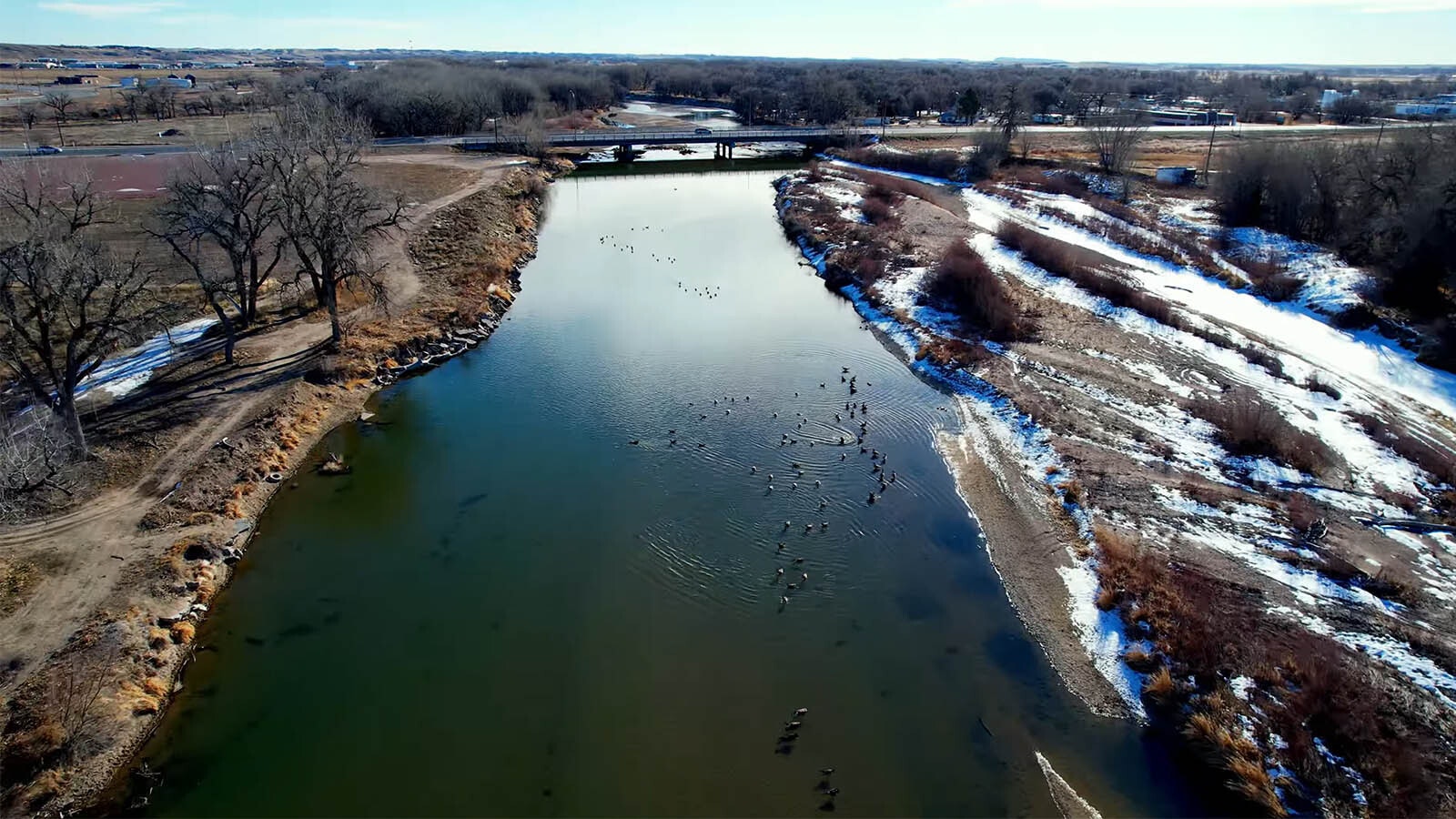
A 20-year-old Wyoming man who shot his friend to death in a January duck-hunting incident is asking a judge to dismiss the criminal case against him, saying his handling of the gun was not reckless.
Goshen County District Court Judge Edward Buchanan has scheduled a Nov. 12 hearing to listen to Gaige Zook’s argument.
Zook is a University of Wyoming student from Pinedale with no criminal history, says an Oct. 16 filing by his attorney, Jason Tangeman.

He is charged with one count of involuntary manslaughter in the Jan. 20 death of Maurizio Justiniano, who was 19. The charge is punishable by up to 20 years in prison, and is a felony that would remove Zook’s gun and voting rights if he’s convicted.
The charge asserts that Zook handled a shotgun “recklessly,” causing Justiniano’s death on the Platte River Jan. 20, as the pair and a third hunter hunkered in a manmade driftwood blind on the river’s south shore.
Zook saw a duck and tried to shoot it, but his gun misfired, says the case evidentiary affidavit. So he leaned his gun against the fallen tree, and borrowed the third hunter’s 20-gauge shotgun instead. He missed the duck, then went back to his own gun and tried to see what was wrong with it.
The gun fired unintentionally, striking Justiniano in the left side of his abdominal area, says the affidavit.
Zook “failed to properly and safely clear his weapon of malfunctions, and by having it pointed in an unsafe direction when it discharged, directly led to and caused the death of Maurizio Justiniano,” charging documents allege.
Zook told the third hunter to call 911. Zook also helped emergency medical personnel care for Justiniano as he lay dying, says the affidavit.

In Wyoming, a person can’t be convicted of murder or manslaughter unless he has some deviation in his state of mind. For first-degree murder, that deviation is “purposely and with premeditated malice.” For second-degree murder it’s “purposely and maliciously.”
And for the involuntary manslaughter charge that Zook faces, that deviation of the mind is “recklessly.”
There was no recklessness here, so there was no manslaughter crime, Tangeman’s motion argues on Zook’s behalf.
The motion characterizes the shooting as a fluke, rather. It quotes Zook’s written statement to investigators, taken in January, which says:
“I gave (the third hunter) back his shotgun, then as I went to grab the gun to inspect it and put the safety on, it fired, hitting Mars.”
Zook also gave investigators a video interview and performed a reenactment of the incident on scene; and these match his written statement, the filing says.
None of these statements provide evidence he consciously allowed the muzzle of his shotgun to point at his friend, Tangeman argued.
The motion says Wyoming case law casts “recklessly” as a state of mind which approaches an intent to do harm. The Wyoming Supreme Court in one 1960 case defined the mindset as a disregard for the safety of others, or behaving with a careless indifference to the consequences of one’s actions, the motion adds.
“The undisputed evidence is that the shotgun misfired and was safely set down with the muzzle pointing straight up,” wrote Tangeman. “Gaige Zook was trying to make the firearm safer in an effort to protect fellow hunters and himself at the time it discharged.”
Yet at some point, the shotgun’s barrel had to be facing Justiniano, Tangeman’s filing acknowledges.
“The question becomes, how did this occur?” he wrote. On the one hand, he says the investigating officer was “speculating” that Zook laid the shotgun down so that it was pointing at Justiniano. But it says that runs contrary to Zook’s matching statements about the incident, and that Zook “does not remember exactly what occurred in the split second the firearm discharged.”
It is likely, argued Tangeman, that Justiniano moved forward and stood up into the barrel’s path at the wrong moment, while Zook was focusing his attention on the faulty gun.
But if the prosecutor’s evidence is “speculative,” then Zook should not have to contest it at trial, the defense attorney argued further.
Lastly, Tangeman invoked Wyoming’s civil law on sports and recreation, which says people engaging in those activities accept any risk associated with them. That’s a law that governs civil, not criminal law.
But the defender argued that it would not fit, to preclude a hunter for being sued in such a shooting – since hunting is inherently risky – but not to spare him from a criminal conviction, which requires a much heftier proof of evidence than the civil trial from which that law may exempt him.
“Allowing this case to proceed to a jury trial would result in criminalizing any hunting accident,” Tangeman wrote.
Online details about the late Justiniano are sparse.
His brother Nahuel Dadin established a GoFundMe page earlier this year asking for help with Justiniano’s cremation, the transport of his ashes back to his home state of Minnesota, and other expenses.
Dadin did not immediately respond to a request for comment placed via the page, which is no longer accepting donations. He could not be reached for comment through other means.
“I just want to go with my family to give my brother the respect he deserves,” wrote Dadin on the page. “We want to pick up my brother (sic) ashes and bring him home where he belongs.”
Justiniano was not a licensed hunter but wanted to go with the other two hunters that day in January, to learn about duck hunting, says the affidavit.
Goshen County Attorney Eric Boyer did not immediately respond to a Monday voicemail request for comment.
Goshen County Coroner Darin Yates told Cowboy State Daily on Monday that after reviewing the forensic pathologist’s account of the autopsy, he deemed Justiniano’s death “accidental.”
It is not unheard-of for a coroner’s manner of death not to match the charges that a prosecutor applies to a case, noted Yates.
That’s because law enforcement and coroners perform their own different investigations of fatal scenes, each looking at different elements of the case.
And coroners do not have the authority to apply or refuse to apply criminal charges, Yates added.
Updated November 2, 2024 1:03pm EDT
javascript:false
New York State authorities seized an Instagram-famous squirrel named Peanut from a New York man’s home on Wednesday.
NEW YORK – New York State authorities recently seized Peanut, an internet-famous squirrel, from a New York man’s home, resulting in the beloved critter’s euthanization and sparking outrage among fans.
Peanut, known for his cowboy hat and waffle-loving antics, had gained a social media following of over half a million.
This is How Much New Windows Should Cost in 2024The Actual Cost Of New Energy-Efficient Windows May Surprise Yourbafibrexwindows.com|
SponsoredLearn More
Mark Longo, Peanut’s owner, was devastated by the state’s actions.
According to Longo, at least six officers from the Department of Environmental Conservation (DEC) came to his door, seizing Peanut and another of his unconventional pets, Fred the raccoon.
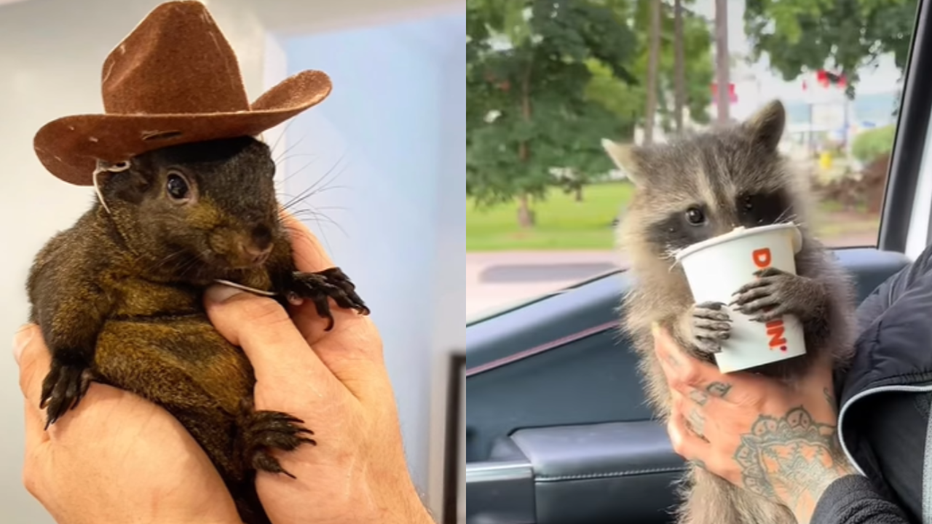
Peanut the squirrel (left), Fred the raccoon (right). (Credit: @pnuts_freedom_farm on Instagram. )
Longo expressed shock and sorrow, describing both animals as cherished members of his sanctuary, which he founded in 2023 as a safe haven for rescued animals.
RELATED: Instagram-famous pet squirrel Peanut seized by authorities in New York
The news has sparked widespread backlash, with even Elon Musk weighing in on X writing, “The government should leave people and their animals alone.”
Many fans echoed similar sentiments, demanding compassion and calling for changes in wildlife policies.
Fans say they too are heartbroken, sharing messages of love and condolences online.
In a social media post, Longo shared: “It is with profound sorrow that we announce the heartbreaking news: on Oct. 30, the DEC made the devastating decision to euthanize our beloved Peanut the squirrel and Fred the raccoon.” He criticized the DEC for informing the media before notifying him, calling it a “troubling lack of respect and empathy.”
“It breaks our hearts that there were mean people who took you away from us, people who didn’t understand the joy and love you brought to our lives.”— P’nuts Freedom Farm
The DEC said it launched an investigation following reports of “potentially unsafe housing of wildlife that could carry rabies and the illegal keeping of wildlife as pets.” Longo claims Peanut, who was unfit for release due to a lack of survival skills, was being certified as an educational animal under state regulations.
Despite the tragedy, Longo has vowed to continue his mission, announcing plans to set up a fundraiser in Peanut’s memory. “I’ll never give up on this nonprofit or those who fell in love with Peanut,” he wrote.

