Bird flu has been detected in a Sac County, Iowa, commercial turkey flock. (Photo by Stephen Ausmus/USDA)
A case of highly pathogenic avian influenza has been detected in a commercial turkey flock of approximately 44,400 birds in Sac County, according to the Iowa Department of Agriculture and Land Stewardship.
While the HPAI H5N1 outbreak has been ongoing since February 2022, Iowa has not reported an outbreak of the bird flu in a commercial flock since December 2025. The state has reported seven outbreaks of the virus in backyard, mixed species or game bird flocks in 2026.
Iowa has had more total birds affected by the bird flu than any other state since the start of the outbreak, according to the U.S. Department of Agriculture’s Animal and Plant Health Inspection Service. GET THE MORNING HEADLINES.SUBSCRIBE
Gov. Kim Reynolds issued a disaster proclamation for Sac County Wednesday after IDALS’s announcement. The disaster proclamation allows state and department resources to be more easily deployed to help contain and monitor the outbreak, which typically requires dispatching the affected flock and disposing of the dead birds.
IDALS is encouraging producers and backyard flock owners to “continue bolstering” biosecurity measures to protect their flocks. HPAI is a viral disease that can travel in wild birds and infect wild and domestic birds. Instances of the virus typically rise during bird migration seasons.
Poultry producers must report possible cases of the bird flu to IDALS and should contact their veterinarians if they suspect birds with the virus. Some clinical signs include a sudden increase in bird deaths, lethargy, decreased egg production, swelling of head, difficulty breathing, thin-shelled or misshapen eggs and diarrhea.
Poultry and egg products remain safe to eat and the U.S. Centers for Disease Control and Prevention, continue to rate the public health risk of bird flu as low as there is no known person-to-person spread.
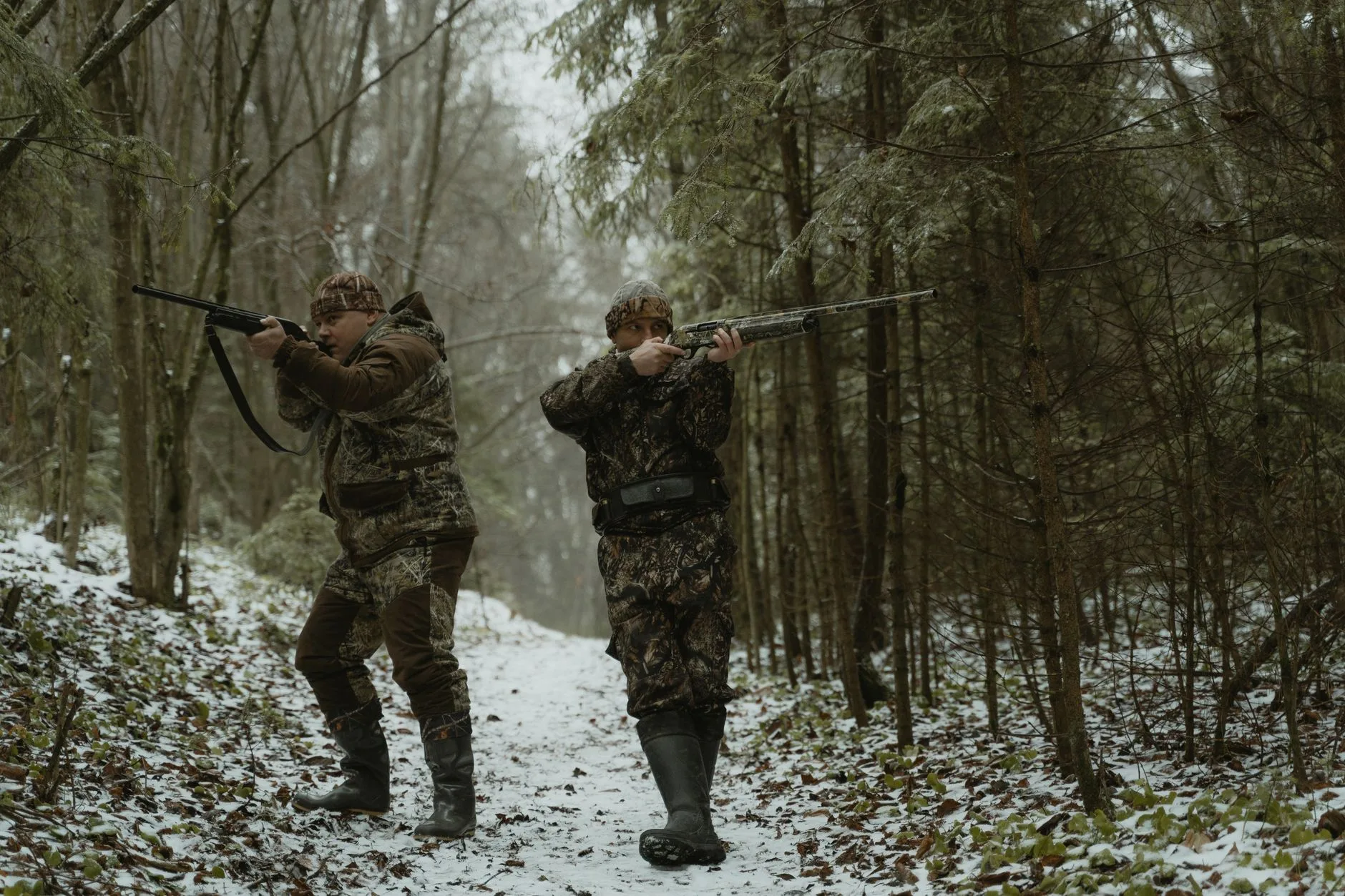
Two thousand, two hundred hunters. Six check stations. Two days. That’s what FWP had to work with after opening weekend in southwestern Montana, and the numbers they pulled from Alder, Cameron, Divide, Gallatin Canyon, Silver City, and Toston tell a story worth paying attention to before you load up for your next trip.
Over October 24 and 25, those 2,200 hunters checked in 146 elk, 41 mule deer, and 18 whitetails. Success rates swung from 6 percent in the Gallatin to 14 percent at Alder. That’s not a small gap — it reflects genuinely different conditions, pressure levels, and animal distribution across a region that covers a lot of very different country.
Where the Hunters Showed Up—And Where They Didn’t
Divide pulled 414 hunters through its station, the second-highest opening weekend count ever recorded there. Cameron ran above average too. Meanwhile, Alder and Gallatin Canyon were quieter than usual, Silver City held near typical numbers, and Toston brought up the rear at 161 hunters checked.
IdentifyPlants
Why the spread? Probably some mix of snow timing, road conditions, and the kind of last-minute intel that circulates in every hunting camp the night before opener. Friday’s fresh snow helped hunters read sign and pattern animals — but it also shut down certain roads and funneled people toward wherever they could still get a truck in.
Those Divide numbers stand out to anyone who’s hunted that country over the last several years. It’s been drawing more attention, and this opening weekend confirms it’s become a legitimate go-to for hunters who want elk opportunity without burning a full day on approach. Whether that pressure holds or scatters as November grinds on is something to watch closely.
Alder, Cameron, Gallatin, and Silver City all came in at or above their average opening weekend success. Divide didn’t. Despite pulling the second-highest hunter count on record, success there came in below average — which tells you something. Either the pressure pushed elk out of that drainage fast, or the country got hunted hard enough in the first few hours that animals simply went quiet and went deep.
ShopOutdoor Gear
Honestly, 6 to 14 percent is about what you’d expect across opening weekend in this part of the state. Elk don’t cooperate just because you’ve been scouting since August. But that range is consistent with prior years, and it’s a good reminder that the hunters who fill tags in Montana are usually the ones still grinding in mid-November — not the ones who needed it to happen by noon on Saturday.
Bear Activity Remains High—Stay Sharp
Multiple hunters reported fresh bear sign over the weekend. Both black bears and grizzlies. With temperatures staying mild and food still available up high, bears aren’t denning yet — not even close.
Carry bear spray. Every time, no excuses. Hang your meat away from your camp, stay loud in thick timber and tight drainages, and don’t let the focus of a successful kill make you sloppy. The window between pulling the trigger and getting that elk on the truck is exactly when people get into trouble. Stay bear-aware through the whole process, not just the walk in.
Booka Safari
What This Means for the Weeks Ahead
Check station data is useful beyond the headline numbers. Below-average turnout at places like Alder, Toston, and Gallatin Canyon suggests there’s opportunity left for hunters who didn’t punch their tag opening weekend. Lower pressure often means less pressured animals — elk that haven’t been bumped three times in two days and gone nocturnal as a result.
Weather is going to drive everything from here. Another snow event in early November — the kind that hits the Gravellys or the Pioneers overnight and stacks a foot by morning — and you’ll see a second surge of activity as animals move and hunters chase tracking conditions. If it stays dry and mild, success rates may flatten out as elk lock into patterns and learn to avoid the obvious pressure zones.
Areas like Divide may keep seeing heavy boots on the ground, which historically pushes elk onto private land or into terrain that demands a lot more from a hunter. If you’ve got the legs and the time, that’s actually where opportunity opens up. In my experience, the mid-season hunters who go where it’s inconvenient — the extra canyon, the longer pack, the access that requires a call to a landowner — are the ones who come out with meat.
BuyMaps
Read the Signs, Not the Crowd
Opening weekend is never the whole picture. It’s the first two days of a six-week conversation between hunters, animals, weather, and country that doesn’t care about your schedule or your expectations. This season looks competitive in some drainages and genuinely wide open in others. The data from those six check stations won’t tell you exactly where to go — but it’ll tell you where everyone else already went.
Stay flexible. Stay bear-aware. Hunt where the pressure isn’t.
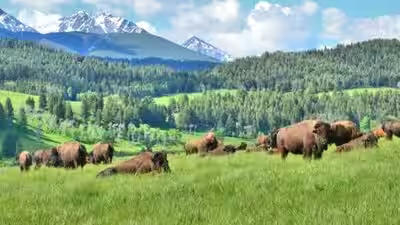
The decision helped turn the Flying D Ranch into an important example of private wildlife conservation in the American West. Today, thousands of bison graze its pastures, while wolves, bears, elk, moose, and other native animals occupy the surrounding forests and valleys. The property remains a working ranch, but one managed with ecological conservation as a central objective.
Turner, who died on May 6, 2026, at age 87, spent much of his later life arguing that protecting wildlife and managing land productively did not have to be mutually exclusive. The transformation of the Flying D remains one of the clearest examples of that philosophy.
Turner bought Montana’s Flying D in 1989
Located southwest of Bozeman, Montana, the 113,613-acre Flying D Ranch occupies part of the Greater Yellowstone Ecosystem, an expansive region known for its relatively intact wildlife habitats and important migration corridors.
The landscape is far from uniform. Steep, forested terrain dominates the southern portion of the property, while its central valleys contain rolling meadows. Farther north, higher benches offer open country suitable for grazing animals.
How bison survived one of the fastest wildlife collapses in history
These shaggy Titans are the largest terrestrial animals in North
When Turner acquired the property in 1989, it had been used primarily for cattle ranching. He subsequently sold off the cattle and began expanding his herd of American bison, a species that had once dominated the Great Plains.
The change was not intended to remove all agricultural activity from the land. Instead, Turner wanted to demonstrate that a ranch could remain economically productive while supporting native animals and the ecological processes associated with them.
He also placed the property under conservation protections designed to limit future development. According to the Turner Institute of Ecoagriculture, the Flying D has been protected by a conservation easement since 1989.
Such agreements restrict certain types of land use, particularly development that could fragment the landscape, while allowing a property to remain privately owned and managed.
The Flying D became a major home for Turner’s bison herd
American bison once numbered in the tens of millions across North America. However, commercial hunting, habitat loss, and government policies contributed to a catastrophic decline during the 19th century.
By the late 1800s, the species had been reduced to a tiny fraction of its former population. Conservation programs eventually helped prevent its disappearance, although most bison today live in managed herds rather than roaming freely across their historical range.
Turner became one of the most prominent private supporters of bison restoration. At the Flying D, he sought to replace conventional cattle production with a system centered on an animal that had evolved alongside North America’s grassland ecosystems.
According to the Turner Institute of Ecoagriculture, the ranch now supports approximately 4,500 bison, managed across a network of grasslands and pastures.
Bison grazing differs in several respects from cattle grazing, although the ecological effects of either animal depend heavily on stocking density, season, water availability, and land management.
The Flying D uses adaptive grazing practices intended to support native vegetation and soil health. The institute also reports that more than 5,000 acres of former cropland have been restored to grazing lands.
This approach does not mean that human management has disappeared. The bison remain part of a managed ranching operation, and their numbers and movements are influenced by the property’s agricultural and conservation objectives.
Turner’s commitment extended far beyond the Flying D. Over several decades, his ranching operations developed one of the world’s largest privately managed bison herds, spread across properties in multiple states.
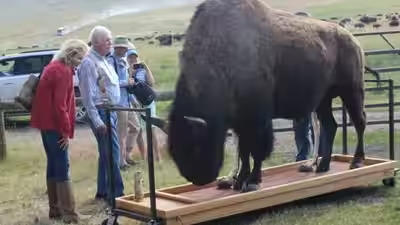
His interest in the animals was not limited to their commercial value. During a July 2017 gathering connected to the International Bison Conference, Turner welcomed visitors to the Flying D and participated in discussions about bison anatomy, conservation, and management.
Former employees also recalled spending long hours with him on horseback, discussing wildlife, landscapes, and the challenges facing threatened species.
The Flying D provides habitat for wolves, bears, elk and mountain lions
Bison may be the most recognizable animals on the Flying D, but they are far from its only inhabitants.
Turner Enterprises identifies established populations of Rocky Mountain elk, mule deer, white-tailed deer, Shiras moose, pronghorn, gray wolves, black bears, mountain lions, and badgers on the property.
Golden and bald eagles can also be seen above the ranch during much of the year, while its waterways provide habitat for fish and other aquatic organisms.
One of the most striking developments occurred after wolves were reintroduced to Yellowstone National Park in 1995.
Wolves had been eliminated from Yellowstone during the early 20th century through hunting and predator-control campaigns. Their return formed part of a federal restoration effort intended to reestablish a native predator in an ecosystem where it had long been absent.
As wolf populations expanded beyond the park, some animals dispersed into surrounding landscapes. Within a decade of the reintroduction, wolves had established themselves on the Flying D.
For many ranchers in the region, the arrival of wolves raised concerns about livestock losses. Turner reacted differently.
Working with biologist Mike Phillips, who had helped lead the Yellowstone wolf recovery effort, Turner decided that the wolves on his ranch should be protected, even if they occasionally killed bison.
The ranch subsequently became a valuable setting for studying wolf behavior. Researcher Val Asher spent years observing the animals and documenting their interactions with one another, with bison, and with the surrounding landscape.
Turner expressed genuine enthusiasm when wolves established a pack on his property. In a 2016 interview republished by Turner Enterprises, he recalled being delighted by their arrival and described how he sometimes howled toward them from the back deck of his house.
The wider return of wolves to Yellowstone has also attracted scientific interest because of the possible effects on prey populations and vegetation. Researchers have documented the recovery of young aspen stands following the return of wolves to Yellowstone, although scientists continue to examine the combined influence of predators, climate, browsing pressure, and other environmental factors.
The Flying D’s experience does not establish that predators and ranching can coexist without economic costs or conflicts. It does, however, demonstrate that some landowners can choose management approaches that allow large carnivores to remain on working landscapes.
Importantly, Turner’s prohibition concerned the wolves on his ranch. It did not mean the entire property was closed to all hunting, and the available historical accounts do not establish the details of every wildlife-management policy in place today.
Rivers and streams add another layer of habitat
Beyond its forests and grasslands, the Flying D contains an extensive network of waterways that contribute to the ecological diversity of the property.
The ranch lies between the Gallatin and Madison river systems and includes sections of Spanish Creek, Cherry Creek, Elk Creek, and other streams, springs, and wetlands.
These waterways support trout populations and provide important habitat for birds, mammals, and other wildlife.
Conservation efforts have focused not only on large terrestrial animals but also on native fish and aquatic ecosystems.
The Turner Institute of Ecoagriculture reports that projects involving the Flying D and its conservation partners have helped restore and protect more than 70 miles of connected stream habitat across public and private lands.
One objective has been to support the recovery of native westslope cutthroat trout, whose populations have declined in many watersheds because of habitat degradation, competition, and hybridization with introduced fish.
The property also contributes to Arctic grayling conservation through a reservoir used to raise fish for reintroduction projects in Montana.
Turner’s environmental work included support for organizations focused on protecting rivers. Scott Bosse, a regional director at American Rivers, has described how the Turner Foundation contributed to conservation efforts in Montana.
Despite its ecological importance, the Flying D remains a working property. Its activities include managed bison production, wildlife conservation, and hunting opportunities offered through the Montana Hunting Company.
How Turner used vast private ranches to preserve Montana’s open landscapes
The Flying D was only one part of Turner’s broader land-conservation strategy.
Over several decades, he acquired approximately two million acres of property across the United States, making him one of the country’s largest private landowners.
His holdings included ranches in Montana, Nebraska, New Mexico, South Dakota, Kansas, and other states. His Montana properties alone eventually covered approximately 130,000 acres.
Rather than converting these landscapes into residential developments, Turner generally favored large working properties that could support wildlife, grazing animals, and conservation research.
Conservation easements became an important tool in this strategy.
These legal agreements can permanently limit certain forms of development while preserving private ownership and allowing compatible agricultural activities to continue.
For large mammals, the protection of connected landscapes is particularly valuable. Animals such as elk, wolves, and bears may travel considerable distances in search of food, breeding opportunities, or seasonal habitat.
Fragmentation caused by roads, housing developments, and fencing can interfere with those movements and increase conflicts between wildlife and humans.
Preserving extensive areas of open land can therefore provide benefits beyond the boundaries of any single ranch.
Conservation became part of Turner’s wider philanthropy
Turner’s environmental initiatives were part of a much broader philanthropic commitment.
In 1997, he announced a $1 billion pledge to support the United Nations through what became the United Nations Foundation. The initiative helped fund programs involving global health, children’s welfare, humanitarian assistance, and environmental protection.
He also established organizations dedicated to protecting species and ecosystems, including the Turner Endangered Species Fund and the Turner Foundation.
The Turner Endangered Species Fund supported research and conservation activities involving threatened animals, including species whose recovery depended on restoring habitat or rebuilding small populations.
Turner’s philosophy combined environmental protection with the belief that private enterprise could contribute to conservation.
He argued that economic activity and ecological responsibility should not automatically be viewed as opposing objectives.
At the Flying D, that philosophy took practical form through bison production, habitat management, wildlife research, and restrictions on future development.
Nevertheless, the model has limits. Managing large ranches requires substantial financial resources, specialized personnel, and long-term planning. The Flying D’s experience cannot simply be replicated on every agricultural property without considering differences in economic conditions, geography, and local wildlife conflicts.
The man behind the land
Before becoming widely known for conservation, Ted Turner built his reputation in media and business.
He founded CNN in 1980, helping establish the world’s first major 24-hour television news network. His business interests later extended into sports, entertainment, and other television channels.
Turner also owned the Atlanta Braves and Atlanta Hawks. An accomplished sailor, he won the America’s Cup in 1977 at age 38.
His outspoken public personality attracted considerable attention, as did his personal life. He married three times, including to actress Jane Fonda, whom he divorced in 2001.
People who worked with him on his Montana properties often described another side of Turner: someone who spent substantial time outdoors and took a direct interest in the animals and landscapes under his care.
Environmental writer Todd Wilkinson, who co-authored a book about Turner’s conservation work, recalled conversations with him about the natural world and the responsibilities associated with owning large areas of land.
Turner did not view wildlife protection simply as a charitable activity separate from his business interests. He made it a central part of how many of his properties were managed.
A conservation legacy that remains on the land
Ted Turner died on May 6, 2026, at age 87, at his home in Lamont, Florida. His death marked the end of a remarkable career spanning broadcasting, business, philanthropy, and environmental conservation.
The Flying D Ranch remains part of the land-management operations associated with his family and businesses.
Bison continue to graze its grasslands, while the property’s varied habitats support wolves, elk, moose, bears, mountain lions, deer, and numerous bird species.
Its conservation easements provide legal protections intended to restrict future development and help preserve the landscape’s ecological value.
Yet the Flying D should not be mistaken for a national park or an unmanaged wilderness reserve. It is a privately owned working ranch where agriculture, wildlife conservation, and other permitted activities coexist under active management.
That distinction is an important part of Turner’s legacy. His approach suggested that large private properties could play a meaningful role in protecting wildlife habitat without being removed entirely from economic use.
The decision to allow wolves to establish themselves on the Flying D became one of the most striking examples of that philosophy. In a region where predators and ranching have often been in conflict, Turner chose to tolerate the presence of animals that could occasionally impose real costs on his business.
Nearly four decades after he purchased the property, the Flying D illustrates both the possibilities and the complexities of conserving wildlife on working land.
Its future will depend on continued management and long-term protection, but the transformation from a cattle ranch into a landscape centered on bison and native wildlife remains a significant chapter in the history of private conservation in the American West.




 Related video: How bison survived one of the fastest wildlife collapses in history (Animalogic)
 Animalogic