SC deer hunters, deer tags should be hitting your mailbox soon
Reply

July 19, 2024 Updated Fri., July 19, 2024 at 6:05 p.m.

By Michael Wright michaelw@spokesman.com(509) 459-5508
Washington’s cougar hunting rules have been rewritten.
In a virtual meeting Friday, the Washington Fish and Wildlife Commission voted to approve a new suite of cougar hunting rules after months of debate.
Under the new rules, the state’s cougar hunting season would run from Sept. 1 to March 31 each year, and harvest would be capped in each individual unit based on population growth. The caps would also include all known cougar kills, including those carried out by wildlife managers in response to conflicts.
The commission also voted to direct Washington Department of Fish and Wildlife to reopen the cougar hunting rules for revisions before the 2025-2026 hunting season.
Commissioners began work on the proposal after they received a petition from conservation groups who wanted stricter limits on cougar hunting. The groups argue that the existing rules allowed too many of the big cats to be killed.
The previous structure included two consecutive seasons running from September through December and January through April. Harvest was limited in each unit based on a range of allowable cougar kills, and management removals were not counted toward the total. The counts also ignored certain ages of cougars.
The new rules cap cougar mortality in each predator management unit based on an estimated 13% growth rate and a density of 2.3 cougars per 100 square kilometers. All deaths between April 1 and March 31 would count toward the cap, and all independent aged cougars are counted.
In units that reach the cap before Sept. 1, the cap would be increased to 20% to allow for some hunting opportunity.
Two units have hit their 13% cap this year. Both are in Eastern Washington – one near Chewelah, and the other in hunting districts surrounding Spokane.
Supporters of the changes argued that they would provide needed protection for the predators. Some opponents argued the rules didn’t go far enough in protecting the animals.
Other opponents saw the changes as an erosion of hunting opportunity in the state, and they argued there are plenty of cougars and no need to limit the hunting of them.
Environmetnalists cheered Friday’s vote. Collette Adkins, the carnivore conservation program director for the Center for Biological Diversity, said in a statement that the vote was “a big win” for cougars.
“I’m glad to see the state finally taking action to rein in unsustainable cougar killing,” Adkins said.
Wyoming and Idaho hunts have had negligible effect, but Montana’s hunt along the park’s northern boundary continues to take a toll on long-running research effort and wolf viewing opportunities.
by Mike KoshmrlJuly 18, 2024
Share this:
FacebookXWhatsAppMessengerEmailShare
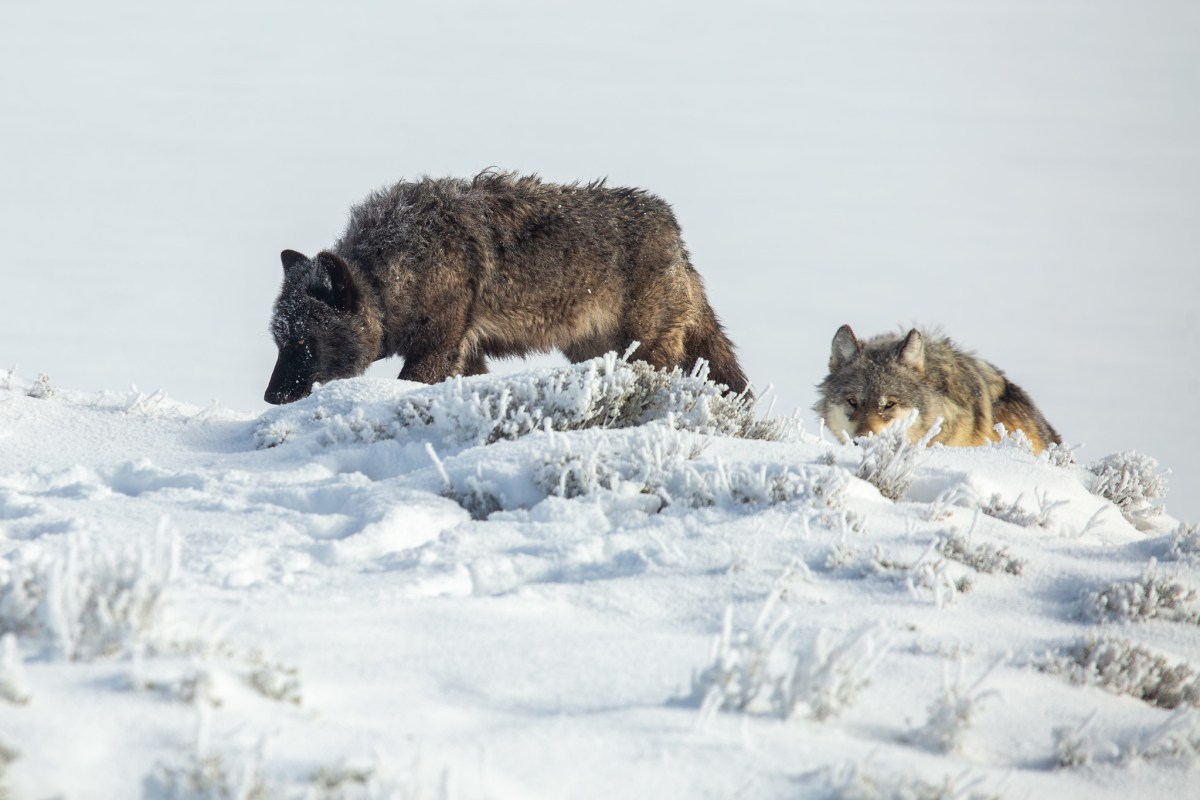
The 2023-’24 winter proved the third deadliest for Yellowstone wolves in the decades since Canis lupus was reintroduced to the landscape in 1995. Overall, 13 wolves were shot by legal hunters, caught by trappers, killed by poachers or died of suspected hunting-related injuries.
Like in past winters, the vast majority of wolves that met their fate after straying beyond the protections of Yellowstone National Park did so in Montana, near the park’s northern boundary. Eight wolves were legally hunted or trapped in Montana hunting zones, one was poached and two more died from suspected gunshot wounds. By contrast, one park wolf died each in Wyoming and Idaho hunts.

Altogether, the hunting toll caused the “dissolution” of three of the park’s 11 wolf packs, according to a letter Yellowstone Superintendent Cam Sholly sent to the Montana Fish and Wildlife Commission seeking relief.
“These losses represented approximately ten percent of the winter 2023/2024 Yellowstone wolf population,” Sholly wrote in a June 26 letter acquired by WyoFile. “Yellowstone is recognized as the best place in the world to view and study free-ranging wolves, which attracts millions of visitors and generates significant economic activity for the region.”
Yellowstone’s superintendent thanked Montana officials for reinstating quotas in hunting units adjacent to the park two years ago — a move the state agency made after the 2021-’22 hunting season, when a record 25 wolves were shot or trapped outside the park’s boundaries in the three border states.
But Sholly also asked for additional changes that would help Yellowstone “achieve wildlife conservation and economic objectives.” Specifically, he asked Montana Fish, Wildlife and Parks to consider breaking up one of its wolf hunting units, 313, into two — and then distributing the current wolf-kill quota of six animals amongst the two new areas. Alternatively, if wolf hunting unit 313 is kept intact, he asked Montana wildlife managers to slash the quota to four wolves to ease the impact on park packs.

The Montana Fish and Wildlife Commission has not formally responded to the three-week-old letter. Writing the park back would have been unusual, because the letter was likely interpreted as a public comment on the agency’s under-review wolf hunting regulations — and the commission’s typical response would be a change to the regulations, Fish, Wildlife and Parks spokesperson Greg Lemon said.
Although Fish, Wildlife and Parks’ draft wolf hunting regulations don’t yet reflect any of the changes Sholly sought, Bozeman, Montana-based commissioner Susan Kirby Brooke formally initiated an amendment that grants the park’s main ask: splitting up wolf hunting unit 313 into two, and dividing the six-wolf quota.
The amendment and the overall 2024-’25 Montana wolf hunting regulations are open to public comment through July 25.
Fish, Wildlife and Parks officials responded favorably to Kirby Brooke’s amendment. The change would have “no adverse biological effects,” the agency wrote. “With no change to the overall quota, the department expects that the season complies with legislative direction for population management,” the agency’s statement about the amendment reads.
A daily must-read news update for and by Wyoming.Subscribe for free!
Much of the strife over the effects of Montana’s hunt on Yellowstone’s wolves has stemmed from actions taken by the Montana Legislature. During the 2021 legislative session, lawmakers passed a bill that directed the Montana Fish and Wildlife Commission to reduce wolf numbers. That resulted in changes to hunting zones that led to the record number of Yellowstone wolves being killed during the 2021-’22 season.

In the aftermath of that legislation, the Montana Fish and Wildlife Commission also passed regulations allowing for baiting and night hunting of wolves. According to Sholly’s letter, the state also lifted a ban on the use of telemetry equipment for wolf hunting around the same time. Typically, a significant portion of Yellowstone wolves wear tracking collars, which means they could potentially be located by hunters who possess very-high frequency receivers.
“The use of these practices run counter to fair chase hunting,” Sholly wrote, “and we request these prohibitions be reinserted into your regulations.”
It’s unclear if those requests will be granted. Montana’s wolf hunting regulations are set to be finalized by the Montana Fish and Wildlife Commission at its Aug. 16 meeting. In the meantime, the draft regulations propose keeping the controversial practices intact: baiting wolves is explicitly legal, night hunting on private land is allowed, and there’s no language in the regulations about using telemetry equipment. Kirby Brooke’s amendment also does not address the practices.
2024-6-26 WolfHuntCommentLetterDownload
There’s no legislative mandate, however, so the Montana Fish and Wildlife Commission does have the latitude to change those rules, Lemon, agency spokesman, said. But it’s also unclear if those practices have had any effects on wolf populations, he said.
“Certainly, the opportunity to harvest wolves has expanded in the last couple of years,” Lemon said. “But even with those expanded opportunities, the harvest has remained relatively stable.”
Lemon disagrees with characterizing Montana’s hunt as being deadly for “Yellowstone wolves.”
“Wolves move across the landscape,” he said. “They spend time in the park and in Montana. The way I look at it, they’re not ‘Yellowstone wolves.’”
Yellowstone bases the characterization on where the wolves roam the overwhelming majority of the time.
“Our rationale for counting these as Yellowstone-based wolves is supported by GPS/VHF radio-collar data that show these packs are within the park at least 96 percent of the year,” Sholly wrote.
There’s evidence that wolves leaving Yellowstone are especially vulnerable to being hunted. Wolves that dwell in the park see scores of people, and that can lead to habituation and brazen behavior.
Data shows that about 85% of all wolves killed in Montana’s two wolf hunting units north of Yellowstone have been from packs that live primarily in the park, Sholly’s letter states.
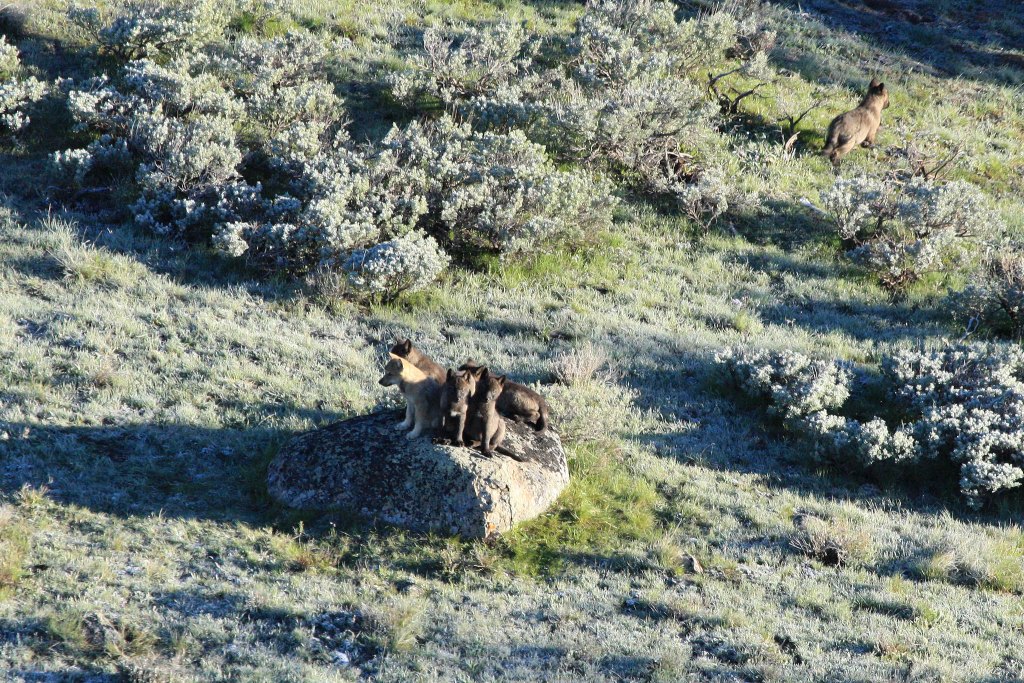
Montana hunts north of the Yellowstone boundary have not only taken a toll by causing packs to disband. Recent research has found that hunting upsets the natural balance of the social canine. It can even stimulate reproduction.
During Montana’s 2021-’22 wolf hunting season, the long-term alpha female from Yellowstone’s 8-Mile Pack was legally trapped in a border unit. Afterward, three subordinate females became breeders, resulting in 18 pups being produced in a single pack — which grew to as many as 25 wolves, according to Yellowstone’s annual wolf report.
Even on the heels of the 2021-’22 and 2023-’24 winters — the first and third-deadliest hunting seasons for Yellowstone’s wolves to date — park wolf numbers actually grew. At the end of the year, the population was assessed at 124 animals and 11 packs, a notable uptick from recent years.

“Some people will point that out and say, ‘Well, what’s the big deal?’” Yellowstone Wolf Project lead biologist Dan Stahler told WyoFile.
It’s important, he said, because of what the National Park Service is all about. “Our mission in Yellowstone is to protect and preserve natural processes — including natural social dynamics,” Stahler said.
While tensions remain over the effects of Montana’s wolf hunting seasons, there’s been notably less impact on park wolves from hunts in Yellowstone’s other two border states: Idaho and Wyoming.
In the coming 2024 hunting season, the Wyoming Game and Fish Department will allow up to 16 wolves to be killed in hunting units that border the park — that’s three fewer than were allowed in 2023. Very few Yellowstone wolves, however, typically end up killed in the state’s hunt. That’s because of a combination of the whereabouts of Yellowstone packs, the lay of the land and large wilderness complexes abutting the park on the Wyoming side.
“I think on average about one wolf that’s taken during the Wyoming hunt comes from a Yellowstone-based pack,” Stahler said. “It’s proven to be the case that [Wyoming] has relatively low impact on park wolves.”
Haley BeMillerBrianne Pfannenstiel
USA TODAY NETWORK
0:20
0:47
https://imasdk.googleapis.com/js/core/bridge3.651.0_en.html#goog_572328076
MILWAUKEE — Usha Vance has never been one to clamor for the spotlight.
She stood by her husband’s side as JD Vance received national acclaim for his memoir, “Hillbilly Elegy,” and ran for the U.S. Senate in 2022. He describes her as brilliant, a defender of what she loves, a comforting change from the chaos of his youth.
During the third night of the Republican National Convention, Usha Vance took on a new, loftier task: Introducing her husband, and herself, to the country in a primetime speech.
“That JD and I could meet at all, let alone fall in love and marry, is a testament to this great country,” she said.
The Vances have been thrust into national prominence this week after Republican presidential nominee Donald Trump named Ohio’s junior senator as his running mate. Her national coming out has prompted a largely supportive reception, even as some far-right personalities have circulated racist commentary denigrating her Indian heritage.
Republican delegates who saw Usha Vance introduce her husband during the convention Wednesday praised her performance, even if the applause was, at times, muted — like when she described how her husband adapted to her vegetarian diet.
By
Reading Time: 5 minutes
Published: 1 day ago

Brian DeMann, a dairy farmer from Martin, Michigan, believes the state’s rules to contain avian flu would be more widely accepted if they came as recommendations rather than requirements for producers. | Reuters/Tom Polansek photo
Newsletter Sign Up – Receive free Western Producer newsletters
Breaking ag news stories and commodities markets snapshots delivered daily right to your inbox!Your EmailYour Postal CodeConsentI consent to receiving emails from Glacier FarmMedia, its affiliates and divisions and third parties, containing agriculture news, updates and promotions. I can unsubscribe at any time
Government response to the outbreak in Michigan sparks COVID-era worry as farmers resist state-mandated efforts
MARTIN, Mich. (Reuters) — Some dairy farmers are resisting Michigan’s nation-leading efforts to stop the spread of avian flu for fear their incomes will suffer from added costs.
ADVERTISEMENT
The government’s restrictions, which include tracking who comes and goes from farms, are rekindling unwanted memories of COVID-19 in Martin and other small towns in central Michigan.
The state has two of the four known cases in humans, all dairy workers, since federal authorities confirmed the world’s first case in U.S. cattle in late March.
The state has tested more people than any of the 12 states with confirmed cases in cows, according to a survey of state health departments. Testing policies vary by state.
Public health experts fear the disease has the potential to turn into another pandemic just a few years after COVID-19. As those worries mount, the acceptance and success or failure of Michigan’s proactive response is being watched by other states looking for a roadmap that goes beyond federal containment recommendations.
More than a dozen interviews with Michigan producers, state health officials, researchers and industry groups, along with preliminary data, show limited dairy farmer participation in efforts to stem and study the virus. In some cases, calls from local health officials go unanswered, money for dairy farm research is left unclaimed and workers still milk cows without extra protective gear.
Brian DeMann, a dairy farmer from Martin, said the outbreak and the state’s response recalls COVID-19. The 37-year-old believes Michigan’s rules to contain bird flu would be more widely accepted if they came as recommendations rather than requirements for farmers.
“Nobody knows if these things that we’re being told to do are going to stop it,” said DeMann, who echoed an uncertain view shared by other farmers.
ADVERTISEMENT
“Just like 2020, people didn’t like to be told what to do.”
This spring, many U.S. dairy owners did not heed federal recommendations to offer more protective equipment to employees, according to farmers and workers.
DeMann said he did not invest in new protective gear, such as masks, for his workers because it is unclear how the virus is spreading.
About 900 permitted dairy farms dot Michigan’s countryside, with cows in open-air barns and piles of feed covered with protective tarps and old tires used as weights.
Tim Boring, Michigan’s agriculture director, said social stigma and economic concerns around infections have discouraged farmers from testing cows for avian flu in the nation’s sixth biggest milk producer.
“There’s a lot of factors that go into the concerns about farms coming forward with positive operations,” he said.
“We know this has been a challenge in Michigan.”
ADVERTISEMENT
The state last reported an infected dairy herd on July 9, its 26th to test positive. Five other states have also confirmed cases in the past month, and about 140 herds have been infected nationally since March, according to U.S. Department of Agriculture data.
Michigan is offering farms up to $28,000 to entice those with infected herds to participate in research. More than a dozen farms have expressed interest, the state said.
The federal government is also offering financial assistance. Twelve of 21 herds enrolled in financial support from the USDA are from Michigan, according to the agency.
To boost testing, USDA launched a voluntary program in which U.S. farmers can test tanks of milk weekly for bird flu. Six farmers in six states have enrolled one herd each, but a Michigan farmer is not among them yet.
“I really would like to see that in every single herd,” said Zelmar Rodriguez, a Michigan State University dairy veterinarian studying infections.
Michigan’s agriculture department said it has up to 200 people responding to avian flu cases in poultry and cattle, including co-ordinating with the USDA on outbreak investigations. Veterinarians in other states said they tracked Michigan’s cases to assess the risks for transmission.
“Michigan is doing a good job with their diagnostics and trying to identify where the disease is,” said Mike Martin, North Carolina’s state veterinarian.
ADVERTISEMENT
Michigan’s outbreak in cows began after an infected Texas farm shipped cattle to Michigan in March before the virus was detected, according to the USDA. Weeks later, a Michigan poultry farm also reported symptoms and tested positive. Whole genome sequencing suggested the virus spread from the dairy farm to the poultry flock.
The USDA now thinks the virus has spread indirectly through people and vehicles moving on and off infected farms.
Chickens owned by Michigan’s largest egg producer, Herbruck’s Poultry Ranch, were infected because the virus spread from cattle, said Nancy Barr, executive director of Michigan Allied Poultry Industries, an industry group.
“It’s a new threat to us,” Barr said.
Herbruck’s told the state in May it was laying off about 400 workers after avian flu decimated flocks in Ionia County. The company said in a public notice it planned to rehire employees as it rebuilds its flocks, a process that can take six months.
As of late June, Ionia County poultry farmers received $73.2 million in indemnity payments from the U.S. government for avian flu losses, the most of any county in the country that had to cull infected flocks since February 2022, according to data obtained from the USDA.
The layoffs struck fear in Ionia, a city of about 13,000 people in central Michigan with a brick-paved Main Street and mural of the Mona Lisa. Business owners said unemployed workers have less money to spend at a time when local stores already struggle to compete with Walmart and Meijer.
ADVERTISEMENT
“I just thought, ‘oh great, here goes the store,’ “ said Jennifer Loudenbeck, owner of the Downtown Vintage Resale shop.
Alex Hanulcik, who owns a fresh fruit stand, said he knows a Herbruck’s employee who left town to find work in the southern United States after being terminated.
“I really feel for the employees,” Hanulcik said.
“They were blindsided.”
Dairy farmers said they are constantly worrying their cows may be the next to become infected, yet they are unsure exactly how to protect them.
Doug Chapin, a dairy farmer in Remus, Mich., said he held meetings with employees to inform them of the risks of the virus. He is trying to make workers wear protective eye gear, though they objected in the past because glasses must be cleaned if milk sprays on them.
“You’re thinking about it all the time,” he said about the virus.
ADVERTISEMENT
Michigan has plans to test dairy workers for signs of previous infections with first-in-the-nation blood testing.
The state has already monitored thousands of people for bird flu symptoms using a complex contact tracing system that texts them three times daily, said Chad Shaw, health officer for the Ionia County Health Department.
However, some farmers remain reluctant to engage with local health authorities.
The Branch-Hillsdale-St. Joseph Community Health Agency began reaching out to farms generally to offer medical care for seasonal workers because of avian flu cases, said health officer Rebecca Burns. There has been little interest, she added.
“These guys aren’t used to us calling them,” Burns said.
Michigan has detected the third most infected dairy herds of any state, after Idaho and Colorado, and lost 6.5 million chickens in April alone from outbreaks on poultry farms, USDA data show.
In late April, U.S. president Joe Biden’s administration began requiring lactating cows to test negative before being shipped over state lines.
ADVERTISEMENT
Michigan went further and in May started requiring farms to keep logs of visitors, disinfect delivery trucks that could carry the virus and take other safety steps. This month, the state began requiring negative tests for non-lactating cows to be shown at fairs.
Colorado reported the nation’s fourth human case July 3. The U.S. government awarded $176 million to Moderna to advance development of its bird flu vaccine for humans.
Two dozen companies are working on a vaccine for cattle, U.S agriculture secretary Tom Vilsack said, because about 140 herds nationally have tested positive.
“Michigan’s been the forefront on providing information, providing access to information that really is helpful,” Vilsack said.

