As Florida’s ban on “lab-grown” meat is set to go into effect, manufacturer Upside Foods hosted a last hurrah — at least for now — with a cultivated chicken-tasting party in Miami. (AP video by Daniel Kozin)Photos
12
BY DAVID FISCHERUpdated 1:25 AM PDT, June 30, 2024Share
MIAMI (AP) — As Florida’s ban on “lab-grown” meat is set to go into effect next week, one manufacturer hosted a last hurrah — at least for now — with a cultivated meat-tasting party in Miami.
California-based Upside Foods hosted dozens of guests Thursday evening at a rooftop reception in the city’s Wynwood neighborhood, known for its street art, breweries, nightclubs and trendy restaurants.
“This is delicious meat,” Upside Foods CEO and founder Uma Valeti said. “And we just fundamentally believe that people should have a choice to choose what they want to put on their plate.”
The U.S. approved the sale of what’s now being called “cell-cultivated” or “cell-cultured” meat for the first time in June 2023, allowing Upside Foods and another California company, Good Meat, to sell cultivated chicken.
Earlier this year, Florida and Alabama banned the sale of cultivated meat and seafood, which is grown from animal cells. Other states and federal lawmakers also are looking to restrict it, arguing the product could hurt farmers and pose a safety risk to the public.
ADVERTISEMENT
While Florida cattle ranchers joined Gov. Ron DeSantis when he signed the ban into law in May, Valeti said Florida officials never reached out to his company before passing the legislation.
A federal lawsuit over whether wolf and coyote traps should be limited because they also ensnare endangered grizzlies will go to trial, possibly the first week of December.
The Daily Montanan reports that at a hearing Wednesday in U.S. District Court in Missoula, Judge Donald Molloy said he would not grant either party summary judgment. He directed the lawyers to propose trial dates.
Molloy also told the lawyers that it would be helpful for them to discuss coyote traps.
In November 2023, the judge temporarily limited Montana’s wolf trapping season in response to a request for a preliminary injunction from conservation groups.
The judge agreed that wolf and coyote traps injure grizzlies, and that any capture is an illegal “take” under the Endangered Species Act.
However, the judge did not stop coyote trapping in his earlier order. He said coyote trapping is regulated differently, and the groups hadn’t tied their arguments closely enough to coyote trapping regulations.
Previously, the judge limited the wolf trapping season this year from Jan. 1 to Feb. 15, when bears are mostly in their dens. The order covered more than half of the state from the western border, or Regions 1-5.
The wolf trapping season had been roughly after Thanksgiving through March 15.
In April, the 9th Circuit Court of Appeals affirmed the timeframe the judge set but said the lower court order should apply only to areas where bears are known to live.
In September 2023, the Flathead-Lolo-Bitterroot Citizens Task Force and WildEarth Guardians had sued the state of Montana as well as Fish and Wildlife Commission Chairwoman Lesley Robinson and Gov. Greg Gianforte.
The conservation groups alleged an expanded trapping season and doubling the number of wolves that could be trapped increased the potential harm already facing endangered grizzly bears.
They also argued Montana officials are violating the law by permitting activities that are “reasonably certain” to result in the accidental killing or a “taking” of a threatened species.
(To “take” is defined as “to harass, harm, pursue, hunt, shoot, wound, kill, trap,” according to the ESA.)
The state argued Montana’s trapping regulations minimize the capture of grizzly bears, and a “floating start date” for trapping based on real-world conditions helps avoid the accidental trapping of bears. They also said the plaintiffs exaggerate harms to grizzlies.
Other parties have intervened in the case. The Montana Stockgrowers Association, Montana Wool Growers Association, and Montana Farm Bureau Federation, Montana Trappers Association and Outdoor Heritage Foundation also are participating.
Wednesday, lawyer Lawson Fite, representing the Montana Stockgrowers Association, told the court he believes the conservation groups still haven’t connected their allegations of harm to grizzlies with the coyote trapping regulations at issue — as the judge earlier found.
Fite, with Schwabe Williamson & Wyatt of Portland, Oregon, also said the record has “scant evidence” of injuries to grizzly bears from coyote trapping. He said just three incidents have been recorded in the last decade.
However, Fite also said an appropriately set trap is not a threat to a grizzly bear.
But Molloy had questions: “What is a properly set trap, and who determines if it’s properly set?”
As an aside, the judge said regulations exist about shooting grizzly bears too, but bears seem to end up getting shot anyway.
Coyotes aren’t part of the updated wolf trapping rules the Fish and Wildlife Commission adopted in its 2023 Wolf and Furbearer Trapping and Hunting Regulations.
However, Fite said state statute governs coyote trapping. He said the law provides criminal penalties for violators who illegally trap and snare coyote.
He also noted the law says traps can’t unduly endanger “livestock,” but Molloy had another question.
“What about bears?”
Fite said the traps won’t unduly endanger grizzly bears either. By comparison, he said adult sheep can break free from traps.
He argued bears that have been caught have been released, and records indicate onsite releases show a lack of injury to them.
Molloy also asked the lawyers about an “incidental take” allowance. Agencies that want to take actions that might buck the Endangered Species Act need to check in with federal officers for approval of unintended harms or kills.
“Isn’t that sort of the resolution of the whole darn thing?” Molloy said.
The plaintiffs also had alleged an “incidental take statement” is required under the Endangered Species Act. In those statements, federal authorities specify impacts and mitigations on threatened species, but the state hasn’t applied for one.
Gary Leistico, representing the Montana Trappers Association, also argued coyote traps weren’t a problem. For one thing, he said, they’re much smaller than wolf traps.
“It’s not reasonably likely that a grizzly bear is going to be trapped in a coyote trap,” said Leistico, of Leistico & Esch of Clear Lake, Minnesota.
But it has, in fact, happened, said Tim Bechtold, representing the conservation groups.
The complaint said since 2010, the state of Montana reported three grizzlies captured in traps set for wolves and four in traps set for coyotes. The state also has found severed grizzly bear toes in a trap.
“There are instances of ‘take’ resulting from a coyote trap,” said Bechtold, of the Bechtold Law Firm in Missoula.
In his preliminary injunction, the judge agreed that widespread coyote trapping “likely presents a significant risk” of grizzly bear “take” in violation of the Endangered Species Act, as the conservation groups argued.
The order also noted coyotes are “predatory” animals under Montana law, which means they can be trapped without a license all year.
After their arguments, Molloy said lawyers had raised some “significant issues,” although he still believes an “incidental take” allowance from federal authorities would solve the problem.
The $250 fine that Cody Roberts paid for his now internationally infamous wolf torment incident was not the steepest penalty that Wyoming Game and Fish Department law enforcement could have pursued for his crime.
The warden who cited Roberts for illegal possession of warm-blooded wildlife in March had the authority to instead compel Roberts’ appearance before a judge, where he could have faced up to $1,000 in fines and six months in jail if convicted.
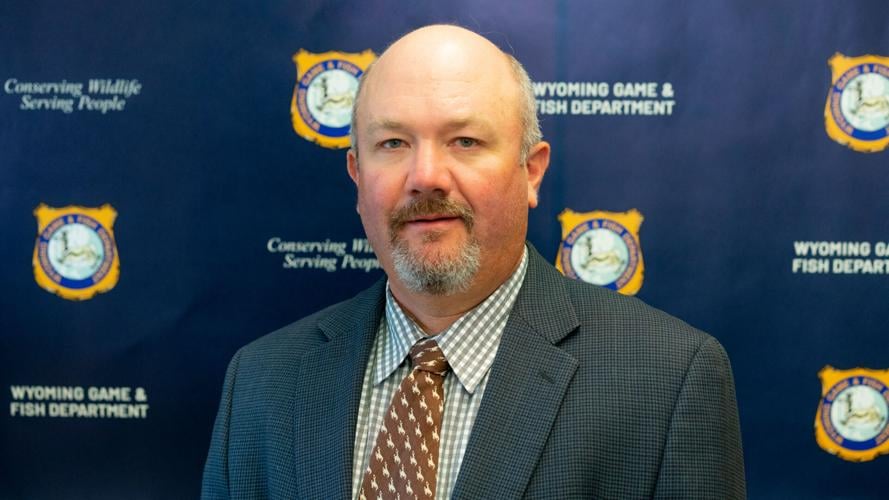
That revelation came Tuesday from Game and Fish Director Brian Nesvik as he answered questions from fellow members of the Treatment of Predatory Animals working group, which was formed in response to the incident. Prior to Nesvik’s comments Tuesday, there was little, if any, public awareness that Game and Fish could have brought steeper punishment. The agency, instead, suggested in its public statements that it had employed all the tools legally at its disposal.
French voters in far-right bastion hope for change
1:42
French Leaders Cast Votes in First Round of Elections
2:12
Kevin Yu’s tee shot to 8 feet yields birdie at Rocket Mortgage
0:33
Hurricane Beryl strengthens to Category 3 storm
1:15
Greek firefighters battle to tame new wildfire
0:37
Zach Johnson sticks wedge tight to set up birdie at Rocket Mortgage
0:38
Nate Lashley gets up-and-down for birdie at Rocket Mortgage
0:39
Zach Johnson holes out from 82 yards for birdie at Rocket Mortgage
0:22
Zach Johnson makes birdie at Rocket Mortgage
0:26
Ben Griffin uses nice approach to yield birdie at Rocket Mortgage
0:25
arrow_back_ios_new
arrow_forward_ios
Roberts is alleged to have run down a yearling female wolf with a snowmobile, attached a muzzle and shock collar to the injured animal and paraded it in a Daniel bar, where it was filmed and photographed, before killing it.
Amid the global fury that exploded in the wake of the event, critics complained Wyoming’s punishment was inadequate given the cruel nature of the behavior.
In Wyoming, it is legal to take wolves, by nearly any means, without a license in predator zones. In addition, there’s a dispute over whether the state’s animal cruelty laws apply to predators like wolves — Game and Fish has taken the position that they do not. Meanwhile, the practice of running down predators using snowmobiles and other motorized vehicles is legal. Those factors, wildlife officials have said, limited their options in the Roberts case.
When asked to explain the judiciary process of a wildlife violation during the working group meeting in Lander, Nesvik, who joined remotely via Zoom, said wardens have several options.
The most common is to issue a forfeitable citation, which means the person can either pay it or plead not guilty and dispute the matter in court. That is what happened with Roberts, who paid.
But for a repeat offense or for a crime the warden believes is “more serious,” he or she has the ability to require a suspect go before a judge and face criminal prosecution, according to Nesvik. “In those cases … oftentimes the warden will make the decision to arrest the person, take them to jail and make them go to court, and they can post the bond and then go to court later.”
Wardens can also work with local law enforcement to press county-level charges, Nesvik said.
Wyoming Stockgrowers Association Executive Vice President Jim Magagna, a working group member, asked a pointed question about the Daniel wolf case: “Did the warden have the option under the current law that he could have required that individual to appear in court?”
“Yes,” Nesvik answered, “the warden in this case could have done that and decided not to.”
The decision to issue a forfeitable citation “was a collective decision made by the wardens and their respective supervisor,” Game and Fish Public Information Officer Breanna Ball told WyoFile in an email Wednesday. “At question in this case was the illegal possession of live wildlife, not animal cruelty or the illegal take of a wolf.”
Roberts was cited under Wyoming statute 23-3-402. He paid the $250 ticket five days later, according to Sublette County Circuit Court records.
Transparency and public outrage
WyoFile did not locate any instances of Game and Fish previously asserting that the $250 fine was the maximum penalty at its disposal. The agency repeatedly cited the role of state law, which is beyond its control, in determining the penalty.
On March 26, in response to an emailed question from KHOL reporter Emily Cohen, who first reported the incident, “What was the citation amount?” Ball replied, “A violation of the Chapter 10 regulation carries a $250 fine and misdemeanor charges.” An April 4 department press release stated that “Misdemeanor fines are set in state statute.”
In an official Game and Fish Commission statement on April 16, the agency’s governor-appointed board stated: “We’re satisfied that every tool we have available was used, and used to the best of our ability. The Department has acted with transparency and in compliance with Wyoming law.”
Later in Tuesday’s meeting, Magagna asked if in the Daniel incident, the warden had the discretion to require Roberts to appear in court, which would have made him subject to higher penalties.
Game and Fish Chief Warden Rick King answered as Nesvik had to leave the meeting early.
“In regards to the penalty, like Director Nesvik explained, game wardens have the discretion to either make a citation forfeitable or ‘must-appear,’” King said. “If they write the citation to be a must-appear citation, that means the defendant has to appear in court, and if they’re found guilty, then the judge can use his discretion in setting a penalty, both a fine and potential jail term. And then the judge has the latitude that’s in the penalty statute to go up to $1,000 and up to six months in jail for a low misdemeanor.”
Ball confirmed the leeway allowed to wardens. “Game and Fish law enforcement officers are given the discretion to consider the facts and circumstances before them and make a decision,” she wrote.
Reporting indicates that Nesvik and King’s Tuesday testimony were the first admissions in a public forum that the agency could have pursued more severe punishment.
Pushes for reform
When the wolf incident was publicized about a month after it occurred, it spread like wildfire and provoked fierce and widespread condemnation and a boycott of Wyoming. The state temporarily halted tourism promotion as a result.
The outrage that Wyoming laws did not penalize Roberts further contributed to the creation of the working group. The Legislature’s Travel, Recreation, Wildlife and Cultural Resources Committee created the group in May to examine current state penalties regarding predators.
During Tuesday’s meeting, Wyoming Department of Agriculture Director Doug Miyamoto, a member of the working group, said that from his perspective, “this event alone probably did change the viewpoint of game wardens and how they might handle a citation from this point and going forward. It certainly would for any of our inspectors.
“Just generally speaking, I think, job done on that front,” Miyamoto said.
The group on Tuesday agreed to draft bill language that would make it illegal to allow taken animals — regardless of whether they are predators — to suffer or live unduly before dispatching them. It did not take action on the practice of running down predators with snowmobiles, however.