World likely to blast beyond grim warming milestone in the next 5 years, UN weather agency says
Reply

By Jessica Landes | May 29, 2024
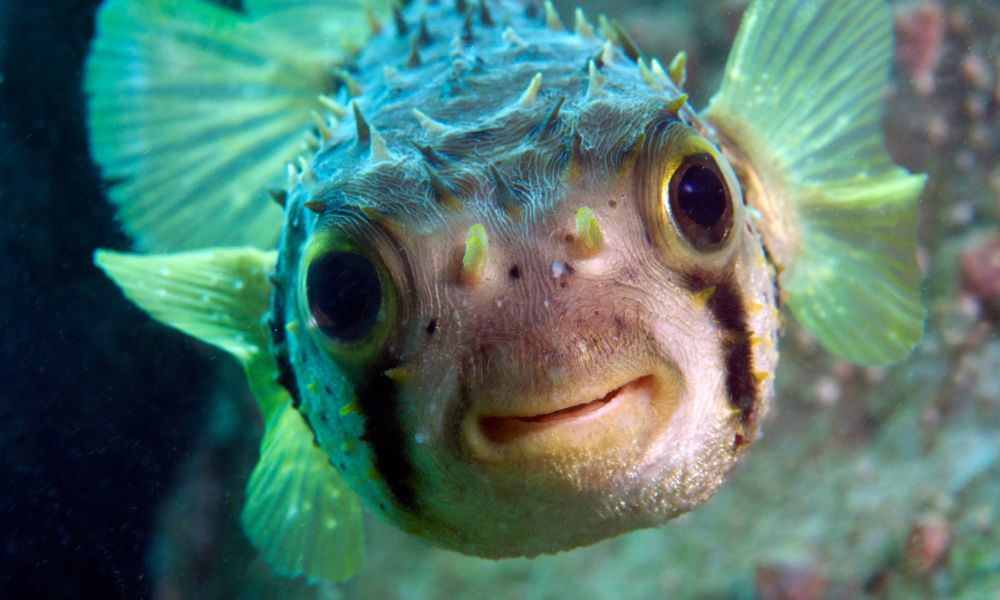
Representative Image (The Ocean Agency/Adobe Stock)
In a historic moment for animal advocacy, nearly 40 researchers publicly asserted that animal sentience deserves to be recognized — by signing “The New York Declaration on Animal Consciousness.”
Sentience is typically understood as the ability to experience a spectrum of emotions including joy, suffering, and fear. Research in the last five years has demonstrated that many species — including fish, insects, and crustaceans — have inner lives or sentience.
The evidence is overwhelming: Fish species form intricate social structures and display social behaviors. Bees are able to work through memories while sleeping. Octopuses have the capacity to figure out how to solve a problem by using memory and prediction skills. All of these species deserve protection.
“When there is a realistic possibility of conscious experience in an animal, it is irresponsible to ignore that possibility in decisions affecting that animal,” the declaration states. “We should consider welfare risks and use the evidence to inform our responses to these risks.”
Jonathan Birch, a professor of philosophy at the London School of Economics and a principal investigator on the Foundations of Animal Sentience project is one of the declaration’s signatories who weighed in on the matter.
“This has been a very exciting 10 years for the study of animal minds,” Jonathan Birch said. “People are daring to go there in a way they didn’t before and to entertain the possibility that animals like bees and octopuses and cuttlefish might have some form of conscious experience.”
Other signees include Peter Singer and Jonathan Balcombe — researchers whose work has contributed to the animal rights movement by arguing that animals feel and should not suffer unnecessarily. Balcombe’s work has demonstrated that fish feel pain — as well as a myriad of other emotions.
The acknowledgment of animal sentience, from mammals to insects, could help transform the way wild, domesticated, and farmed animals are treated worldwide.
Recognition of octopus sentience has helped lead to legislation protecting the clever animals from being farmed in the U.S. — such as a ban on octopus farming in the state of Washington which Lady Freethinker advocated for on the basis of octopus sentience. Lady Freethinker will continue to call on lawmakers to make change for animals around the world.
Lady Freethinker applauds every scientist who signed The Declaration on Animal Consciousness for advocating for compassion for all species.
House Republicans are working to make America’s factory farms even crueler.
by Marina BolotnikovaJun 4, 2024, 3:30 AM PDT

Pigs in a gestation crate facility in Canada. In 2018, California banned the sale of pork raised using these crates, which are not much larger than an adult pig and don’t provide enough space for them to turn around.Jo-Anne McArthur/We Animals Media

Marina Bolotnikova is a deputy editor for Vox’s Future Perfect section. Before joining Vox, she reported on factory farming for national outlets including the Guardian, the Intercept, and elsewhere.
Every five years, farm state politicians in Congress perform their fealty to Big Ag in a peculiar ritual called the Farm Bill: a massive, must-pass package of legislation that dictates food and farming policy in the US.
At the urging of the pork industry, congressional Republicans want to use this year’s bill to undo what little progress the US has made in improving conditions for animals raised on factory farms. The House Agriculture Committee late last month advanced a GOP-led Farm Bill with a rider designed to nullify California’s Proposition 12 — a landmark ballot measure, passed by an overwhelming majority in that state in 2018, banning extreme farm animal confinement — and prevent other states from enacting similar laws.
Inside the Republican effort to force millions of farm animals back into cages
California has the country’s strongest animal welfare law. Now it just needs to be enforced.
The Supreme Court rediscovers humility — in a case about pigs
Prop 12, along with a comparable law in Massachusetts passed by ballot measure in 2016, outlaws the sale of pork produced using gestation crates — devices that represent perhaps the pinnacle of factory farm torture. While many of the tools of factory farming are the product of biotech innovation, gestation crates are deceptively low-tech: They’re simply small cages that immobilize mother pigs, known as sows, who serve as the pork industry’s reproductive machines.
Sows spend their lives enduring multiple cycles of artificial insemination and pregnancy while caged in spaces barely larger than their bodies. It is the equivalent to living your entire, short life pregnant and trapped inside a coffin.

Pigs inside a gestation crate facility.Jo-Anne McArthur/We Animals Media
Ian Duncan, an emeritus chair in animal welfare at the University of Guelph in Canada, has called gestation crates “one of the cruelest forms of confinement devised by humankind.” And yet they’re standard practice in the pork industry.
While Prop 12 has been celebrated as one of the strongest farm animal protection laws in the world, its provisions still fall far short of giving pigs a humane life. It merely requires providing enough space for the sows to be able to turn around and stretch their legs. It still allows the use of farrowing crates, cages similar to gestation crates that confine sows and their nursing piglets for a few weeks after birth. And about 40 percent of pork sold in California is exempt; Prop 12 covers only whole, uncooked cuts, like bacon or ribs, but not ground pork or pre-cooked pork in products like frozen pizzas.

A sow and her piglets in a standard farrowing crate.Jo-Anne McArthur/Essere Animali/We Animals Media
The pork lobby refuses to accept even those modest measures and has sought to link Prop 12 to the agenda of “animal rights extremists.” It has also claimed that the law would put small farms out of business and lead to consolidation, even though it is the extreme confinement model favored by mega factory farms that has driven the skyrocketing level of consolidation seen in the pork industry over the last few decades.
For nearly six years, instead of taking steps to comply with Prop 12, pork lobbyists sued to get the law struck down. They lost at every turn. Last year, the US Supreme Court rejected the industry’s argument that it had a constitutional right to sell meat raised “in ways that are intolerable to the average consumer,” as legal scholars Justin Marceau and Doug Kysar put it.
The Supreme Court loss appeared to be the end of the road. Now, though, pork lobbyists are counting on Congress to pass the “solution” to Prop 12 that it couldn’t win in the courts.
For animal advocates, the protracted battle to defend Prop 12 has consumed years of attention and resources that could otherwise have been spent moving on to new issues. It’s shown how hard it is to make even marginal progress for animals in a system where they are commodities that exist to make money and where policy leaders prioritize the unencumbered flow of meat production over minimal standards of decency.
Several other states have gestation crate bans, but the California and Massachusetts laws are unique because they outlaw not just the use of crates within those states’ borders, but also the sale of pork produced using gestation crates anywhere in the world. Both states import almost all of their pork from bigger pork-producing states (the top three are Iowa, Minnesota, and North Carolina), so the industry has argued that Prop 12 and Massachusetts’ Question 3 unfairly burden producers outside their borders. California in particular makes up about 13 percent of US pork consumption, threatening to upend the industry’s preferred way of doing business for a big chunk of the market.
The California and Massachusetts laws also ban the sale of eggs and veal from animals raised in extreme cage confinement. Both industries opposed Prop 12 before it passed but have largely complied with the law; neither has put up the fierce legal fight that the pork industry has, led by Big Meat lobbying groups like the National Pork Producers Council, the North American Meat Institute, and the American Farm Bureau Federation.
House Agriculture Committee chair Glenn Thompson (R-PA), who introduced this year’s House Farm Bill last month, touts “addressing Proposition 12” as a core priority. The legislation includes a narrowed version of the EATS Act (short for Ending Agricultural Trade Suppression), a bill introduced by Republicans in both chambers last year to ban states from setting their own standards for the production of any agricultural products, animal or vegetable, imported from other states.
The Farm Bill language has been tightened to focus solely on livestock, banning states from setting standards for how animal products imported from other states are raised. It is less extreme only in comparison to the sweeping EATS Act, but also more transparent about its aim to shield the meat industry from accountability. At the Farm Bill markup on May 23, when the legislation passed committee, Thompson urged his colleagues to protect the livestock industry from “inside-the-beltway animal welfare activists.”
The provisions slipped into the Farm Bill may have consequences that reach far beyond the humane treatment of animals. They “could hamstring the ability of states to regulate not just animal welfare but also the sale of meat and dairy products produced from animals exposed to disease, with the use of certain harmful animal drugs, or through novel biotechnologies like cloning, as well as adjacent production standards involving labor, environmental, or cleanliness conditions,” Kelley McGill, a legislative policy fellow at Harvard’s Animal Law & Policy Program who authored an influential report last year on the potential impacts of the EATS Act, told me in an email.
House Republicans have been trying to use the Farm Bill to overturn public preferences on animal welfare for more than a decade, as Vox’s Kenny Torrella reported last year, ever since the far-right former Rep. Steve King of Iowa introduced the precursor to the EATS Act in 2013. What may seem more surprising, at first blush, is that the factory farm industry’s campaign to force animals back into immobilizing cages has drawn support from a broader swath of authorities, including the Biden administration.
In 2022, to the dismay of animal advocates, the Department of Justice filed an amicus brief to the Supreme Court backing the pork industry’s case against Prop 12. Earlier this year, US Agriculture Secretary Tom Vilsack declared that Prop 12 would cause “chaos” in the pork market if Congress doesn’t intervene. Both moves reveal the gulf between ordinary people’s intuitions about how animals ought to be treated and the priorities of policy leaders who defer to the meat industry about how things should be done. It’s a particularly cruel consequence of the agricultural exceptionalism that prevails in the US: the doctrine that places agriculture outside the bounds of democratic deliberation.
The American Veterinary Medical Association (AVMA), meanwhile, the leading organization representing US veterinarians that is highly influential in animal welfare policy, has voiced “strong support” for the portion of the Farm Bill that would invalidate Prop 12, a move that reflects a central contradiction within the veterinary profession. While the public may expect the AVMA to represent the interests of animals, it plays a key role in the factory farm system and, as I’ve reported previously, has faced criticism for what some vets have called its corporate capture by the meat industry. The organization had not previously taken a position on gestation crate bans, but it has a close relationship with the American Association of Swine Veterinarians, a pork industry vet group that has long opposed Prop 12. That the AVMA is weighing in now suggests how urgently the pork industry is working to shore up support for overturning the law.
Despite the monumental effort from the pork lobby and its allies, the odds of this year’s Farm Bill nullifying Prop 12 appear slim. Democrats, who control the Senate, oppose the House bill’s proposed cuts to the Supplemental Nutrition Assistance Program (SNAP), which makes up about 80 percent of the bill’s $1.5 trillion in spending, and its removal of so-called climate-smart conditions from farm subsidies made available by the Inflation Reduction Act. Members of the House Freedom Caucus, on the other hand, are likely to demand steeper cuts to SNAP, formerly known as food stamps.
The broader EATS Act has been opposed by more than 200 members of Congress, including more than 100 Democratic representatives and several members of the Freedom Caucus; Prop 12 nullification language is not included in the rival Senate Farm Bill framework introduced by Sen. Debbie Stabenow (D-MI). Many lawmakers and other observers consider the House bill dead on arrival, which would mean that a Farm Bill may not get passed until 2025.
Prop 12’s pork regulations, meanwhile, took full effect in California at the start of this year after two years of delay due to the industry’s legal challenges. After implementation, prices for pork products covered by the law abruptly increased by about 20 percent on average, a spike that UC Davis agricultural economist Richard Sexton attributes to the pork producers’ reluctance to convert their farms to gestation crate-free before they knew whether Prop 12 would be upheld by the Supreme Court.
But after the Court’s ruling in May of last year, “the industry sprung into action,” Sexton told me in an email. “We believe the volatility in pork prices around the implementation of Prop 12 is due to a short-term disequilibrium as the industry adjusts to the new law.” Sexton and fellow ag economist Daniel Sumner, in research funded by the National Pork Board, have projected that over time Prop 12 would increase prices for covered pork by a more moderate 7.2 percent, while prices outside California would slightly decrease.
“The nation’s largest pork producers are largely adapting to the new rules,” John McCracken and Ben Felder reported in March in Investigate Midwest, even as anti-Prop 12 lobby groups keep up the fight. Some producers welcome the opportunity to charge a price premium for selling compliant pork and oppose overturning Prop 12.
Chris Green, executive director of the Animal Legal Defense Fund, told me he’s optimistic that the struggle over Prop 12 is already won, despite the last-ditch maneuver in the Farm Bill. “This is just the last death throes of trying to maintain this unmaintainable situation, where they have no regulation on the way that they raise their animals,” he said.
Uganda, 1958. Photo by George Rodger/Magnum
is clinical associate professor of environmental studies, affiliated professor of bioethics, medical ethics, philosophy and law, and director of the animal studies MA programme at New York University. He is also on the executive committee at the NYU Center for Environmental and Animal Protection and the advisory board for the Animals in Context series at NYU Press. He is co-author of Chimpanzee Rights (2018) and Food, Animals, and the Environment (2018), and the author of Saving Animals, Saving Ourselves (2022).
Edited byPam Weintraub
3,100 words

Listen here 20:49
Brought to you by Curio, an Aeon partner
Listen to more Aeon Essays here
Save
Post
Share
This January, a 57-year-old man in Baltimore received a heart transplant from a pig. Xenotransplantation involves using nonhuman animals as sources of organs for humans. While the idea of using nonhuman animals for this purpose might seem troubling, many humans think that the sacrifice is worth it, provided that we can improve the technology (the man died two months later). As the bioethicists Arthur Caplan and Brendan Parent put it last year: ‘Animal welfare certainly counts, but human lives carry more ethical weight.’
Of course, xenotransplantation is not the only practice through which humans impose burdens on other animals to derive benefits for ourselves. We kill more than 100 billion captive animals per year for food, clothing, research and other purposes, and we likely kill more than 1 trillion wild animals per year for similar purposes. We might not bother to defend these practices frequently. But when we do, we offer the same defence: Human lives carry more ethical weight.
But is this true?
Most humans take this idea of human exceptionalism for granted. And it makes sense that we do, since we benefit from the notion that we matter more than other animals. But this statement is still worth critically assessing. Can we really justify the idea that some lives carry more ethical weight than others in general, and that human lives carry more ethical weight than nonhuman lives in particular? And even if so, does it follow that we should prioritise ourselves as much as we currently do?
Join over 250,000+ newsletter subscribers
Our content is 100 per cent free and you can unsubscribe anytime.
Daily: A daily dose of essays, guides and videos from Aeon+Psyche
Weekly: A week’s worth of big ideas from AeonSubscribe for free
I’m already subscribedPrivacy policy
Ethicists sometimes offer capacities-based arguments for ranking species according to a hierarchy. For example, in How to Count Animals, More or Less (2019) Shelly Kagan argues that we should assign human interests extra ethical weight because we have a higher capacity for agency and welfare than other animals. I have cognitive capacities that a pig lacks, so I have interests that they lack. I also have the capacity to experience happiness and suffering more intensely than a pig does, so I have stronger interests related to my welfare than they do.
Ethicists also offer relationship-based arguments for species hierarchies. For example, in ‘Defending Animal Research’ (2001), Baruch Brody argues that we should assign human interests extra ethical weight because we have special bonds and a sense of solidarity with members of our own species. According to this view, we should ‘discount’ the interests of nonhuman animals for the same reason that we should ‘discount’ the interests of future generations: we have special duties within these categories that we lack across them.
In response to these and other such arguments, some ethicists contend that we should reject species hierarchies entirely. For example, in Fellow Creatures (2018) Christine Korsgaard argues that it generally makes no sense to ask whether a human or a pig has a better life, because each species of animal has a different form of life, and we can evaluate each life only against the standards set by that form of life. Comparing humans and pigs is, literally, like comparing apples and oranges.
If anything, we increasingly have grounds for prioritising nonhuman animals
While I think that this rejection of species hierarchies is worthy of consideration, I want to defend a separate idea: even if we accepted a species hierarchy on capacities-based and relationship-based grounds, it would still not follow that our current stance of human exceptionalism is acceptable. We would need to think carefully about how much ethical weight different animals carry rather than simply assert that we take priority. And when we do, we might be surprised by what we find.
In particular, if we take our own arguments for human exceptionalism seriously, then the upshot is not that we always take priority but rather that we sometimes do. And when we consider the scale of nonhuman suffering and death in the world and the extent of our complicity in this suffering and death, we can see that human exceptionalism has it backwards: if anything, we increasingly have capacities-based and relationship-based grounds for prioritising nonhuman animals.
To be clear, my goal here is not to argue against a strong form of human exceptionalism, according to which humans necessarily matter more than nonhumans. If you think that any human interest, no matter how minor, takes priority over any nonhuman interest, no matter how major – that, for instance, scratching a single human itch takes priority over preventing 100,000 elephant deaths – then there are good arguments against your view, but they will not be my focus here.
My goal is instead to argue against a moderate form of human exceptionalism, according to which humans contingently matter more than nonhumans. If you are among the many who think that we take priority over other animals because of our ‘higher’ capacities and ‘stronger’ relationships, this is wishful thinking. There are too many nonhumans, and our lives are too intertwined with theirs, for that to be plausible. This ‘moderate’ view is not as ethical as you think.
Let’s examine these arguments for human exceptionalism one by one, starting with the capacities-based arguments.
Yes, I have a higher capacity for agency (that is, self-determination) than nonhuman animals. I can step back from my beliefs, desires and actions, and ask whether I have reason to endorse them. As a result, I can use evidence and reason to set and pursue long-term goals. In contrast, a worm is only able to do what seems natural from moment to moment, without ever stopping to assess these choices.
Why does this difference matter? Plausibly, agents have a wider range of interests than non-agents do, all else being equal. It would be bad for you to keep me in confinement, since I need to be able to set and pursue my own goals to live well. In contrast, it might not be bad for you to keep a worm in confinement (with proper care), since all they need is, say, air, moisture, darkness, warmth, food and other worms to live well.
I also have a higher capacity for welfare (that is, happiness, suffering and other such states) than many nonhuman animals. Since I have a more complex brain than a worm does, I can experience more happiness and suffering at any given time. And since I have a longer lifespan than a worm does, I can also experience more happiness and suffering over time – provided, of course, that I live a reasonably full life.
Why does this difference matter? Plausibly, beings with a higher capacity for welfare have more at stake than beings with a lower capacity for welfare, all else being equal. Even if it would be bad for you to keep a worm in confinement, it would be still worse for you to keep me in confinement. Each day of confinement would harm me more, and I would also have more days of confinement overall.
My own view is that these capacities-based arguments are reasonable, as far as they go. Setting priorities requires considering how much everyone has at stake in any given situation, and our capacities are part of what determines how much we have at stake. But these arguments fall far short of establishing even a moderate form of human exceptionalism. Human and nonhuman capacities overlap substantially, and setting priorities requires considering other factors, too.
African elephants have about three times as many neurons as humans, and they have comparable lifespans
First, we might not always have a higher capacity for agency than other animals. We all lack the capacity for rational reflection early in life, some of us lose this capacity later in life, and some of us never develop this capacity at all. Meanwhile, many nonhuman animals have the capacity for memory, emotion, self-awareness, social awareness, communication, instrumental reasoning and more. Human and nonhuman agency thus overlap substantially in practice.
Moreover, even when we do have a higher capacity for agency than other animals, this difference might be smaller than we think. Our views about agency are anthropocentric, in that we treat human agency as the standard against which all forms of agency should be compared. But while human agency is certainly impressive, nonhuman agency is impressive too. And if we studied nonhuman agency on its own terms, we might discover forms of self-determination that humans lack.
Likewise, we might not always have a higher capacity for welfare than other animals. If our welfare capacity is a simple function of our brain complexity and lifespan, then some nonhumans might have a higher welfare capacity than humans do. For example, African elephants have about three times as many neurons as humans, and they have comparable lifespans. So, based on this way of making comparisons, these animals have a higher welfare capacity than us.
Moreover, even when we do have a higher capacity for welfare than other animals, this difference might once again be smaller than we think. For all we know, our capacity for welfare might not be a simple function of our brain complexity and lifespan. We are still early in the study of animal minds. And while it might be that, say, twice as many neurons equals twice as much welfare capacity, it might also be that the difference in welfare capacity is larger or smaller than that.
In short, the capacities-based arguments fail to vindicate even moderate forms of human exceptionalism. If we think that humans can have strong interests even when we lack the capacity for rational reflection (as, of course, we should), then we should think that nonhumans can too. And if we give humans the benefit of the doubt in cases of uncertainty about how much happiness and suffering we can experience (as, again, we should), then we should do the same for nonhumans.
Other factors are relevant to how we set priorities, too.
For instance, even if a human has more at stake than a nonhuman in general, they might not have more at stake in particular cases. Suppose you can either save a human from a minor injury or save a pig from a major injury. In this case, it might be that you should save the pig.
Similarly, even if a human has more at stake than one nonhuman, they might not have more at stake than many nonhumans. Suppose you can either save a human from a minor injury or save 1,000 pigs from minor injuries. In this case too, it might be that you should save the pigs.
Finally, morality is about more than benefits and harms, at least in practice. We would never permit doctors to breed humans for their flesh or organs, since the rights of the ‘donors’ would trump the benefits for the recipients. Why not think that the same can be true for nonhumans?
This all raises serious doubts about human exceptionalism. We regularly impose major burdens on nonhumans in exchange for minor benefits for humans. The ‘harm’ to humans of eating plants instead of animals is nothing compared to the harm to an animal of being factory farmed.
We also regularly impose burdens on very many nonhumans for each human who benefits. We probably kill at least a trillion farmed and wild animals, not including insects, for food each year. This is more than the total number of humans who have ever existed – killed every year.
And we regularly use nonhumans in ways that we would never permit ourselves to use humans. This is not simply a matter of us saving ourselves instead of saving them (though we do that too): this is a matter of us exploiting and exterminating them on a global scale.
The upshot is clear. Even if we think that beings with a higher capacity for agency and welfare take priority over beings with a lower capacity for agency and welfare, all else being equal, we should still be sceptical that this difference justifies anything like our current behaviour.
But what about relationship-based arguments for human exceptionalism, which focus on how we relate to humans and other animals?
Many people believe that, at least in practice, we have both a right and a duty to prioritise ourselves and our communities. I should take care of myself before I take care of you, and I should also take care of my family before I take care of yours. And if we can exhibit this kind of partiality in the context of smaller groups such as families, perhaps we can do the same in the context of larger groups such as species.
In fact, some ethicists believe that the analogy holds not only for species but also for other large groups, like generations. They argue that we can ‘discount’ the interests of nonhuman animals and future generations, in part because we have closer relationships within these categories than beyond them, and in part because full impartiality for all sentient beings from now until the end of time would be too demanding.
This kind of argument is partly about our personal interests. If we allow morality to be too impartial, then our personal interests would carry very little relative weight. But they should carry at least a moderate amount of relative weight, both because we have a right to take care of ourselves and because we need to do that to take care of others. So, we should allow morality to be somewhat partial to create space for self-care.
This kind of argument is also partly about our relationships. We have special duties in the context of special relationships. I should take care of my family before I take care of yours because I have special bonds within my family. And the same can be true for larger groups like species and generations. So, we should allow morality to be somewhat partial to create space for our relational duties, too.
But even if we accept that these claims are true and that they extend to groups such as species and generations, we should still reject our current stance of human exceptionalism. There are many more individuals across species and generations than within a single one. And our lives are increasingly linked across species and generations in ways that have important implications for our interests and our relationships.
Suppose that I do, in fact, have a duty to take care of my family before I take care of yours, all else being equal. Does it follow that I can treat your family however I like? Of course not. It would be wrong for me to take food from your family to provide food for mine, particularly if my family already has much more food than yours does. It would also be wrong for me to kill your family so that I can provide my family with human flesh to eat instead of, say, rice and beans.
Deforestation, factory farming and the wildlife trade are hurting us right now
These points apply across species and generations, too. Humans are taking resources away from nonhuman animals and future generations, even though we already have much more than they do in many ways. We are also killing hundreds of billions of nonhuman animals for food each year in ways that impose health and environmental threats on future generations too – even when we have access to humane, healthful, sustainable plant-based alternatives.
Furthermore, many policies that would benefit nonhuman animals and future generations would benefit us, too. As the WHO’s One Health framework reminds us, human, nonhuman and environmental health are linked. We need to phase down industries such as deforestation, factory farming and the wildlife trade, not only for nonhuman animals and future generations but also for ourselves: waste, pollution, infectious diseases and other hazards from these activities are hurting us right now.
We should keep in mind that we have relational duties across species and generations, too. Many of us care about members of other species and generations: I dare anyone to try to matter to me more than my dog Smoky, and many parents feel the same way about their children, grandchildren and so on. And when our practices harm nonhuman animals and future generations, we have a relational duty to reduce and repair these harms whether we care about these individuals or not.
In short, relationship-based arguments fail to vindicate current forms of human and generational exceptionalism. Even if we have a right or duty to take care of ourselves and other current humans, we still need to treat nonhuman animals and future generations much better to accomplish that goal. We also need to treat them much better for their own sakes, especially when our activity is harming them. Our relational duties extend much farther than we might have thought.
When we weave these threads about capacities and relationships together, we reach a surprising conclusion: we should not only prioritise ourselves less but should perhaps not prioritise ourselves at all in some cases. After all, even if we discount the interests of nonhuman animals and future generations, these populations are still so large, and our practices are still impacting them so much, that their interests might still carry more ethical weight than ours do in the aggregate.
And when we weave the biological and generational arguments together, we reach an even more surprising conclusion: we should prioritise not only current nonhumans and future humans but also, and especially, future nonhumans. For instance, when we assess the impacts of the climate crisis, we should assign a lot of ethical weight to the impacts on other species. Which populations will expand and contract, and what will follow for the welfare of individual animals?
Granted, there might be a limit to how much we can prioritise current and future nonhumans at present, since we currently lack the knowledge, power and political will that we need to help them at scale. So we might need to prioritise ourselves now to be able to prioritise them later.
But even if we accept this pragmatic argument, we should still prioritise nonhuman animals much more than we do now. We are already capable of harming nonhuman animals much less and helping them much more, and in many cases, making these changes would benefit us, too. We should also keep in mind that there is a path dependence to how history unfolds. For better or worse, our successors will inherit the world that we create. So if we want our successors to have more impartial priorities, then we need to work to develop more impartial priorities, too.
The upshot is that we need to rethink our relationship with other animals from the ground up. When setting priorities across species, we have a responsibility to follow the best information and arguments where they lead, rather than assume a self-serving conclusion from the start.
And when we take our thumbs off the scales, we can expect the scales to shift. We should already be treating nonhumans much better and, eventually, we might even need to prioritise their interests and needs over our own. We should start preparing for that possibility now.

