Eveleth man injured, rescued after fall from tree stand
Reply

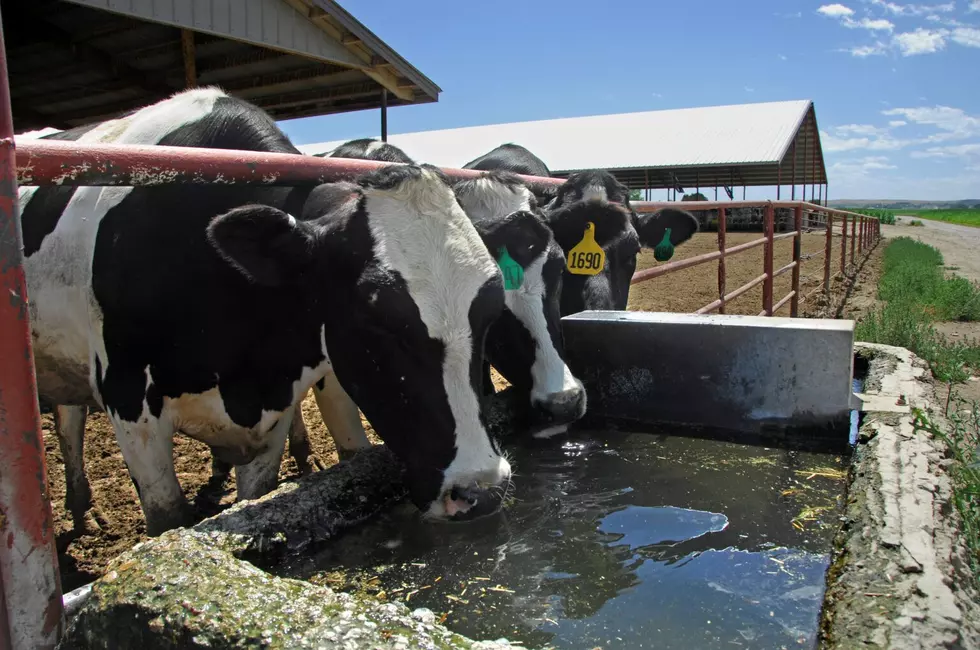
States NewsroomPublished: November 13, 2026(Photo by Kirsten Strough/USDA)
Mia Maldonado
(Oregon Capital Chronicle) U.S. and Oregon agriculture officials have for the first time detected the highly contagious and, for many animals, lethal, avian influenza virus, commonly known as bird flu, in Oregon dairy cattle.
The U.S. Department of Agriculture’s Animal and Plant Health Inspection Service confirmed the case on Tuesday, saying in a news release the discovery was made as part of routine testing done by state agriculture officials. The Oregon Department of Agriculture reported that the virus was detected in a herd in Morrow County.
The most recent nationwide outbreak of the virus began in March 2024 and has since reached herds in 22 states, now including Oregon, and infecting more than 1,200 cattle.
Federal officials said the virus does not pose a risk to pasteurized milk and dairy consumers, and it poses low risk to the general public, though people who work or spend time recreationally with birds or mammals should take precautions outlined by the U.S. Centers for Disease Control and Prevention.
Milk from infected animals is being diverted from commercial milk tanks or destroyed, and dairies are required to test and send only milk from healthy animals into processing for human consumption.
In late October, neighboring Washington became the 20th state where officials discovered cattle with the virus. Cattle in Indiana shortly after were also found to have the virus.
The USDA is working closely with the Oregon Department of Agriculture to further investigate the case, conduct testing and collect data to prevent further disease spread.
by Stephanie Soucheray, University of Minnesota
edited by Swati Mestri, reviewed by Andrew Zinin
Credit: Unsplash/CC0 Public Domain
Earlier this week, the U.S. Department of Agriculture’s Animal and Plant Health Inspection Service (USDA’s APHIS) announced the first detection of H5N1 avian flu in a dairy herd in Oregon.
Since 2024, avian flu has been detected in 22 states. Most recently, Washington’s Yakima Valley has reported increased activity.
“This detection does not pose a risk to consumer health or affect the safety of the commercial milk supply,” the USDA said. “The U.S. Food and Drug Administration is confident that pasteurization is effective at inactivating HPAI [highly pathogenic avian influenza] virus, and that the commercial, pasteurized milk supply is safe.”
According to the USDA, the affected herd was tested as part of Oregon’s ongoing surveillance for HPAI in dairy cattle. “Prior to this detection, the herd has consistently tested negative through routine surveillance conducted under the National Milk Testing Strategy program,” the agency said.
The USDA said the detection does not change the agency’s strategy and emphasized that producers should report any livestock with clinical signs of illness or any unusually sick or dead wildlife to their state veterinarian.
In related news, United Farm Workers (UFW) posted a statement on X late Tuesday sounding the alarm on human cases of H5N1 among Yakima Valley dairy workers. The union said cases are being widely underreported in part because workers are often immigrants and there is an ongoing U.S. Immigration and Customs Enforcement (ICE) surge in Yakima Valley.
“UFW staff are trying to support sick workers, but there are many barriers,” the post read. “Workers with milder symptoms are reluctant to be tested or miss work because sick cattle still need care. Workers are very afraid of ICE-related retaliation if they don’t follow employers’ instructions.”
Earlier this month, a Yakima County resident with an underlying health condition died from H5N1, and two others were reported infected. All three patients had occupational exposure to dairy cows.
The death marked the only U.S. H5N1 death recorded this year and the third recorded since 2024. According to the Centers for Disease Control and Prevention, there have been 74 human cases of H5N1, including three deaths, in the United States since 2024.
The union said many more workers are sick and are being offered only goggles and gloves for handling raw milk.
“The workers report symptoms that range from mild upper respiratory infection with pinkeye to severe flu symptoms with bone pain, severe cough and high fever. We do not have reports that indicate human-to-human transmission, just workplace exposure to infected animals and milk,” the union said.
In the last 30 days, 51 cattle herds have been hit with H5N1. In the past week, H5N1 has been detected in two herds in Idaho as well as the Oregon herd. Washington state has had 43 detections since Oct. 8.
The organisation says dairy workers are not being tested and some have very severe symptoms consistent with bird fluMaeve CullinanGlobal Health Security ReporterShow biography
Many more cattle ranch workers infected with H5N1 than reported, says US farming union
Published 11 November 2026 4:12pm GMTGift this article freeAdd us as preferred source

Far more US farm workers are infected with bird flu than officially reported, with some suffering “very severe” symptoms, according to the country’s largest farming union.
H5N1 is currently spreading rapidly across US cattle farms in dozens of US states.
Officially, just three people have been diagnosed with the virus in the past month, all following close contact with infected cows.
In total, 73 people in the US have been officially been recorded as infected with H5N1 since 2024, mostly dairy farm workers. Three have died.
But United Farm Workers (UFW), which represents thousands of workers across the US, said it was aware of many more farmers experiencing symptoms consistent with H5N1 who had not been tested.
Advertisement
“We have now connected with a number of workers and have confirmed that more workers are sick with avian flu symptoms who have not been tested,” the UFW wrote on X.
Symptoms range from “very mild to very severe”, the post added, including mild upper respiratory infections and conjunctivitis to severe flu-like symptoms, bone pain, persistent coughing and high fever.
The ongoing outbreak is worrying disease experts.
“H5N1 is not a virus to be casual about- or to let spread unchecked, given every mutation is like the virus buying a lottery ticket to acquire human-to-human transmission,” said Dr Devi Sridhar, a public health researcher at the University of Edinburgh.
Referring to the statement by the UFW, Professor Francois Balloux, director of the UCL Genetics Institute, added: “The most puzzling aspect to me is not even the incompetence and paralysis of the authorities but the resignation and fatalism. It feels like reading some chronicle by a mediaeval peasant.”
Advertisement
Of the roughly 1,000 people infected with H5N1 since the virus was first identified in the late 1990s, almost half have died. However, most historical cases have resulted from contact with wild birds, while the strain circulating in cattle, known as genotype B.12, is thought to cause much milder illness.
Concerns have nevertheless grown after an unidentified farm worker in Washington state died in late October from the cattle-derived H5N1 strain, raising questions about whether the virus may have mutated.
The Trump administration has been heavily criticised for allowing bird flu to run rampant through America’s wild and domestic animals, putting people at risk.
Deep cuts to the federal agencies responsible for managing human and animal health, the US Centers for Disease Control (CDC) and the Department of Agriculture (USDA), have resulted in the scaling down of surveillance and testing programmes amongst both livestock and farm workers.
Advertisement
Every infection, animal or human, raises the chance the virus could mutate and eventually gain the ability to spread between people – something which experts have long warned could trigger the next pandemic.
As flu season begins, experts are concerned a dairy worker infected with ordinary seasonal flu could catch H5N1 at the same time, and the two viruses could mix to create a new, more dangerous strain that could spread between people – a phenomenon known as “reassortment.”
“It is clear that workers are not being informed of the risks of handling sick cattle and infected milk. They are being given no information on flu shots or avian flu testing,” the UFW said.
Estimates suggest that over half of the 150,000-strong dairy workforce in the US are immigrant or undocumented workers, driven in part by high demand for intensive year-round labour and a lack of domestic applicants.
Advertisement
Many are reportedly worried about coming forward for testing over fears they will come into contact with US Immigration and Customs Enforcement (ICE), the federal agency emboldened under Trump, which has been tasked with deporting one million immigrants every year.
Yakima Valley, the region of Washington State where the three recent H5N1 cases have been reported and where the virus is spreading through dozens of dairy herds, is in the midst of an ICE crackdown.

The area, which is home to a large community of Hispanic people, saw a nearly three-fold increase in ICE arrests from January to July this year compared to the year before, with 522 people arrested in the seven months.
“Given the current and ongoing ICE surge in the Yakima Valley, many or most of the workers are understandably reluctant to proactively engage with public agencies,” UFW said.
Advertisement
“Protecting dairy workers protects everyone. The front line of this risk, the human firewall, are the workers in the dairies,” the post concluded.
Britain continues to be plagued by an H5N1 outbreak, mostly amongst farmed poultry. From Friday, November 13, all farmed birds in the UK will be subject to a mandatory ‘flockdown ’- where they are kept inside for an indefinite period – to try and prevent the virus spreading between farms.

