Potential avian flu outbreak raises concerns following deaths of multiple geese in Webster
Reply

A polar bear found dead on Alaska’s North Slope is the first of the species known to have been killed by the highly pathogenic avian influenza that is circulating among animal populations around the world.
The polar bear was found dead in October near Utqiagvik, the nation’s northernmost community, the Alaska Department of Environmental Conservation reported.
The discovery of the virus in the animal’s body tissue, a process that required sampling and study by the North Slope Borough Department of Wildlife Management and other agencies, confirmed earlier this month that highly pathogenic avian influenza was the cause of death, said Dr. Bob Gerlach, Alaska’s state veterinarian.
“This is the first polar bear case reported, for anywhere,” Gerlach said. As such, it was reported to the World Organisation for Animal Health and has gotten attention in other Arctic nations that have polar bears, he said.
This was also the first Endangered Species Act-listed animal in Alaska known to fall victim to the disease. Polar bears, dependent on sea ice that is diminishing because of climate change, were listed as threatened in 2008.
While polar bears normally eat seals they hunt from the sea ice, it appears likely that this bear was scavenging on dead birds and ingested the influenza virus that way, Gerlach said. Numerous birds on the North Slope of various species have died from this avian influenza, according to the Department of Environmental Conservation.
However, the bear need not have directly eaten an infected bird to have become sick, Gerlach said.
“If a bird dies of this, especially if it’s kept in a cold environment, the virus can be maintained for a while in the environment,” he said.
The polar bear death is a sign of the unusually persistent and lethal hold that this strain of highly pathogenic avian influenza has on wild animal populations two years after it arrived in North America, officials said.
Top 10 Plays of the Day, 12/29/2023
Top 10 Plays of the Day, 12/29/2023close
Next
Stay


volume_off
-3:22
sd
share
closed_caption
fullscreen
Auto (360p)
225p
360p
Subtitles Off
Subtitles EN

Top 10 Plays of the Day, 12/30/2023
3:25

Top 10 Plays of the Day, 12/29/2023
3:36

Friday’s news in < 10 minutes
9:07

Broncos have benched Russell Wilson, what is his future in Denver? | FOX NFL Kickoff
1:17

Were Lions robbed vs. Skip’s Cowboys? | Undisputed
1:48

‘It smells like we are a horrible road team.’ — Skip breaks down his Cowboys road woes
4:28

Can Tua Tagovailoa steal the MVP lead from Lamar Jackson? | Speak
5:59

Russell Wilson asked to adjust his contract, is he misunderstood? | Speak
1:18

Should teams fear Joe Flacco, Browns heading into the playoffs? | Speak
6:49

‘I love this written-off, no-hope scenario.’ — Skip still believes in his Cowboys reaching SBLVIII
5:17
arrow_back_ios_new
arrow_forward_ios
“What we’re dealing with now is a scenario that we haven’t dealt with in the past. And so there’s no manual,” said Andy Ramey, a U.S. Geological Survey wildlife geneticist and avian influenza expert.
No longer just a poultry problem
Highly pathogenic avian influenza is called that because it spreads rapidly in flocks of domestic poultry, often requiring massive culls to control the contagions. Such outbreaks have been of concern in the past because of their economic consequences for global agriculture. Until recently, wild birds were afterthoughts. Though they were known to carry the viruses, ferrying them between domestic poultry populations, they were largely unaffected.
That has changed dramatically. The prior U.S. outbreak of highly pathogenic avian influenza, in 2014-15, resulted in some wild bird infections, and some influenza-caused bird die-offs occurred in Europe shortly thereafter. But the current version is considered unprecedented in its effect on wild birds and other wildlife.
“Across North America, and really around the world, lots of wild birds these days – I mean, thousands of wild birds these days, tens of thousands in some cases — are dying because of these highly pathogenic avian influenza viruses,” Ramey said.
The deaths are of particular concern when they occur in populations that are already vulnerable, he said. An extreme example he cited is the highly endangered California condors, with a population of just a few hundred. After 21 influenza deaths were documented, federal wildlife officials launched what promises to be a challenging vaccination program in that population.
The disease has also killed a variety of mammals around the world.
In Alaska, three foxes, a black bear and a brown bear have died from this avian influenza. Elsewhere, more bears have been found dead after being infected by the virus, along with skunks, raccoons, mountain lions and large numbers of seals in eastern Canada and off the coasts of Maine and Washington state, as well as outside of North America. The nation’s first detection of the disease in a squirrel was confirmed earlier this month in an animal found in Arizona.
To Gerlach, the polar bear case was not surprising, considering that black and brown bears have died. It is possible that more polar bears succumbed to the disease, but in remote places out of the view of people to record the events, he said.
“You’re really dependent on the public that’s out there, or the wildlife biologists that are doing surveillance,” he said. Documenting cases in any wild mammal population can be difficult, he added: “How long is a carcass going to be in the wild before it gets scavenged or eaten by something else?”
Aside from the large and wide-ranging death toll in the wild, the current outbreak has some other differences, particularly its durability, as seen in its persistence away from domestic flocks.
The virus that caused the 2014-15 outbreak spread in the wild bird populations for a while, but it “sort of fizzled out,” Ramey said, probably because it was eventually stamped out in poultry operations.
But this one continues to be maintained in the wild, as evidenced by monitoring in Western Alaska, a place far from any big farms raising chickens or turkeys, he said.
Gerlach gave the same assessment. “After the second year, that all of sudden disappeared,” he said of the 2014-15 version. “It didn’t stick around, where this virus seems like it’s sticking around.”
Rather than winding down, it is continuing to spread across the world, he noted, even into bird populations in Antarctica, as has been recently documented. There are signs that it is now endemic in the wild, a fixed feature into the foreseeable future, he said. If so, “it’s not going to go away. It’s going to be here, and we have to have some way to deal with it,” he said.
Alaska a disease crossroads
For Alaska, “a mixing area” for global bird migrations, spread of avian diseases is always an issue, Gerlach said. “Alaska is a catchall area for birds from North America or the Americas, as well as from Asia,” he said.
The highly pathogenic avian influenza of 2014 and 2015 was introduced from Asia to North America by wild birds migrating through Alaska. The current influenza is also crossing continents through Alaska, though from multiple directions, Ramey’s research has found.
In a newly published study, Ramey and his research partners found what is likely to have been three separate and independent introductions of highly pathogenic avian influenza into Alaska last year. His research, with colleagues from the USGS and other agencies, used genetic analysis to trace one form of influenza to North America and two to Asia.
“To have three introductions in Western Alaska, two from East Asia and one from the Lower 48, I mean, we haven’t seen anything like that before,” he said. “It really, I think, exemplifies how these viruses now are clearly able to be maintained.”
That study examined birds harvested in the fall of 2022 by hunters in the Izembek National Wildlife Refuge area at the southern tip of the Alaska Peninsula. Ramey and his colleagues found only a tiny number of hunted birds that were infected with the currently active highly pathogenic influenza virus: out of 811 swab samples taken directly from birds and another 199 samples from feces, the only harvested birds identified as infected were eight pintails, one cackling goose and one widgeon.
It can take months to get test results from samples, so what happened to those harvested birds is unknown, he said. But their meat was safe to eat as long as it was properly cooked to the recommended 165 degrees, he said. “Heat is remarkably good at deactivating viruses,” he said. Along with the cooking advice, there are other longstanding recommendations about safely handling hunted birds, such as regular handwashing and avoidance of obviously sick animals.
There is little evidence that the current avian influenza wave poses an infection risk to humans. Only a few cases have been documented in the world, and those were general among people working with poultry.
For Alaskans dependent on wild game, this highly pathogenic influenza poses a different type of risk: possible food-security problems. If large numbers of birds wind up dying, that might mean less food on the table in rural Alaska, Ramey and Gerlach said.
“Obviously, less birds could equate to less availability, and also less resiliency in the population from things like disease, or climate change, or toxins, et cetera, that could in fact, impact these populations of birds,” Ramey said.
Plenty of stressors already exist in wild populations, he said, “so adding another threat to these populations isn’t doing them any favors.”
Now that Colorado has wolves — some of which have a history of killing cattle in Oregon — Wyoming ranchers are banking on Wyoming’s “shoot on sight” policy for whenever those wolves cross over. “They’re classified as predators and they can be removed,” said one rancher.
December 28, 20234 min read
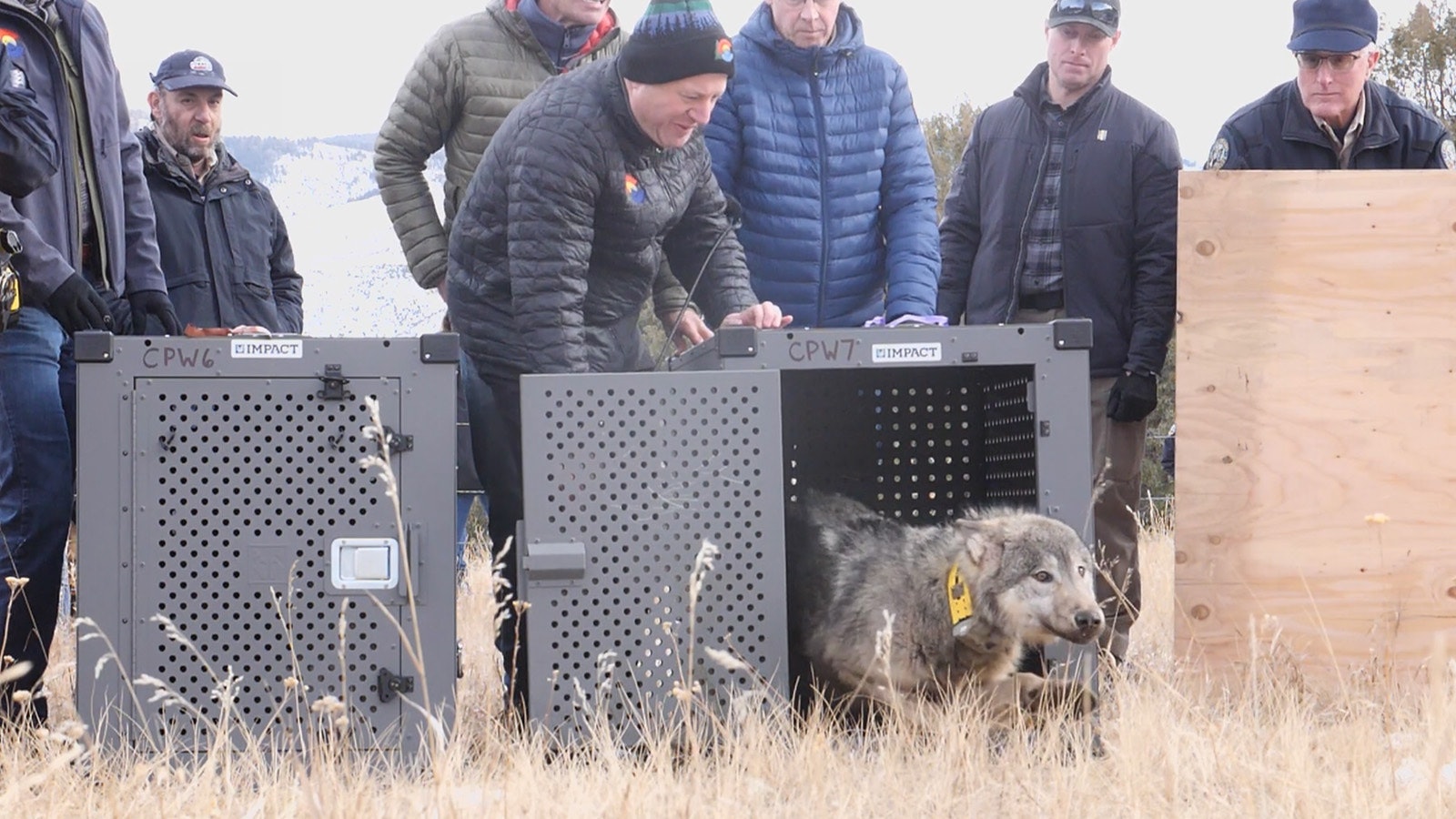
After Colorado released wolves earlier this month, many which have killed livestock in Oregon, some Wyoming ranchers said the Cowboy State’s “shoot on sight” wolf policy can protect ranches here.
“On the positive side, if any of those wolves cross over into Wyoming, they’re no longer protected. They’re classified as predators and they can be removed,” Jim Magagna, a sheep rancher and executive vice president of the Wyoming Stock Growers Association, told Cowboy State Daily.
Meanwhile, Wyoming ranchers can emphasize with the plight of their counterparts in Colorado, even if they can’t do much to change the Centennial State’s wolf policy, said cattle rancher and Wyoming Livestock Roundup publisher Dennis Sun.

“There’s really not a lot that Wyoming ranchers can do, except show support for the Colorado ranchers,” he told Cowboy State Daily.
Colorado’s wolf reintroduction program has drawn criticism after it was revealed that some of the wolves transplanted from Oregon and released in Colorado earlier this month might have been involved in killing livestock in their home state.
Colorado’s wolf reintroduction program was initiated by Proposition 114, which Colorado voters passed in 2020 by the slimmest of margins, 50.91% to 49.09%. The goal was to put wolves on the ground in Colorado by the end of this year.
Colorado at first struggled to find wolves for reintroduction after Wyoming, Montana and Idaho all refused to provide any. This fall, Oregon agreed to give 10 wolves for Colorado’s initial reintroductions.
Those plans were realized Dec. 18 when Colorado Parks and Wildlife released five wolves at an undisclosed location in Grand County, Colorado. The event was by invitation only.
The secrecy of the event was criticized, as well as the fact that some of the wolves that were released had reportedly come from Oregon packs that had killed livestock.

Magagna said that might increase the chances that those wolves will start going after sheep and cattle in Colorado. Even so, he added that any wolves have the potential to kill livestock.
“I’m not convinced that there is any wolf or any pack of wolves that isn’t capable of becoming acclimated to killing livestock,” he said.
Wolves had already migrated from Wyoming into Colorado, forming Colorado’s North Park Pack around 2020. That pack later killed several livestock animals and dogs, Sun noted.
He wondered if Coloradans were starting to have buyer’s remorse over passing Proposition 114.
“It’s kind of a bad deal how it got crammed down everyone’s throat in Colorado. I think if they had to do it over again, they wouldn’t vote to have wolves,” Sun said.
Colorado Wolf Release 12-18-23 from Colorado Parks & Wildlife on Vimeo.
Ranchers who operate on both sides of the Wyoming-Colorado state line will likely get the worst of it, Magagna said. That’s because the two states’ polices are completely different.
In Colorado, wolves will remain protected for the foreseeable future. On the Wyoming side, they’d be in the section of the Cowboy State where they are classified as a predatory species and may be shot on sight at any time without a license or bag limits.
Ranchers straddling the state line will have to ask themselves, “Is that a Wyoming wolf or a Colorado wolf that killed my livestock?’” Magagna said.
Magagna added that many sheep ranchers run their flocks on private property or federal land leases in Colorado for part of the year, and then bring them north into Wyoming for the remaining months.
Rancher and former Wyoming legislator Pat O’Toole has property divided by the state line. He previously expressed similar concerns to Cowboy State Daily. He also said that in light of massive big game winterkill losses last winter, Colorado couldn’t have picked a worse time to bring in more apex predators.
Colorado plans to keep a 60-mile buffer zone between its wolf release sites and the Wyoming state line, as well as its borders with other states and sovereign Native American tribal lands.
Sun said that won’t contain the wolves for long, given the species’ propensity for wandering. It could be just a few years before wolves are pushing up against the Wyoming state line in several areas, he said.
“Despite the availability of food sources, they’re going to travel,” Sun Said. “When wolves kick yearlings out of the group, they travel.”

Some birds are arriving earlier and some are staying longer
Lana Michelinabout 24 hours ago
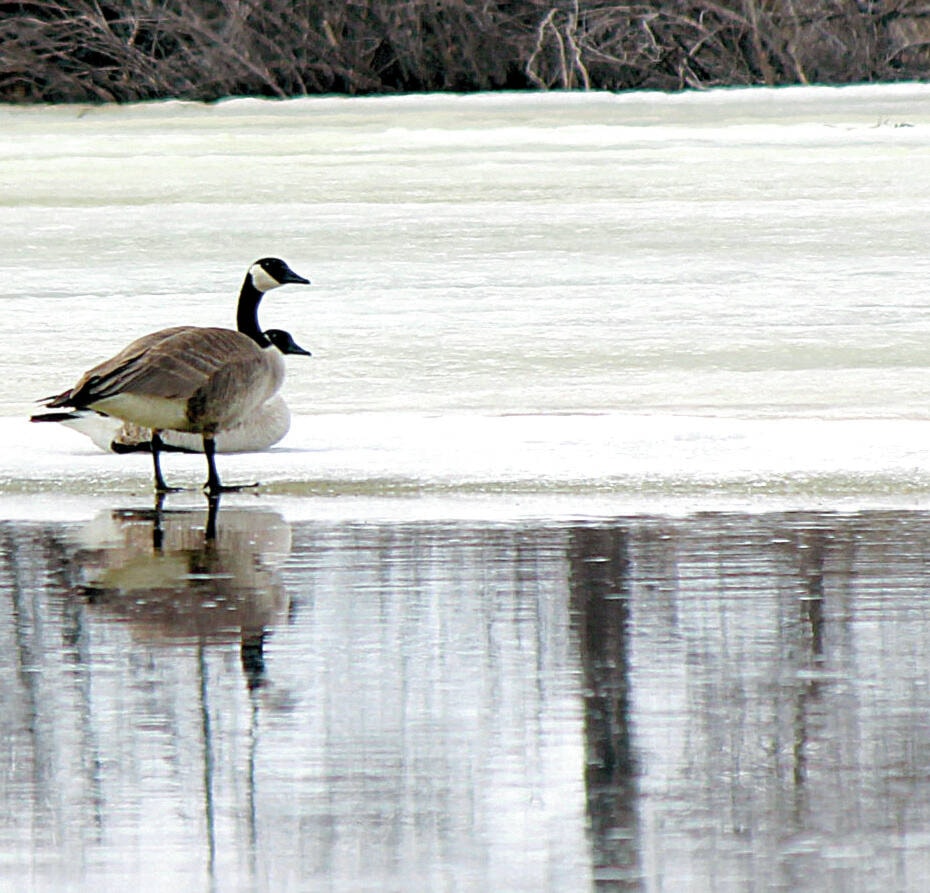
Geese a plenty were found in this year’s Christmas Bird Count.
With warm temperatures and open water available all around central Alberta, some 1,557 Canada geese were counted in the region this month. This falls just short of the record number of geese counted in December of 2017 — some 1,971.
But it’s a huge difference from the zero geese spotted in the -30 C weather during last December’s bird count.
Count organizer Judy Boyd, of the Red Deer River Naturalists, believes the unusually mild conditions so far this winter mean there was no real reason for geese to fly south.
Migration takes a heavy toll on them, she added. “They have to stop to feed, to fatten up, and then keep going. Think of how far some birds have to fly — to the Gulf of Mexico.”
In between, they must navigate many hazards, including hunters and predators, greater exposure to avian flu, and large cities with misleading artificial lights and tall glass buildings.
Boyd said a Toronto group goes around collecting the thousands of carcasses of birds killed flying into skyscrapers. Given these odds, staying put where there’s enough food and water makes sense, she added.
Another oddity in this year’s bird count — which was conducted by about 85 central Alberta volunteers on Dec. 25 — was the early return of some horned larks.
Boyd said they are supposed to arrive in this area in January, but some have come a month early. She isn’t sure whether the mild weather also played into this unusual behavior.
As well, the lack of giant flocks of red polls, bohemian waxwings, and snow buntings were noticed. Usually several hundreds of these birds can be seen flying together in the winter months, said Boyd. But during this year’s bird count, some flocks spotted were as small as 25 to 35 birds. She feels this might just be an incidental observation on that particular day, since she’s seen some larger flocks earlier in the season.
However, ornithologists have recorded changes to some bird populations over the last few decades. Boyd read that many California juncos have stopped migrating out of that State and are instead nesting there, while barn swallows are inexplicably sticking around in Argentina. “Maybe it’s climate change, I don’t know…”’
While no completely out-of-province birds were seen during this month’s bird count, Boyd knows a few were reported earlier this season.
A Harris’s Sparrow was seen in central Alberta, even though it’s supposed to nest in the Northwest Territories and head to the central U.S. for the winter. A killdeer was spotted at Riverbend — although this bird was supposed to now be in the southern U.S. and Gulf area. And an out-of-season American Kestrel was also seen.
But perhaps the strangest report was of a Eurasian eagle owl at someone’s bird feeder. Boyd said she has no clue how this exotic bird could have blown so far off course as it normally travels between Siberia and Ethiopia.
The annual Christmas Bird Count is done to compile one of the world largest sets of wildlife survey data. The results are used to assess population trends and the distribution of birds. Another bird count will be done in May.
Morgan Reddekopp KSTP
Updated: 2 minutes ago
Published: December 29, 2023 – 3:56 PMPlay Video
Update 12/30 at 1:28 p.m.: Officials with the Beltrami County Sheriff’s Office said they are restricting access to Upper Red Lake due to the number of fishermen becoming stranded on and breaking through the ice.
Snowmobiles, all-terrain vehicles, and all motorized vehicles are prohibited from going on the ice. A violation of this order is a misdemeanor, and if convicted, fines, penalties, and restitution may be sought by Beltrami County, according to officials with the sheriff’s office.
More than 100 anglers were rescued after becoming stranded on an ice floe on Upper Red Lake Friday evening, according to the Beltrami County Sheriff’s Office.
A call came in just before 5 p.m. that around 100 people were stranded on an ice chunk with over 30 feet of open water separating them from shore on the southeastern portion of the lake.
Before authorities arrived to the ice rescue, bystanders attempted to evacuate the floe via canoe. Four people fell into the water during this attempt and were brought back to the ice floe to warm up in a fishing shelter, authorities said.
In all, 122 anglers had been evacuated by authorities by 7:37 p.m.
No injuries were reported during this incident and the only people that had fallen into the water were the four who tried to evacuate via canoe.
This is at least the fifth ice rescue on Upper Red Lake this month.
“Our first responders have had a lot of practice this year, and it is quite impressive we evacuated 122 people in less than 3 hours from the first call in a rural area of the county,” said Chris Muller, the emergency management director for the Beltrami County Sheriff’s Office.
The Minnesota Department of Natural Resources is urging people to use caution before venturing out onto the ice as recent widespread rain, wind, and warm temperatures have degraded ice conditions to a dangerous level.
Chris Ellis, of Ellis Towing and Ice Recovery, shared that the company towed an ATV from the lake Thursday after a father and son were stranded.
“Our ice conditions look like March and April ice,” he said. “The water that we had for two days of rain ran through it. It’s sharded and it does not have the integrity and the strength that ice should have coming into the first of January.”
RELATED: Another warning after 3rd ice rescue on Upper Red Lake this week | Plane lands on Upper Red Lake, breaks through ice | Responders rescue dozens of people stranded on ice on Upper Red Lake
Michael Dorgan
Sat, December 30, 2023 at 6:37 AM PST·2 min read
https://news.yahoo.com/chipotle-worker-beaten-furious-customers-143747029.html

An enraged North Carolina man and woman are being sought for viciously attacking a Chipotle worker after learning that their order of extra chicken would cost more, police say.
Jamel Williams, 36, and Kayla Pyle, 34, reportedly placed an order inside a Charlotte, South Carolina, Chipotle on Dec. 10 but when a 20-year-old worker there said that Pyle’s request for extra protein would cost more, a heated argument kicked off, according to local authorities.
The unidentified worker was allegedly so upset with the interaction that she decided to end her shift early from the Indian Land eatery and go home at around 9 p.m., according to the Lancaster County Sheriff’s Office. It is unclear what was said between the arguing parties.
CHIPOTLE CUSTOMERS IN MARYLAND CAUGHT ON VIDEO THROWING FOOD, CHAIRS AT STAFF
As the worker headed for the door on one side of the dining room, Williams, who at 6-feet 3 inches tall and 300 pounds is much bigger than the worker, entered from the other side and approached the victim, police said.
“He pushed her to the floor and began hitting her, pulling her hair, and jerking her around,” the Lancaster County Sheriff’s Office said in a statement.
Pyle then joined in and struck the victim, police said.
Video footage posted online shows the attack unfolding with the Chipotle worker falling to the ground and curling up to protect herself.
Customers can be heard yelling at the attackers to stop and at one point, the suspect identified as Williams, who is wearing red pants, can be seen launching a massive uppercut at the worker.
WOMAN WHO THREW FOOD AT CHIPOTLE EMPLOYEE CAN WORK OFF JAIL TIME AT FAST-FOOD RESTAURANT, JUDGE SAYS

The police were called to the scene but Williams and Pyle had fled the scene in a Dodge Charger by the time officers arrived.
“I don’t know what was said between Pyle and the victim, but the victim was leaving for home and was chased down from behind by Williams and attacked in the dining room of the restaurant,” Sheriff Barry Faile said in a statement. “The assault was completely unjustified. I hope the victim has recovered from her injuries.”
Fox News Digital reached out to Chipotle for comment but did not immediately receive a response.
Lancaster County Sheriff’s Office said they were able to identify Williams and Pyle with the help of the Charlotte Mecklenburg Police Department. Law enforcement said witnesses got a description of the Dodge Charger and a tag number. Store video and video taken by a witness were also obtained.
Arrest warrants charging Williams with assault and battery in the first degree and charging Pyle with assault and battery in the second degree were issued on Wednesday.
“I encourage them to turn themselves in and let the judicial system run its course in this case,” Faile said.
Original article source: Chipotle worker beaten by furious customers upset over extra chicken charge: police

