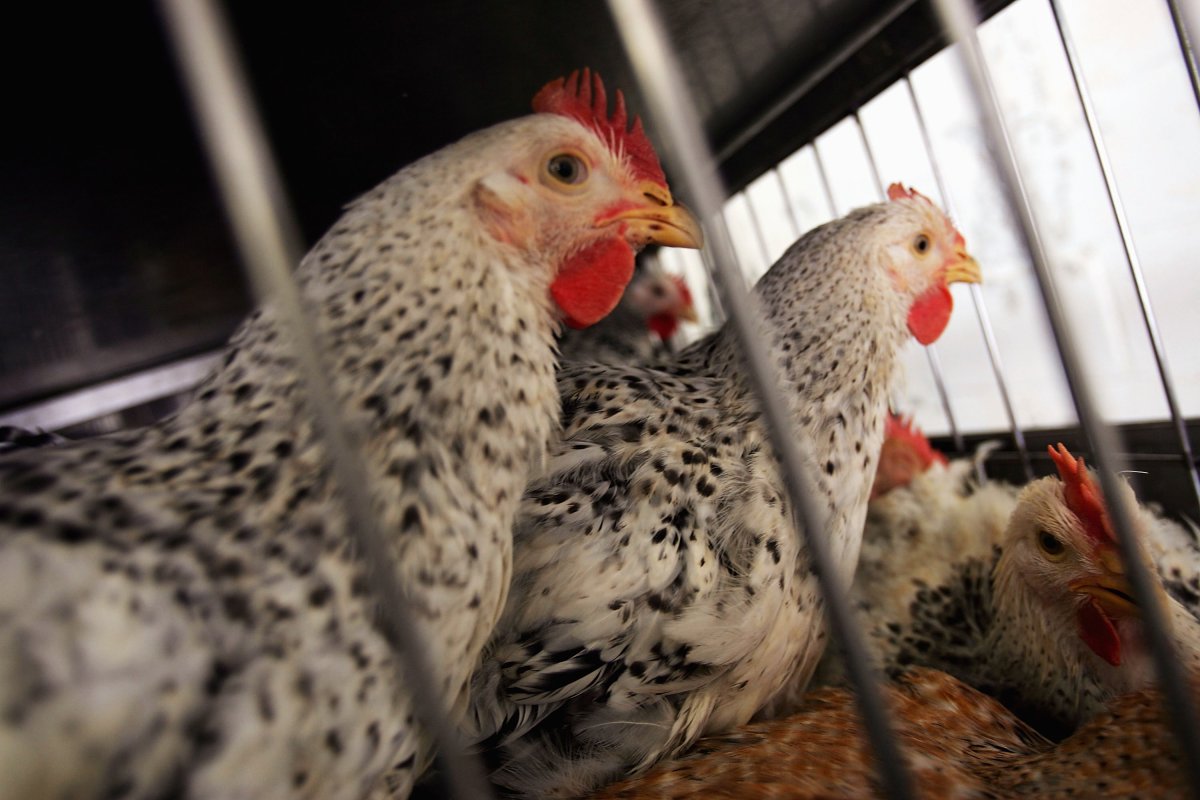
In the Canary Islands, as throughout Spain, there are various hunting seasons every year. It has often been the case that if, while out in rural areas and away from houses, a licensed hunter happened upon any sort of animal living in the wild they were allowed to hunt them, so long as they are not on a list of endangered or protected species. Too often this has also included any dogs or cats that the hunter judged to be feral. Much of the culture around hunters has also been strongly criticised for inhumane treatment towards hunting dogs. Animal welfare groups, such as the national political formation PACMA, as well as many…
A man is in a critical condition after being accidentally shot during a pig hunting trip in Cunnamulla in south-west Queensland overnight.
Police said the man, aged in his 50s, was hunting for feral pigs on a private property with friends in the town, located around 750 kilometres west of Brisbane, when a firearm was accidentally discharged.
It isunderstood the weapon was being carried by another man when it discharged, shooting his friendin the torso.
The injured man was taken to Cunnamulla Hospital in a critical condition with a chest wound around…
An orca slightly breaches the water between two fishing boats in Alaska.
Orcas have been interacting with boats in the Atlantic since 2020, drawing international attention.
Scientists have developed guidelines for boaters who come into contact with killer whales.
But data shows that if a killer whale really wants to interact with a boat, humans can’t do much.
Sign up for our newsletter to get the latest on the culture & business of sustainability — delivered weekly to your inbox.Email address
By clicking ‘Sign up’, you agree to receive marketing emails from Insider as well as other partner offers and accept our Terms of Service and Privacy Policy.
Advocacy groups have released recommendations for how to act if you come into contact with killer whales while boating. Some of the recommendations include slowing down, turning off the engine, and staying quiet to avoid exciting the orcas.
But following these protocols may not be enough, said Mónica González of the Coordinadora para o Estudo dos Mamíferos Mariño, an organization in Spain known as CEMMA that studies marine animals.
González and her colleagues have been tracking these interactions since 2020. Recently, in a webinar hosted by The Orca Behavior Institute, González said that they noticed sometimes orcas damaged a boat regardless of whether the people on board followed proper protocol or not.
González analyzed accounts from 231 boats that reported physical contact with an orca in the Strait of Gibraltar since 2020. Her team found that 63% of slightly damaged boats didn’t follow protocol, compared with 36% that did.
Five orcas swim in the ocean outside of Mayotte, France.
But in looking at cases of severe damage, when the boat stopped working, she said they found something different. Roughly half of the damaged boats followed protocol, and the other half didn’t. The protocol didn’t seem to have an effect.
“In very severe damage, when towing is required, we don’t find significant evidence to follow or not follow our protocol,” she said in the webinar. “So our protocol runs, but not when we’re talking about serious damage.”
The orcas, it seems, will continue damaging the boat if they’re in the mood to do so, and there’s not much boaters can do at that point.
No one is sure why orcas have been ramming boats in the first place. But the leading ideas are curious young orcas or defensive behavior by orcas that have been harmed before, González said in the webinar.
In either case, our own actions may not deter an orca already set on its course.
The risks of harvest failures in multiple global breadbaskets have been underestimated, according to a study Tuesday that researchers said should be a “wake up call” about the threatclimate changeposes to our food systems.
Food production is both a key source of planet-warming emissions and highly exposed to the effects of climate change, with climate and crop models used to figure out just what the impacts could be as the world warms.
In the new research published inNature Communications, researchers in the United States and Germany looked at the likelihood that several major food producing regions could simultaneously suffer low yields.
These events can lead to price spikes, food insecurity and even civil unrest, said lead author Kai Kornhuber, a researcher at Columbia University and the German Council on Foreign Relations.
A whooping crane family in Sauk County, Wisconsin. Unfortunately, days after this image was taken, the chick went missing, likely from predation. Whooping cranes are a federally listed endangered species due to loss of wetland habitat, power line collision, and illegal hunting. (Shawna Bethell)
Earlier this summer, I took a road trip up to Baraboo, Wisconsin, where the owner of my bed and breakfast mentioned that wild whooping cranes had nested a couple fields up.
They sent me off with directions, and a few minutes later I sat watching a pair of tall, white, red-masked birds elegantly stride across a newly sprouted cornfield, a scrawny yellow chick tagging behind. When I told my nephew, he asked me if I realized how incredible it was to be that close to those whoopers and their next generation. I assured him I did.
Whooping cranes are endangered, numbering only 836 in the world. Of those, 134 live in captivity. To see them as a family was truly a gift. But Kansans are lucky. Barton County is home to not one but two Ramsar designated wetlands of international importance. And Cheyenne Bottoms Wildlife Area and Quivira National Wildlife Refuge are staging sites used by whooping cranes — among other protected species — as they migrate up and down the country each season. People travel considerable distances to see them.
But things may change in Barton County.
Acciona Energy USA, a subsidiary of Madrid, Spain-based Acciona Energy, plans to develop a solar farm on a large swath of land bordering Cheyenne Bottoms. For now, officials have placed a temporary moratorium on all permits for commercial solar development within the unincorporated area of Barton County, allowing the planning commission time to consider zoning regulations.
According to environmental manager and zoning administrator Judy Goreham, the moratorium will last until Dec. 31, with the option to either extend or eliminate that deadline, depending on the amount of time the commission needs.
Generally speaking, I support solar power. But careful placement of large-scale infrastructure is crucial, and locating it anywhere near a wetland — especially a wetland of critical habitat — is unconscionable.
– Shawna Bethell
It is often implied that there have not been enough studies to truly understand the impact of solar farms on birds. However, a 2014 study by the National Fish and Wildlife Forensics Laboratory, titled Avian Mortality at Solar Energy Facilities in Southern California: A Preliminary Analysis, summarizes data on bird mortality from three types of solar energy facilities, one of which is a photovoltaic facility, the type planned for Barton County. (Note: descriptions and images in the study may be disturbing to some readers.)
Results of the study indicate that while a wide variety of bird species were killed at the solar facilities, there was increased water bird mortality at the photovoltaic facility, where “open water sources were present.”
It also relates that “impact trauma and predation were both present,” and clarified that “predation was documented mostly at the photovoltaic site, and in many cases appeared to be associated with stranding or nonfatal impact trauma with the panels, leaving birds vulnerable to resident predators.”
Further, and most directly pertaining to the wetlands in Barton County, is the discussion of migratory water birds.
Birds were attracted to water features in the region and were “habituated to the presence of an accessible aquatic environment.” This can “translate into a misinterpretation” of the “horizontal polarized light source” as being a body of water. Of the 15 birds that died of predation at the solar farm, 14 were species that made their homes on water and were found near the ponds located near the infrastructure.
An attempt to reach Acciona asking about its mortality mitigation practices, especially in light of the placement of the facility, was unsuccessful.
I also tried to reach the National Wildlife Service to learn the consequences of killing federally protected species by such infrastructure but was again unsuccessful.
The only precedent I learned of was at the High Prairie Renewable Energy Center in Kirksville, Missouri, where a wind farm was built near habitat for federally protected species. When multiple protected species were killed by turbines, the facility had to decrease operation, while attempting to pass increased rates to the consumer to compensate. I hope Kansas is not so shortsighted.
There are only 41 Ramsar sites in the United States, and Kansas is home to two of them. This is something to be proud of, protected and enjoyed. Audubon of Kansas has suggested a well-considered, alternative location for an industrial solar facility in Barton County, and I strongly hope the commissioners and planning committee take it into consideration.
A protected wetland is not the place for industry. It is the place for refuge, for wildlife and humans alike.
Shawna Bethell is a freelance essayist and journalist covering the people and places of Kansas, Nebraska and Missouri. Through its opinion section, Kansas Reflector works to amplify the voices of people who are affected by public policies or excluded from public debate. Find information, including how to submit your own commentary, here.
China is the largest producer of planet-overheating gases in the world.According to some research, the country accounted for 27% of the world’s total air pollution in 2019, and more than tripled its air-polluting gases over the past three decades.
However, there may be cause for some hopefulness, as China’s investments in solar energy and electric vehicles (EVs) may be pushing the country toward a “tipping point,” where dirty energy usage falls into long-term decline and more sustainable energy sources take over, according to Bloomberg News.
Bloombergpainteda scene of the recent SNEC PV Power Expo in Shanghai, where China’s largest automaker, BYD; the world’s largest EV battery manufacturer, Contemporary Amperex Technology Co. Ltd.; and thousands of domestic solar companies were all in attendance, signaling massive investment in clean energy.
A former associate editor with the Times of India, Jug Suraiya writes two regular columns for the print edition, Jugular Vein, which appears every Friday, and Second Opinion,… MORE
Has Mother Earth borne too many children for her to support? The world’s population has crossed eight billion. And though the population replacement rate – the number of children people have to replace themselves – has decreased in some parts of the world, it has remained static, or increased, in others, and by 2037 there will be more than 9 billion humans on an already overcrowded globe, exacting an increasing toll on dwindling natural resources, such as water and agricultural land.
In 1798 the English economist, Thomas Robert Malthus, propounded his famous –or infamous – Theory of Population, which stated…
Monday, July 3, was the hottest day ever recorded globally, according to data from the U.S. National Centers for Environmental Prediction.
The average global temperature reached 17.01 degrees Celsius (62.62 Fahrenheit), surpassing the August 2016 record of 16.92C (62.46F) as heatwaves sizzled around the world.
The southern U.S. has been suffering under an intense heat dome in recent weeks. In China, an enduring heatwave continued, with temperatures above 35C (95F). North Africa has seen temperatures near 50C (122F).
And even Antarctica, currently in its winter, registered anomalously high temperatures. Ukraine’s Vernadsky Research Base in the white continent’s Argentine Islands recently broke its July temperature record with 8.7C (47.6F).
“This is not a milestone we should be celebrating,” said climate scientist Friederike Otto of the Grantham…
Japan will soon begin releasingtreated radioactive waterinto the ocean following approval from the United Nations’ nuclear watchdog for a controversial plan that comes 12 years after the Fukushima nuclear meltdown.
The plan to release treated wastewater has been in the works for years, with the environment ministerdeclaring in 2019there were “no other options” as space runs out to contain the contaminated material.
Rafael Grossi, chief of the International Atomic Energy Agency (IAEA), arrived inJapanon Tuesday to visit Fukushima and presentthe UN body’s safety reviewto Prime Minister Fumio Kishida.
But the UN’s approval has done little to reassure rattled residents in neighboring countries, and local fishermen whostill feel…