Wisconsin bear hunters harvested 2,922 bears during the 2023 black bear season, a marked decrease from the 4,009 bears harvested last year.Photo credit: iStock /LynnBystrom
MADISON, Wis. – The Wisconsin Department of Natural Resources (DNR) today announced preliminary results for the 2023 bear season. The 2023 bear season harvest is well below the recent annual average of approximately 4,000 harvested bears, representing the lowest yearly bear harvest since 2008.
Wisconsin bear hunters harvested 2,922 bears during the 2023 black bear season, a marked decrease from the 4,009 bears taken by hunters last year. This decline was observed across the state, as the bear harvest fell short of respective targets in all management zones.
Similarly, statewide hunter success dropped to 23%, down from the recent 5-year average statewide hunter success rate of 32%. Hunter success rates in individual zones varied from about 60% in Zone A to about 5% in Zones E and F.
“This fall saw a remarkably high acorn crop across much of the state, and this abundance of natural food typically results in reduced hunter success rates as hunters’ baits are less effective,” said Randy Johnson, DNR Large Carnivore Specialist. “Almost all of the anecdotal reports I heard from bear hunters this fall mentioned the incredible abundance of acorns and other natural foods in the woods. It is difficult to predict when these bumper acorn crops will occur, but when they do, the impact on bear hunting is unmistakable.”
Harvest data indicates Zones A and B, in the northern and northeastern parts of the state, were less impacted than other areas, with hunter success rates closer to average at 59% and 50%, respectively. Zone C, located in the central part of the state, fell well short of its harvest target, with below-average hunter success rates as well. Similarly, in the northwestern area of the state, Zone D saw well below-average harvest and hunter-success rates. The drop in Zone D is likely due, at least in part, to recent management actions intended to reduce bear populations in this area, combined with the abundance of natural foods available this fall. Finally, Zones E and F, encompassing most of the state’s southern areas, saw declines in average hunter success rates and total harvest.
Zone-specific preliminary registration information is as follows:
Zone
Harvest Target
Preliminary Harvest
Percentage of Target Harvested
Licenses Issued
Hunter Success Rate
A
1,075
1,028
95.6%
1,730
59%
B
850
744
87.5%
1,495
50%
C
600
379
63.1%
3,000
13%
D
1,800
657
36.5%
4,035
16%
E
200
96
48.0%
2,000
5%
F
50
18
36.0%
500
4%
Statewide Total
4,575
2,922
63.8%
12,760
23%
*These preliminary data do not include bears taken via agriculture damage tags, the Learn to Hunt program or tribal harvest.
The 2023 bear season ran from Sept. 6 to Oct. 10. Hunters were awarded 12,760 bear hunting licenses through the license lottery system. Nearly 138,000 people applied for a bear hunting license or preference point for the 2023 season, setting a record for the number of applicants. A full breakdown of the 2023 bear license drawing and license wait times is available on the DNR website.
“Interest in bear hunting continues to grow in Wisconsin and across the nation,” said Johnson. “We encourage hunters to review management zone boundaries, season frameworks and license wait times as they make their hunting plans for the coming years.”
Bear permit applicants must apply at least once during any period of three consecutive years to retain their accumulated preference points; otherwise, all accumulated preference points will be lost.
Hunters wishing to obtain a license or preference point for the 2024 season are encouraged to apply through Go Wild before the Dec. 10 deadline.
Wisconsin has a thriving and expanding bear population, estimated at approximately 25,000 individuals. The resident bear population’s range covers more than half the state, with concentrations in the forested regions of northern and central Wisconsin, with a continued trend of slow southward expansion.
Hunters play an important role in bear management by providing critical data from every harvested bear. This data informs the DNR’s population models to track trends, achieve management objectives and ensure a healthy bear population.
Visit the DNR’s Bear Hunting webpage to learn more about black bear hunting, ecology and management in Wisconsin.
Climate change causes tens of billions of dollars in economic damage in the United States every year, according to a new assessment. Many survivors of climate-driven disasters, including hurricanes, floods and wildfires, struggle for months or even years to repair their homes or find new stable housing. Here, a Louisiana home damaged by a hurricane sits waiting for unaffordable repairs.
Ryan Kellman/NPR
Climate change is expensive, deadly and preventable, according to the new National Climate Assessment, the most sweeping, sophisticated federal analysis of climate change compiled to date.
Released every five years, the National Climate Assessment is a congressionally mandated evaluation of the effects of climate change on American life. This new fifth edition paints a picture of a nation simultaneously beset by climate-driven disasters and capable of dramatically reducing emissions of planet-warming gasses in the near future.
This is the first time the assessment includes standalone chapters about climate change’s toll on the American economy, as well as the complex social factors driving climate change and the nation’s responses. And, unlike past installments, the new assessment draws heavily from social science, including history, sociology, philosophy and Indigenous studies.
Sponsor Message
The new approach adds context and relevance to the assessment’s robust scientific findings, and underscores the disproportionate danger that climate change poses to poor people, marginalized communities, older Americans and those who work outdoors.
“Climate change affects us all, but it doesn’t affect us all equally,” says climate scientist Katharine Hayhoe, one of the authors of the assessment. But threaded throughout the report are case studies and research summaries highlighting ways “climate action can create a more resilient and just country,” she says.
This is also the first time the National Climate Assessment will be translated into Spanish, although the Spanish-language version won’t be available until the spring, according to the White House.
The National Climate Assessment is extremely influential in legal and policy circles, and affects everything from court cases about who should foot the bill for wildfire damage, to local decisions about how tall to build coastal flood barriers. “It really shapes the way that people understand, and therefore act, in relation to climate change,” says Michael Burger, the director of the Sabin Center for Climate Change Law at Columbia University.
Hundreds of scientists from universities, industry, and federal agencies contributed to the report. They reviewed cutting-edge research published since the last report and contextualized it in decades of foundational climate research.
The fifth edition of the assessment arrives as millions of Americans are struggling with the effects of a hotter Earth. Dramatic and deadly wildfires, floods and heat waves killed hundreds of people in the United States in 2023.
And, while federal spending on renewable energy and disaster preparedness has increased, the U.S. is also investing in new fossil fuel infrastructure that is not compatible with avoiding catastrophic warming later this century.
Here are the three big takeaways from the Fifth National Climate Assessment. More information about the specific effects of climate change in your area can be found in the assessment’s regional chapters.
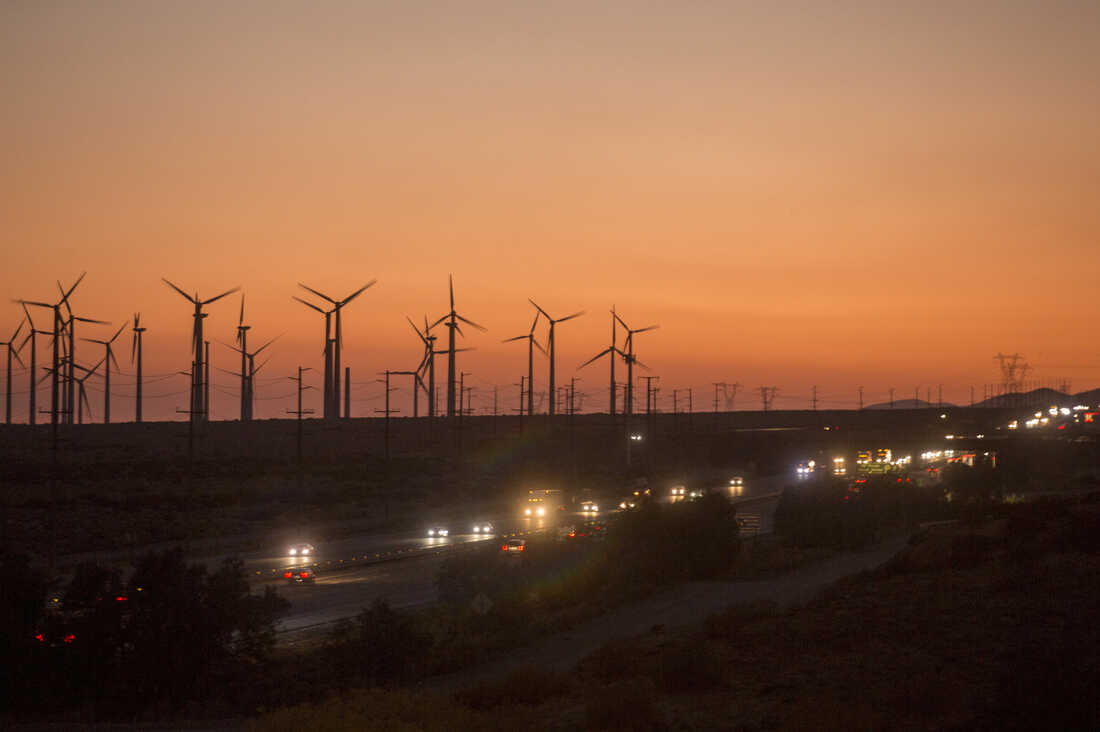
Windmills near Whitewater, Calif., in 2020. Reducing fossil fuel use and investing more in renewable energy sources such as wind will help the U.S. avoid billions of dollars of economic costs and help Americans live longer, healthier lives according to the Fifth National Climate Assessment.
Ringo H.W. Chiu/AP
Climate change makes life more expensive
Food, housing, labor – it all gets pricier as the Earth heats up, according to the National Climate Assessment.
Climate-driven weather disasters, like heat waves, floods, hurricanes and wildfires, are particularly expensive. They destroy homes and businesses, wreck crops and create supply shortages by delaying trucks, ships and trains. Such disasters make it more likely that families will go bankrupt, and that municipal governments will run deficits, the authors note.
Weather-related disasters in the U.S. cause about $150 billion each year in direct losses, according to the report. That’s a lot of money – roughly equal to the annual budget for the Energy Department – and it’s only expected to go up as the Earth gets hotter.
And that’s all before factoring in the less obvious or tangible costs of climate change. For example, healthcare bills for people who are sicker because of extreme heat, or have respiratory illness brought on by breathing in mold after a flood. Exposure to wildfire smoke alone costs billions of dollars a year in lost earnings, the assessment notes – a burden that falls disproportionately on poor people who work outdoors.
“The research indicates that people who are lower income have more trouble adapting [to climate change], because adaptation comes at a cost,” says Solomon Hsiang, a climate economist at the University of California, Berkeley and a lead author of the assessment.
For example, one of the simplest ways to adapt to severe heat waves is to run your air conditioner more. But “if people can’t pay for it, then [they] can’t protect themselves,” explains Hsiang.
And the hotter it gets, the more profound the economic harm, assessment warns. Twice as much planetary warming leads to more than twice as much economic harm, the assessment warns.
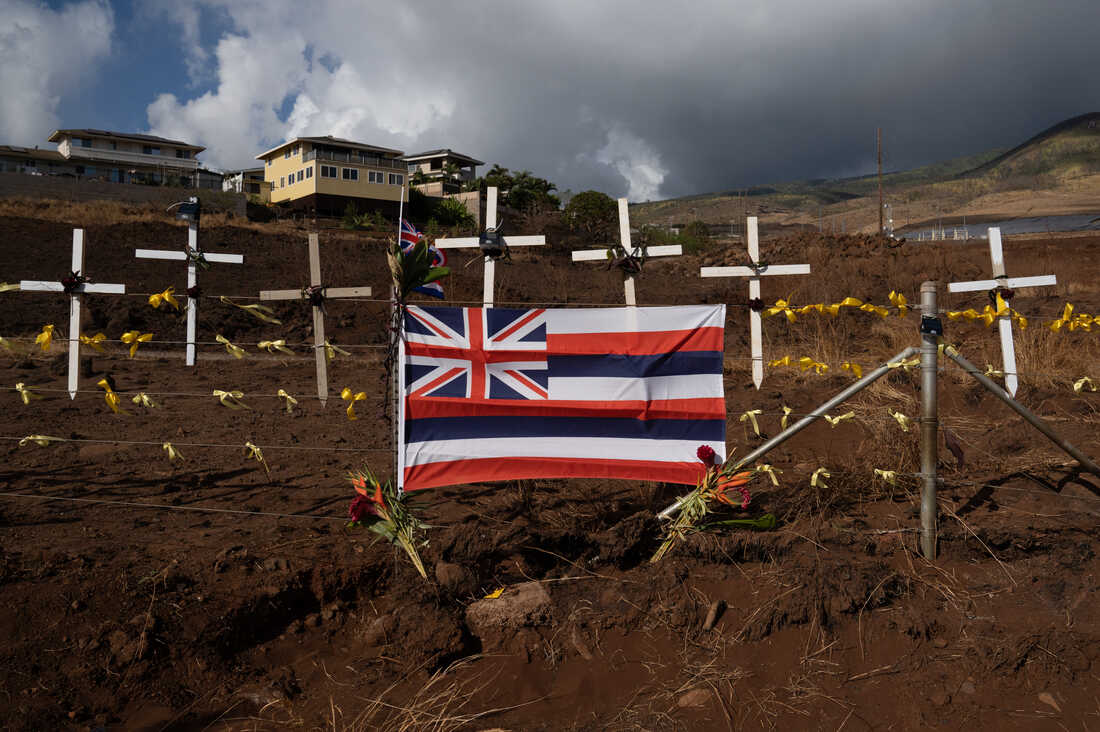
A roadside memorial to those who died in the wildfire that swept through the town of Lahaina, Hawaii in August. The latest National Climate Assessment underscores the many ways that climate change is already making Americans sick, and even killing them.
Claire Harbage/NPR
Climate change makes people sick and often kills them
Since the previous NCA was released five years ago, the health costs of climate change have gone from theoretical to personal for many Americans.
The most obvious risk? Extreme weather, particularly heat, says Mary Hayden, the lead author of the chapter examining human health. Heat waves have become hotter, longer, and more dangerous, and they’re hitting areas that aren’t ready for them–like the “record-shattering” heat dome that descended on the Pacific Northwest in 2021 and caused hundreds of deaths.
But it’s not just heat. Wildfire smoke can send people thousands of miles from the fires to hospitals with respiratory problems and heart disease complications. Hurricanes can disrupt people’s access to healthcare: when a clinic is flooded or people are displaced, for example, kidney patients can’t get dialysis treatment.
In most cases, the people who bear the brunt of the disasters are those already at risk: poor communities, communities of color, women, people with disabilities, and other marginalized groups. Temperatures in formerly redlined neighborhoods in cities across the country can soar nearly 15 degrees Fahrenheit hotter than wealthier areas just blocks away, putting residents at much higher risk of heat exposure.
The assessment also homes in on research tracking less-obvious health impacts. Living through climate disasters, for example, can leave lasting emotional scars. “We’re not just talking about [people’s] physical health–we’re talking about their mental health. We’re talking about their spiritual health. We’re talking about the health and well-being of communities which are being affected by this,” Hayden says.
That means recognizing the long-term effects on communities like Paradise, California, where people still deal with deep emotional trauma five years after their town burned in the 2018 Camp Fire. The report also flags the growing emotional toll on children and young people, for whom anxiety about the future of the planet is bleeding into all parts of their lives.
A lobsterman paddles out to his boat in a harbor in Maine. Climate change is disrupting ways of living with, and from, the ocean.
Ryan Kellman
Climate change threatens people’s special, sacred places and practices
The places, cultural practices, and traditions that anchor many communities are also in flux because of climate change.
Fishing communities are seeing their livelihoods shift or collapse. The Northeast’s iconic lobster fishery, the single most economically valuable in the country, has withered as marine heatwaves sweep through the regional seas. Shrinking snowpack and too-warm temperatures are interrupting opportunities for beloved recreational activities, like skiing or ice fishing.
Indigenous communities are being forced to adjust to new climate realities, which are disrupting traditional food-gathering traditions. In Palau, a monthly tradition of catching fish at a particularly low tide has been upset by sea level rise, which keeps water levels too high to trap fish in the historically-used places. Sea level rise is also forcing coastal communities to re-think their very existence, pulling apart the social fabric that has developed over generations.
But many communities – Indigenous people, farmers and fishers, groups that have lived tightly connected to their environments for a long time – have deep stores of resilience from which to draw, says Elizabeth Marino, a sociologist and the lead author of the chapter on social transformations. “There is quite a lot of wisdom in place to adapt to and even mitigate climate change,” she says. “It allows people to come up with solutions that fit the lives that they lead, and that’s also a place of hope.”
The fixes to climate change can make Americans’ lives better
The fifth assessment lays out a stark picture of the climate challenges the U.S. faces. Keeping planetary warming to “well below” 2 degrees Celsius (3.6 degrees Fahrenheit), the goal of the international Paris Agreement, will require immediate, enormous cuts to fossil fuel emissions in the U.S and beyond. Keeping warming below 1.5 degrees Celsius (2.7 degrees Fahrenheit), an ambitious target written into the Agreement, will be even harder, the report says.
But it also points out many successful efforts underway to adapt to the new reality and to prevent worse outcomes.
“It’s not the message that if we don’t hit 1.5 degrees, we’re all going to die,” says Hayhoe. “It’s the message that everything we do matters. Every 10th of a degree of warming we avoid, there’s a benefit to that.”
Addressing fossil fuel-driven climate change can also help people live healthier lives, stresses J. Jason West, the lead author on a chapter on air quality. Dialing back fossil fuel emissions would help prevent further climate change and also lessen the kinds of air pollution most harmful to human health.” There really is a lot of opportunity to take action that would resolve both of those problems at the same time,” West says.
There’s been a subtle shift in the report’s perspective since the last one, says Candis Callison, a sociologist and author of the report. There’s now a clear acknowledgement, developed through years of rigorous research, that the fossil fuel-powered society the U.S. built over generations was profoundly unjust. Many pollution-producing coal or gas power plants were sited in communities of color rather than white communities, affecting people’s health outcomes for generations. And decisions about land and water use for energy extraction often excluded tribal communities, with consequences still playing out today.
The transition forward can look different, she says. “Climate change actually provides us with an opportunity to address some of those inequities and injustices–and to respond to these impacts,” Callison says. “That’s really a powerful thing.”

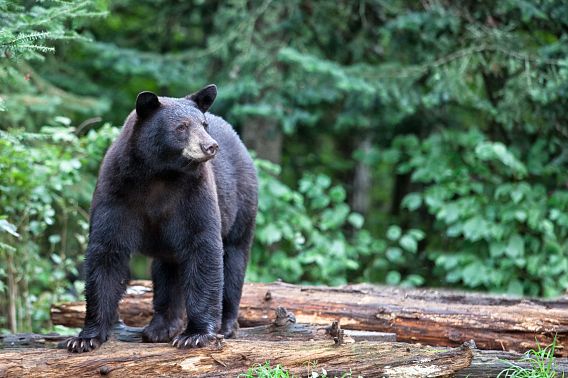 Wisconsin bear hunters harvested 2,922 bears during the 2023 black bear season, a marked decrease from the 4,009 bears harvested last year.Photo credit: iStock /LynnBystrom