Shapps’ remarks came during a U.S.-U.K. climate summit in which both President Biden andKing Charles III participatedon Monday morning. They were made in response to Shell CEO Wael Sawan stating last week that the global energy system continues to “desperately need oil and gas” and that green energy development wasn’t advanced enough to allow nations to abandon fossil fuels.
“There always has to be a transition … but it doesn’t just happen overnight, in fact, it’s idiotic…
New research reveals how climate change can disrupt the evolutionary process and ecological balance. The study on apple maggot flies shows that warmer temperatures predicted for the future can affect these species differently, potentially halting speciation, and creating potential chaos in the ecological timing of insect communities.
New research delves into the potential repercussions of global warming on ecosystems, and how it could derail the development of newspecies.
Across the globe, new species constantly emerge as separate groups of organisms branch off and evolve in divergent paths. But what occurs when climate change becomes a variable in this complex equation?
Illustration of Earth’s tectonic plates. (Andrzej Wojcicki/Getty Images)
Marine life booms with a spate of new species every 36 million years, and tectonic heaving is the indirect reason, new research has found.
A deep analysis of the fossil and geological record reveals a changing sea level that occurs in response to a 36-million-year cycle of tectonic movement.
This, a team led by geologist Slah Boulila of Sorbonne University in France has found, disrupts several ecosystems, causing many species to struggle – and new ones to blossom to fill the new ecological niches that emerge.
“In terms of tectonics, the 36-million-year cycle marks alterations between faster and slower seafloor spreading, leading to cyclical depth changes in ocean basins and in the tectonic transfer of water into the deep Earth,” says geoscientist Dietmar Müller of the University of Sydney.
“These in turn have led to fluctuations in the flooding and drying up of continents, with periods of extensive shallow seas fostering biodiversity.”
A close look at the fossil record shows that biodiversity is not a nice, even constant. Instead, it fluctuates dramatically on scales of tens of millions of years, punctuated by extinction events and the rise of new species.
What hasn’t been clear is what drives these changes; whether each event is unique unto itself, or whether there’s an underlying mechanism that links them.
The research by Boulila and team was a painstaking analysis of multiple geological datasets from the past 250 million years, combined with computational simulations and modeling using tectonic visualization software called GPlates.
Earth’s crust is never still. It consists of separate tectonic plates that are constantly moving and being recycled. Places where the tectonic plates meet beneath the ocean are known as subduction zones; there, water is sucked deep under the mantle, to be spewed out later via volcanic activity.
In their data and simulations, the researchers found a cycle of 36 million years in the diversity of marine life… and this coincided with a cycle found in tectonic, sea-level, and large-scale rock layer data over the same time period.
These findings, they say, constitute compelling evidence that the sea level changes triggered by Earth’s tectonic cycles play a key role in biodiversity cycles and shaping ecosystems.
“This research challenges previous ideas about why species have changed over long periods,” Müller says.
“The cycles are 36 million years long because of regular patterns in how tectonic plates are recycled into the convecting mantle, the mobile part of the deep Earth, similar to hot, thick soup in a pot, that moves slowly.”
There are other triggers throughout Earth’s history that can drive biodiversity. For example, the team also found evidence of a biodiversity cycle of 62 million years.
This could have been driven by changes in carbon dioxide levels, but it needs to be investigated further, the researchers say.
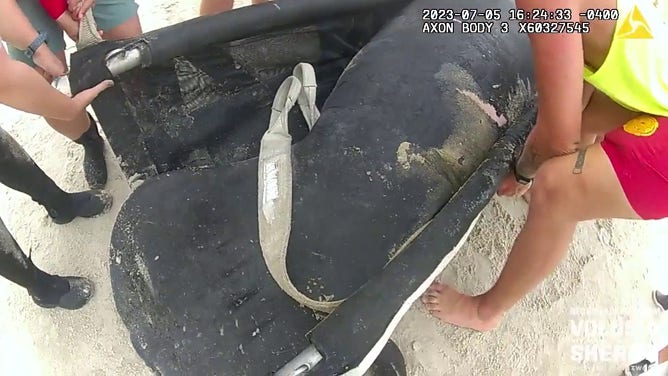
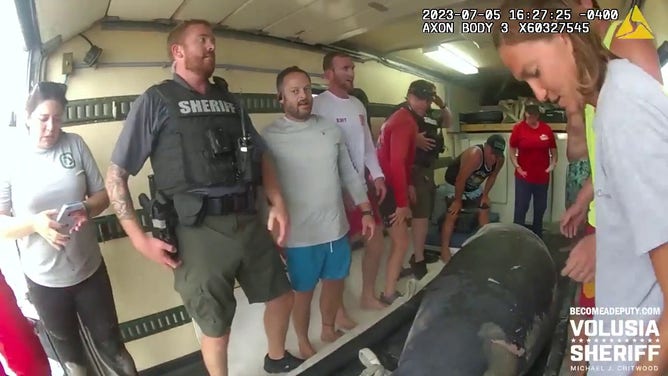
A manatee was found stranded on a beach in Volusia County, Florida, on Wednesday, July 5. Bodycam footage released by the Volusia County Sheriff’s Office shows the team effort by at least 12 volunteers to hoist the manatee off the sand.
VOLUSIA COUNTY, Fla. – A beached manatee in Florida is recovering after life-saving help from a large group of rescuers.
On Wednesday, deputies with the Volusia County Sheriff’s Office joined the Florida Fish and Wildlife Conservation Commission, Volusia County Beaches and members of the County of Volusia Marine Mammal Stranding Team to help carry the stranded manatee off the beach in Ponce Inlet.
A beached manatee in Florida is recovering after the life-saving help from a large group rescuers who help hoist the marine mammal off the sand.
(Volusia Sheriff’s Office)
The sheriff’s office released bodycam footage showing at least a dozen people using a stretcher to lift the manatee into a vehicle. Nearby beachgoers watched rescuers successfully transport the animal into a vehicle, where it was eventually taken to the Sea World Rehabilitation Center.
Authorities remind residents and visitors not to approach or touch a stranded animal. Instead, you should report them to the Florida Fish and Wildlife.
The sheriff’s office released bodycam footage showing at least a dozen people using a stretcher to lift the manatee into a vehicle.
(Volusia Sheriff’s Office)
Marine mammal strandings are common along the Florida coast, according to the Volusia County Marine Mammal Stranding Team. It occurs when live animals beach themselves or dead animals wash up on the shore.
Many of the reasons why live animals beach themselves are unknown.
Florida manatees and bottlenose dolphins are the most common animals that are found stranded in Volusia County.
Adolphin and its calf have been rescued from the Louisiana pond they were trapped in for nearly two years.
The two animals were stuck in the pond system near Grand Isle in the Pelican State.
Audubon Coastal Wildlife Network (CWN) and partners in the Southeast Region Marine Mammal Stranding Network managed to rescue the stranded mammals on June 17, CWN said on a Facebook post.
The dolphins became stuck due to a storm surge and flooding caused by Hurricane Ida, which battered Louisiana in August 2021.
The CWN had been aware of the pair for some time, monitoring them for over a year.
The Grand Isle is a town on a narrow barrier island in the Gulf of Mexico. Although there are some species of dolphin that can survive in freshwater, these particular dolphins need saltwater in order to survive. Luckily, this pond system has enough salinity, as well as food supplies and tidal flow. This meant the dolphins were able to survive for the past two years.
However, there is not any pathway to the Gulf of Mexico, into their natural habitat.
The rescue team was made up of NOAA Fisheries Service in partnership with Audubon Coastal Wildlife Network (CWN), National Marine Mammal Foundation, SeaWorld Orlando, The Institute for Marine Mammal Studies, Dauphin Island Sea Lab, and South Carolina Aquarium.
A video of the rescue showed teams easing the dolphins onto a mat, floating within the pond.
Rescuers can then be seen transporting the dolphins in a boat towards the open ocean. They gently kept the dolphins wet using sponges.
Dolphins need to be kept wet at all times, or they run the risk of becoming dehydrated. Even though they cannot breathe underwater, they still need to be wet in order to live.
At the end of the video, rescuers can be seen releasing the dolphins into the wild.
It is not uncommon for wildlife to become displaced during a hurricane.
Storm surges happen when atmospheric pressure causes sea levels to rise during a severe storm.
Marine wildlife are often at the mercy of these surges when storms occur.
Marine mammals and sea turtles are at particular risk.
“It is common for storm surge and increased coastal flooding associated with hurricanes to cause marine mammals and sea turtles to strand on land or be washed into inland waterways where they are not typically observed, such as lakes, ponds, and canals,” the CWN said in a Facebook post. “Animals may be found in these areas for weeks to months following the hurricane, requiring rescue by trained and authorized responders to return them to their natural habitat.”
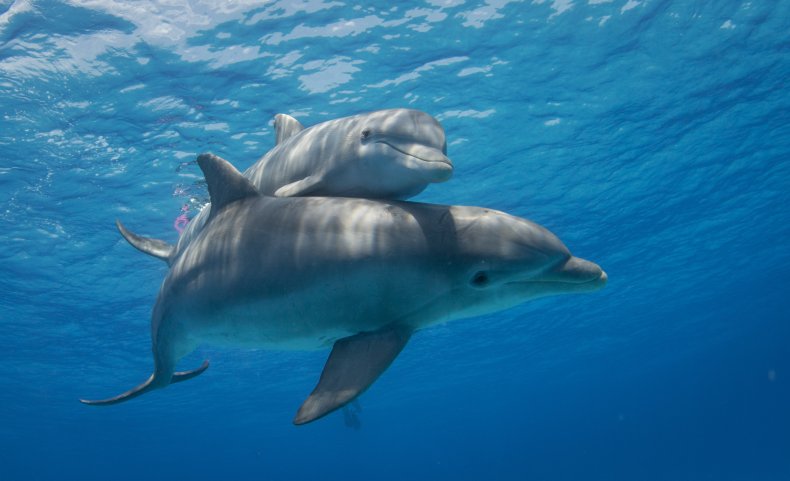
A stock photo shows a mother and a calf swimming side by side. Two dolphins were rescued after being stranded in a pond for two years.NALUPHOTO/GETTY
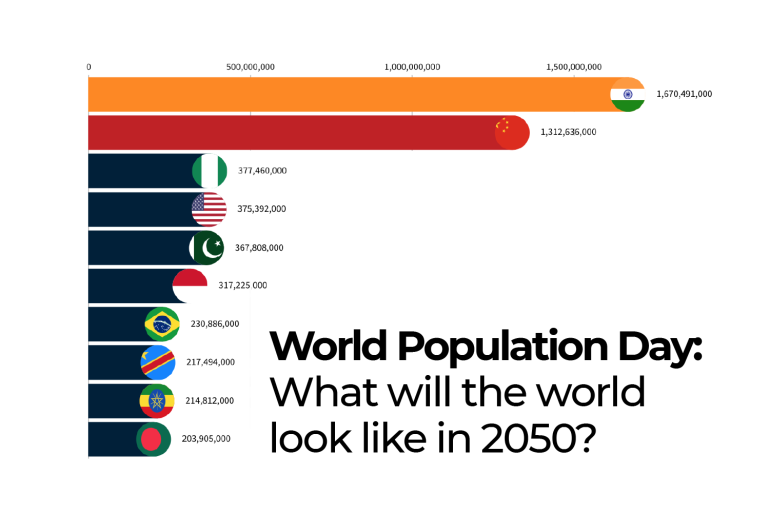
People across the globe observe July 11 asWorld Population Day– designated by the United Nations to focus attention on the urgency and importance of population issues, including their relations to the environment and human development.
Over the past 12 months, the world saw two significant population milestones. First, in November 2022, the global population officially hiteight billionpeople. Second, in April this year,India surpassed Chinato become the world’s most populous country, according to UN estimates.
Two new reports were recently published with information on additional sporadic avian influenza (bird flu) human cases and outbreaks in wild birds, poultry, and other animals such as cats.
On June 30, 2023, the European Centre for Disease Prevention and Control (ECDC) confirmed Poland’s Chief Veterinary Officer of Poland announced that about 20 samples from domestic cats from different cities have tested positive for A(H5N1) influenza virus.
The director of the National Veterinary Institute in Puławy, Poland, stated that “they have detected two mutations that indicate that the A(H5N1) virus is evolving to multiply more easily in mammals.”
The ECDC stated several uncertainties regarding the source of infection, the potential of feline-to-feline and feline-human transmission of the particular A(H5N1) influenza virus strain, and the severity of the disease.
Poland’s authorities advise pet cat owners to prevent contact of their cats with other animals or objects from outside the homes and enhance hygiene measures.
And the statement also mentions the need to isolate any suspected cases from other pets due to potential shedding from the gastrointestinal tract.
Furthermore, there are too many uncertainties at this stage to properly assess the risk to the general public. And no human cases have been reported related to this event in Poland.
Separately, the U.S. Centers for Disease Control and Prevention (CDC) published an updated Technical Report on June 30, 2023.
The CDC confirmed it is actively working on the domestic situation with current clade 2.3.4.4b HPAI A(H5N1) viruses associated with infections in wild birds and poultry outbreaks, including conducting surveillance among people with relevant exposures.
And we are preparing for the possibility that these HPAI A(H5N1) viruses gain the ability for increased transmissibility to people.
The CDC continued to say despite the panzootic nature of highly pathogenic avian influenza (HPAI) A(H5N1) viruses in wild birds and poultry, only a small number of sporadic human cases of A(H5N1) have been identified since 2022.
Nearly all reported human cases since 2022 were associated with recent poultry exposures, and no instances of mammal-to-human or human-to-human transmission of the HPAI A(H5N1) virus have been identified.
According to the U.S. Department of Agriculture, 9.37 billion eggs were produced in May, up 4% from last year. David Silverman via Getty Images
First published on Listen to the article3 min
Dive Brief
U.S. egg production numbers are on the rise, signaling a rebuild after bird flu decimated commercial flocks last year and sent prices skyrocketing.
A total of 9.37 billion eggs were produced in May, up 4% from last year, according to the U.S. Department of Agriculture. Egg production levels were down as much as 6% earlier this year, but started to show signs of improvement in April.
Highly pathogenic avian influenza, a contagious disease often fatal to birds, has affected 325 U.S. commercial poultry flocks over the past year, but only seven cases have been reported since March. No cases were reported in the past 30 days.
Dive Insight
HPAI, often spread by migratory birds, affected more than 58 million commercial and wild birds in the past year, the country’s worst outbreak on record, according to USDA data. As cases spread, supplies tightened and prices soared, especially for eggs.
U.S. egg inventories were down 29% in December compared to the start of 2022. More than 43 million egg-laying hens died from disease or depopulation efforts last year. Wholesale egg prices surged 267% on increased holiday demand. They have since decreased as flocks are rebuilt and farmers adopt biosecurity measures as HPAI preventative.
After last year’s outbreak, Brian Earnest, lead economist, animal protein at CoBank, said he anticipated HPAI to be a year-round issue in 2023 with a lingering expectation that it would be back in full force, but “that does not seem to be the case.”
Instead, the rate of infection among domestic commercial poultry flocks has significantly weakened, according to USDA data. No U.S. cases have been reported among egg-laying birds since December.
“It appears that maybe commercial flocks are growing some immunity to it,” Earnest said.
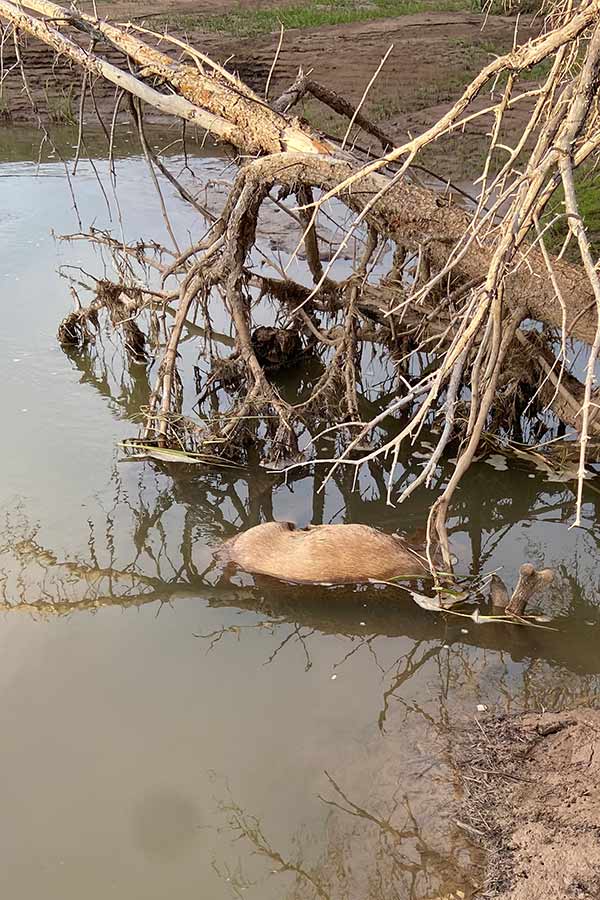
CEDAR CITY — Utah Division of Wildlife Resources conservation officers are seeking the public’s help after a buck deer was recently illegally shot and killed in southern Utah.
DWR officers received a tip on June 16 from an individual who discovered the dead deer while fishing at the Kanab Creek area of the East Fork of the Sevier River in Kane County. Upon further investigation, officers discovered that the buck deer had been shot behind the left shoulder. Investigators believe a small caliber firearm was used.Officers believe the deer may have been shot south of where it was found, due to the high flow and fast moving water in the river at the time. Due to the lack of decomposition of the carcass, investigators estimate the deer had been shot within the previous week of it being found, sometime between June 10–16.
Attempted cat purges overlook value of predation to maintaining the health of species
WELLINGTON, New Zealand; PERTH, Australia––The cat news from Down Under on June 28, 2023 provoked a global explosion of hissing and spitting, focusing––as cat news from Down Under usually does––on ever more cruel, bizarre, and inevitably futile attempts to exterminate cats, rationalized as always by absurdly inflated claims from birders about the numbers of birds whom cats purportedly kill.
(Beth Clifton collage)
Cat-killing contest
“Animal welfare protestors at a hunting contest in rural New Zealand faced off against a group of child attendees, some clutching dead feral cats, who repeatedly chanted the word ‘meat’ at demonstrators,” reported Guardian correspondent Charlotte Graham-McLay.
“The North Canterbury event had previously scrapped the category for killing feral cats after it was criticized by animal welfare groups,” Graham-McLay summarized, “but it was reinstated following apparent support from the local community.”
The killing contest organizers claimed that “About 1,500 competitors – 400 of them children – killed hundreds of animals during the contest, including 243 feral cats,” Graham-McLay said.
Former New Zealand environment minister Maggie Barry, an architect of Predator-Free New Zealand, with endangered kiwi. (Facebook photo)
How cat predation helps birds
Overlooked by the North Canterbury cat pogrom sponsors, and by practically everyone else pushing the campaign to make New Zealand “predator free” by 2050, is that cats there, as everywhere else worldwide, are the major predators of mice and rats, whose egg predation poses a far greater threat to ground-nesting flightless birds such as the kiwi, the national symbol of New Zealand, than cats and all other non-native predators of adult birds combined.
Also overlooked, not only by New Zealand birders but by birders worldwide, is that while cats preferentially hunt rodents, by night, when cats do hunt birds the birds they kill are most often debilitated by disease or injury.
This is especially relevant to New Zealand, because as vulnerable as flightless birds such as the kiwi are to cats and other introduced predators, they are even more vulnerable to introduced infectious diseases. The bird whom a cat––or a brush possum or a weasel––kills may be the bird who otherwise spreads a malady such as the H5N1 avian influenza among a bird population having little history of exposure and of building resistance to non-native pathogens.
Mallard duck. (Beth Clifton photo)
H5N1 has reached New Zealand at least once
New Zealand––and Australia as well––are thousands of miles away from the mainland Asian, North American, and European nations which in recent years have killed multi-millions of poultry in mostly futile efforts to slow the spread of H5N1.
But the nations Down Under are scarcely immune to the threat. The New Zealand Ministry of Agriculture and Forestry in September 2008 reported finding low pathogenic H5N1 in two mallard ducks.
Fifteen years later, high pathogenic H5N1 is circulating globally more widely and rapidly than ever before. If and when it reaches New Zealand, as it almost inevitably will at some point, an absence of predation to intercept sick birds before they infect others could bring about an overnight catastrophe for the New Zealand bird population, irrespective of any and all conservation efforts.
Not that killing cats in the name of conservation seems to be accomplishing much.
“In one part of the South Island,” mentioned Graham-McLay, “between 150 and 200 feral cats are still caught each year, 18 years into an initiative to remove them.”
(Beth Clifton collage)
Compound 1080 & the “Felixer”
Western Australia state environment minister Reece Whitby meanwhile announced that his department plans to spend $7.6 million Australian dollars over the next five years to deploy sixteen “Felixer” cat-killing machines and air drop 880,000 poison baits meant to kill cats.
“The Felixer device uses lasers and cameras to identify feral cats and foxes from other animals before spraying them with 8 milligrams of toxic gel,” explained Eli Green via the NCA NewsWire media release service.
Thylation, maker of the “Felixer,” contends that most Australian native carnivores are too small to activate Felixers and dingoes are too large.
Dingo. (www.ehp.qld.gov.au)
Dingos in danger
“However,” Green mentioned, “the device can be activated by dingo pups, which means that they will not be suitable in all areas at all times of the year.
“From the funding,” Green added, “$2 million will go toward grants for local community organizations, farmer groups and traditional owners to fight feral cats.”
Such schemes, University of Queensland emeritus professor of veterinary science Jacquie Rand and WellBeing International founder Andrew Rowan jointly pointed out earlier in 2023, have “little obvious conservation merit (and nobody has demonstrated that such a cull is achievable). Other invasive mammalian species in Australia (e.g., foxes, rabbits, and horses) have also been targeted without much noticeable progress in reducing their numbers. Data show baiting with Compound 1080 has largely been ineffective in achieving a sustained decrease in feral cat numbers over several years and that native animals are also at risk of poisoning.”
(Beth Clifton collage)
Neuter/return banned in Australia
By contrast, the only experimental neuter/return program ever authorized in Australia discovered that “sterilization of around 30 cats per 1,000 residents in a year produces a 30-50% reduction in cat intake into the community animal shelter within 12-18 months,” accomplished “in one rural town, one suburb in Queensland, one suburb in New South Wales, and the city of Banyule (population 130,000) in Victoria,” Rand and Rowan mentioned.
Releasing feral cats, once trapped, is otherwise illegal throughout Australia, regardless of the cats’ sterilization status.
Australian feral cat. (Beth Clifton collage)
Data, finally, on Australian shelter cats
A study newly published in the journal Animals, by Rand and fellow Australian veterinary researchers Diana Chua and John Morton, further demonstrates the potential for neuter/return to please both Australian cat advocates and conservationists, and those in New Zealand too, other than the most inveterate cat-haters, who prefer killing cats over obtaining results by reducing cat predation.
The study, “Stray and Owner-Relinquished Cats in Australia—Estimation of Numbers Entering Municipal Pounds, Shelters and Rescue Groups and Their Outcomes,” is based on data collected from as many pounds, shelters, and rescue groups as possible in 2018–2019, with “Unavailable municipal pound data imputed based on known data and the human population.”
This is essentially the same method that ANIMALS 24-7 used to produce annual estimates of U.S. animal shelter traffic in both dogs and cats from 1993 through 2014.
“We estimated a total of 179,615 stray and surrendered cat admissions to pounds, shelters, and rescue groups in Australia in 2018–2019 (7.2/1000 human residents) and that 5% of admissions were reclaimed, 65% rehomed, and 28% euthanized,” Rand, Chua, and Morton reported.
“Municipal councils operating their own pounds rehomed 26% and euthanized 46% of cat intake compared to 65% rehomed and 25% euthanized for welfare organizations,” Rand, Chua, and Morton found.
The data is closely comparable to the numbers that ANIMAL 24-7 found in the U.S. during the 1990s, before neuter/return dramatically lowered shelter cat intakes and also before the post-2010 advent of “return-to-field” of non-feral cats hopelessly distorted shelter admission data as a data reference point indicative of feral cat population trends.
The preponderance of data, both from New Zealand and Australia and from the U.S. over the past 30 years, suggests that properly funded and well-managed neuter/return programs, as opposed to haphazard, poorly funded local volunteer efforts, would be the fastest, most inexpensive way to reduce cat predation, irrespective of the conservation value of retaining some cat predation to control rodent populations and the spread of avian disease.
Properly funded and well-managed neuter/return programs could also end the ecologically suicidal practice of littering the countryside with Compound 1080, or fluoroacetate, a poison banned in most of the world and restricted in the U.S. for 50 years.
Map of New Zealand. While Compound 1080 has been spread only in the teal blue areas, brush possums (inset) are persecuted everywhere.
New Zealand national obsession
But as BBC News correspondent Henri Astier detailed on June 29, 2023, killing cats, rats, brush possums, and other mammalian predators has become a national obsession in New Zealand, a nation which already had one of the world’s highest rates of sport hunting participation.
The national Predator-Free New Zealand campaign aims to protect birds, Astier explained, “in an area larger than the United Kingdom.
“At the heart of the project is a unique ecology,” Astier wrote. “New Zealand split from an ancient supercontinent 85 million years ago, long before the ascent of mammals. Without land predators, birds could nest on the ground or do without flying.
(Beth Clifton collage)
“Celebrity physicist popularized the dream of a predator-free country”
“Further, New Zealand was the last major landmass settled by humans. In the 13th century Polynesians brought mice and Pacific rats. Six centuries later, Europeans introduced larger mammals. Almost a third of native species have been wiped out since human settlement.
“Efforts to save the others,” Astier continued, “are not new. In the 1960s, conservationists managed to clear rats from small offshore islands. But tackling predators did not become a social phenomenon until about 2010,” when the introduction of inexpensive infrared wildlife cameras produced widely distributed images of cats, rats, brush possums, and other mammals “pouncing on eggs and chicks.
“In 2011,” Astier recounted, “a celebrity physicist, Sir Paul Callaghan, popularized the dream of a predator-free country.
Australian politician Greg Hunt declared war on feral cats in 2017. New Zealand politicians followed. (Merritt Clifton collage)
“Politicians then got on board”
“Politicians then got on board,” in a nation where longtime anxiety over Asian immigration easily carried over into anxiety over “alien” animals.
A 2016 law marked rats, brush possums, and mustelids, including stoats, weasels, and ferrets, for extermination.
“Mid-century was chosen as an inspirational deadline,” Astier mentioned.
The campaign has claimed some successes. On the Miramar peninsula, Astier wrote, “Rats are now a rarity and many native birds have made a comeback. The distinctive call of the tui, whose numbers in Wellington had dwindled to just a few pairs in 1990, is ubiquitous.”
But James Lynch, the founder of Zealandia, the first of what are now dozens of large fenced bird sanctuaries in New Zealand, is among the Predator-Free New Zealand critics.
(Beth Clifton collage)
“Most native birds do not need a predator-free environment”
Summarized Astier, “Most native birds, he notes, do not need a zero-predator environment to thrive. The few that do, he argues, can survive on offshore or urban sanctuaries. Rather than try to clear the whole country of pests, Lynch recommends focusing resources on woodland around fenced areas to maximize the survival of birds coming out.”
Most New Zealanders currently appear to accept the argument that if predators can just be exterminated completely, once and for all, the trouble and expense of sustained killing campaigns can be avoided forever more––as if no rats, for instance, would ever again arrive with cargo and repopulate every accessible habitat niche, just as rats have repeatedly done at every port around the world despite millennia of rat-hunting and poisoning.
(Beth Clifton collage)
“How could we be so blithe with suffering?”
“Others regard the very idea of a predator-free New Zealand as fanciful,” Astier acknowledged. “Conservation researcher Wayne Linklater,” of Victoria University, “points out that over the past 150 years, New Zealand has lost every war it has waged on rabbits, deer and other pests.
“Campaigns to exterminate intelligent, sentient beings are not just unworkable but ethically misguided, Linklater adds.”
Beth & Merritt Clifton
Concluded Linklater, speaking for himself as both a longtime critic of the effects of predators on native birds and an opponent of killing campaigns, “We marshaled enormous resources and people’s passion and we implemented great cruelty. How could we be so blithe with suffering?”



 Illustration of Earth’s tectonic plates. (Andrzej Wojcicki/Getty Images)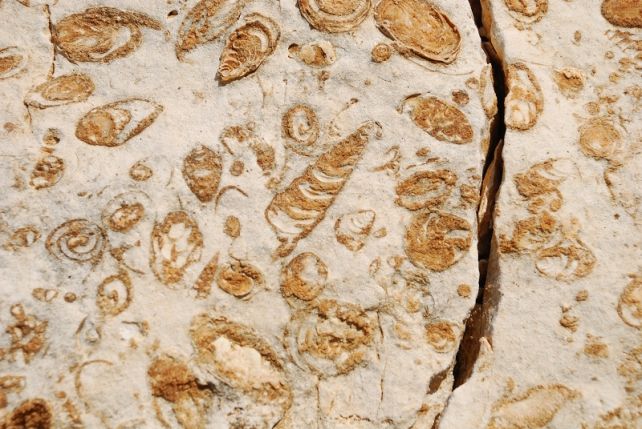

 Listen to the article3 min