Attempted cat purges overlook value of predation to maintaining the health of species
WELLINGTON, New Zealand; PERTH, Australia––The cat news from Down Under on June 28, 2023 provoked a global explosion of hissing and spitting, focusing––as cat news from Down Under usually does––on ever more cruel, bizarre, and inevitably futile attempts to exterminate cats, rationalized as always by absurdly inflated claims from birders about the numbers of birds whom cats purportedly kill.
(Beth Clifton collage)
Cat-killing contest
“Animal welfare protestors at a hunting contest in rural New Zealand faced off against a group of child attendees, some clutching dead feral cats, who repeatedly chanted the word ‘meat’ at demonstrators,” reported Guardian correspondent Charlotte Graham-McLay.
“The North Canterbury event had previously scrapped the category for killing feral cats after it was criticized by animal welfare groups,” Graham-McLay summarized, “but it was reinstated following apparent support from the local community.”
The killing contest organizers claimed that “About 1,500 competitors – 400 of them children – killed hundreds of animals during the contest, including 243 feral cats,” Graham-McLay said.
Former New Zealand environment minister Maggie Barry, an architect of Predator-Free New Zealand, with endangered kiwi. (Facebook photo)
How cat predation helps birds
Overlooked by the North Canterbury cat pogrom sponsors, and by practically everyone else pushing the campaign to make New Zealand “predator free” by 2050, is that cats there, as everywhere else worldwide, are the major predators of mice and rats, whose egg predation poses a far greater threat to ground-nesting flightless birds such as the kiwi, the national symbol of New Zealand, than cats and all other non-native predators of adult birds combined.
Also overlooked, not only by New Zealand birders but by birders worldwide, is that while cats preferentially hunt rodents, by night, when cats do hunt birds the birds they kill are most often debilitated by disease or injury.
This is especially relevant to New Zealand, because as vulnerable as flightless birds such as the kiwi are to cats and other introduced predators, they are even more vulnerable to introduced infectious diseases. The bird whom a cat––or a brush possum or a weasel––kills may be the bird who otherwise spreads a malady such as the H5N1 avian influenza among a bird population having little history of exposure and of building resistance to non-native pathogens.
Mallard duck. (Beth Clifton photo)
H5N1 has reached New Zealand at least once
New Zealand––and Australia as well––are thousands of miles away from the mainland Asian, North American, and European nations which in recent years have killed multi-millions of poultry in mostly futile efforts to slow the spread of H5N1.
But the nations Down Under are scarcely immune to the threat. The New Zealand Ministry of Agriculture and Forestry in September 2008 reported finding low pathogenic H5N1 in two mallard ducks.
Fifteen years later, high pathogenic H5N1 is circulating globally more widely and rapidly than ever before. If and when it reaches New Zealand, as it almost inevitably will at some point, an absence of predation to intercept sick birds before they infect others could bring about an overnight catastrophe for the New Zealand bird population, irrespective of any and all conservation efforts.
Not that killing cats in the name of conservation seems to be accomplishing much.
“In one part of the South Island,” mentioned Graham-McLay, “between 150 and 200 feral cats are still caught each year, 18 years into an initiative to remove them.”
(Beth Clifton collage)
Compound 1080 & the “Felixer”
Western Australia state environment minister Reece Whitby meanwhile announced that his department plans to spend $7.6 million Australian dollars over the next five years to deploy sixteen “Felixer” cat-killing machines and air drop 880,000 poison baits meant to kill cats.
“The Felixer device uses lasers and cameras to identify feral cats and foxes from other animals before spraying them with 8 milligrams of toxic gel,” explained Eli Green via the NCA NewsWire media release service.
Thylation, maker of the “Felixer,” contends that most Australian native carnivores are too small to activate Felixers and dingoes are too large.
Dingo. (www.ehp.qld.gov.au)
Dingos in danger
“However,” Green mentioned, “the device can be activated by dingo pups, which means that they will not be suitable in all areas at all times of the year.
“From the funding,” Green added, “$2 million will go toward grants for local community organizations, farmer groups and traditional owners to fight feral cats.”
Such schemes, University of Queensland emeritus professor of veterinary science Jacquie Rand and WellBeing International founder Andrew Rowan jointly pointed out earlier in 2023, have “little obvious conservation merit (and nobody has demonstrated that such a cull is achievable). Other invasive mammalian species in Australia (e.g., foxes, rabbits, and horses) have also been targeted without much noticeable progress in reducing their numbers. Data show baiting with Compound 1080 has largely been ineffective in achieving a sustained decrease in feral cat numbers over several years and that native animals are also at risk of poisoning.”
(Beth Clifton collage)
Neuter/return banned in Australia
By contrast, the only experimental neuter/return program ever authorized in Australia discovered that “sterilization of around 30 cats per 1,000 residents in a year produces a 30-50% reduction in cat intake into the community animal shelter within 12-18 months,” accomplished “in one rural town, one suburb in Queensland, one suburb in New South Wales, and the city of Banyule (population 130,000) in Victoria,” Rand and Rowan mentioned.
Releasing feral cats, once trapped, is otherwise illegal throughout Australia, regardless of the cats’ sterilization status.
Australian feral cat. (Beth Clifton collage)
Data, finally, on Australian shelter cats
A study newly published in the journal Animals, by Rand and fellow Australian veterinary researchers Diana Chua and John Morton, further demonstrates the potential for neuter/return to please both Australian cat advocates and conservationists, and those in New Zealand too, other than the most inveterate cat-haters, who prefer killing cats over obtaining results by reducing cat predation.
The study, “Stray and Owner-Relinquished Cats in Australia—Estimation of Numbers Entering Municipal Pounds, Shelters and Rescue Groups and Their Outcomes,” is based on data collected from as many pounds, shelters, and rescue groups as possible in 2018–2019, with “Unavailable municipal pound data imputed based on known data and the human population.”
This is essentially the same method that ANIMALS 24-7 used to produce annual estimates of U.S. animal shelter traffic in both dogs and cats from 1993 through 2014.
“We estimated a total of 179,615 stray and surrendered cat admissions to pounds, shelters, and rescue groups in Australia in 2018–2019 (7.2/1000 human residents) and that 5% of admissions were reclaimed, 65% rehomed, and 28% euthanized,” Rand, Chua, and Morton reported.
“Municipal councils operating their own pounds rehomed 26% and euthanized 46% of cat intake compared to 65% rehomed and 25% euthanized for welfare organizations,” Rand, Chua, and Morton found.
The data is closely comparable to the numbers that ANIMAL 24-7 found in the U.S. during the 1990s, before neuter/return dramatically lowered shelter cat intakes and also before the post-2010 advent of “return-to-field” of non-feral cats hopelessly distorted shelter admission data as a data reference point indicative of feral cat population trends.
The preponderance of data, both from New Zealand and Australia and from the U.S. over the past 30 years, suggests that properly funded and well-managed neuter/return programs, as opposed to haphazard, poorly funded local volunteer efforts, would be the fastest, most inexpensive way to reduce cat predation, irrespective of the conservation value of retaining some cat predation to control rodent populations and the spread of avian disease.
Properly funded and well-managed neuter/return programs could also end the ecologically suicidal practice of littering the countryside with Compound 1080, or fluoroacetate, a poison banned in most of the world and restricted in the U.S. for 50 years.
Map of New Zealand. While Compound 1080 has been spread only in the teal blue areas, brush possums (inset) are persecuted everywhere.
New Zealand national obsession
But as BBC News correspondent Henri Astier detailed on June 29, 2023, killing cats, rats, brush possums, and other mammalian predators has become a national obsession in New Zealand, a nation which already had one of the world’s highest rates of sport hunting participation.
The national Predator-Free New Zealand campaign aims to protect birds, Astier explained, “in an area larger than the United Kingdom.
“At the heart of the project is a unique ecology,” Astier wrote. “New Zealand split from an ancient supercontinent 85 million years ago, long before the ascent of mammals. Without land predators, birds could nest on the ground or do without flying.
(Beth Clifton collage)
“Celebrity physicist popularized the dream of a predator-free country”
“Further, New Zealand was the last major landmass settled by humans. In the 13th century Polynesians brought mice and Pacific rats. Six centuries later, Europeans introduced larger mammals. Almost a third of native species have been wiped out since human settlement.
“Efforts to save the others,” Astier continued, “are not new. In the 1960s, conservationists managed to clear rats from small offshore islands. But tackling predators did not become a social phenomenon until about 2010,” when the introduction of inexpensive infrared wildlife cameras produced widely distributed images of cats, rats, brush possums, and other mammals “pouncing on eggs and chicks.
“In 2011,” Astier recounted, “a celebrity physicist, Sir Paul Callaghan, popularized the dream of a predator-free country.
Australian politician Greg Hunt declared war on feral cats in 2017. New Zealand politicians followed. (Merritt Clifton collage)
“Politicians then got on board”
“Politicians then got on board,” in a nation where longtime anxiety over Asian immigration easily carried over into anxiety over “alien” animals.
A 2016 law marked rats, brush possums, and mustelids, including stoats, weasels, and ferrets, for extermination.
“Mid-century was chosen as an inspirational deadline,” Astier mentioned.
The campaign has claimed some successes. On the Miramar peninsula, Astier wrote, “Rats are now a rarity and many native birds have made a comeback. The distinctive call of the tui, whose numbers in Wellington had dwindled to just a few pairs in 1990, is ubiquitous.”
But James Lynch, the founder of Zealandia, the first of what are now dozens of large fenced bird sanctuaries in New Zealand, is among the Predator-Free New Zealand critics.
(Beth Clifton collage)
“Most native birds do not need a predator-free environment”
Summarized Astier, “Most native birds, he notes, do not need a zero-predator environment to thrive. The few that do, he argues, can survive on offshore or urban sanctuaries. Rather than try to clear the whole country of pests, Lynch recommends focusing resources on woodland around fenced areas to maximize the survival of birds coming out.”
Most New Zealanders currently appear to accept the argument that if predators can just be exterminated completely, once and for all, the trouble and expense of sustained killing campaigns can be avoided forever more––as if no rats, for instance, would ever again arrive with cargo and repopulate every accessible habitat niche, just as rats have repeatedly done at every port around the world despite millennia of rat-hunting and poisoning.
(Beth Clifton collage)
“How could we be so blithe with suffering?”
“Others regard the very idea of a predator-free New Zealand as fanciful,” Astier acknowledged. “Conservation researcher Wayne Linklater,” of Victoria University, “points out that over the past 150 years, New Zealand has lost every war it has waged on rabbits, deer and other pests.
“Campaigns to exterminate intelligent, sentient beings are not just unworkable but ethically misguided, Linklater adds.”
Beth & Merritt Clifton
Concluded Linklater, speaking for himself as both a longtime critic of the effects of predators on native birds and an opponent of killing campaigns, “We marshaled enormous resources and people’s passion and we implemented great cruelty. How could we be so blithe with suffering?”
China and Russia need to “lead the correct direction of global governance reform”, according to Chinese President Xi Jinping, who hailed the two countries’ partnership at a meeting with a top Russian politician in Beijing on Monday, state media reported.
Beijing and Moscow have ramped up economic cooperation and diplomatic contacts in recent years, with exchanges only growing closer since Russia’s invasion of Ukraine last year.
On Monday, Xi met Valentina Matviyenko, the speaker of theFederation Council — the Russian parliament’s upper house — at the Great Hall of the…
Acalf belonging to a species of bison that became extinct in the wild in Western Europe in the Middle Ages has been born in Switzerland.
The European bison calf was born in the Jura Mountains on July 4 as part of the Wisnet Thal project, which is based in Solothurn, northwestern Switzerland, according to a news release.
The Wisnet Thal initiative, which began in November 2022, focuses on reintroducing the European bison to the mountain range. The aim is to see whether a herd can be reintroduced to the area over a five-year period. Visitors are able to come and visit the project.
TAMPA, Fla. (WFLA) — Two men were separately caught with illegal wildlife this weekend in South Florida, according to the Monroe County Sheriff’s Office.
Jorge Isael Frontela Diaz, a 37-year-old angler in Miami, was given a citation to appear in court on Friday for possessing illegal fish. He was caught by an Upper Keys deputy who found four undersized schoolmaster snappers and four undersized mangrove snappers.
Sergio Alejandro Mena Rivera, a 24-year-old Fort Lauderdale man was arrested Saturday afternoon for possessing illegal lobster. Mena Rivero had a resource check conducted by a Middle Keys deputy who found five wrung lobster tails, three of which were undersized. He was also cited for possession of lobster out of season and having no measuring device.
For information on wildlife regulations, visit www.myfwc.com.
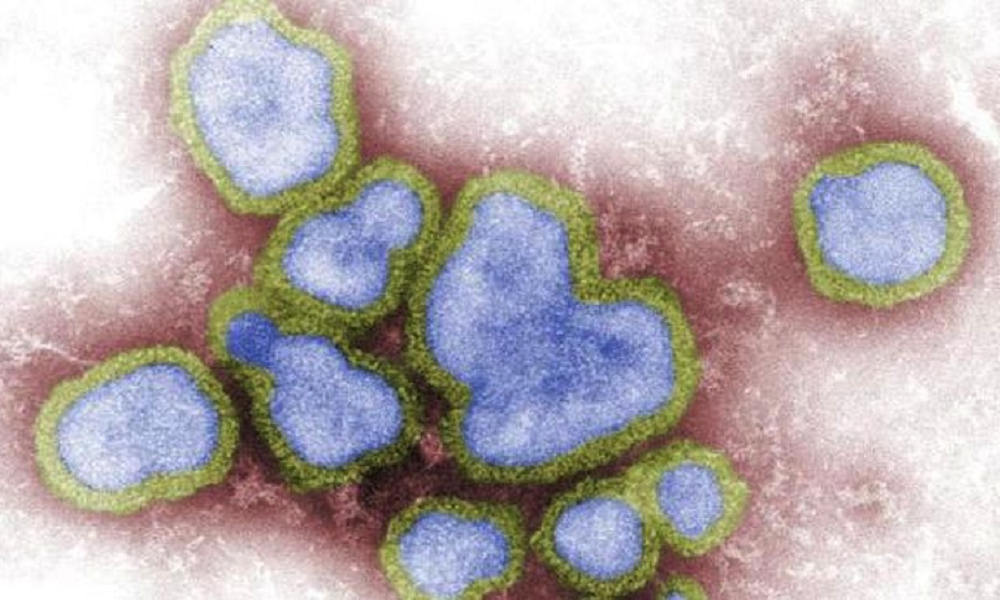
Micrograph of avian influenza, also known as bird flu (Credit: CDC/F.A. Murphy)
A 52-year-old woman in eastern China who tested positive for H5N1 bird flu earlier this year was also suffering from COVID-19, according to a new report, making it the first known case of co-infection with both viruses.
The woman, from a rural area in Anhui province, was exposed to sick poultry and developed a fever on February 1. She was initially given antibacterial treatment but was transferred to a hospital in Jiangsu province when her symptoms got worse.
At admission, the woman had a temperature of 39°C (102.2°F), worsening shortness of breath, decreased blood pressure, air bronchogram and lung consolidation, according to a team of researchers at the First Affiliated Hospital of Nanjing Medical University.
Dustin D. Goldsmith, 39, of McCall Creek, was charged with possession of wild game for commercial use, a Class 4 felony.
Hunter D. Baxter, 29, of Lucedale, was charged with possession of wild game for commercial use, a Class 4 felony, and unlawful use of weapons, a Class 3 felony.
EXTENDED SALE ENDS SOON: Only 25¢ for Unlimited Digital Access.
According to court documents, on or about April 2 Goldsmith allegedly captured, killed or possessed wild turkeys for profit or commercial purposes.
According to court documents, on or about March 6 Baxter allegedly captured, killed or possessed wild turkeys for profit or commercial purposes. On April 29, Baxter allegedly had a silencing attachment for a firearm.
PUBLISHED:July 7, 2023 at 12:44 p.m.| UPDATED:July 7, 2023 at 2:48 p.m.
A coyote stares and licks its lips as it stands in the front yard of a home in Rialto on Sunday, April 12, 2020. (Photo by Watchara Phomicinda, The Press-Enterprise/SCNG)
One of the first things I learned when I moved to Pasadena from Virginia is that I cannot leave my little dog Sueshi outside without me because — of course — we share our neighborhood with coyotes.
Sueshi and I run into coyotes almost every day on our walks. As you might imagine, I’m an expert hazer. The coyotes run away when I yell “go away” and wave my arms to appear threatening and bigger than my height of 5′ 5.”
Harvard Law School and NYU Center for Environmental & Animal Protection deliver a shocker for most Americans (but not for you!)
“For many Americans, concepts such as ‘bushmeat’ or ‘wildlife farming’ seem foreign,” opens Animal Markets & Zoonotic Disease in the United States, “but they refer to practices that are common within the United States as well, differentiated only by the language we use to describe them.”
Animal Markets & Zoonotic Disease in the United States, newly co-published by the Harvard Law School and the Center for Environmental & Animal Protection at New York University, offers little, including that insight, which will surprise longtime readers of ANIMALS 24-7.
Informed chiefly by multiple daily bulletins from ProMED, the Program for Monitoring Emerging Diseases, in which ANIMALS 24-7 has participated since within days of ProMED’s debut in 1994, we have extensively covered almost every topic raised by Animal Markets & Zoonotic Disease in the United States, many times, while wondering if anyone beyond ProMED and our own readership is paying attention.
But Animal Markets & Zoonotic Disease in the United States succinctly puts the whole mosaic of deadly zoonotic disease threats resulting from American treatment of animals together between one set of covers, with prestigious names and a thick alphabet soup of advanced degrees to lend emphasis to the discussion.
Animal Markets & Zoonotic Disease in the United States points out that despite all the wagging fingers pointed at China recently over outbreaks of SARS, the H5N1 avian flu, and COVID-19 , “More emerging infectious diseases originated in the United States than in any other country in the world during the second half of the 20th century,” including the 1918 “Spanish” influenza pandemic.
(Beth Clifton collage)
“Spanish” influenza & 2009 swine flu pandemic both started here
Contrary to common belief, the 1918 influenza pandemic—which “infected roughly 500 million people, one-third of the world’s total population, killing 12 times as many in absolute terms as has COVID-19 to date, ” did not start in Spain, nor in China.
Rather, the “Spanish” influenza “appears to have been born of humble origins deep in the American Heartland,” spreading from here to the rest of the world, remind the six co-authors and five reviewers of Animal Markets & Zoonotic Disease in the U.S.
As recently as 2009, Animal Markets & Zoonotic Disease in the U.S. recalls, “the influenza strain H1N1, known as ‘swine flu,’ swept through the U.S., infecting more than 100 million Americans and hospitalizing over 900,000.”
Then came COVID-19, originating in China, but killing 1.2 million Americans, nearly twice as many as anywhere else.
This occurred chiefly because “There is no single, unified federal or state authority responsible for the prevention, detection, and regulation of zoonotic disease. Rather, regulatory authority is divided among different government agencies, each tasked with overseeing particular types of animals or activities,” Animal Markets & Zoonotic Disease in the U.S. observes, from the collective perspectives of multiple lawyers and environmental health scientists.
“The result,” they continue, “is a poorly interlocking system whereby animals are divided into artificial categories and governed along similarly arbitrary divisions of administrative authority.”
(Beth Clifton collage)
Administrative bungling
In absence of any one federal agency with complete jurisdiction over zoonotic disease, administrative bungling from then-U.S. president Donald Trump on down left the U.S. with a more inept and ineffective response than any other developed nation––and as many deaths as Brazil and India combined, which have between them more than four times as many people.
“Trouble spots and gaps arise,” Animal Markets & Zoonotic Disease in the U.S. explains, “when animals are governed by regulatory categories such as ‘wildlife’ or ‘livestock,’ but do not fit neatly into either category.
“While disease can jump freely from wildlife to livestock to humans and back, the U.S. regulatory system struggles to exercise this same kind of flexibility. And because zoonotic disease touches on many different policy areas—including human health, environmental health, and animal health—it often falls on the fault lines between agencies, resulting in a lack of unified and comprehensive government action.”
COVID & salmonella on the job. (Beth Clifton collage)
Not even China has comparable culpability
Animal Markets & Zoonotic Disease in the United States exemplifies this underlying problem by looking first in depth at wildlife trafficking, an issue in which no other nation, not even China, has comparable culpability.
The U.S. is “the largest importer of wildlife in the world, bringing in more than 220 million live wild animals and their diseases each year.”
Yet, “An overwhelming majority of live wild animals are never physically inspected upon entering the country, nor are they quarantined,” because the U.S. Fish & Wildlife Service “has no legal authority to check wildlife imports for disease unless mandated to do so by another agency,” such as the Centers for Disease Control & Prevention or the Department of Agriculture.
“If you try to bring a dog or cat home from abroad with you, your “companion animal may be required to go through veterinary checks and a 30-day quarantine period,” notes Animal Markets & Zoonotic Disease in the United States, “while a commercial wholesaler importing hundreds of sugar gliders or other wild animals would not be subject to either process. Similarly, an individual cannot bring meat from abroad back to the United States, but one can import live wild animals from those same countries with very little scrutiny.”
(Beth Clifton collage)
High-risk species in American homes
Reminds Animal Markets & Zoonotic Disease in the United States, citing several examples, “The exotic pet trade is problematic from a public health standpoint because it brings high-risk species into American homes,” and not just occasionally.
Indeed, “studies have shown that at least 50%–90% of snakes, turtles, and lizards are carriers of salmonella,” Animal Markets & Zoonotic Disease in the United States summarizes,yet “these animals are handled and held by individuals, often children, with few sanitary precautions.
“Other diseases are rare but can be quite deadly,” especially those carried by non-human primates, such as “yellow fever, Ebola, dengue, viral hepatitis, and disease caused by poxviruses,” as well as herpes B, carried by 80%–90% of macaques, transmitted through bites.
“Monkeys have also been shown to transmit bacterial zoonotic diseases to humans including tuberculosis and others,” Animal Markets & Zoonotic Disease in the United States mentions in passing.
(Beth Clifton collage)
Invisible threat
However, “While the exotic pet trade is vast in scale,” Animal Markets & Zoonotic Disease in the United States warns, “it is also largely invisible. Exotic pet auctions and swap meets typically do not allow cameras. Sales frequently take place without adequate record-keeping. The exotic pet industry has proven highly resistant to regulation.
“Yet, the catalog of species and associated diseases involved in the trade is seemingly endless,” with neither the Endangered Species Act nor the Convention on International Trade in Endangered Species of Wild Fauna & Flora including any provisions to intercept zoonoses.
“The Animal Welfare Act requires breeders, wholesalers, dealers, transporters, and sellers of exotic and wild animals to be licensed,” Animal Markets & Zoonotic Disease in the United States, allows, “but only provides limited oversight.
“Moreover, Animal Welfare Act provisions have little direct impact on disease risk, and the Act exempts broad categories of animals—including reptiles, amphibians, birds,” and most rodents.
(Beth Clifton collage)
Zoonotic disease linked to hunting kills more people than hunting accidents
Hunting likewise presents substantial zoonotic disease risk, with little awareness of the risk factors among either the participants or the regulators.
“Wild aquatic birds, the natural reservoirs for avian influenza,” Animal Markets & Zoonotic Disease in the United States mentions, “have transmitted low pathogenic strains of virus to hunters. If more deadly high pathogenic strains of the virus were introduced in North America,” which could occur with fall migration in any year after waterfowl from around the world spend the summer mixing and mingling inside the Arctic Circle, “the risk for human exposure to the virus through hunting could be substantial.”
Such exposure can be indirect. For instance, droppings from infected migratory waterfowl are believed to have caused “documented H5N1 outbreaks at 16 game bird farms in the last year alone,” the authors of Animal Markets & Zoonotic Disease in the United States note.
(Beth Clifton collage)
Mixing species who would never meet in nature
Captive hunting operations, like the exotic pet trade, “allow for the mixing of a wide range of species from different continents that would never encounter one another in nature,” Animal Markets & Zoonotic Disease in the United States explains. “This interspecies contact may offer pathogens additional opportunities to spread among species and provide them new pathways to reach humans.
“Other conditions of captive hunting facilities also lend themselves to zoonotic transmission. For example, animals are artificially concentrated in large numbers, with both native and non-native species confined in fenced areas sharing the same feeding stations and water sources.”
Zoonotic disease transmission associated with hunting ranches has not been completely ignored.
“Tuberculosis and brucellosis are two significant zoonoses found in farm-raised bison, deer, and elk,” Animal Markets & Zoonotic Disease in the United States recalls. “But, due in part to a 2015 federal eradication program in cattle and captive deer, these diseases are fairly uncommon in the United States.
“More recently farmed deer have been found to carry SARS-CoV-2 [better known as COVID-19]. Researchers found that 30% of captive and wild deer tested in Iowa in 2020 carried SARS-CoV-2, with one herd having infection rates over 80%.
“USDA research in early 2020 showed that although deer did not show symptoms, they can transmit the disease. At the time of this writing, deer,” including wild deer, “appear to be spreading the disease back to humans.”
So-called “fence-line transmission” of chronic wasting disease, CWD for short, starting with ranched elk infecting wild elk at hunting ranches in the Rocky Mountains, “has been reported in 29 states and is considered endemic in some, including Colorado, Wyoming, and Nebraska,” Animal Markets & Zoonotic Disease in the United States recounts.
“In certain areas, roughly 10% of free-roaming deer carry the disease,” Animal Markets & Zoonotic Disease in the United States adds, but “the CDC reports that, on some big game ranches, 79% of deer tested positive for CWD.”
CWD, a prionic disease related to “mad cow disease” and Creutzfeldt-Jakob disease in humans, is not known to have had human victims––yet––but hunters in CWD-endemic areas are commonly advised against eating their kills.
However, Animal Markets & Zoonotic Disease in the United States observes, “state departments of fish and game are reliant on the sale of hunting licenses, and by proxy, the sale of wildlife. These incentives may allow disease risk to be overlooked in favor of revenue, for example, in the case of state-run feeding grounds for elk.
“To keep population numbers high and protect hunting revenue, Wyoming has created artificial environments of 800 or more animals per acre, in which diseases like brucellosis are found at thirteen times normal levels.”
Serious as the threats associated with wildlife trafficking and hunting are, Animal Markets & Zoonotic Disease in the United States emphasizes that, “Eight of the 10 species who share the highest number of viruses with humans are domestic species, including pigs, cattle, sheep, and goats.
“Ninety-eight percent of livestock in the United States live on large-scale facilities known as CAFOs (‘concentrated animal feeding operations’), colloquially called ‘factory farms.’
“CAFOs are officially defined by the USDA as operations that house more than 2,500 swine, 1,000 head of beef cattle (raised for meat), 700 dairy cows (raised for milk), 125,000 broiler chickens (raised for meat), or 82,000 laying hens or pullets (raised for eggs).
“Wild aquatic birds are the natural reservoirs of avian influenzas and transmit the viruses to domestic poultry,” Animal Markets & Zoonotic Disease in the United States again explains, “who can then turn low-pathogenic strains to highly pathogenic strains, potentially spreading them to other species.
(Beth Clifton collage)
Chickens & pigs
“Both chicken and hog facilities are particularly susceptible to viral influenza, with hogs acting as a potential bridge species capable of passing avian influenza to humans and spawning new forms of disease.
“While recent prior outbreaks of avian influenza in humans have been rare and mostly limited to poultry workers, mortality was severe, ranging from 30%–60%. Estimates project an influenza A pandemic could infect 30% of the world’s population in a matter of months.”
Scared yet?
“Apart from direct transmission of pathogens,” Animal Markets & Zoonotic Disease in the United States continues, “overuse of antibiotics by CAFOs presents serious risks to public health. Antibiotic drugs are fed to animals to prevent and treat illness, often caused by poor living conditions, as well as to stimulate their growth.”
This “encourages the development of antibiotic-resistant pathogens,” Animal Markets & Zoonotic Disease in the United States summarizes, “such that the livestock industry not only creates zoonotic disease exposure, but also undermines the human health system’s ability to treat some of those same diseases.”
Despite the magnitude of the associated risks, “Oversight of factory farms is limited,” Animal Markets & Zoonotic Disease in the United States continues. “Regulators may lack basic information about how many operations exist and where. Surveying aerial photographs in 2017, Iowa’s Department of Natural Resources found 4,200 previously unknown facilities in Iowa alone.
“Prior attempts by the Environmental Protection Agency to inventory and locate factory farms were abandoned following a string of lawsuits from the livestock industry.”
Animal Markets & Zoonotic Disease in the United States concedes that, “Many industrial animal agricultural operations “have higher levels of biosecurity than other industries. Access to these facilities is tightly controlled,” but “Intense biosecurity goes hand-in-hand with a lack of transparency at these facilities that are closed to the public, journalists, and regulators, such that much of what is known of conditions in CAFOs comes through private undercover investigations or whistleblowers.
(Beth Clifton collage)
Strict biosecurity is not enough
“Ongoing H5N1 influenza outbreaks demonstrate that even with strict biosecurity protections in place, and advanced warning about impending disease, many producers are still unable to prevent infection.
“Over the last 60 years,” Animal Markets & Zoonotic Disease in the United States continues, “production of both pigs and poultry has become increasingly clustered, concentrating in regions of the Midwest and Southeast and overlapping in areas like Iowa and North Carolina.
“In these places, each form of production makes the other more dangerous.
“Though both USDA and CDC are well versed in the risks,” Animal Markets & Zoonotic Disease in the United States charges, “neither imposes any regulation to separate pig and poultry operations in order to prevent the creation of new influenza viruses.
(Beth Clifton collage)
From pigs to mink
“The interplay between different animal industries can amplify risk in other ways as well,” Animal Markets & Zoonotic Disease in the United States adds. “For example, pathogens can spread as animals produced in one industry are used to feed animals in another. In an outbreak of influenza outbreak among 15,000 mink held on a Midwestern fur farm, researchers determined that the animals likely became infected when they were fed raw or partially-cooked turkey meat from birds who were carrying the virus.
“However, laboratory analysis suggested that the strain the mink were infected with originated in swine—likely moving from a pig facility to infect nearby turkeys before the birds were slaughtered and fed to captive mink.”
(Beth Clifton collage)
Hiding the evidence
Speaking of mink, “Eighteen mink farms across four states experienced outbreaks of COVID-19,” Animal Markets & Zoonotic Disease in the United States recalls.
“The CDC waited several months after confirming that mink may have spread COVID-19 to farm workers in Michigan before releasing this information.”
Meanwhile, “Public records requests reveal that, in the wake of COVID-19 outbreaks on Utah mink farms, the state department of public health was denied access to the infected fur farms while attempting to carry out testing in an effort to contain the spread.
“Fur Commission USA, the industry’s largest trade group, issued warnings to its members not to allow reporters or researchers near their mink sheds.”
(Beth Clifton collage)
Raw milk
Almost as an aside, tucked within a discussion of zoonotic disease risk associated with camel farming, of which there is very little in the U.S., Animal Markets & Zoonotic Disease in the United States, mentions that “31 states allow for the sale of raw milk [primarily from cows and goats], which in particular carries a greater risk of brucellosis than pasteurized milk. Studies have shown that states that legalize raw milk sales experienced greater numbers of disease outbreaks related to milk consumption.”
Several industries ancillary to animal agriculture are comparatively small, but also contribute outsized zoonotic disease risk, including livestock auctions, fairs, petting zoos, and especially live markets.
Like exotic animal auctions, livestock auctions, fairs, petting zoos, and live markets bring together a variety of species under conditions which not only allow pathogens to spread, but are conducive to reassortment of viruses and bacteria to create mutated new pathogens.
“There is often a lack of sanitation and transparency,” at such sites, Animal Markets & Zoonotic Disease in the United States observes. “Journalists and photographers are sometimes not allowed to document certain portions—sometimes any portions” of the events and locations.
“Additionally, lack of record-keeping means that it may be very difficult to trace and control a disease outbreak sourced from” any of these points.
(Beth Clifton collage)
U.S. leads world in swine-origin influenza outbreaks
“Roadside petting zoos have been linked to numerous zoonotic outbreaks, including bacterial, viral, and fungal infections,” Animal Markets & Zoonotic Disease in the United States reminds.
“Fairs are almost never limited to one species of animal, which presents additional opportunities for the spread of viruses. Perhaps the most dangerous of these combinations is poultry and swine, as pigs are susceptible to many forms of avian influenza and provide an ideal mixing vessel for the creation of novel strains of influenza virus.
“Over the last decade, following the 2009 H1N1 swine flu epidemic,” Animal Markets & Zoonotic Disease in the United States says, “the U.S. has recorded the highest number of swine-origin influenza infections of any country in the world.
“The vast majority of these infections occurred in youth swine exhibitors at state and county fairs. Roughly 18% of swine at county fairs test positive for influenza A.9.”
Storefront live markets were in almost every neighborhood circa 1920. They still exist, but not as obviously.
Live markets
Live markets, to be found in every major U.S. city and many small towns, “are typically retail food markets,” selling poultry, mammals (predominantly rabbits, pigs, calves, sheep, and goats), fish, and other aquatic animals (predominantly frogs, turtles, and crustaceans).”
Though little noticed by most of the public, “Hundreds of such markets operate across the United States,” Animal Markets & Zoonotic Disease in the United States details. “The USDA estimates that more than 25 million birds of different species pass through 130 known live bird markets in the Northeast alone each year.
“The dominant disease risk from live poultry markets is influenza. Live bird markets are particularly high-risk in this respect because they often combine waterfowl—the natural reservoirs of influenza—with chickens and other poultry who can become infected and potentially spread the virus to other animals and humans.”
(Beth Clifton collage)
Ritual slaughter
Many live markets serve ethnic minorities, including supplying animals for sacrificial rituals. After reviewing the zoonotic disease threats associated with Islamic ritual slaughter and the Caribbean practice of Santeria, Animal Markets & Zoonotic Disease in the United States assesses that, “While many forms of sacrificial slaughter pose heightened zoonotic disease risk due to a lack of biosecurity and oversight, perhaps the most significant risk comes from the [Hassidic] Jewish practice of Kapparos (Kapparot).
“Each year in New York City alone, Kaporos practitioners sacrifice an estimated 60,000 chickens in public streets over the course of a few days before the onset of Yom Kippur.
“Practitioners are expected to directly handle the birds before and during slaughter.
“The quantity of those interactions, as well as the resultant biofluids such as blood and excrement that can contaminate public streets, make this form of sacrificial slaughter particularly high-risk for public health.”
Backyard bird keepers, chiefly raising hens and secondarily raising gamefowl for cockfighting, produce about 18.7 million birds per year, according to USDA estimates.
“Unlike industrial poultry producers, backyard bird operations impose few if any biosecurity measures,” Animal Markets & Zoonotic Disease in the United States reports.
“Half or more of the birds have contact with wildlife—including waterfowl, the natural reservoirs for avian influenza.
“In addition, many owners raise multiple species of birds or other animals. Sixteen percent of operators also raise pigs, a species that can serve as a mixing vessel for influenza viruses and may transmit them to humans.
“Backyard poultry have also been affected by the current avian influenza outbreak, which, at the time of this writing, has reached 507 backyard flocks along with 325 commercial suppliers, leaving a total of over 58.7 million poultry dead.”
(Beth Clifton collage)
Cockfighting
“Though animal fighting is a relatively small market,” Animal Markets & Zoonotic Disease in the United States warns, “it may convey significant zoonotic risk to those individuals involved in the practice because they are directly exposed to blood and other fluids. Participants regularly handle injured animals or animal carcasses and, without proper sanitation, could easily become infected with any pathogens that the animal carried.
“Cockfighting operations in particular may allow for the transmission of avian influenza and other highly contagious diseases. These concerns are augmented by a distinct lack of veterinary care and transparency.”
Steve Hindi, Karen Davis, & Eric Mills have warned the world for decades. (Beth Clifton collage)
Mills, Davis, & Hindi warned them
Yet, Animal Markets & Zoonotic Disease in the United States continues, “It was not until the 2002-2003 outbreak of Newcastle disease that the cockfighting industry and its movements came to be better understood by regulators.
“At the time, the industry was estimated to be worth $50 million in California alone and used a sophisticated system to transport birds illegally despite the state and federal quarantines in place.”
Animal Markets & Zoonotic Disease in the United States does not mention that three of the most frequent ANIMALS 24-7 contributors––Eric Mills of Action for Animals, Karen Davis of United Poultry Concerns, and Steve Hindi of Showing Animals Respect & Kindness––have been struggling for thirty-odd years each to get indifferent public officials to enforce animal welfare laws already on the books that could prevent the disease risks associated, respectively, with live markets, Kaporos, and cockfighting.
(Beth Clifton collage)
Imports for lab use
What about animal use in biomedical research?
“Perhaps in part due to the fact that animals are often kept in isolation, and in part due to self-imposed protocols,” Animal Markets & Zoonotic Disease in the United States says, “instances of zoonotic disease outbreaks appear quite rare in research facilities.”
But imports of monkeys from abroad for laboratory use, in particular, has brought new diseases into the U.S.
“For example,” Animal Markets & Zoonotic Disease in the United States recites, in 1989 “100 monkeys who were imported by the Hazelton Research Products facility in Reston, Virginia carried a new strain of Ebola virus,” which infected one worker at the Kennedy Animalport in New York City and several laboratory employees.
William Karesh [left], whose alleged “gain of function” research in China has become a favorite target of COVID conspiracy theorists, and ANIMALS 24-7 editor Merritt Clifton [right]. (Beth Clifton photo)
“Gain of function”
“Several biosecurity labs in the United States carry out research focused on infectious disease wherein animals are deliberately infected or exposed to dangerous pathogens,” Animal Markets & Zoonotic Disease in the United States continues. “Some of these studies have led to exposure among laboratory workers who then risk spreading these diseases to the general public.
“Perhaps the most controversial type of research study,” Animal Markets & Zoonotic Disease in the United States notes, “is ‘gain of function research,’” the subject of innumerable ill-founded conspiracy theories associated with COVID-19, “which seeks to better understand how pathogens, often animal pathogens, could be altered and made to adapt and acquire new capacities such as becoming more virulent, more transmissible, or better able to infect new hosts, often for the purposes of defending against them.”
While the conspiracy theorists typically impute that “gain of function research” is something sinister done only in Wuhan, China, reality is that most “gain of function research” on record has been done, and is being done, right here in the U.S.
Bat Conservation International founder Merlin Tuttle. (Beth Clifton collage)
“Holy cow, Batman!”
And then there is out-and-out batshit craziness.
“Many bacterial, fungal, and viral pathogens have been identified in bat guano,” Animal Markets & Zoonotic Disease in the United States understates. “Bats are believed to be a reservoir for many viruses, including SARS-related coronaviruses,” among them COVID-19, Nipah virus, Ebola virus, rabies, the MERS coronavirus (MERS-CoV), as well as others, “and carry the fungus that causes histoplasmosis in humans.
“There has been at least one reported instance in China of bat-human disease transmission during the process of guano harvesting,” Animal Markets & Zoonotic Disease in the United States says, “in which six men fell ill with a severe respiratory disease.”
(Beth Clifton collage)
Batshit in Texas
But this is hardly just a Chinese problem.
“Bracken Cave near San Antonio, Texas supports more than 15 million Mexican free-tailed bats and is the largest bat maternal nesting colony in the world,” Animal Markets & Zoonotic Disease in the United States says. “Purveyors harvest up to 50 tons of guano annually from Bracken cave alone.
“Similar caves are found around the United States, including in Oklahoma, California, Tennessee, and Maryland.
“There are state and local guidelines as well as CDC guidelines for handling bats, but there are no known regulations in the United States governing bat guano farming.”
(Beth Clifton collage)
$773 billion for defense, but only $468 million for pandemic preparedness
The bottom line, for Animal Markets & Zoonotic Disease in the United States, is that “More people died in one day in 2020 from COVID-19 complications than from the attacks of September 11, 2001. Yet the fiscal year 2023 defense budget released by President Joe Biden appropriated only $468 million for pandemic preparedness, compared to $773 billion allocated for defense.”
Animal Markets & Zoonotic Disease in the United States was researched and written by Ann Linder, Valerie Wilson McCarthy, Chris Green, Bonnie Nadzam, Dale Jamieson, and Kristen Stilt. It was independently reviewed by Kelsey Eberly, Doug Kysar, Carney Anne Nassar, Jonathan Pekar, and Delcianna Winders.
Chamarajanagar: Forest officials on Friday arrested four men who had allegedly hunted deer in the forest region of the district.
The arrested men have been identified as Muttappa, Irfan Baig and Salim of Basappanadoddi village and Venkatesh, who is a resident of Ajipura village.
The forest officials had raided a house in the Vadakehalla forest area of the Male Mahadeshwara Wildlife Sanctuary on receiving a tip-off that a deer had been hunted in the area and the hunters were also cooking the meat. The officials confiscated 11 kg meat, a rifle and two-wheelers from the arrested men, who have been remanded in judicial custody by the court.
The investigation team included Regional Forest Officer Praveen Kumar, Deputy Regional Forest Officers Salan and Prasad, Conservators of Forest Parashuram and Anil Kumar and forest guards Ganesh and Prabhu.
As the world has gotten hotter, more people are exposed to dangerously high temperatures each year. Recent findings published in Nature Sustainability show that without policy changes, the world will heat up enough by the end of the century that more than 2 billion people will live in life-threatening hot climates, as Science Hub reported.
What’s happening?
So far, the world’s average temperature has risen by just under 1.2 degrees Celsius (about 2 degrees Fahrenheit) above preindustrial level due to human activity, according to Science Hub. The Paris Agreement — an international treaty to limit heat-trapping gases produced by each country and stop the world from getting hotter — proposed to cap the increase at 2.7 degrees Fahrenheit.
However, the new study found that with the current laws, population growth, and environmental conditions, the world will likely reach about 4.8 degrees Fahrenheit above the preindustrial benchmark, per Science Hub.
The researchers then looked at which areas would be most affected if the temperature increased to that level. They defined “unprecedented heat” zones as areas where the average temperature throughout the year, counting all seasons, is 84.2 degrees Fahrenheit or higher.
Science Hub reported that 40 years ago, only 12 million people worldwide lived in regions with temperatures surpassing that heat. Today, thanks to the warming we’ve already experienced, about 60 million people are affected.
The study found that by 2100, 2 billion out of the world’s projected population of 9.5 billion will live in areas with an average temperature higher than 84.2 degrees Fahrenheit. The most affected areas will be countries around the equator, noted Science Hub: India, Nigeria, Indonesia, the Philippines, and Pakistan.
Why is this heating worrisome?
The hotter the world gets, the more heat waves, droughts, and wildfires we experience. As Science Hub reported, studies have also linked the rising heat to everything from more contagious diseases to lower labor efficiency and more conflict between people.
“That’s a profound reshaping of the habitability of the surface of the planet, and could lead potentially to the large-scale reorganization of where people live,” study author Tim Lenton, director of the Global Systems Institute at the University of Exeter, told ScienceAlert.
What’s being done?
Science Hub reported that if the global community reaches the goal set by the Paris Agreement, the affected population would be limited to half a billion people instead of 2 billion.
In the meantime, individuals can protect themselves from heat waves with these tips for cooling off.
Join our free newsletter for cool news and cool tips that make it easy to help yourself while helping the planet.