FILE — A squirrel climbs a fence in Central Park, May 2, 2020, in New York. New York could ban contests that involve killing coyotes, squirrels and some other wildlife species for cash prizes. (AP Photo/Frank Franklin II, File)The Associated Press
ALBANY, N.Y. –The contests have names such as Predator Slam, Squirrel Scramble and Final Fling for Fox, sometimes challenging hunters to bag the heaviest coyote or the heftiest bunch of squirrels to win a cash prize.
While participants seek prey in the name of fundraising, animal rights advocates are training their sights on contests they see as senseless slaughters. With bans in eight states, activists are now looking to New York, where Gov. Kathy Hochul is considering a proposal recently approved by the Legislature.
OROFINO – Raoul Brown has been sentenced in Clearwater County District Court after pleading guilty to felony Involuntary Manslaughter in April. Brown shot and killed 38-year-old Lanae Tackely during a hunting incident in October of last year.
Brown was sentenced on Friday and will serve a minimum of two years in jail. The judge also issued a four year indeterminate sentence. Brown was also given credit for 219 days already served.
According to the Clearwater County Sheriff’s Office, deputies and medical crews responded to the area of South Dicks Creek and Teakean Butte at approximately 4:14 p.m. on October 15, 2022 after receiving reports of a shooting. Upon arrival, deputies found 38-year-old Lanae A. Tackely on the ground suffering from a gunshot wound.
According to a probable cause affidavit obtained by…
We hunters have been doing a good job of managing deer overpopulation for years now. Where’s the appreciation from you non-hunters? If you’re not part of the solution, you’re part of the problem.
Rolf, Bangor, Maine
Now hold it right there, Rolf! Which species of animal has the most out-of-control population in this country (or on the entire planet for that matter)? And no fair peeking in the mirror (unless you seriously want to address the problem). That’s right, it ‘s the species Homo sapiens. Assuming you consider yourself a human being, YOU are the problem!
Personally, I’d appreciate it if you would start managing your own population. As of this year, there are now EIGHT BILLION of us inhabiting this once wild and wonderful planet. Don’t fool yourself into thinking we’re in control of nature. We may be outnumbering and outgunning every other species, but in the…
YOU CAN SEND LETTERS TO THE EDITOR TO LETTERS@PRESSDEMOCRAT.COM.
July 20, 2023, 12:06AM
No moral high ground
EDITOR: I agree with your July 12 editorial’s premise that the United States should be a signatory to the Convention on Cluster Munitions signed by 123 other countries (“Cluster bombs are a step too far”). This treaty outlaws the production, possession and use of these indiscriminate killers. But to think that the U.S. is a principled player in the use of weapons of war is to ignore history.
The United States relinquished the moral high ground in warfare with the fire bombings of Dresden and Tokyo, followed by dropping atomic bombs on Hiroshima and Nagasaki during World War II. The extensive use of…
The report argues that nearly half of the planet’s animal species are now in decline, but unlike past mass extinctions, this one has been entirely caused by humans
F I G U R E 1 | Percentage of species per taxonomic group which have decreasing, stable, increasing… [+]DOI:10.1111/BRV.12974
Tragically, the global mass extinction event that we find ourselves in the midst of will be even worse than originally predicted, according to a recent study (ref). The international team of scientists came to their conclusion after analyzing population trends data for more than 71,000 animal species — including mammals, birds, reptiles, amphibians, fish and insects — from around the world to see how their numbers have changed…
DEATH VALLEY, California — A 71-year-old man died Tuesday after hiking in temperatures that were above 120 degrees and just hours after he had been interviewed by a newspaper reporter about the excessive heat.
The National Parks Service says in a news release that Los Angeles resident Steve Curry collapsed outside the restroom at Golden Canyon in Death Valley National Park just after 3:30 p.m. Other visitors who saw Curry called 911, but emergency workers with the park service and the Inyo County Sheriff’s Officer were unable to save him, despite performing CPR and using an automated external defibrillator.
A helicopter could not be sent to the site because of the extreme heat, the parks service says.
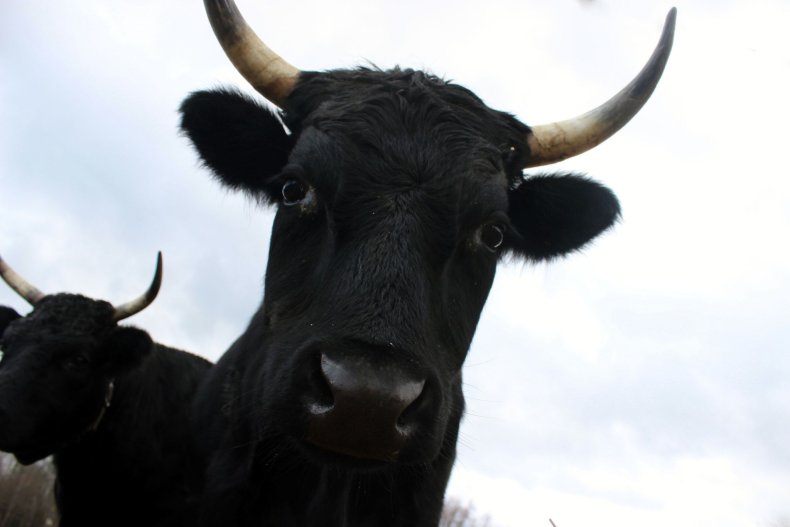
There are brains in the barnyard, according to a literature review published this week about cattle intelligence. The paper summarized a selection of peer-reviewed research that demonstrated bovine cognition, and determined that the animals can have “Eureka” moments, can be optimistic or pessimistic, are affected by painful experiences, protect their calves, and can recognize their friends.
“We wanted to dig into the objective scientific literature [on cattle] and say, ‘What do we know, who are they?’ and then put that back out to the public domain,” said Lori Marino. Marino is a neuroscientist and former faculty member in Neuroscience and Behavioral Biology at Emory University, and is also one of the authors of the paper.
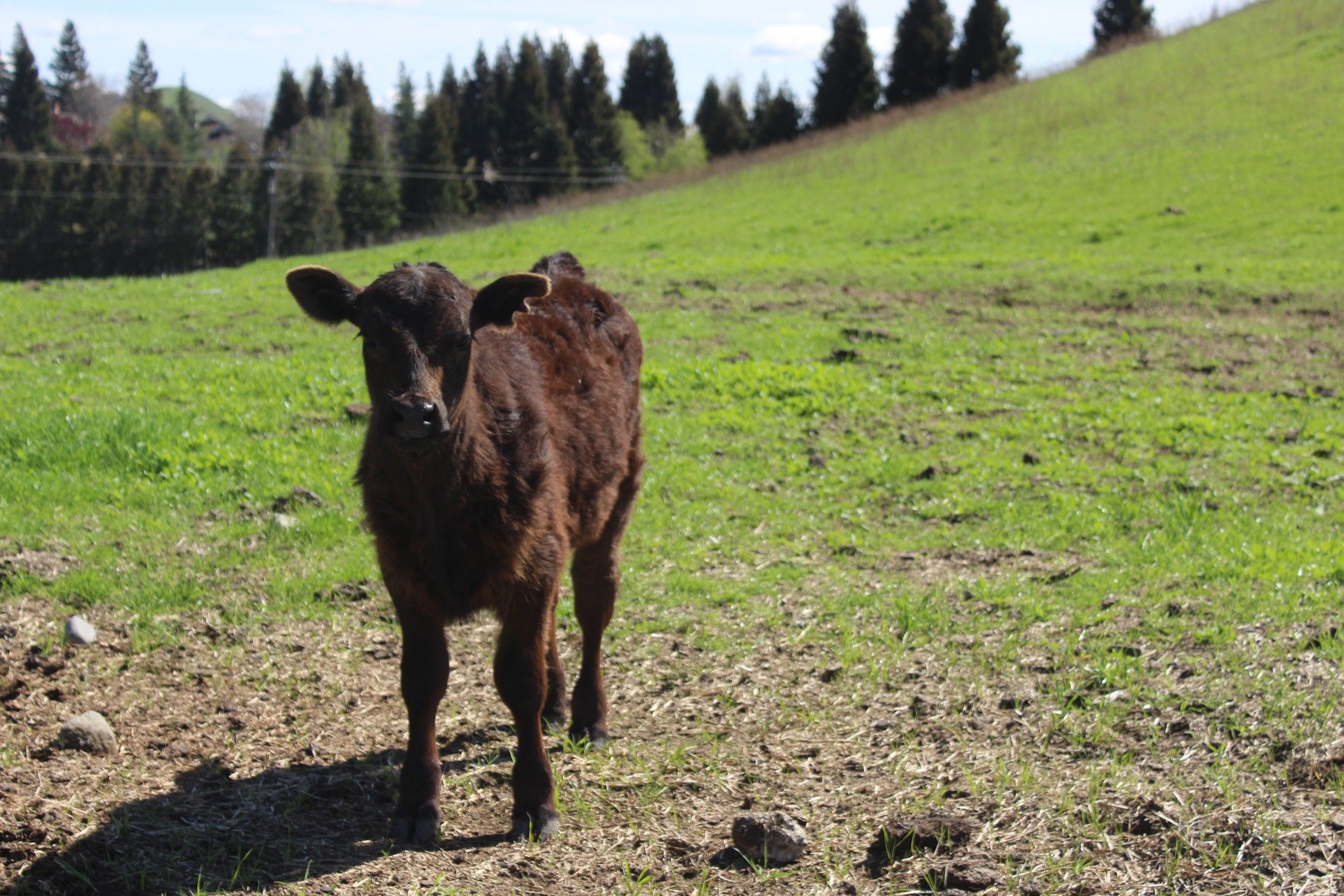
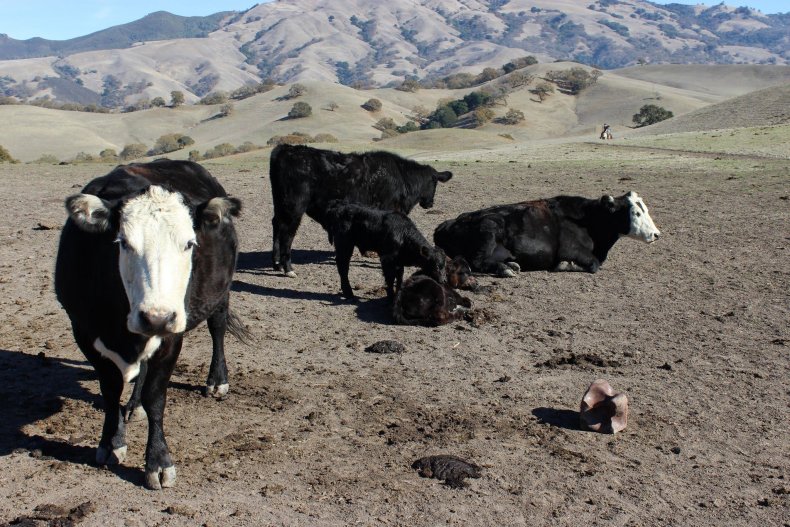
Cattle in the foothills of Mount Diablo.KRISTIN HUGO
Marino and Florida State University PhD student Kristin Allen cited more than 200 papers from 22 major journals and summarized indications of cow psychology, personalities, and intelligence. For example, dairy calves run around and play less after they have endured the procedures of disbudding, or having the buds of horns cut out of their head with a hot iron and without anesthesia, according to the journal Applied Animal Behaviour Science. The review paper considers the less active, dehorned cattle are pessimistic, whereas the more playful animals are optimistic.
Marino also says that cattle can experience “Eureka” moments. In research published in Applied Animal Behaviour Science, researchers observed cattle who were given a reward after completing a task, and gave the same reward to other cattle who had no control over their rewards. By measuring heart rate, they determined that the cattle who could control their own fate got more excited than the ones who were rewarded passively. This could be interpreted as cattle having an emotional reaction to finishing a puzzle, not just getting food.
It’s notable that, while the literature review cites peer-reviewed research, the paper itself could be influenced by a desire to improve the welfare of farm animals. The Someone Project, which funded the paper, is a joint endeadvor between Farm Sanctuary, a farm animal protection organization that runs three shelters for farm animals like cattle, and the Kimmela Center for Animal Advocacy.
Furthermore, in the same issue of Animal Behavior and Cognition, several other authors published their commentaries on the paper, with positive and negative takes. One called it ” a case of over-interpretation and personification,” stating that the authors anthropomorphize the animals, or compared them to humans when they shouldn’t have.
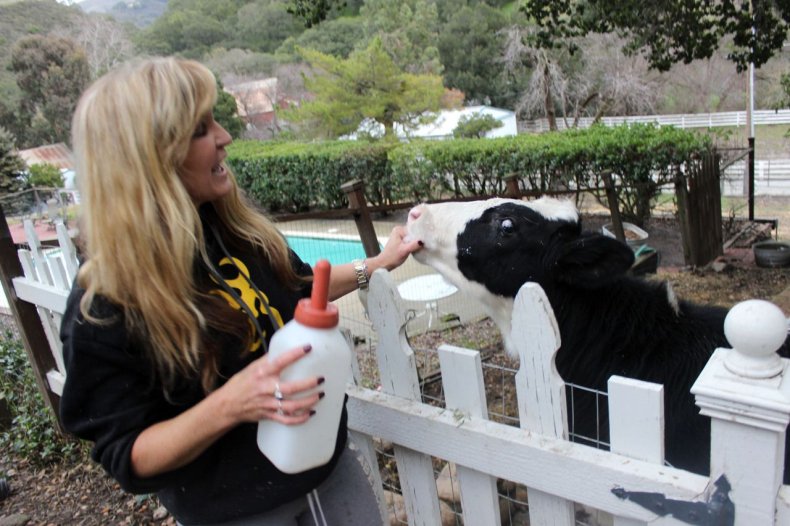
Goliath the former dairy calf sucks on the fingers of animal rescuer Christine Hubbs.KRISTIN HUGO
Phoenix Faces Hottest Day In 6 Years: Here’s Where Else Records Could Fall
Was this content a good use of your time?
Your feedback will help us improve the product
Topline
An unrelenting series of summer heat waves have shattered single-day temperature records throughout the South and Southwest this summer, breaking longstanding records in major cities across the country, as “dangerously” hot conditions linger this week from California to Florida.
July 19Phoenixbrokeits latest in a string of daily temperature records amid a historic heat wave in the southwest, with the temperature at Phoenix’s Sky Harbor Airport reaching 117 degrees, the hottest day since 2017 and the city’s fourth hottest day…
Openings intended for wildlife will be put into portions of the U.S.-Mexico border wall — including sections in Arizona — under terms of a settlement in a lawsuit over how the Trump administration paid for new construction.
The deal filed this week in federal court spells out that there will be a passage of 5 feet by 7 feet in the Perilla Mountains corridor in Cochise County to accommodate jaguars and black bears.
The Sonoran pronghorn will get to go through an opening no shorter than 18 feet to be put in the Cabeza Prieta National Wildlife Refuge in Pima County.
A Sonoran pronghorn at Cabeza Prieta National Wildlife Refuge.Mark Henle, Arizona Republic 2017
The border wall pass-throughs are the result of the settlement agreed to by the federal government to end a 4-year-old lawsuit. It challenged the Trump administration’s use of military construction and other funds, which courts have previously ruled was illegal, to build new border barriers despite the fact Congress never approved use of the money.
From the perspective of the Sierra Club and the Southern Border Communities Coalition, which first sued in 2019, the construction caused extensive damage and affected some threatened or endangered species. The settlement calls for the U.S. Department of Homeland Security to create some breaches in the barrier to allow large animals that have migration patterns along the border to pass through.
There will also be at least 20 passages installed for small wildlife, no smaller than an 8.5-by-11-inch sheet of paper, at various locations along the border.
The federal agency also agreed to open, on a full-time basis, various stormwater gates built into the existing barrier system, also with certain species in mind.
In Arizona, the San Pedro River is specifically included, along with two other areas in Cochise County in the San Bernardino National Wildlife Refuge. There will also be two in Organ Pipe National Monument in Pima County.
As part of the deal, Homeland Security is entitled to install gates that would allow the passages to be closed due to “exigent circumstances or border security operations.’’
It also permits the federal agency to place “wildlife-friendly infrastructure’’ near the passages and other barriers to detect unauthorized entry into the United States.
The U.S./Mexico border wall along the San Pedro River in the San Pedro Riparian National Conservation Area.Mamta Popat / Arizona Daily Star 2021
Remote areas
The idea isn’t to create new openings for migrants, said Erick Meza, borderland coordinator for the Sierra Club.
“We selected these openings in areas that are remote where we have historically seen not so many migrants moving through these spaces,’’ said Meza.
He acknowledged that, strictly speaking, these openings are large enough so they also could be used by people seeking to cross the border illegally. But it does not mean unrestricted access, he said.
“They will be monitoring with the use of technology,’’ Meza said, referring to the Border Patrol.
“The technology is already there in some of these cases,’’ Meza said, with some spots already within the view of towers with cameras. “This won’t be so much of a change for them.’’
The agreement was designed to keep a certain amount of flexibility in how these passages would be designed, said Cecillia Wang, deputy legal director of the American Civil Liberties Union, which represented the Sierra Club.
One option for openings, she said, would be a Normandy-style fence, essentially a barrier that keeps vehicles from crossing but does not deter wildlife.
That kind of structure, Wang acknowledged, also would allow individuals to cross. But she said it is important to put all that into perspective.
“Congress said ‘no’ to border wall construction in these locations, and presumably had good reasons for doing that,’’ which is why Trump instead illegally diverted the military money, she aid.
“The baseline isn’t that there should be wall here to prevent people and vehicles from going back and forth,’’ Wang said. “The baseline is there never should have been border wall there in the first place.”
Federal border officers have many ways to prevent and detect border crossings “besides building a border wall,” she said.
Pronghorn afraid of being enclosed
Meza said it is important to create these large openings.
Consider, he said, the Sonoran pronghorn.
For most other species, a culvert would be sufficient. Not pronghorn.
“They’re afraid of being enclosed,’’ Meza said. “They are prey. So they like open spaces.’’
The agreement considers the needs of other species that need cross-border access, as well.
For example, it specifically prohibits the use of razor wire. But it does permit barbed wire to prevent cattle from crossing the border.
But here, too, Meza said, the agreement requires it be designed so it doesn’t stop wildlife.
Cabeza Prieta National Wildlife Refuge near Ajo.Christopher Reynolds, Los Angeles Times file photo
So, for example, he said, a barrier could include a strand of barbed wire near the top — high enough to deter cattle but also high enough so that bears and wolves could pass underneath.
Overall, the deal also includes nearly $1.2 billion largely to remediate damage caused by construction.
Doesn’t cover future wall construction
The government also agreed to a process to notify various groups about any future plans for construction as well as provide them with opportunities for input.
Strictly speaking, the agreement does not preclude future border wall construction. It covers only the areas that were financed solely through the illegal diversion.
That, at least on paper, permits the Biden administration and successor administrations to use other lawfully acquired and congressionally approved dollars to erect barriers elsewhere.
But Ricky Garza, border policy counsel for the Southern Border Communities Coalition, said the government has agreed to notify and consult with his group as well as the Sierra Club before any future projects begin. That will provide an opportunity to seek changes to minimize impact, Garza said.
Money going back to defense projects
Aside from the nearly $1.2 billion for mitigation projects, the deal requires that another almost $430 million be refunded to the Department of Defense to go back to the original projects for which the dollars were allocated.
For example, there is $160 million for projects at West Point in New York, $95 million for construction at Holloman Air Force Base and White Sands missile range in New Mexico, and more than $36 million for military projects in Virginia.
That explains why those states filed their own lawsuits against the Trump administration for illegal diversion of funds. Their claims also were settled with the new deal.
The World Health Organisation says more than two dozen cats have been infected with bird flu across Poland, but no people appeared to have been sickened.
In a statement, the UN health agency said it was the first time so many cats had been reported to have bird flu over such a wide geographical area in a single country, amid an unprecedented global outbreak of the latest version of the H5N1 version of the disease.
WHO said that late last month, Polish authorities informed agency officials of the unusual deaths of more than 45 cats in 13 geographical regions of the country. Testing last week found that 29 had H5N1.
Dozens of cats in Poland have died with bird flu. (Getty Images/iStockphoto)
As of June, the most recent variant of H5N1 has been reported in birds and other animal species in Asia, Africa, Europe and the Americas.
Since 2020, WHO said a dozen human cases have been reported.
Scientists worry that rising cases of H5N1, particularly in animals that have frequent contact with humans, might lead to a mutated version of the disease that could spread easily between people, triggering another pandemic.
Before the COVID-19 pandemic, many experts had suspected that the next global outbreak would be sparked by H5N1.
But while bird flu has killed hundreds of millions of birds globally, it has sickened fewer than 900 people since 2003 and has not been able to spread easily among humans.
WHO said it was unclear how the domestic cats in Poland became infected with bird flu and said officials were still investigating possible sources of exposure, including contact with wild birds that are known to carry H5N1.
The agency said the risk of people in Poland being infected with bird flu was “low” and “low to moderate” for people exposed to cats, including cat owners and veterinarians.
Last week, WHO and partners warned that the increasing numbers of mammals infected with H5N1 were unusual.
Experts have previously cautioned that pigs, which are susceptible to flu viruses from both humans and birds, might act as a “mixing vessel,” leading to the emergence of mutated viruses that could be lethal to people.
Since last year, authorities in 10 countries have reported bird flu outbreaks in mammals, including farmed mink in Spain, seals in the US, and sea lions in Peru and Chile.