‘We are damned fools’: scientist who sounded climate alarm in 80s warns of worse to come

James Hansen, who testified to Congress on global heating in 1988, says world is approaching a ‘new climate frontier’

Oliver Milman

@olliemilmanWed 19 Jul 2023 06.00 EDT

The world is shifting towards a superheated climate not seen in the past 1m years, prior to human existence, because “we are damned fools” for not acting upon warnings over the climate crisis, according to James Hansen, the US scientist who alerted the world to the greenhouse effect in the 1980s.

Hansen, whose testimony to the US Senate in 1988 is cited as the first high-profile revelation of global heating, warned in a statement with two other scientists that the world was moving towards a “new climate frontier” with temperatures higher than at any point over the past million years, bringing impacts such as stronger storms, heatwaves and droughts.

The world has already warmed by about 1.2C since mass industrialization, causing a 20% chance of having the sort of extreme summer temperatures currently seen in many parts of the northern hemisphere, up from a 1% chance 50 years ago, Hansen said.

“There’s a lot more in the pipeline, unless we reduce the greenhouse gas amounts,” Hansen, who is 82, told the Guardian. “These superstorms are a taste of the storms of my grandchildren. We are headed wittingly into the new reality – we knew it was coming.”

Hansen was a Nasa climate scientist when he warned lawmakers of growing global heating and has since taken part in protests alongside activists to decry the lack of action to reduce planet-heating emissions in the decades since.

James Hansen: ‘There’s a lot more in the pipeline, unless we reduce the greenhouse gas amounts.’
James Hansen: ‘There’s a lot more in the pipeline, unless we reduce the greenhouse gas amounts.’ Photograph: Murdo MacLeod/The Guardian

He said the record heatwaves that have roiled the US, Europe, China and elsewhere in recent weeks have heightened “a sense of disappointment that we scientists did not communicate more clearly and that we did not elect leaders capable of a more intelligent response”.

“It means we are damned fools,” Hansen said of humanity’s ponderous response to the climate crisis. “We have to taste it to believe it.”

This year looks likely to be the hottest ever recorded globally, with the summer already seeing the hottest June and, possibly, hottest week ever reliably measured. Conversely, 2023 may in time be considered an average or even mild year, as temperatures continue to climb. “Things will get worse before they get better,” Hansen said.

“This does not mean that the extreme heat at a particular place this year will recur and grow each year. Weather fluctuations move things around. But the global average temperature will go up and the climate dice will be more and more loaded, including more extreme events.”https://interactive.guim.co.uk/uploader/embed/2023/07/archive-zip/giv-13425CUWFOihLMbol/

Hansen has argued in a new research paper, which has yet to be peer-reviewed, that the rate of global heating is accelerating, even when natural variations, such as the current El Niño climatic event that periodically raises temperatures, are accounted for. This is due to what he said was an “unprecedented” imbalance in the amount of energy coming into the planet from the sun versus the energy reflected away from Earth.

While global temperatures are undoubtably climbing due to the burning of fossil fuels, scientists are divided over whether this rate is accelerating. “We see no evidence of what Jim is claiming,” said Michael Mann, a University of Pennsylvania climate scientist who added that the heating of the climate system had been “remarkably steady”. Others said the idea was plausible, although more data was required to be certain.

“It’s maybe premature to say the warming is accelerating, but it’s not decreasing, for sure. We still have our foot on the gas,” said Matthew Huber, an expert in paleoclimatology at Purdue University.

Hansen testifies before a Senate subcommittee in 1989, a year after his history-making testimony telling the world that global warming was here and would get worse.
Hansen testifies before a Senate subcommittee in 1989, a year after his history-making testimony telling the world that global warming was here and would get worse. Photograph: Dennis Cook/AP

Scientists have estimated, through reconstructions based on evidence gathered via ice cores, tree rings and sediment deposits, that the current surge in heating has already brought global temperatures to levels not seen on Earth since about 125,000 years ago, before the last ice age.skip past newsletter promotion

Sign up to Down to Earth

Free weekly newsletter

The planet’s most important stories. Get all the week’s environment news – the good, the bad and the essential

https://www.google.com/recaptcha/api2/anchor?ar=1&k=6LdzlmsdAAAAALFH63cBVagSFPuuHXQ9OfpIDdMc&co=aHR0cHM6Ly93d3cudGhlZ3VhcmRpYW4uY29tOjQ0Mw..&hl=en&type=image&v=iZWPJyR27lB0cR4hL_xOX0GC&theme=light&size=invisible&badge=bottomright&cb=v3qusu6l8msPrivacy Notice: Newsletters may contain info about charities, online ads, and content funded by outside parties. For more information see our Privacy Policy. We use Google reCaptcha to protect our website and the Google Privacy Policy and Terms of Service apply.

“We quite possibly are already living in a climate that no human has lived through before and we are certainly living in a climate that no human has lived in since before the birth of agriculture,” said Bob Kopp, a climate scientist at Rutgers University.

Should global temperatures rise by a further 1C or more, which is widely predicted to happen by the end of the century barring a drastic reduction in emissions, Huber said Hansen was “broadly correct” that the world will be plunged into the sort of warmth not seen since 1-3m years ago, a period of time called the Pliocene.

“That is a radically different world,” said Huber of an epoch in which it was warm enough for beech trees to grow near the south pole and sea levels were about 20 meters higher than now, which would today drown most coastal cities.

“We are pushing temperatures up to Pliocene levels, which is outside the realm of human experience; it’s such a massive change that most things on Earth haven’t had to deal with it,” Huber said. “It’s basically an experiment on humans and ecosystems to see how they respond. Nothing is adapted to this.”

Previous shifts in the climate, spurred by greenhouse gases or changes in the Earth’s orbit, have caused changes to unfold over thousands of years. But as heatwaves strafe populations unused to extreme temperatures, forests burn and marine life struggles to cope with soaring ocean heat, the current upward spike is occurring at a pace not seen since the extinction of the dinosaurs 65m years ago.

“It’s not just the magnitude of change, it’s the rate of change that’s an issue,” said Ellen Thomas, a Yale University scientist who studies climate over geologic timescales. “We have highways and railroads that are set in place, our infrastructure can’t move. Almost all my colleagues have said that, in hindsight, we have underestimated the consequences. Things are moving faster than we thought, which is not good.”

This summer’s searing heat has fully revealed to the world a message that Hansen attempted to deliver 35 years ago and scientists have strived to convey since, according to Huber. “We have been staring this in the face as scientists for decades, but now the world is going through that same process, which is like the five stages of grief,” he said. “It’s painful to watch people go through it.

“But we can’t simply give up because the situation is dire,” Huber added. “We need to say ‘Here is where we need to invest and make changes and innovate’ and not give up. We can’t just write off billions of people.”

https://www.theguardian.com/environment/2023/jul/19/climate-crisis-james-hansen-scientist-warning

Rare pink dolphins spotted swimming in Louisiana

https://news.yahoo.com/rare-pink-dolphins-spotted-swimming-133252797.html

Li Cohen

Updated Wed, July 19, 2023 at 12:29 PM PDT·2 min read

Thurman Gustin has been fishing along a river in Cameron Parish, Louisiana, for more than 20 years. Last week, he came across something he’s never seen before – two rare, pink dolphins.

He captured one of the dolphins on video popping out of the water. He said that there are always dolphins in the area, but this one took him by surprise. Gustin said the sighting ranks among the highest of other experiences he’s had with other wildlife – even a bobcat swimming across a bayou in Texas.

“That was cool,” the Houston, Texas, native said of the bobcat, “but nothing like this.”

“As we were going I noticed something just under the water that I knew wasn’t normal. I [stopped] the boat and up popped this beautiful pink dolphin,” he said, adding that his first reaction when he saw it was, “I had to record it.”

– ADVERTISEMENT –

https://s.yimg.com/rq/darla/4-11-1/html/r-sf-flx.html

The dolphin was among “several” swimming in the area, he said, adding that the large one he recorded wasn’t the only pink dolphin among the pod.

“The big pink one went by and had a smaller one next to it,” he said. “My girlfriend also noticed the differences in the size.”

https://www.facebook.com/plugins/post.php?href=https%3A%2F%2Fwww.facebook.com%2F729749920%2Fvideos%2F121743684306363%2F&width=500

While there is a species known as the pink river dolphin, that particular species lives in freshwater river basins across South America, according to the World Wildlife Fund. These animals were likely bottlenose dolphins, which are typically gray in color and are often found in the Gulf of Mexico. Cameron Parish, where Gustin saw the dolphin, borders the Gulf.

According to the Blue World Institute, pink- or white-colored bottlenose dolphins are rare, and it’s a trait seen among those that have albinism.

“Albino dolphins are uncommon and therefore attract human attention leading to some of them being unfortunately captured and held captive,” the Institute says.

This particular dolphin may have been southern Louisiana’s famous dolphin, Pinky, which was first seen in 2007 in the Calcasieu River in the same area Gustin was in. Scientist Greg Barsh, who studies color variation in genetics, previously told National Geographic that Pinky is likely an albino dolphin, given its reddish eyes and blood vessels, indicating a lack of pigment.

Pinky has since garnered her own Facebook page with thousands of followers, where people share footage of their own encounters with the animal. The animal seen by Gustin could also potentially be a member of Pinky’s family, as Pinky has been spotted with a calf in the past.

“I love nature,” Gustin said. “…always be inspired by nature, it’s God’s way of saying hello.”

A pink dolphin was captured on video in southern Louisiana last week after a fisherman spotted it swimming in a river.  / Credit: Thurman Gustin
A pink dolphin was captured on video in southern Louisiana last week after a fisherman spotted it swimming in a river. / Credit: Thurman Gustin

Kerry’s trip to China yields no breakthrough on climate

Exposing the Big Game's avatarThe Extinction Chronicles

The announcement followed closed-door meetings aimed at formally restarting the U.S.-Chinese climate dialogue.

Climate Envoy John Kerry attends a meeting with Chinese Premier Li Qiang, unseen.

John Kerry said the two nations vowed to continue meeting on climate change. | Pool photo by Florence Lo

ByZACK COLMAN

07/19/2023 10:07 AM EDT

Updated:07/19/2023 03:49 PM EDT

The United States and China failed to reach new climate agreements despite “productive” conversations, special climate envoy John Kerry said Wednesday after a four-day visit to Beijing, an outcome that underscores the tensions between the world’s two biggest carbon polluters and economies.

Kerry said the hours of closed-door meetings with senior Chinese officials revealed “things we clearly agreed on,” with both sides committing to regular meetings, including one in the next few weeks. He still expressed hope of achieving breakthroughs that could keep the planet from experiencing disastrous climate change.

“We had a very extensive set of frank conversations and realized that it’s going to take…

View original post 1,791 more words

Guatemalan boy dies in Mississippi poultry plant accident

Duvan Perez, 16, dies at Mar-Jac factory in Hattiesburg amid rollback of child labor laws across several US states

Gloria Oladipo

@gaoladipoWed 19 Jul 2023 10.46 EDT

A 16-year-old from Guatemala died on Friday after sustaining a workplace injury at a poultry plant in Mississippi, authorities confirm.

The child, identified as Duvan Tomas Perez, died at Mar-Jac Poultry plant in Hattiesburg, Mississippi, about two hours outside of Jackson, NBC News reported. He migrated to the US six years ago from the town of Huispache and was a middle school student.

The federal complaint also argued that the state’s appointment powers meant that Jackson voters would be unable to hold new officials accountable because the state would appoint them.

The accident occurred on Friday at about 8pm central time, the Forrest county coroner, Butch Benedict, told the Guardian.

The teenager’s death was caused by workplace equipment, Benedict confirmed. Benedict added that an autopsy had been completed and details would probably be released next week.

https://imasdk.googleapis.com/js/core/bridge3.581.0_en.html#goog_1610718310

https://imasdk.googleapis.com/js/core/bridge3.581.0_en.html#goog_1011961441

https://imasdk.googleapis.com/js/core/bridge3.581.0_en.html#goog_1259993621Video appears to show Wagner chief for first time since aborted mutinyNo let-up in Phoenix as extreme temperatures persistOceanGate CEO Stockton Rush created ‘mousetrap for billionaires’, says friendUS soldier was reportedly laughing when crossing border into North KoreaJudge rejects Trump’s request for new trial in E Jean Carroll civil caseVideo appears to show Wagner chief for first timesince aborted mutiny

An employee who was working at the time of the incident told NBC that he heard the boy cry for help.

“Two times he began to scream, ‘Help! Help!’” the worker said to NBC. “I knew he had died.”

Minors in Mississippi are not allowed to be employed in poultry plants. The Occupational Safety and Health Administration (Osha) and the labor department have launched investigations into the boy’s death, NBC reported.

Companies in violation of labor rules could face fines of over $30,000 per incident.

Several employees have died at Mar-Jac over the years, Benedict said. Perez’s was the third death since 2020, when a 33-year old worker died after being injured at the plant, Hattiesburg American reported.

A 48-year employee also died in June 2021 after sustaining injuries from heavy machinery, the American reported.

Several US states have recently rolled back child labor protections, an effort mostly led by Republican lawmakers, despite child labor law violations increasing by 37% in 2022 and by 283% since 2015.

In May, the Iowa governor, Kim Reynolds, received widespread criticism after signing legislation overturning several child labor protections including how many hours children can work and the type of industries.

The new legislation also provides employers with exemption from liability if minors are sickened, injured or killed at work.

Such rollbacks in protections often affect migrant children who can be at an increased risk of exploitation, said Elora Mukherjee, a professor of law at Columbia Law School.

“Rather than being in school and being generously supported by the communities they’re in, many of these children are forced to work in exploitative conditions to try and support themselves and their family members,” said Mukherjee, emphasizing the need for migrant children to receive support.

Mukherjee said it was hard to pin down an exact figure on how many migrant minors are being employed illegally.

Federal investigations have been opened in at least 11 states to better understand the scope of the problem, Mukherjee added, calling those inquiries an important first step.

“It’s clearly just a first step. It’s not enough,” Mukherjee said, adding that the government should be investing more into such investigations and targeting firms and employers who are hiring migrant children.

Monetary fines that companies face for violations can also be minuscule and “not sufficient to deter child labor violations”, especially for multinational corporations who make millions in profits, Mukherjee said.

Mukherjee called the death of Duval a “tragedy” that reflects the difficult situations migrant minors face.

Kamala Harris’s Revealing Malthusian Malapropism

Exposing the Big Game's avatarThe Extinction Chronicles

Vice President Kamala Harris participates in a political event with reproductive rights groups at the Mayflower Hotel in Washington, D.C., June 23, 2023.(Evelyn Hockstein/Reuters)

Share https://www.nationalreview.com/2023/07/kamala-harriss-revealing-malthusian-malapropism/

  • 161

ByANDREW FOLLETT

July 19, 2023 6:30 AMListen to article

The pollution that Kamala Harris wants to eliminate might be you.

All Our Opinion in Your Inbox

NR Daily is delivered right to you every afternoon. No charge.SUBSCRIBE

Americashould “reduce population” to solve global warming, according to Vice President Kamala Harris.

“When we invest in clean energy and electric vehicles and reduce population, more of our children can breathe clean air and drink clean water,”Harris saidon Friday at Coppin State University in Baltimore, eliciting applause from the audience. Apparently not all lives matter to somebody in D.C.

javascript:false

TOP STORIES

‘They Need to Do Something’: McCarthy Urges Democrats to Hold Members Accountable for Continued Antisemitic Remarks

JEFF ZYMERI

Taylor Swift Didn’t…

View original post 915 more words

White House alters Kamala Harris’s transcript speech over ‘reduce population’ comment

White House alters Kamala Harris's transcript speech over 'reduce population' comment

The White House has made an adjustment to the transcript of a speech Vice President Kamala Harris made on Friday after Harris made a statement seemingly promoting population reduction.

Harris’s comment was made during a speech about climate change, during which she called for investment in clean energy and electric vehicles, along with the statement on reducing population. As of Saturday morning, the transcript for the speech has been updated to read as “pollution” instead of “population,” implying that Harris meant to say the former.

WOMEN VETERANS IN CONGRESS WEIGH IN ON PENTAGON ABORTION POLICY DEBATES

“When we invest in clean energy and electric vehicles and reduce population [pollution], more of our children can breathe clean air and drink clean water,” the transcript currently reads.

Harris’s speech was delivered at Coppin State University in Baltimore, Maryland.

The apparent slip up by Harris received pushback on social media, including criticism from Twitter owner and Tesla CEO Elon Musk

“Reducing population is [nuts]. We need to increase population,” Musk tweeted.

Sign up for free: Springs AM Update

Your morning rundown of the latest news from Colorado Springs and around the country overnight and the stories to follow throughout the day delivered to your inbox each evening.

Sign Up

View all of our newsletters.

CLICK HERE TO READ MORE FROM THE WASHINGTON EXAMINER

Earlier in the week, Harris was also criticized over an attempt to explain Artificial Intelligence during a meeting with labor union and civil rights leaders.

“I think the first part of this issue that should be articulated is AI is kind of a fancy thing,” Harris said during a roundtable in Washington, D.C. on Wednesday “First of all, it’s two letters. It means artificial intelligence, but ultimately what it is, is it’s about machine learning.”

Belgium to ban import of hunting trophies of endangered species

Exposing the Big Game's avatarCommittee to Abolish Sport Hunting Blog

By Kitty Block

July 19, 2023 0 Comments

https://blog.humanesociety.org/#=

Belgium to ban import of hunting trophies of endangered species

A proposed ban to end trophy imports of imperiled animal species including the African savannah elephant is headed to Belgium’s Council of State for legal review, and after that it will be voted on by the Parliament, the very body that unanimously supported the identical resolution in 2022. 1001slide/ iStock.com

48SHARES

Whenever I see social media posts by trophy hunters gleefully posing with the animals they’ve killed, I have a feeling of deep loss, for the individual animals slain, for those animals’ families and social networks, and for our planet. And I also feel a deep outrage, because to me those images stand out starkly and bizarrely against a reality in which most people worldwide feel trophy hunting is a vestige of a shameful past happening right here and now. 

For these and other reasons, I was heartened to learn last…

View original post 661 more words

Seeing through the hype

There's an Elephant in the Room's avatarThere's an Elephant in the Room blog


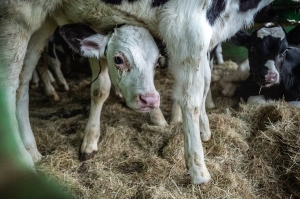
Calves in transport Photographer/Filmmaker: Jo-Anne McArthur

Today I’ve been thinking of the way those who seek to justify continued exploitation of other individuals  – including industry supporters who promote themselves as ‘representing victim interests’ – habitually grasp at any available straws, and the way in which, as advocates we have to be aware that diversionary tactics are ultimately not tackling the root of a problem. So here’s a spoiler. When it comes to the exploitation of nonhumans, that root is always ‘speciesism’ and the solution is to end all exploitation of other individuals. If an article doesn’t point that out, it’s not ‘representing victim interests’. 

So – that all sounds a bit obscure, doesn’t it? Well I’ll explain. Recent posts about the plight of calves exploited by the dairy industry have provided several examples of what I’m talking about.  Now don’t get me wrong, what’s done to calves is utterly…

View original post 1,080 more words

In New Mexico, temperatures are too high for birds to use their usual coping methods

July 16, 20238:04 AM ET

https://www.npr.org/2023/07/16/1187992847/in-new-mexico-temperatures-are-too-high-for-birds-to-use-their-usual-coping-meth

Heard on Weekend Edition Sunday

By 

Bryce DixLISTEN· 1:23

1-Minute ListenPLAYLIST

Extreme heat in New Mexico is creating unsafe conditions for people as well as wildlife, especially birds.

Sponsor Message

BRYCE DIX, BYLINE: And this is Bryce Dix in Albuquerque, N.M., where the heat wave has triggered statewide excessive heat warnings. The scorching heat spells trouble for humans, but it’s also hurting wildlife, especially bird populations. Normally to keep cool in heat waves like this, birds have a variety of tools at their disposal. Some urinate on their own legs, but the most common is a sort of avian panting. That’s where the bird will open its mouth and flutter its neck muscles. But that panting can cause birds to lose water and become dehydrated rapidly. Now, experts say the climate is warming much too fast for birds to adapt.

BLAIR WOLF: We’re talking about birds that breed once a year.

DIX: That’s University of New Mexico biologist Blair Wolf. He’s concerned for bird diversity in the Southwest and across the world as global temperatures recently reached the hottest they’ve ever been in history, causing unprecedented dehydration and loss of food sources.

WOLF: So there’s not a lot of good news, and people need to wake up when you have 120 degrees over in Phoenix and 130 in Death Valley.

DIX: Those susceptible birds might include small songbirds like goldfinches, which get dehydrated fast, or birds like the curve-billed thrasher, which only live in the desert and can’t move to cooler places. Some, he says, could be wiped out.

WOLF: The birds that are most susceptible to heat stress are just going to be gone.

DIX: In the meantime, blistering temperatures are expected to loom over the region throughout the next week, potentially breaking heat records in the process.

The Ocean Colors Are Permanently Changing For A Terrible Reason

Exposing the Big Game's avatarThe Extinction Chronicles

Giant Freakin Robot

Giant Freakin RobotFollow

Story by Phillip Moyer•Saturday

Giant Freakin Robot

The Ocean Colors Are Permanently Changing For A Terrible Reason

Was this content a good use of your time?

Your feedback will help us improve the product

The Ocean Colors Are Permanently Changing For A Terrible Reason©Provided by Giant Freakin Robot

You know how the ocean is generally blue? Well, it won’t be that way forever. According to the National Oceanography Centre, the number of phytoplankton in the ocean is steadily increasing, whichThe Guardianreports is changing the color of the ocean to a green hue.

Increasing phytoplankton found in the oceans due to climate change will soon make its colors appear more green than blue.

A study of 20 years of Oceanic data checked, among other things, the ocean’s changing color around the world over time. They looked for patterns across the whole color spectrum and…

View original post 548 more words