LAKE BUENA VISTA, FL – NOVEMBER 12: A racoon watches is seen on the course during the first round of the Children’s Miracle Network Classic at the Disney Palm and Magnolia courses on November 12, 2009 in Lake Buena Vista, Florida. (Photo by Sam Greenwood/Getty Images)
DES MOINES, Iowa —There are new rules in the way Iowans can hunt and trap raccoons as well as how farmers can deal with raccoon depredation issues.
A bill signed into law by Gov. Reynolds earlier this year says landowners may shoot or trap raccoons using cage or dog-proof traps if raccoons are causing damage to their agricultural property outside of city limits. Landowners do not need to notify the DNR before shooting or trapping raccoons, and a license is not required. The law goes into effect on July 1.
Correction: A previous version of the story incorrectly listed the number of states that participate in squirrel hunting season throughout the year. It has been updated with correct information for the spring season.
Hunters in the Ozarks often share tales of their bountiful harvests and the exhaustion of their deer, turkey and bear tags. Taxidermists have long banked on those successes.
But one of Missouri’s longest outdoorsman traditions — a sanctioned hunt that predates the inception of the Missouri Department of Conservation — doesn’t generate nearly as much boasting: squirrel hunting season.
The rodents don’t provide as much sustenance as most game animals and are rarely presented in prize fashion, but they still require the purchase of a small game permit in the state of Missouri.
Geneticists discovered a past whole genome duplication (WGD) event in the common ancestor of sturgeons and paddlefish that occurred just before a significant mass extinction, potentially providing these species with advantageous genetic variations. This discovery also raises the possibility of similar overlooked WGDs in other species’ lineages, which might have contributed to survival during periods of extreme environmental changes.
Geneticists have made a significant discovery about the ancient history of sturgeons and paddlefish, which carries profound implications for our understanding of evolution. They identified a previously hidden instance of “whole genome duplication” (WGD) in the shared ancestor of thesespecies, an event that appears to have facilitated genetic variations that may have provided an edge during a severe mass extinction event around…
For too many years, horse racing has treated horses as mere commodities, routinely seeing its athletes die on the field and discounting such deaths as the cost of doing business. iStock.com
On June 2, Churchill Downs, the home of the Kentucky Derby, suspended horse racing upon the recommendation of the Horseracing Integrity and Safety Authority after 12 horses died in a span of a few weeks at the track.
Just 10 days prior the Authority finally gained the power to fully enforce the Horseracing Integrity and Safety Act, landmark legislation that passed in 2020. After the recent spate of horse deaths, the Authority recommended that Churchill Downs suspend racing and conduct an extensive safety review. Remarkably, the track heeded this call.
We are determined that this be just the first of many such racing industry moves that prioritize horse safety and welfare. This moment is the culmination of years of advocacy and collaboration with forward-thinking industry leaders. Despite repeated attempts by some industry outliers to block these reforms, the Authority can finally fully enforce the HISA’s racetrack safety and anti-doping measures. Trainers with records of horse fatalities and drug violations who have remained seemingly untouched by the scandals that surround them may finally come to reckon with the penalties they deserve.
But the Authority still faces obstruction within the industry, most notably from the National Horsemen’s Benevolent and Protective Association, which has filed lawsuit after lawsuit to block the changes the HISA seeks to make.
In listening to the Authority and stepping up to halt operations and prioritize horse safety, Churchill Downs has done the right thing. This act of responsibility and transparency is a step toward reforming horse racing, but more needs to be done.
No more lives can be lost. Nothing can bring back those 12 horses who perished at Churchill Downs, nor the hundreds who have died over the years in accidents at tracks across the country that may have been prevented. Anyone obstructing reforms that put animal welfare first in horse racing cares not at all for the equines that make the sport possible. To laud these horses and yet see their injuries and deaths as a mere cost of doing business is a truly brutal way to treat these animals.
As the final race of the Triple Crown, the Belmont Stakes, approaches this weekend, we are insisting that horse racing should not be a matter of life or death.
Sara Amundson is president of the Humane Society Legislative Fund.
Penn State researchers discovered Masai giraffe populations divided by East Africa’s Great Rift Valley haven’t interbred for centuries. This, along with significant inbreeding and a 50% decline over 30 years, suggests they are more endangered than previously thought. Distinct but coordinated conservation efforts for each population are recommended.
Giraffe populations separated by Great Rift Valley in eastern Africa are genetically distinct, suggesting that conservation efforts should be considered separately for each population.
Giraffes in eastern Africa may be even more endangered than previously thought. A new study led by researchers at Penn State reveals that populations of Masai giraffes separated geographically by the Great Rift Valley have not interbred — or exchanged genetic material — in more than a thousand years, and in some cases hundreds…
A call of “shot fired” that led to the deployment of a tactical police team turned out to be a simple accident involving a trio of gopher hunters in Weyburn on Monday, police say.
According to the Weyburn Police Service (WPS), the call was received from a local hotel on June 12.
A guest in the hotel was nearly hit by a bullet that was fired through the wall from the room next door, police say.
WPS had the hotel evacuated and the Joint Tactical Police Team (JTST) made up of Weyburn and Estevan police were brought in.
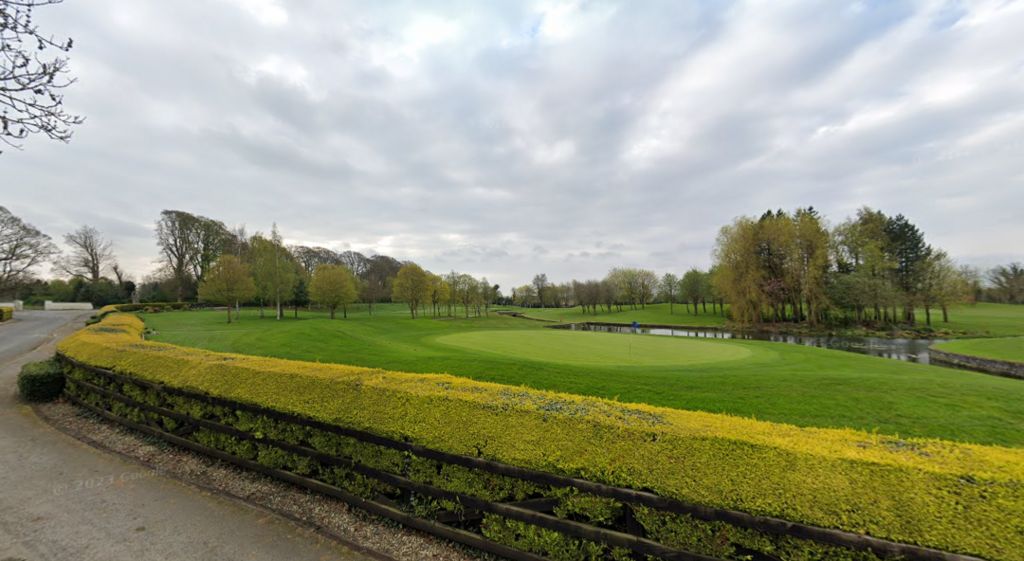
A man in his 40s has been seriously injured after he was accidentally shot at a golf club outside of Dublin on Monday.
Gardaí (Irish police) believe he may have been mistaken for an animal by a person out hunting in the area.
The shooting happened in Corrstown Golf Club, Kilsallaghan, at about 23:00 local time.
The victim, who was shot in his upper body, was taken to the Mater Misericordiae University Hospital and is being treated in the intensive care unit.
His injuries are understood to be non-life threatening.
Irish broadcaster RTÉ reports that a number of men were out hunting in the area while a separate group, wearing wetsuits, were searching for golf balls near a lake.
It is understood that one of the hunters saw movement in the dark, mistook the…
A brown bear mauled a hunter Saturday night east of Sterling, injuring the man before he shot and killed the animal, Alaska State Troopers said.
Sterling resident Nicholas Abraham, 34, was hunting for rabbits north of the Sterling Highway at Mile 73.5 a little after 8 p.m. Saturday when he came across a brown bear sow with cubs, troopers said in an onlinereport.
“Abraham became aware of the sow when he was about 15 feet from her,” troopers spokesman Justin Freeman said. “She was on him immediately after he became aware of her.”
Abraham shot the sow with a .44 handgun, according to troopers’ report.
He was able to drive himself to the hospital, where he was treated for minor injuries, Freeman said.
Alaska Wildlife Troopers investigated the site of the bear mauling Sunday, Freeman said, and they did not see…
Airplanes are pictured at tarmac in Munich Airport Franz-Joseph-Strauss International on September 15, 2022 in Erding, Germany.
If you’re a frequent flyer who has experienced increasingly shaky flights, it’s not just your imagination. Turbulence has increased in the last few decades.
A study released this Junein the journalGeophysical Research Lettersfound that not only has turbulence increased, reported instances of severe turbulence have gone up more than 50% in about 40 years. And the culprit is warmer air due to climate change.




 The City of Weyburn sign can be seen in this file photo. (David Prisciak/CTV News)