Beyond Factory Farms: A New Look at the Rights of Animals

Peter Singer.
Peter Singer. KEITH MORRIS / HAY FFOTOS / ALAMY STOCK PHOTO

https://e360.yale.edu/features/peter-singer-interview

INTERVIEW

Philosopher Peter Singer’s book, Animal Liberation, helped launch the animal rights movement nearly 50 years ago. He talks with Yale Environment 360 about how we now better understand how animals feel pain and how other species are not so different from humans as we thought.

BY RICHARD SCHIFFMAN • MAY 23, 2023

Peter Singer has been called one of the most influential — and controversial — philosophers alive today. His pioneering work Animal Liberation: A New Ethics for Our Treatment of Animals, which vividly portrayed the harsh conditions for livestock on factory farms, helped spark the animal rights movement. The book, published in 1975, has now been revised and was reissued this week.

In an interview with Yale Environment 360, the 76-year-old Singer talks about how in the years since his seminal book was published, science has eroded the boundaries between humans and other creatures, demonstrating that animals can experience joy and also suffer. Knowing this, we are ethically bound to avoid causing them pain, he says. Singer, a vegan, also cites the environmental reasons to eat plants, which are less carbon intensive to produce than meat. Factory farming of livestock is on the rise worldwide, he notes, while wild animals are increasingly under threat.

Singer argues that protections increasingly afforded animals should be extended to ecosystems, rivers, and other natural features. The ethical demand to protect nature is growing, but slowly. “I do think the world will get there eventually,” he says, “but I can’t say when. I don’t expect to live to see it myself.”

A pig farm in New Zealand.
A pig farm in New Zealand. FARM WATCH VIA FLICKR

Yale Environment 360: You are best known for your work on animal rights. Was there anything in your childhood or upbringing that sparked your interest in animals and your desire to lessen their suffering?

Peter Singer: No, I don’t think so, I was not an animal lover, and I still don’t consider myself an animal lover. I don’t want to have [pet] animals in my house. I appreciate their abilities more after learning about them. I empathize more with their suffering and their capacity for suffering, but I’m still not emotionally attached in the way that many people are emotionally attached usually to their companion animals, their dogs and cats.

NEVER MISS AN ARTICLE

Subscribe to the E360 Newsletter for weekly updates delivered to your inbox. Sign Up.

My concern about inflicting suffering on animals came much more from my interest in ethics, which I only developed when I followed through on the ethical implications of what I found out about factory farming and the way that animals were being treated. That’s really what brought me into this area and led me to write Animal Liberation.

e360: You published that book nearly a half century ago. Why did you feel it was important to revise it now?

Singer: Well, it has never been out of print since 1975, which is unusual in modern publishing, so there is still a demand for it. But I was starting to get a little embarrassed that the factual information was from earlier than 1990 when we last fully revised it. These conditions in labs and factory farms have changed a lot since then. I wanted this book to still be relevant. It needed a very through updating.

“We shouldn’t inflict [pain] on others without a very strong justification. And the species boundary isn’t relevant.”

e360: I imagine that your own views have changed somewhat as well.

Singer: Yes, that’s right, inevitably they have changed to some extent, and of course the situation is different now. There is a whole animal movement that didn’t exist when the book was written, and that has gone in a variety of directions, including the suffering of wild animals. I wanted to comment on that. Progress has been made, so some of the things that I described that were really bad in the first edition have improved in some jurisdictions.

e360: When you first wrote the book, the very idea that animals had rights was considered marginal. Now it is more widely accepted, at least in principle — how do you account for that change?

Singer: I hope that it’s been in response to some of the arguments that I and others have put forward. I also think that the scientific work of Jane Goodall and Diane Fossey and others really helped to narrow that gap that we previously had thinking all humans are over here and over there is this vast collection of beings we call animals ranging from chimpanzees to oysters and they are all somehow in another moral category entirely. I think that’s been demolished by a lot of the work that’s been done, and not only on great apes but also on so many other species.

e360: You are a vegan, and the rationale for your veganism is based on the capacity of animals to feel pain more than on their intelligence. Why is pain the criteria?

Singer: We recognize that pain is a bad thing in ourselves. Just as we don’t like pain inflicted on us, we shouldn’t inflict it on others without a very strong justification. And the species boundary isn’t relevant. Pain is pain as long as a creature is capable of feeling it. And that seems to me to be a more simple and straightforward argument than one based on cognitive capacities.

A recent study found evidence that octopuses feel pain in a similar way to mammals.
A recent study found evidence that octopuses feel pain in a similar way to mammals. MARTIN STRMISKA / ALAMY STOCK PHOTO

e360: How far do you take this? Can fish feel pain? What about plants? Do they have rights in your view?

Singer: With fish there is now a whole body of research that shows they can feel pain. There isn’t such a body of research with plants, and plants don’t seem to have the kind of nervous system that we associate with feeling pain. I do feel there’s a gray area between fish and vertebrates and at least some invertebrates that can feel pain. Recently the U.K. passed an amendment to its animal welfare legislation that recognized that cephalopods like octopus and squid and crustaceans like lobster and crab [can feel pain]. So I do think there are some invertebrates for which we have good evidence. But getting back to the oyster, it seems very unlikely that oysters can feel pain. So in my view it’s not true that all animals can feel pain.

ALSO ON YALE E360

Chicken frenzy: A state awash in hog farms faces a poultry boom. Read more.

e360: You write a lot in the book about meat production at a time when the conditions that livestock were being raised under were not well known. Have the practices of factory farming changed much since you wrote the book?

Singer: Europe and the U.K. have banned some of the worst forms of confinement for chickens where they can’t even spread their wings, as well as California and several other U.S. states. The confinement of calves in veal stalls so that they can’t turn around — that’s also prohibited in some places. Confining breeding sows in tiny stalls has also been banned in Europe and elsewhere. But in much of the U.S., conditions haven’t changed very much, and in some respects they have gotten worse.

Chickens are being bred to grow so fast that the birds no longer support their body weight. For the last couple of weeks, they are in pain just standing up, and they can’t sit down because they are raised on a kind of litter — wood shavings that are full of their droppings and has such a high level of ammonia in it that if they sit down, it gives them skin burns on their legs and chest. There is no legal control, and market forces demand the cheaper chickens that can be raised that way. Overall, the breeding of chickens, which is the largest number of farm animals, has intensified. It’s actually gotten worse.

“It is not OK to eat grass-fed beef because the animals have a good life. We need to think about the effect on the planet.”

e360: Why you think the U.S. lags behind Europe in terms of these kinds of reforms?

Singer: The agricultural industry is very powerful here, and money plays a bigger role in American politics than it does in European politics. In California there have been a couple of referendums to improve the lives of farmed animals. They both passed by large majorities, over 60 percent, and in Massachusetts there were even larger margins. So if you put it to Americans, they reject these practices. But there is no federal legislation at all regulating farm animal welfare. The agribusiness lobby has managed to defeat any attempt to change the rules.

e360: You also write about the abuse of lab animals. That situation has changed a lot since you wrote the book, hasn’t it?

Singer: It has changed, though not as much as I had initially believed when I set out to revise the book. Unfortunately, there is still a lot of pain and suffering inflicted on animals for not very significant or no benefit at all to humans. There is still a lot of toxicity testing of nonessential substances that goes on. But the FDA is becoming a bit more accepting of non-animal results now. Legislation went through Congress recently that said that they shouldn’t require animal research.

In Europe, you can’t test cosmetics on animals. You can’t even import cosmetic products that have been tested on animals. But there is nothing like that in the U.S. One area that has improved is experimentation on great apes like chimpanzees, which has essentially stopped.

The National Primate Research Center of Thailand, where a COVID-19 vaccine was tested on monkeys.
The National Primate Research Center of Thailand, where a COVID-19 vaccine was tested on monkeys. MLADEN ANTONOV / AFP VIA GETTY IMAGES

e360: How important for you are the arguments based on climate change, that animal agriculture is more energy intensive and is a big contributor to global warming?

Singer: Well, people should be aware of it. Some people say. “I don’t eat factory farmed products, but I eat grass-fed beef.” It’s true that with grass-fed beef they have a reasonably natural way of life and animal welfare concern are much less than with chickens and pigs and feedlot beef, but in fact the greenhouse gas emissions are still very high, so because of climate change I would not say that it is OK to eat grass-fed beef because the animals have a good life. We need to think about the effect on the planet as well.

e360: Growing vegetables has a carbon cost as well. How much of a difference is there between eating meat and eating a vegetarian diet?

Singer: There’s a really big difference in fact. I have graphs and charts in the book that show it. Pretty much all animal products are worse than the worst of the plant products. Beef is by far is the worst. Then, the other ruminants, like lamb. Even dairy is pretty bad, although you get more protein and calories out of dairy than you do from beef. Maybe the best animal product from the greenhouse gas point of view is eggs, but even that is worse than pretty much all of the main plant products — the grains, the soybeans, and the like.

e360: You’ve written mostly about the cruelty to farm animals. What about destroying wildlife habitat, driving them to extinction — isn’t that an equal or greater violation?

Singer: The arguments for biodiversity and against extinction are another category of argument because they are not focused on individual animals [but rather on species]. You need a different argument for preserving biodiversity and preventing extinction. Of course there are such arguments. And as you say, environmentalists are making them.

“It is a different ethical argument if you are talking about things that are not sentient, like rivers and mountains.”

e360: Some environmentalists have argued that legal rights should be extended to geographical features like rivers, mountains, and ecosystems. Is there an ethical basis for extending rights to these natural systems?

Singer: To me, the ethical basis is the responsibility of this generation to pass on things that have existed for millions of years to future generations. To destroy these things is a kind of vandalism. Just as what the Taliban did to the Bamiyan Buddhas is clearly wrong, so too it is wrong to dam a wild river. It is a very different ethical argument if you are talking about things that are not conscious and sentient, like rivers and mountains. But I do support countries that have such legislation that recognizes those rights.

e360: You’ve written that global poverty, climate change, and the way we treat animals are the top three ethical issues facing us today. Are these three connected in your mind?

MORE ON YALE E360

Turning hog waste into biogas: Green solution or greenwashing? Read more.

Singer: Yes, they are connected. In all of them, there is a lack of concern for distant others. The distance can be geographic — they’re somewhere like Africa, so I don’t have to be concerned about them — or it can be economic — they are poor [so I can ignore them]. With climate change, the distance is temporal. The people who will be worst affected by climate change will be living at the end of this century and maybe the next century. And there is a biological distance between us and other species. They are distant relations. We’re less concerned for animals for that reason.

e360: Is the move toward fully recognizing animal rights inevitable?

Singer: I do think the world will get there eventually, but I can’t say when. I don’t expect to live to see it myself.

Residents evacuated after suspected ammonia pollution at warehouse

Exposing the Big Game's avatarThe Extinction Chronicles

Firemen flush drainage system at premises in Shah Alam to reduce odour to ‘safe level’.

FMT Reporters-22 May 2023, 2:39pm

68Shares

facebook sharing button Share https://www.freemalaysiatoday.com/category/nation/2023/05/22/residents-evacuated-after-suspected-ammonia-pollution-at-warehouse/

twitter sharing buttonTweet

whatsapp sharing buttonShare

email sharing buttonEmail

Police and fire department personnel at the warehouse in Section 32, Shah Alam last night.

PETALING JAYA: A suspected case of ammonia pollution at a warehouse in Section 32, Shah Alam, last night caused residents of a nearby housing area to be evacuated.

Shah Alam district police chief Iqbal Ibrahim said authorities were alerted by a resident of the housing area, who complained of a foul smell from a drain nearby at about 9.30pm.

ADVERTISING

Stay up-to-date by following FMT’sTelegramchannel

FMT

Iqbal said police and the Selangor fire department’s Hazmat unit found that the odour, suspected to be ammonia pollution, originated from a drain near a warehouse.

“The warehouse management said regular maintenance works were being carried out as scheduled…

View original post 206 more words

Ethanol production poses harm to endangered species, Wisconsin scientist says

Exposing the Big Game's avatarThe Extinction Chronicles

A whooping crane flies over the Aransas Wildlife Refuge in Fulton, Texas.

A whooping crane flies over the Aransas Wildlife Refuge in Fulton, Texas. Despite only 500 birds in the natural flock, in 2022, the U.S. Fish and Wildlife Service had plans to downlist whooping cranes from endangered to threatened.Pat Sullivan/AP Photo

UW-Madison’s Tyler Lark recommends better farming practices, alternative biofuels

By Joel Patenaude

Published:

  • Tuesday, May 23, 2023, 12:00pm

SHARE:  https://www.wpr.org/ethanol-production-harms-endangered-species-wisconsin-scientist-corn-farmers-gas-pump

Forward logo

Facebook logo

ListenDownload

While renewable fuel standards at American gas stations aim to reduce the nation’s reliance on imported and polluting fossil fuels, conservationists worry the standards are also amplifying pressure on vulnerable animals.

One Wisconsin scientisthoping to draw more attention to thatis Tyler Lark, who works at the Center for Sustainability and the Global Environment at the University of Wisconsin-Madison.

Lark said renewable fuel standards, enacted in 2007, spurred millions of acres to be converted into cropland for the cultivation of corn and ethanol production. And that…

View original post 870 more words

Florida man loses arm after alligator attacks him behind bar in Port Charlotte, officials say

Francisco Guzman

USA TODAY

AD

0:29

https://imasdk.googleapis.com/js/core/bridge3.575.0_en.html#goog_930708048

A 23-year-old man lost his arm Sunday after an alligator attacked him behind a bar in Florida, authorities said. 

The man was attacked behind Banditos Bar, which is located near a pond in Port Charlotte, the Florida Fish and Wildlife Conservation Commission said in a statement to USA TODAY. 

Charlotte County Fire and EMS received a call about the attack around 1:40 a.m., spokesman Todd Dunn told USA TODAY. 

Responders treated the man with “an above-the-elbow amputation of his upper right extremity,” and airlifted him to Gulf Coast Hospital in Fort Myers by helicopter, Dunn said. 

https://84480ad8ce639e83c5d33a63f9ef5856.safeframe.googlesyndication.com/safeframe/1-0-40/html/container.html

Witness saw man swimming towards shore after attack

Manny Hidalgo, a patron at another bar, told The Daily Sun that he heard the man screaming and went outside looking for him near the pond area.

“He was yelling and swimming toward the shoreline,” Hidalgo told the outlet. “I ran and dragged him up onto the sand. I was scared to get close to the water because it was dark out.”

https://84480ad8ce639e83c5d33a63f9ef5856.safeframe.googlesyndication.com/safeframe/1-0-40/html/container.html

Officials removed the 10.5-foot alligator from the property and it was “humanely killed,” the wildlife conservation said. 

Anchorage attorney files lawsuit to stop proposed Kincaid Park moose hunt

Exposing the Big Game's avatarCommittee to Abolish Sport Hunting Blog

ByMichelle Theriault Boots

Updated: 20 hours agoPublished: 22 hours ago

https://www.adn.com/alaska-news/anchorage/2023/05/22/anchorage-attorney-files-lawsuit-to-stop-proposed-kincaid-moose-hunt/

A cow moose browses on foliage at Kincaid Park on Sunday, August 9, 2020. (Bill Roth / ADN)

An Anchorage attorney has filed a lawsuit against the Alaska Board of Game in an attempt to halta moose huntproposed for mobility-impaired people in Anchorage’s Kincaid Park.

And Tuesday, three Anchorage Assembly members plan to introduce an ordinance spurred by the hunt that would require Assembly sign-off to allow hunting on city parklands.

The lawsuit, filed Friday in Anchorage Superior Court, says the moose hunt would violate the Alaska Constitution because it would grant “exclusive or special privileges to hunt and fish for Alaska wildlife to a specific group.”

ADVERTISEMENT

The lawsuit asks a the Superior Court to declare the proposed hunt unconstitutional, and for an injunction that would prevent the state from taking steps to implement it.

Separately, aproposed ordinance

View original post 491 more words

Recycling can release huge quantities of microplastics, study finds

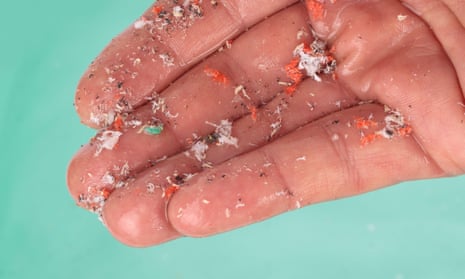
Tiny bits of coloured plastic on a wet hand
Researchers found the level of microplastics released in the water amounted to 13% of the plastic processed. Photograph: Maxshoto/Alamy

https://www.theguardian.com/environment/2023/may/23/recycling-can-release-huge-quantities-of-microplastics-study-finds

Seascape: the state of our oceansPlastics

Scientists find high levels of microplastics in wastewater from unnamed UK plant – and in air surrounding facility

Seascape: the state of our oceans is supported by

theguardian.org

About this content

Karen McVeigh

@karenmcveigh1Tue 23 May 2023 13.25 EDT

Recycling has been promoted by the plastics industry as a key solution to the growing problem of plastic waste. But a study has found recycling itself could be releasing huge quantities of microplastics.

An international team of scientists sampled wastewater from a state-of-the-art recycling plant at an undisclosed location in the UK. They found that the microplastics released in the water amounted to 13% of the plastic processed.

The facility could be releasing up to 75bn plastic particles in each cubic metre of wastewater, they estimated.

“I was incredibly shocked,” said Erina Brown, the lead researcher of the study, conducted at the University of Strathclyde in Glasgow. “It’s scary because recycling has been designed in order to reduce the problem and to protect the environment. This is a huge problem we’re creating.”

https://imasdk.googleapis.com/js/core/bridge3.575.0_en.html#goog_665681944

https://imasdk.googleapis.com/js/core/bridge3.575.0_en.html#goog_1708419226

https://imasdk.googleapis.com/js/core/bridge3.575.0_en.html#goog_1200503306Ron DeSantis to launch presidential campaign on Twitter with Elon MuskUS regulators launch investigation into worker death at Amazon warehouseTrump hush money trial set for March 2024 during Republican primariesJP Morgan claims US Virgin Islands ‘complicit’ in Jeffrey Epstein crimesCanadian police solve 48-year-old case of teenager’s rape and murder using DNASouth Carolina state senate considers six-week abortion ban amid heated debateUS regulators launch investigation into worker deathat Amazon warehouse

The researchers tested the water before and after the plant installed a water filtration system and found the filter reduced the concentration of microplastics from 13% of the plastic processed to 6%.

The estimate of 75bn particles a cubic metre is for a plant with a filter installed. A majority of the particles were smaller than 10 microns, about the diameter of a human red blood cell, with more than 80% smaller than five microns, Brown said.

Microplastics, usually considered to be any particle of plastic measuring less than 5mm, have been found everywhere from freshly fallen snow in Antarctica to the depths of the ocean, and can be toxic for animals and plants.

The results also revealed high levels of microplastics in the air around the recycling facility, with 61% of the particles less than 10 microns in size. Particulate matter less than 10 microns has been linked to human illness.

The facility was a “best case scenario”, Brown said, given that it had made efforts to install water filtration while many other recycling plants may not.

“An important consideration is what other plants globally are emitting,” she said. “This is something we really need to find out.”

The study, published in the Journal of Hazardous Material Advances, suggests the recycling plant discharged up to 2,933 metric tonnes of microplastics a year before the filtration system was introduced, and up to 1,366 metric tonnes afterwards.

“More than 90% of the particles we found were under 10 microns and 80% were under 5 microns,” said Brown. “These are digestible by so many different organisms and found to be ingested by humans.”

“For me, it highlights how drastically we need to reduce our plastic consumption and production.”

Globally, only about 9% of the 370m metric tonnes of plastic produced gets recycled.

Judith Enck, a former senior official at the US Environmental Protection Agency, who now leads Beyond Plastics, a lobby group, said: “The findings are disturbing but not surprising. This one recycling facility, a state-of-the-art facility, demonstrates the serious problem of using plastics. It causes serious problems, even in terms of the infrastructure to recycle plastics. It is a clarion call to use less.”

Killer whales learn to sink yachts off Gibraltar

The Telegraph

The TelegraphFollow

Story by James Crisp • 2h ago

Killer whales attack a sailing boat off the coast of Morocco – Stephen Bidwell / SWNS© Provided by The Telegraph

Avengeful killer whale called Gladis is teaching gangs of orcas to attack yachts around Gibraltar, and has already sunk three boats.

It may read like something out of Moby Dick, but in this case the truth is stranger than fiction.

Researchers believe that a female orca called White Gladis is seeking revenge after being traumatised by a collision with a boat, or being trapped in illegal fishing nets.

Her attacks are now being copied by the rest of the nearby killer whale population, which has learnt how to ram vessels from their ringleader.

The matriarch is tutoring younger whales in the art of sinking boats; raising the prospect of future generations continuing the war on humans for years.

On May 2, six of the apex predators slammed into the hull of a Bavaria 46 yacht, which was sailing in the Strait of Gibraltar, near Tangier in Morocco.Two Twisp Banks Paying Record High Interest Rates (See the List)

Two Twisp Banks Paying Record High Interest Rates (See the List)

Ad

Savings Pro

The hour-long attack left Cambridge couple Janet Morris, 58, a business consultant, and Stephen Bidwell, 58,  a photographer, who were on board for a sailing course, in awe.

The couple were below deck, when the cry of “orcas!” went up.

“It’s an experience I will never forget,” Mr Bidwell told the Telegraph.

“I kept reminding myself we had a 22-ton boat made of steel, but seeing three of them coming at once, quickly and at pace with their fins out of the water was daunting.”

“I couldn’t believe it when I saw them,” said Ms Morris, 58, “We were sitting ducks.”

“A clearly larger matriarch was definitely around and was almost supervising,” Mr Bidwell told the Telegraph before conceding he could have come face to face with White Gladis herself.

“The experience left us in awe of nature and her power”.

Skipper Greg Blackburn, from Leeds, was already dealing with “heavy weather” of 25-30 knot winds and a rolling swell of six to 10 feet when the whales hit his rudder with two large blows.

He said. “I thought ‘oh dear’ when I saw them. After reading reports and knowing what has been going on, I just thought we were in for a ride now.”

The skipper dropped the main sail and tried to make the boat “as boring as possible”.

The whales eventually lost interest, but not before causing extensive damage worth thousands of pounds, leaving the boat to limp back to port.

Mr Bidwell and Ms Morris are going back to the Straits of Gibraltar again in just two weeks to recoup the missed sailing hours, rather than an Ahab-style quest to face Gladis again.

Janet Morris and Stephen Bidwell – Stephen Bidwell / SWNS© Provided by The Telegraph

The attack in the Straits, a vital travel route to reach the Mediterranean from Gibraltar, followed a similar incident in November last year off the coast of Portugal.

The French-crewed vessel sank off the port of Viana do Castelo after orcas “cracked” its hull and it took on water.

A pod of three orcas attacked and sank a third sailboat, piercing its rudder, off the coast of Spain, just two days after Mr Bidwell’s brush with the bully whales.

Werner Schaufelberger, the captain, said he saw the two smaller whales imitating the ramming tactic of the largest orca.

“The little ones shook the rudder at the back while the big one repeatedly backed up and rammed the ship with full force from the side,” he told Yacht, a German publication.

“The two little orcas observed the bigger one’s technique and – with a slight run-up – they, too, slammed into the boat.”

Spanish coast guards rescued the crew of the stricken vessel but the boat sank at the port entrance of Barbate after it was towed to shore.

The couple were enjoying a sailing course off the coast of Morocco when they spotted the pod approaching – Greg Blackburn / SWNS© Provided by The Telegraph

“That traumatised orca is the one that started this behaviour of physical contact with the boat,” said Alfredo López Fernandez, a biologist at the University of Aveiro in Portugal and representative of the Atlantic Orca working group.

This “critical moment of agony” made Gladis aggressive towards boats, and that aggressive behaviour is now being copied by other orcas, he told LiveScience.

Orcas are social animals and can learn from each other. David Attenborough’s Frozen Planet II captured footage of orcas working together to cause waves to knock seals off icebergs and into the water,

Other theories are that the whales are exhibiting territorial, defensive, or play behaviour.

The first reports of aggressive orcas off the Iberian coast began in May 2020. In September of that year, Spanish authorities banned boats from setting sail from the country’s northwestern tip after 29 orca attacks were registered.

The assaults have become increasingly frequent. The orcas approach from the stern and hit the rudder before losing interest once they have stopped the boat.

Oh Dear, There’s a Hole in the Bottom of the Ocean

Exposing the Big Game's avatarThe Extinction Chronicles

Popular Mechanics

Popular MechanicsFollow

Story by Jackie Appel • 43m ago

The floor of the ocean off the coast of the Pacific Northwest has sprung a leak called Pythia’s Oasis. Here’s what that means.©Marius Hepp / EyeEm

  • The floor of the ocean off the coast of the Pacific Northwest has sprung a leak.
  • The spring, known as Pythia’s Oasis, is likely venting water from beneath local tectonic plates through a fault called the Cascadia Subduction Zone.
  • This liquid is likely acting as a lubricant between the two plates colliding at the fault, and losing too much of it could increase the likelihood of a damaging earthquake.

Theoceanhas a leak.

Technically, it’s a spring, because water is flowing in and not out. But in the ways that matter, it definitely is a leak. It’s known as Pythia’s Oasis, and it’s a spring of almost-fresh water most welling up from under the

View original post 502 more words

Did life evolve more than once? Researchers are closing in on an answer

by Jordi Paps, The Conversation

https://phys.org/news/2023-05-life-evolve.html?fbclid=IwAR3bFK_NO9qZpnfSl6GuEUYiBd5yKYqelxObeLXBr3whtocNR0GLx0EJ_bg

Did life evolve more than once? Researchers are closing in on an answer
Credit: Maximillian cabinet/Shutterstock

From its humble origin(s), life has infected the entire planet with endless beautiful forms. The genesis of life is the oldest biological event, so old that no clear evidence was left behind other than the existence of life itself. This leaves many questions open, and one of the most tantalizing is how many times life magically emerged from non-living elements.

https://db30d380003e62e04b1b7fd2b7831d5e.safeframe.googlesyndication.com/safeframe/1-0-40/html/container.html

Has all of life on Earth evolved only once, or are different living beings cut from different cloths? The question of how difficult it is for life to emerge is interesting—not least because it can shed some light on the likelihood of finding life on other planets.

The origin of life is a central question in modern biology, and probably the hardest to study. This event took place four billion years ago, and it happened at a molecular level—meaning little fossil evidence remains.

Many lively beginnings have been suggested, from unsavory primordial soups to outer space. But the current scientific consensus is that life emerged from non-living molecules in a natural process called abiogenesis, most likely in the darkness of deep-sea hydrothermal vents. But if life emerged once, why not more times?

What is abiogenesis?

Scientists have proposed various consecutive steps for abiogenesis. We know that Earth was rich in several chemicals, such as amino acids, a type of molecules called nucleotides or sugars, which are the building blocks of life. Laboratory experiments, such as the iconic Miller-Urey experiment, have shown how these compounds can be naturally formed under conditions similar to early Earth. Some of these compounds could also have come to Earth riding meteorites.

Next, these simple molecules combined to form more complex ones, such as fats, proteins or nucleic acids. Importantly, nucleic acids—such as double-stranded DNA or its single-stranded cousin RNA—can store the information needed to build other molecules. DNA is more stable than RNA, but in contrast, RNA can be part of chemical reactions in which a compound makes copies of itself—self-replication.

The “RNA world” hypothesis suggests that early life may have used RNA as material for both genes and replication before the emergence of DNA and proteins.

Once an information system can make copies of itself, natural selection kicks in. Some of the new copies of these molecules (which some would call “genes”) will have errors, or mutations, and some of these new mutations will improve the replication ability of the molecules. Therefore, over time, there will be more copies of these mutants than other molecules, some of which will accumulate further new mutations making them even faster and more abundant, and so on.

Did life evolve more than once? Researchers are closing in on an answer
Smoking hydrothermal vent. Credit: NOAA/wikipedia.

Eventually, these molecules probably evolved a lipid (fatty) boundary separating the internal environment of the organism from the exterior, forming protocells. Protocells could concentrate and organize better the molecules needed in biochemical reactions, providing a contained and efficient metabolism.

https://googleads.g.doubleclick.net/pagead/ads?client=ca-pub-0536483524803400&output=html&h=280&slotname=5350699939&adk=2071891895&adf=1857921027&pi=t.ma~as.5350699939&w=540&fwrn=4&fwrnh=100&lmt=1684772131&rafmt=1&format=540×280&url=https%3A%2F%2Fphys.org%2Fnews%2F2023-05-life-evolve.html%3Ffbclid%3DIwAR3bFK_NO9qZpnfSl6GuEUYiBd5yKYqelxObeLXBr3whtocNR0GLx0EJ_bg&fwr=0&rpe=1&resp_fmts=3&wgl=1&uach=WyJXaW5kb3dzIiwiMTUuMC4wIiwieDg2IiwiIiwiMTEzLjAuMTc3NC41MCIsW10sMCxudWxsLCI2NCIsW1siTWljcm9zb2Z0IEVkZ2UiLCIxMTMuMC4xNzc0LjUwIl0sWyJDaHJvbWl1bSIsIjExMy4wLjU2NzIuMTI3Il0sWyJOb3QtQS5CcmFuZCIsIjI0LjAuMC4wIl1dLDBd&dt=1684764821842&bpp=2&bdt=1452&idt=1222&shv=r20230517&mjsv=m202305160101&ptt=9&saldr=aa&abxe=1&cookie=ID%3Dfbc39745c66497e5-2260117f11dc0009%3AT%3D1679509356%3AS%3DALNI_Mb1UqPkc8JEI5F1wKJdtiV2E6nsag&gpic=UID%3D00000963b4b63959%3AT%3D1679509356%3ART%3D1684764823%3AS%3DALNI_MYgNNsSmQVd22hVFMwVkQWWwYDqGA&prev_fmts=0x0%2C336x280%2C1519x714&nras=2&correlator=8756460656084&frm=20&pv=1&ga_vid=40909074.1679509354&ga_sid=1684764823&ga_hid=42601364&ga_fc=1&u_tz=-420&u_his=1&u_h=864&u_w=1536&u_ah=816&u_aw=1536&u_cd=24&u_sd=1.25&dmc=8&adx=395&ady=3147&biw=1519&bih=714&scr_x=0&scr_y=302&eid=44759927%2C44759837%2C44759876%2C31074469%2C31074545%2C44772269%2C44785295%2C44788442%2C44789779&oid=2&psts=ABHeCvhOmj8awJLZU8YNydhZk4yHxFochFx0cfYSl7E90in-5QExHGcF0QXXabjUoKfNtgqLZ40krXoDZL2phr93XdA&pvsid=1645645292889558&tmod=1790025547&wsm=1&uas=3&nvt=1&ref=https%3A%2F%2Fl.facebook.com%2F&fc=1920&brdim=0%2C0%2C0%2C0%2C1536%2C0%2C1536%2C816%2C1536%2C714&vis=1&rsz=%7C%7CpeEbr%7C&abl=CS&pfx=0&fu=128&bc=31&ifi=2&uci=a!2&btvi=1&fsb=1&xpc=xqJl3ZdWjj&p=https%3A//phys.org&dtd=M

Life on repeat?

Abiogenesis could have happened more than once. Earth could have birthed self-replicating molecules several times, and maybe early life for thousands or millions of years just consisted of a bunch of different self-replicating RNA molecules, with independent origins, competing for the same building blocks. Alas, due to the ancient and microscopic nature of this process, we may never know.

Many lab experiments have successfully reproduced different stages of abiogenesis, proving they could happen more than once, but we have no certainty of these occurring in the past.

A related question could be whether new life is emerging by abiogenesis as you are reading this. This is very unlikely though. Early Earth was sterile of life and the physical and chemical conditions were very different. Nowadays, if somewhere on the planet there were ideal conditions for new self-replicating molecules to appear, they would be promptly chomped by existing life.

What we do know is that all extant life beings descend from a single shared last universal common ancestor of life (also known as LUCA). If there were other ancestors, they left no descendants behind. Key pieces of evidence support the existence of LUCA. All life on Earth uses the same genetic code, namely the correspondence between nucleotides in DNA known as A, T, C, and G—and the amino acid they encode in proteins. For example, the sequence of the three nucleotides ATG always corresponds to the amino acid methionine.

Theoretically, however, there could have been more genetic code variants between species. But all life on Earth uses the same code with a few minor changes in some lineages. Biochemical pathways, such as the ones used to metabolize food, also support the existence of LUCA; many independent pathways could have evolved in different ancestors, yet some (such as the ones used to metabolize sugars) are shared across all living organisms. Similarly, hundreds of identical genes are present in disparate live beings which can only be explained by being inherited from LUCA.

My favorite support for LUCA comes from the Tree of Life. Independent analyses, some using anatomy, metabolism or genetic sequences, have revealed a hierarchical pattern of relatedness that can be represented as a tree. This shows we are more related to chimps than to any other living organisms on Earth. Chimps and we are more related to gorillas, and together to orangutans, and so on.

You can pick any random organism, from the lettuce in your salad to the bacteria in your bioactive yogurt and, if you travel back in time far enough, you will share an actual common ancestor. This is not a metaphor, but a scientific fact.

This is one of the most mind boggling concepts in science, Darwin’s unity of life. If you are reading this text, you are here thanks to an uninterrupted chain of reproductive events going back billions of years. As exciting as it is to think about life repeatedly emerging on our planet, or elsewhere, it is even more exciting to know that we are related to all the life beings in the planet.

Provided by The Conversation 

This article is republished from The Conversation under a Creative Commons license. Read the original article.


Explore further

New asteroid sample study offers further hints of space origin for the building blocks of life on Earth

The Closest Living Relative of the First Animal Has Finally Been Found

A debate has been settled over the earliest animal ancestor—a free-swimming creature with a well-developed nervous system

The Closest Living Relative of the First Animal Has Finally Been Found
A bioluminescent comb jelly, or ctenophore. Credit: Jacques Julien/Alamy Stock Photo

Deep, deep in geologic time, some 600 million or 700 million years ago, the very first animals evolved on Earth. Their closest relatives that still live today include sponges, sea anemones and comb jellies. But exactly which of these is truly the closest relative to the very first animals has remained one of the most contentious questions in evolutionary biology. With few fossils of these early, squishy animals, their history has necessarily been muddy, and it has been challenging to reconstruct what happened.

A study published on May 17 in Nature resolves the relationships of these early animals by looking at the chromosomes of sponges, comb jellies, jellyfish and three close single-celled relatives of animals. By studying the pattern of chromosomes at the base of the animal evolutionary tree breaking and fusing together, a team of researchers at the University of California, Berkeley, University of Vienna, Monterey Bay Aquarium Research Institute and University of California, Santa Cruz, determined that comb jellies, more formally known as ctenophores, are in fact the closest relatives of the first animals.

“Understanding these deepest relationships in the animal tree of life is absolutely critical for reconstructing the history of the origin and evolution of a lot of the complex traits that we’re most interested in—things like the nervous system and animal symmetry,” says Casey Dunn, an evolutionary biologist at Yale University, who was not involved in the study.ADVERTISEMENT

The implicit assumption for more than 100 years was that the history of animal evolution was largely a stepwise addition of complex features in the animal lineage, Dunn explains. Chief among those widely held assumptions was that sponges are really primitive because they lack neurons and muscles. That led to the idea that they must have split off from the animal lineage before neurons and muscles originated. Comb jellies have muscles and a network of neurons, so they were thought to branch later.

But back in 2008, based on early information from the first sponge and ctenophore genomes, Dunn and his colleagues had proposed that comb jellies branched before sponges did. The researchers found that the inventory of these animals’ genes didn’t match the idea that sponges were a “snapshot of time before this machinery evolved,” Dunn says. Sponges already had genes that resembled those for neurotransmitters; perhaps these were used for cell-to-cell communication long before the evolution of neurons, with their specialized shape and function.

After that 2008 paper, dozens of studies appeared. Some were consistent with Dunn’s result, and some refuted it. “I personally have remained neutral on this debate,” says Paulyn Cartwright, an evolutionary biologist at the University of Kansas, “because applying subtly different models of evolution for how sequences evolve could change the result—meaning that the findings were not very robust one way or another.”

“So my conclusion was that it’s a very difficult problem,” adds Cartwright, who was not involved in the 2008 paper or the new study. “Part of the reason why it’s so challenging is because we’re looking at something that happened over half a billion years ago. And not only did it happen half a billion years ago, but it probably happened relatively quickly in geological time, so there’s not a lot of information to reconstruct these very ancient events.” Also, ctenophores have had half a billion years to undergo their own independent evolution, and they have a variety of features that are unique to their lineage.

In the Nature paper, the team took a new, creative approach to analyze the genomes of these early animals. Over hundreds of millions of years, gene sequences mutate so much that any signal about the relatedness of different lineages is washed out. “So you need something that evolves very slowly that you can track,” says Dan Rokhsar, an evolutionary genomicist at U.C. Berkeley, who oversaw the study. Instead of looking at alterations in nucleotides (single-letter changes in DNA), the method—developed by Rokhsar, along with Oleg Simakov and Darrin Schultz, both at the University of Vienna—focuses on larger-scale features in the genomes: groups of genes on chromosomes.ADVERTISEMENT

This technique is based on a simple idea: over evolutionary time, the order of genes on a chromosome gets shuffled via mutations—for instance, via inversions that flip the order of genes within a chromosome. Although their order may change, the genes on a chromosome form a kind of linkage group: they don’t usually shuffle with genes on other chromosomes. But on rare occasions, chromosomes can break and fuse, leading those linkage groups to mix. These events are rare enough that it is possible to trace them all the way back to the origins of the first animals.

The key insight is that chromosome fusion and mixing is as irreversible as the mixing of milk in a cup of tea. So the researchers deduced that if they observed fusion-with-mixing events that were shared between two lineages, then that event must have occurred in the common ancestor of those two lineages. The irreversibility of fusion-and-mixing events makes them particularly well-suited for resolving relationships in the animal tree that have resisted more conventional methods.

To elucidate the relationships at the base of the animal tree, the researchers assembled sequences of each chromosome for the comb jelly Bolinopsis microptera, two deep-sea sponges and three unicellular relatives of animals: a choanoflagellate, an ichthyosporean and a filasterean amoeba. They also used existing chromosome-scale genomes of cnidarians (sea anemones, jellyfish and corals, among others), sponges and amphioxus, or lancelet—an invertebrate that is very closely related to vertebrates and is a bilaterian, an animal with bilateral symmetry.

newsletter promo

From this wealth of genomic data, the team discovered four fusion-and-mixing events shared by bilaterians (amphioxus), jellyfish, and sponges but not by ctenophores. If sponges branched before ctenophores, that would require these exact same four fusion and mixing events to have occurred independently in two lineages, the chance of which is vanishingly small. The researchers’ findings therefore provide strong support for the idea that ctenophores branched first. “This paper is a sea change in the discussion of these relationships and their evolutionary implications,” Dunn says.

“I’m very much convinced that [the researchers] have solved this debate because of the type of characters they’re using,” Cartwright says. “They have very strong data to support the early diverging ctenophores.”

https://fe0028630fe4ddad08c128231fb0cbb1.safeframe.googlesyndication.com/safeframe/1-0-40/html/container.htmlADVERTISEMENT

What the finding means is that the ancestor of all animals, including sponges, already had a well-developed nervous system, and it probably was free-swimming, Cartwright adds. “We have to rethink the function and the structure of the early ancestor of animals. It wasn’t like a simple sponge, but it was likely something much more complex,” she says.

Another implication of the findings is that sponges lost a lot of the elements of a proper nervous system and muscular system because they’re filter feeders attached to the bottom of the ocean floor. The elements of a nervous system in the sponge genome may not be so much the beginnings of an animal nervous system as the remnants of a well-developed nervous system in the ancestor, Cartwright explains.

Rather than animal evolution proceeding as a gradual increase in complexity, it’s clear that evolutionary losses are part of the story. It has also become clear that early animals evolved unusual nerve cell features. Recent discoveries have shown that ctenophores have no synapses, the tiny connections between neurons. Instead the cells of their primitive nervous system, known as a nerve net, are fused together, forming a syncytium—“an entirely new way to build a nervous system,” Dunn says. And although sponges lack neurons, they have cells with neuronal features, called neuroid cells, in their digestive system.

One takeaway from this long quest is that, as more information is learned, researchers may find that early animal nervous systems are more diverse and innovative than we can currently imagine. Now we have a solid tree on which to pin them, providing a roadmap of sorts for future discoveries about the evolution of essential animal features.