New York City is sinking in part due to the extraordinary weight of its vertiginous buildings, worsening the flooding threat posed to the metropolis from the rising seas, new research has found.
The Big Apple may be the city that never sleeps but it is a city that certainly sinks, subsiding by approximately 1-2mm each year on average, with some areas of New York City plunging at double this rate, according to researchers.
This sinking is exacerbating the impact of sea level rise which is accelerating at around twice the global average as the world’s glaciers melt away and seawater expands due to global heating. The water that flanks New York City has risen by about 9in, or 22cm,since 1950and…
If you enjoy watching cardinals or bluebirds at a feeder or seeing a great blue heron at the water’s edge, it may not be immediately apparent but the nation’s birds are under siege.
“Birds are declining,” said Ken Rosenberg, a conservation biologist with Road to Recovery, an organization that focuses on recovery of the nation’s most rapidly declining birds. “It’s death by a million cuts.”
They’re imperiled by habitat loss, disease and other threats. Several incidents this spring illustrate a few of the hazards.
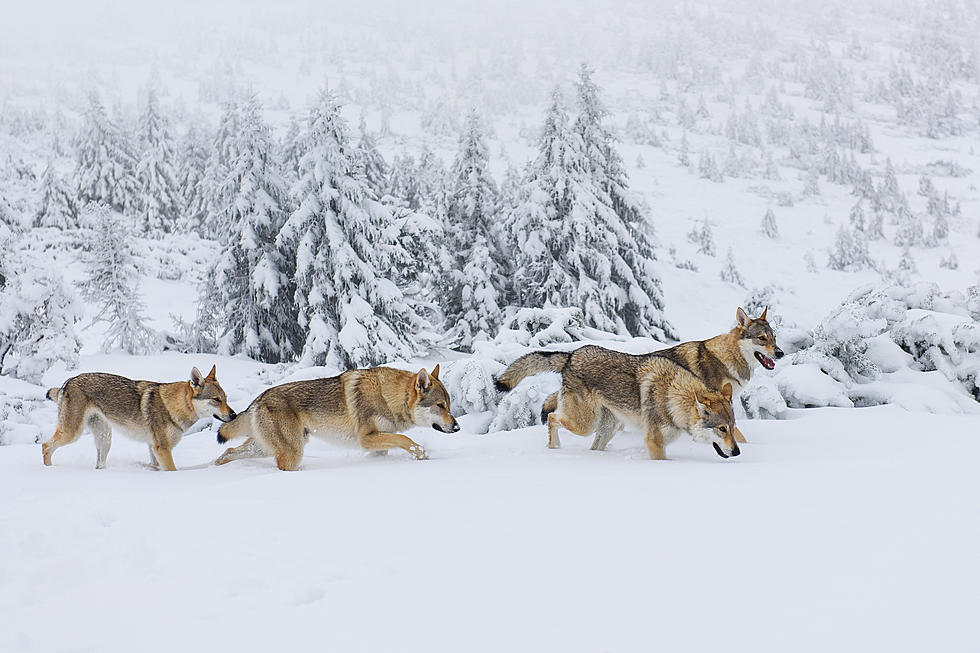
The Washington State Department of Fish and Wildlife (WDFW) is asking to keep the gray wolf species’ protected status after successfully increasing the wolf population.
According to WDFW, the state’s gray wolf population has grown nearly 28% each year since 2008, and hasn’t published a status report on the wolves since listing them as endangered back in 1980.
Based on 14 years of population growth, WDFW concluded that the species no longer meets the threat of extinction, or the state definition for a threatened species.
A man accidentally shot his friend while they were out hunting in Rasil Forest, Hulu Besut early yesterday morning, seriously injuring him. — Picture by Ahmad Zamzahuri
Follow us onInstagram, subscribe to ourTelegramchannel andbrowser alertsfor the latest news you need to know.
Sunday, 21 May 2023 8:01 PM MYT
JERTIH, May 21 — A man accidentally shot his friend while they were out hunting in Rasil Forest, Hulu Besut, near here early yesterday morning, seriously injuring him.
Besut district police chief Supt Abdul Rozak Muhammad said the 38-year-old man was believed to have shot the 32-year-old victim between midnight and 1am.
“Preliminary investigations found that the suspect and the victim, who are good friends, entered the forest with a shotgun, believed to be homemade, to hunt mouse deer.
Cows and mongooses are among at least 65 species of animals that can “laugh,” according to a study from UCLA.
Researchers Sasha Winkler and Greg Bryant combed through existing scientific literature for their findings, meaning no animals were harmed or exploited in the study, which was published in the scientific journal BioAcoustics.
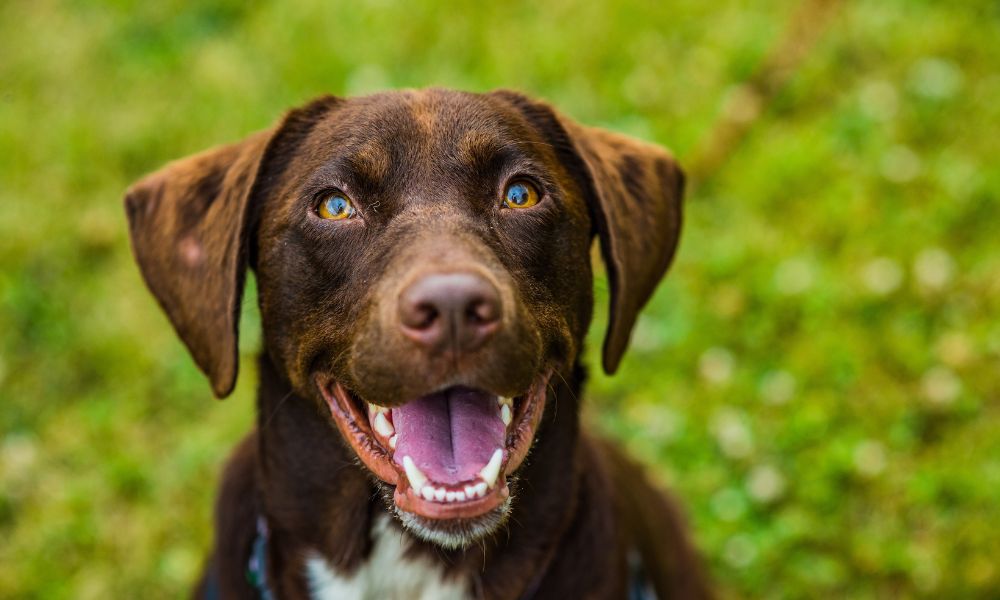
They were on the lookout for “play vocalizations” — or sounds that animals make when likely feeling happy and relaxed, similar to human laughter.
While scientists knew that certain species — most notably, primates and rats — express the equivalent of laughter during bonding, the UCLA study added to that list species including dogs, foxes, seals, mongooses, and three species of birds, including the Australian magpie and the parakeet.
“This work lays out nicely how a phenomenon once thought to be particularly human turns out to be closely tied to behavior shared with species separated from humans by tens of millions of years,” Bryant said.
Lady Freethinker applauds the scientists for exploring their theories in a way that did not exploit, harm, or remove animals from their natural environments or subject them to unnatural circumstances.
This study is another example of animals’ sentience, that they can feel emotions like we do, and that they deserve to live their days free from fear, pain, and exploitation!
You can help animals in laboratories by signing our most recent petition, urging Oregon to ban cruel tests on animals for cosmetics!
The controversial author on the importance of updating his landmark book on animal liberation, being ‘flexibly vegan’ and the ethical dangers of artificial intelligence for the non-human world
Australian philosopher Peter Singer’s book Animal Liberation, published in 1975, exposed the realities of life for animals in factory farms and testing laboratories and provided a powerful moral basis for rethinking our relationship to them. Now, nearly 50 years on, Singer, 76, has a revised version titled Animal Liberation Now. It comes on the heels of an updated edition of his popular Ethics in the Real World, a collection of short essays dissecting important current events, first published in 2016. Singer, a utilitarian, is a professor of bioethics at Princeton University. In addition to his work on animal ethics, he is also regarded as the philosophical originator of a philanthropic social movement known as effective altruism, which argues for weighing up causes to achieve the most good.He is considered one of the world’s most influential – and controversial – philosophers.
Why write Animal Liberation Now? The last full update was 1990. Though the philosophical arguments have stood up well, the chapters that describe factory farming and what we do to animals in labs needed to be almost completely rewritten. I also hadn’t really discussed factory farming’s contribution to the climate crisis and I wanted to reflect on our progresstowards animal rights. Effectively, this is a new book for the next generation, hence the new title.
What progress have we made in our treatment of animals since the original book? And what have we learned about animal sentience? There have been some improvements in factory farming practices in some regions of the world, but in others we have hit new lows. China now has enormous factory farms and lacks any national standards for raising animals for food. Extreme forms of confinement also still dominate the US states with the most pigs and laying hens. Animal experimentation is now regulated in many developed nations, but what’s notable is how minimal it is in the US, where the vast majority of animals used in experiments aren’t covered. On animal sentience, we now have strong evidence that fish too can feel pain. There are also good reasons for thinking the same of some invertebrates – the octopus but also lobsters and crabs. How far sentience extends into other invertebrates is unclear.
Can you explain your position against speciesism, the belief most humans hold that we are superior to other animals? Shouldn’t humans count more? Just as we accept that race or sex isn’t a reason for a person counting more, I don’t think the species of a being is a reason for counting more than another being. What is important is the capacity to suffer and to enjoy life. We should give equal consideration to the similar interests of all sentient beings. Defenders of speciesism argue that humans have a special rational nature that sets them apart from animals, but the problem is where that leaves infants and the profoundly intellectually disabled. Instead of defending the idea that all humans have rights but no animals do, we should recognise that many things we do to animals cause so much pain and yet are so inessential to us that we ought to refrain. We can be against speciesism and still favour beings with higher cognitive capacities, which most humans have – but that is drawing a line for a different reason. If there are animals that have higher cognitive capacities than some humans, there’s no reason to say that the humans have more worth or moral status simply because they are human.
Many things we do to animals cause so much pain and yet are so inessential to us that we ought to refrain
The chapters in Animal Liberation Now about animal testing and factory farming are upsetting to read. Were they upsetting to write and rewrite and what pulled you through? I found them very upsetting, both 48 years ago and as I’ve worked on them over the past year. But I also felt driven to complete them so people know and can help stop it. I’ve had to develop a thicker skin and sometimes have had trouble getting to sleep, but it needed to be done. I do steer away from emotive language. I’ve never considered myself an animal lover and I don’t want to only appeal to animal lovers. I want people to see this as a basic moral wrong.
You have provoked the ire of the disability rights advocates over the years, including by arguing that parents should have the right the end the lives of severely disabled newborns. This has been criticised as an ableist view that could lead to other disabled people being less valued. What’s your response? In general, I think it is better to have abilities than not to have them. Most people hold that view. Obviously, there are forms of discrimination against disabled people that we should firmly reject. Ableism has a sound purpose when it calls out discrimination against disabled people on grounds not related to their disability.
If parents have a newborn with a severe disability and that child needs to be on a respirator to survive, doctors will invite parents to decide whether to allow the child to die. That happens regularly and is generally uncontroversial. Yet it is what the child’s future will be like that is really relevant. And I think, even in cases where the child doesn’t need a respirator, parents should be able to consult doctors to reach a considered judgment, including that the child’s life is not one that is going to be a benefit for the child or for their family, and that therefore it is better to end the child’s life. If that is ableist, then it isn’t always wrong to be ableist.
You argue there are certain situations where we could replace the animals we experiment on with humans… During the Covid pandemic, I supported 1Day Sooner, an organisation of well informed volunteers offering to test the efficacy of candidate vaccines. That could have saved many thousands of lives by speeding up vaccine introduction, but the volunteers were rejected. There is also a case for beneficially using humans in persistent vegetative states from which we can be absolutely clear that they will never recover. People could sign consent statements, as they do with organ donation, saying they don’t mind their body being used for research if that were to happen.
While effective altruism – the philanthropic social movement you helped originate – has its critics, it has gained a following in recent years, including in Silicon Valley tech circles (disgraced cryptocurrency founder Sam Bankman-Fried was prominent in the movement). One newer idea it has spawned is longtermism. It prioritises the distant future over the concerns of today and advocates reducing the risk of our extinction, for example, by thwarting the possibility of hostile artificial intelligence (AI) and colonising space. To what extent do you endorse longtermism? We should think about the long-term future and we ought to try to reduce risks of extinction. Where I disagree with some effective altruists is how dominant longtermism should become in the movement. We need some balance between reducing the extinction risks and making the world a better place now. We shouldn’t negate our present problems or our relatively short-term future, not least because we can have much higher confidence that we can help people in these timeframes. Though the lives of people in the future aren’t of any less value, how we can best help people millennia from now is uncertain.
Are you vegan and how did you first become concerned about animal suffering? “Flexibly vegan” is how I would describe myself today. I don’t do it much, but I have no objection to eating oysters – I don’t think they can suffer – and oyster farming is quite an environmentally sustainable industry. Also, if I am out somewhere where it’s a real problem, I will go for something vegetarian. That my everyday purchases are vegan is the main thing.
A world of conscientious omnivores would produce much less meat and dairy products, with vastly less suffering
Myjourney began when I was a graduate student in philosophy at Oxford University in 1970. It was thanks to another graduate student explaining why he hadn’t chosen the meat option when we had lunch one day: he was vegetarian because he didn’t think the animals were treated right. My wife and I did some reading and became vegetarians soon after. Becoming mostly vegan took longer.
Conscientious omnivores oppose factory farming but continue to eat animal products from farmers who treat their animals well and don’t subject them to suffering. Do they get a pass? Honestly, I can’t show that they are wrong. Assume that the cows wouldn’t have existed if they weren’t going to be sold for their meat and the conscientious omnivores investigate how their food is produced, and can be confident that the animals really do have good lives and are killed painlessly and without suffering – then I think they do get a pass. They’re allies in the movement against factory farming, and a world of conscientious omnivores would produce much less meat and dairy products, with vastly less suffering.
What of meat grown from cultured animal cells? That gets more than a pass and I hope to try it soon. What is needed now is to produce it cheaply at scale. It is much better for the climate than meat from animals and for animal suffering. And while it is true that it still suggests that meat is desirable, there are people who are unwilling to make that switch to becoming vegan or vegetarian. The companies’ use of fetal bovine serum to develop their products is regrettable and I am pleased that many companies have found alternatives and stopped using it, but if there are no alternatives, its use can be justified. I don’t regard it as a reason for never eating them.
You’ve brought vegan recipes back in Animal Liberation Now. Why resurrect them and do you have a particular favourite? Popular demand! In 1975 there weren’t many good vegetarian or vegan cookbooks so it made sense to include recipes. Then, as that changed, I didn’t think people needed the recipes any more so I took them out. What I have put back is different. The focus is on my and my wife’s dishes. Both vegan recipes from our childhoods that we still make and then things we have started cooking since becoming mostly vegan. I have shifted to more Asian food and a favourite is the recipe for dal. It is a good meal and easy to make.
What are you working on now? The ethics of AI as it affects animals. A colleague and Ipublished our first paper on this last year. We need to ensure the AI systems starting to be used in factory farms to manage animals don’t further negatively affect their lives, that self-driving cars are programmed to avoid hitting animals and that biases against farm animals that can be replicated and reinforced through AI are minimised. ChatGPT refuses to give recipes for cooking dogs on the grounds that it is unethical but readily provides recipes for cooking chickens.
Animal Liberation Now by Peter Singer is published on 8 June by the Bodley Head (£20). To support the Guardian and Observer order your copy at guardianbookshop.com. Delivery charges may apply
Ethics in the Real World: 90 Essays on Things That Matter (updated and expanded) is published by Princeton University Press
An allegation that Wyoming Republican Party National Committeewoman Nina Webber sprayed bullets near a home last fall while hunting have been dropped with prejudice. She called the charge a political “hit job” and said that “the truth has finally come out.”
Wyoming GOP Committeewoman Nina Webber said she feels vindicated after charges alleging she was hunting recklessly near a home in Park County last fall were dropped with prejudice. She called the pursuit of the allegations a political “hit job.” (Courtesy Photo)
A Wyoming Republican Party National Committeewoman was cleared on a charge of reckless endangering on Wednesday after originally being accused of shooting bullets in close vicinity of a home and its residents while she was hunting.
On Wednesday, Park County Attorney Bryan Skoric dismissed the charge against Webber with prejudice, telling Cowboy State Daily the state did not have enough…
While these plans and kites are quite old, they’re not the oldest hunting structures ever found. Several years ago, archaeologists working near Mexico City discovered 15,000-year-old pits containing butchered mammoth bones, which they say were deliberately constructed mammoth traps.
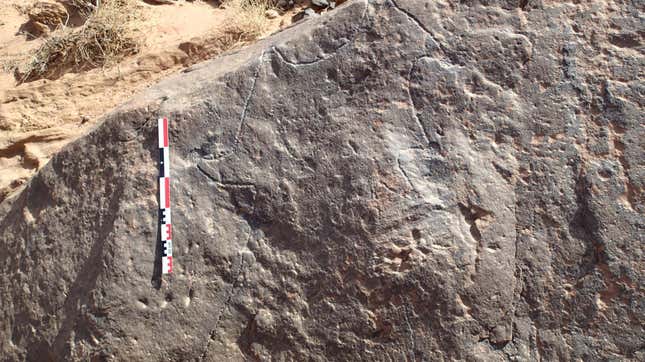
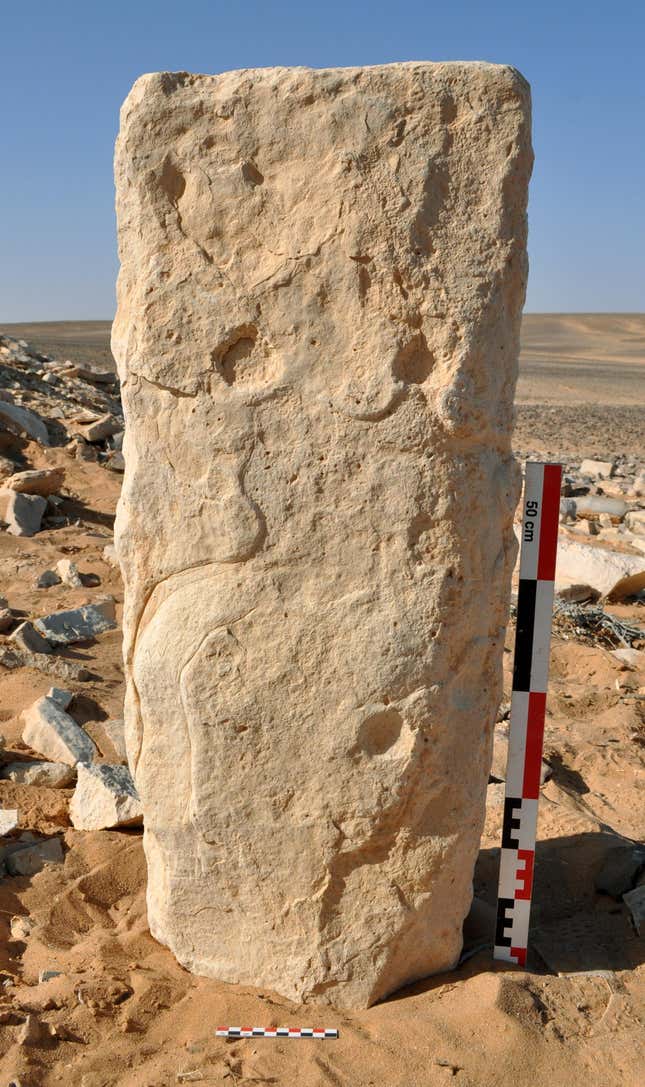
One of the engravings found by the researchers, on a boulder in Saudi Arabia.
Ancient people living in what is today Saudi Arabia and Jordan carved to-scale plans for large animal traps, called kites, into rock. The scientists who analyzed the discoveries say the ability to transpose an aerial-view plan of this size to an actual structure points to a milestone in human intelligence and engineering.
Researchers from CNRS uncovered evidence of two aerial-view plans for ancient megastructures etched into rocks in Saudi Arabia and Jordan. Developing scale plans for massive structures is commonplace today, but for humans thousands of years ago, it was no small feat.
Related Content
How Do You Make New Little Mermaid Songs? | io9 Interview
The plans are 267 kilometers apart and both date to between 7,000 and 8,000 years old. Each rock face contains scale models of desert kites—massive animal traps—transposed onto the two-dimensional surface of the rock. The etching in Jordan is 80 centimeters long and 32 centimeters wide, while the etching in Saudi Arabia is much larger, at 382 centimeters long and 235 centimeters wide. The team’s research is published today in PLOS ONE.
The etched rock face found in Jordan.
“We were immediately surprised by the similarity of the drawing with the hunting desert kite structures,” study author Olivier Barge wrote in an email to Gizmodo. “That’s how we realized that the engravings were actually accurate plans at scale.”
Desert kites are massive structures made of stone walls and pits that allowed humans to corral and trap animals. According to the researchers, desert kites were discovered as early as the 1920s, and thousands of them have been cataloged across the Middle East. Both stone etchings were found by study author Wael Abu-Azizeh and his colleagues in 2015, while the actual Saudi Arabian kite was discovered in 2014 and the Jordanian kite in 2013. Rémy Crassard, lead author on the manuscript, Barge, and Abu-Azizeh studied photos and created digital models of the etched stones and matched them to pre-existing kite structures via satellite imagery, which led them to nearby structures in Saudi Arabia and Jordan.
“The fact that it is only from looking at the satellite imagery that we were able to recognize that the features observed in the field were part of a desert kite layout is interesting in itself: it reminds how these large scale features are difficult to perceive from the ground, in view of their large size and their intricate topographical setting,” Barge said.
While these plans and kites are quite old, they’re not the oldest hunting structures ever found. Several years ago, archaeologists working near Mexico City discovered 15,000-year-old pits containing butchered mammoth bones, which they say were deliberately constructed mammoth traps.
Deep in the Mojave desert, about halfway between Los Angeles and Phoenix, a sparkling blue sea shimmers on the horizon. Visible from the I-10 highway, amid the parched plains and sun-baked mountains, it is an improbable sight: a deep blue slick stretching for miles across the Chuckwalla Valley, forming an endless glistening mirror.
But something’s not quite right. Closer up, the water’s edge appears blocky and pixelated, with the look of a low-res computer rendering, while its surface is sculpted in orderly geometric ridges, like frozen waves.
“We had a guy pull in the other day towing a big boat,” says Don Sneddon, a local resident. “He asked us how to get to the launch ramp to the lake. I don’t think he realised he was looking at a lake of solar panels.”
Over the last few years, this swathe of desert has been steadily carpeted with one of the world’s largest concentrations of solar power plants, forming a sprawling photovoltaic sea. On the ground, the scale is almost incomprehensible. The Riverside East Solar Energy Zone – the ground zero of California’s solar energy boom – stretches for 150,000 acres, making it 10 times the size of Manhattan.
It is a crucial component of the United States’ green energy revolution. Solar makes up about 3% of the US electricity supply, but the Biden administration hopes it will reach 45% by 2050, primarily by building more huge plants like this across the country’s flat, empty plains.
But there’s one thing that the federal Bureau of Land Management (BLM) – the agency tasked with facilitating these projects on public land – doesn’t seem to have fully taken into account: the desert isn’t quite as empty as it thought. It might look like a barren wilderness, but this stretch of the Mojave is a rich and fragile habitat for endangered species and home to thousand-year-old carbon-capturing woodlands, ancient Indigenous cultural sites – and hundreds of people’s homes.
Residents have watched ruefully for years as solar plants crept over the horizon, bringing noise and pollution that’s eroding a way of life in their desert refuge.
“We feel like we’ve been sacrificed,” says Mark Carrington, who, like Sneddon, lives in the Lake Tamarisk resort, a community for over-55s near Desert Center, which is increasingly surrounded by solar farms. “We’re a senior community, and half of us now have breathing difficulties because of all the dust churned up by the construction. I moved here for the clean air, but some days I have to go outside wearing goggles. What was an oasis has become a little island in a dead solar sea.”
Concerns have intensified following the recent news of a project, called Easley, that would see the panels come just 200 metres from their backyards. Residents claim that excessive water use by solar plants has contributed to the drying up of two local wells, while their property values have been hit hard, with several now struggling to sell their homes.
“It has been psychologically gruelling,” says Teresa Pierce, who moved here six years ago. “From the constant pounding of the metal posts to the endless dust storms. I now have allergies that I’d never had before – my arms burn all day long and my nose is always running. I feel like a prisoner in my own home.”
Elizabeth Knowles, director of community engagement for Intersect Power, the company behind the Easley project, said it knew of residents’ concerns and was exploring how to move the project further from the community. “Since being made aware of their concerns, we have been in regular contact with residents to listen to their concerns and incorporate their feedback into our planning efforts.”
‘90% of the story is underground’
The mostly flat expanse south-east of Joshua Tree national park was originally identified as a prime site for industrial-scale solar power under the Obama administration, which fast-tracked the first project, Desert Sunlight, in 2011. It was the largest solar plant in the world at the time of completion, in 2015, covering an area of almost 4,000 acres, and it opened the floodgates for more. Since then, 15 projects have been completed or are under construction, with momentous mythological names like Athos and Oberon. Ultimately, if built to full capacity, this shimmering patchwork quilt could generate 24 gigawatts annually, enough energy to power 7m homes.
But as the pace of construction has ramped up, so have voices questioning the cumulative impact of these projects on the desert’s populations – both human and non-human.
Kevin Emmerich worked for the National Park Service for over 20 years before setting up Basin & Range Watch in 2008, a non-profit that campaigns to conserve desert life. He says solar plants create myriad environmental problems, including habitat destruction and “lethal death traps” for birds, which dive at the panels, mistaking them for water.
He says one project bulldozed 600 acres of designated critical habitat for the endangered desert tortoise, while populations of Mojave fringe-toed lizards and bighorn sheep have also been afflicted. “We’re trying to solve one environmental problem by creating so many others.”
Such adverse impacts are supposed to be prevented by the desert renewable energy conservation plan (DRECP), which was approved in 2016 after years of consultation and covers almost 11m acres of California. But Emmerich and others think the process is flawed, allowing streamlined environmental reviews and continual amendments that they say trample conservationists’ concerns.
“The plan talks about the importance of making sure there’s enough room between the solar projects to preserve wildlife routes,” says Chris Clarke of the National Parks Conservation Association. “But the individual assessments for each project do not take into account the cumulative impact. The solar plants are blocking endangered species’ natural transport corridors across the desert.”
Much of the critical habitat in question is dry wash woodland, made up of “microphyll” shrubs and trees like palo verde, ironwood, catclaw and honey mesquite, which grow in a network of green veins across the desert. But, compared with old-growth forests of giant redwoods, or expanses of venerable Joshua trees, the significance of these small desert shrubs can be hard for the untrained eye to appreciate.
“When people look across the desert, they just see scrubby little plants that look dead half the time,” says Robin Kobaly, a botanist who worked at the BLM for over 20 years as a wildlife biologist before founding the Summertree Institute, an environmental education non-profit. “But they are missing 90% of the story – which is underground.”
Her book, The Desert Underground, features illustrated cross-sections that reveal the hidden universe of roots extended up to 150ft below the surface, supported by branching networks of fungal mycelium. “This is how we need to look at the desert,” she says, turning a diagram from her book upside-down. “It’s an underground forest – just as majestic and important as a giant redwood forest, but we can’t see it.”
The reason this root network is so valuable, she argues, because it operates as an enormous “carbon sink” where plants breath in carbon dioxide at the surface and out underground, forming layers of sedimentary rock known as caliche. “If left undisturbed, the carbon can remain stored for thousands of years,’” she says.
Desert plants are some of the oldest carbon-capturers around: Mojave yuccas can be up to 2,500 years old, while the humble creosote bush can live for over 10,000 years. These plants also sequester carbon in the form of glomalin, a protein secreted around the fungal threads connected to the plants’ roots, thought to store a third of the world’s soil carbon. “By digging these plants up,” says Kobaly, “we are removing the most efficient carbon sequestration units on the planet – and releasing millennia of stored carbon back into the atmosphere. Meanwhile, the solar panels we are replacing them with have a lifespan of around 25 years.”
For Alfredo Acosta Figueroa, the unstoppable march of desert solar represents an existential threat of a different kind. As a descendant of the Chemehuevi and Yaqui nations, he has watched as what he says are numerous sacred Indigenous sites have been bulldozed.
“The history of the world is told by these sites,” he says, “by geoglyphs, petroglyphs, and pictographs. Yet the government has chosen to ignore and push aside the creation story in the name of progress.”
His organisation, La Cuna de Aztlan, acts as custodian of over 300 hundred such sites in the Lower Colorado River Basin, many of which, he says, have already been damaged beyond repair. He claims that a 200ft-long geoglyph of Kokopelli, a flute-playing god, was destroyed by a new road to one of the solar plants, while an image of Cicimitl, an Aztec spirit said to guide souls to the afterlife, is also threatened. “The solar projects cannot destroy just one sacred site without destroying the sacredness of the entire area,” he adds. “They are all connected.”
He cites a 2010 report by the California Energy Commission, which includes testimony from the heritage experts Dr Elizabeth Bagwell and Beverly E Bastian stating that “more than 800 sites within the I-10 Corridor and 17,000 sites within the Southern California Desert Region will potentially be destroyed”, and that “mitigation can reduce the impact of the destruction, but not to a less-than-significant level”.
The Bureau of Land Management declined a request for an interview. In an emailed statement, its public affairs officer, Michelle Van Der Linden, did not directly address questions about solar plants’ water use, health issues, or ecological and archeological impacts, but said the agency operated within the applicable laws and acts. “The DRECP effort was a multiple-year collaborative discussion resulting in an agreement reached between the BLM, numerous environmental groups, partners and stakeholders, in regards to the application and decision process related to renewable energy projects. Project issues were and continue to be identified and addressed through the National Environmental Policy Act process, which includes the opportunity for public engagement and input and also addresses many of the cumulative impacts and additional environmental, social and economic concerns mentioned.”
But a more fundamental question remains: why build in the desert, when thousands of acres of rooftops in urban areas lie empty across California?
“There are so many other places we should be putting solar,” says Clarke, of the National Parks Conservation Association, from homes to warehouses to parking lots and industrial zones. He describes the current model of large-scale, centralised power generation, hundreds of miles from where the power is actually needed, as “a 20th-century business plan for a 21st-century problem”.
“The conversion of intact wildlife habitat should be the absolute last resort, but it’s become our first resort – just because it’s the easy fix.”
Vincent Battaglia, founder of Renova Energy, a rooftop solar company based in Palm Desert, agrees. “We’ve been led to believe that all solar is good solar,” he says. “But it’s not when it molests pristine land, requires hundreds of millions of dollars to transmit to city centres, and loses so much power along the way. It is simply preserving the monopoly of the big energy companies.”
California recently reduced the incentive for homeowners to install rooftop solar panels after it slashed the amount that they can earn from feeding power back into the grid by about 75%. Forecasters suggest that, after doubling in size from 2020 to 2022, the market for residential solar installations is expected to decrease by nearly 40% by 2024 as a result.
Battaglia is optimistic that home energy storage is the answer. “Batteries are the future,” he says. “With solar panels on rooftops and batteries in homes, we’ll finally be able to cut the cord from the big utility companies. Soon, those fields of desert solar farms will be defunct – left as rusting relics of another age.”
Back in Lake Tamarisk, the residents are preparing for the long battle ahead. “They picked on a little town and thought they could wipe us out,” says Sneddon. “But they can’t just mow us over like they did the desert tortoises.
“They thought we were a bunch of uneducated redneck hicks living out here in the desert,” says Pierce. “We’re going to show them they were wrong.”
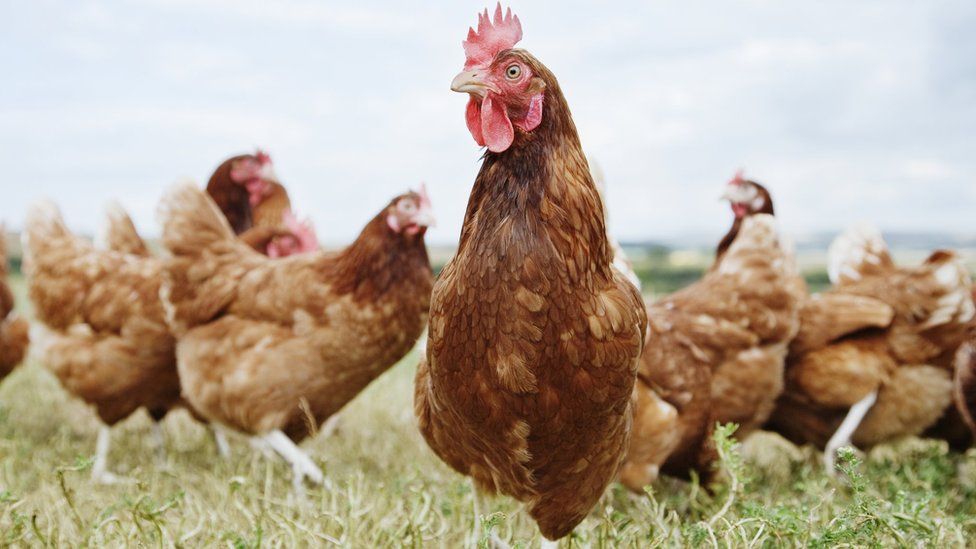
Both people were known to have recently worked on an infected poultry farm and have since tested negative.
Neither worker experienced symptoms of avian influenza, with both cases found during screening.
The risk to the general population remains very low, the UKHSA added.
ADVERTISEMENT
The UKHSA is running a programme of testing workers who have come into contact with infected birds, but is also running asymptomatic testing.
The first person who tested positive is thought to have inhaled the virus.
The second person is thought to be a more complicated case and it is unclear whether they have suffered a genuine infection or whether they too inhaled the virus…