An “unusual” black bear sighting awed throngs of beachgoers in Florida over the weekend, but state wildlife experts said Monday that cubs can sometimes take a swim in the Gulf of Mexico.
A crowd of vacationers in Destin were shocked and delighted when they spotted a black bear cub casually taking a dip in the Gulf on Sunday, according to footage captured of the odd moment.
While the bear was swimming in the ocean, a woman could be heard saying off-camera, “I guess he’s on vacation, too!”
But the Florida Fish and Wildlife Conservation Commission (FWC) said in a statement that during this time of year, young bears like the one spotted in Destin can leave the comfort of their mother’s home to explore “unexpected areas” in search of a new home.
Cubs might also be venturing into the Gulf to find food at islands, the FWC said.
“While it is unusual to see a bear swimming in the shallows of a crowded beach, it isn’t unusual to hear of black bears swimming in the Gulf, on their way to barrier islands in search of food,” the FWC stated.
The bear came out of the shallows on Sunday.
“During this time of year, juvenile bears such as the one seen in Destin are starting to leave their mother’s home range and may be seen in unexpected areas as they try to find a new home.
“Typically, these bears will move away on their own. If you see a bear, give it plenty of space, don’t try to approach it, and never feed it.”
Captain Chris Kirby, a lifelong Sunshine State resident, said bears have been spotted swimming around in the bay of the Gulf and are common sights throughout Destin, particularly near Eglin Air Force Base.
Black bear cubs will swim in the Gulf to find food, officials said.
“I’ve seen two swim in the bay,” Kirby, who operates Charter Boat Backlash, told The Post Monday evening. “And that’s over 30 years. That’s a long time, too. They’re not uncommon, I’ve heard stories of (bears) swimming around the bay as well.”
Still, watching footage of the bear moving around people on the beach took him by surprise.
There were bear sightings back then on and around the flight line and active runways, leading to worries among base officials, the past news release stated.
Residents are urged to secure food that might attract bears and keep them lingering in the area, the FWC said in its Monday statement.
“If a bear is not able to find food, it will move on,” the state agency said.
ALMA – If you’ve ever wanted to hunt a mountain lion, you may have the opportunity to do so in Nebraska.
According to the Nebraska Game and Parks Commission, recommendations for a 2024 mountain lion hunting season were approved at its June 9th meeting in Alma.
For the first time, a mountain lion harvest season will take place outside the Pine Ridge as the Niobrara Unit is created, encompassing parts of Brown, Cherry, Keya Paha, Rock and Sheridan counties.
The objective for the Niobrara Unit is to provide a harvest opportunity for mountain lions that allows the population to remain resilient and healthy, while slowing growth of the population.
Season 1 in the Niobrara and Pine Ridge units will take place Jan. 2 through the end of February. The season will end immediately in a unit if the annual harvest limit or female sub-limit are reached.
The Pine Ridge limit will be four mountain lions with a sub-limit of two females, and the Niobrara limit will be two mountain lions with a one female sub-limit. Up to 320 permits will be issued by lottery in the Pine Ridge Unit and up to 160 permits will be issued in the Niobrara Unit.
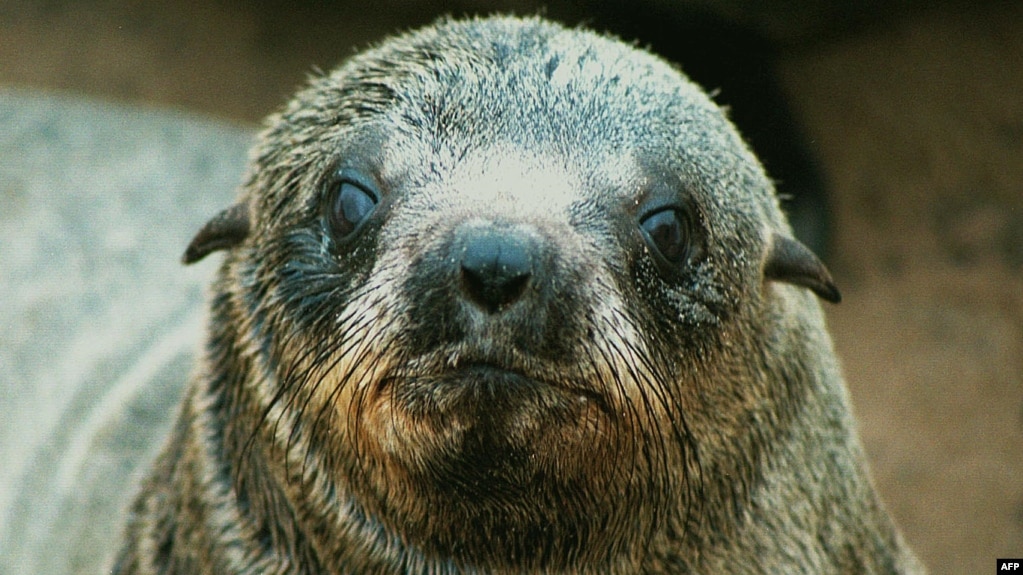
FILE – A Namibian Cape fur seal pup is pictured at a seal reserve 430 kilometers west of Windhoek. Namibia’s Ministry of Fisheries has issued a quota for the harvesting of 80,000 pups and 6,000 bulls in the harvesting season that begins July 1, 2023.
Share
Print
WINDHOEK, NAMIBIA —
This year’s Cape fur seal culling along Namibia’s coastline is set to begin July 1 – a harvest that’s done onshore for population control.
The seal population, according to the country’s Ministry of Fisheries and Marine Resources, stands at 1.6 million and is made up of 26 colonies. The ministry has issued a quota for the harvesting of 80,000 pups and 6,000 bulls this year.
The annual harvest is usually met with controversy because of the methods used in the culling of seals. Pups are clubbed over the head, while the bigger bulls are shot with rifles.
The culling method has raised ethical concerns among environmentalists, but authorities say the population must be thinned to maintain fish stocks in the ocean. Seals are estimated to consume 2 million tons of fish per year.
Environmental advocate Dirk Heinrich told VOA that the seals are not to blame for the depletion of the fish stocks. Overfishing in Namibian waters for profit is the cause, he said.
“It seems that some people lose some money, and then the best culprit is another animal, and then we kill that animal and make it less and try to make money out of it,” he said. “In that way, we actually destroy our whole ecosystem.
“We should rather look at us, the humans. Are we concerned, especially we Namibians, are we concerned about conservation and the natural or sustainable utilization of natural resources, or are we looking at dollars only?”
Seal products
Fisheries Ministry spokesperson Uaripi Katjiukua told VOA the seals feed mostly on noncommercial fish stocks, such as gobies. She also explained what is done with the culled seals.
“The seal products include the skin, the meal, oil, and dry genitals meat,” she said. “These products are demanded both in the local and international markets.”
The seal harvesting is overseen by Ministry of Environment officials alongside those of the Fisheries Ministry. Romeo Muyunda, spokesperson for the Environment Ministry, said, “If you let that [seal] population grow, then indeed it is that population that is going to consume commercial amounts [of fish], and we don’t want it to get to that level.” The population needs to be maintained at a level that the ecosystem can support, he said.
Twenty-seven countries worldwide, including the U.S., Mexico and South Africa, have banned imports of all seal products. In 2019, the European Union banned all imports of seal products, citing animal welfare and the culling methods.
Namibian seal products are exported mainly to Asian markets. Seal penis is a delicacy in China.
PRIEST LAKE – On the morning of June 8, a nonresident hunter shot and killed a male grizzly bear he mistook for a black bear. The bear was killed in Idaho’s Panhandle, north of Upper Priest Lake. After shooting the bear and identifying it as a grizzly, the hunter contacted Idaho Fish and Game and is cooperating with the ongoing investigation.
Officials say the incident serves an important reminder that grizzly bears can be found in game management units in the Panhandle, in the Greater Yellowstone Ecosystem, and grizzlies are known to occasionally visit portions of the Clearwater Region. Hunters can refer to page 73 of the 2023 Big Game Seasons and Rules to see units where grizzlies may be found.
Grizzly bears are protected under state and federal…
Weeks of unprecedented wildfiresin Canada have burned millions of hectares, displaced more than 100,000 residents and plunged the country into a nationwide crisis as exhausted crews battle hundreds of blazes. But experts caution that a changing climate and human actions on the landscape will probably make fire seasons worse in the coming years.
Hundreds of firefighters from across the world have flown toCanadato aid a nation stretched thin with a spring fire season that has shattered records on both sides of the country, with warmer and drier months still to come.
A Pennsylvania man who attempted to shoot a deer, but instead shot his elderly neighbor, is headed to jail.
According to reports,Michael Lloyd, 41, of College Township was sentenced Friday to serve at least three months and as long as 23 ½ months in the Centre County Correctional Facility. Per the Centre Daily Times, Lloyd must report to the prison by June 12.
His hunting license was revoked for five years, and he was ordered to pay $29,000 in restitution, according to reports. That total could increase if the 83-year-old man that Lloyd shot has to receive additional treatments.
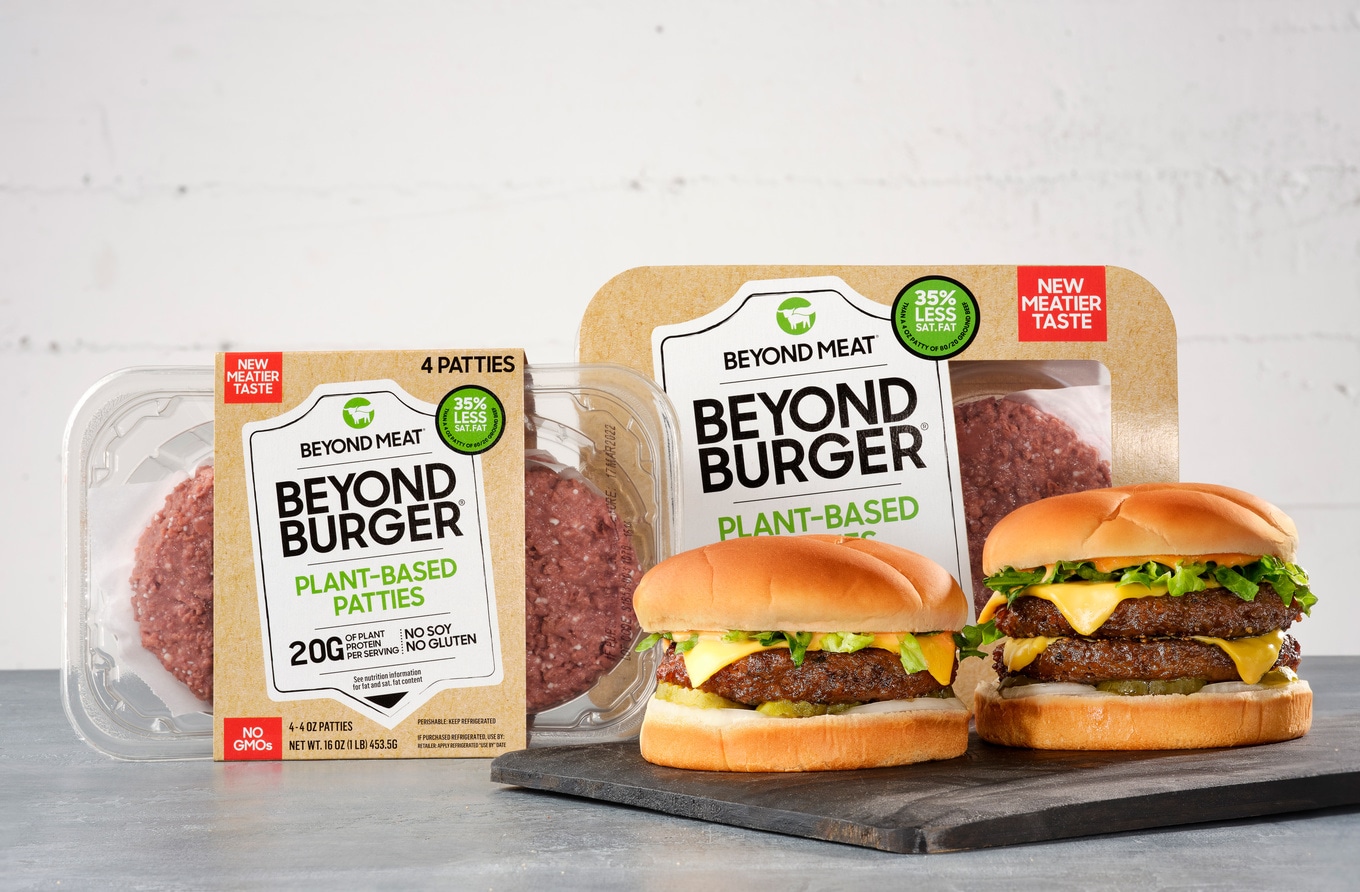
The last few years have been a rollercoaster ride for the plant-based meat market. When Beyond Meat—arguably one of the most well-known brands in the plant-based meat arena—first went public in 2019, it made history when the stock surged to record-breaking highs. Since then, the brand has found its way to grocery store shelves, restaurant menus, and fast-food chains all over the world (hello, McPlant in the UK). But it hasn’t all been plain sailing for the California brand—or indeed, the rest of the plant-based meat industry.
In a very short period of time, the plant-based meat market was crowded with options. And all of that competition made things complicated. Even Beyond Meat CEO Ethan Brown has acknowledged that the number of products on the market made it very difficult for his brand to stay on its upward trajectory. We’ve also witnessed a pandemic, and, right now, a cost of living crisis, which has also affected product sales.
But all of that said, Beyond Meat is turning things around, and vegan meat sales—driven by health, environmental, and ethical concerns—do seem to be thriving. The story appears to be a little different for traditional meat, however. Here’s what you need to know.
Beyond Meat
Vegan meat sales to increase
According to Brown, Beyond Meat is set for a solid second half of this year, which will see the company return to growth and achieve cashflow positive status, reports AgFunder Network Partners (AFN). This follows year-on-year declines in US food service and retail, but growth in international food service.
The company is set to launch new products, after reportedly failing to do enough to separate itself from the pack in recent years. “A tremendous number of entrants came into the [plant-based meat] category,” Brown told AFN. “It became a very crowded and somewhat confusing landscape for the consumer, and I don’t think we did enough to really stand out.”
“Now some of that is taking care of itself as the category shakes out and I think the consumer is left with a much more rational and approachable decision set in grocery,” he added, before revealing that a new, “animalic” edition of the Beyond Burger is set for release. “It’s been a long time in the making,” he said. “But we are receiving very positive reviews from early customer tests.”
Several reports have indicated growth in the plant-based meat sector as a whole. According to Grand View Research, in 2022, the global plant-based meat market was worth more than $4.4 billion, and it’s expected to expand at a compound annual growth rate of 24.9 percent from 2023 to 2030.
The market research platform does also acknowledge that things haven’t been easy for everyone in the industry (calling out Beyond Meat and fellow California plant-based giant Impossible Foods, specifically), but “rising consciousness” among consumers will help to keep overall growth on track.
“Diverse plant-based meat types continue to grow in popularity, which diversifies and expands the category,” Grand View Research reports. “The exponential growth of refrigerated plant-based meat is likely to continue over the forecast period of 2023-2030. It reflects a shift in both product innovation and merchandising strategies across the plant-based industry.”
Individual retailers have also spotted growth in the plant-based sector. Sprouts Farmers Market, for example, which has more than 380 stores across the US, recently reported a 21-percent growth in the sale of plant-based alternatives. And even meat giants themselves are banking on demand. John Pinto, the CEO of plant-based brand PlantPlus Foods, which was jointly created by Brazil’s second-largest beef producer Marfrig, also recently acknowledged challenges, but predicted that global plant-based food sales will surge to $30 billion in the next decade.
“Plant-based consumption has slowed down due to the macroeconomic scenario and all the supply-chain hurdles that all the food sector faced over the past years,” Pinto told Bloomberg. “We see this moment as a chapter on the sector’s expansion process.”
Adobe Stock
Is demand for conventional meat dropping?
While the plant-based market appears to be accelerating, the story seems a little different in the conventional meat industry.
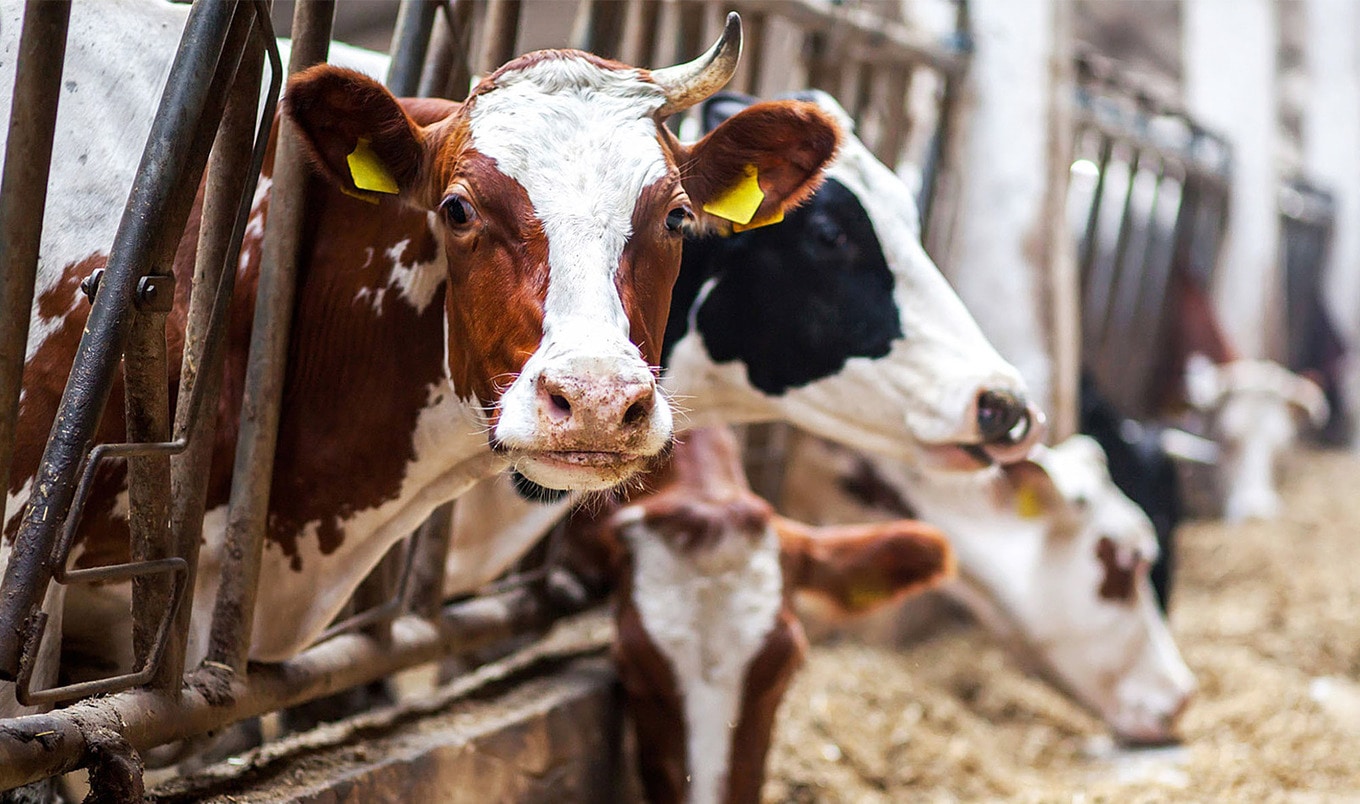
It’s important to note that the market is undeniably still colossal, worth nearly $900 billion, and millions of people still love regular, animal meat from factory farms. But recent reports indicate that the cost of living crisis has caused consumers to pull back a little from making big animal protein purchases.
According to data from the Meat Demand Monitor Project, US consumer demand hit a peak during the middle of last year and has been dropping ever since. That said, the demand still remains higher than it was in 2020, during the pandemic.
But there are other reasons, aside from price, for the drop in demand since 2022, claims Professor Glynn Tonsor of Kansas State University’s Department of Agricultural Economics. “Regularly … we observe the relative importance of price is lower in many coastal states (on average within those states at least),” he told National Hog Farmer.
“My opinion is most coastal residents likely place a higher priority on environmental impact, animal welfare, and perhaps some other social considerations that differ from the traditional eating experience factors of taste, fresh[ness], etc,” he continued. “Accordingly, this makes price a lower relative factor for those residents.”
In the EU, the meat market also appears to be struggling. In April 2023, for example, the European Commission revealed that beef, pig, and sheep meat production are forecast to see declines. And in the same month, Germany’s Federal Office for Agriculture and Food revealed that the country’s meat consumption was at its lowest level for over 30 years.
This is ultimately good news for climate scientists, who have consistently been urging Western countries to cut down on their meat consumption for the benefit of the environment. Animal agriculture is a leading contributor to a number of major environmental issues, including deforestation and rising greenhouse gas emissions.
In April 2022, one study from the University of Bonn in Germany suggested that meat consumption must drop by at least 75 percent in rich countries, which are putting an unnecessary strain on the planet through a high demand for animal products.
“If all humans consumed as much meat as Europeans or North Americans, we would certainly miss the international climate targets and many ecosystems would collapse,” said the study’s lead author Professor Matin Qaim.




 Beyond Meat
 Adobe Stock

