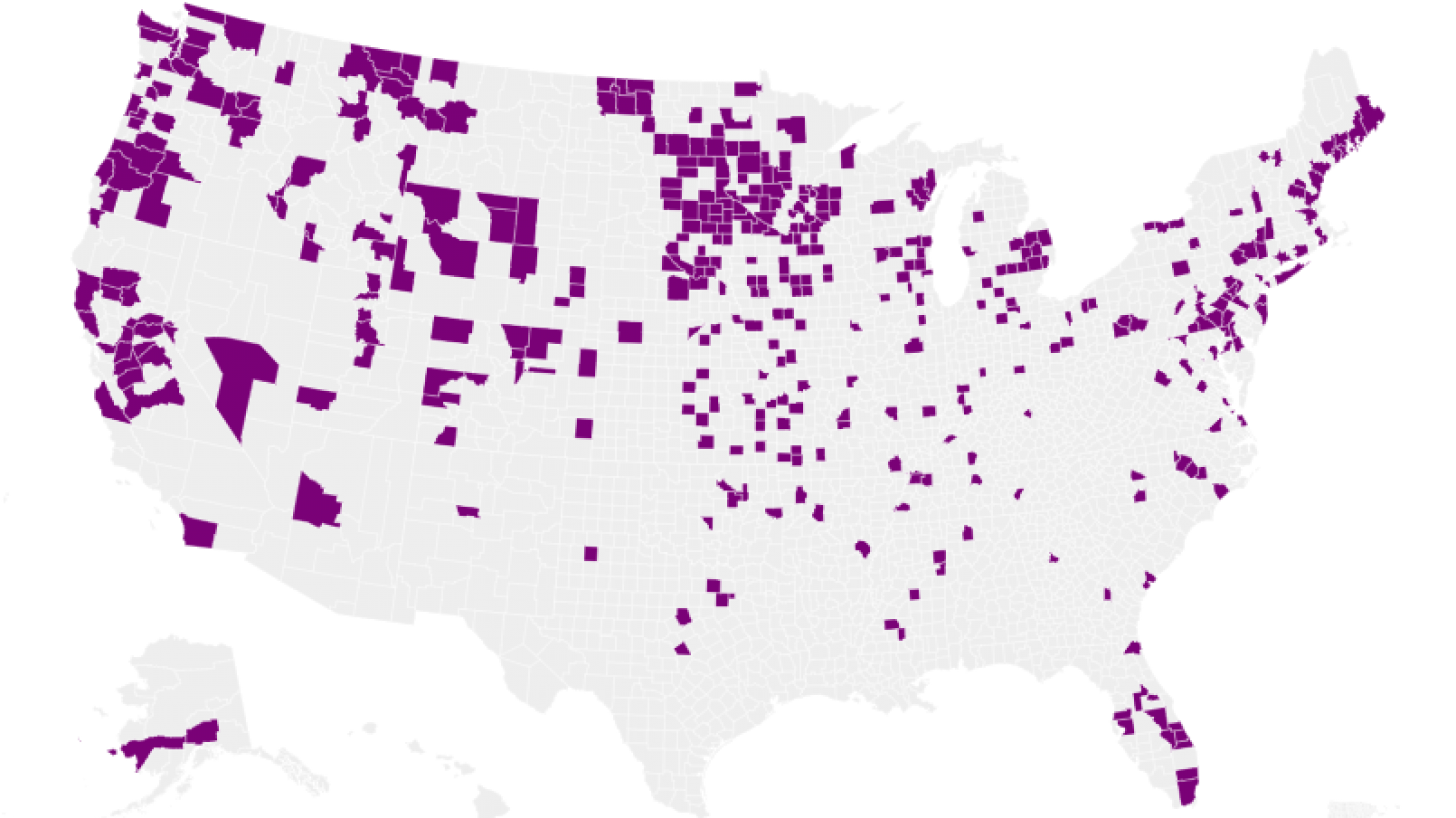
RALEIGH — The N.C. Wildlife Resources Commission voted at its business meeting on Aug. 18 to adopt an emergency amendment to restrict the use of some natural deer attractants/scents in the Primary and Secondary Chronic Wasting Disease Surveillance Areas.
The Wildlife Commission’s emergency rule builds off the General Assembly’s Session Law 2021-176 that took effect on Dec. 1, 2021 which defines the attractants/scents that may be used while hunting statewide. The session law stipulates that possession or use of substances containing a cervid excretion, including feces, urine, blood, gland oil, or other bodily fluid for the purposes of taking or attempting to take, attract, or scout wildlife are prohibited. However, the following substances may be used:
The provincial Department of Fisheries, Forestry and Agriculture is not planning to alter the small game hunting season in light of the current outbreak of deadly avian flu.
The department says to date, they have seen no evidence that avian flu has affected local populations of grouse or ptarmigan, and the risk to human health remains low.
While no changes to the small game hunting season are anticipated, the department says it is continuing to monitor the situation closely and will be sharing information on precautions for the hunting and handling of birds where avian flu may be present.
In the meantime, information for all wild bird hunters is available on the federal government’s
(Photo via Gov NL Moose Management Plan 2022-2026.)
Starting this hunting season, hunters will now be allowed to hunt or trap on Sundays.
The change comes with the opening of the big game bow-hunting season today. The big game rifle-hunting season doesn’t open until Saturday, September 10.
The idea of Sunday hunting has sparked controversy in the past, with some hunters heavily in favour, while other outdoor enthusiasts, including berry-pickers, expressing strong reservations.
Meanwhile, the province has introduced some changes toMoose Management Area maps, which now show moose densities in recently surveyed areas and current population information.
Successful hunters are reminded to drop off big game jawbones at one of more than 50 locations across the province.
Sept. 1 is the official beginning of the 2022-23 hunting season. Both geese and squirrel open this coming Thursday. That is where the similarity of the two species ends. Squirrels are basically a woodland critter and geese move around a lot in their lifetime. Geese can be found on water, fields, yards and even golf courses. Pretty much anywhere there are geese one can find them close to, or on, water.
I am crazy about goose hunting. There’s something about how receptive these birds are to my goose calls. Plus, hanging out with friends and family in a freshly cut field — hunting and scouting new ground really — makes chasing geese a great way to spend September.
HELENA—The Montana Fish and Wildlife Commission adopted new wolf hunting regulations at its meeting this week in Helena, with new special consideration for the hunting of wolves near Yellowstone National Park.
On Thursday, the Commission voted to do away with the state’s 18 current Wolf Management Units (WMU). This coming hunting season wolves will now be managed in seven regional trapping units and one WMU. The new WMU 313 is a combination of the old WMU 313 and 316, both of which border the north side of Yellowstone.
Hard harvest quotas were set for each trapping district totaling 450 wolves combined. Independent of the trapping districts, a quota of six wolves was set…
Smoke fills the sky as Sydney is enveloped in a thick bank of hazardous bushfire smoke forcing authorities in Australia’s most populous city to scale back controlled forest burning nearby on May 2, 2021.
The fifth round of discussions, which began two weeks ago, were designed to establish a UN Ocean Treaty that would set rules for protecting biodiversity in two-thirds of the world’s oceanic areas that lie outside territorial waters.
But UN members failed to agree on how to share benefits from marine life, establish protected areas, or to prevent human activity with life on the high seas.
“Although we did make excellent progress, we still do need a little bit more time to progress towards the finish line,” UN oceans ambassador Rena Lee said, according to Agence France-Presse.
Many hoped that the New York session, which began on 15 August, would ultimately produce an agreed treaty text on “the conservation and sustainable use of marine biodiversity beyond national jurisdiction”.
But environmental campaigners, who noted that discussions had been continuing on and off for 15 years, expressed disappointment and blamed wealthy countries, including the US, of being too slow to compromise.
Among the issues holding up the treaty is agreement on a process for creating protected areas as well as environmental impact assessments.
“While progress has been made, particularly on ocean sanctuaries, members of the High Ambition Coalition and countries like the USA have moved too slowly to find compromises, despite their commitments,” said Laura Meller of Greenpeace’s Protect the Oceans campaign.
Meller said that some groups, like the Pacific islands and the Caribbean group, had pushed to complete the agreement. But countries in the global north had only started working to reach compromises in the final days of negotiations, she said.
“Time has run out,” Meller added. “Further delay means ocean destruction. We are sad and disappointed. While countries continue to talk, the oceans and all those who rely on them will suffer.”
A Greenpeace activist takes photos of projections on the Brooklyn Bridge of a shark trapped in a net as part of a plea to protect the ocean’s marine life. Photograph: Alexi Rosenfeld/Getty Images
Greenpeace had warned Thursday that treaty talks were on the brink of failure because of the greed of countries in the High Ambition Coalition and others such as the US and Canada. At issue, the group said, was prioritizing hypothetical future profits from Marine Genetics Resources over protecting the oceans.
Meller also said that Russia had blocked negotiations, refusing to engage in the treaty process and in attempts at compromise with the European Union “on a wide range of issues”.
Monica Medina, the assistant US secretary of state, said her country remained committed to the goal of protecting at least 30% of the world’s oceans by 2030. “We cannot let the tides and currents push us back,” Medina said. “We must keep going.”
Unless the UN general assembly schedules a special emergency session to conclude negotiations, talks will not automatically resume until next year.
If the body fails to do so, Greenpeace warned that “it will be challenging to protect 30% of the world’s oceans by 2030 – the 30×30 target that scientists say is the minimum needed to give the oceans space to recover”.
The failure to reach an agreement comes after world leaders at the UN Ocean Conference in Lisbon in July vowed to do everything in their power to save the seas. But despite uplifting calls to action in the closing statement, no clear commitments emerged.
“While it’s disappointing that the treaty wasn’t finalized during the past two weeks of negotiations, we remain encouraged by the progress that was made,” said Liz Karan of the NGO Pew Charitable Trusts of the latest round of talks.
One of the lab mice used in the research.(Qiang Wang)
Changing the number of chromosomes an animal has can take millions of generations to happen in nature through the course of evolution – and now, scientists have been able to make these same changes in lab mice in a relative blink of an eye.
The new technique usingstem cellsand gene editing is a major accomplishment, and one that the team is hoping will reveal more about how the rearrangement of chromosomes can influence the way that animals evolve over time.
It’s in chromosomes – those strings of protein and DNA inside cells – that we find our genes, inherited from our parents and blended together to make us who we are.
For mammals like mice and us humans, chromosomes typically come paired. There are exceptions, such as in sex cells.
‘We are all homeless and have nothing’: Extreme weather affecting thousands in Pakistan and AfghanistanCNN—
Severe rains and flooding have killed at least 1,033 people, including 348 children, and left 1,527 more injured inPakistansince mid-June, officials said on Sunday.
The country’s National Disaster Management Authority (NDMA) added that 119 people had died and 71 injured in the last 24 hours alone.
At least 33 million people have been affected by the disaster, Pakistan’s Minister for Climate Change Sherry Rehman said on Thursday. She called the floods “unprecedented” and “the worst humanitarian disaster of this decade.”
“Pakistan is going through its eighth cycle of monsoon while normally the country has only three to four cycles of rain,” Rehman said. “The percentages of super flood torrents are shocking.”
Marine life living outside of the 1.2% of protected areas are at risk of exploitation from the increasing threats of climate change, overfishing and shipping traffic.
Image caption,Marine animals such as sharks are heavily fished for their meat and claimed medicinal properties
Over the last two weeks 168 members of the original treaty, including the EU, came together to try and make a new agreement.
The International Union for the Conservation of Nature (IUCN) that documents the status of the world’s biodiversity spoke to BBC News during the conference.
ADVERTISEMENT
Their Senior High Seas Advisor, Kristina Gjerde, explained why this treaty was so important: “The high seas are the vital blue heart of the planet.
“What happens on the high seas affects our coastal communities, affects our fisheries, affects our biodiversity – things we all care so much about.”
The negotiations focused on four key areas:
Establishing marine protected areas
Improving environmental impact assessments
Providing finance and capacity building to developing countries
Sharing of marine genetic resources – biological material from plants and animals in the ocean that can have benefits for society, such as pharmaceuticals, industrial processes and food
More than 70 countries – including the UK – prior to the meeting had already agreed to put 30% of the world’s oceans into protected areas.
This would put limits on how much fishing can take place, the routes of shipping lanes and exploration activities like deep sea mining.
Deep-sea mining is when minerals are taken from the sea bed that is 200m or more below the surface. These minerals include cobalt which is used for electronics, but the process could also be toxic for marine life, according to the IUCN.
As of March 2022, the International Seabed Authority, which regulates these activities, had issued 31 contracts to explore the deep sea for minerals.
But countries failed to reach agreement on key issues of fishing rights and also funding and support for developing countries.
World Wildlife Foundation’s (WWF) Senior Ocean Governance Expert Jessica Battle – who was at the negotiations – told BBC News that the Arctic was a divisive issue: “As it opens up due to climate change and we have much shorter winters, that is going to open up a whole new area of extraction.”
There are concerns that without this treaty not only will marine species not be protected but also some species will never be discovered before they become extinct.
Sharks and rays are among the species set to lose out from the failure to pass the treaty.
According to the IUCN they are facing a global extinction crisis – and are one of the most threatened species groups in the world.
Sharks and other migratory species such as turtles and whales move through the world’s oceans interacting with human activities like shipping which can cause them severe injuries and death.
All species of sharks and rays are also overfished – leading to rapid population decline.
Such reduction in animal numbers have been observed across most major marine groups.
It is not yet clear when countries will come back together to continue negotiations – but a deadline has been set for the end of the year.
They have a jam-packed calendar of international meetings on other matters between now and January – including the annual climate conference COP27 and the UN General Assembly meeting.
If the treaty does get signed there will still be further work to do.
The treaty will not outline what areas of the ocean will be placed under marine protection – just the process by which organisations and countries can apply for it.
Equally the treaty is not expected to include exact figures on what financial support developing nations will receive from developed countries, Liz Karan Project Director for the Pews High Seas Campaign told BBC News.
And Ms Karan said in the previous treaty from 1982 there were promises for support that were not fulfilled, and this has left some developing nations frustrated.
The fate of the oceans also depends on global action on climate change – which is decided as part of other UN negotiations.
The world’s seas have absorbed 90% of the warming that has occurred due to increasing greenhouse gases produced by human activities, according to Nasa.
“The half of our planet which is high seas is protecting terrestrial life from the worst impacts of climate change,” said Prof Alex Rogers from Oxford University, UK, who has provided evidence to inform the UN treaty process.