Planet Earth continues to run a fever. Data released by theCopernicus Climate Change Servicelast week showed that March of 2023 was the planet’s second-warmest month in recorded history, registering average global temperatures 0.92 degrees Fahrenheit above normal high temperatures measured between 1991 and 2020.
On Thursday, the National Oceanic and Atmospheric Administration (NOAA) confirmed the March findings, adding that “Polar sea ice saw its second-smallest March coverage on record.”
Above-normal monthly temperatures haven’t just become the normthanks to climate change; they are all but guaranteed. The heat in March marked the 529th consecutive month of hotter-than-normal temperatures in comparison to the 20th century average.
Precipitation and water content in the mountain snowfields were just above average, but not extraordinary, in most of western Wyoming. At low elevations, though, the snow depths shattered records — and killed tens of thousands of ungulates.
A single surviving pronghorn stands between a trio of antelope carcasses south of Boulder. Adult pronghorn mortality in the Sublette herd is typically around 20 percent, but wildlife biologists expect a far higher rate this year. The magnitude of the loss may not be known until May or June. (Cali O’Hare/Pinedale Roundup via Wyoming News Exchange)
That may come as a surprise to many amid the avalanche of news about record snowfall at nearby Teton Range ski areas and wildlife walloped statewide to such a degree that officials are taking steps to drastically scale back some hunting seasons.
“It could happen, but it’s not likely,” U.S. Bureau of Reclamation staffer Brian Stevens said of filling the currently quarter-full Jackson Lake.
The northern shoreline of Jackson Lake receded enough in 2022 that the Snake River was constrained to its historic channel, pictured here in September. (Mike Koshmrl/WyoFile)
That, and many other aspects of this harrowing winter, is due at least in part to the unusual way the snow has accumulated — as an “inverted snowpack” with disproportionate amounts pummeling and persisting in lower-lying country.
Total precipitation in the Snake River watershed this season, for example, is 106% of the long-term median — more or less average. But down in the Jackson Hole valley floor and much of Wyoming’s low elevations, snow depths were off the charts.
At lower elevation just miles from the Teton Range and its about-average snowpack, National Elk Refuge biologist Eric Cole measured settled snow depths that were more than double the average from January through March, with a mean of 21 inches and tops of 31 inches. And not only was there a lot of it, all that snow stuck around.
“The melt started remarkably late,” Cole said. “Typically the snowpack starts declining on the south end of the refuge around the second week of March, but this year it began around April 8.”
That was bad news for wildlife, even on the refuge where elk are fed. As of April 11, nearly 13% of all the calves dwelling on the U.S. Fish and Wildlife Service property had keeled over — more than triple the average death rate.
Bottom-heavy snowpack lingering long into spring was widespread in Wyoming. And so were consequences for wildlife like mule deer and pronghorn, which starved to death by the thousands.
“I’ve been looking at modeled snow depths across the region and where you’re normally seeing maybe two inches of snow on the ground, you’re up at 16, 17 inches of snow,” said Tony Bergatino, who directs the University of Wyoming’s Water Resource Data System.
Those low-elevation depths were unlike anything folks working today can recall seeing. At one low-elevation plot Bergatino monitors east of Rock Springs near Interstate 80, the previous high of modeled snow depth since 2004 was about 12 inches.
“Whereas right now that area’s sitting at about 24 inches,” down from an April 5 peak of 27.9 inches he said. “It was really anomalous.” And like on the Elk Refuge, it too persisted much later than usual.
“If you look at the median, the snow’s pretty much gone by then and the average over the last 20 years would be about 2.5 inches,” Bergatino said. “It was over 10 times higher [on April 5] at that particular location.”
A herd of pronghorn nibble at sagebrush shoots sticking through the windswept snowpack in the Green River Basin in April 2023. (Mike Koshmrl/WyoFile)
Wyoming Game and Fish Department biologist Gary Fralick, who manages the Wyoming Range Mule Deer Herd, said there’s no doubt in his mind that winter 2022-’23 has been the harshest for wintering deer of his 30-year tenure. The same anomalous deep, long-lasting, low-elevation snowpack appears to be the cause. Overall precipitation in the Upper Green River Basin — which encompasses much of the Wyoming Range herd’s easternmore winter ranges — has been only 108% of the median and its snowpack sits at 116%.
The winter of 2016-17, by contrast, which ravaged Wyoming Range mule deer, dumped a roughly 200%-of-median snowpack at the peak of winter. Yet, because it fell mostly in the high country, it wasn’t as deadly to deer as this winter is likely to end up, in Fralick’s estimation.
“Of all the winters, undoubtedly this current winter is going to be the worst that they’ve experienced,” he said. “Conditions that I’ve seen on the La Barge winter ranges and the Cokeville winter ranges are the most extreme snow conditions that I’ve ever seen.”
Especially near La Barge, there were simply no wind-scoured slopes, which free up forage for deer, Fralick said.
A vigilant doe mule deer pauses from browsing during the depths of a severe winter in the lower Green River basin. This image was taken just south of the Wyoming state line in Moffat County, Colorado, in February 2023. (Mike Koshmrl/WyoFile)
Deer and pronghorn died en masse and are still dying because of it.
Wyoming Game and Fish officials walked through some of the mortality data during town hall-style winter wildlife meetings in Pinedale and Rawlins — the latter meeting held remotely because of an April snowstorm.
As of the March 30 meeting in Sublette County, about half of the adult pronghorn between Rock Springs and Pinedale had succumbed to winter and a pneumonia-causing bacterial infection, Mycoplasma bovis. Adult deer mortality in the region hit roughly 30%, Game and Fish Director Brian Nesvik said. Almost all the fawns of both species had perished, an entire age class wiped off the landscape.
The state agency has since proposed fairly sweeping changes to the fall hunting seasons proposed in the Green River Basin and beyond. Some doe and fawn pronghorn hunts that would have targeted hundreds of animals have been canceled and Type 1 “any antelope” tags typically used on bucks have been vastly reduced. Mule deer hunting seasons have been shortened a week, new antler point restrictions imposed and youth hunts have been altered to exclude does and fawns.
The Wyoming Game and Fish Commission will decide whether to act on those hunting season changes at its April 18 meeting in Casper.
Sen. Larry Hicks (R-Baggs), addressing attendees of the remote Rawlins winter wildlife meeting, spoke to how the unusual snowpack has affected wildlife.
“Our snowpack across the Green River basin is inverted,” Hicks said. “The abnormal year that we’re having is that our low-elevation sites across the Salt River, Bear River, Little Snake and Green River basin are our highest snowpack [sites]. That’s an indicator of our winter range conditions.”
There are a few exceptions: Parts of the state where the snowpack was exceptional regardless of elevation, said Jeff Goats, a soil scientist with the Natural Resources Conservation Service’s Wyoming office. That’s true in the Little Snake Basin, he said, even with its inverted snowpack. The basin as a whole still has a 158%-of-median snowpack. The Upper Bear River Basin in far southwestern Wyoming sits at 162%, and the Belle Fourche River Basin, which drains from the Black Hills, is registering a 144% snowpack.
Snowpack conditions as of mid-April 2023. The map relies on SNOTEL sites that are typically at high-elevation, masking record-setting low-elevation snow depths. (Natural Resource Conservation Service)
Although some water bodies, like Jackson Lake, likely won’t fill, more generally the snowpack promises to bolster flows down drought-sapped rivers and replenish levels of other drought and irrigation-depleted reservoirs.
Based on historical data, mid-April is when Wyoming’s snowpack is typically about at its peak. The median date of the peak “snow water equivalent” comes first in the Belle Fourche and South Platte river basins, in the closing days of March, Goats said. The latest peak snowpack typically occurs in the Tongue River Basin, on April 29, he said.
Low-elevation areas that accumulated record snow depths and took a major toll on Wyoming’s wildlife are finally melting out, too.
“We’ve lost almost a foot of snowpack depth in the past week,” the National Elk Refuge’s Cole said.
Bergatino, with the Water Resource Data System, said that ideally Wyoming’s bottom-heavy snowpack will come off slow and steady — but it’s still too early to tell.
“We’ve pretty good chances of below normal temperature, but also some slightly elevated chances for above normal precipitation across the entire state,” he said of the mid-April forecast. “Probabilities for colder temperatures are best in the West. Hopefully that’ll keep things there for a little bit longer, so we don’t just have this all come off at once.”
HONOLULU (KITV4) — A mother Hawaiian monk seal gave birth to a pup Friday morning at a Waikiki beach, according to the NOAA.
Mom Kaiwi gave birth to her pup on Kaimana Beach on April 14. This is her fifth-born. Mom and pup are expected to remain together for at least five to seven weeks while the pup nurses.
An infographic about Hawaiian monk seal pups in their first few weeks of life.NOAA
The still-smoldering fire at an Indiana recycling plant that triggered a massive evacuation is spewing carcinogens more than a mile away, officials said Friday.
The Environmental Protection Agency said it found samples of “asbestos-containing” debris that was ejected about a mile-and-a-half from the Richmond recycling plant, where aninferno has been burning since Tuesday.
The evacuation order that forced 2,000 residents to flee their homes is still in effect as federal, state and local agencies develop plans to…
South Dakota’s governor told an audience of people that her two-year-old grandchild has several guns.
While speaking on Friday at a National Rifle Association (NRA) lobbying leadership forum in Indiana, the Republican governor Kristi Noem told audience members her toddler grandchild has multiple guns,reported Mediaite.
During her remarks, Noem spoke about her grandchildren: Addie, who is almost two, and Branch, who is a few months old. Noem then said that Addie already had a shotgun and a rifle.
“Now Addie, who you know – soon will need them, I wanna reassure you, she already has a shotgun and she already has a rifle and she’s got a little pony named Sparkles too. So the girl is set up,” said Noem.
Nine people were arrested at Aintree racecourse after a large number of protesters attempted to gain entry to the track – delaying the start of the Grand National, Merseyside police has said.
Dozens of activists climbed fences at Aintree, with at least two affixing themselves to a jump using glue and lock-on devices, climate and animal rights group Animal Rising said.
The protesters breached security fences as National runners were in the parade ring, causing a delay of 12 minutes.
Merseyside police said that nine individuals who managed to enter the course were arrested.
The force said: “Just after 5pm, a large number of protesters attempted to gain entry on to the course. The majority were prevented from breaching the boundary fencing, but the nine individuals who managed to enter the course were later arrested by officers.”
Sarah McCaffrey, a shopworker and student – and one of those disrupting the track – said: “Whether it’s for food or for fun, our use of animals and nature is symbolic of a relationship beyond broken.
“We’re a nation of animal lovers, but the pain these beautiful creatures experience daily does not do that label justice. We need to find ways of loving animals that don’t hurt them.
“I truly believe that we are a nation of animal lovers, every one of us. I know everyone coming to Aintree to view the races today would say they love the horses; however, the suffering experienced by them should shock us all.
“That’s why I’ve decided to put my body between those horses and death on the racecourse, rather than gamble with their lives.”
By signing, you accept Lady Freethinker’s Terms of Service and Privacy Policy, and agree to receive email updates on this and other issues. You can unsubscribe at any time.
Share this petition
PETITION TARGET: New York Standing Committee on Environmental Conservation
Lured by fake distress calls or bait, then gunned down indiscriminately with high-powered rifles by participants seeking to kill for cash or other prizes, hundreds of defenseless wild animals in New York each year are dying painful deaths without dignity — with their corpses often tossed like trash.
Each year, New York is home to at least 29 wildlife killing contests, which award “prizes” to participants who kill the most animals, the heaviest animals, or the largest animals.
Victims include coyotes, foxes, crows, bobcats, squirrels, rabbits and woodchucks, according to legislation that seeks to ban this brutal travesty by prohibiting any event whose objective is killing wildlife — whether for prizes or “entertainment.”
The bills, A0219 and S04099, note there is no evidence that these killing contests are effective in “managing” wildlife populations — and, rather, run counter to science-based wildlife management principles.
Meanwhile, wildlife killing contests are undeniably cruel — allowing participants to use unethical devices such as distress calls, lures, or bait, and leaving orphaned babies likely to die from exposure, predation, or starvation, according to the legislation.
“Wildlife killing contests are a wanton waste of New York’s wildlife resources, which belong to all state residents,” the legislation states. “These organized competitions treat animals as disposable pieces in a game to win cash and prizes.”
Eight other states have banned these gruesome contests, which glamorize and glorify the killing of sentient beings — and it’s time for New York to do the same.
Sign our petition urging New York legislators to whole-heartedly support and quickly pass this legislation, which will save countless innocent lives while sending a strong message that killing — especially glamorized killing for people’s greed or “entertainment” — will NOT be tolerated.
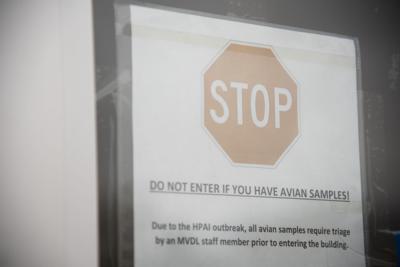
Officials are warning Montanans to keep themselves and their pets away from dead birds, as a bird flu outbreak now in its second year starts to infect more mammals.
In Montana,close to 82,500 domestic birds have been culledfrom the ongoing outbreak of highly pathogenic avian influenza, or HPAI, since the state saw its first case in a poultry flock last April.
But on top of the losses for farm-raised birds, the outbreak has also taken a harder toll on wild birds than in years past. That’s ledat least…
Officials are warning Montanans to keep themselves and their pets away from dead birds, as a bird flu outbreak now in its second year starts to infect more mammals.
In Montana, close to 82,500 domestic birds have been culled from the ongoing outbreak of highly pathogenic avian influenza, or HPAI, since the state saw its first case in a poultry flock last April.
But on top of the losses for farm-raised birds, the outbreak has also taken a harder toll on wild birds than in years past. That’s led at least 12 mammals in Montana to succumb to the disease, which experts say they likely got from eating infected wild birds.
RELATED NEWS: – “Inflation has peaked”: Colombia Finance Ministermenuvolume_off volume_up
Next
Stay
volume_off
-2:50
sd
share
fullscreen
Auto (225p)
225p
360p
Subtitles Off
RELATED NEWS: – “Inflation has peaked”: Colombia Finance Minister
Colombia’s Finance Minister, Jose Antonio Ocampo, believes annual inflation, which accelerated for a 10th straight month to 13.34%, peaked in March. He spoke with Bloomberg’s Shery Ahn from DC.
“Inflation has peaked”: Colombia Finance Minister
Business |
2:52
US Charges 21-Year-Old for Classified Documents Leak
Business |
1:56
Summers Sees ‘Troubling’ Signs of Fading US Influence
Business |
1:58
Recession Is on the Way, Longview’s Watling Says
Business |
2:42
What the UMich Sentiment Survey Signals About US Economy
Business |
5:59
BofA’s Harris Sees Signs of Recession in US Retail Data
Business |
1:17
Fed’s Waller: Still More Work to Do on Inflation
Business |
0:57
US Retail Sales Decrease More Than Expected in March
Fed’s Emergency Bank Loans Fall for Fourth Straight Week
Business |
1:22
It’s meant a busy year for Montana Fish Wildlife and Parks and the state’s Veterinary Diagnostic Lab, which are sampling and testing animals to see how the H5N1 strain has spread across species.
According to lab data as of March 31, employees have confirmed one black bear, two grizzly bears, two raccoons, one red fox, and six striped skunks as “non-negative” for bird flu. The samples are then sent to a national lab in Iowa where they are confirmed positive.
The lab also confirmed the influenza strain in three bald eagles, five turkey vultures, 13 red-tailed hawks, and 21 great horned owls.
The situation is much different than the last time an HPAI outbreak roiled the country, said Erika Schwarz, the clinical veterinary microbiologist who’s in charge of leading the bird flu testing for the state lab.
That outbreak, which spanned from December 2014 to June 2015, killed more than 50 million birds across the country. Cases went down as the weather got warmer.
But this time around, animals continued to contract the virus through the summer. A year later, the outbreak has killed 58 million domestic birds in the U.S. and counting, and impacts to wild birds and mammals have been more severe too, Schwarz said.
Montana’s lab didn’t test mammals for bird flu during the last HPAI outbreak or at start of this one, according to Schwarz.
That changed in October, when Montana officials started hearing of mammals contracting bird flu in other states.
The lab had saved samples from two grizzly bears, and a black bear originally misidentified as a grizzly, who were all euthanized for neurological problems. Originally, officials thought the bears had rabies, but those tests were negative.
Schwarz said a few weeks later, on a whim, the lab thought to test those samples for bird flu and were startled to see them come back positive.
Clinically, the symptoms for rabies and bird flu are the same, Schwarz said. Animals will show signs of neurological distress, like abnormal movements and circling, tremors, seizures, and not fearing humans.
Since the bears, the lab has started to test any animals with those symptoms for both rabies and bird flu.
It’s a heavy workload for the lab’s employees, but Schwarz said they’re trained to handle high amounts of testing. Cases have slowed a little this winter, but they’re expecting them to pick back up again, Schwarz said.
“This outbreak and how long it’s persisted is unusual,” Schwarz said. “It’s left a lot of scientists just baffled.”
In the last outbreak, Montana didn’t see wild bird die off so there weren’t infected dead birds on the landscape for other animals to get into, said FWP wildlife veterinarian Jennifer Ramsey. That’s changed now.
Last week, three domestic cats — two in Nebraska and one in Wyoming — contracted the virus after eating wild birds. A dog in Canada died of bird flu the week prior.
“It’s not something new — mammals have been infected with avian influenza viruses in the past,” Ramsey said. “We just haven’t dealt with it to this extent here before. It’s concerning.”
People should make sure to keep their pets away from dead birds, and always wear gloves if they have to handle a carcass, Ramsey said.
U.S. health officials are monitoring how the virus is changing overtime, Ramsey said. The longer the virus circulates and the more species it infects, the easier it is to mutate.
So far, there’s no evidence of the virus spreading from mammal to mammal, which would cause significant concern, Ramsey said. A handful of humans who worked closely with infected birds got the virus in 2022 but recovered.
The threat of mammal to mammal spread was amplified when animals at a Spanish mink fur farm died from bird flu in January. But Schwarz said those animals were in such close proximity to each other, allowing a greater opportunity for the virus to spread quickly through many animals.
“When we think about the types of mammals that we see acquiring the virus here, they are mostly solitary or semi-solitary carnivores and mesocarnivores,” Schwarz said. “So the risk of seeing this kind of rapid mammal-to-mammal spread would probably be quite a bit lower.”
People should report any unexplained animal mortalities to FWP, Ramsey said. While the state has limited resources, and tries to focus testing on areas and species where bird flu hasn’t been confirmed yet, reports help officials better understand where the virus is.
Cases in mammals have been concentrated in places like Bozeman and Missoula, where there are more people to report mortalities. But that’s not to say other parts of the state don’t have similar amounts of virus that’s going undetected, Ramsey said.
“Montana is a very large, rural state… if I’m sitting here at my desk in Bozeman, I have no idea what somebody may be seeing in another town,” Ramsey said. “So having those calls and reports is helpful.”
Animal welfare and wildlife conservation advocacy group The Fur-Bearers says there are more reports of pets in British Columbia being caught in wildlife traps than in any other Canadian province or territory.
Over a four-year period, between 2017 and 2021, there were 56 pets in B.C. reported to have been ensnared by a trap, whereas Albertan authorities reported 30 incidents and data in Ontario was unrecorded.
However, although fur trapping is licensed, the reporting of pet animals caught in traps remains unregulated, so the group suspects the incidents to be much greater.
about:blank
“Companion animals have become the collateral damage of the commercial fur…


]https://news.yahoo.com/world-records-529th-straight-month-of-above-average-heat–and-an-el-nino-is-brewing-174903746.html
 by