We shouldn’t eat animals, whether they are intelligent or not

If something becomes appalling and unconscionable when you imagine it being done to a human, it should not be done to any other animal, writes Shannon RayWed 5 Apr 2023 08.19 EDT

I agree with Elle Hunt’s view that the perceived intelligence of an animal shouldn’t determine whether or not we eat them (Octopus farming turns my stomach – but are some species really more worthy than others?, 30 March). She is absolutely right that our idea of intelligence is biased towards human abilities, accounting for neither those cognitive areas in which animals outperform humans, nor those animals who simply haven’t been put through “intelligence tests” yet.

So, I find her conclusion – that we should eat higher-quality, more local meat – slightly baffling. Absolutely, we should avoid factory-farmed meat (both terrestrial and aquaculture), but we are kidding ourselves if we believe that there is any humane way to slaughter livestock or club octopuses. A general rule of thumb: if something becomes appalling and unconscionable when you imagine it being done to a human, it should not be done to any other animal, either – at least not by choice.

The American novelist Jonathan Safran Foer showed in his book Eating Animals that the trip to the slaughterhouse and the journey down the assembly line are full of fear and suffering, even for those animals who live (truncated) “free-range” lives. George Monbiot has likewise pointed out that organic, pasture-fed meat is not a solution.

The clear and obvious solution is for those of us who have a choice in what we eat each day to simply adopt a nutritious, plant-based diet and abstain from meat altogether – the kind with legs and the kind with fins. Once we accept that responsibility, we can start making real progress.
Shannon Ray
Oxford

One person killed in hunting accident in South Carolina, DNR says

Exposing the Big Game's avatarCommittee to Abolish Sport Hunting Blog

Share https://www.wyff4.com/article/south-carolina-deadly-hunting-accident/43529529

WYFF 4

Updated: 12:39 PM EDT Apr 6, 2023Infinite Scroll Enabled

Stephanie Moore

Digital Media ManagerPlay VideoSHOW TRANSCRIPT

GET LOCAL BREAKING NEWS ALERTS

The latest breaking updates, delivered straight to your email inbox.Your Email AddressSUBMITPrivacy Notice

LAURENS COUNTY, S.C. —

One person was killed in a hunting accident in Laurens County, South Carolina, according to the South Carolina Department of Natural Resources.

DNR officials said the accident happened about 6 p.m. Wednesday in the Cliff Pitts Wildlife Management Area in Laurens County.

Advertisement

The coroner said Michael Calvin Keeler Jr., 34, from Waterloo, died from a gunshot wound.

DNR said two people were turkey hunting when the accident happened.

Recommended

Bear in tree

Bear climbs tree in front of South Carolina church

View original post

Physicists Simulated a Black Hole in The Lab, And Then It Started to Glow

PHYSICS06 April 2023

https://www.sciencealert.com/physicists-simulated-a-black-hole-in-the-lab-and-then-it-started-to-glow

ByMICHELLE STARR

Black Hole Illustration In SpaceSimulation of a warped and spinning black hole. (Yukterez/Wikimedia Commons, CC BY-SA 4.0)

A synthetic analog of a black hole could tell us a thing or two about an elusive radiation theoretically emitted by the real thing.

Using a chain of atoms in single-file to simulate the event horizon of a black hole, a team of physicists observed the equivalent of what we call Hawking radiation – particles born from disturbances in the quantum fluctuations caused by the black hole’s break in spacetime.

https://1eda40a57295807d18c43813804a9211.safeframe.googlesyndication.com/safeframe/1-0-40/html/container.html

This, they say, could help resolve the tension between two currently irreconcilable frameworks for describing the Universe: the general theory of relativity, which describes the behavior of gravity as a continuous field known as spacetime; and quantum mechanics, which describes the behavior of discrete particles using the mathematics of probability.

For a unified theory of quantum gravity that can be applied universally, these two immiscible theories need to find a way to somehow get along.

This is where black holes come into the picture – possibly the weirdest, most extreme objects in the Universe. These massive objects are so incredibly dense that, within a certain distance of the black hole’s center of mass, no velocity in the Universe is sufficient for escape. Not even light speed.

That distance, varying depending on the mass of the black hole, is called the event horizon. Once an object crosses its boundary we can only imagine what happens, since nothing returns with vital information on its fate.

https://1eda40a57295807d18c43813804a9211.safeframe.googlesyndication.com/safeframe/1-0-40/html/container.html

But in 1974, Stephen Hawking proposed that interruptions to quantum fluctuations caused by the event horizon result in a type of radiation very similar to thermal radiation.

If this Hawking radiation exists, it’s way too faint for us to detect yet. It’s possible we’ll never sift it out of the hissing static of the Universe. But we can probe its properties by creating black hole analogs in laboratory settings.

This has been done before, but in a study published last year, led by Lotte Mertens of the University of Amsterdam in the Netherlands, researchers did something new.

A one-dimensional chain of atoms served as a path for electrons to ‘hop’ from one position to another. By tuning the ease with which this hopping can occur, the physicists could cause certain properties to vanish, effectively creating a kind of event horizon that interfered with the wave-like nature of the electrons.

The effect of this fake event horizon produced a rise in temperature that matched theoretical expectations of an equivalent black hole system, the team said, but only when part of the chain extended beyond the event horizon.

This could mean the entanglement of particles that straddle the event horizon is instrumental in generating Hawking radiation.

The simulated Hawking radiation was only thermal for a certain range of hop amplitudes, and under simulations that began by mimicking a kind of spacetime considered to be ‘flat’.

This suggests that Hawking radiation may only be thermal within a range of situations, and when there is a change in the warp of space-time due to gravity.

It’s unclear what this means for quantum gravity, but the model offers a way to study the emergence of Hawking radiation in an environment that isn’t influenced by the wild dynamics of the formation of a black hole. And, because it’s so simple, it can be put to work in a wide range of experimental set-ups, the researchers said.

“This, can open a venue for exploring fundamental quantum-mechanical aspects alongside gravity and curved spacetimes in various condensed matter settings,” the researchers explained in their paper.

The research has been published in Physical Review Research.

An earlier version of this article was published in November 2022.

Drought, record snowfall will decrease deer hunting permits again this year

Deer

Photo by: Utah DWR

By: Laura Polacheck

https://www.fox13now.com/news/local-news/drought-record-snowfall-will-decrease-deer-hunting-permits-again-this-year

Posted at 11:07 AM, Apr 04, 2023

and last updated 10:36 AM, Apr 04, 2023

SALT LAKE CITY — For the fifth consecutive year, the Utah Division of Wildlife Resources is recommending a decrease in the number of general-season deer hunting permits, but is seeking public feedback on this and other hunting recommendations starting April 4.

DWR manages deer, elk, and other wildlife populations in the state to maintain healthy populations, and weighs several factors for doing so.

Recent Stories from fox13now.com

https://imasdk.googleapis.com/js/core/bridge3.566.2_en.html#goog_748614745

https://imasdk.googleapis.com/js/core/bridge3.566.2_en.html#goog_656255229

https://imasdk.googleapis.com/js/core/bridge3.566.2_en.html#goog_1703969728

https://imasdk.googleapis.com/js/core/bridge3.566.2_en.html#goog_1703969729Top VideosWATCH MOREApples and Truffles at the ChocolateCovered Wagon

“There are a few things that can negatively impact deer populations in Utah,” DWR Big Game Coordinator Dax Mangus said. “Those include poor or limited habitat, predators and weather — either extreme, ongoing drought or really heavy snowfall, like we had this winter.

“The most important factors that drive deer population numbers are the survival rates of doe deer, fawn production and fawn survival after the winter. The way we hunt buck deer in Utah doesn’t drive deer populations, but what happens with deer populations drives how we hunt buck deer.”

To protect the deer population in Utah, the DWR is proposing the following

  • Northern Utah: Proposing a decrease of 4,800 permits (about a 20% decrease from last year).
  • Central Utah: Proposing an increase of 600 permits (a 4% increase from last year).
  • Northeastern Utah: Proposing a decrease of 1,000 permits (about an 11% decrease from last year).
  • Southern Utah: Proposing an increase of 3,275 permits (about a 28% increase from last year).
  • Southeastern Utah: Proposing an increase of 450 permits (about a 3.5% increase from last year).

“For several years, we have had more demand for deer hunting in Utah than we have the supply for,” Mangus said.
“We are recommending a decrease for both buck deer and antlerless deer permits again this year, but the circumstances of individual deer populations vary greatly across the state. We use the best available data and our management plans to make proactive recommendations for the herd health of our wildlife.”

Elk are impacted differently by drought and severe winter conditions because survival of adults typically remains high, so DWR biologists are recommending a slight increase in public draw bull elk permits for the 2023 hunts.

DWR has several other proposals, including a ban on attaching electronics in essentially any type of hunting weapon.

They also are proposing a prohibition on using cellphones or two-way radios to aid in stalking an animal.

Other recommendations include prohibiting the use of visual-enhancement technology, including drones, aerial imaging, electronically amplified calls, or night vision devices to locate big game or locate protected wildlife.

“We value innovation but also recognize that common-sense regulations limiting the use of technology for hunting can preserve hunting traditions into the future and can increase opportunities for hunters,” DWR District Wildlife Biologist Derrick Ewell said.

For information about public meetings on these recommendations or to share feedback, go the to DWR’s website.

PETA to barbeque ‘lifelike baby’ near Charleston City Market on Wednesday


by Joseph EricksonTue, April 4th 2023, 9:58 AM PDT

https://abcnews4.com/news/local/peta-to-barbeque-lifelike-baby-near-charleston-city-market-on-wednesday-meeting-street-wciv-easter

UserWay icon for accessibility widget
FILE- PETA to barbeque 'lifelike baby' near Charleston City Market on Wednesday (WZTV)

FILE- PETA to barbeque ‘lifelike baby’ near Charleston City Market on Wednesday (WZTV)

Facebook Share Icon
Twitter Share Icon
Email Share Icon

CHARLESTON, S.C. (WCIV) — Supporters of animal rights group, PETA, will be hosting a barbeque in downtown Charleston on Wednesday. On the menu, per the organization – a “lifelike baby.”

“Babies don’t belong on the barbecue at Easter or any other time of year, whether that baby is a piglet, a lamb, or any other sentient being,” says PETA President Ingrid Newkirk. “PETA hopes that anyone who is disturbed by the idea of chowing down on a child will think about extending their compassion to all other animals and choose a vegan meal instead, something PETA is ready to help facilitate.”

READ MORE: Firefighters save puppy from fire at South Carolina hotel

According to PETA, supporters will be wearing chefs hats and aprons and holding signs that read, “Leave Babies Off the BBQ. Go Vegan!” while standing at the corner of South Market and Meeting streets.

Promoted Links

Shop 2023’s Coolest Sheets. From $140.LUXOMEShop Now

They’ll also be handing out vegan starter kits.

The demonstration is scheduled for noon.

New human case of bird flu identified in China

Exposing the Big Game's avatarThe Extinction Chronicles

Ashleigh Hollowell (Twitter)-Tuesday, March 28th, 2023

SavePostTweetShareListenText SizePrintEmai

https://www.beckershospitalreview.com/public-health/new-human-case-of-bird-flu-identified-in-china.htmll

Health officials in China have reported a positively identified case of H3N8 avian flu, according to a March 27reportfrom the Center for Infectious Disease Research and Policy at the University of Minnesota in Minneapolis.

The infection was found in a 56-year-old woman living in Zhongshan City in China’s Guangdong province. She reportedly had direct contact with poultry prior to contracting the strain of avian flu.

It is the first case of the H3N8 strain identified in China since 2022, when two children contracted it last spring.

At this time, no other human cases have been identified.

View original post

Bird flu concerns grow after death of 10 bush dogs at UK zoo raises fears of spread between mammals

10 bush dogs at a zoo in England have caught and likely died from the H5N1 virus, suggesting some limited transmission between animals

Bird Flu restriction zone sign, Suffolk. (Photo by: David Tipling/Universal Images Group via Getty Images)
In an upgrade to its risk assessment, the UKHSA says the risk of avian influenza in the UK is Level 3, meaning there is limited mammalian transmission

By Jane Merrick

Policy Editor

March 29, 2023 1:33 pm(Updated 4:37 pm)

https://inews.co.uk/news/politics/bird-flu-can-transmit-between-mammals-ukhsa-upgrades-risk-alert-2241050

Scientists are investigating the possibility that bird flu was transmitted among a pack of bush dogs at a zoo in England.

Ten bush dogs at the unnamed zoo died in what is being described as an isolated event last November. The H5N1 avian influenza virus was detected in the dead animals through retrospective sampling, the UK Health Security Agency said.

While mammal to mammal transmission has not been confirmed in the dogs, it is one line of investigation. There is a possibility that the dogs caught the virus through infected birds fed to them by zookeepers.

https://buy.tinypass.com/checkout/template/cacheableShow?aid=Xi7fMnt7pu&templateId=OT38VD6MY21E&templateVariantId=OTVPRPHBR1ZY9&gaClientId=354375519.1679083560&offerId=fakeOfferId&experienceId=EXQ4XIFR1T61&iframeId=offer_5e9ab34beba551577386-0&displayMode=inline&pianoIdUrl=https%3A%2F%2Fid.tinypass.com%2Fid%2F&widget=template&url=https%3A%2F%2Finews.co.uk

In its updated risk assessment for bird flu, the UKHSA said the UK is currently at Level 3, meaning there is “limited mammalian transmission”.

This is a change in wording from the last assessment, when the alert level was described as “changes in the virus genome that could lead to mammal-to-mammal transmission”.

However, the UKHSA insisted the level of risk had not changed. A spokesperson said: “The risk to human health has not changed. As previously, there is low confidence evidence of limited transmission in mammals, but there is no current evidence that this risk is changing.”

A previous assessment defined the risk as spillover infections in mammals with non-sustained transmissions between mammals, and the scale of risk had been changed to provide more granular detail, a source said.

But scientists are on high alert for transmission between animals after incidents of mass infections and deaths of mammals in areas around the world, including farmed mink in Spain, seals in the Caspian Sea and sea lions in Peru.

There have been 23 deaths of wild mammals in the UK since the current outbreak of the highly infectious H5N1 virus began 18 months ago, including two dolphins, mainly due to isolated cases of animals scavenging on infected dead birds. The 10 bush dogs would take the total of wild and captive mammals who have died to 33.

Government scientists insist there is no change to the risk to human health, which is classed as very low.

Scientists at the UKHSA and the SPI-M group, which produced modelling of the covid pandemic for the government, have also revealed different scenarios for what would happen in a human pandemic of bird flu.

While there is still no evidence of human-to-human transmission, the UKHSA said it wanted to prepare for the emergence of novel influenza viruses.

The current risks assessment says the H5N1 virus can “successfully infect mammals and humans with high levels of direct exposure (for example, scavenger mammalian species, humans working closely with birds)”. There have been only seven cases of bird flu in humans since October 2021.

It adds: “Polymerase basic protein (PB2) mutations associated with mammalian adaptation, including E627K, are seen in mammalian infections. There is evidence of transmission in farmed mink and possible, though unconfirmed, transmission in populations of seals and sea lions.”

Dr Meera Chand, Deputy Director at UKHSA, said: “The latest evidence suggests that the avian influenza viruses we’re seeing circulating in birds do not currently spread easily to people.

“However, viruses constantly evolve, and we remain vigilant for any evidence of changing risk to the population. It is right that we prepare for the emergence of novel influenza viruses and we are working with partners to ensure that we have the tools and capabilities in place for these and other emerging infections.”

Bird flu detected in two dead mountain lions

   Email this Article

The virus has not been detected in birds in the area where the cats were found.

An adult male mountain lion can have a home range greater than 100 square miles. Photo courtesy of Mountain Lion Foundation.

An adult male mountain lion can have a home range greater than 100 square miles. Photo courtesy of Mountain Lion Foundation.

Information provided by California Department of Fish and Wildlife

In a news release on March 28 the California Department of Fish and Wildlife (CDFW) said the Eurasian strain of highly pathogenic avian influenza (HPAI H5N1), commonly known as bird flu, was detected in two mountain lions in Mono County in December 2022 and January 2023. While additional disease testing is being conducted to rule out the possibility of co-infections, HPAI H5N1 is suspected to be the cause of the death for both mountain lions.

According to CDFW, this is the second species of wild mammal known to have contracted HPAI H5N1 in California since the virus was reported in wild birds in July 2022. In January, the virus was detected in a bobcat found in Butte County. The new findings also mark the first detection of HPAI H5N1 in Mono County. To date, the virus has been found in 45 counties statewide.

“The Eurasian lineage of avian influenza is primarily a disease impacting birds but is occasionally being detected in wild mammals. We don’t expect this to have a population-level impact for California’s mountain lions or other mammalian carnivores, but it is a disease we will continue to monitor,” said Dr. Jaime Rudd, a pesticide and disease investigations specialist in CDFW’s Wildlife Health Lab.

“The main route of disease transmission for carnivores seems to be through ingestion of infected birds – typically waterfowl such as geese. Biologists following the movements of these mountain lions noted that they had preyed upon wild Canada geese in the past,” Rudd said.

The remains of the two mountain lions, who were related (mother and daughter), were collected from Mono Lake in Mono County on December 23 and January 14. Samples were submitted to the California Animal Health and Food Safety Laboratory in Davis for preliminary testing. Last week, the U.S. Department of Agriculture’s National Veterinary Services Laboratories confirmed the detection of HPAI H5N1.

“The main pathological finding for these two mountain lions was encephalitis, which is inflammation of the brain. Additionally, there were lesions in the lungs causing pulmonary edema. Much of the lesions in the brain and lungs were associated with the virus, but additional disease testing is being performed to rule out the possibility of co-infection,” said Rudd.

CDFW said both mountain lions were wearing GPS collars as part of population study by the Department. The mortality notification sent from the collar helped biologists track the deceased animals and allowed for their remains to be collected in a timely manner to perform necropsies and determine cause of death.

“HPAI H5N1 is still considered a low-risk zoonotic pathogen,” said CDFW Senior Wildlife Veterinarian Dr. Deana Clifford. “It’s significant that the detections occurred far from the bobcat detection, and in an area where the disease had not yet been detected in wild birds. This means it’s possible that the mountain lions may represent detections of a new foci [area of activity] of infections for wild birds.”

Notwithstanding, said CDFW, the mountain lion and bobcat detections, infection of wild mammals with avian influenza viruses appears to be relatively rare. Elsewhere in the U.S. and Canada, periodic detections of HPAI H5N1 have been made in mammalian carnivores including foxes, bobcats, raccoons, skunks and bears. Detections in mountain lions have occurred in five other states. The virus has also been detected in a small number of marine mammals.

According to the Department the strain of HPAI H5N1 currently circulating in the U.S. and Canada has caused illness and death in a higher diversity of wild bird species than during previous avian influenza outbreaks, affecting raptors and avian scavengers such as turkey vultures and ravens. Mammalian and avian predators and scavengers may be exposed to avian influenza viruses when feeding on infected birds.

CDFW infromational flyer

CDC information

Avian flu detected in dead bobcat in Northern California | BenitoLink

Chile detects bird flu in 53-year-old man with severe influenza symptoms

Exposing the Big Game's avatarThe Extinction Chronicles

By StaffReuters

Posted March 30, 2023 12:55 pm

Updated April 1, 2023 8:05 am

Click to play video: 'Why avian flu spread has some experts cautioning need for human vaccine'
WATCH: Why avian flu spread has some experts cautioning need for human vaccine – Mar 24, 2023

LEAVE A COMMENT

SHARE THIS ITEM ON FACEBOOKSHARE THIS ITEM ON TWITTERSEND THIS PAGE TO SOMEONE VIA EMAILSEE MORE SHARING OPTIONSDESCREASE ARTICLE FONT SIZEINCREASE ARTICLE FONT SIZE

Chile detected the first case ofbird fluin a human, the country’s health ministry reported on Wednesday.

The case was detected in a 53-year-old man who presented severe influenza symptoms, according to a statement issued by the ministry, but they noted the patient was in stable condition.

The government is also investigating the source of contagion as well as others who were in contact with the patient.

Chile has reported cases of the H5N1 bird flu…

View original post 126 more words

11th Human Case of Bird Flu Confirmed

Exposing the Big Game's avatarThe Extinction Chronicles

March 31, 2023 • 1:37 am CDT

https://www.precisionvaccinations.com/2023/03/31/11th-human-case-bird-flu-confirmed

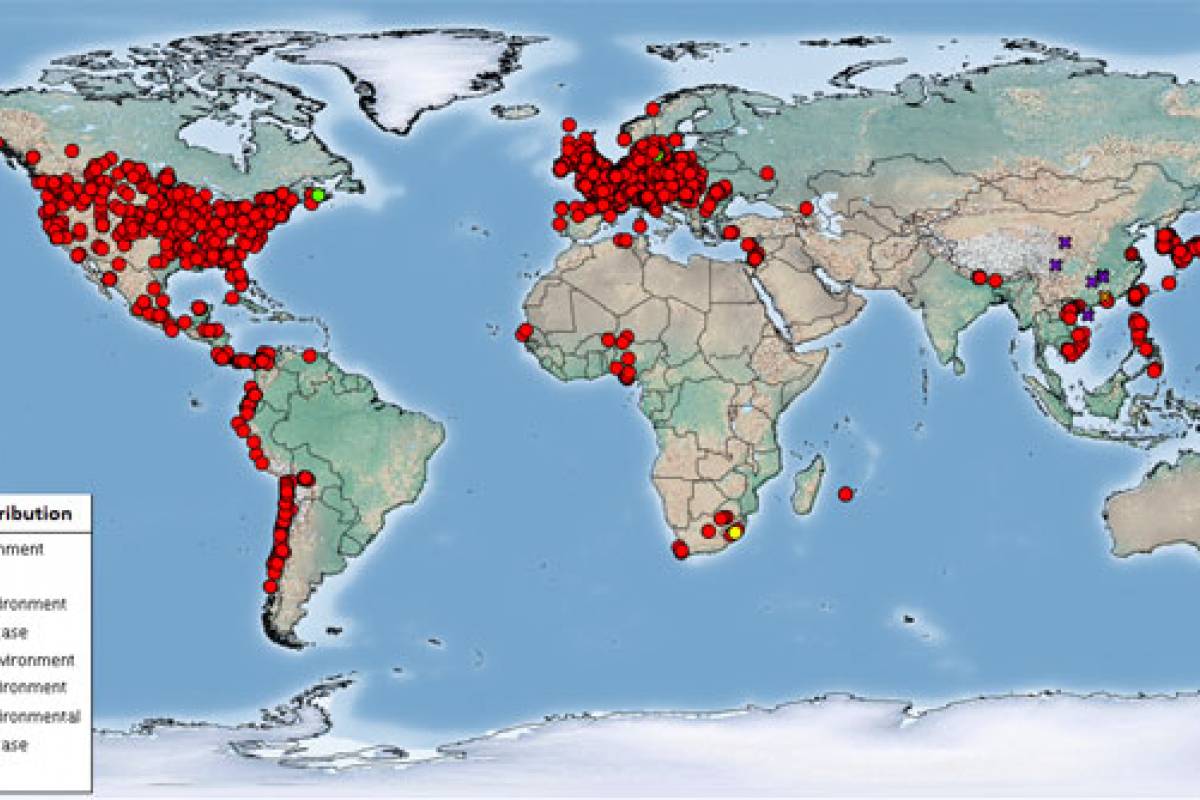
Global distribution of Avian Influenza: October 2022 to March 30, 2023

(Precision Vaccinations)

The Chilean Ministry of Health recentlyconfirmedthe country’s first case of human infection with the avian influenza A(H5N1) virus.

This is the second human “H5N1 bird flu” virus infection reported in South America; Ecuador reported the first in December 2022.

Globally, this is the 11th human case of H5N1 reported since January 2022.

The prior 10 H5N1 cases alsohad exposure to poultry.

Bird Flu(Avianinfluenza) is a disease caused by influenza type A viruses that occur naturally among birds.

Detection of human infection with H5N1 bird flu in another country in South America is not surprising,wrotethe U.S.Centers for Disease Control and Prevention (CDC) on March 29, 2023.

A recentCDC H5N1 technical report noted that “because of …the wide global prevalence of HPAI A(H5N1) viruses in wild birds…

View original post 97 more words