OMAHA, Neb. (AP) — The ongoing bird flu outbreak has cost the government roughly $661 million and added to consumers’ pain at the grocery store after more than 58 million birds wereslaughteredto limit the spread of the virus.
In addition to the cost of the government response that the USDA tallied up and rising prices for eggs, chicken and turkey, farmers who raise those animals have easily lost more than $1 billion, said an agricultural economist, though no one has calculated the total cost to the industry yet.
The bad news is that with the outbreak entering its second year and the spring migratory season looming, there is no end in sight. And there is littlefarmerscan do beyondthe steps they have already takento try…
Organizers are celebrating the opening year of a program that pairs Yellowknife’s jail with the NWT’s Department of Environment and Natural Resources to teach inmates trapping skills.
Staff at the North Slave Correctional Complex say interest in the workshops continues to grow. Trapping sessions for inmates now run every two weeks in six-week cycles.
“One year ago, things were really different,” said participant Kristijan Bradaric. “It was just the leisure room and the gym. But this was the program that started to change things. There’s more activities available now.”
Advertisement.
Carl Williams, the program’s instructor, has been trapping since he was 10 years old. His father worked for the Hudson’s Bay Company. He raves about the support that’s offered through ENR for trappers like him, and said the Genuine Mackenzie Valley Fur Program is the only one of its kind in North America.
“I was born in the Yukon, but we moved here in ’71 because of this program,” Williams said. “Whether you’re making a living off it, whether it’s a hobby, you’re learning a tradition that’s been passed on.”
As part of the day’s session, Williams offers tips to enhance each pelt’s success at auction, such as brushing out the fur and pinning back the animal’s ears.
“This is a city fox, so it’s fatty – it ate well,” said Williams. “It also doesn’t have guard hairs in its fur. Was probably living someplace warmer, like under a building.”
Without guard hairs, the pelt will look flat and fetch less on the market. Williams said these tricks of the trade aren’t always taught by ENR, and must be passed on from trapper to trapper.
Advertisement.
A lynx intended for the program didn’t defrost in time, so organizers pivoted to squirrels for the hands-on part of the session. It quickly becomes clear that several participants haven’t shown up to learn, but to put existing skills to use. When handed a knife and a squirrel, some begin skinning expertly, giving pointers to the beginners.
A lynx snared near Behchokǫ̀ ended up being too frozen to skin. Caitrin Pilkington/Cabin Radio
“The last thing I skinned was a polar bear,” said one participant with a grin. “So this is an adjustment. But it turns out you skin squirrels the same way, just a lot smaller.”
For Vincent Casey, program founder and public education coordinator for NSCC, giving inmates an opportunity to show off their expertise is part of the program’s success.
He said that while it can be difficult for organizers to figure out which programs are going to connect with inmates, within a few months of running the Trapper Training program, it was clear the sessions were resonating with participants.
Advertisement.
“Over the summer, we did a fish prep session and it was more than just the instructor teaching,” said Casey. “The inmates, or the participants, were getting up and sharing their knowledge of how they do different things.”
He describes participants learning that people cut up the same fish differently in the Beaufort Delta than they do in Fort Smith, and connections forming over shared memories of fishing with family.
“They weren’t just sitting and watching, they were confident enough to speak up and to share their experiences, which is what I had really hoped would happen.”
Reminders and reconnection
Casey said he was motivated to create the program after comments made in the NWT legislature by Kam Lake MLA Caitlin Cleveland, who called for more cultural programming in correctional centres in 2021.
According to the most recent annual report by the territory’s Department of Justice, while Indigenous residents make up 50 percent of the population, 83 percent of incarcerated men in NWT prisons are Indigenous. This is the same percentage Cabin Radio reported in 2020, the year Canada’s correctional investigator found that Indigenous adults make up more than 30 percent of the country’s prison population.
Austin Corbett, a criminal lawyer practising in Alberta and the NWT, told Cabin Radio in 2022 that many sentencing options aren’t being adequately used, calling jail “the bluntest hammer” to deal with many social issues.
But until courts take a different approach, prison programs try to minimize the damage done when Indigenous inmates are separated from family, friends and culture.
“We work very closely with a traditional counsellor here, and he’s constantly hearing good things from inmates about the program and how it’s impacted them,” said Casey. “A lot of the comments are about how this program reminds them of youth, or becoming reconnected with a part of themselves they hadn’t felt for a while.”
For many participants, the most significant barrier to hunting and trapping is not a lack of skill and experience, but the 12-foot barbed-wire fence that surrounds the correctional centre.
Two participants roast bannock over the fire at NSCC. Caitrin Pilkington/Cabin Radio
The second half of the workshop takes place just inside it, where inmates who have volunteered to help run the program have built a fire for the others. Before long, people have gathered to cook bannock and tease each other over technique.
“This is nice,” said one participant with a smile. “I haven’t been outside in a long time.”
Wildfires in Sakha, Russia, in August 2021. Losing forests is one feedback loop in a complex web of changes that can accelerate the impacts of the climate crisis.Ivan Nikiforov/Anadolu Agency/Getty ImagesCNN—
Dangerous climate feedback loops areincreasing global warmingand risk causing a permanent shift away from the Earth’s current climate, according to a new study.
Climate feedback loops are cyclical chain reactions that happen when one change triggers further changes, in a process that keeps on repeating itself. Some of these feedback loops drive down warming, but others amplify it.
Take Arctic ice, for example. Warming temperaturescause sea ice to melt, revealing the dark ocean water beneath. As dark surfaces absorb more heat than reflective surfaces like ice, the ocean warms and more ice melts.
A group of international scientists from institutions including Oregon State…
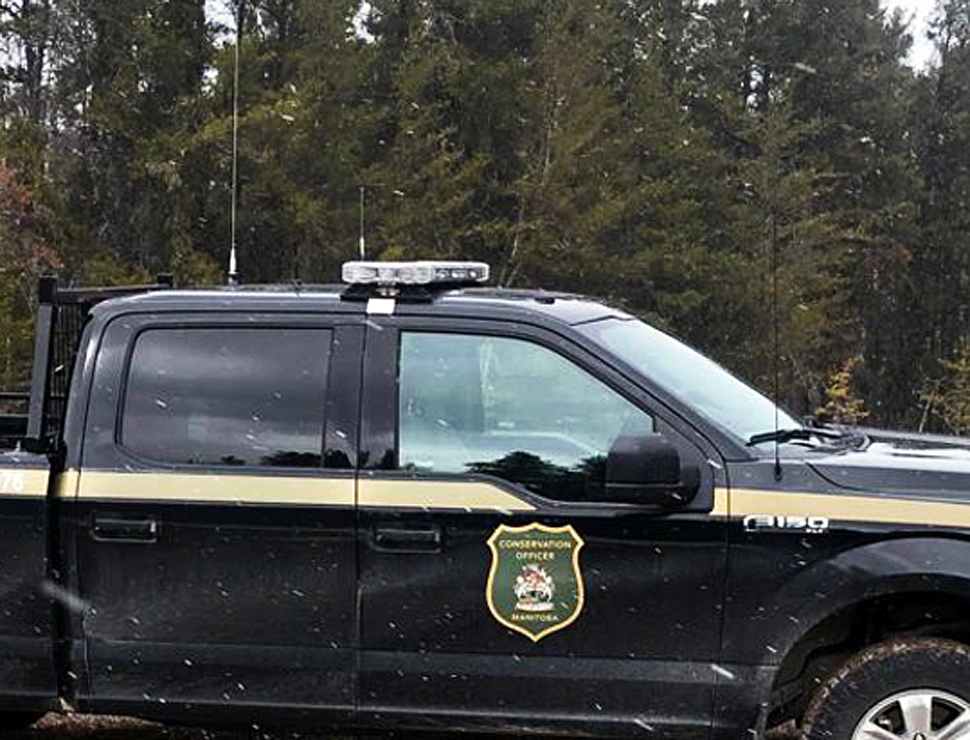
Manitoba Conservation has now released some information regarding an investigation involving two people from Landmark and Winnipeg.
On Oct. 29, 2022, the two individualswere found hunting moose along the Steeprock Road in the Porcupine Provincial Forest, which isclosed to all moose hunting.
Charges of hunting moose within the moose closure were laid.
If convicted, a person can be fined up to $25,000 or receive up to six months in jail, or both.
Manitoba Natural Resources and Northern Development advises conservation officers are continuing enforcement to protect Manitoba’s natural resources through a variety of enforcement activities across the province including roadside check stops in key locations to ensure compliance with natural resource and public safety legislation.
The enforcement report issued on Friday included details about other investigations across the province.
On Nov. 25, 2022, an off-duty conservation officer from…
Sulphur, LA (KPLC) -Two Lake Charles hunters have been accused and cited of deer hunting violations in Calcasieu Parish, according to the Louisiana Department of Wildlife and Fisheries (LDWF).
Agents with LWDF say they cited Michael Joseph Spell, 33, on Feb. 11 for four counts of failing to tag deer, four counts of failing to validate deer harvest and taking over the seasonal limit of deer.
A citation was also issued to Brittany Pratt, 26, on Feb. 15 for failing to tag deer, failing to validate deer, and not possessing basic hunting and deer hunting licenses.
LWDF says their agents began investigating the incident after learning about subjects illegally trespassing on private property while hunting deer near Sulphur.
By Newser Editors and Wire ServicesPosted Feb 17, 2023 3:20 AM CST
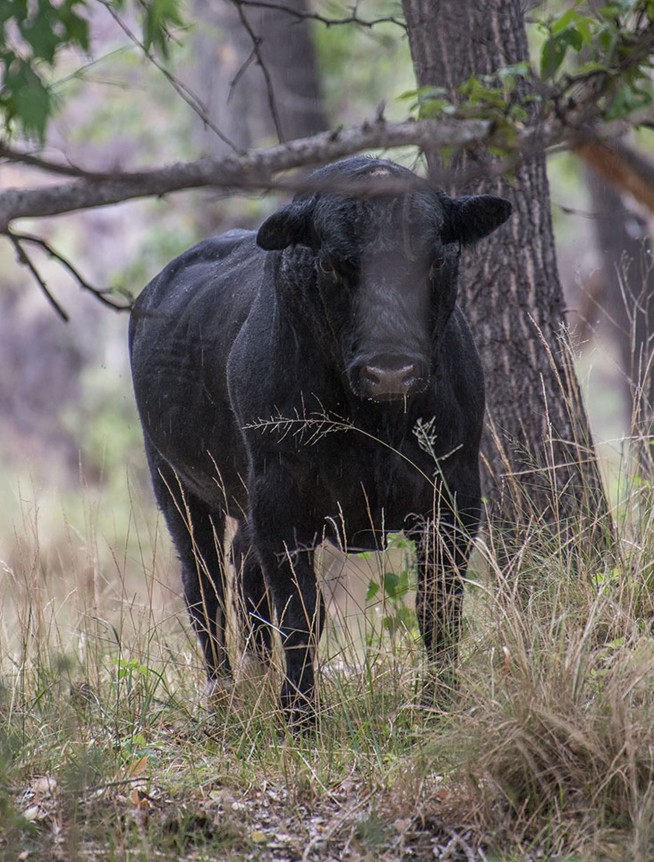
In this photo provided by Robin Silver, a feral bull is seen along the Gila River in the Gila Wilderness in southwestern New Mexico, on July 25, 2020. (?Robin Silver/Center for Biological Diversity via AP)
A helicopter with a shooter will fly over a portion of the vast Gila Wilderness in southwestern New Mexico next week, searching for feral cows to kill. US Forest Service managers approved the plan Thursday to protect sensitive spots in the nation’s first designated wilderness area. The move sets the stage for legal challenges over how to handle unbranded livestock and other stray cows as drought deepens in the West, theAPreports. The Gila National Forest issued the decision amid pressure from environmental groups who raised concerns about nearly 150 cattle whose hooves and mouths…
SSW phenomenon is linked to polar vortex, an area of low pressure across the North Pole
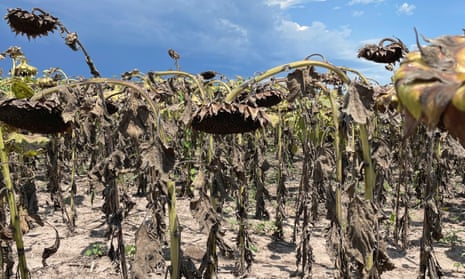
Drought-hit fields in Tostado, northern Santa Fe, Argentina, earlier this month.Photograph: Miguel Lo Bianco/Reuters
Fri 17 Feb 2023 04.38 EST
There has been keen interest over recent weeks in the much-anticipated sudden stratospheric warming (SSW) event, which only began this week but is now well under way. The SSW phenomenon is linked to the polar vortex, an area of low pressure across the North Pole that forms within the stratosphere during autumn, as temperatures plummet in the absence of solar radiation.
SSW events are very common and occur two in every three winters. It remains unclear how climate change will affect these events in the future. As the vortex develops during autumn and into winter, westerly stratospheric winds increase in strength. But in the event of a SSW episode, stratospheric…
Sen. Jesse Kiehl, D-Juneau, discusses Senate Bill 10 on Wednesday, Feb. 15, 2023, at the Alaska State Capitol in Juneau. The Senate approved the bill unanimously. (Photo by James Brooks/Alaska Beacon)
The Alaska Legislature is considering a plan to give disabled veterans and members of the Alaska National Guard free trapping licenses in addition to the free hunting and fishing licenses they already receive.
Senate Bill 10, by Sen. Jesse Kiehl, D-Juneau, passed the Senate in a 20-0 vote Wednesday and advanced to the House for consideration.
It’s the first bill passed by either half of the Legislature this year, but Kiehl said that status doesn’t mean much.
“I don’t want to race, I want to get things done,” he said.
Kiehl said he’s never been able to understand why disabled…
Sen. Jesse Kiehl, D-Juneau, discusses Senate Bill 10 on Wednesday, Feb. 15, 2023, at the Alaska State Capitol in Juneau. The Senate approved the bill unanimously. (Photo by James Brooks/Alaska Beacon)
The Alaska Legislature is considering a plan to give disabled veterans and members of the Alaska National Guard free trapping licenses in addition to the free hunting and fishing licenses they already receive.
Senate Bill 10, by Sen. Jesse Kiehl, D-Juneau, passed the Senate in a 20-0 vote Wednesday and advanced to the House for consideration.
It’s the first bill passed by either half of the Legislature this year, but Kiehl said that status doesn’t mean much.
“I don’t want to race, I want to get things done,” he said.
Kiehl said he’s never been able to understand why disabled veterans — those who are at least 50% disabled according to the U.S. Department of Veterans Affairs — haven’t been able to freely trap for furs, even though they’re allowed to hunt and sport fish for free.
“It is a way we can show our appreciation to those who have a disability that they acquired in service to our country,” he said of his bill, which was expanded at the request of the Alaska Department of Fish and Game to cover active-duty members of the Alaska National Guard.
Though it has yet to be heard in the House, Kiehl’s bill already has supporters; Rep. Mike Cronk, R-Tok, has introduced an identical companion bill.
In a fiscal note submitted to the Legislature, the Department of Fish and Game said it does not expect the bill to have a significant impact. Between 2017 and 2020, the department issued an average of 827 trapping licenses per year, indicating low interest in trapping overall.
By comparison, the state issued more than 90,000 resident sport fishing licenses on average during those three years.