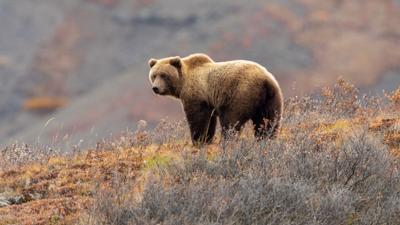
According to the Alaska State Troopers perThe Associated Press, the boy and a 41-year-old man were hunting Tuesday evening in the Palmer Hay Flats in Alaska when they both found themselves near a bear.
The boy was mauled and left with serious injuries, according tothe AP. The man shot and killed the bear. The man also had minor injuries.
According tothe AP, both the boy and the man were taken to the hospital. The two are believed to be related, but troopers did not say how.
Utah filed an amicus brief in a court of appeals, stating the state has “substantial interest” in the outcome of a lawsuit involving the Northwestern Band of Shoshone’s hunting and fishing rights in Idaho, because many of the tribe’s members live in Utah and assert hunting and fishing rights under the same treaty. (Division of Wildlife Resources)
SALT LAKE CITY — Utah recently threw its weight behind the Northwestern Band of Shoshone Nation’s lawsuit against Idaho.
The tribe sued Idaho and two Fish and Game officials in June 2021 on the grounds that the state denied its right to hunt and fish on its ancestral lands as guaranteed by the 1868 Treaty of Fort Bridger. The lawsuit was sparked…
LANSING – Double-crested cormorants are continuing to draw attention from wildlife researchers amid strong disagreements about whether the birds – whose numbers have grown in recent decades – are harming fish populations, reducing recreational and commercial fishing opportunities and damaging natural habitats in the Great Lakes region.
Their consumption of threatened and endangered fish species is among the concerns.
Last year, the Michigan Department of Natural Resources reported that “as part of the (U.S. Fish & Wildlife Service) permit system, we query all of our fisheries managers and field biologists each year to provide locations where cormorant conflicts exist in the state. We currently have 50+ sites where conflicts exist.”
In a separate 2022 report, DNR said, “Collectively, cormorants eat tens of millions of pounds of fish a year in Michigan and are especially lethal at fish stocking sites.”
What would it mean to treat other living creatures fairly?
PAULA BRONSTEIN/GETTY IMAGES
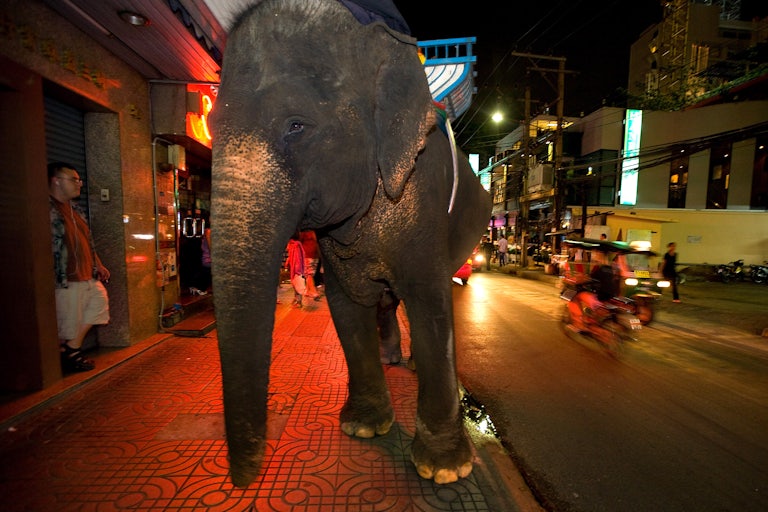
An elephant roams the streets of Bangkok, Thailand, in 2008
The numbers say it all: Nearly two-thirds of global mammalian biomass is currently made up of livestock, the majority raised and killed in intolerably cruel factory farms. The domesticated chicken is now the world’s most populous bird, whose discarded bones will define the fossil record of our human-dominated age. Driven by habitat loss, climate change, and other human causes, the ongoingSixth Mass Extinctionrepresents not just a crisis of biodiversity but a source of immense suffering for millions of individual creatures.
“Animals are in trouble all over the world,” University of Chicago professor Martha Nussbaum writes inJustice for Animals: Our Collective Responsibility,her new book out this month. In her half-century as a moral philosopher, Nussbaum has tackled an enormous range of topics, including…
An elephant roams the streets of Bangkok, Thailand, in 2008
The numbers say it all: Nearly two-thirds of global mammalian biomass is currently made up of livestock, the majority raised and killed in intolerably cruel factory farms. The domesticated chicken is now the world’s most populous bird, whose discarded bones will define the fossil record of our human-dominated age. Driven by habitat loss, climate change, and other human causes, the ongoingSixth Mass Extinctionrepresents not just a crisis of biodiversity but a source of immense suffering for millions of individual creatures.
“Animals are in trouble all over the world,” University of Chicago professor Martha Nussbaum writes inJustice for Animals: Our Collective Responsibility,her new book out this month. In her half-century as a moral philosopher, Nussbaum has tackled an enormous range of topics…
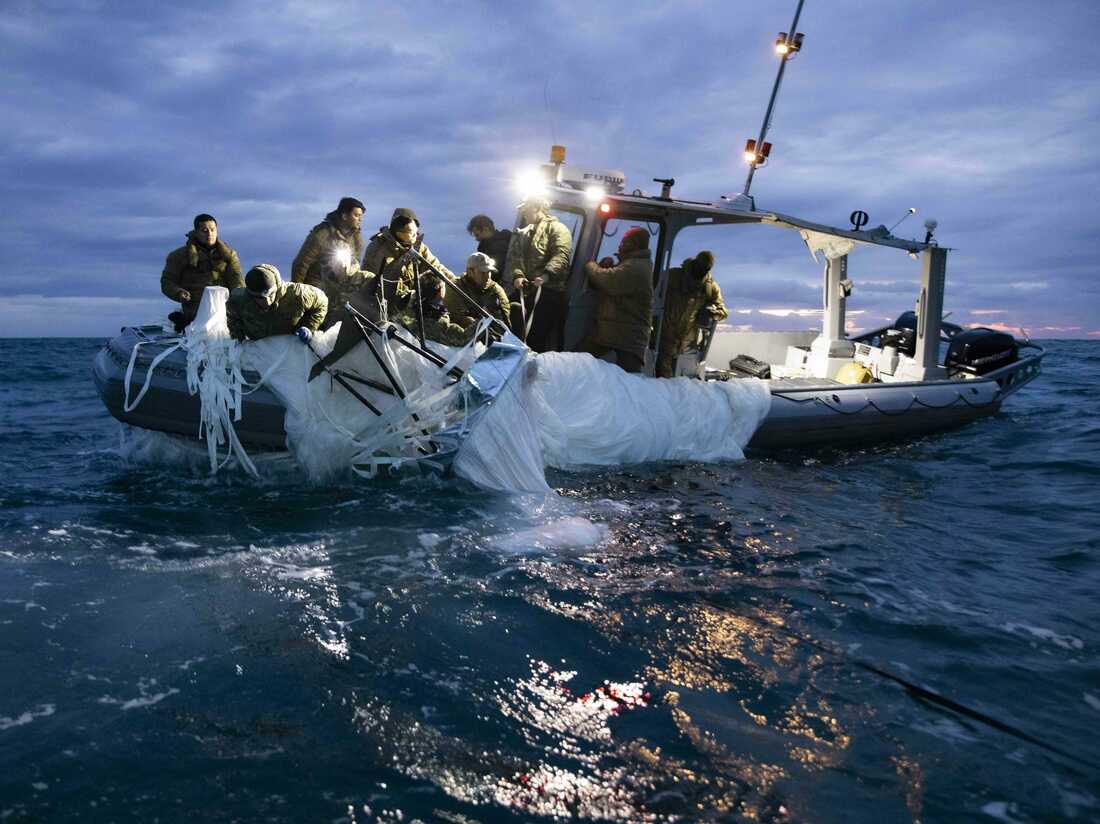
Sailors recover a high-altitude surveillance balloon in the waters off the coast of Myrtle Beach, S.C., on Feb. 5, after a fighter jet shot the balloon out of the sky.
Petty Officer 1st Class Tyler Thompson/U.S. Navy Photo
U.S. fighter jets have shot down four high-altitude objects this month — including the first instance in which U.S. Northern Command “has taken kinetic action against an airborne object” in U.S. airspace over its nearly 65-year existence, according to the unit’s commanding officer, Gen. Glen VanHerck.
The shootdowns came in steady succession over the weekend, after alarms were raised in early February over an object that the U.S. said was a surveillance balloon deployed by China.
China has accused the U.S. of flying its own spy balloons over China — a claim rejected by Secretary of State Antony Blinken.
“We do not send spy balloons over China, period,” Blinken told NPR’s Morning Edition.
With the other recently downed objects yet to be publicly identified, speculation has included questions of whether they might be alien UFOs.
No sign of alien activity, the White House says
“There is no – again, no — indication of aliens or extraterrestrial activity with these recent takedowns,” White House press secretary Karine Jean-Pierre said at Monday’s daily press briefing.
John Kirby, a spokesperson for the National Security Council, told reporters that “all manner of innocuous craft” can fly at the same altitudes. That includes aircraft used by companies and countries for purposes that are “not nefarious at all.”
Kirby also said all three objects most recently shot down over the U.S. and Canada were determined not to pose a direct threat to people on the ground. They were also found to be uncrewed and to have limited abilities, from a lack of communication signals to a lack of obvious propulsion capability.
Here’s what we know so far about these takedowns, from the questions that they raise to where recovery operations stand:
What’s behind the surge of unexplained objects?
It can be attributed at least in part to increased scrutiny, including enhanced radar techniques, Assistant Secretary of Defense for Homeland Defense and Hemispheric Affairs Melissa G. Dalton said on Sunday.
The U.S. has been on the alert to look for spy balloons and unauthorized objects since a Chinese balloon caused a national sensation and political outrage. That incident, Dalton said, also helped the U.S. learn more about what to look for in detecting similar objects. That process includes adjusting radar-filtering systems known as “gates,” VanHerck added.
“You can set various gates” to filter radar information, VanHerck said. “We call them velocity gates that allow us to filter out low-speed clutter.”
A lot more information is available, the general said, when lower speeds are included rather than filtered out.
“We have adjusted some of those gates to give us better fidelity on seeing smaller objects,” VanHerck said. “You can also filter out by altitude. And so, with some adjustments, we’ve been able to get a better a categorization of radar tracks now. And that’s why I think you’re seeing these overall.”
Why do people keep asking if these are alien ships?
Pentagon Press Secretary Brig. Gen. Pat Ryder speaks during a press briefing at the Pentagon on Feb. 10. At the time, Ryder offered few details about the object shot down.
Drew Angerer/Getty Images
When U.S. officials describe these incidents, they often use language that’s purposefully vague, such as “high altitude airborne objects.” It’s an attempt to be accurate while still reporting preliminary data, but the approach can be intriguing, and it also provokes public speculation.
For instance, here’s Pentagon Press Secretary Brig. Gen. Pat Ryder from last Friday, talking about that day’s shootdown: “We have no further details about the object at this time, including any description of its capabilities, purpose, or origin.”
When a reporter asked VanHerck on Sunday if the U.S. military has ruled out potential actions by extraterrestrials, he did not dismiss the idea.
“I haven’t ruled out anything,” he said. “At this point, we continue to assess every threat or potential threats unknown that approaches North America with an attempt to identify it.”
“We call them objects for a reason,” VanHerck said. And while the initial incident involved a balloon, he added, “These are objects. I am not able to categorize how they stay aloft. It could be a gaseous type of balloon inside a structure or it could be some type of a propulsion system. But clearly, they’re — they’re able to stay aloft.”
Sponsor Message
Starting with the most recent object, here’s what we know so far about these takedowns, drawing on U.S. and Canadian officials’ statements:
Feb. 12: Lake Huron
Location and altitude: The object was around 20,000 feet, soaring near the eastern portion of Michigan’s Upper Peninsula. It was shot down over Lake Huron, “about 15 nautical miles east of the Upper Peninsula,” VanHerck said.
Size and shape: “It presented as an octagonal structure with strings hanging off but no discernable payload,” a senior Biden administration official said.
What shot it down: An F-16, firing an AIM-9X Sidewinder missile.
Reason given: “We did not assess it to be a kinetic military threat to anything on the ground,” the North American Aerospace Defense Command said, “but assess it was a safety flight hazard and a threat due to its potential surveillance capabilities.”
Recovery effort: “Our team will now work to recover the object in an effort to learn more,” NORAD said. The location of the shootdown, the unit says, was chosen both to limit risks to people and to boost the chance of recovering debris.
Feb. 11: Yukon, Canada
Location and altitude: Approximately40,000 feet, in Canada’s central Yukon, after crossing the border from Alaska. The shootdown took place around 100 miles from the U.S.-Canada line.
Size and shape: Early indications showed “this object is potentially similar” to the one shot down off the South Carolina coast, Canadian Defense Minister Anita Anand said, adding that it was “smaller in size and cylindrical.”
What shot it down: An F-22 fired an AIM-9X Sidewinder missile, said Ryder, the Pentagon press secretary.
Reason given: “The object … had unlawfully entered Canadian airspace [and] posed a reasonable threat to the safety of civilian flight,” Anand said.
Recovery effort: “Canadian Forces will now recover and analyze the wreckage of the object,” Canadian Prime Minister Justin Trudeau said. The effort includes the Royal Canadian Mounted Police and Canadian Special Operations Forces, with the FBI acting as a liaison.
Sponsor Message
Feb. 10: Alaskan coast
Location and altitude: It was at 40,000 feet, over Prudhoe Bay along Alaska’s northern coast.
Size and shape: “The object was about the size of a small car,” Ryder told reporters, adding that it was “not similar in size or shape to the high-altitude surveillance balloon” from the previous weekend.
What shot it down: An F-22 fired an AIM-9X Sidewinder missile.
Reason given: It “posed a reasonable threat to the safety of civilian flight,” Ryder said.
Recovery effort: “Recovery activities are occurring on sea ice,” as allowed by Arctic weather, limited daylight and other conditions, the U.S. Northern Command said on Saturday.
Feb. 4: South Carolina coast
Sailors recover a high-altitude surveillance balloon on Feb. 5 off the coast of Myrtle Beach, S.C.
Petty Officer 1st Class Tyler Thompson/U.S. Navy via Getty Images
Size and shape: The balloon was estimated to be up to 200 feet tall. Of the payload, VanHerck said, “I would categorize that as a jet airliner type of size, maybe a regional jet,” with a weight of more than 2,000 pounds.
Location and altitude: The balloon famously crossed much of the continental U.S. before being shot down over the Atlantic Ocean, near Myrtle Beach, S.C. It was flying between 60,000 and 65,000 feet.
What shot it down: An F-22 Raptor using an AIM-9X Sidewinder missile.
Reason given: The large intruder was part of a “fleet of balloons developed to conduct surveillance operations, which have also violated the sovereignty of other countries,” a senior U.S. defense official told reporters.
Recovery effort: Some wreckage from the balloon was gathered from the Atlantic Ocean’s surface. Divers and remote-operated vehicles were also used in “the retrieval of additional debris from the sea floor,” according to the U.S. Northern Command. The FBI is involved, taking custody of debris as it’s brought onshore.
On Thursday morning, a U.S. Navy Landing Craft Air Cushion — basically a high-capacity hovercraft — parked on a beach to retrieve a range of supplies and food for the crew, from fresh produce to Chick-Fil-A and a birthday cake, local paper The Sun News reports.
Legislators should vote “no” on House Bill 1698. While it seems a practical approach to reduce wolf-recovery conflict by “providing flexibility for the Department of Fish and Wildlife to collaborate with local governments,” it does so by effectively downlisting wolves prematurely and undermining the scientific and management authority of the department and its commission.
HB 1698 sets a dangerous precedent by giving county officials undue influence over wildlife policy and elevates politics over science. Local governments lack sufficient scientific expertise, and their interests can oppose the concerns of the totality of state residents.
The Wolf Management Plan (2011) was created with strong citizen involvement and it is working. Endangered-species recovery is best ensured when programs remain in place until numbers are reached for the population’s long-term viability and there is sufficient return of animals into suitable habitat across the species’ historic range. This is why the Wolf Management Plan requires that recovered wolves live across three regions of Washington that together reflect the species’ historic state range.
While we remain patient for wolf recovery, the department must fully support those communities learning to coexist with wolves, majestic carnivores that provide ecosystem benefits for people and nature.
Fred W. Koontz, Duvall, wildlife conservation biologist
On February 9, 2023, Karl Tabares-Chevarie was charged with Use a Prohibited Firearm in a Careless Manner and Hunt Without a Licence.
According to areleasefrom RCMP, he was on duty and driving in a fully marked police vehicle on a winter road on March 14, 2022.
He was returning to Bunibonibee Cree Nation in Manitoba when he “encountered a caribou and attempted to hunt the caribou illegally.”
Using his patrol-issued carbine rifle from his police vehicle, he discharged two rounds at the caribou. The two rounds hit the vehicle, and the caribou was unharmed.
Louisiana Department of Wildlife and Fisheries enforcement agents cited two men for alleged hunting violations in St. Bernard Parish on Feb. 7.
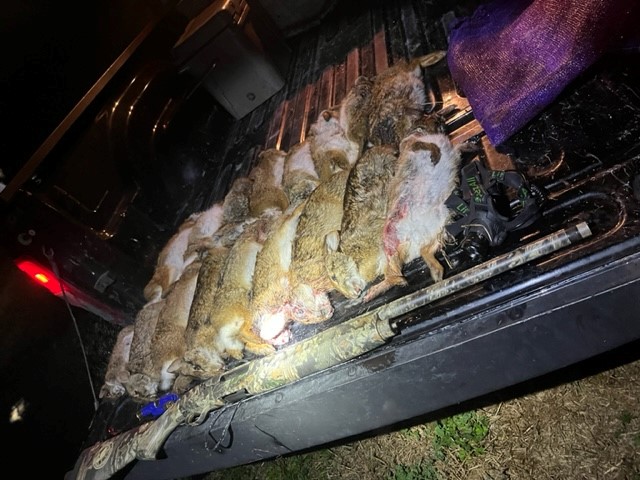
Agents cited Ryan Guerra, 47, and Ronald Alveris, 56, both of St. Bernard, for hunting wild quadrupeds during illegal hours and hunting from a moving vehicle. Guerra was also cited for taking over the limit of rabbits.
Agents were responding to complaints of illegal night hunting on the east bank levee in lower St. Bernard Parish when they observed Guerra and Alveris on an all-terrain vehicle at the base of the levee actively hunting around 11:55 p.m.
Agents made contact with the men and found them in possession of 17 rabbits, two lights and a shotgun. During questioning, Alveris told agents he did not shoot any of the rabbits.
Agents seized all 17 rabbits and donated them to a local…