Anne McKinsey and her dog, Clara, take a break during a hike in Corinth in October. Photo courtesy of Anne McKinsey
In the midafternoon of Dec. 20, while some people were tying up work ahead of the long holiday, and others were shopping for presents, Anne McKinsey was trudging about half a mile through the snow, trying to get her dog to the veterinarian.
McKinsey and her 3-year-old Shetland sheepdog, Clara, had been walking along one of their usual trails, not far from their home in East Corinth, when McKinsey heard her pet yip in pain.
She found Clara’s neck caught between two hinged metal bars, a device known as a conibear trap, which was set about 50 feet from the wooded trail.
She was able to remove the trap from a makeshift enclosure at the base of a tree.But she…
Night hunting and hunting out of season can be some of the toughest crimes for wildlife officers to catch, often requiring many nights patrolling areas of poaching activity. One such patrol on Bald Knob National Wildlife Refuge in August 2020 led to the arrest and successful prosecution of one of the worst cases of illegal hunting many officers of the U.S. Fish and Wildlife Service and Arkansas Game and Fish Commission have seen in years.
In August 2020, Senior Federal Wildlife Canine Officer Cpl. Branden Kieffer and his K9 partner Timber conducted a traffic stop on a suspicious vehicle late one evening after observing several violations at the refuge. They discovered that Jimmy Hobbs Jr. of Bald Knob was in possession of a suppressed, loaded .308 caliber rifle equipped with…
Japan has seen an unusually high number of avian influenza outbreaks this season, raising fears that the number of birds culled to prevent the disease from spreading could hit a record high for a single season.
Infections of the highly pathogenic bird flu virus have been breaking out at poultry farms and elsewhere across the country.
As of Wednesday, about 7.3 million birds, including chickens, had either been destroyed, or were supposed to be destroyed.
If infections keep spreading at the current rate, the number of birds destroyed may surpass the record of roughly 9.87 million set in the season from 2020 to 2021.
Hokkaido University avian flu expert Professor Sakoda Yoshihiro said infected migratory birds had begun arriving in Japan by late September, the earliest on record.
Sakoda said the birds have reached various locations around Japan, spreading the virus on an unprecedented scale.
He said the movement of migratory birds is transferring the virus to crows and other birds, allowing the virus to keep spreading until spring.
Sakoda said the bird flu season is still in its first half, and the number of outbreaks at poultry farms and elsewhere will likely remain very high for some time. He called on workers at such farms to take thorough anti-infection measures.
PITTSBURGH (KDKA) — A man has died after falling from a cliff in Westmoreland County.
The call came in around 7:30 p.m. on Tuesday for crews to respond to a rescue in New Alexandria off McChesney Road. The Westmoreland County coroner said a hunter was checking his traps and fell down a steep embankment.
He was discovered by family members. The coroner identified the man as 63-year-old Paul Berger.
It is more than a year since avian flu began to devastate wild birds in large numbers, and conservationists are fearful of what 2023 will hold. The highly infectious variant of H5N1 has causedEurope’s worst bird flu seasonand has spread across the globe with little sign of slowing.
In the UK, there were reports of some great skua dying from the H5N1 variant in the summer of 2021 but the mass die-offs started in theautumn and winter. More than a third of Svalbard barnacle geese in the Solway…
GREEN RIVER — Two Texas men have lost their hunting, fishing, and trapping privileges for 5 years in 48 states after they pleaded guilty to numerous charges related to illegally killing antelope in Wyoming, according to a press release from the Wyoming Game and Fish Department.
Matthew Adams, 26, and Carl Denmon, 25, of Texas, have pleaded guilty to numerous wildlife crimes, resulting in over $31,000 in fines and restitution. Each man was sentenced to and served 30 days in jail, and 11 1/2 months of unsupervised probation. The men also lost their hunting, fishing and trapping privileges for five years. Because Wyoming is a member of the wildlife violator compact, the men are suspended from hunting, fishing and trapping in 48 states. Adams and Denmon also were made to surrender the firearms used in committing these crimes which…
NASHVILLE — The Tennessee Wildlife Resources Agency and the Tennessee Fur Harvesters Association will be hosting the inaugural Becoming an Outdoors Woman (BOW) Trapper Workshop Jan. 20-21 at Buffalo Ridge Refuge in Humphreys County.
Instructors at the camp are outdoor women who will teach the fundamentals of trapping, snaring, fur handling, and tanning animals. The two-day workshop is free, but registration is mandatory, and participation is limited. Registration may be madehere.
Check-in for each of the training camps will begin with registration on Friday from 5-7 p.m. Friday with classroom instruction from 7-9 p.m. Saturday’s session will begin with breakfast at 7 a.m. with instruction to begin at 8 a.m. Lunch also be provided at noon and instruction will resume from 1-5 p.m.
On-site primitive camping is available, and participants must provide their own camping gear, have appropriate clothing, and bring…
Coroner David West said Matthew Roach, 40, of Elgin, died.
West said Roach was a member of the hunting club.
The accident is under investigation by the South Carolina Department of Natural Resources, the Kershaw County Sheriff’s Office and the Kershaw County Coroner’s Office.
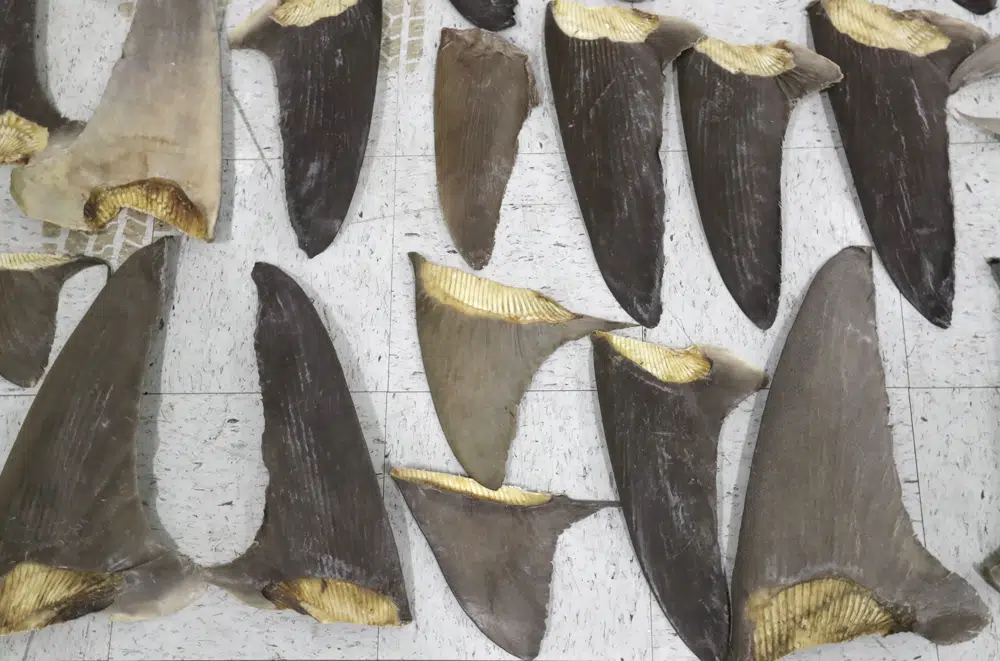
FILE – Confiscated shark fins are displayed during a news conference, Thursday, Feb. 6, 2020, in Doral, Fla. In 2022, the U.S. House and Senate passed identical versions of a proposed shark fin ban as part of a broader defense spending bill that President Joe Biden is expected to sign into law. Once he does, it will be illegal for Americans to buy, sell, transport or even possess foreign-caught fins — something ocean conservation activists have long sought. (AP Photo/Wilfredo Lee)
MIAMI (AP) — The U.S. is poised to ban the lucrative trade in shark fins, a move conservationists hope will help protect millions of sharks that are butchered every year to satisfy demand in China and other parts of Asia.
The practice of shark finning, whereby sharks are caught for their fins and their carcasses then dumped back into the ocean, has been banned in U.S. waters for decades. But the U.S. remains a major hub for the brisk trade where the fins of as many as 73 million sharks are cut off around the world each year.
The House and Senate passed identical versions of the proposed ban as part of a broader defense spending bill that President Joe Biden is expected to sign into law. Once he does, it will be illegal for Americans to buy, sell, transport or even possess foreign-caught fins — something ocean conservation activists have long sought.
“Our ports are no longer open for business for shark fins,” said Gib Brogan, campaign director with the ocean conservation group Oceana. “That will take them out of the supply chain and we expect it to disrupt the global fin market.”
But some scientists who study shark fisheries aren’t so certain. They believe the legislation will have little impact on the trade in shark fins and will only serve to shut down a regulated American fishery for shark meat and other legal products.
U.S. shark fisheries, although small, are well managed, and removing the country from the fin trade could encourage more exploitation of sharks in parts of the world where it’s less sustainable, said Robert Hueter, senior scientist emeritus at Mote Marine Laboratory in Sarasota, Florida.
“It’s putting the wrong people out of the fishery, creating opportunities for those that are doing it the wrong way to have more market share,” Hueter said. “People think this is going to solve the problems, and it’s not.”
While not all sharks are killed just for their fins, none of the other shark parts — such as its meat, jaws or skin — can compete with fins in terms of value. Depending on the type of shark, a single pound of fins can fetch hundreds of dollars, making it one of the priciest seafood products by weight.
ADVERTISEMENT
Kevin Wark, a shark fisherman based in New Jersey, said the new rules have the potential to put fishermen out of business.
“I understand there might be a lot of illegal fishing in the South China Sea and around the world, and there might be a couple incidents in the U.S., but there’s a lot of hardworking, honest guys here,” Wark said.
However, conservationists say the U.S. must act forcefully to encourage other countries to take similar steps, much in the way the U.S. ban on the ivory trade has been pivotal in protecting African elephants. The fin ban, first floated in 2017 by a bipartisan group of lawmakers, is similar to action already taken by Canada.
ADVERTISEMENT
Overfishing has led to a 71% decline in shark species since the 1970s. The International Union for Conservation of Nature, a Switzerland-based group that tracks wildlife populations, estimates that more than a third of the world’s 500-plus shark species are threatened with extinction.
At an international wildlife conference in Panama last month, governments from around the world extended trade restrictions to more than 90 shark species that are increasingly being hunted not only for their fins, but also their meat, some of which ends up in pet food.
___
This story was corrected to reflect that the fins of as many as 73 million sharks are cut off each year, not that 73 million fins are cut off.
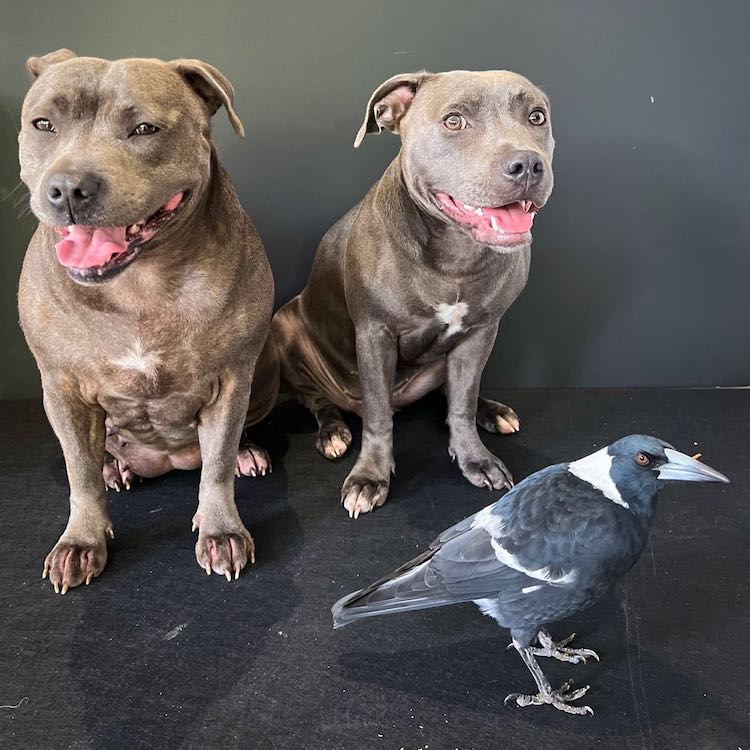
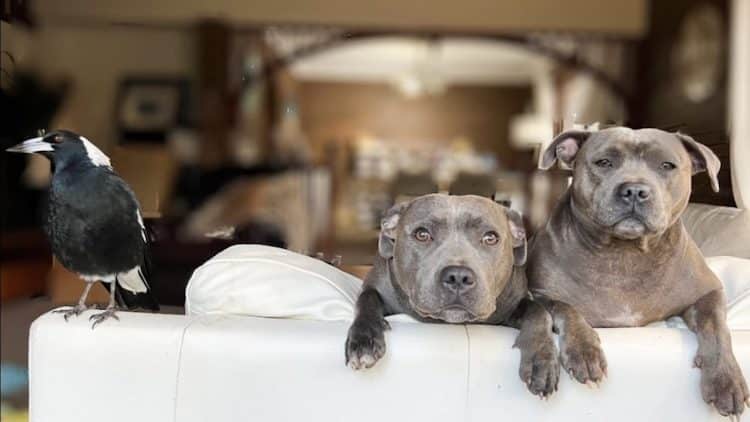
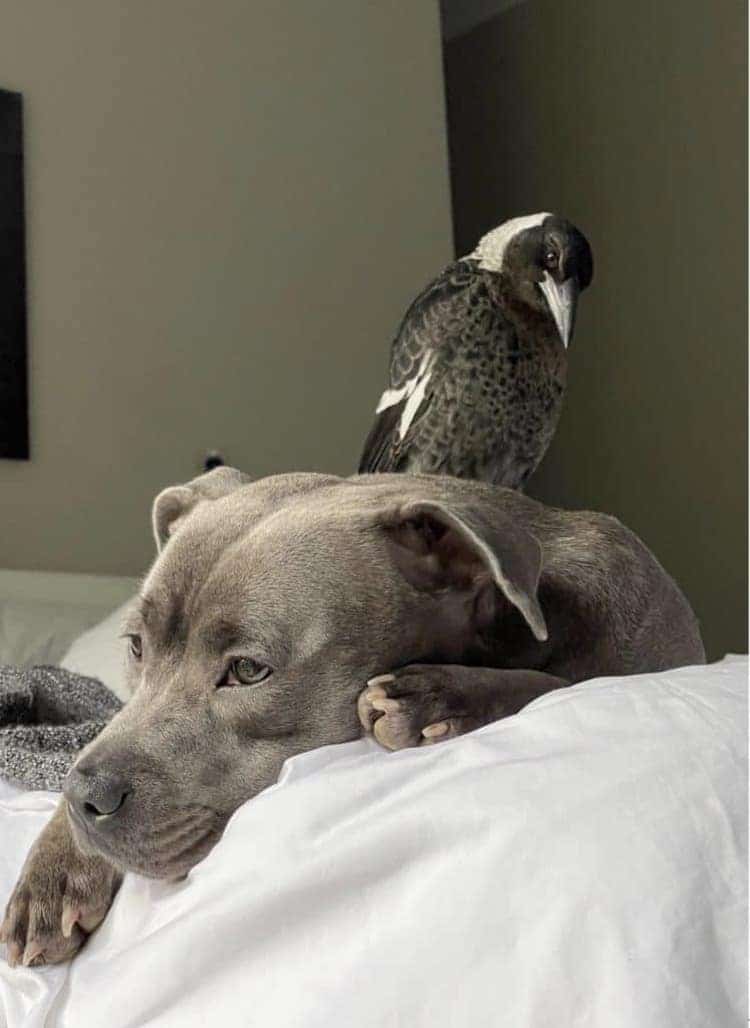
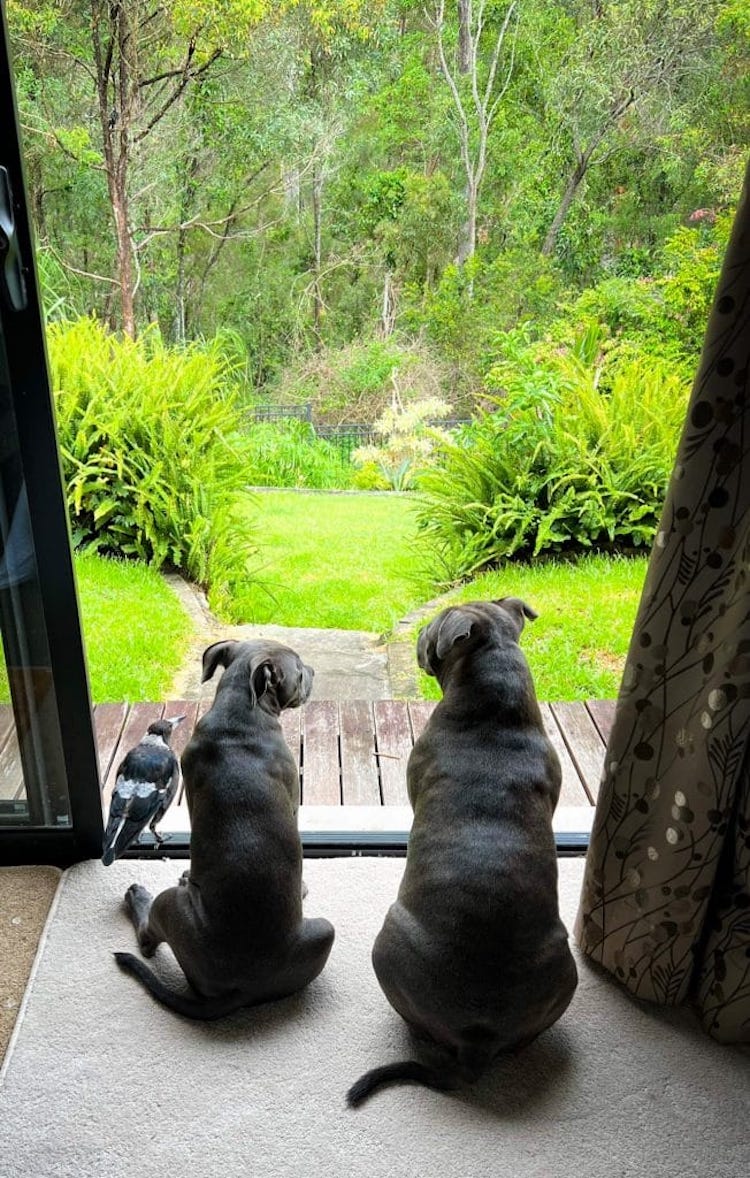
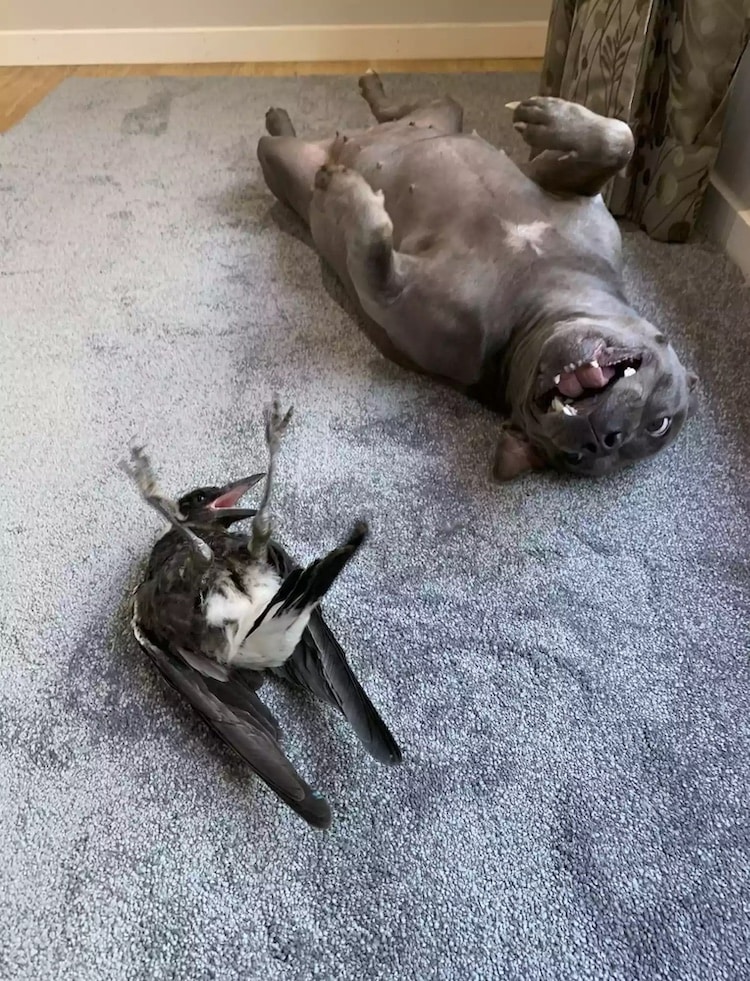
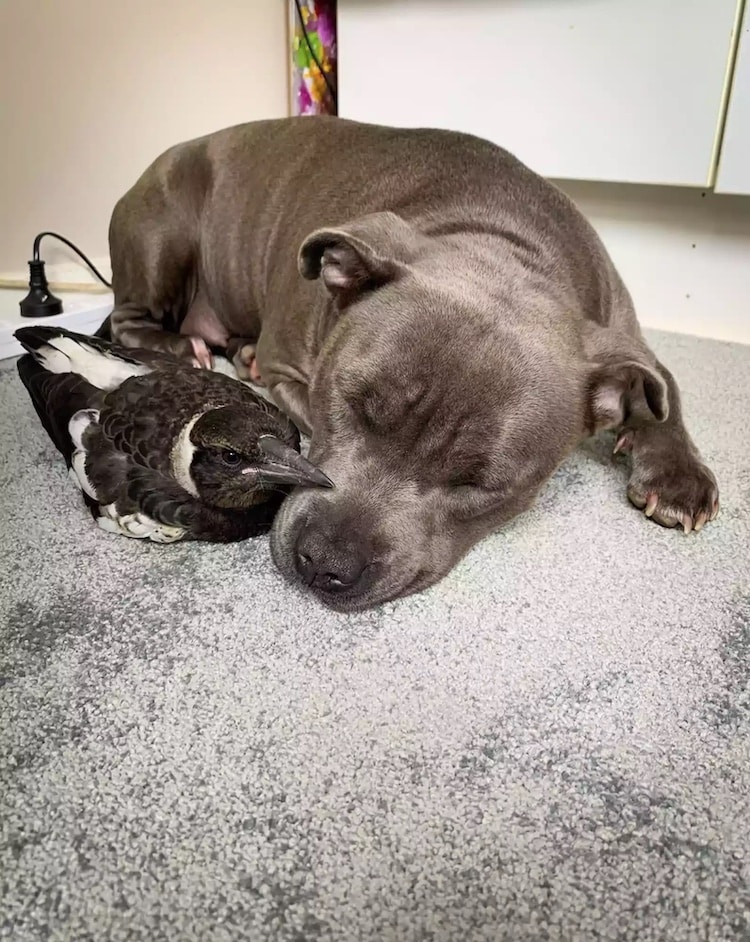
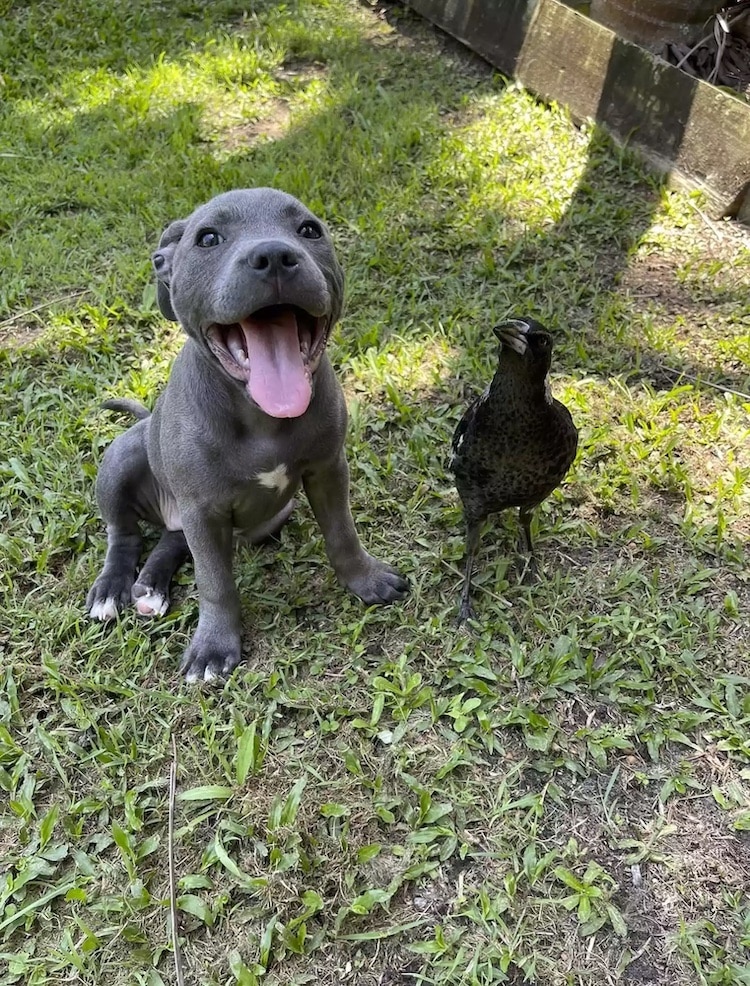
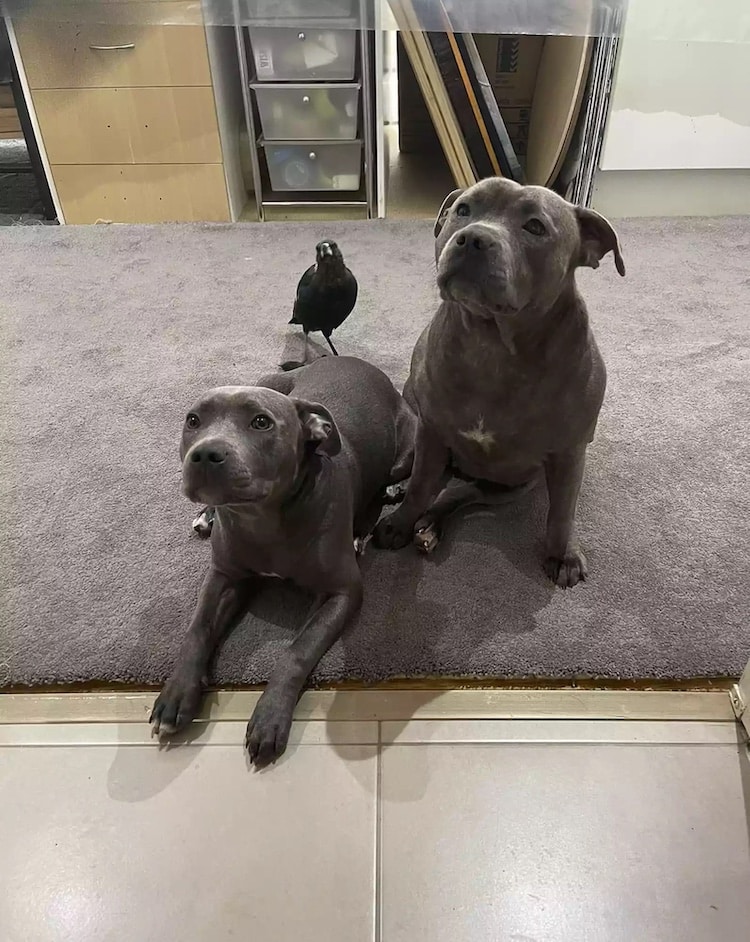
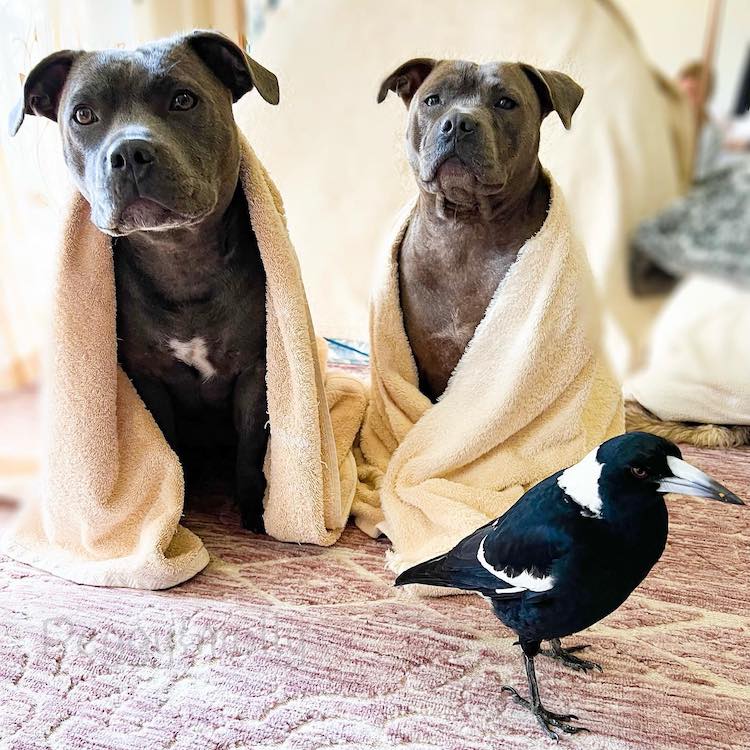
Two dogs and a magpie have formed an unlikely friendship with deep bonds. Peggy, a Staffordshire bull terrier, her pup Ruby, and Molly the (male) magpie flock together at their home in Queensland, Australia. They enjoy naps, outdoor adventures, and singing (barking) in each other’s presence. They don’t have to be doing much to have a good time—the mark of a true friendship.
Peggy and Molly met two years ago when Juliette Wells and her partner Reece found the baby bird abandoned at a dog park near their home. It was during magpie breeding season, and the couple saw the tiny creature wandering the park. They were concerned about it and waited there for hours to see if the bird’s parents would come back to help it. Much to Juliette and Reece’s dismay, they never did.
With Molly alone in the park, the couple knew they had to act. They took the magpie back to their home and contacted friends in a wildlife rescue. Unfortunately, none of the rescues had the capacity to take in the bird, so Juilette and Reece decided to care for Molly with guidance from their animal rescue friends. The humans’ loving care helped Molly thrive, and she didn’t want to leave their nest. Juilette and Rece are so glad she decided to stay.
Peggy was, understandably, unsure of how to handle the new baby bird in the house. But after a few days, she became curious and the two formed a friendship. As Molly grew, Juliette began sharing their bond on social media where the unusual and sweet relationship continues to gain a lot of attention.
“I love to describe them as ‘acceptance, love, and unity’ despite their differences,” Juliette tells My Modern Met. “We call it our modern-day Pooh and Piglet story.” Ruby was added to the mix later on, and she and Molly became instant friends.
The living situation is not without its challenges. Peggy is protective of Ruby, and Molly can be aggressive when it’s the magpie mating season. To ensure that things remain calm and safe for everyone, Juliette and Reece make sure that the animals have the space to be themselves. For Molly, in particular, this means having access to the outdoors with other wild birds.
Follow the trio on Instagram to see what they’re up to next. You can even purchase a calendar and be reminded of their friendship month after month.
Two dogs and a magpie have formed an unlikely friendship with deep bonds.
Peggy, a Staffordshire bull terrier, her pup Ruby, and Molly the (male) magpie flock together at their home in Queensland, Australia.
They enjoy naps, outdoor adventures, and singing (barking) in each other’s presence.
They don’t have to be doing much to have a good time—the mark of a true friendship.
Juliette Wells and her partner Reece found Molly in a park near their home and took in the then-baby bird.
Now, the animals’ popular Instagram account shares a peek into their lives.