“So Far We Have Survived Nuclear Armageddon By Luck” Paul Craig Roberts
“The long lucky streak can’t go on forever. President Reagan understood this and focused on ending the Cold War. This achievement has been overturned by the evil neocons operating through the last three US presidents.” click here for additional P.C.R. sourced article Ticking Closer to Nuclear Midnight.
“In a nuclear war, immense nuclear firestorms in burning cities would create millions of tons of thick, black, radioactive smoke. This smoke would rise above cloud level and quickly surround and engulf the entire Earth. The smoke would form a stratospheric smoke layer that would block sunlight from reaching the surface of Earth for a period of about ten years. Heated smoke in the stratosphere would cause massive destruction of the protective ozone layer. Huge amounts of harmful Ultraviolet light would penetrate the smoke and reach the surface of…
PANJIM: The State government has order probe into the incident wherein a leopard was killed after getting trapped in a wired snare near Kopordem village.
A carcass of full-grown leopard was found near Kopordem village on Friday early morning. Forest officials informed that the male leopard died after getting caught in the trap.
Forest Minister Vishwajit Rane has ordered an investigation into the incident and has assured to take harsh measures.
In a tweet, Rane informed that directions are issued to the Principal Chief Conservator of Forest (PCCF) to conduct an investigation to track down those responsible for laying wire snare traps for wild animals.
“We will take harsh measures against those involved. Such action will not be tolerated,” Rane said.
The Minister said that the protection of wildlife is an important aspect of the forest department and under the Wildlife Protection Act, the government is committed…
Temperatures were expected to moderate across the Northeast and Midwest Tuesday after days of frigid weather from “the blizzard of the century” left at least 62 dead nationwide and caused Christmastravel chaos. Around half of those deaths were in Erie County, New York, where Buffalo is located.
Blizzard conditions persisted in parts of the Northeast — the stubborn remnants of a sprawl of extreme weather that gripped the country over several days, causing widespread power outages, travel delays and deaths in nine states, according to official figures.
In New York state, authorities described ferocious conditions, particularly in Buffalo, with hours-long whiteouts, bodies being discovered in vehicles and under snow banks, and emergency personnel going “car to car” searching for survivors.
The perfect storm of fierce snow squalls, howling wind and sub-zero temperatures forced the cancelation of more…
“Free-range organic” young turkeys with surgically mutilated beaks at Diestel Turkey Ranch, a Whole Foods supplier
Photo by East Bay Animal Advocates
Back in the early 1980s, when I joined the emerging Animal Rights Movement, little attention was paid to farmed animals. The general attitude back then was: “It’s hard enough to get people to care about whales. How can we ever hope to get them to care about a chicken?” Back then, most if not all of those running the traditional animal welfare organizations ate animals. Animals were on their plates, not off them.
But in the mid-1980s, a Revolution was getting underway. New animal advocacy groups sprang up: Farm Animal Reform Movement, Farm Sanctuary, PETA. These groups were founded and led by activists who practiced and promoted, veganism – ethical veganism for the animals, not just about food and diet.
In the 1990s, farmed animals started appearing on the animal advocacy agenda. Veal calves isolated from their mothers in wooden crates comparable to a coffin. Hens caged for life in Henitentaries. These two abuses, especially, drew attention. At the same time, the idea persisted that being vegan is a personal choice rather than an ethical imperative. “We can’t impose our values” kind of thing.
Today, most animal organizations in the U.S. include farmed animals, whose plight on factory farms they acknowledge. The question is, what form does farmed animal advocacy take in our contemporary animal advocacy movement? What are groups actually doing? What are they asking, or urging, their supporters and others to do for the largest population of abused animals on the planet: those billions of chickens, turkeys, cows, pigs, ducks, aquatic animals and so many more, each of whom is an individual, an embodied consciousness with feelings, the same as ourselves.
The question involves asking: What is our goal for farmed animals?
I take this opportunity to express a concern I have, looking forward.
One group’s long-term goals for several categories of animals are: ending fur-wearing, ending puppy mills, ending the use of animals in personal-care product testing. By contrast, this group’s long-term goal, or “vision,” for farmed animals is, vaguely, “a better life” – a “better life’ in conditions that cannot be good, compared to the life these animals need and deserve to enjoy every bit as much as you or I, a cat or a dog. For farmed animals, the long-term goal for this advocacy group is merely to eliminate “extreme confinement and other inhumane practices.” The single exception: “Dogs are no longer raised and killed for their meat.”
Unlike wearing fur, for example, dining on animals other than dogs is not an issue as long as the animals on the plate were treated “humanely” on the farm and during slaughter. The term “humane” in this context is whitewashed not only by animal-abusing industries, but by animal advocacy societies that support the continuation of animal farms. One’s eyes glaze over just looking at the word, “humane.” What does “animal advocacy” even mean when it condones cutting an animal’s throat for cuisine? And when it hides the realities of so-called humane animal farming in a way that hardly differs from how agribusiness and its affiliates bury their brutalities in euphemisms and lies?
Seldom, if ever, does a “humane farming” advocacy group reveal the atrocities of one of its humane-certified farms. Typically it takes an OUTSIDER – an investigative journalist, an accidental visitor, a whistleblower – to reveal what goes on in those places. Only then might we learn that a “humane certifier,” so-called, has “suspended” certification of a particular farm. Doesn’t this say something about the entire “humane farming” enterprise?
Another large animal advocacy group posted an article this month advocating what its president called, “Smaller farms that treat animals humanely,” going on to say that “factory farming” . . . is just as brutal to humans as it is to animals.” It is painful to read this false equivalence and to quote it.
Factory-farming is NOT just as brutal to humans, by which the writer means small rural farmers and factory-farm workers, as it is to the animals. Yes, it is brutal to workers, in corporate slaughterhouses especially. But there’s a Huge Difference here: Unlike the chickens, turkeys, cows, pigs, fishes and other victims of factory farming, the workers are not the legally enslaved property of corporations. They are not the ones being SLAUGHTERED.
Moreover, the workers are not intentionally mutilated (without pain relievers, of course) as the animals are (debeaked, detoed, ear-cropped, etc.). They do not endure the terror and indignity of artificial insemination and masturbation that turkeys and pigs helplessly endure; they are not subjected to genetic assault to produce bodies and body parts designed for human consumption. “We are no longer selling broilers, we are selling pieces. A knowledge of how broilers of different strains and sexes grow and become pieces is increasingly important” (“Latest research findings reported at annual poultry science meeting,” Feedstuffs, Sept. 7, 1992).
The workers and rural farmers are not forced to live without respite in filthy, polluted buildings and feedlots from which they cannot escape. Unlike the animals, workers can walk outside for a breath of air if they choose. Not being enslaved property like the animals, they can walk away for good; and, unlike the animals, the workers get to go home, even after a miserable work shift. By contrast, the animals never get to “go home,” ever. The only “home” they will ever know is that Home in the Sky where they are finally free, in other words, Dead.
As we begin the New Year, I urge my fellow animal rights advocates to think about what we want to say and do on behalf of farmed animals and their plight in 2023 and beyond. A fellow activist sent me an email this month about the situation I have described. He wrote:
If they had said that their ultimate vision was that no animal should be exploited and raised for food, no animal should be killed, and the animal-based food industries should pass out of existence, but until that happens it is a good thing to lessen the suffering of captive animals if we can do that, that would be an argument that might work. But they couldn’t bring themselves to say that.
Why couldn’t they? What are the forces that put farmed animals forever in the Land of the Forsaken by their “advocates”?
In The Divine Comedy, Dante passes through the gate of Hell, which bears the inscription: “Lasciate ogne speranza, voi ch’intrate,” typically translated as “Abandon all hope, ye who enter here.”
Translation: “Long-term vision” for farmed animals. Is this our vision? As farmed animal advocates, we really do have to choose.
KAREN DAVIS, PhD is the President and Founder of United Poultry Concerns, a nonprofit organization that promotes the compassionate and respectful treatment of domestic fowl including a sanctuary for chickens in Virginia. Inducted into the National Animal Rights Hall of Fame for Outstanding Contributions to Animal Liberation, Karen is the author of numerous books, essays, articles and campaigns. Her books include A Home for Henny; Instead of Chicken, Instead of Turkey: A Poultryless ‘Poultry’ Potpourri; Prisoned Chickens, Poisoned Eggs: An Inside Look at the Modern Poultry Industry; More Than a Meal: The Turkey in History, Myth, Ritual, and Reality; and The Holocaust and the Henmaid’s Tale: A Case for Comparing Atrocities. Karen’s latest book is For the Birds: From Exploitation to Liberation – Essays on Chickens, Turkeys, and Other Domesticated Fowl. Karen hosts a biweekly podcast series titled: “Thinking Like a Chicken: News & Views.”
Most of us can agree that friendship is a vital part of life. Our friends give us support, connection, and laughter, but they also help to prevent loneliness and isolation. Research suggests that in America, most people have between three and five close friends. You know the kind we’re talking about. The people you can have a good old talk about life with or share endless private jokes and memories with. But friendship isn’t just for humans. Research suggests that cows, and many other animals, have best friends, too—they just show their bond in a different way. And that’s because, just like us, they have the capacity to experience emotions, connection, and empathy.
The emotional lives of cows
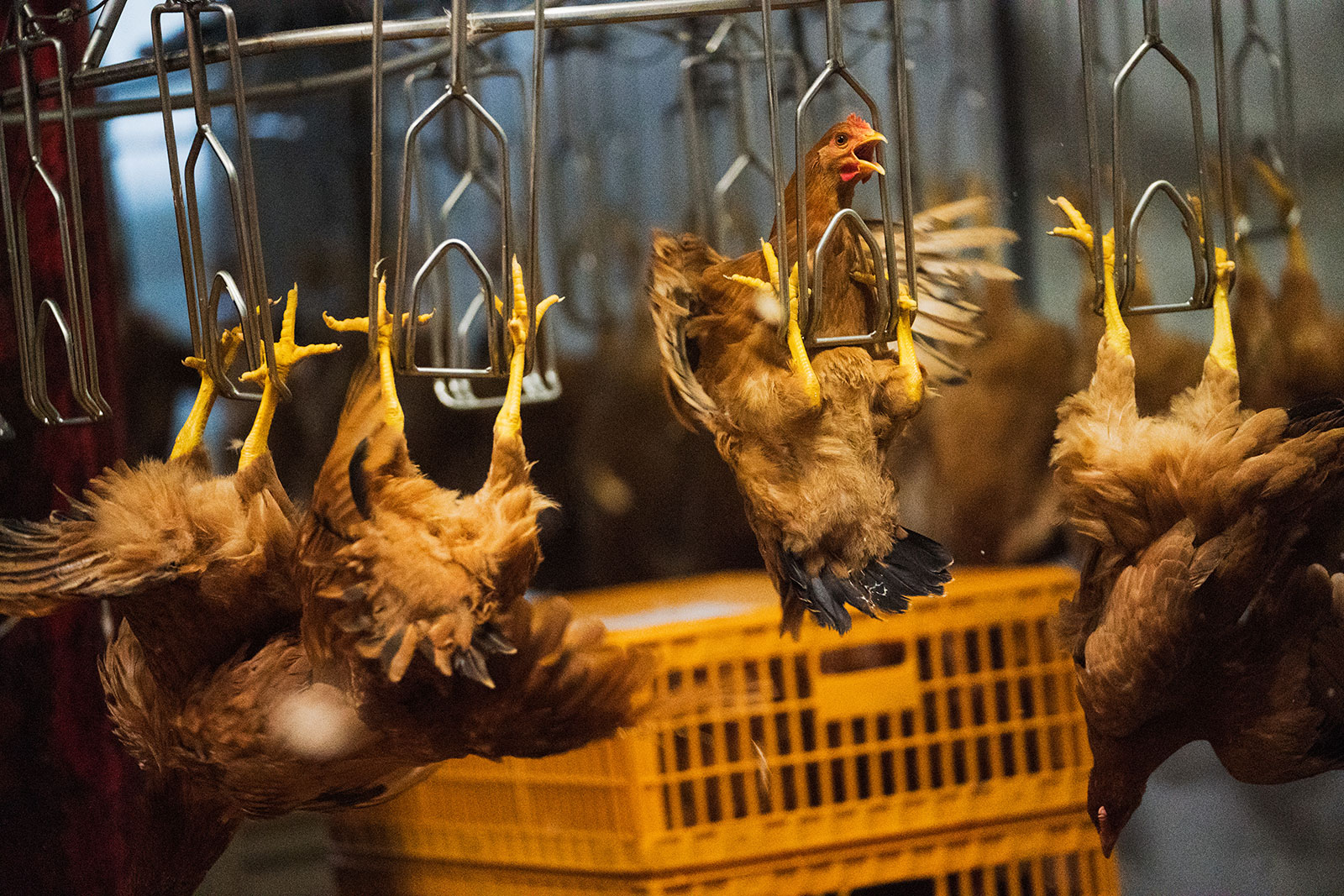
For thousands of years, humans have farmed cows for meat and milk. But while open-field farming used to be the norm for most cattle, things have changed over the last century. Today, factory farming is the most common method of raising cows in the food industry. In the US, 99 percent of farm animals are raised in cramped industrialized conditions.
Maria Teneva/Unsplash
All farm animals are sentient, and that means they all suffer in exploitative circumstances. But we know that dairy cows, in particular, are subjected to a tough and emotional existence. And that’s because they show us. After mother dairy cows give birth, their calves are taken away, and farmers themselves have confirmed the grief and sorrow that ensues.
“Soon after birth, the farmer comes along, picks up the freshly washed and loved newborn calf, and heaves it into a trailer before driving off,” Jackie Scurr, a former dairy farmer who was in the profession for 18 years, recalled for Free From Harm.
“The mother cow, naturally horrified and distressed out of her mind, chases alongside the trailer, bellowing and calling to her baby, while the confused and terrified calf cries back to the mother.” —Former Dairy Farmer Jackie Scurr
But anguish isn’t the only emotion cows can feel. If given the opportunity, they can demonstrate a range of emotions. And in 2020, one study from the University of Sydney suggested that cows express these emotions through the way they moo.
Researchers analyzed more than 330 recordings of cow vocalizations from a period of six months and found they made different sounds depending on their circumstances. If they were about to be fed, for example, they made positive sounds. But if they were experiencing something negative, like isolation from the rest of their herd, they made different sounds. “Recording vocalizations is non-invasive,” said lead author Alexandra Green to Psychology Today. “So this is a potential way to assess animal welfare on a farm without disturbing expression of the cows’ natural behaviors.”
Do cows have best friends?
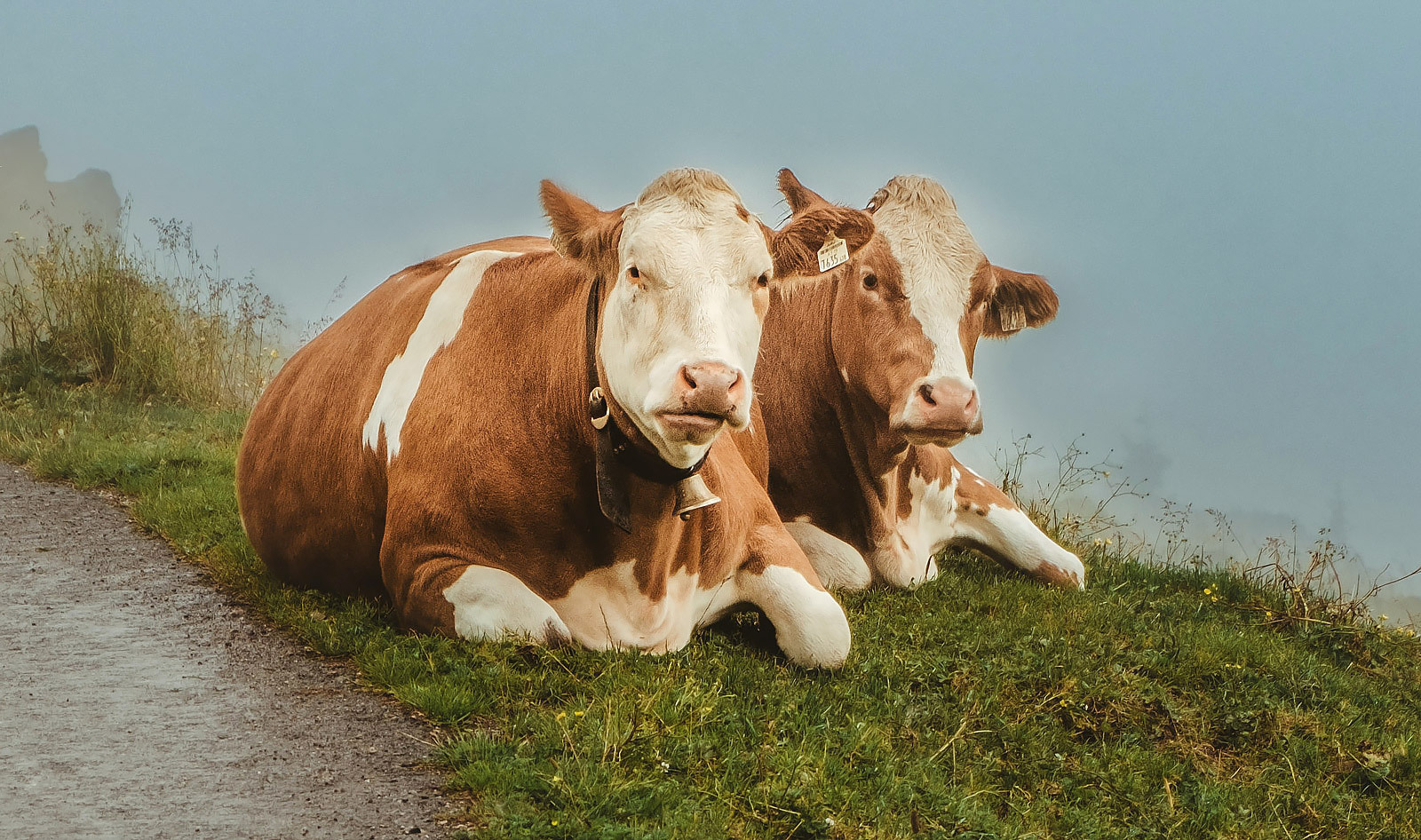
Because cows can experience emotions, they can also experience connection. Just like humans, research suggests that the animals have particular friends that calm them down and make them feel good.
In 2011, one study from Northampton University examined cows who had been placed in pens for 30 minutes on two separate occasions. The first time, they were with a partner they spent a lot of time with, also known as their best friend. But the second time, they were with a cow they were not familiar with. When with a friend, their heart rates and levels of cortisol (the stress hormone) were lower.
The results indicate that cows are much happier when they have a friend with them, and Krista McLennan, the lead author, told The Daily Mail that farmers had also anecdotally confirmed this theory. ”I’ve spoken to a number of farmers who have said they do notice bonds building among their cows and some spending a lot of time together,” she said.
Adobe
McLennan’s research also looked at thousands of observations from dairy farms and discovered a pattern of relationships. More than 50 percent of cows chose to do most of their grazing and resting with one specific friend.
Can cows be friends with humans?
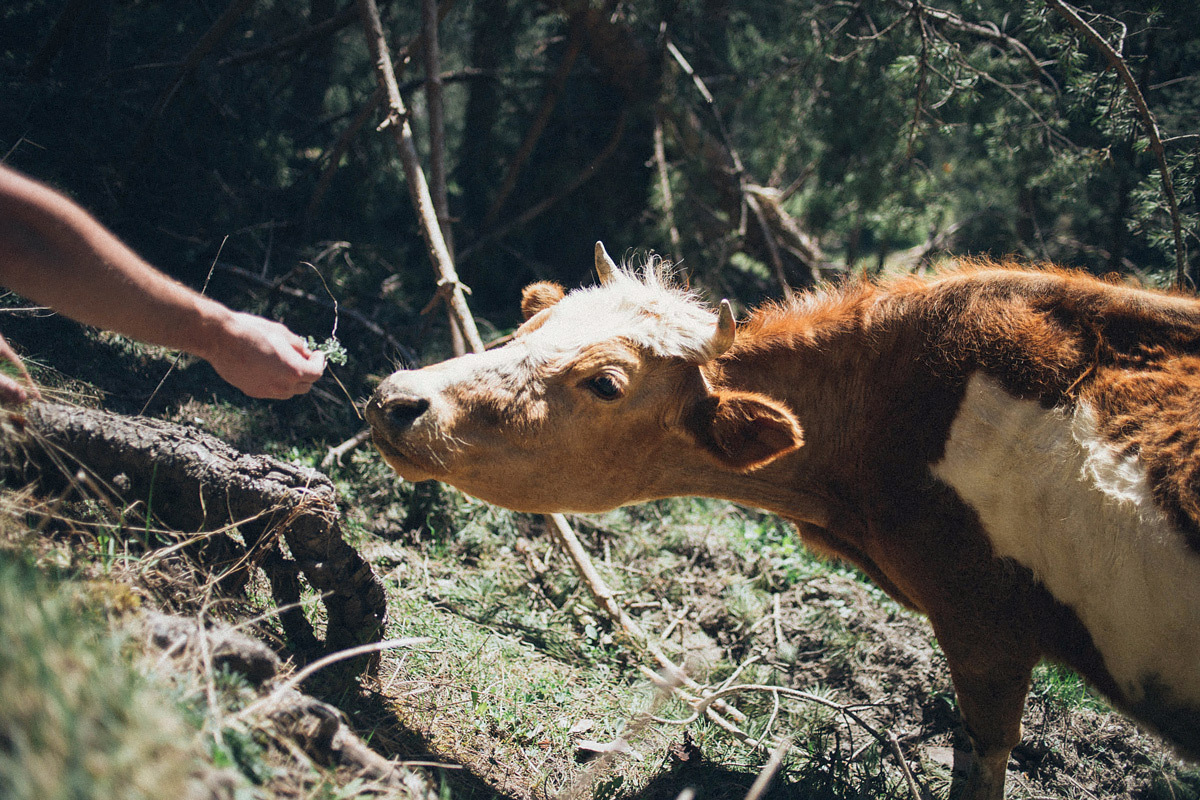
There is much anecdotal and video evidence out there that proves cows can feel affectionate toward human beings. For example, this video from Kinder World, shows several clips of the animals enjoying strokes, scratches, and cuddles from humans, as well as licking and rubbing them in return and resting their heads peacefully on human laps.
Elina Sazonova/Pexels
Experts believe that cows can also bond with farmers and vets, even when they are being raised for meat or dairy. “We still form bonds with these animals, especially ones we work with closely,” Janice Swanson, PhD, of Michigan State University, said. “Farmers may form a bond with the lead cow, or a veterinarian might bond with an animal who had a difficult birth and required special care.”
But not all cows are the same. Some prefer to be left alone and may not express the same amount of affection towards human beings or other animals, while others are incredibly social. It all comes down to individual preference and personality. Just like human beings, some are more introverted, while others are more extroverted.
Ranae Smith/Unsplash
What about other animals? Do they have friends?
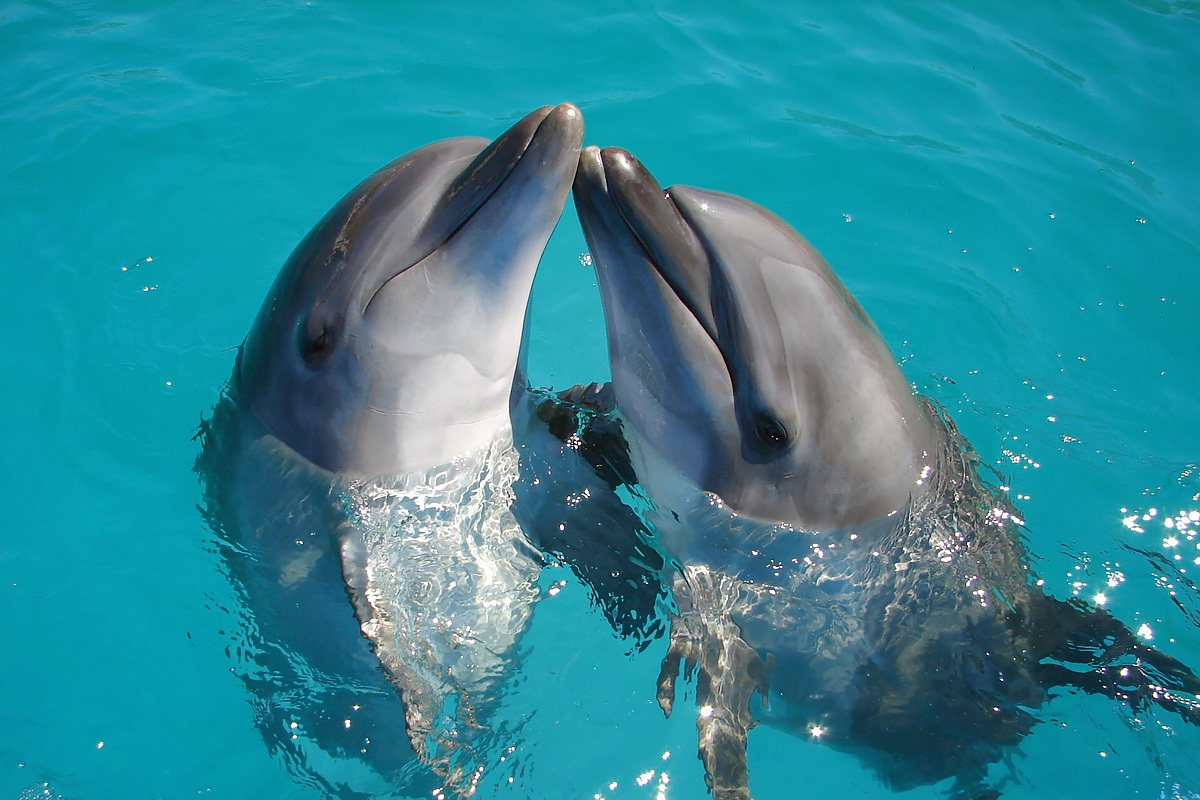
Cows are far from alone when it comes to making friends. Research suggests that dolphins, for example, have incredibly close and long-lasting friendships. They are also quite protective of their peers and can shun others who are not in their own clique.
Horses have also been known to bond with other horses, and, like cows, they are herd animals, so they don’t like to be alone. Dogs also form long-lasting attachments, both with other dogs and humans. And elephants are known to enjoy being in groups, because, again they are herd animals, and they like socializing.
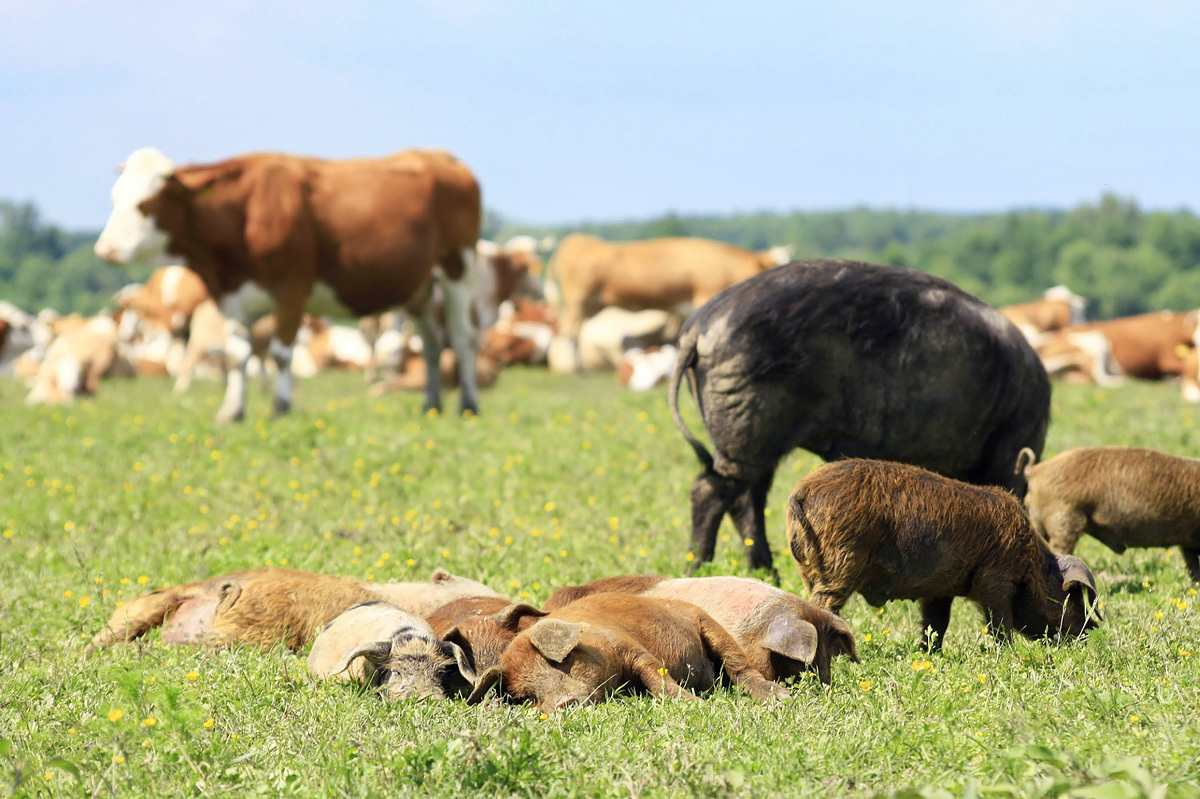
Pigs, sheep, birds, monkeys, and even bats are just a few more examples of the other types of animals that have demonstrated a desire for socialization or friendship.
The science behind animal bonding
According to the Baylor College of Medicine, it’s likely humans evolved to have close friendships because it increased our chance of living longer, and our children’s chance of living longer. By coming together, our individual strengths benefit each other. And this is shown in the animal kingdom, too. Killer whales, for example, share with each other when prey is hard to find. And research has also shown that wolves elect to help each other out with food, too. Ultimately, it comes down to one thing: survival.
When animals bond with humans, this is also mutually beneficial. A companion animal can boost a human’s mental health and well-being, for example, and they may also provide protection and in some instances, service. In return, animals have many needs, like food, water, and shelter, taken care of. Plus, whether they’re a cow in a sanctuary or a companion animal like a dog, they also get to enjoy a few strokes and scratches, too.
Proposed geoengineering methods include pumping salt water into clouds to make them more reflective of sunlight, or to place ice particles in clouds to stop them from trapping heat. Photograph: Charlotte Observer/MCT/Getty Images
As global heating escalates, the US government has set out a plan to further study the controversial and seemingly sci-fi notion of deflecting the sun’s rays before they hit Earth. But a growing group of scientists denounces any steps towards what is known as solar geoengineering.
The White House has set into motion a five-year outline for research into “climate interventions”. Those include methods such as sending a phalanx of planes to spray reflective particles into the upper reaches of the atmosphere, in order to block incoming sunlight from adding to rising temperatures.
The work is required by Congress. It is “not new research, but a report that highlights some of the key knowledge gaps and recommendations of priority topics for relevant research”, said a spokesperson for the White House’s office of science and technology policy, adding Joe Biden’s administration wants “effective and responsible CO2 removal” as well as deep cuts to greenhouse gas emissions.
Several American researchers, somewhat reluctantly, want to explore options to tinker with the climate system to help restrain runaway global heating, even as they acknowledge many of the knock-on risks aren’t fully known. “Until recently, I thought it was too risky, but slow progress on cutting emissions has increased motivation to understand techniques at the margins like solar geoengineering,” said Chris Field, who chaired a National Academies of Sciences report last year that recommended at least $100m being spent researching the issue.
“I don’t think we should deploy it yet and there are still a ton of concerns, but we need to better understand it,” Field said. “Climate change is causing widespread impacts, it’s costing lives and wrecking economies. We are in a tough position; we are running out of time, so it’s important we know more.”https://interactive.guim.co.uk/uploader/embed/2022/12/archive-zip/giv-6562M4eflCusuvs7/Diagram showing three potential solar geoengineering methods.
Previous attempts at running experiments for what is known as solar radiation management (SRM) have faced staunch opposition. Last year, an exploratory flight in Sweden of a high-altitude SRM balloon, led by Harvard University researchers, was halted after objections by environmentalists and Indigenous leaders.
But at least one US startup is now hoping to leap ahead with solar geoengineering.
Make Sunsets, backed by two venture capital funds, launched in October. It claims to have already run two internal test flights for its plan to inject sulphur via balloons into the stratosphere, more than 20km above the Earth’s surface.
The venture, named after the deep red sunsets that would occur if particles were seeded into the stratosphere, says its “shiny clouds” will “prevent catastrophic global warming” and help save millions of lives. “Any human-caused release of carbon dioxide is geoengineering,” it argues on its website, which asks people to buy “cooling credits” to fund its work. “We screwed up the atmosphere, and now we have a moral obligation to fix things!”
Edward Parson, an expert in environmental law at University of California, Los Angeles, says Make Sunsets’ claims that it could return the world to its pre-industrial temperature for just $50bn a year are “absurd”. He explains that most researchers are wary of deploying what they consider to be a desperate, last-ditch option.
But Parson says the risks in researching solar geoengineering have been overblown and that the US “is probably the bold leader on this. It would be a big step forward if we have a research program.”
“In my opinion, the probability that a nation makes a serious effort on solar geoengineering over the next 30 years is about 90%,” he adds. “As impacts get much worse and if mitigation doesn’t massively increase, I judge it quite likely that some major nation considers its citizens are suffering climate harms that are intolerable.”
This prospect horrifies opponents of solar geoengineering. An open letter signed by more than 380 scientists demands a global non-use agreement for SRM; it also says that growing calls for research in this area are a “cause for alarm”, due to an unknown set of ramifications that will have varying consequences in different parts of the world and could scramble “weather patterns, agriculture and the provision of basic needs of food and water”.
Frank Biermann, an expert in global governance at Utrecht University, said he’s also disturbed that solar geoengineering will create a sort of moral hazard where governments ease off efforts to cut emissions and fossil fuel companies use it as cover to continue business as usual. Planet-heating emissions are expected to hit a record high this year, even though they must halve this decade if the world is to avoid dangerous levels of global heating.
This debate threatens to derail current climate policies. It’s a huge risk.
Frank Biermann, global governance expert
“I would say the majority of scientists believe this is a crazy idea for a variety of reasons,” said Biermann, who thinks the US is an outlier because of its own large per-capita emissions and inconsistent adherence to global agreements.
“Soon, everyone who is dependent on coal, oil and gas will jump on the solar engineering bandwagon and say, ‘we can continue for 40 years with fossil fuels’ now. This debate threatens to derail current climate policies. It’s a huge risk.”
Biermann likens research on blocking sunlight to the satirical movie Don’t Look Up, in which researchers who warn of a catastrophic incoming meteoroid are sidelined in favor of an outlandish plan to deal with it. “The only way to find out whether this works is to do it to the whole planet for several years,” he said.
“I mean will 8 billion people sit there in our living rooms having our last meal waiting and hoping that elite western universities got it right, that the Americans will not mess it up?”
There isn’t any international governance around solar geoengineering for now. Critics fret that unilateral action to alter the climate could spark conflict if one part of the world benefits, while another suffers knock-on droughts or floods.
Also, the addition of aerosols would have to be continuous to maintain the cooling – any disruption, either intentional or otherwise, would cause a sort of “termination shock”, where bottled up warming would be unleashed in a disastrously rapid jolt.
“Termination shock terrifies me,” said Lili Fuhr, a climate and energy expert at the Center for International Environmental Law. “This is just a gigantic gamble with the systems that sustain life on Earth. It could be weaponized, it could be misused – imagine if, say, India and Pakistan disagreed over one of them doing this.
“We need to do more than just emissions cuts and I wish we had a magical fix to this, but this doesn’t turn bad ideas into good ones,” Fuhr adds.
The idea of recalibrating the world’s climate to deal with heat-trapping emissions isn’t new. A group of scientific advisers to Lyndon Johnson cautioned the US president about global heating in 1965, musing that “deliberately bringing about countervailing climatic changes therefore need to be thoroughly explored”.
There are several types of proposed geoengineering, such as pumping a mist of salt water into clouds to make them more reflective of sunlight, or to place ice particles in high-altitude clouds to stop them trapping so much of the heat that bounces off Earth.
The most high-profile method, though, is firing a reflective substance such as sulphur or chalk dust from nozzles into the stratosphere, where the particles would then circulate around the world and start deflecting the sun’s rays. David Keith, professor of applied physics and of public policy at Harvard, estimates that around 2m tons of sulphur a year, injected via a fleet of about 100 high-flying aircraft, would cool the planet by around 1C, around the amount it has heated up since the Industrial Revolution.
All of this would cost several billion dollars a year according to an estimate, and provide a relatively quick drop in temperatures. Keith argues it is more compelling than various carbon capture technologies that can take a long time and involve complex, expensive infrastructure. “Pretending that climate change can be solved with emissions cuts alone is a dangerous fantasy,” Keith has stated.
We have lost so many easy paths to limit the harms of climate change that we only face worse options.
David Keith, professor of applied physics and of public policy at Harvard University
The basic physics of doing this is well understood, Parson said, likening it to the huge eruption of Mount Pinatubo in the Philippines in 1991, an event that expelled nearly 20m tons of sulphur dioxide into the stratosphere and caused global temperatures to drop temporarily by about 0.5C.
“Most people didn’t notice that and there have been studies since that give us confidence it can be done,” said Parson. “We don’t know how it should be done, yet, and the environmental aspects and the governance remain concerns. It would be reckless to just start deploying this now but we have lost so many easy paths to limit the harms of climate change that we only face worse options.”
Other effects on regional weather are more uncertain, to the extent one recent novel based on the topic, The Ministry for the Future by Kim Stanley Robinson, depicted India embarking upon solar geoengineering to save itself from deadly heatwaves while another, Termination Shock by Neal Stephenson, conversely had India sabotaging a sulphur deployment system in Texas because it interfered with its monsoon.
The debate over how much we should meddle with the climate is likely to intensify as the fallout from global heating worsens. For now, opponents won’t back down. To Biermann, solar geoengineering should be considered by governments as being akin to landmines or biological weapons and blacklisted internationally.
“This is just another one on this list,” he said. “People talk about the freedom of research, but you don’t have the freedom to sit in your back yard and develop a chemical bomb.”
The Wyoming Game and Fish Department reports that Matthew Adams (26) and Carl Denmon (25) of Texas, have pled guilty to numerous wildlife crimes, resulting in over $31,000 in fines and restitution. Each man was sentenced to and served 30 days in jail, and 11.5 months of unsupervised probation. The men also lost their hunting, fishing and trapping privileges for five years. Because Wyoming is a member of the wildlife violator compact, the men are suspended from hunting, fishing and trapping in 48 states. Adams and Denmon also were made to surrender the firearms used in committing these crimes which included two .22LR rifles with homemade suppressors.
Adams was charged with 11 counts, as follows:
-Wanton destruction (2 Counts)
-Taking a big game animal with an illegal caliber firearm (2 counts)
BATH TOWNSHIP, Mich. (WJRT) – A Grand Blanc Township man is one of two suspects arraigned on murder charges for the death of a hunter in Clinton County’s Bath Township in 2018.
The Michigan Attorney General’s Office charged 34-year-old Thomas Olson of Grand Blanc Township and 34-year-old Robert Rodway of St. Johns with felony murder and using a firearm to commit a felony.
Both suspects face up to life in prison with no chance of parole if they are convicted.
Prosecutors say Olson and Rodway were hunting in the Rose Lake State Park in Bath Township on Nov. 16, 2018, when they encountered Chong Yang. Yang’s family reported…
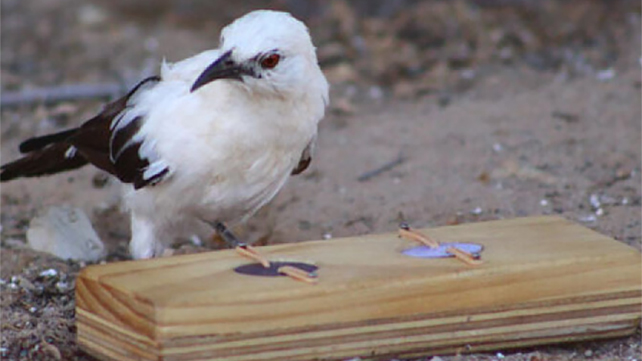
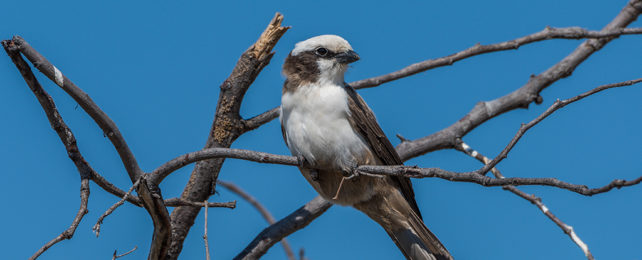
The Southern Pied Babbler. (nicholas_dale/iStock/Getty Images Plus)
Researchers have discovered something strange about female southern pied babblers, a small black-and-white bird found in Africa’s dry savannah: the more chicks that they have over the years, the less smart they seem to get.
As these birds age, they typically produce more offspring each year. Meanwhile, according to a series of controlled tests conducted by researchers from the University of Western Australia, their cognitive ability declines.
This findings suggest intelligence and reasoning comes at a cost in energy. In animals where energy and resources are at a premium, the survival of the next generation has priority.
“Analyzing over 10 years of breeding data, we found that individuals with lower general cognitive performance produced more fledglings per year,” UWA evolutionary biologist Camilla Soravia and colleagues write in their published paper.
“Collectively, our findings support the existence of a trade-off between cognitive performance and reproductive success in a wild bird.”
Cognitive performance refers to the ability to take in information, process it, and then act accordingly. In the case of this study, 38 wild southern pied babblers (Turdoides bicolor) were tested on how well they could learn associations, adapt to changes in the experiments, and control counterproductive behaviors, with food used as a reward.
The birds that did well on one task generally performed well on all tasks, demonstrating high levels of general cognitive performance (or GCP). This GCP varied considerably across all birds of both sexes, but was comparatively lower among female birds who were older in age.
At the same time, a measure of the females’ reproductive success suggested their fertility tended to increase with each passing year.
In male birds, there was no significant difference in cognitive ability across birds of different ages. There was also no evidence that living in larger groups increased intelligence, as has been suggested by some other studies of Western Australian magpies (Gymnorhina tibicen dorsalis).
“To our knowledge, our finding represents the first evidence of sex differences in age-related cognitive decline in a wild animal,” write the researchers.
As the researchers point out in their finished study, breeding is competitive if you’re a southern pied babbler: females try to dominate each other and fight to get the attention of males, and clutches of eggs often get destroyed and need to be laid all over again.
This requires a lot of energy. For younger female birds, it might pay off to establish yourself with some smart acting. As females get older, they might put more of their efforts into reproducing rather than maintaining their nervous system and brain – this is something that has been noticed in butterflies, for example.
Given the study constitutes a snapshot in time of birds at different ages, it can’t be ruled out that female birds with lower GCP simply outlived females who spent more energy on cognitive performance, rather than experience a decline in intelligence. More data taken over a longer period of time would help prove this is what’s happening. However, it’s an interesting association that the study authors want to explore further.
“In order to understand how selection acts on cognition we need to consider not only its benefits but also its costs,” Soravia and colleagues conclude.
“Future studies should consider expanding the test battery by including, for example, tasks assessing social cognition, the ability to make inferences and reaction time.”
BROWN COUNTY, Texas — A 70-year-old man and one other person were shot Dec.16 in Brown County in what the Brown County Sheriff’s Office said was a hunting accident.
The two were riding in a vehicle while hunting for ducks when the driver tried to jump a pond. However, the vehicle hit a pothole and a 12-gauge shotgun discharged, hitting the passengers in the front and the back left.
The passenger in the front was shot in the arm while the passenger in the back was shot in the ear. The Lake Bride Volunteer Fire Department responded to the scene with Deputy Herring from the BCSO.


 Maria Teneva/Unsplash
 Adobe
 Elina Sazonova/Pexels
 Ranae Smith/Unsplash







 The Southern Pied Babbler. (nicholas_dale/iStock/Getty Images Plus)