In New Hampshire, two hunters were infected with “A parasite never before seen in humans.” The infection happened after the pair hunted and butchered a moose with their dogs, saysNewsweek.
AsDr. Elizabeth Talbot, infectious disease physician at Dartmouth Hitchcock Health toldWMUR Channel 9, “It’s the first time it’s been identified in humans.”Because of this, the state’s Health and Human Services Department has healthcare workers on high alert.
Although humans rarely contract the parasite, dogs in contact with raw game meat can. As a result, hunters with dogs in moose territory are at a notably higher risk. According to Dr. Talbot, the state’s been tracking tapeworms in moose populations for several years.
Published:Dec. 19, 2022 at 3:42 PM PST|Updated:15 hours ago
CHARLESTON COUNTY, S.C. (WCSC) – First responders were called to a “hunting incident” in Charleston County Monday night.
An official with the Department of Natural Resources (DNR) has confirmed there was a hunting incident in the Adams Run community near Parkers Ferry Road.
Charleston County Sheriff’s Office spokesperson Andrew Knapp says deputies were called to the area of 6601 Parkers Ferry Rd. around 5:30 p.m. for a report of a person with a gunshot wound. EMS transported the person to the hospital, Knapp says.
The investigation has been turned over to the DNR.
The extent of their injuries is unknown at this time.
Kevin Leech, 57, was deer hunting from a climbing tree stand when for unknown reason the stand malfunctioned, causing Leech to fall. Leech, who was not wearing a full body safety harness, was pronounced dead at the scene, officials said.
An exact cause of death is pending autopsy results.
Conservation Officers remind everyone using elevated platforms to hunt to always wear a full body harness, use a tree stand’s…
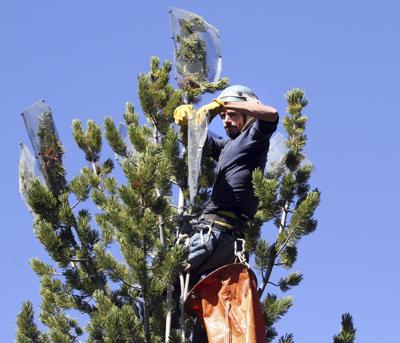
FILE – In this 2013 photo, cone collectors like Gabe Thorne, of Hamilton, head up into the high country around the west to climb to the very top of whitebark pine and collect cones from disease-free trees in Sula, Mont. U.S. officials say climate change, beetles and a deadly fungus are imperiling the long-term survival of the high-elevation tree found in the western U.S. (Perry Backus/Ravalli Republic via AP, File)Perry Backus
Whitebark pine trees can live more than 1,000 years, but in just two decades more than a quarter of the trees that are a key food source for some grizzly bears have been killed by disease, climate change, wildfires and voracious beetles, government officials said as they announced federal protections Wednesday.
The U.S. Fish and Wildlife Service will designate whitebark pine as threatened…
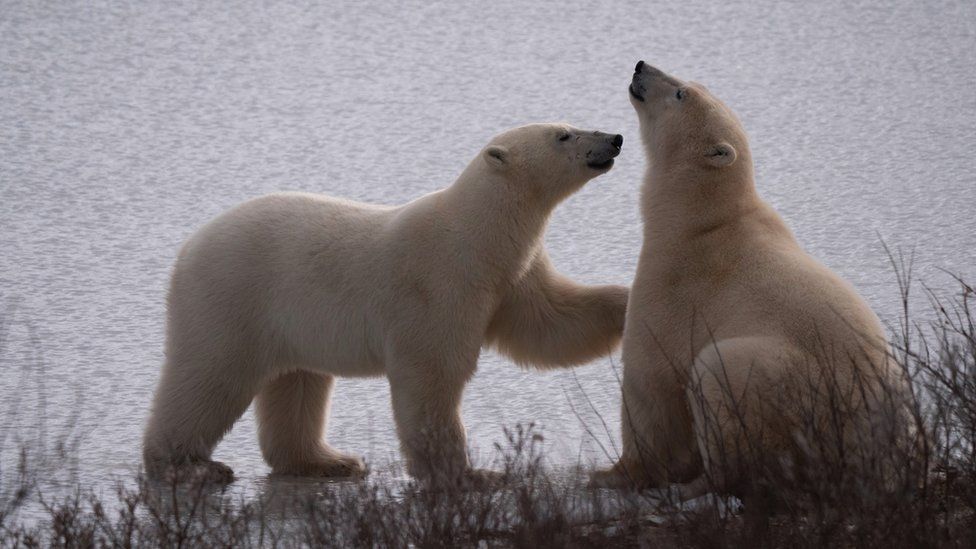
“The bears know the ice will be back soon – they’re waiting,” says Alysa McCall, from Polar Bears International (PBI).
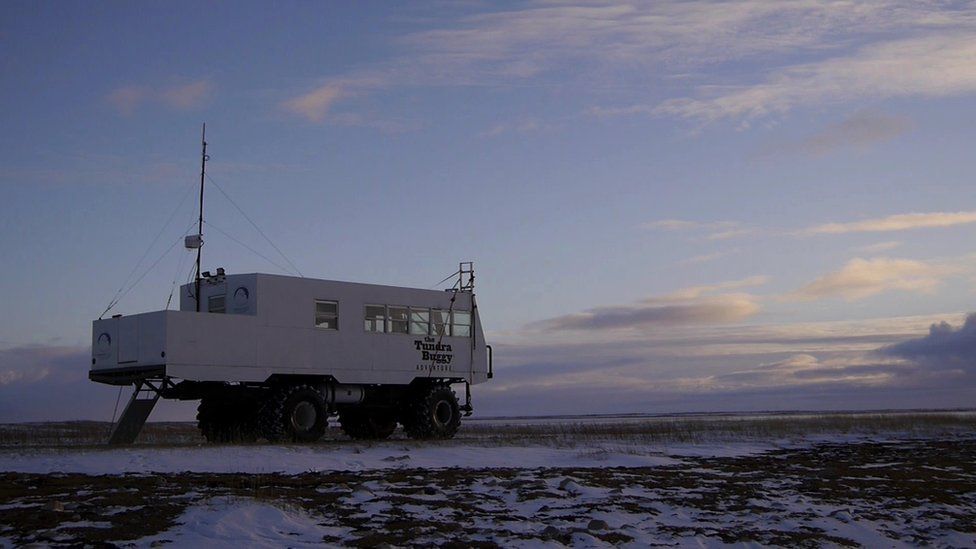
Alysa and her team are in the Canadian Arctic just outside Churchill, Manitoba, in a tundra buggy – an observation lab on tracks, which allows them to watch bears in safety.
Churchill is dubbed the “polar-bear capital” of the world.
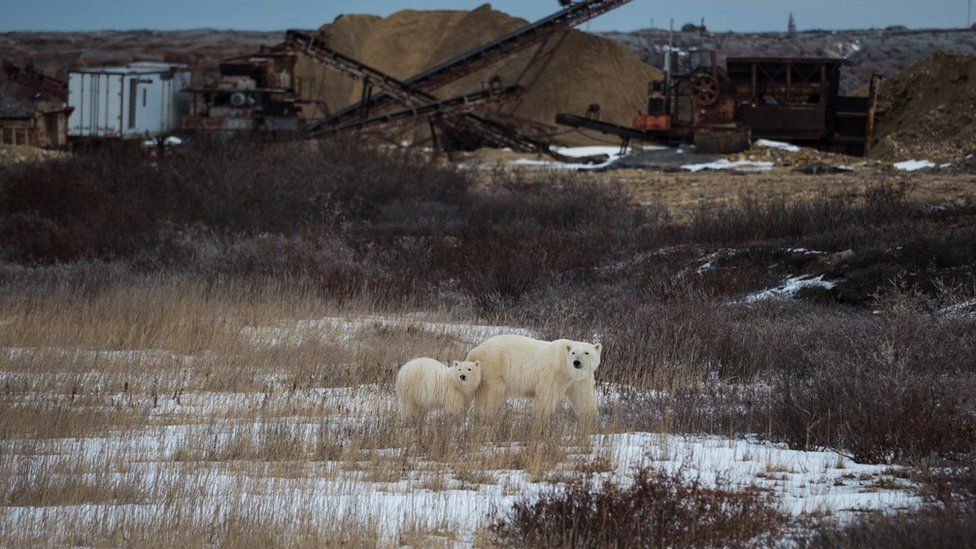
Day-to-day life is shaped by the polar bears’ proximity to the town. Residents have bear-proof rubbish bins and the province employs bear-patrol guards to accompany children when they are trick-or-treating at Halloween.
ADVERTISEMENT
ADVERTISEMENT
It is common practice for people to leave their parked-car doors unlocked so others have somewhere to run to should they encounter a wandering bear.
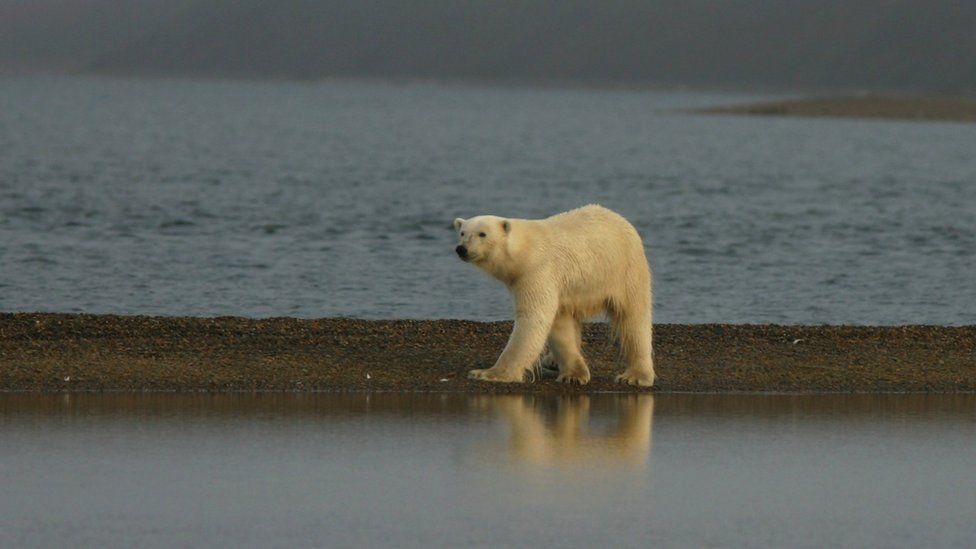
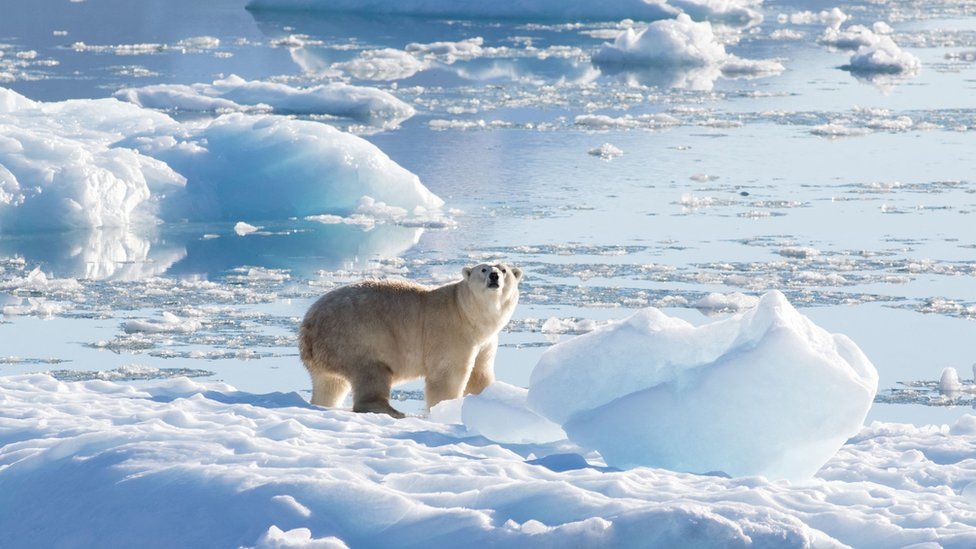
In Churchill’s frozen Hudson Bay, bears use the sea-ice as a platform to hunt seals.
But the sea-ice-free season in this part of the Canadian Arctic is lengthening, leaving bears unable to hunt for long periods.
About 2,000km south in Montreal, world ministers are gathering at the UN biodiversity summit in an effort to reach an agreement that will to protect wild spaces and reverse the human-driven loss of nature.
But as the polar bear becomes an icon of climate change, the bears’ plight in Churchill embodies the inextricable link between preserving the natural world and fighting global warming. The polar-bear capital of the world is simply getting too warm for polar bears.
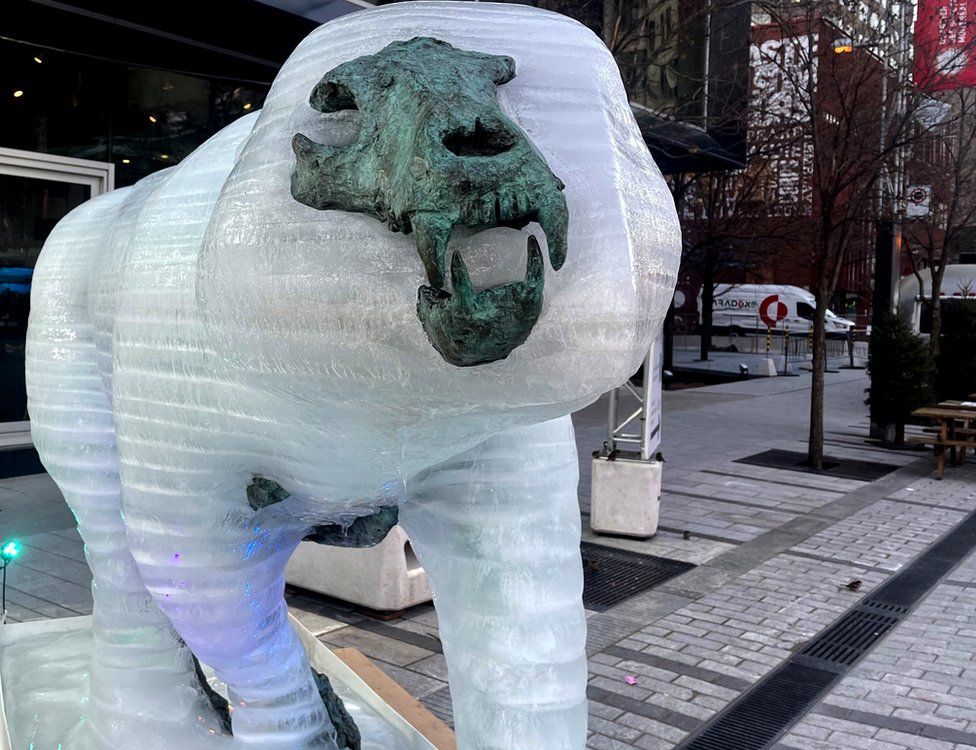
Image caption,A polar bear ice sculpture in Montreal, where the UN biodiversity summit is taking place
“Looking over the last couple of decades, it forms later and later and it breaks up earlier and earlier in spring,” Dr Flavio Lehner, of conservation charity PBI, says.
“So this season in between – where the bears are on land and can’t take advantage of those hunting opportunities – that’s is getting longer and longer, with warming.”
Image caption,Tundra buggies allow the team to watch and study the bears in safety
Bears depend on the blubber of seals for energy. Mothers raising cubs, in particular, need to consume sufficient fat.
“At 180 days [without sea-ice], we start to see impacts on their reproductive success,” Dr Lehner says. “So beyond that, we’re likely to see declines, simply because they can’t reproduce successfully any more.”
These omnivorous predators will eat just about anything they can find on land, including berries, eggs, small rodents and even reindeer, Ms McCall says, “but nothing replaces that [high fat] seal blubber”.
These changes are bringing bears and humans into closer proximity, making places such as Churchill, where polar bears and people coexist, riskier for both.
A US Geological Survey study, using data from satellite tracking collars on more than 400 polar bears in Alaska, shows the time they spend onshore has grown significantly in recent decades.
Image caption,Polar bears in Alaska have been seen onshore earlier in the year
“Back in the 1980s, polar bears would only spend a couple of weeks onshore each summer,” USGS research wildlife biologist Dr Karyn Rode says.
“Now, many spend nearly two months ashore each year.”
And communities along Alaska’s North Slope have been seeing bears earlier.
Image caption,Life in Churchill is shaped by the bears’ proximity to the town
The fate of Churchill, its seasonal sea-ice and Hudson Bay’s hundreds of polar bears fundamentally depends on what every country in the world does to reduce emissions of the planet-heating gases that are changing this place so rapidly.
“The sea-ice projections are strongly dependent on the temperature – and the temperature is dictated by how much greenhouse gas we emit into the atmosphere,” Dr Lehner says.
“So, from a scientific perspective, there is a beautiful relationship between how much we emit and what that means for the sea-ice and for the bears.”
Ms McCall says the western Hudson Bay subpopulation of bears, which she and her colleagues study, has declined up to 30% in the past 30-40 years, because of less access to sea-ice.
“They are warning us what’s to come for polar bears that live farther north [where icy winters are currently longer],” she adds.
Dr Lehner says climate change has transformed how we need to think about conservation.
“It permeates all life on this planet,” he tells the BBC.
“So something like setting up a national park is not bad, but it’s not going to help if that ecosystem fundamentally changes because of climate change.
“These are not separate issues – if you care about animals, if you care about conservation, you have to care about climate change.”
Hear a special episode of Inside Science from the UN Biodiversity summit in Montreal on BBC Sounds
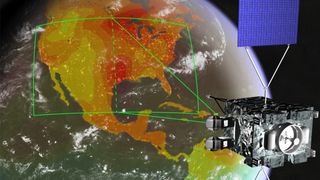
An artist’s representation of GeoCarb studying carbon gases above the Earth.(Image credit: NASA/Lockheed Martin/University of Oklahoma)
All good things must come to an end, and in the case of NASA’s GeoCarb mission, some good things must end before they really begin.
NASA has canceled the GeoCarb mission, which was a collaboration with the University of Oklahoma and Lockheed Martin that intended to put agreenhouse gas–monitoring satellite into geostationary orbit. GeoCarb would have measured levels of carbon dioxide, carbon monoxide and methane in the atmosphere about 4 million times per day. The mission wasselected by NASAin 2016.
“Decisions like this are difficult, but NASA is dedicated to making…
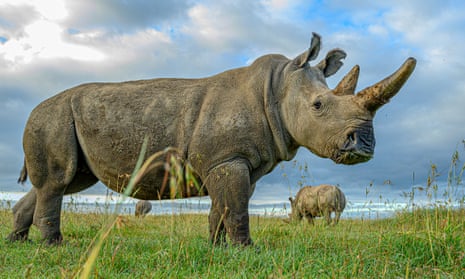
When Dr Natalie Cooper, a scientist at the Natural History Museum, met Sudan, the last surviving northern white male rhino, in Kenya before he died aged 45, she understandably feared the subspecies’ extinction was certain – mostly due to poaching fuelled by human greed for the prized horn. “The sense of enormity when staring extinction right in the eye is difficult to comprehend,” she reflects on that 2013 encounter. “It was fairly obvious by that point that the breeding programme wasn’t going to work – the subspecies seemed doomed, it was just a matter of time.”
Imagine you are walking near a river and you see a river otter playing in the water, twisting and turning. It is a few feet long, maybe two-three feet. Sleek and dark, tumbling over others of its kind. It looks like it’s dancing! Believe it or not, these otters are in danger of getting trapped.
Hi, my name is Luca and I am a fifth grader at Academy School. We are currently studying Vermont river otters. We have been studying them for about a month and have learned a lot. We have also been learning about trapping otters in Vermont. Trapping otters is wrong. The trapping season goes from late October until the end of March. Most of the traps used kill the otter and any other animal that gets in. Traps are very dangerous for pets and other wild animals, and it is the same…
(Left to Right) Chance Benefield, Aniyah Pearce, Jacob Wolfe, and Elizabeth Yockman were arrested for illegal night hunting in Dooly County
DOOLY COUNTY, Ga. (WGXA) — A hunter found himself prey in a manhunt after he and three others were caught illegally hunting deer at night, according to the Georgia Department of Natural Resources.
According to a press release from the DNR, a Dooly County Deputy spotted a grey Ford F150 shining a spotlight on an open field on private property on Williams Road at around 2:30 Wednesday morning. As the deputy approached the vehicle, a man ran away.
The deputy saw a harvested deer in the bed of the truck when he approached and saw another deer in the field near the truck.
The driver and two passengers were arrested and Rangers along with Dooly and Crisp County Deputies began…