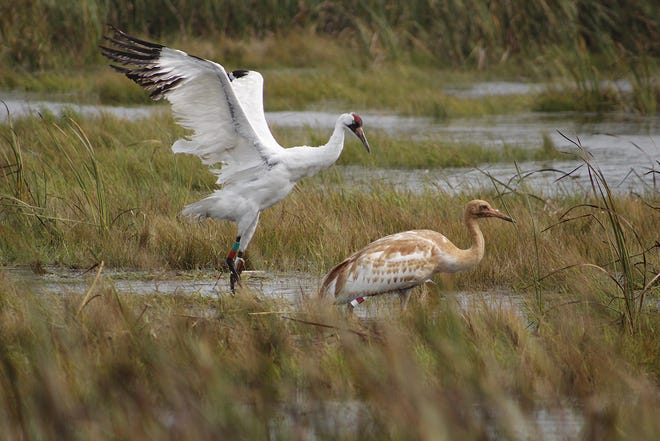
As a strain of highly pathogenic avian influenza spreads across North America and other continents, conservationists have a heightened concern about its potential effects on endangered species such as whooping cranes.
That tops the previous high in 2014 and 2015 when a different strain affected 49 million domestic birds and cost $1 billion. The USDA proclaimed that outbreak as “the most costly animal health emergency in U.S. history.”
This year’s economic losses have yet to be tallied.
Unfortunately the toll on wild birds from the current strain of…
By Barry Kent MacKay | Director & Wildlife Specialist | December 2, 2022
It appeared thatmany of the proposals to provide added levels of protection, regulation, controls and oversight to international trade in speciesthat may be threatened, even endangered with extinction, by such trade, that we supported,passed. Our support is primarily through membership and some other levels of involvement in theSpecies Survival Network(SSN). SSN consists of a wide range conservation and animal and plant protection organizations, which in turn draw upon a vast network of experience and academic expertise to make recommendations to the voting Parties to theConference on International Trade in Endangered Species of Wild Fauna and Flora(CITES). This is done at the CITES Conference of the Parties (COP), with the 19thending, in Panama, on November 25th. COPs are held…
Lockdowns cut air pollution from transport in 2020, but that helped methane concentrations to build up researchers said.
A mysterious surge in planet-heating atmospheric methane in 2020 despite COVID lockdowns that reduced many human-caused sources can be explained by a greater release from nature and, surprisingly, reduced air pollution, scientists said Wednesday.
Methane stays in the atmosphere only a fraction as long ascarbon dioxide, but is far more efficient at trapping heat and is responsible for roughly 30 percent of the global rise in temperatures to date.
Released from the oil and gas, waste and agriculture sectors, as well as throughbiological processesin wetlands, the powerful greenhouse gas is a key target for efforts to curb global warming.
But a new study published in the journalNaturesuggests that cuttingmethanemay be even more of a challenge—and more urgent—than is currently understood.
DENVER (KDVR) — Since April, there have been 15 detections of a deadly strain of the bird flu in flocks of birds in Colorado.
There is a population of birds in Colorado whose function is solely to lay eggs for consumption.
This year’s outbreak of bird flu has impacted 85% of the total egg-laying bird population in the state.
“Four point seven million domestic poultry in the state of Colorado,” Dr. Maggie Baldwin, state veterinarian from Colorado’s Department of Agriculture, said.Holiday hazards: Top insurance claims during season
Back in 2014 and 2015, the country saw the largest outbreak of bird flu ever, impacting 50 million birds.
Baldwin said the current outbreak is exceeding those figures from eight years ago.
“We’ve experienced the largest foreign animal disease outbreak in not only our state’s history but in our nation’s history,” Baldwin said.
The 15 detections in Colorado of a deadly strain of the virus have occurred in both commercial and private flocks.
Ten of those detections have been in backyard flocks and five of those detections have been in commercial flocks.
Baldwin said there’s a typical, less deadly, strain of the virus that’s been detected in the state before.
“People can also spread the virus. If we’re out interacting with wild birds,” Baldwin said, “if we’re out duck hunting, for example, and we go home and take care of our chickens at home, we can bring that virus home.”
The USDA has created a program called “Defend the Flock” aimed at providing resources for poultry farmers to keep the bird flu away from their flocks.
“It’s a really good self-assessment that a producer of any size can use,” Baldwin said.
By SCOTT SHINDLEDECKER The Western News | December 12, 2022 4:25 AM
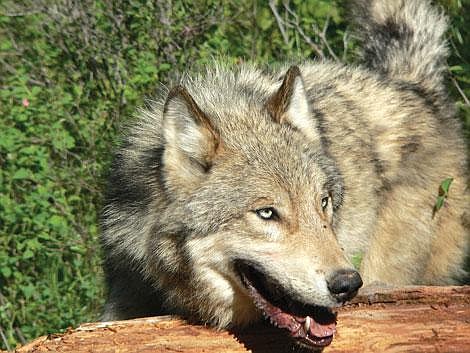
Wolf trappers are now free to begin their pursuit of the cagy canines in certain areas of Northwest Montana because grizzly bear activity has declined.
Montana Fish, Wildlife and Parks made the announcement in a news release late Monday afternoon.
The areas of occupied grizzly bear habitat now open include areas in FWP Region 1, elk and deer hunting districts 100, 101, 103, 104 120, 121, 122, 123 and 124.
In Region 2, occupied grizzly bear habitat south of Interstate 90, or HDs 210, 211, 212, 213, 214, 215, 216 and 217 is now open to trapping.
The occupied grizzly bear habitat in FWP Region 5 is also open. This includes areas northeast of Yellowstone National Park.
The rest of the occupied grizzly bear habitat in Montana remains closed to wolf trapping due to grizzly bear activity.
According to a chart provided by FWP, radio-collared grizzlies in the Cabinet-Yaak Ecosystem, which includes HD 100 and 104, are either denned or at their dens. In addition, there have been no encounters, conflicts or sightings in the last week.
In the Northern Continental Divide Ecosystem West Region 1, which includes HD 101 and 103, there were no encounters, conflicts or sights.
The only grizzly activity in NCDE West Region 1 included multiple grizzly tracks that were confirmed in the snow in the Northfork and Swan regions. Three of 12 collared grizzlies were still out.
There was a report of a black bear sighting in Kalispell with tracks and a bear getting into garbage in the Lawrence Park area.
Weather forecasts, which include snow and cold, also played a role in the agency’s determination to open wolf trapping season.
In August, the Montana Fish and Wildlife Commission approved wolf hunting and trapping regulations for the 2022 season, which ends March 15, 2023.
The regulations include a floating start date for wolf trapping in occupied grizzly bear habitat.
The intent of the floating start date is to avoid conflict with grizzly bears that haven’t denned for the winter. Wolf trapping in these areas opens Dec. 31 unless FWP opens it early due to a decline in grizzly bear activity.
FWP makes a decision opening trapping in occupied bear habitat each Monday in December with input from field staff on bear activity.
Wolf trapping is open in all other areas of the state. Hunters and trappers should note that wolf harvest quotas exist in each FWP trapping district and wolf management unit 313. Those harvest quotas can be viewed and followed on the FWP Wolf Dashboard.
Wolf hunters and trappers should make sure to be familiar with the 2022 Furbearer, Wolf and Trapping Regulations, which include maps of occupied grizzly bear habitat.
DEC conservation officers ticketed a hunter (not shown in photo) last month for illegally killing a black bear in the Montezuma National Wildlife Refuge. It was the first time a bear had been sighted in the refuge, according to DEC.
Signed-in readers now can bookmark stories to read later.
A hunter killed a black bear last month in the Montezuma National Wildlife Refuge in Seneca County. According to the New York State Department of Environmental Conservation, refuge biologists say it is the first confirmed sighting of a black bear within the refuge’s boundaries.
DEC conservation officers working a spotlight detail on the night of Nov. 18 received a report that a K-9 trained in wildlife recovery had tracked a bear shot earlier in the day. Officers later interviewed the hunter at…
DefaultMono SansMono SerifSansSerifComicFancySmall CapsDefaultX-SmallSmallMediumLargeX-LargeXX-LargeDefaultOutline DarkOutline LightOutline Dark BoldOutline Light BoldShadow DarkShadow LightShadow Dark BoldShadow Light BoldDefaultBlackSilverGrayWhiteMaroonRedPurpleFuchsiaGreenLimeOliveYellowNavyBlueTealAquaOrangeDefault100%75%50%25%0%DefaultBlackSilverGrayWhiteMaroonRedPurpleFuchsiaGreenLimeOliveYellowNavyBlueTealAquaOrangeDefault100%75%50%25%0%
It’s been months since Steve Keel disappeared after going on a hunting trip to Alaska. For the first time, his friend who went on the trip with him spoke.
A deer hunter in Lancaster County recently hung upside down for an hour before Pennsylvania Game Commission staff and personnel from local fire companies could bring in multiple extension ladders to get down from his tree.
According to Lancaster County Game Warden Greg Graham, the hunter’s treestand failed, but his safety harness prevented any injuries that would have required a hospital stay.
He noted that the hunter was saved because he followed advice to always wear a fall restraint when using any type of elevated stand.
Many of the other reports in the December Field Office Reports from the Game Commission involved hunters doing the wrong thing and getting caught, and in some cases taking additional wrong actions.
Graham also reported that he found multiple Game Law violations…
FILE – This image taken from video provided by Fort Huachuca shows a wild jaguar on Dec. 1, 2016, in southern Arizona. An environmental group on Monday, Dec. 12, 2022, petitioned the U.S. Fish and Wildlife Service to help reintroduce the jaguar to the Southwest, where it once roamed for hundreds of thousands of years before being whittled down to just one of the big cats known to survive in the region. (Fort Huachuca via AP, File)(ASSOCIATED PRESS)
PHOENIX (AP) — An environmental group on Monday petitioned the U.S. Fish and Wildlife Service to help reintroduce the jaguar to the Southwest, where it roamed for hundreds of thousands of years before being whittled down to just one of the big cats known to survive in the region.
The male jaguar, named Sombra — shadow in Spanish —…