By Leo Wolfson, State Politics Reporter Leo@Cowboystatedaily.com
Nina Webber, a Wyoming Republican Party national committeewoman and two-time state House candidate from Cody, is facing misdemeanor charges for reckless endangering while hunting.
Webber, 58, was cited by the Park County Sheriff’s Office along the North Fork Highway outside Wapiti in the early morning hours of Nov. 30.
According to thePowell Tribune, Trout Creek Ranch Manager Cory Williams said he and his wife were forced to seek cover outside their home that morning as bullets rained down on him and his wife. They came from a group of hunters shooting on the opposite, southern side of the North Fork Highway.
Williams said one bullet “whizzed” by his head.
‘Unsafe Hunting’
Williams said he heard about two dozen shots fired…
Conservationists want 30% of the ocean protected, but small-scale fishers and Indigenous people say a blanket ban punishes them for a crisis they didn’t create while commercial vessels can still trawl with impunity
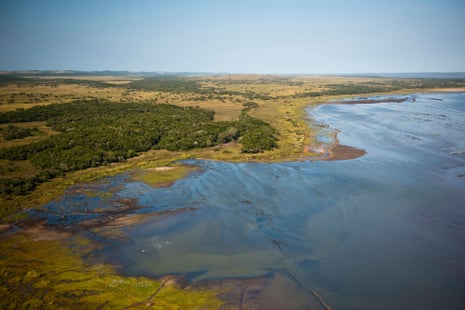
It is one of South Africa’s largest nature reserves, where hippos, elephants and endangered black rhinos live among wetlands, savannah and lakes. But iSimangaliso wetland park, a Unesco world heritage site favoured by wealthy eco-tourists for its biodiversity, is also the site of an increasingly deadly battle, between the people who live there and the conservationists ostensibly tasked with protecting it.
The rural Nibela community in KwaZulu-Natal province, one of the country’s poorest regions, have fished in Lake St Lucia for generations. It is their traditional land, but it is also a marine protected area (MPA), with regulations that restrict gillnet fishing and access to the lake. The park authorities generate income via tourists, who can pay 2,000 rand (about £100) for a deep-sea fishing trip. But the local fishers – who gain little or no benefit from the park and are not allowed fishing permits – say they are labelled poachers by armed park rangers who patrol the lake.
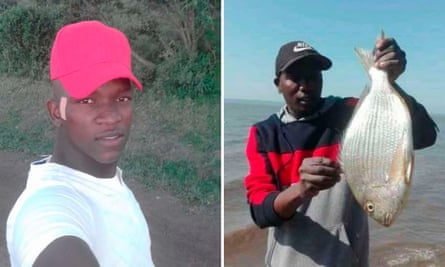
Last year, the conflict left a fisher missing, presumed dead – the second in two years from the same family. Police are treating as murder and attempted murder the death and disappearance of two brothers at iSimangaliso. On 12 November 2021, Thulani Mdluli, 24, went missing and is presumed dead after an altercation with rangers. The park authorities claim the rangers were shot at by poachers; the fishers protest they were unarmed. A little more than a year before, on 16 September 2020, Thulani’s brother, Celempilo Mdluli, 30, was shot dead, allegedly by rangers, as he fished.
View of the iSimangaliso wetland park and Lake St Lucia. Photograph: Alamy
“We depend on fishing to put food on the table,” says Thomas Nkuna, 68, a fisher and father of 10 from KwaZulu-Natal. He says the struggling community has always fished to feed their families – long before permits were needed – and have no choice but to continue, even without permission.
“We have to fish at night, to hide from the rangers. But rangers patrol the waters and confiscate our tools,” he says. “Sometimes we run away. Fishermen have been killed by the rangers.”
The deaths are an extreme example of what has become a common problem. As scientists warn that biodiversity loss threatens to tip the world into its sixth mass extinction, many are pushing for a global target to conserve one-third of the world’s land and sea by 2030. From Antigua to Zambia, more than half of the world’s governments back this 30×30 target, which could be adopted at December’s biodiversity negotiations at Cop15 in Montreal.
Left, Thulani Mdluli, a local fisher, has been missing since 12 November 2021. Right, Thulani’s brother, Celempilo Mdluli, was fatally shot while fishing on the protected lake in September 2020
On Tuesday, Agnès Callamard, Amnesty International’s secretary general, warned that in its current form the 30×30 proposal was “a grave risk” to the rights of Indigenous peoples and to conservation. She urged world leaders in Montreal to place Indigenous communities at the heart of the agreement.
Far away from the international spotlight, small-scale fishing and Indigenous communities say they are being forced to pay for a biodiversity crisis they bear little responsibility for creating. From Colombia to the UK, they are fighting against marine protected areas and fishing bans, arguing they are being disproportionately affected compared with commercial fisheries.
Artisanal fishers tell us they have struggles with marine protected areas – in some cases they are being displaced in the name of conservation
Amélie Tappella, Crocevia Centro Internazionale
In Colombia, where shark fishing was banned in 2020 to help end the shark fin trade, artisanal fishers from Afro-Colombian communities who have fished shark for centuries for local consumption say the ban threatens their cultural heritage and food security. In Greenland, traditional hunters in remote areas who have fished for narwhals for generations are at loggerheads with scientists who say the animal is on the brink of extinction. Hunters criticise the scientists for not listening to their traditional knowledge and question their counting methods.In the ‘Bakhmut meat grinder’, deadlocked enemyforces slog it out
In the UK, a vicar has led opposition to a marine protected area on the Holy Isle of Lindisfarne because, she says, it would have a “massive socio-economic” impact on locals who survive on fishing.
Hugh Govan, of the University of the South Pacific, who specialises in ocean governance, describes the 30×30 target as a “neocolonialist” approach.
“It imposes decisions on land and sea use on developing countries without evidence that these are the best tools to achieve their legitimate sustainability and development ambitions,” says Govan. “A bit rich coming from the countries that drive the global crises.”
He questions the real-world value of protection zones, which are often poorly governed.
“All too often, the most destructive fisheries are allowed or even subsidised to continue, while subsistence and community fisheries are criminalised,” he says.
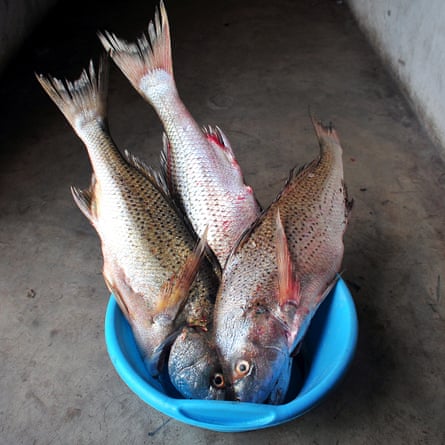
Fish from Lake St Lucia feeds Nibela communities and is also sold in markets around northern KwaZulu-Natal to generate income for families. Photograph: Lucas Ledwaba
Govan points to a controversial decision last year by Kiribati, which heavily relies on revenue from fishing licenses, to open the largest marine reserve in the world – the “no take” Phoenix Islands Protected Area – to commercial fishing. But the decision, Govan says, was based on research suggesting the MPA was doing nothing to conserve tuna. Instead, Kiribati argued, it would rely on an alternative method known as marine spatial planning to conserve ocean resources in a way that benefits its people. The approach has been used in Ecuador to balance conservation against moderate fishing, with inevitable compromises.
Imposed targets, such as 30×30, could even make things worse in developing countries, Govan argues, because it risks alienating coastal communities who, if involved in management, are adept at governing their own resources.
In the coral triangle of Indonesia, for example, a study in June comparing different management styles of MPAs found that allowing Indigenous people to participate in their management yielded more biomass than applying heavy-handed penalties. In the UK, the Sustainable Food Trust has found that small-scale fishers employ 10 times as many people as industrial fishers while having a lower environmental impact, using much less fuel and producing a fraction of the carbon emissions.
“Artisanal fishers from all over the world tell us they have struggles with marine protected areas – in some cases they are being displaced in the name of conservation,” says Amélie Tapella of Crocevia Centro Internazionale, an Italian NGO that acts as secretariat of the International Planning Committee for Food Sovereignty, a platform of grassroots farmers and small-scale fishers.
Not including these communities risks losing invaluable knowledge and expertise, she says. “If governments only focus on establishing marine protected areas, not consulting the artisanal fishing communities or even entrusting them with direct management, we will lose their unique knowledge that allows us to find the key to a world where man and nature coexist.”
One alternative approach to MPAs is being piloted in Port St Johns, in Eastern Cape, South Africa: a collaborative, “bottom up” project that will treat the community and government as equal partners in conserving resources. This pilot, lead by WWF South Africa, will offer the impoverished fishing community much-needed access to better markets for east coast lobster, a species that fetches a low price locally, in exchange for engaging in more sustainable fishing practices.
Craig Smith, senior manager of WWF South Africa’s marine programmes, who is leading the pilot, believes MPAs are necessary to reverse biodiversity loss. The problems arise, he says, when the needs of coastal communities are not taken into account as well.
“MPAs in South Africa have been very much a top-down approach,” says Smith. “The consultation process is a tick-box exercise. The government has set up MPAs, but does not have mechanisms in place where local communities can be accommodated. We don’t want to go down that road.”
Fishers in a boat surrounded by gulls on Lake St Lucia. Photograph: Alamy
Jones Thomas Spartegus, youth representative for the World Forum of Fisher People in India, says new restrictions in the Gulf of Mannar biosphere reserve in Tamil Nadu are squeezing the community’s fishing rights while commercial vessels continue to trawl the ocean.
“Here, people view the ocean for two purposes: one for the ‘blue economy’ and the other, by conservationists, for the species,” says Spartegus.
“But my life in a traditional fishing community is being endangered.”
For nine days, Montana hunters will have to turn to older firearm technology.
Montana Fish, Wildlife and Parkstells us that starting tomorrow, (Saturday, December 10), Muzzleloader Heritage Season begins and runs through December 18. And it is not just some token tribute to the ways of the past, where an anticipated small handful of participants have to share the season with other hunters. Nope, it is a passed-into-law Montana kind of thing.
Ukraine’s 63rd Brigade Moves East – With Trench Family Of Wartime Pets
When FWP says the season is for muzzleloaders only, they pretty much mean muzzleloaders only. No other means of taking game, including archery, is allowed. Now, there are some areas that have elk shoulder seasons running through February 15, where firearms and archery equipment…
Animal advocates are demanding new legislation after a deer was shot just steps away from the facility in Hampton Bays that released it back into the wild.
Evelyn Alexander Wildlife Rescue Center rehabilitates around 3,000 animals a year – including deer that head into the forest.
Ginnie Fratti, founder of the rescue center, says a couple of days into the hunting season, they heard a loud bang and found a deer they had released back into the wild in January 2022 that was shot by a hunter.
“I ran and tried to save her, and the hunter was standing right there – not even 10 feet from our building structures,” Fratti said.
ADVERTISING
The hunter was so close because there is a hunting area right near the Evelyn Alexander Rescue Center.
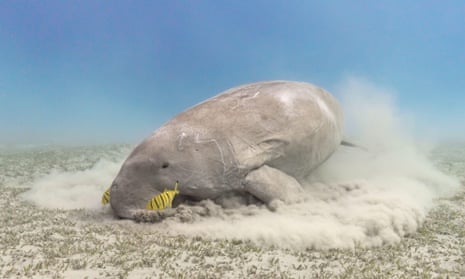
Illegal and unsustainable fishing, fossil fuel exploration, the climate crisis and disease are pushing marine species to the brink of extinction, according to the International Union for Conservation of Nature (IUCN) red list, with populations of dugongs, abalone shellfish and pillar coral at risk of disappearing for ever.
Marine life is facing a “perfect storm” of human overconsumption, threatening the survival of some of the world’s most expensive seafood, according to the conservation organisation, which publishes the most up-to-date information on the health of wildlife populations on Earth.
From South Africa to Australia, 20 of the world’s 54 abalone species are now threatened with extinction, according to the first IUCN scientific assessment of the species group. In east Africa and New Caledonia, dugongs – marine mammals that largely feed on seagrass – are close to extinction, damaged by oil and gas exploration, bottom-trawling, chemical pollution and mining.
The information comes as countries negotiate this decade’s biodiversity targets for protecting the planet at Cop15, with draft proposals to take radical action on species extinction this decade.
“Today’s IUCN red list update reveals a perfect storm of unsustainable human activity decimating marine life around the globe. As the world looks to the ongoing UN biodiversity conference to set the course for nature recovery, we simply cannot afford to fail,” said Dr Bruno Oberle, IUCN director general. “We urgently need to address the linked climate and biodiversity crises, with profound changes to our economic systems, or we risk losing the crucial benefits the oceans provide us with.”
Those at risk include the endangered Omani abalone, found off the Arabian peninsula, which has disappeared from more than half its range due to pollution from agricultural and industrial runoff, which causes harmful algal blooms. On the west coast of South Africa, poaching by criminal networks, many connected to the international drugs trade, has devastated populations of the perlemoen abalone.
In the western Indian ocean, fewer than 250 mature dugongs are left, with fewer than 900 in New Caledonia.
“Strengthening community-led fisheries governance and expanding work opportunities beyond fishing are key in east Africa, where marine ecosystems are fundamental to people’s food security and livelihoods,” said Evan Trotzuk, who led the east Africa red list assessment of the mammals.
“Further, the creation of additional conserved areas where dugongs live, particularly around Bazaruto Archipelago national park [in Mozambique], would also empower local communities and other stakeholders to find, implement, and benefit from solutions that halt long-term declines in dugong abundance, as well as in seagrass extent and quality,” he said.
Sign up to Global Dispatch
Free newsletter
Get a different world view with a roundup of the best news, features and pictures, curated by our global development team
The IUCN has moved pillar coral’s status from vulnerable to critically endangered following a dramatic drop in its population. Photograph: Francoise Cabada-Blanco/IUCN
The pillar coral, found from the Caribbean to the Yucatan peninsula, was also part of the most recent round of IUCN red list assessments and has been moved from vulnerable to critically endangered after its population shrank by more than 80% across its range since 1990. The decline was caused by disease, bleaching from the climate crisis and fertiliser runoff.
There are 150,388 species that have been assessed by scientists for the IUCN red list, of which 42,108 are threatened with extinction. More than 1,550 of the 17,903 marine animals and plants analysed are at risk of disappearing for ever, with global heating affecting at least 41% of threatened marine species.
VENTURA COUNTY, Calif. (KTLA) — Six people are in custody and a seventh is being sought by authorities after California Fish and Wildlife game wardens busted an alleged poaching ring that spanned several years and involved the cooperation of a local grocery market.
They’re called the E-Bike Crew, a group of six men who are believed responsible for dozens of illegal kills of local wildlife.
On Monday, Ventura County District Attorney Erik Nasarenko announced that 21 charges have been filed against the men, including allegations of forgery, conspiracy, receiving of stolen property, animal cruelty and possession of an untagged bear.
The investigation into the illegal poaching activities spanned more than a year.
The men involved, identified in public records as Martin M. Bravo, Martin Bravo Sr., Jaime Mendoza Avila, Walfre Lopez y Lopez, Gilberto Lopez Hernandez and Cristian Lopez Perez, are accused of working in concert together to fraudulently obtain California hunting tags, licenses and other entitlements.
The group allegedly worked with the cooperation of Juventino Reyes Guerrero, the operator of a Fish and Wildlife licensing desk located within Lizette’s Market in Piru.
From June 2019 to October 2021, the men allegedly falsified and reprinted hunting tags to allow them to skirt California hunting regulations and harvest more animals than legally allowed. Their motivation, court documents allege, was profit, personal gain and, simply, entertainment.McDonald’s offering 50-cent double cheeseburgers
California has restrictions on the number of animals that can be taken throughout the year. The restrictions exist to protect California’s wildlife species and prevent over-hunting, which can cause devastating results for the local ecosystem.
For example, California law prohibits more than two deer hunting tags to be issued per year.
While printing legal tags for the group, Reyes Guerrero reportedly regularly re-printed tickets, blaming it on poor print quality. In reality, game wardens allege, Guerrero was giving the men involved in the poaching group additional tags.
Each reprinted ticket is tracked through the state’s Automated License Data System. During the time that the alleged crimes took place, no licensed dealer in the state of California had more reprinted tickets than Lizette’s Market, authorities said.
Juventino Reyes Guerrero operating the licensing terminal at Lizette’s Market in this undated photo (Ventura County District Attorney’s Office/California Fish and Wildlife)
A warden began taking notice of the scheme after coming across the group while on patrol in the Los Padres National Forest in northern Ventura County. The men were riding electric bicycles with their firearms on their person. One of the men received a warning for riding with a live round in the chamber of his gun.
One of the men, who documents identify as Mendoza Avila, spontaneously told the warden that they were part of the “E-Bike Crew from Oxnard.”
They group would ride their bikes across Ventura County and parts of Santa Barbara County, hunting animals and then using their e-bikes and trailers to transport them from where they fell.
Over the next year, that warden would receive several complaints and tips alleging that the same E-Bike Crew was responsible for multiple illegal kills, including some that took place in local wildlife sanctuaries and on a restricted oil field.
On one occasion, a Fish and Wildlife officer contacted several members of the group and found that some of their tags were only partially filled out. State law requires that these tags be filled out completely to prevent the same tag being used for multiple kills. It was just one of the examples of the group playing coy with their hunting tags, authorities allege.
The group was coordinated, wore camouflage and communicated via radio.
But the alleged poachers were not coordinated enough to avoid detection. They were spotted numerous times on camera as they hunted illegally in the Sespe Condor Sanctuary, which is closed off to the public because it’s a nesting ground for the endangered California Condor.
Investigators were able to get a clear idea of all the men involved in the poaching activity and later identified the source of their hunting tags as Lizette’s Market.
Additional tags were also found to have been printed and reprinted at a Walmart in Oxnard.
Reyes Guerrero, who operates Lizette’s Market, is accused of printing and reprinting the tags under his stepdaughter’s name. When contacted, the stepdaughter told investigators she had no idea about the operation.
It was later found that the poaching group and their associates accounted for 100% of all reprints at Lizette’s Market, Fish and Wildlife said.
On Dec. 8, 2021, search warrants were issued at locations across Ventura County that were associated with members of the E-Bike Crew.
During the search, officials recovered dozens of trophies, antlers and animal skulls that were believed to have been harvested illegally. Among them was a skull of a mountain lion, whom Martin M. Bravo allegedly tried to pass off as a bobcat skull. Hunting mountain lions is strictly prohibited in California.
Gilberto Lopez Hernandez poses with a recently killed bear on Sept. 25, 2021. (Ventura County District Attorney’s Office/California Fish and Wildlife)
Various animal parts and frozen meat are seen in this photo taken on Dec. 8, 2021 during a raid at the home of Martin M. Bravo of Oxnard.(Ventura County District Attorney’s Office/California Fish and Wildlife)
A mounted trophy of a deer believed to be harvested illegally is seen in a shed belonging to Martin M. Bravo, photographed during a search warrant on Dec. 8, 2021 (Ventura County District Attorney’s Office/California Fish and Wildlife)
A photograph of a bear taken on Oct. 18, 2020 from a seized cell phone (left) and what is believed to be the same bear located at a taxidermist shop in Oxnard several months later. (Ventura County District Attorney’s Office/California Fish and Wildlife)
Gilberto Lopez Hernandez poses with a recently killed bear on Sept. 25, 2021. (Ventura County District Attorney’s Office/California Fish and Wildlife)
Various animal parts and frozen meat are seen in this photo taken on Dec. 8, 2021 during a raid at the home of Martin M. Bravo of Oxnard.(Ventura County District Attorney’s Office/California Fish and Wildlife)
Various animal parts and frozen meat are seen in this photo taken on Dec. 8, 2021 during a raid at the home of Martin M. Bravo of Oxnard.(Ventura County District Attorney’s Office/California Fish and Wildlife)
At Bravo’s home, they also recovered metal slashing weapons that can be affixed to the feet of chickens, which are often associated with cock fighting, another illegal activity in California.
Bravo also allegedly admitted to killing a bear that was in the process of being taxidermized. The bear was never reported.
Freezers that were searched were also found to be filled with various animal meats, including both deer and bear — the bulk of which was believed to be obtained illegally.
Lizette’s Market was also among the locations searched. Physical and electronic evidence of the reprinting scheme was obtained during that search, officials said.
During interviews with the accused members of the E-Bike crew, many of the participants admitted to killing more than the legally allowed number of animals, improperly using the hunting tags and discussing how to get reprinted tags. Several of them also admitted to exchanging and bartering illegally obtained animal parts and meat.
The owners of Lizette’s Market denied knowingly participating in the scheme, court documents state.
Review of text message and WhatsApp conversations also shed light on the process and revealed many of those involved in the scheme discussed the illegal activity openly with one another.
In the summary findings of the investigation, Fish and Wildlife officials say the group was responsible for an undetermined number of illegal kills over the years, including dozens of deer and several bears, and either simply didn’t report the kills or used fraudulent tags in an attempt to cover their tracks.
“With the reprint scheme enacted, the Wildlife Trafficking Organization (WTO) was allowed to go into the surrounding wilderness areas in and around Ventura County and provided the means to illegally kill any game animal at any given time with a safeguard in place in the event the group was confronted by law enforcement. The execution of this scheme has resulted in a significant loss to wildlife resources within the county, the deprivation of lawful hunting opportunity for law abiding citizens, and the illegal commercialization of native wildlife for personal gain or profit,” the arrest warrant states.
Martin M. Bravo and his father, Martin Bravo Sr., Jaime Mendoza Avila, Gilberto Lopez Hernandez, Cristian Lopez Perez and Juventino Reyes Guerrero were arraigned on Monday and remain in custody with bail set at $200,000. Walfre Lopez y Lopez has not yet been located and has an active arrest warrant.
Major animal poaching ring busted by CA Fish and Wildlife
BY TRAVIS SCHLEPP AND NEXSTAR MEDIA WIRE – 12/09/22 6:53 AM ET
VENTURA COUNTY, Calif. (KTLA) — Six people are in custody and a seventh is being sought by authorities after California Fish and Wildlife game wardens busted an alleged poaching ring that spanned several years and involved the cooperation of a local grocery market.
They’re called the E-Bike Crew, a group of six men who are believed responsible for dozens of illegal kills of local wildlife.
On Monday, Ventura County District Attorney Erik Nasarenko announced that 21 charges have been filed against the men, including allegations of forgery, conspiracy, receiving of stolen property, animal cruelty and possession of an untagged bear.
The investigation into the illegal poaching activities spanned more than a year.
The men involved, identified in public records as Martin M. Bravo, Martin Bravo Sr., Jaime Mendoza Avila, Walfre Lopez y Lopez, Gilberto Lopez Hernandez and Cristian Lopez Perez, are accused of working in concert together to fraudulently obtain California hunting tags, licenses and other entitlements.
The group allegedly worked with the cooperation of Juventino Reyes Guerrero, the operator of a Fish and Wildlife licensing desk located within Lizette’s Market in Piru.
From June 2019 to October 2021, the men allegedly falsified and reprinted hunting tags to allow them to skirt California hunting regulations and harvest more animals than legally allowed. Their motivation, court documents allege, was profit, personal gain and, simply, entertainment.McDonald’s offering 50-cent double cheeseburgers
California has restrictions on the number of animals that can be taken throughout the year. The restrictions exist to protect California’s wildlife species and prevent over-hunting, which can cause devastating results for the local ecosystem.
For example, California law prohibits more than two deer hunting tags to be issued per year.
While printing legal tags for the group, Reyes Guerrero reportedly regularly re-printed tickets, blaming it on poor print quality. In reality, game wardens allege, Guerrero was giving the men involved in the poaching group additional tags.
Each reprinted ticket is tracked through the state’s Automated License Data System. During the time that the alleged crimes took place, no licensed dealer in the state of California had more reprinted tickets than Lizette’s Market, authorities said.
Juventino Reyes Guerrero operating the licensing terminal at Lizette’s Market in this undated photo (Ventura County District Attorney’s Office/California Fish and Wildlife)
A warden began taking notice of the scheme after coming across the group while on patrol in the Los Padres National Forest in northern Ventura County. The men were riding electric bicycles with their firearms on their person. One of the men received a warning for riding with a live round in the chamber of his gun.
One of the men, who documents identify as Mendoza Avila, spontaneously told the warden that they were part of the “E-Bike Crew from Oxnard.”
They group would ride their bikes across Ventura County and parts of Santa Barbara County, hunting animals and then using their e-bikes and trailers to transport them from where they fell.
Over the next year, that warden would receive several complaints and tips alleging that the same E-Bike Crew was responsible for multiple illegal kills, including some that took place in local wildlife sanctuaries and on a restricted oil field.
On one occasion, a Fish and Wildlife officer contacted several members of the group and found that some of their tags were only partially filled out. State law requires that these tags be filled out completely to prevent the same tag being used for multiple kills. It was just one of the examples of the group playing coy with their hunting tags, authorities allege.
The group was coordinated, wore camouflage and communicated via radio.
But the alleged poachers were not coordinated enough to avoid detection. They were spotted numerous times on camera as they hunted illegally in the Sespe Condor Sanctuary, which is closed off to the public because it’s a nesting ground for the endangered California Condor.
Investigators were able to get a clear idea of all the men involved in the poaching activity and later identified the source of their hunting tags as Lizette’s Market.
Additional tags were also found to have been printed and reprinted at a Walmart in Oxnard.
Reyes Guerrero, who operates Lizette’s Market, is accused of printing and reprinting the tags under his stepdaughter’s name. When contacted, the stepdaughter told investigators she had no idea about the operation.
It was later found that the poaching group and their associates accounted for 100% of all reprints at Lizette’s Market, Fish and Wildlife said.
On Dec. 8, 2021, search warrants were issued at locations across Ventura County that were associated with members of the E-Bike Crew.
During the search, officials recovered dozens of trophies, antlers and animal skulls that were believed to have been harvested illegally. Among them was a skull of a mountain lion, whom Martin M. Bravo allegedly tried to pass off as a bobcat skull. Hunting mountain lions is strictly prohibited in California.
Gilberto Lopez Hernandez poses with a recently killed bear on Sept. 25, 2021. (Ventura County District Attorney’s Office/California Fish and Wildlife)
Various animal parts and frozen meat are seen in this photo taken on Dec. 8, 2021 during a raid at the home of Martin M. Bravo of Oxnard.(Ventura County District Attorney’s Office/California Fish and Wildlife)
A mounted trophy of a deer believed to be harvested illegally is seen in a shed belonging to Martin M. Bravo, photographed during a search warrant on Dec. 8, 2021 (Ventura County District Attorney’s Office/California Fish and Wildlife)
A photograph of a bear taken on Oct. 18, 2020 from a seized cell phone (left) and what is believed to be the same bear located at a taxidermist shop in Oxnard several months later. (Ventura County District Attorney’s Office/California Fish and Wildlife)
Gilberto Lopez Hernandez poses with a recently killed bear on Sept. 25, 2021. (Ventura County District Attorney’s Office/California Fish and Wildlife)
Various animal parts and frozen meat are seen in this photo taken on Dec. 8, 2021 during a raid at the home of Martin M. Bravo of Oxnard.(Ventura County District Attorney’s Office/California Fish and Wildlife)
Various animal parts and frozen meat are seen in this photo taken on Dec. 8, 2021 during a raid at the home of Martin M. Bravo of Oxnard.(Ventura County District Attorney’s Office/California Fish and Wildlife)
At Bravo’s home, they also recovered metal slashing weapons that can be affixed to the feet of chickens, which are often associated with cock fighting, another illegal activity in California.
Bravo also allegedly admitted to killing a bear that was in the process of being taxidermized. The bear was never reported.
Freezers that were searched were also found to be filled with various animal meats, including both deer and bear — the bulk of which was believed to be obtained illegally.
Lizette’s Market was also among the locations searched. Physical and electronic evidence of the reprinting scheme was obtained during that search, officials said.
During interviews with the accused members of the E-Bike crew, many of the participants admitted to killing more than the legally allowed number of animals, improperly using the hunting tags and discussing how to get reprinted tags. Several of them also admitted to exchanging and bartering illegally obtained animal parts and meat.
The owners of Lizette’s Market denied knowingly participating in the scheme, court documents state.
Review of text message and WhatsApp conversations also shed light on the process and revealed many of those involved in the scheme discussed the illegal activity openly with one another.
In the summary findings of the investigation, Fish and Wildlife officials say the group was responsible for an undetermined number of illegal kills over the years, including dozens of deer and several bears, and either simply didn’t report the kills or used fraudulent tags in an attempt to cover their tracks.
“With the reprint scheme enacted, the Wildlife Trafficking Organization (WTO) was allowed to go into the surrounding wilderness areas in and around Ventura County and provided the means to illegally kill any game animal at any given time with a safeguard in place in the event the group was confronted by law enforcement. The execution of this scheme has resulted in a significant loss to wildlife resources within the county, the deprivation of lawful hunting opportunity for law abiding citizens, and the illegal commercialization of native wildlife for personal gain or profit,” the arrest warrant states.
Martin M. Bravo and his father, Martin Bravo Sr., Jaime Mendoza Avila, Gilberto Lopez Hernandez, Cristian Lopez Perez and Juventino Reyes Guerrero were arraigned on Monday and remain in custody with bail set at $200,000. Walfre Lopez y Lopez has not yet been located and has an active arrest warrant.
The men are due back in court on Wednesday in Ventura County Superior Court.
The men are due back in court on Wednesday in Ventura County Superior Court.
The men are due back in court on Wednesday in Ventura County Superior Court.
The men are due back in court on Wednesday in Ventura County Superior Court.
The men are due back in court on Wednesday in Ventura County Superior Court.
The men are due back in court on Wednesday in Ventura County Superior Court.
BY TRAVIS SCHLEPP AND NEXSTAR MEDIA WIRE – 12/09/22 6:53 AM ET
VENTURA COUNTY, Calif. (KTLA) — Six people are in custody and a seventh is being sought by authorities after California Fish and Wildlife game wardens busted an alleged poaching ring that spanned several years and involved the cooperation of a local grocery market.
They’re called the E-Bike Crew, a group of six men who are believed responsible for dozens of illegal kills of local wildlife.
On Monday, Ventura County District Attorney Erik Nasarenko announced that 21 charges have been filed against the men, including allegations of forgery, conspiracy, receiving of stolen property, animal cruelty and possession of an untagged bear.
The investigation into the illegal poaching activities spanned more than a year.
The men involved, identified in public records as Martin M. Bravo, Martin Bravo Sr., Jaime Mendoza Avila, Walfre Lopez y Lopez, Gilberto Lopez Hernandez and Cristian Lopez Perez, are accused of working in concert together to fraudulently obtain California hunting tags, licenses and other entitlements.
The group allegedly worked with the cooperation of Juventino Reyes Guerrero, the operator of a Fish and Wildlife licensing desk located within Lizette’s Market in Piru.
From June 2019 to October 2021, the men allegedly falsified and reprinted hunting tags to allow them to skirt California hunting regulations and harvest more animals than legally allowed. Their motivation, court documents allege, was profit, personal gain and, simply, entertainment.McDonald’s offering 50-cent double cheeseburgers
California has restrictions on the number of animals that can be taken throughout the year. The restrictions exist to protect California’s wildlife species and prevent over-hunting, which can cause devastating results for the local ecosystem.
For example, California law prohibits more than two deer hunting tags to be issued per year.
While printing legal tags for the group, Reyes Guerrero reportedly regularly re-printed tickets, blaming it on poor print quality. In reality, game wardens allege, Guerrero was giving the men involved in the poaching group additional tags.
Each reprinted ticket is tracked through the state’s Automated License Data System. During the time that the alleged crimes took place, no licensed dealer in the state of California had more reprinted tickets than Lizette’s Market, authorities said.
Juventino Reyes Guerrero operating the licensing terminal at Lizette’s Market in this undated photo (Ventura County District Attorney’s Office/California Fish and Wildlife)
A warden began taking notice of the scheme after coming across the group while on patrol in the Los Padres National Forest in northern Ventura County. The men were riding electric bicycles with their firearms on their person. One of the men received a warning for riding with a live round in the chamber of his gun.
One of the men, who documents identify as Mendoza Avila, spontaneously told the warden that they were part of the “E-Bike Crew from Oxnard.”
They group would ride their bikes across Ventura County and parts of Santa Barbara County, hunting animals and then using their e-bikes and trailers to transport them from where they fell.
Over the next year, that warden would receive several complaints and tips alleging that the same E-Bike Crew was responsible for multiple illegal kills, including some that took place in local wildlife sanctuaries and on a restricted oil field.
On one occasion, a Fish and Wildlife officer contacted several members of the group and found that some of their tags were only partially filled out. State law requires that these tags be filled out completely to prevent the same tag being used for multiple kills. It was just one of the examples of the group playing coy with their hunting tags, authorities allege.
The group was coordinated, wore camouflage and communicated via radio.
But the alleged poachers were not coordinated enough to avoid detection. They were spotted numerous times on camera as they hunted illegally in the Sespe Condor Sanctuary, which is closed off to the public because it’s a nesting ground for the endangered California Condor.
Investigators were able to get a clear idea of all the men involved in the poaching activity and later identified the source of their hunting tags as Lizette’s Market.
Additional tags were also found to have been printed and reprinted at a Walmart in Oxnard.
Reyes Guerrero, who operates Lizette’s Market, is accused of printing and reprinting the tags under his stepdaughter’s name. When contacted, the stepdaughter told investigators she had no idea about the operation.
It was later found that the poaching group and their associates accounted for 100% of all reprints at Lizette’s Market, Fish and Wildlife said.
On Dec. 8, 2021, search warrants were issued at locations across Ventura County that were associated with members of the E-Bike Crew.
During the search, officials recovered dozens of trophies, antlers and animal skulls that were believed to have been harvested illegally. Among them was a skull of a mountain lion, whom Martin M. Bravo allegedly tried to pass off as a bobcat skull. Hunting mountain lions is strictly prohibited in California.
Gilberto Lopez Hernandez poses with a recently killed bear on Sept. 25, 2021. (Ventura County District Attorney’s Office/California Fish and Wildlife)
Various animal parts and frozen meat are seen in this photo taken on Dec. 8, 2021 during a raid at the home of Martin M. Bravo of Oxnard.(Ventura County District Attorney’s Office/California Fish and Wildlife)
A mounted trophy of a deer believed to be harvested illegally is seen in a shed belonging to Martin M. Bravo, photographed during a search warrant on Dec. 8, 2021 (Ventura County District Attorney’s Office/California Fish and Wildlife)
A photograph of a bear taken on Oct. 18, 2020 from a seized cell phone (left) and what is believed to be the same bear located at a taxidermist shop in Oxnard several months later. (Ventura County District Attorney’s Office/California Fish and Wildlife)
Gilberto Lopez Hernandez poses with a recently killed bear on Sept. 25, 2021. (Ventura County District Attorney’s Office/California Fish and Wildlife)
Various animal parts and frozen meat are seen in this photo taken on Dec. 8, 2021 during a raid at the home of Martin M. Bravo of Oxnard.(Ventura County District Attorney’s Office/California Fish and Wildlife)
Various animal parts and frozen meat are seen in this photo taken on Dec. 8, 2021 during a raid at the home of Martin M. Bravo of Oxnard.(Ventura County District Attorney’s Office/California Fish and Wildlife)
At Bravo’s home, they also recovered metal slashing weapons that can be affixed to the feet of chickens, which are often associated with cock fighting, another illegal activity in California.
Bravo also allegedly admitted to killing a bear that was in the process of being taxidermized. The bear was never reported.
Freezers that were searched were also found to be filled with various animal meats, including both deer and bear — the bulk of which was believed to be obtained illegally.
Lizette’s Market was also among the locations searched. Physical and electronic evidence of the reprinting scheme was obtained during that search, officials said.
During interviews with the accused members of the E-Bike crew, many of the participants admitted to killing more than the legally allowed number of animals, improperly using the hunting tags and discussing how to get reprinted tags. Several of them also admitted to exchanging and bartering illegally obtained animal parts and meat.
The owners of Lizette’s Market denied knowingly participating in the scheme, court documents state.
Review of text message and WhatsApp conversations also shed light on the process and revealed many of those involved in the scheme discussed the illegal activity openly with one another.
In the summary findings of the investigation, Fish and Wildlife officials say the group was responsible for an undetermined number of illegal kills over the years, including dozens of deer and several bears, and either simply didn’t report the kills or used fraudulent tags in an attempt to cover their tracks.
“With the reprint scheme enacted, the Wildlife Trafficking Organization (WTO) was allowed to go into the surrounding wilderness areas in and around Ventura County and provided the means to illegally kill any game animal at any given time with a safeguard in place in the event the group was confronted by law enforcement. The execution of this scheme has resulted in a significant loss to wildlife resources within the county, the deprivation of lawful hunting opportunity for law abiding citizens, and the illegal commercialization of native wildlife for personal gain or profit,” the arrest warrant states.
Martin M. Bravo and his father, Martin Bravo Sr., Jaime Mendoza Avila, Gilberto Lopez Hernandez, Cristian Lopez Perez and Juventino Reyes Guerrero were arraigned on Monday and remain in custody with bail set at $200,000. Walfre Lopez y Lopez has not yet been located and has an active arrest warrant.
The men are due back in court on Wednesday in Ventura County Superior Court.
Denmark had been the world’s biggest producer of mink fur until the industry was shutdown by the Danish government in 2020.
More than 1,000 mink farms in Denmark were ordered to close over fears a Covid mutation was a risk to human health. Two years on, most will never reopen
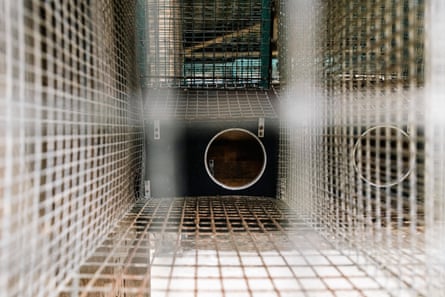
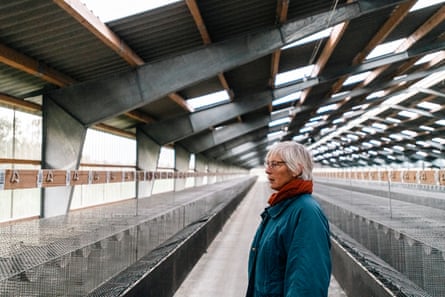
The farm is quiet. Martin Merrild is sweeping leaves. Behind him is a row of 20 large sheds – all empty. Two years ago, his farm near Hjerm in West Jutland had been home to 15,000 mink, a small carnivorous mammal bred by farmers in individual cages before being skinned for its fur.
Since he started mink farming almost 40 years ago, Merrild’s life had revolved around a yearly cycle. It would start with a smaller population of female and male mink. In early March, the females would be ready for breeding and Merrild and his staff would have just a few weeks to ensure they got a mate. From late April, mink the size of a thumb would be born.
Martin Merrild has been farming mink since the 1980s, until an outbreak of Covid in 2020 saw his entire herd culled. He hasn’t reared a mink since
These would grow quickly over the summer months to about 3-4kg. They would be killed and skinned for their fur in November, with the cycle repeated the following year.
Across Denmark, more than 15 million mink were bred every year on farms like Merrild’s. Denmark was the world’s biggest producer of mink fur, at one point producing 40% of the world’s supply, mostly exported to Asia.
But on the morning of 4 November 2020, the industry came to a standstill as the Danish prime minister, Mette Frederiksen, announced the culling of the country’s entire farmed mink herd: 15 million animals.
Merrild’s mink sheds and cages lie empty
Twelve people had become infected with a Covid-19 mutation that originated in mink and Frederiksen feared the mutation, if left unchecked, could jeopardise future vaccines.
Soon after the announcement, veterinary officials came to kill Merrild’s animals. His sheds have remained largely untouched ever since.
Merrild plans to sell his farm once he receives compensation to dismantle and remove his mink sheds
“We’re lucky as we’ve had other things to do on the farm,” says Merrild, who also grows food crops and has a flock of poultry. “But there are men who’ve only ever worked with mink their whole lives. They were on a mink farm every day. And now nothing for two years.”
Half an hour south of Merrild’s farm is a collection of large warehouses emblazoned with the illustration of a mink. They belong to a company that had been feeding 3 million mink across the region, trucking out hundreds of tonnes of feed to farms every day during the peak summer months.
Much of the supporting industry, including companies who produced feed for the mink, have been mothballed since the Danish government shutdown the industry
Today, it feels like a half-empty museum without any visitors. Staff at the site have found other jobs, but the buildings and machinery remain mothballed as the owners await the outcome of a compensation claim.
“I just wish it would end. The business is over so we just want to be able to move on now,” says the company’s former chairman.
More than 1,000 former mink farmers are still waiting on the outcome of their compensation claims
There are more than 1,000 former mink farmers, like Merrild, who are still waiting on the outcome of their compensation claims. Unable to dismantle their barns, they are farming ghosts.
Aase Rask had worried for the health of her husband, Ejner, then 68, as his mink were taken away and killed. He had known nothing else since the early 1980s, with their son lined up to take over the farm near Holstebro, West Jutland.
They see few viable alternatives for making the farm profitable and their son is now trying to forge an alternative career in machinery.
Aase and Ejner Rask had been solely farming mink on their farm near Holstebro, Denmark since the early 1980s
But Ejner has at least found a new and unlikely passion: growing strawberries. Over the past two years, four of his sheds have been filled with berries, along with a small amount of peppers, potatoes and other vegetables. The couple sell them during the summer months on a stall by the roadside.
Even now, with the onset of winter, the mink cages are partly hidden by the green leaves of the plants.
“It’s more of a hobby and just about keeps my brain active, so I’m not just sitting down,” says Ejner. “It has been cheaper than going to a psychologist. At least strawberries don’t bite and everyone likes them.”
The Rasks have taken to growing tomatoes and peppers since mink farming was halted
The Danish government recently agreed to allow mink farming to restart after an official inquiry found its shutdown lacked legal justification. Although there were outbreaks of Covid in farmed mink across the world, Denmark was the only country to order a wholesale cull and shutdown its industry.
But after two years, many of the 5,000-plus vets, feed manufacturers, auctioneers and advisers involved have moved on, with just a handful of farmers expected to pick up where they left off. Everyone else is just waiting to see their cages removed.
The Rasks had about 27,000 mink on their farm before the animals were culled
“We knew quickly that the mink would not be coming back. The infrastructure supporting the industry has gone now. It’s over,” says Merrild.
At 67, the delays to compensation have left him feeling too old to consider replacing the mink with something else. “The best thing for the value of the farm [if we sell it] is to get the mink stuff away now,” he says.
Ejner Rask says growing strawberries keeps his brain active and that “everybody likes strawberries”
Deforestation is a major threat to the survival of orangutan. Here a baby sumatran orangutan plays around in a tree as they train at Sumatran Orangutan Conservation Programme’s rehabilitation center in Indonesia.
Ulet Ifansasti/Getty Images
Delegates from around the world are gathering in Montreal this week to address what United Nations Secretary General Antonio Guterres has described as “humanity’s senseless and suicidal war with nature.”
The UN Convention on Biological Diversity (CBD), which kicked off Tuesday, comes at a critical time. More than a million species are at risk of extinction globally, many within decades, because of human actions. Destruction of forests, wetlands and other natural ecosystems that clean air and water for the world’s now 8 billion human residents continues worldwide. Climate-warming greenhouse gas emissions continue to rise.
The World Economic Forum lists biodiversity loss as one of the top three global risks, because the loss of nature doesn’t just impact plants and animals.
“If there’s no food, there’s no clean air to breathe in, there’s no water, there are no medicines which are dependent on biodiversity resources, where are we? What are we?” said Elizabeth Maruma Mrema, the executive secretary of the convention. “It means we will perish just as the animals and plants.”
Here’s what you need to know about the nearly two-week convention:
What is the Convention on Biological Diversity?
Remember the climate conference, COP27, in Egypt last month? The CBD is a lot like that. It’s a conference of parties — more than 190 countries in total (though, notably, not the U.S.) — gathered with the intent of slowing the decline in nature.
This is the 15th meeting of the CBD. A critical one that’s long-overdue. Previous planned conventions were disrupted by COVID-19, the kind of pandemic that scientists say becomes more likely as we continue to fracture and damage the natural world.
What’s so special about this one?
Every ten years, the CBD negotiates something called a Global Biodiversity Framework. It sets goals for member nations over the next decade. In this case, countries will try to agree on a framework that lasts until 2030.
What are the main goals of this convention?
Generally and bluntly speaking, the main goal is to stop the bleeding.
A study published last year suggests just 3% of the world’s ecosystems are still ecologically intact — meaning they still support healthy populations of their native species and haven’t been tarnished by human actions.
The assessment, which was bleaker than previous studies, recommends urgent efforts to protect those areas and restore others, “while this is still possible.”
A report from the world’s leading scientists shows humans have significantly altered 75% of the Earth’s land and two-thirds of its oceans.
“Fundamentally, we need to safeguard our life support systems in the face of accelerating nature loss,” said Rebecca Shaw, chief scientist at the World Wildlife Fund. “Inaction is absolutely not an option because it will put us only at greater risks of pandemics, which none of us want, it undermines our efforts on securing our climate, and it makes our food production systems much more vulnerable.”
Ok, but what specifically are they looking at?
The draft framework for the convention lists more than 20 goals (you can read it here).
The flashiest item on the list is a pledge by member countries to protect 30% of their land and water by the year 2030, a concept known as 30 by 30. The Biden administration has pledged to do that in the U.S., as have scores of other countries.
An aerial view of a deforested area of the Amazonia rainforest in Brazil this year.
SMichael Dantas/AFP via Getty Images
Big questions remain though about what, specifically, will count as conserved or protected land. And there are concerns from indigenous groups that the concept could be used as a pretense to displace indigenous people from their lands, similar to how the U.S. national park system was used to displace Native Americans.
“There is a lot of evidence that shows traditional lands and territories managed by indigenous peoples are the most important areas when it comes to biodiversity,” said Viviana Figueroa, a legal expert at the International Indigenous Forum on Biodiversity, who’s part of the negotiations in Montreal. “So it would be a high interest to take our land. This is something we don’t want.”
Wait… why isn’t the U.S. part of the Convention on Biological Diversity?
The U.S. is one of just four UN members that hasn’t signed on to the CBD. The reason is politics.
Sponsor Message
The CBD was ratified in 1993, with input from the U.S. The Clinton administration wanted to sign the treaty but was blocked by a Republican majority in the Senate.
Conservation groups have called on the Biden administration to join the CBD. It rejoined the Paris climate agreement after the U.S. left under former president Donald Trump.
The Biden administration has not made an effort to sign on to the treaty but is expected to have a behind-the-scenes role in the negotiations. It has made biodiversity a priority, appointing a first-ever special envoy for biodiversity and water resources, launching its America the Beautiful initiative, aimed at conserving and restoring natural ecosystems, and has started work on making nature a part of the country’s economic calculus.
What are the expected tension points?
As we saw at last month’s climate conference in Egypt, these conventions often end without interested parties getting everything they want. Delegates expect there to be hard negotiations over the wording and substance of all the proposed goals.
Similar to the climate conference, the biggest tension point is likely to revolve around the issue of financing. Conserving nature may be crucial to sustaining the global economy in the long-term, but it also costs money up front.
Smaller, developing nations, which are disproportionately suffering the effects of climate change and biodiversity loss, want to see stronger financial commitments from richer, developed countries, which have economically benefited from polluting the world’s environment.
Richer countries have a long history of promising to help finance climate and biodiversity projects but haven’t always followed through. Progress was made with the establishment of a fund for “loss and damage” — the climate impacts smaller countries are feeling right now — at the recent climate conference but questions remain about who will put money into it and when.
Sponsor Message
The first draft of the biodiversity framework identified a $700 billion annual financing gap to reverse nature’s decline. Questions will undoubtedly come up over who should help pay to resolve that.
Will an agreement actually slow nature loss?
That is the many dollar question. And there’s reason for skepticism. The previous ten-year framework set by the CBD in 2010 established 20 conservation and nature-related targets for the year 2020. None of them were achieved.
More than 10,000 people are attending this year’s CBD, including NGOs and businesses.
Shaw said the broad interest from the public and private sector is a hopeful indication that the biodiversity crisis is finally gaining broad international recognition.
“We have seen a ratcheting up in commitment and focus on climate change in the last 20 years,” Shaw said. “And it’s because the impacts have become unbearable globally. Like you can’t ignore it anymore. We’re there on the nature side.”
The state Department of Environmental Conservation released details on a pair of illegal deer hunting incidents in Wayne County last month.
On November 18th officers received a call from Wayne County 911 reporting an individual who shot a deer with a rifle.
By the time DEC officers arrived on-scene, a deputy with the sheriff’s office and officer with the Macedon Police Department were already there.
The subject admitted that because he wouldn’t be able to hunt during opening season, he shot a deer with his rifle one day early.
Other hunters saw and reported the deer being shot and falling. Charge are pending against the hunter, who was not identified, for the illegal take of a whitetail deer.
In a separate incident on November 19th a hunter in Wayne County was charged after taking two deer within 30 minutes of each other.
Residents in the Riverside Park South neighbourhood are worried about unauthorized coyote traps being set. The City of Ottawa removed its traps earlier this month and it appears someone is setting up their own.
Hunt Club East resident Michelle Briere walks her dog in McCarthy Woods almost every day. She says she’s worried the traps might hurt her dog.
“I think it’s pretty irresponsible to have these traps out in the forest, especially if they’re not announced,” says Briere. “I would say probably 90 per cent of the people who come into this forest walk their dogs off leash and there’s always young children running around as well. So I’m quite concerned that someone’s dog or child is going to end up getting…










 Gilberto Lopez Hernandez poses with a recently killed bear on Sept. 25, 2021. (Ventura County District Attorney’s Office/California Fish and Wildlife)
 Various animal parts and frozen meat are seen in this photo taken on Dec. 8, 2021 during a raid at the home of Martin M. Bravo of Oxnard.(Ventura County District Attorney’s Office/California Fish and Wildlife)
 A mounted trophy of a deer believed to be harvested illegally is seen in a shed belonging to Martin M. Bravo, photographed during a search warrant on Dec. 8, 2021 (Ventura County District Attorney’s Office/California Fish and Wildlife)
 A photograph of a bear taken on Oct. 18, 2020 from a seized cell phone (left) and what is believed to be the same bear located at a taxidermist shop in Oxnard several months later. (Ventura County District Attorney’s Office/California Fish and Wildlife)