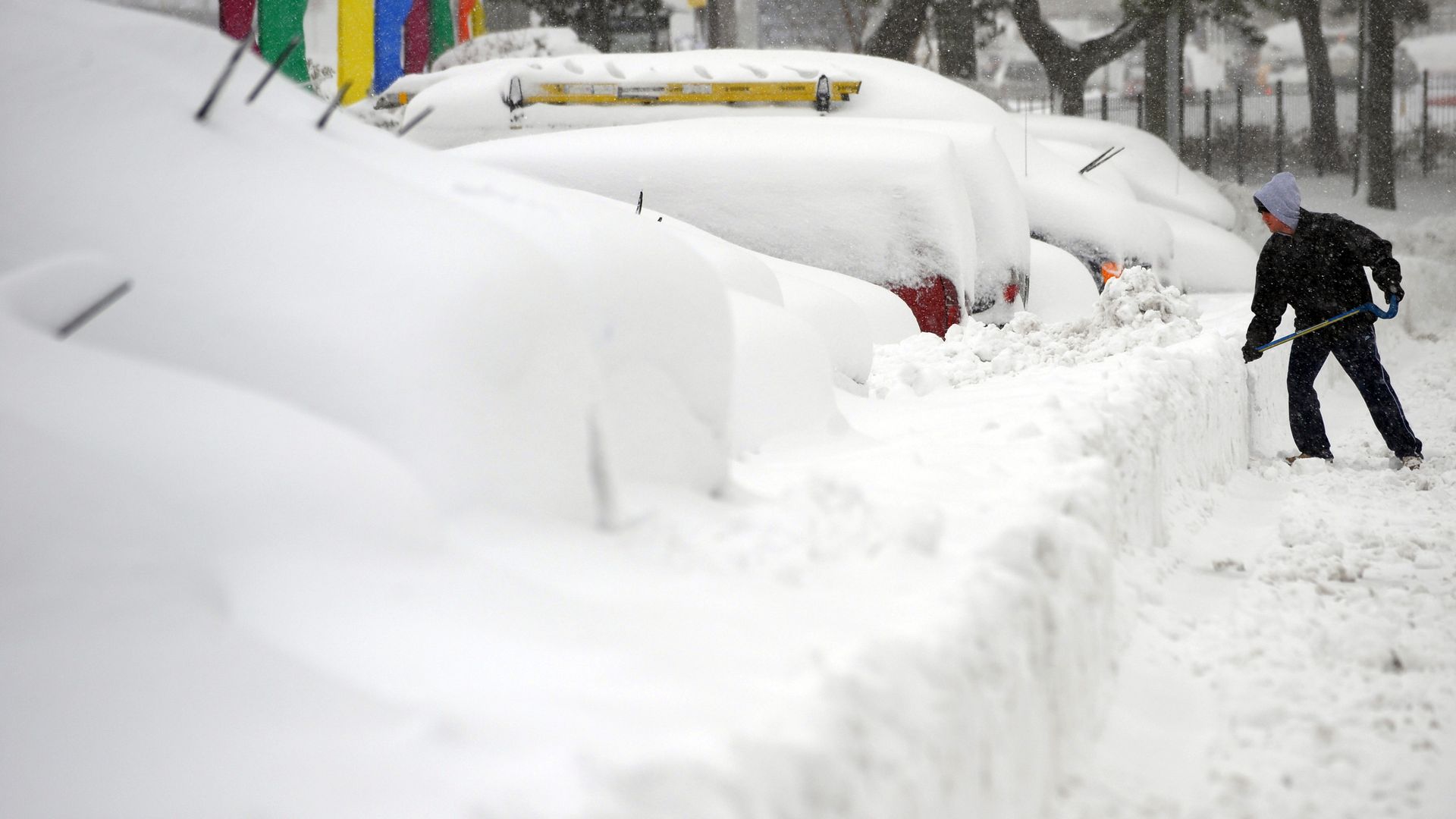
A man shovels to dig out his car in Silver Spring, Maryland, on February 6, 2010. Photo: Jewel Samad/AFP via Getty Images
An extreme weather pattern is affecting conditions across the U.S. and Europe, specifically a powerful area of high pressure across Greenland and Hudson Bay. This feature, known as a “Greenland Block,” along with another weather cycle, typically lead tocold and snow in the eastern U.S., parts of Europe and Asia.
The big picture:The blocking high over Greenland is acting like an atmospheric detour, diverting weather systems around it and favoring, but not guaranteeing, cold air outbreaks in Europe and North America as Christmas approaches.
For now, life is flourishing on our oxygen-rich planet, but Earth wasn’t always that way – and scientists have predicted that, in the future, the atmosphere will revert back to one that’s rich in methane and low in oxygen.
This probably won’t happen for another billion years or so. But when the change comes, it’s going to happen fairly rapidly, according to research published in 2021.
This shift will take the planet back to something like the state it was in before what’s known as the Great Oxidation Event (GOE) around 2.4 billion years ago.
What’s more, the researchers behind the study say that atmospheric oxygen is unlikely to be a permanent feature of habitable worlds in general, which has…
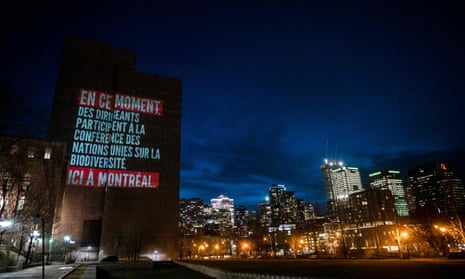
A light mural organised by the World Wildlife Fund (WWF) projected on the Palais de Justice in Montreal, Canada. Photograph: Andrej Ivanov/AFP/Getty Images
The “fate of the entire living world” will be determined at the Cop15 UN biodiversity summit, according to leading scientists.
They said the gathering of the world’s nations, which began on Wednesday in Montreal, is “vastly more important than Cop27”, the recent high-profile UN climate meeting. “We say this because of the many dimensions of anthropogenic global change … the most critical, complex and challenging is that of biodiversity loss,” the researchers said.
The current rapid loss of wildlife and natural places is seen as the start of a sixth mass extinction by many scientists and is destroying the life-support systems on which humanity depends for clean air, water and food. Protection of the natural world, such as rainforests, is also vital in ending the climate emergency.
Cop15 aims to ensure the protection of 30% of the planet by 2030, as well as the redirection of $500bn in agricultural subsidies that support the destruction of nature.
The warning from scientists came in an editorial in the journal Science Advances, written by Prof Shahid Naeem at Columbia University, US; Prof Yonglong Lu at Xiamen University, China; and Prof Jeremy Jackson at the American Museum of Natural History.
They said an earlier 10-year plan, known as the Aichi iodiversity targets, failed to meet any of its goals by its 2020 deadline, despite being backed by 196 nations. “Failure is not an option this time as Earth’s terrestrial, marine, and freshwater systems begin to collapse under the pressure to meet the needs of a global population that will soon approach 10 billion,” the researchers said.
However, they added that there were some reasons for optimism, including wide and growing support for the “30×30” protection plan and the fact that the drivers of biodiversity loss are well understood, giving clear direction for action.
The destruction of wild places for farming and mining is the key cause of biodiversity loss, along with the overexploitation of wild animals and plants on land and in the seas and pollution. The climate crisis and the spread of invasive species around the world also contribute. The UN’s environment chief, Inger Andersen, has called these drivers the “the five horsemen of the biodiversity apocalypse”.
The UN secretary general, António Guterres, opened the summit with a stark message: “Without nature, we are nothing. Nature is our life-support system, and yet humanity seems hellbent on destruction.
“With our bottomless appetite for unchecked and unequal economic growth, humanity has become a weapon of mass extinction,” he said. “[Cop15] is our chance to stop this orgy of destruction, to move from discord to harmony.”
Along with the “30×30” target, other draft goals for the Cop15 agreement include reducing the rate of introduction of invasive species by 50%, cutting pesticide use by at least two-thirds, halting the flow of plastic pollution and making it compulsory for big businesses to disclose their impact on nature.
In the editorial, Naeem and his colleagues said: “A comprehensive body of scientific evidence has highlighted how global change, including climate change, is ultimately tied to biodiversity conservation.” For example, they said, healthy forests and oceans can absorb huge amounts of climate-heating carbon dioxide.
They said a leading study of the effect of Covid-19 lockdowns showed how “the reduction in traffic, industrial noise and pollution, and human-wildlife contact led to a wide range of positive impacts on nature around the world”, with “animals quickly responding to the reductions in human presence”. However, a reduction in conservation work also led to illegal hunting and habitat destruction.
“The take-home message was that stemming biodiversity loss can be achieved not only by just reducing human pressures but also by enhancing human activities in research, restoration and conservation,” the researchers said.
They said the Cop15 agreement would have to recognise the rights of Indigenous peoples and secure long-term funding from wealthier nations to achieve the targets, because many of the most biodiverse places are in low-income countries.
French diplomat Laurence Tubiana, an architect of the Paris climate agreement, said: “We need a global goal to halt and reverse biodiversity loss by 2030. This will direct targets, laws, policies and funding at all levels and regions, much like the 2015 Paris agreement has started doing for climate action. In seven years, the momentum is clear to see. We need the same momentum to protect all life on Earth.”
Prof Johan Rockström, director of the Potsdam Institute for Climate Impact Research in Germany, said: “We need a ‘Paris moment’ in Montreal. Only if we protect and regenerate Earth’s nature, can we really protect Earth’s climate.”
Congratulations on being one of our top readers globally – you’ve read 116 articles in the last year
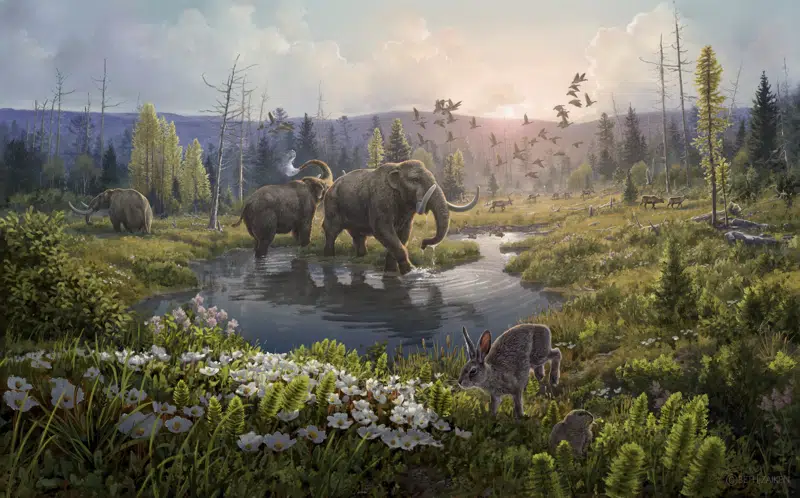
This illustration provided by researchers depicts Kap Kobenhavn, Greenland, two million years ago, when the temperature was significantly warmer than northernmost Greenland today. Scientists have analyzed 2-million-year-old DNA extracted from dirt samples in the area, revealing an ancient ecosystem unlike anything seen on Earth today, including traces of mastodons and horseshoe crabs roaming the Arctic. (Beth Zaiken via AP)
NEW YORK (AP) — Scientists discovered the oldest known DNA and used it to reveal what life was like 2 million years ago in the northern tip of Greenland. Today, it’s a barren Arctic desert, but back then it was a lush landscape of trees and vegetation with an array of animals, even the now extinct mastodon.
“The study opens the door into a past that has basically been lost,” said lead author Kurt Kjær, a geologist and glacier expert at the University of…
In some ways, this year’s UN climate summit held in Egypt was all about food. In the context of crop failures and food insecurity, due to extreme weather and dwindling diversity, as well as rising food prices exacerbated by Russia’s war in Ukraine and the tight grip of corporate monopolies – Cop27 included the first ever day dedicated to food and climate.
But at Cop27, as in the debate more broadly, corporate interests dominated. Campaigners and NGOs say the food industry’s fingerprints were all over the solutions being touted, including an array of technologies and incentives that they say will do little to cut big food’s huge climate footprint, reduce diet-related diseases or increase food security and climate resilience in the long term.
“From treating cow burps to robotic weeders, none of the false solutions on offer at Cop27 come close to stopping the industrial food production from being an engine of planetary destruction,” said Raj Patel, food justice scholar and author of Stuffed and Starved. “Agribusiness and governments offered a series of patented patches designed not to transform the food system, but to keep it the same.”
There’s a lot still to unpick from Cop27, but here are some of the food “solutions” that experts told the Guardian they are most alarmed about:
1 The rise of ‘climate-smart agriculture’
The phrase “climate smart” – the mother of all buzzwords – has made its way into climate plans and policymaking, adopted by corporations, governments and multilateral agencies, such as the World Bank and FAO.
Billions of dollars are going into research on so-called climate-smart tech solutions such as robotics, AI, net zero dairy, cultivated meat and precision farming, including drones, GPS and drip-irrigation technologies. While proponents say these will increase productivity, help farmers adapt to the climate crisis, and cut emissions, critics say that the phrase “climate smart” has become an all-encompassing cover for rebranding harmful farm practices.
A key proponent of climate-smart agriculture is the Agriculture Innovation Mission for Climate initiative (Aim4C), a joint initiative spearheaded by the US and the UAE, which has promised $4bn in agricultural innovation to reduce emissions. It is supported by 40 countries and some of the world’s largest food companies including PepsiCo, the meat giant JBS and CropLife, an association of agrochemical companies. More than two-thirds of its partners are in the US or Europe, according to a DeSmog analysis, with not a single group representing Indigenous communities listed among its knowledge partners.
Aim4C has no clear plans to significantly slow or reduce activities such as industrial meat production and fertilizer use, which climate scientists say are fundamental to curbing global heating.
“AIM’s agritech solutions are not a strategy for 21st-century ecological change that benefits all of humanity and the web of life. Rather, this is more business as usual” said a spokesperson for the International Coalition on Climate and Agriculture, an alliance of activists and civil leaders.
2 Tech fixes for food’s giant methane problem
Methane is a short-lived but powerful heat-trapping gas that accounts for about a third of the rise in global temperature since the pre-industrial era. Livestock – through cattle burps, manure and the cultivation of feed crops – is responsible for nearly a third of global anthropogenic methane emissions, which is why scientists are clear that reducing meat and dairy consumption in the global north is essential to curbing global heating to 1.5C.
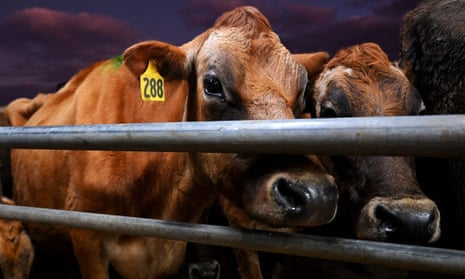
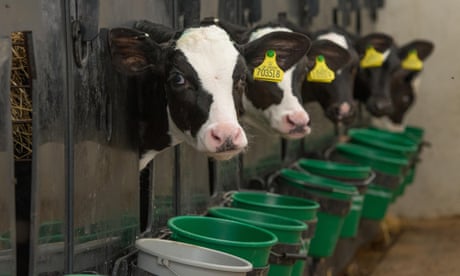
But the focus at Cop27 was not on changing human diets but rather cows’ diets – to make their burps less gassy.
There was much excitement from JBS, Nestlé, the world’s largest food and drinks company, and the meat and dairy trade groups about the boom in methane-reducing feed additives made from ingredients such as seaweed, ozone, enzyme inhibitors, green tea and garlic.
But the long-term risks and benefits of these emerging products remain unclear, and those currently on the market are only affordable to industrial cattle farmers and food companies that are invested in growing meat and dairy consumption, not reducing it.
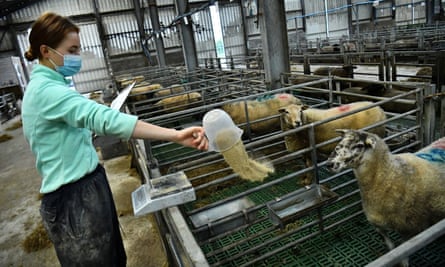
Sheep are fed seaweed extract to reduce their methane emissions in Ireland in August 2021. Photograph: Clodagh Kilcoyne/Reuters
“At best, these technologies provide a cover for the large meat and dairy corporations to continue overproducing on polluting factory farms,” said Amanda Starbuck, research director at Food and Water Watch.
3 Increasing access to fossil fuel-based fertilizers as the answer to food insecurity
The global food system is a heavy user of synthetic nitrogen fertilizers, produced in an energy-intensive process reliant on fossil fuels. They are credited with helping to increase yields and reduce hunger, but their expansion has come at a huge cost to the environment, climate and human and animal health.
Synthetic nitrogen fertilizers are responsible for 2% of global greenhouse gas emissions, according to a 2022 study, which found that reducing their use “offers large mitigation potential” in addition to other health, environmental and economic benefits.
Yet curtailing synthetic fertilizers was not on the agenda at Cop27, rather the focus of industry reps and European and US officials was on fertilizer access and “efficiency” – helping farmers use increasingly costly nitrogen inputs in smarter ways.
The US, EU, Norway, Germany and the Netherlands announced $109m of public funds (plus $26m in private investment) to expand fertilizer access and efficiency to combat food insecurity.
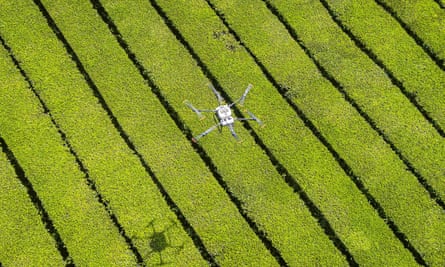
An unmanned aerial vehicle spreads fertilizer over a tea farm at Kipkebe Tea Estate in Musereita, Kenya. Photograph: Patrick Meinhardt/AFP/Getty Images
But according to the UN special rapporteur on the right to food, Michael Fakhri: “Chemical fertilizers do not ensure food security. Their pervasive use sometimes increases crop production in the short term, but it creates a longer-term dependency on corporations and trade … the ultimate goal must be to wean them off this dependency as soon as possible.”
Branding fertilizer efficiency as climate action is further evidence of the industry controlling the narrative, said Lili Fuhr, deputy director for climate and energy at the Centre for Environmental Integrity. “Synthetic fertilizers are just fossil fuels in another form. Fertilizer companies know they will soon be under scrutiny and are trying to divert attention from production to more efficient use by the farmers.”
The fertilizer industry, which will benefit directly from the new taxpayer funded subsidies, is already booming: nine of the largest companies are expected to make $57bn profits in 2022 – up more than fourfold from 2020.
4 Industrial agriculture as the only way to feed a growing population
The industrial food sector pitches itself as the only way to feed a growing population. Yet small farmers (with less than two hectares) produce over a third of the world’s food – despite having access to only 12% of agricultural land. Much of the world’s population is either undernourished or overweight, suggesting that we are not producing or eating well.
Still, the momentum and the money seem to be skewed in favor of industrial agriculture, allowing it to continue to grow and emit. Almost 90% of the $540bn in global food subsidies, which play a big role in deciding what food is produced and what we eat, have been deemed “harmful” to the planet – by damaging health, the climate and nature as well as excluding smallholder farmers.
“Subsidies are a major change agent. They make it hard for farmers to make changes, and stop consumer-driven market changes from naturally taking place. This is not a level playing field,” said Stephanie Haszczyn from the Farm Animal Investment Risk & Return (Fairr) initiative.
Lower-impact forms of farming often receive little to no subsidy assistance. Proponents like La Via Campesina argue that agroecology – a form of farming steeped in Indigenous and ancestral knowledge that works with nature and local conditions to produce food sustainably, protecting biodiversity and soil quality – offers a viable greener, healthier and fairer alternative to big ag.
But neither subsidies nor agroecology were on the agenda at Cop27. “It was very disturbing to see a large contingent of corporate lobbyists influencing the process while small-scale farmers have been shut out and drowned out,” said Million Belay, an Ipes-Food expert and general coordinator of the Alliance for Food Sovereignty in Africa, a large grassroots movement. “Farmers demanded recognition for diverse, resilient farming, agroecology and climate finance, but they left with very little.”
NEW JERSEY — Black bear hunting season in New Jersey will go ahead, albeit later than originally planned. A New Jersey appeals court judge ruled in the state’s favor Tuesday in a legal battle brought by a coalition of animal-welfare groups.
The hunting period will run through Saturday, with check stations open from 4-7 p.m. Tuesday and from 12-7 p.m. for the remainder of that period, according to the state Division of Fish and Wildlife. The season officially ends 30 minutes after Saturday’s sunset.
An injured hunter was air rescued by Maryland State Police on Friday after he became trapped by marshy terrain inside a Dorchester County nature refuge.
According to anews release, the MSP Trooper 6 crew responded to Blackwater National Wildlife Refuge near Cambridge, Maryland, to rescue the hunter, who had fallen about 14 feet out of a tree stand. Trooper 6 is assigned to the Easton section of the Maryland State Police Aviation Command.
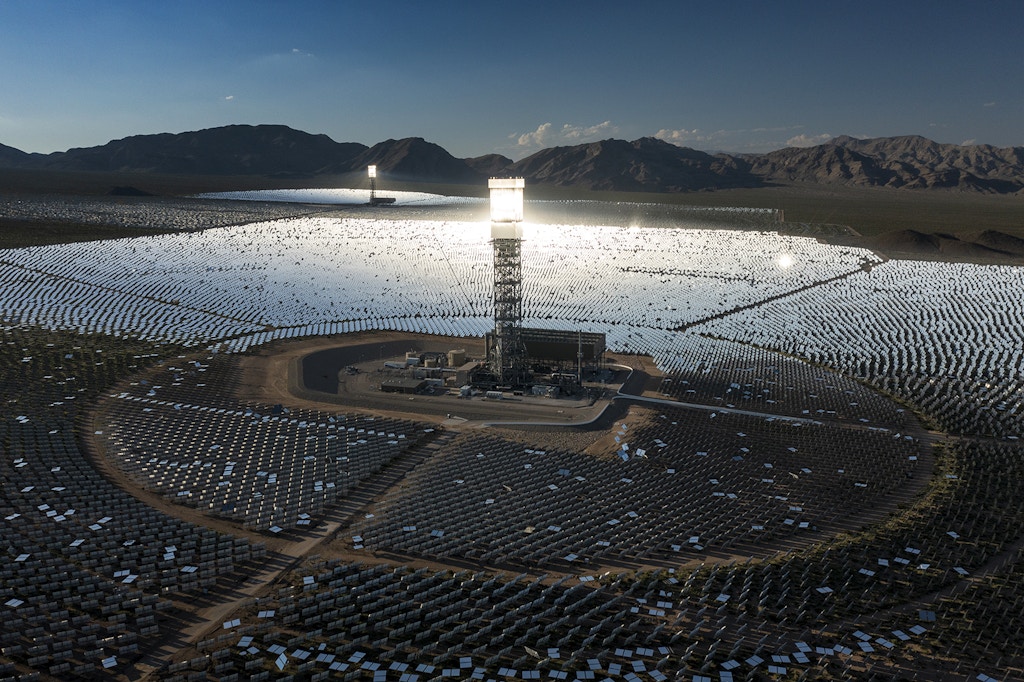
A boiler tower surrounded by mirrors at the Ivanpah Solar Electric Generating System in the Mojave Desert, Calif., on Aug. 26, 2022.
Photo: David McNew/Getty Images
CONSERVATION BIOLOGY FINDS itself in a terrifying place today, witness to mass extinction, helpless to stop the march of industrial Homo sapiens, the pillage of habitat, the loss of wildlands, and the impoverishment of ecosystems. Many of its leading figures are in despair. “I’m 40 years into conservation biology and I can tell you we are losing badly, getting our asses kicked,” Dan Ashe, director of the U.S. Fish and Wildlife Service under President Barack Obama, told me recently. “There are almost no reasons to be optimistic.”
This might explain the discipline’s desperate hitching of its wagon to the climate movement. Climate, after all, is the environmental cause du jour, eclipsing all other sustainability concerns, increasingly attractive as a rallying cry for a public that has canonized it as one of the major political, social, and economic issues of our time. Mainstream climate activism of the Bill McKibben variety points toward a grandly hopeful end within the confines of acceptable capitalist discourse: decarbonization of the global economy, with technologies driven by profit-seeking corporations subsidized by governments. Taking up this banner of optimistic can-do-ism, the environmental movement has convinced itself, and sought to convince the public, that with a worldwide build-out of renewable energy systems, humanity will power its dynamic industrial civilization with jobs-producing green machines while also — somehow — rescuing countless species from the brink.
“But this happens to be a lie,” Ashe told me. “The lie is that if we address the climate crisis, we will also solve the biodiversity crisis.”
“The lie is that if we address the climate crisis, we will also solve the biodiversity crisis.”
A group of conservationists took up the question of climate and extinctions last year in the journal Conservation Letters, warning that “threats to biodiversity are increasingly seen through the single myopic lens of climate change.” The authors, who titled their article “An inconvenient misconception: Climate change is not the principal driver of biodiversity loss,” included Joel Berger, a wildlife biologist at Colorado State University; evolutionary biologist Andrew Dobson, who teaches at Princeton; and Tim Caro, an evolutionary ecologist at the University of California, Davis. “There is an assumption,” they observed, “that climate change is now the most important ‘horseman of the biodiversity apocalypse’” — despite this being “at best premature.”
When it comes to effects on wildlife, climate change is more like a mule, slow and plodding. Yes, a warmed atmosphere is projected to be a significant factor in the extinction crisis in future decades, but what’s destroying species today is habitat fragmentation and loss, overhunting and overexploitation, agricultural expansion, pollution, and industrial development. It isn’t climate change that caused a 69 percent loss in total wildlife populations between 1970 and 2018, according to a World Wildlife Fund study published this year. The cause is too many people demanding too much from ecosystems, or human overshoot of the biophysical carrying capacity of the Earth.
Overshoot is a product of both excessive numbers and rising affluence. Access to the things that create what we call quality of life, like indoor lighting and temperature controls, especially air conditioning; more diverse dietary choices, especially meat; and greater access to transportation, especially air travel — all signs of rising affluence, all delightful if you are a human, yet all demand more energy and material inputs that involve scouring and denuding more wildlands and animal habitat to feed, clothe, house, and energize burgeoning humanity.
According to the co-authors of the Conservation Letters piece, we are “dangerously ignoring” this reality and instead doubling down on the “distortion” that climate mitigation is all that matters to protecting wildlife. Over the last 30 years, the proportion of scientific papers closely tying climate change and global warming to changes in patterns of biodiversity has “steadily increased,” according to their analysis. Media coverage of climate change in relation to biodiversity has followed suit, repeating and compounding the error. The net result of this “misguided focus on climate change” has been the undermining of conservation science “as an evidence-based scientific discipline.” As Dobson put it to me, “If conservation biologists don’t take a balanced look at the evidence, they can’t claim to be evidence-based.”
The crux of the problem is that mainstream environmentalists have siloed climate change as a phenomenon apart from the broad human ecological footprint, separate from deforestation, overgrazing of livestock, megafauna kill-off, collapsing fisheries, desertification, depleted freshwater, soil degradation, oceanic garbage gyres, toxification of rainfall with microplastics, and on and on — the myriad biospheric effects of breakneck growth. Climate change is “but one symptom of an environmentally dysfunctional system of constant growth of economies and populations,” ecologist William Rees, professor emeritus at the University of British Columbia, told me.
“The meta-problem that we need to keep our eyes on,” Rees said, is ecological overshoot. Modern techno-industrial culture, he writes, “is systematically — even enthusiastically — consuming the biophysical basis of its own existence.” Rees describes this as a malignant process, humanity as cancer.
Rees is hardly alone in his stark assessments of the status quo. In the most recent letter of “world scientists’ warning,” a semiannual notice to the public, 12 experts in life sciences, global system dynamics, and ecology noted that “most planetary boundaries that regulate the state of the Earth are beyond their safe space. Therefore, climate change is not a stand-alone issue. It is part of a larger systemic problem of ecological overshoot.”
The authors added the commonsense observation that humanity “cannot sustain unlimited growth in a finite world,” a physical law of life on Earth that we ignore at our peril.
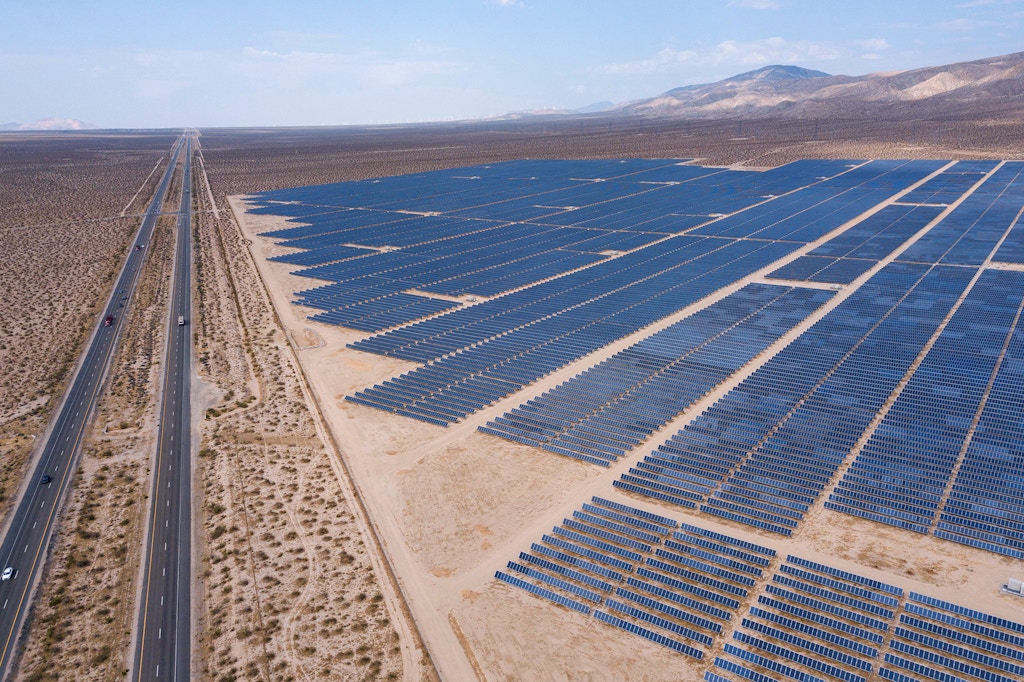
Solar panels that are part of an electricity generation plant near Mojave, Calif., on June 18, 2021.
Photo: Patrick T. Fallon/AFP via Getty Images
IT MAY BE that solving the climate crisis, because we will solve it with bold technologies to maintain ourselves in overshoot — as opposed to practicing humility and restraint with an eye toward contraction of the human enterprise — will accelerate extinctions, due to the demands for space and minerals to drive the technologies. To generate solar and wind power on the scale necessary to decarbonize the U.S. utility and transportation sectors, for example, requires land use on a massive scale.
Solar and wind occupy much larger acreage than oil and gas, requiring networks of roads and utility corridors, transportation and transmission capacity that doesn’t exist today. Environmental lawyer Michael Gerrard, founder and director of the Sabin Center for Climate Change Law at Columbia Law School, estimates that the U.S. needs a tripling or even quadrupling of transmission capacity — up from the 160,000 miles of high-voltage power lines now in operation — to move all the new green energy to consumers, who are mostly in cities, from the remote places where it’s harvested.
A report for the Brookings Institution states that wind and solar require 10 times more land per unit of power produced than coal- or natural gas-fired power plants, a figure that takes into account the land torn up and habitat destroyed in order to drill out, pump, and transport fossil fuels. “Renewable power production,” the report states matter-of-factly, “will take place in areas that have not seen energy development.”
There is also the global scale of mining needed to extract and process the lithium, nickel, cobalt, rare earths, and other necessities for renewables infrastructure. The net result: Decarbonizing will likely lead to huge fragmentation of land, in the U.S. and overseas, particularly in minerals-rich China and the “global south.” And not just wildlife will be affected: The “death villages” around the Bayan Obo mine in China, source of 70 percent of the world’s rare earths, are testament to the health cost of green-tech mining, which is only going to accelerate in pace and scale.
Consider the green destruction of habitat now unfolding in the Mojave Desert across California and Nevada, where the rush to build industrial solar is catastrophic for native flora and fauna. “Utility-scale solar is just as bad as urbanization and development,” said Patrick Donnelly, who works at the Center for Biological Diversity investigating the environmental effects of the renewable energy rush in the American West. “The result is that the Mojave is in big trouble.”
Start with site-specific Mojave plant species such as the tricorner milkvetch and the white-margined beardtongue, lovely rare flowers endemic only to certain valleys and basins. They are goners under the solar regime. From there the picture only gets uglier, with the likely wiping out of huge stretches of habitat for the broad suite of Mojave fauna: foxes, hawks, badgers, rabbits, and, most prominently, the desert tortoise, the keystone species of the Mojave, whose construction of extensive burrows provides homes for at least a dozen other species. “If there were no desert tortoises to dig new burrows,” states a Fish and Wildlife Service manual about the species, it would lead to “the demise of the ecosystem.”
“The worst thing these massive solar projects do is cause direct habitat loss for the tortoise and friends,” Donnelly told me. The grim future that rampant solar development promises for Mojave wildlife is already in evidence where migratory passages for tortoises have been compromised by existing solar. Climate change modeling tells us the optimal temperature range for the tortoise is moving steadily northward, and so the tortoise will seek the path north to survive. Critical passages for this expected migration have been cut off. Ivanpah Valley, a bottleneck between the east Mojave and the north Mojave, is now severed by solar. Pahrump Valley, another passage to the north, is slated for solar that will have a similar blockading effect. There are tens of thousands of acres in the Mojave Desert containing what the U.S. Bureau of Land Management calls “high density populations” of desert tortoise that are now being developed for solar, with the expected result, according to Donnelly and other watchdogs, that tortoises there will wink out.
Some 60,000 acres of BLM land adjacent to near-pristine Death Valley National Park have been proposed for industrial solar. One of the sites is Sarcobatus Flat, a wild place mostly empty of human habitation, which is a value in itself, as wildlife needs big open spaces free of the meddling of Homo sapiens. Situated in the Great Basin-Mojave transition zone, Sarcobatus is a vast valley of Joshua trees, greasewood, and blackbrush. The Joshua tree, which the Fish and Wildlife Service is considering for protection under the Endangered Species Act, is on a path to extinction, Joshua tree woodlands being one of the most imperiled ecosystems in the American West. The solar project at Sarcobatus Flat would kill, bulldoze, and stack in cordwood piles between 50,000 and 70,000 of the trees, according to a field estimate by the nonprofit Basin and Range Watch.
The Great Basin Desert to the north, meanwhile, remains mostly free of the techno-industrial regime. But that’s ending with the advent of new electrical transmission projects into these remotest parts of Nevada, a project called Greenlink that electricity and natural gas provider Nevada Energy is funding. Greenlink North, pending approval, is planned to run along Highway 50, the famous Loneliest Road in America, from Reno to Ely, through some of the wildest parcels of public land in the state — and prime habitat of the endangered greater sage-grouse. This ground-nesting bird, like the desert tortoise, is an indicator species of landscape health.
The purpose of the transmission line, as Nevada Energy has made clear, is to render solar economically feasible in those remote sun-rich landscapes. Greenlink North, along with the associated solar fields it will make possible, is expected to devastate some of the last strongholds of sage-grouse in north-central Nevada, as the birds are exquisitely sensitive to the light and noise of development.
We will be a kind of gleaming metallic Noah’s Ark that carries few animals, only lots of people.
It may be that global society can achieve a measure of sustainability in climate terms — but on a planet that has been stripped of creatures like the tortoise and the sage-grouse, shorn of natural agency, reduced to a biological pauper, its last wildernesses occupied for the greater good of the industrial juggernaut. We will be a kind of gleaming metallic Noah’s Ark that carries few animals, only lots of people.
Pondering these matters, Dan Ashe had arrived at a revelation that amounted to a conservation biologist’s worst nightmare. “I’ve come around to the idea that a lot of the diversity of life on Earth may be incompatible with human ambitions and aspirations. On the other hand,” he told me, “I can be very optimistic about climate because ultimately humanity is going to deal with carbon pollution. It’s an issue for our well-being. We can solve it by building machines and making money. That’s obvious in the Inflation Reduction Act. … But with the biodiversity crisis, you can’t solve it with machines, and it involves constraints on our making money. And history shows we aren’t very good at constraint.”
Ashe suggests that conservation biologists cease the empty claims about “saving the planet” with climate mitigation and start speaking truth: There is at present no plan, in any country, anywhere, on a global or national scale, to address extinctions, biodiversity crash, and habitat loss. The dismal reality is that with a green build-out, we will be saving not the complex web of life on Earth but the particular way of life of one privileged domineering species that depends for its success on a nature-ravaging network of technological marvels. Only once this truth is understood can honest decisions be made about what kind of world humanity wishes to inhabit in the age of ecological disorder.
A search team emerges from the woods in Goshen early Friday after the body of a missing hunter was found.PHOTO BY TODD MAISEL
GOSHEN— A hunter who had gone missing on Wednesday was found dead early Friday.
The body of the man, who has not been identified, was found about 10 a.m., according to state police. Goshen is in Hampshire County, about 30 miles east of Pittsfield.
The man had been reported missing about 5 p.m. Wednesday after calling someone from his cellphone, according to Western Mass News.
Rescuers gathered at the scene of a search operation in Goshen on Friday after the body of a missing hunter was found in the woods nearby.PHOTO BY TODD MAISEL
Search teams from state police, the Chesterfield Fire Department, and the Berkshire Mountain Search and Rescue team had been dispatched, using a K-9 unit and…