Good might be debatable, Charlie shot Tex in the back.
According to theLC Sun News, Gilligan was on his way to hunt some rabbits when his hunting dog Charlie accidentally shot him in the back with a shotgun, nearly killing him.
“I was very fortunate I could get to my phone.
The DASO (Doña Ana County Sheriff’s Office) first-responders saved…
Rafael Mariano Grossi, the International Atomic Energy Agency’s director general, called strikes at Zaporizhzhia nuclear power plant “alarming.”Lisa Leutner/ReutersCNN—
Ukraine accused Russian forces on Sunday of launching rockets at theZaporizhzhia nuclear power plant, further ratcheting fears of an accident a day after the United Nation’s watchdog warned that fighting at the occupied complex risked a “nuclear disaster.”
It was the second time in as many days that the plant, which is the largest of its kind in Europe, was hit. Ukraine and Russia have traded blame for both attacks.
The rockets launched on Saturday night struck near a dry storage facility, where 174 casks with spent nuclear fuel are kept, according to Energoatom, Ukraine’s state-run nuclear power company. Explosions blew out windows in parts of the plant and one worker was hospitalized with…
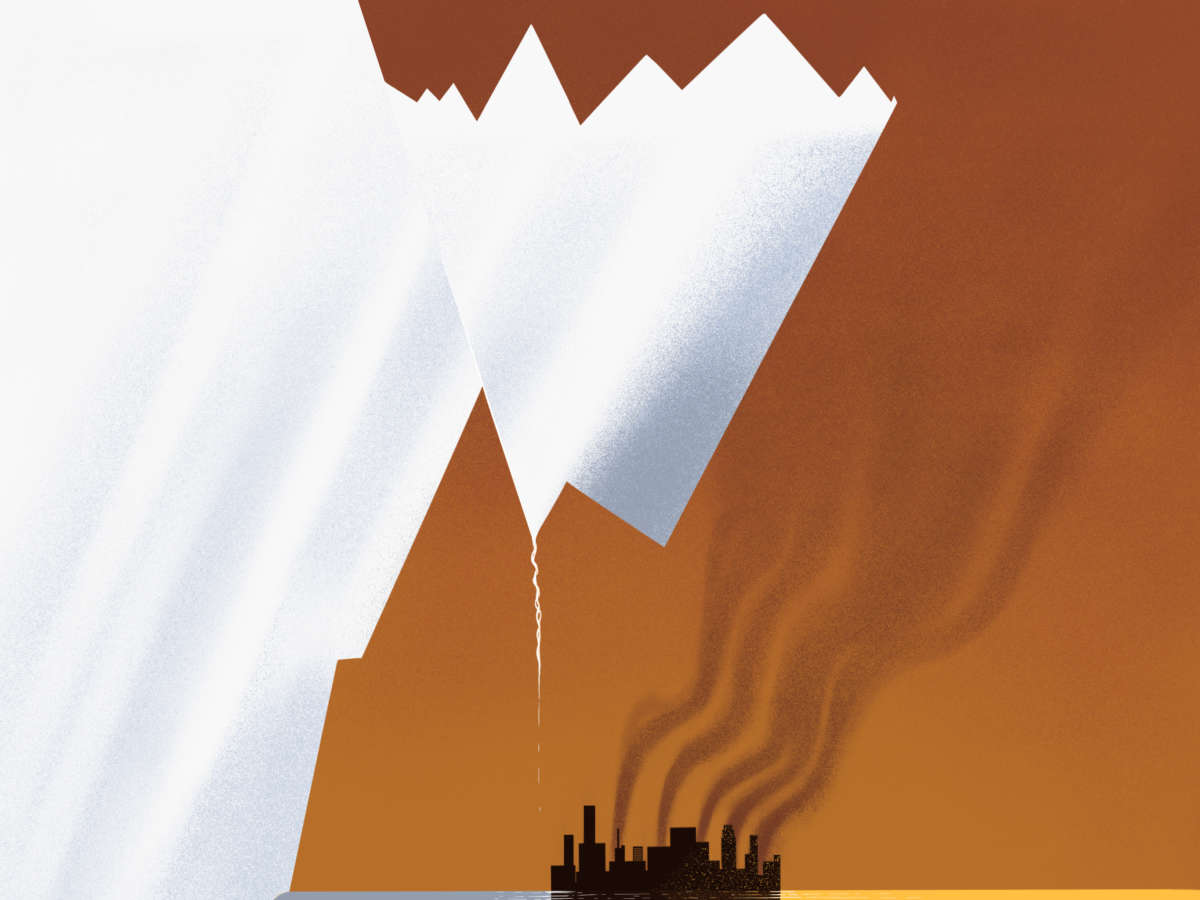
It was an “instant classic” viral video. A hiker enjoying a guided trip in the Tian Shan Mountains of Kyrgyzstan pulled out his cellphone and captured the sectional collapse of, and ensuing avalanche from, an enormous glacier. Much like a horror movie, the suspense builds as the massive, billowing wall of ice, rocks and debris moves ever closer to the hiker, Harry Shimmin of the U.K., whose steady hand maintains the crystal-clear picture on his phone.
Ultimately, the avalanche bears down on Shimmin, who acted like a voyeur watching a dangerous drama in which he actually had a starring role. At the last minute, and after a couple of “Oh, dear Gods,” he hastily dropped behind a rock as the barrage unleashed by the climate-afflicted glacier began pelting him and the group of hikers travelling with him. Luckily, they all survived.
Simultaneously exciting and terrifying, Shimmin’s video affords us all a rare glimpse of the unstoppable power of a collapsing glacier. At least, it used to be rare. Just about a week earlier in the Dolomite Mountains of northeastern Italy, 11 hikers were killed when a breakaway chunk of the Marmolada Glacier unleashed a similar onslaught. Not coincidentally, this occurred during a “record-breaking heat wave during the country’s worst drought in 70 years,” which has deprived the mountains of winter snow. The drought is also depriving the Po River Valley of the water it needs to produce the olive oil and world-renowned risotto rice that makes it among the world’s most storied agricultural regions.
Stay in the loop
Never miss the news and analysis you care about.
Email
In years past, the Po River Valley could depend on the run-off from countless tons of snow in the Cottian Alps, where the mountainous borders of Italy and France meet. However, now it’s gotten so dire in the Alps that the Swiss are now covering up their iconic ice with expensive UV-resistant “geotextile” blankets. It’s a desperate bid to slow what is increasingly inevitable. One prediction is that all of the mountainous nations’ glaciers could be gone by the turn of the next century. In 2021, a Swiss ski resort essentially put a band aid on this broken leg by throwing 1 million square feet of “giant fleece blankets” over a titanic glacier on Mount Titlis. Meanwhile, in the French Alps, the Tignes ski resort closed its summer glacier skiing season “a month earlier than scheduled,” truncating what used to be a summer continuation of skiing to just 14 days, the shortest in the history of the resort.
Across the English Channel, an epic heat wave sent parts of the U.K. over the 40 degrees Celsius (104 degrees Fahrenheit) mark for the first time in recorded history. The “heat apocalypse” stoked destructive flames along a wildfire-scarred swath of southern Europe stretching from Portugal to Greece. According to The Independent, those fires produced an estimated “11 million tonnes of planet-heating emissions.” The recent trend of European heat waves is also stoking fears of more glacial disasters. The continent’s glaciers are melting “faster than ever,” and, as AP News reported, a satellite assessment in 2021 (that’s before this year’s historic heat wave) found that glaciers are “losing 31% more snow and ice per year than they did 15 years earlier.”
And that’s just the tip of the iceberg.
On February 7, 2021, a wedge of glacier-covered rock more than 500 meters wide and 180 meters thick just “suddenly let go” in the Himalayas and, as BBC Newsreported in June of that year, a mixture of rock, ice and water hit the valley floor below “like 15 atomic bombs.” Over 200 people living and working in the Chamoli district of the Indian state of Uttarakhand were killed and hydroelectric infrastructure worth hundreds of millions of dollars was lost in the deluge. Although scientists are careful to not overplay climate change as the direct cause, researchers did write that “glacier shrinkage uncovers and destabilises mountain flanks and strongly alters the hydrological and thermal regimes of the underlying rock.” Sadly, the mountainous state was hit again on April 23, 2021, when a glacier “burst” sparked an avalanche in Sumna, this time killing 16 near the Indo-China border.
Just a month later, on May 20, a chunk of Antarctic ice reportedly “three times the size of New Delhi” broke free and set sail on the sweltering seas. Dubbed “A-76” by scientists, the “world’s largest iceberg” is destined to methodically melt like another viral sensation, an earlier breakaway iceberg known as “A-68.” Then it happened again. In November, a huge hunk of the Perito Moreno Glacier fell into the waters abutting Los Glaciares National Park in Argentina’s “fast melting” Patagonia region. It was much to the amazement of “stunned” onlookers who, like Harry Shimmin, found themselves bearing witness to the fallout of anthropogenic climate change while on holiday.We’ve basically doubled-down on carbon emissions after the over-hyped carbon interregnum during the pandemic.
But it doesn’t end there.
On March 5, 2022, another group of tourists in Argentina “oohed and ahhed” when a glacier broke off of a 60-meter-high cliff, plunged and then re-emerged from the sea. Twenty-one days later, an “ice shelf bigger than New York City” broke off in an area in eastern Antarctica that scientists have, according to The Washington Post, thought to be “relatively stable and far less vulnerable to global warming compared to ice in western Antarctica.” Ominously, a trio of scientists observed that “there is enough ice in the West Antarctic ice sheet to raise sea levels by several meters, and if East Antarctica starts losing significant amounts of ice, the impact on sea levels could be measured in tens of meters.”
As the great science journalist Robert Krulwich recently explained in a superb animated video for CBS “Sunday Morning,” the last time atmospheric CO2 concentrations were this high was 2.5 million years ago. Known as the Pliocene Era, the Earth was “about 3 or 4 degrees” (Celsius) warmer and global sea levels were 55 feet higher than they are today. That’s right … 55!
Is that what’s in store for us over the next century should we continue to burn hydrocarbons like there’s no tomorrow? We certainly seem hell-bent on finding out, because we’ve basically doubled-down on carbon emissions after the over-hyped carbon interregnum during the pandemic. And if our Anthropocene Era sees only half of the Pliocene sea level rise, there will, in fact, be no tomorrow for millions, if not billions of humans crowded along the Earth’s coasts or living downstream from the world’s melting glaciers. It promises to be the greatest disaster humans have ever produced. But just like Shimmin, we can’t say we didn’t see it coming.
Hell, we can even see it from space.
Satellite images from the European Union’s Earth observation program show how drastically the aforementioned Po River has changed over the last two years. They named the satellite “Copernicus” in honor of the Renaissance genius who challenged centuries of church canon by proving the Earth, and by extension humankind, was not at the center of the universe, but rather it (and humans) revolved around the Sun.
Now Copernicus revolves around the Earth, revealing, as Euronewsreported, the stark impact we’re having on this staggeringly rare harbor for life in, as far as we’ve found, an otherwise life-averse solar system. In the Po Valley, it shows exposed sand where water once ran and, in turn, helped sustain 125 municipalities and numerous farms that are now forced into rationing.
Satellite data collected by NASA in early July of this year showed similarly parched areas of the Great Salt Lake in Utah, which is increasingly bereft of its famously briny waters. In fact, it now sits at its “lowest level in 175 years of record keeping,” according to Discover Magazine, which paired the satellite images with photos illustrating how a dire, regional drought is currently damaging the lake.
The once-greater lake’s salty sister in California is suffering a similar retreat. Mono Lake was famously brought back from the brink by an incredibly effective citizen-led campaign in the 1970s, ‘80s and ‘90s. But now, its once-ubiquitous “Save Mono Lake” bumper stickers have long-since faded and the lake is again endangered. This time, it’s not the excessive redirection of its tributary waters to quench the thirst of millions of Southern Californians. Water is still pulled, but now Mono Lake, like all the examples in this sad litany, is also battling a drought made more disastrous by a “two-decade run of extreme warming and drying.”
Approximately 350 miles southwest of Mono Lake, we find Lake Mead, which stands at its lowest level since the human-made reservoir was first filled in 1937. It is nearing the nadir of a “22-year downward trend.” That’s per scientists at NASA’s Earth Observatory, which recently released a shocking set of satellite photos showing the lake literally drying-up in three stages since the year 2000. You may have seen ‘em, because the photos had a viral moment as they made the rounds on social media, like the media of avalanches and floods and cattle dropping dead before it. Lake Mead had already made the news repeatedly, particularly as the receding waters exposed possible murder victims. What’s not a mystery is what’s killing the “largest reservoir in the United States,” which, as NASA notes, supplies water to “millions of people across seven states, tribal lands, and northern Mexico,” but is currently “filled to just 27 percent of capacity.”There’s little doubt that the commonality of pools and second cars in sun-baked desert metropolises like Las Vegas and Phoenix [stokes] the climate feedback loop driving the drought.
The irony is that its closest customer, Las Vegas, the home of unbridled excess, has a surprisingly low draw from Mead and an efficient system that captures, treats and returns water to the lake. Still, Southern Nevada gets 90 percent of its water from the drought-ravaged Colorado River via Lake Mead, and, as AP Newsreported, it’s still home to 200,000 swimming pools, with 1,300 more pools added annually. It’s also home to an estimated 3,000 “commercial” pools that serve 40 million tourists who fly and drive to Las Vegas every year. Unsurprisingly, those commercial pools are not affected by new water restrictions. One critic of the restrictions, who happens to own a custom pool design business, said without irony, “When you’re in the desert and it’s 100 degrees outside on a regular basis, it’s part of life to have a pool,” and “having a pool in Las Vegas is like having a second car … it’s that common.”
Alas, pools and second cars in sun-baked desert metropolises like Las Vegas and Phoenix (with the most pools per capita) are local cogs in a globe-spanning, fossil-fueled economic machine that’s driving the climate feedback loop now threatening the river that helps to fill those ubiquitous pools. The same goes for using air conditioning to survive a superheating world, which pumps out CO2 and further heats the world, thus making air conditioning even more necessary and, in turn, accelerating the heating that melts glaciers and dries up lakes and ignites wildfires in rapidly escalating doom-loop.
This escalating feedback loop is also responsible for the suffering of more than 2 billion people currently sweltering in India, Pakistan and China, for impoverished climate refugees fleeing from Central America, and for millions of low-carbon-producing, sea-level Bangladeshis inauspiciously stuck between collapsing glaciers in the Himalayas and melting breakaway ice shelves now bobbing in the warming oceans.
But the time when we can sit back and marvel at these climate catastrophes is as long gone as Iceberg A-68. Now the viral moments are much closer to home … from Kansas to Kentucky, from Nebraska to Texas and Maine, and we are all more and more like Harry Shimmin with each passing day as the reality of climate change becomes as relentless as a collapsing glacier. Earth’s climate is breaking through the fourth wall to show us that we cannot afford the luxury of voyeurism.
In essence, Mother Nature’s “invisible hand” is imposing punishment on an economic system that pretends we can sustain unlimited growth on a planet of limited resources and, astonishingly, somehow remain free of the feedback loop’s environmental consequences. In fact, that’s what Mother Nature is telling us in these viral moments. Her invisible hand is enforcing a brutal type of ecological discipline on an economic system that is divorced from reality.
Breaking the feedback loop is really the only option we have left.
A bee collects pollen from prickly poppies in California.
This story is part of a group of stories called
Finding the best ways to do good.
It turns out that bees may not just be able to dish out pain — they may also be able to take it.
In a study published last week in the journal PNAS, researchers in the United Kingdom found that bees trade off exposure to heat in order to access better food. The finding suggests bees aren’t just mindless automata responding to stimuli but rather conscious, feeling creatures that can experience pain and engage in complex decision-making.
In other words, bees might be sentient, which would mean they have the capacity to feel and have subjective experiences.
For the experiment, behavioral neurosciencePhD candidate Matilda Gibbons of Queen Mary University of London, along with four other colleagues, first offered bees the choice to drink from two “high quality” feeders labeled yellow with a 40 percent sucrose (sugar) solution, outfitted with an inactive heating pad. (Bees, not unlike us, love sugar.) Different groups of bees were also offered two alternative pink-labeled feeders with either a 10, 20, 30, or 40 percent sucrose solution, each paired with a heating pad that was also inactive.
A bee drinks sucrose from a feeder in an experiment to test their ability to make motivational trade-offs.
The bees, of course, preferred the sweetest 40 percent sucrose solution. But researchers then repeated the experiment with a twist: The yellow high-sugar feeders were turned up to 131 F — enough to cause discomfort to the bees, but not injury. The pink feeders, which ranged from 10 to 40 percent sucrose, remained unheated.
When the unheated feeder contained just 10 or 20 percent sucrose, bees kept drinking from the high-sugar feeders despite the pain. But when the unheated feeder contained 30 or 40 percent sucrose, many bees migrated over to it, using associative memories to avoid the pain of the heated feeder while still being able to enjoy a high-sugar snack.
“Instead of being sort of a robotic reflexive response, which would be them always avoiding the heat in any situation, they’re able to weigh up the different options and then suppress this response,” Gibbons said.
“Work like this recent paper that shows motivational trade-offs [and] very strongly suggests pain experience is, in some sense, quite revolutionary,” says Heather Browning, a philosopher and scientist in the Foundations of Animal Sentience project at the London School of Economics, who was not involved in the study.
One of the reasons it’s revolutionary, according to Browning, is because the ability to make motivational trade-offs is an important marker in determining sentience. It’s also been observed in hermit crabs.
“At least one of the likely roles of sentience for an organism, one of the reasons that [sentience] evolved, is to help an animal make trade-offs like this,” says Browning. “It’s to help them have flexible decision-making when they have these competing motivations.”
However, it’s not formal proof that bees are sentient or that they feel pain, the researchers cautioned, given the inherently subjective nature of pain and consciousness. Even understanding consciousness in humans is still a mystery, something known in philosophyas “the hard problem.”
But the researchers do say the possibility that bees have a capacity for pain and suffering should be taken seriously, and the findings could apply to some other insects as well.
“Can we really say that just because bees are doing this, does that tell us much about other insects? It probably does about the closer related ones, so bees and wasps and ants and maybe flies, but as you get sort of further and further away, probably less,” says Andrew Crump, a postdoctoral biologist at the London School of Economics and a co-author on the study.
As revolutionary as the new study may be, it won’t usher in a revolution of insect rights — just look at how we treat many birds and mammals despite general consensus on their sentience.
Researchers are at the beginning of what will likely be a long slog to better understand if, and how, insects are sentient. Butthe findings do serve as one more proof point that the number of species we include as sentient may be undercounted — and grossly so, given that there are an estimated 10 quintillion insects alive at any moment (1 quintillion is a million trillion).
The debate over who gets to be in the sentience club
Despite insects’ extraordinary evolutionary success, animal science researchers have only begun to investigate whether they possess consciousness in the last few years.
Up until the late 1970s, researchers in the field focused on animal behavior and didn’t try to determine if their behavior conferred sentience. The animal mind — if such a thing existed — was considered a black box better left unopened.
That changed in large part due to the work of Donald Griffin, a Harvard-trained zoologist who began to argue in the late 1970s that animals, not just chimpanzees and mammals, are conscious and their minds should be further studied. His students began conducting animal studies and the field, which he named “cognitive ethology,” grew from there.
The idea was controversial at the time, but today there is consensus among those who study consciousness that birds and mammals can possess sentience. Though there are some outlier skeptics, there’s also consensus that fish feel pain, which could be enough to indicate sentience. The jury is still out on insects, and probably will be for some time, but our understanding of them is changing.
“Social insects are traditionally thought to be wholly governed by instinct: They can build complex nests and efficiently divide up their labor through innate behaviors, but are considered stupid as individuals, with complexity emerging only at the group level,” wrote Lars Chittka, a co-author on the study and author of The Mind of a Bee, in the Washington Post. “But there is significant evidence that bees have an inner world of thought — that they are not responding to stimuli only with hard-wired responses.”
Much of the debate around sentience has centered around the neocortex, the part of the mammalian brain that processes language, cognition, and more, and that most neuroscientists believe gives rise to consciousness. Crump says birds don’t have a neocortex, but a structure in their brain, the dorsal pallium, is similar and is where scientists believe birds’ consciousness would lie.
Fish don’t have that brain structure either, but over the last two decades, researchers have come to believe that fish likely experience pain in the telencephalon region of the brain, which receives activity from their nociceptors — sensory receptors that identify and react to harmful stimuli. We may come to better understand the lives of insects through similar discoveries, but making the determination as to whether or not particular insect species are sentient, let alone all insects, will be tricky.
Much of insect researchers’ current focus is just figuring out what biological markers of sentience are, though the demonstrated ability to make motivational trade-offs, like Gibbons’s bees did, is one of them.
The study builds upon our understanding of insects’ capacity for pain, but it doesn’t provide definitive proof that bees or other insect species are sentient. However, using the precautionary principle — the idea that we should err on the side of minimizing harm in the face of limited information and uncertainty — let’s suppose that they are. Should that change how we treat them?
Bees and other insects might feel pain. Now what?
The debate over whether insects are sentient may seem frivolous, given how distant they feel from mammals, let alone human beings. But every past debate over who deserves moral attention and just how wide our circle of concern should be has seemed frivolous to some. If just a small fraction of the 10 quintillion insects alive right now can feel pain, some changes may need to be in order.
In light of this study, the most sensible place to start is with beekeeping. According to Jason Schukraft, formerly at the research group Rethink Priorities (he’s now at the grant-making foundation Open Philanthropy), the trillion or so bees managed globally for their honey can suffer from a variety of threats: pesticide exposure, poor nutrition, disease, long-distance transport, invasive hive inspections, and honey harvest. Those factors have been linked to colony collapse disorder, but they can be ameliorated by better management.
Many cultures around the world have long eaten insects, but in recent years there’s been a rise in insect factory farming — primarily to supply feed for factory-farmed chicken and fish, rather than for direct human consumption. It’s an emerging trend we might want to think twice about.
An employee tips larvae into a sorting oven inside the Ynsect insect farm in Dole, France.
If we sourced more protein from insect farms instead of cattle, pig, and chicken farms, it might be a win for human health. But if commonly farmed insects, like crickets and mealworms, can feel pain, it could be a moral catastrophe orders of magnitude worse than livestock farming, given the astronomical numbers of insects that would need to be raised to replace the 70 billion-plus land animals farmed globally each year.
We can find ways to more humanely coexist with insects, such as reducing insecticide use at home and on farms. Policymakers might one day consider protecting insects under the law too. Earlier this year, the UK parliament passed the Animal Welfare (Sentience) Bill, which encompasses all vertebrates; cephalopods, like octopus and squid; and decapods, like lobsters, shrimp, and crawdads. The law isn’t going to, say, outlaw shrimp farming, but it’s a sign that those highest in government are giving the question of animal sentience real consideration.
Crump says their recent study, and future studies, could — when combined — build a clearer picture as to whether bees and other insects are sentient or not.
“It won’t be any one study [that determines insect sentience], and it won’t be any one kind of indicator,” Crump said. Each development may only provide weak evidence for sentience, but if there are enough pieces all pointing to the same conclusion, Crump says, “That’s when we start to get quite a strong case.”
Ben Green doesn’t have to worry that Vladimir Putin might cut off Europe’s gas this winter, fret about a seasonal revival of Covid-19, or panic about a looming global food crisis.
Green weaned himself off gas when he purchased the five-hectare (12-acre) grounds of a derelict East German army barracks three years ago: the previous owner, who used it as an outdoor museum for vintage tanks, had gutted the building of water and gas pipes. Green patched up the roof of the refectory and insulated the windows so that temperatures inside don’t drop below 5C at night. He bathes by pouring a bucket of cold water over his head and cooks on a wood-burning stove.
A 49-year-old Englishman with a greying ginger beard and the word “Vegan!” tattooed on his left upper arm, Green is unaffected by fraying supply chains because he lives almost entirely off the vegetables and fruit he grows on his land. If, as Green hopes, friends give him an oil press for his 50th birthday, he will soon be able to cut out the occasional four-mile cycle to the nearest village for cooking oil.
On those trips he does stock up on tea, coffee and chocolate, but they are luxuries he could dispense with in the case of a systemic breakdown of supply chains. The fact his food miles are still measurable at all is due to the bottomless appetite of Fat Tony, Brunhilde Demagogue and Marilyn Monroe, his three Mangalica pigs.
Advertisement
Coronavirus is not a cause for concern – partly because Green is twice vaccinated, in spite of one what one may assume from his enthusiasm for herbal remedies, but mainly because he lives on his own in the middle of a remote spruce forest in Saxony, whose exact coordinates he keeps secret, and rarely receives visitors.
Green does worry about this year’s extreme heat and drought, which is endangering his race to fill his cellar with 100 pots of tomato stew, 180kg of potatoes and 22kg of dried beans in order to survive the winter.
But this summer’s soaring temperatures may also lead more people to recognise Green’s experiment in self-sufficiency as a model to emulate in preparation for a climate catastrophe. A catastrophe, Green believes, which is inevitable and imminent.
“When I was born, we were at 324 parts of carbon dioxide in one million parts of air. This year, we hit 420. Change is coming, and if you’re not prepared for it, it’s going to be fairly awful.
“What we are looking at isn’t the end of humanity but the end of capitalism,” he said, describing climate breakdown as the common denominator behind the various political, food, energy and health crises that have started to converge in recent years. “The collapse is going to happen, and this is the year when people will notice.”
Green with the three pigs he rescued. Photograph: Christian Jungeblodt/The Observer
Living in expectation of the apocalypse is no longer a minority position. A YouGov survey carried out at the start of the coronavirus pandemic found almost a third of respondents in the US anticipate a life-changing disaster in their lifetime. A separate poll of five countries in 2019 found that more than half of respondents in France, Italy, the UK and the US think civilisation as they know it will collapse in years to come.
In America, anxiety about a systemic breakdown has fed a trend of “preppers” stocking up on food supplies and arms to look after themselves and their families. During the pandemic, US sellers of underground shelters reported surging demand.
Green, who chronicles his hermit existence on his Instagram account, The Pirate Ben, sees himself in the vanguard of a more positive and less selfish European counter-movement: “happy doomerism”.
“The problem with preppers is: what do they do when the baked beans run out? I don’t want any fear here – that’s where all the white power stuff comes from.”
He doesn’t believe in the need for population reduction, as do some on the fringes where the far right and eco-activism overlap. If people can keep or relearn their knowledge of how to sustainably work the land, Green argues, there should be enough food for everyone: “What I am trying to do is preserve the best of our society for when we come out at the other end.”
There is more of The Good Life than Extinction Rebellion to his decision to rescue his pigs from a butcher – an act of “effective altruism” the three huge pigs are evidently unwilling to repay. Their never-ending hunger for horse muesli mixed with hay pellets, and stale bread rolls from the nearest village bakery, is what still stops him from living a 100% self-sufficient and climate-neutral existence.
What I am trying to do is preserve the best of our society for when we come out at the other end
Ben Green
“The pigs were the worst decision in my life,” he said, as he gives Tony a doting pat on his muddied back. “It was stupid, and clearly detrimental to my goals.” Eating them would be the logical conclusion, he admits. “But it’s not going to happen.”
To call Green a humanist would be one step too far, he said. Building a self-sufficient post-climate change community requires discipline: he rises at 6am, feeds the pigs, tends to his crops, mows grass, feeds the pigs a second time, and then goes to bed at around 10pm.
And such discipline requires a strong belief in right and wrong. He places the blame for climate change not just with a few powerful individuals, he wrote on one recent blog entry, but all of those who participated in a world-destroying economy: “Every person who works for a fossil fuel company in any capacity should be tried for genocide. From the kids in the post-room to the CEOs.”
Sign up to First Edition, our free daily newsletter – every weekday morning at 7am BST
Green reiterated the point when asked about the blog entry. “A few show trials for genocide would go a hell of a long way.” What would be the punishment for genocide? “I think that’s fairly well established.”
Before he moved to the barracks in the Saxon woods three years ago, the native Brummie pursued a successful career as an IT engineer. Spells in Austria, Spain, London and Berlin ended when he was fired from his last job in Zurich in 2018.
With the severance payment and his savings, he bought the former barracks of the East German National People’s Army.
Though he speaks fluent German, the choice of location was the result of a rational cost-benefit analysis rather than any strong affection for the eastern German state bordering the Czech Republic. “You want to be as far north as you can be for the heat, but also as far south as you can be because of the sunlight for the growing season.”
Seekers of self-sufficient lifestyles setting up communes in Spain or Portugal, he said, were “insane” because they would struggle to work the land amid rising temperatures.
Preppers look after themselves. Green wants to set an example for others to follow, but for now happy doomerism remains a movement of one. After starting out with occasional volunteers who helped him work the land, he currently runs the project solo. A strict no-drugs policy at the barracks is designed to put off half-hearted dropouts.
“The first follower will have to be very special,” he said, sitting down in the refectory to escape the midday sun. “They will have to believe in the project in the way even I don’t.”
Anyone seriously interested in joining Green in the event of a climate-induced famine can pay €3,500 (£2,950) to be put on a waiting list, though he gives no guarantees that will automatically secure a place. One person has already made the payment.
British scientists have identified a new strain of bird flu that kills 38 percent of those it infects as the most likely candidate to spark a new worldwide flu pandemic. Prof. Jonathan Van-Tam, deputy chief medical officer for England with special responsibility for pandemic planning, told the Daily Telegraph that H7N9, a flu virus circulating in poultry in China could be “the cause of the next pandemic.” Some 1,625 people in China are known to have been infected with the H7N9 virus, 623 of whom have died. Most of those infected have been been in close contact with poultry; currently, the disease cannot spread from human to human, but experiments have shown it is just three mutations away from being able to do so.
The Alaska State Fair in 2021. (Matthew Faubion/Alaska Public Media)
There will be no chickens, turkeys, geese or ducks on display at this year’s Alaska State Fair in Palmer due to concerns about spreading bird flu, organizers announced on Thursday.
“This was a difficult decision for the Fair to make, but after evaluating the risks and benefits, and listening to the expert recommendations, we believe it is best to err on the side of caution in order to keep Alaska livestock healthy and food safe,” Jerome Hertel, the fair’s CEO, said in a statement.
Health officials say the bird flu is highly contagious and lethal among birds, while the risk to human health from the virus is very low.
The bird flu has affected more than 40 million poultry and 2,000 wild birds nationwide, reports the Centers for Disease Control and Prevention.
Alaska confirmed its first bird flu case in late April and has since reported about 100 additional infections in birds across the state, including chickens in the Mat-Su, bald eagles in the Aleutians, geese in Anchorage and ravens on the North Slope.
The Alaska State Fair will still have a baby chick exhibit this year, organizers say, because the disease does not impact chicks in the egg. Also, 4-H youth will have photos and descriptions of their birds that are for sale at the fair.
The Alaska State Fair runs from Aug. 19 to Sept. 5.
Bird flu concerns also prompted organizers of the Tanana Valley State Fair in Interior Alaska to ban poultry this year.
PINELLAS COUNTY, Fla. (WWSB) – After rescuing sea turtles earlier this week, Pinellas County Sheriff’s deputies freed a shark Friday caught in a crab trap in Tampa Bay.
In a video posted on sheriff’s office Twitter feed, Marine Unit deputies say they were flagged down by a citizen reporting a shark caught on a crab trap. Deputies are seen and heard trying to extricate a six-foot-long shark hooked on the trap’s buoy.
“Move, move, move,” the deputy said. “It’s taking me …. Go backwards, backwards, backwards!”
After deputies decided they could not safely remove the hook, they cut as far down as possible, allowing the shark to live another day.
“That’s at least … That’s 6-foot,” a deputy says.
“Bye Bud,” one deputy said as the shark swam away.
Work is done on the roof of a building under construction in Sacramento, Calif., Thursday, March 3, 2022 California employers added 41,400 new jobs in April lowering the state’s unemployment rate to 4.6%. New unemployment claim in California remain high, with the state accounting for nearly 24% of all new jobless claims in the country. The biggest job losses came in construction, which lost 13,200 jobs in April. (AP Photo/Rich Pedroncelli)
With Indonesian islanders suing cement producers for climate damagesrecently, buildings are getting much-needed attention for their carbon-heavy footprint. The built environment generatesnearly 50 percentof annual global emissions. Yet, buildings hardly receive the climate activism commensurate with their impact – despite concrete being thesecond-most consumedmaterial…
Top Chinese military officials have not returned multiple calls from their American counterparts this week as a crisis erupted in the Pacific over House SpeakerNancy Pelosi’s visit to Taiwan, according to three people with knowledge of the attempts.
Beijing’s ghosting of Defense Secretary Lloyd Austin and Joint Chiefs Chair Gen. Mark Milley comes as China continues launching missiles and positioning warships and aircraft in unprecedented military drills around Taiwan. Officials and experts say China’s silence is a shortsighted and reckless move that increases the risk of escalation in an already tense situation.