Chinese ships and aircraft conducted a simulated attack on Taiwan on Saturday, Taiwanese officials said, per Reuters.
Taiwanese jets scrambled as Chinese military assets conducted missions around the Taiwan Strait, Reuters said.
Taiwan’s defense ministry said 14 Chinese aircraft crossed the median line.
Chinese ships and planes rehearsed an attack on Taiwan on Saturday, Taiwanese military officials said, prompting the island nation to scramble its jets, per Reuters.
Taiwan’s defense ministry said 20 Chinese aircraft and 14 warships conducted missions around the Taiwan Strait on Saturday afternoon, Reuters reported.
The ministry said that 14 of the 20 Chinese aircraft crossed the median line — a 110-mile-long strait that acts as an unofficial buffer between China…
Taiwan said Saturday thatChina’s military drills appear to simulate an attack on the self-ruled island, after multiple Chinese warships and aircraft crossed the median line of the Taiwan Strait.
Taiwan’s armed forces issued an alert, dispatched air and naval patrols around the island, and activated land-based missile systems in response to the Chinese exercises, Taiwan’s Ministry of National Defense said. The island’s leadership also announced it detected four unmanned aerial vehicles flying in the vicinity of the offshore county of Kinmen on Friday night and fired warning flares in…
The loss of crocodiles and alligators would have a devastating impact on other species, warned conservationists as they demanded better protection for the threatened amphibians.
Loaded:100.00%Pause
Current Time1:18
/
Duration1:25LOCaptionsFullscreen
Top 7 Tips For An Eco-Friendly Life, According To ExpertsUnmute
They say habitat loss, hunting, fishing and damming of rivers are all threats to crocs.
Each species plays different, but important roles in the wider ecosystem, such as creating shelter for other animals by burrowing or by feeding on invasive, agricultural pests.
Researchers led by the Zoological Society of London (ZSL) have studied the important ecological functions and have…
In this conservative corner of California, a monster fire that killed four people and destroyed dozens of structures is being framed by many in political terms.
Some residents acknowledge the role of climate change in California’s increasingly destructive firestorms, but their true ire is often focused on decades of government policies they believe have worsened the fire risk and made fighting the destructive McKinney fire inside the Klamath National Forest more difficult.
Yreka, which sits in the shadow of that national forest, was once a “timber town” known for its logging industry. Some residents here this week said the slow death of that industry coincided with the increased frequency of wildfire in the area as vegetation became more and more overgrown.
“As a kid we very seldom worried that fires would get out of control and take out whole towns,” said Bill Robberson, 60, a lifelong resident of Siskiyou County and fourth-generation Californian.
Experts said there are many factors behind the blaze. Population growth has pushed more residents into the wildland-urban interface, leaving more homes and people in harm’s way. What’s more, human-caused global warming has contributed to soaring temperatures and searing dryness, creating a recipe for even the smallest of sparks to transform into a firestorm.
Still, some stakeholders in the community said bureaucratic red tape has prevented essential work from occurring. Their concerns reflected a mounting frustration with decision-makers in Sacramento and Washington, D.C., who they said often fail to keep the interests of rural, conservative Northern California top of mind.
“We as a government seem to have no problem declaring an emergency for lots of things, so why doesn’t Washington declare a public health and safety emergency based on forest health and climate change for the Pacific Northwest and make it a priority?” asked Larry Alexander, executive director of the Northern California Resource Center, which sponsors the fire safe council in Yreka and other parts of the county. “It would be beneficial to the forest, beneficial for public health and safety, and it would put a lot of people to work.”
Dissatisfaction with state and federal government was a common refrain among locals in the county, which is in the heart of the proposed state of Jefferson. The breakaway state would include portions of Northern California and southern Oregon, where many residents of the largely remote and rural region believe they have been neglected by the governments of both states.
The Jefferson movement is decades old — Yreka was the proposed capital in the original 1941 plan — but has gained new energy in recent years as supporters say liberal Democratic policies around issues such as gun control, immigration and taxes are unaligned with their interests. And as the region’s once-booming timber industry has become increasingly hobbled by regulations, environmentalism, technological advances and other market forces, many locals started looking toward the now-smoldering forestland with a growing sense of betrayal.
“When we lost the logging industry around this area, it was devastating for us,” Yreka Mayor Duane Kegg said. “We lost a lot of our economy, and losing a lot of economy has a trickle-down effect on a lot of different issues — homelessness, people going through drug and alcohol problems. We’ve seen it over the years, and I attribute all of this to back in the ’80s, losing our logging industry.”
The schism has grown only stronger as the battle among environmentalists, loggers and politicians heats up amid increasingly large and frequent wildfires. In 2018, then-President Trump blamed California’s worsening conflagrations on the state’s failure to rake the forest floors. In 2021, Gov. Gavin Newsom condemned the U.S. Forest Service’s “let it burn” policy after the 69,000-acre Tamarack fire spread into some communities near South Lake Tahoe, prompting the agency to revisit its approach.
Alexander attributed much of the forest management backlog to environmental clearance processes — such as those imposed by the Endangered Species Act to protect northern spotted owl habitats in forests — which he said can take two to five years to address. He also questioned whether top-level officials truly grasped the urgency of the situation.
“When it comes to prevention, we’re so woefully behind the curve of having enough fuels reduction and forest health activities,” he said. “It needs to be 100 times more than what we’re doing, just in terms of funding and resources and planning, and we just get behind every year.”
Some work has been done locally, including a fuel mitigation project on private properties that border the forestland on the western edge of Yreka. The work was funded by the Forest Service and completed just days before the McKinney fire ignited.
It was part of an $8-million project known as the Craggy Vegetation Management Project, which was developed by the Yreka Fire Safe Council, the California Department of Forestry and Fire Protection and the Forest Service and designed to help improve fire resiliency on about 11,000 acres in the area, according to the project page.
But it took more than seven years to get the project off the ground, Forest Service documents show, and only a little more than one-third of the 11,000 acres has undergone some treatment. Agency spokeswoman Kimberly DeVall emphasized that although one segment of the Craggy project boundary did stretch along Highway 96 where the McKinney fire burned, the design was “primarily to improve defensibility against wildfire for the communities of Yreka and Hawkinsville, which is about 10 to 15 miles southeast of where the structure fires occurred.”
Many residents affected by Northern California’s wildfires couldn’t care less which agency has jurisdiction over the state’s massive swaths of forests, which count state, federal and private lands among its sprawling acreage. All that matters to them is whether the work gets done.
“When we first moved here, it wasn’t like this,” said Nick Rouhier, a construction worker who has lived in Yreka since 2009. “We’ve had a fire season since about 2015.”
Related video: California wildfire slowly being brought under control
was about 15% contained. Over 3500 people have been forced to
Loaded: 100.00%Play
Current Time 0:18
/
Duration 0:26LQCaptionsFullscreen
California wildfire slowly being brought under controlUnmute
Earlier this week, Rouhier was using time off work — due to evacuations and business closures — to clear some vegetation from the frontyard of his home, which was just outside the mandatory evacuation zone. He said he was staying close to home in case he had to “bug out” and leave quickly.
Rouhier attributed the regular appearance of fires in the area to a number of factors, including noticeably hotter summers and the state’s persistent drought, but he also said one theme among locals was that the “forests aren’t being taken care of.”
He wondered whether there were enough resources to truly manage a forest the size of Klamath and noted that the side of the mountain in direct view of his house hadn’t burned in decades.
“I’d be worried if I see some flames up there,” he said.
Echoing his concerns was Rep. Doug LaMalfa (R-Richvale), who has been outspoken about the state’s forest management practices in the past — even joining conservative gubernatorial candidate Larry Elder in a 2021 news conference decrying Newsom’s handling of wildfires.
“I’m not blasting anybody that’s here,” LaMalfa said of the crews battling the McKinney fire, “but at the upper level, they’re so fearful of lawsuits and such that they’re almost paralyzed.”
The district LaMalfa represents has experienced several devastating fires in recent years, including the massive Dixie fire last year and the deadly Camp fire in Paradise in 2018. He recalled when 5,000-acre fires were considered big, while today, they routinely surpass five and six digits.
“What has changed has been 50 years of changed management due to lawsuits, misuse of the ESA [Endangered Species Act] and all of that,” he said.
But regional environmental groups said it was the Forest Service, not their lawsuits, that slowed some of the work in the area. The Klamath-Siskiyou Wildlands Center even filed a “non-objection” to the Craggy vegetation project, calling it a “welcome break from the focus on backcountry post-fire clearcutting.”
“We encouraged them to prioritize that project because it was located in existing dense timber plantations that could carry fire very quickly,” said the organization’s conservation director, George Sexton. He added that the use of traditional ecological knowledge, including the implementation of prescribed fire, “has been very effective, and there needs to be more of it.”
“I think if we could all come at it assuming better intentions from one another, then these things would be opportunities for pulling together rather than division, splintering apart,” he said.
LaMalfa criticized the Biden administration’s recently announced plans to address 20 million additional acres of federal forestland in 10 years, noting that it’s still only a fraction of what the agency oversees.
“To get across all nearly 200 [million acres], that’ll take a hundred years,” he said. “We need to quintuple it or more, and we need to be aggressive on this because we keep losing.”
But while failures of forest management — along with population growth and a lack of funding — have contributed to the issue, politics have doused it in gasoline, said Bruce Cain, a political scientist and the director of the Bill Lane Center for the American West at Stanford.
Politicization makes people “less likely to think that climate change is the cause, less likely to take steps to protect themselves even from the smoke, to wear a mask, to believe that their property is in danger,” Cain said. “It does have that effect. What’s at stake here is not whether people will eventually learn — it’s the rate at which they’ll learn that we’ve got to do something about this, and that may take a while longer because of polarization.”
Cain recently co-wrote a study that found that the state’s Republicans are generally more opposed than Democrats to spending public funds on resilience measures, but that personal experience with wildfires lessens that opposition. However, he also said state and federal agencies are struggling to do the kind of maintenance that is necessary, and that land management is “something we don’t do well in California.”
“It’s not something that’s an easy sell because people want to have the right to live where they want to live, and communities want to have the right to generate revenue in the ways that they want to generate revenue,” he said. “And that’s where the fighting is most likely to happen.”
That friction was underscored by the strong pro-logging undercurrent running through Yreka and outlined by Mayor Kegg.
“My family’s been in logging for a number of years, so we’ve seen a lot of things that unfortunately didn’t go the right direction for a lot of years as far as proper forest management, and that’s what happens a lot of places up here in true Northern California and southern Oregon,” Kegg said.
“We can still keep our habitat for wildlife and still keep it safe for everybody and have logging, which is a valuable resource for our community, and which it’s pretty much built on,” he added.
Kim Greene, mayor of the nearby town of Weed, which saw similar destruction during the Boles fire in 2014, shared a similar sentiment.
“Our slogan in Weed is, ‘You can log it, you can graze it or you can burn it down,’” she said. “The state of California chooses to burn it down.”
Research has shown that government fire suppression policies, along with the displacement of Indigenous people who performed cultural burning, have contributed to denser vegetation in the Klamath bioregion. But experts also say commercial logging can lead to the replacement of larger, fire-resistant trees with stands of abnormally dense and young trees that are more susceptible to carrying fire.
“There’s plenty of evidence to say that if you just did logging and thinning you could actually make the problem worse,” said Jeffrey Kane, a professor of fire ecology and fuels management at Cal Poly Humboldt. “Because it’s not just a matter of removing trees, it’s a matter of reducing fuels, and in many cases when you thin forest you don’t always remove the fuels.”
Kane said logging “in and of itself can’t help prevent fire like this” but did note that it could be part of a multi-pronged solution that helps address excess trees and increased fire activity due to climate change.
“It’s possible. It’s going to take work, it’s going to take money, it’s going to take working together and not getting bogged down in these somewhat divisive arguments,” he said. “Because when you’re rowing against each other, you’re not going to get very far.”
With the death toll from the McKinney fire likely to keep climbing as authorities sift through the rubble of homes, it’s clear that the issue is as personal as it is political.
Robberson, the fourth-generation resident, said it was hard not to be concerned by the increased frequency of fires. He sat at a table along the town’s mostly evacuated main street, where visitors were greeted by the faint smell of smoke and a banner proclaiming, “Join the state of Jefferson.”
Fire season has become such a regular and disruptive part of life in Yreka that he’s considering something his California forebears never would have dreamed of: leaving the state altogether.
“The impact environmentally, economically — and the smoke — it’s difficult to think about,” Robberson said. “And it doesn’t help tourism. You don’t want to be known as a place that burns.”
Chinese ships and aircraft conducted a simulated attack on Taiwan on Saturday, Taiwanese officials said, per Reuters.
Taiwanese jets scrambled as Chinese military assets conducted missions around the Taiwan Strait, Reuters said.
Taiwan’s defense ministry said 14 Chinese aircraft crossed the median line.
Chinese ships and planes rehearsed an attack on Taiwan on Saturday, Taiwanese military officials said, prompting the island nation to scramble its jets, per Reuters.
Taiwan’s defense ministry said 20 Chinese aircraft and 14 warships conducted missions around the Taiwan Strait on Saturday afternoon, Reuters reported.
NORTH BEND, Wash. — Multiple bears in Western Washington have been euthanized in recent days amid an increase in bear sightings, including four bears in North Bend that were put to sleep.
Washington Department of Fish and Wildlife officials said a mother bear and her three cubs were getting too comfortable around people, with one of them breaking into a home to find a snack.
“I know for a fact there were at least five (bears) that we’d see regularly,” said Melissa Grant who lives in the North Bend area. “Now there’s one.”
Grant is no stranger to bear sightings in her own backyard, evident by the broken railing and plenty of home surveillance footage.
She would “get into trash, get into bird feeders,” Grant said. “But in the last month or so since she had the three cubs, it’s escalated.”.
State officials said the mama bear had been captured, tagged and released before, but she and her cubs had recently become too comfortable being around people.
“People put their trash out too early, the bears come (and) eat the trash,” Grant said. “This one started escalating, started breaking into people’s homes.”
One anonymous neighbor captured the bears on a backyard picnic table. It’s the same home where one bear reportedly climbed through a window to eat a snack.
Then on Wednesday, the mother bear got stuck in a parked van that had food inside.
“We had to drill a hole into the vehicle and we had to dart her at that time,” Capt. Jennifer Maurstad of the wildlife agency said, adding that the decision was made to euthanize the mama bear and her cubs because of their history of foraging around. “We also try to take into account the most important thing is public safety, as well.”
In a separate incident in Whatcom County, a black bear was put down Wednesday after attacking a jogger.
The man who was attacked was treated at the hospital for injuries to his hands and feet.
“He was able to fight and protect himself and eventually spooked the bear off,” Maurstad said.
Grant believes people can help keep themselves and the bears safe by securing food, and her neighborhood is even looking at getting locked trash cans.
“The bear got into the van but it wasn’t (my neighbor’s) fault,” Grant said. “It was all of our fault for habituating this bear.”
Officials say they are on target for their usual number of bear sightings a year, about 1,000 from King County up to Canada.
Until Wednesday, the last bear attack in Washington state was in 2015.
Image caption,Pictures have emerged showing the whale drifting in the River Seine
A beluga whale has been spotted in France’s River Seine, and officials are now deciding how to save a mammal more suited to cold Arctic waters.
They say the animal is currently near a lock at Vernon, about 70km (43 miles) north-west of Paris.
Members of the public are being urged to keep away from the whale that appears to be underweight.
Experts are puzzled as to why the whale has strayed so far south from its natural habitat.
“The challenge now will be to help feed it, and try to accompany it towards the ocean,” Lamya Essemlali, the head of environmental group Sea Shepherd France, was quoted as saying by the Reuters news agency.
She said taking the animal out of the water was out of the question as it was too risky.
This came just weeks after a humpback whale seen swimming in the same stretch of water had died. It was thought to have found its way into the Thames because of a navigational error, possibly during high tides.
Every year, tens of millions of Chinese urban dwellers escape to the tropical island of Hainan for its white-sand beaches, year-round warm weather, and all-inclusive resorts. But the beach getaway has turned into a literal tourist trap, with Chinese authorities stranding thousands of travelers in the tropical paradise due to a small COVID outbreak.
On Friday, China’s Hainan island reported 127 new confirmed COVID-19 cases, including 48 in the capital Sanya. That number of cases may seem minuscule for an island of 9.2 million people, but Chinese authorities still adhere to a COVID-zero policy that does not tolerate any spread of the virus. China deploys harsh lockdowns, mass testing measures, and strict border controls to ensure that it stamps out all COVID cases, even as nearly every other country on earth has given up on fully…
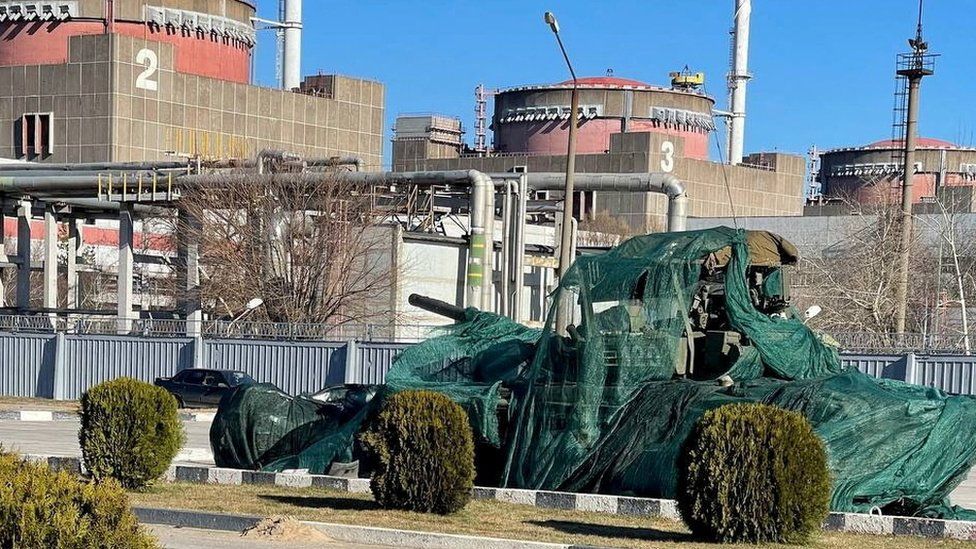
Image caption,A covered Russian tank outside the Zaporizhzhia nuclear power plant on 4 August
Ukraine’s nuclear agency says Russian rockets have damaged part of a giant Russian-controlled nuclear power plant, but there has been no radiation leak.
Enerhoatom said a nitrogen-oxygen unit and a high-voltage power line had been damaged at the Zaporizhzhia plant – Europe’s largest – in southern Ukraine.
Local Russian-appointed officials blamed Ukraine for shelling earlier.
Ukraine also accuses Russian forces of firing rockets at civilian areas from the site, employing “terror tactics”.
“Every morning we wake up and see that they have hit only residential homes,” a local businessman told the BBC.
The BBC was unable to verify the reported damage at the nuclear plant. Enerhoatom says there were two rounds of Russian rocket fire on Friday…
Consumers traveling from 21 US state into Canada are no longer allowed to take poultry products, eggs and birds into the country. The Canadian Food Inspection Agency has reportedly implemented these measures in an effort to protect Canada’s poultry resources from outbreaks of highly pathogenic avian influenza. The measures don’t apply to commercial imports with accompanying permits and certifications.
TheCanadian Food Inspection Agencyhas reportedly implemented these measures in an effort to protect Canada’s poultry resources from outbreaks of highly pathogenic avian influenza.
The restricted states are Colorado, Idaho, Indiana, Iowa, Kansas, Maine, Maryland, Michigan, Minnesota, Missouri, Nebraska, New Jersey, New York, North Carolina, North Dakota, Oregon, Pennsylvania, South Dakota, Utah, Washington and Wisconsin.
In addition, all poultry products and by-products that are not fully cooked and canned or hermetically sealed are prohibited.ALSO READ: