Two African countries say they need to kill elephants for food. Critics say it’s cruel and won’t work

By Laura Paddison, CNN

 6 minute read 

Published 1:00 AM EDT, Sat October 12, 2024
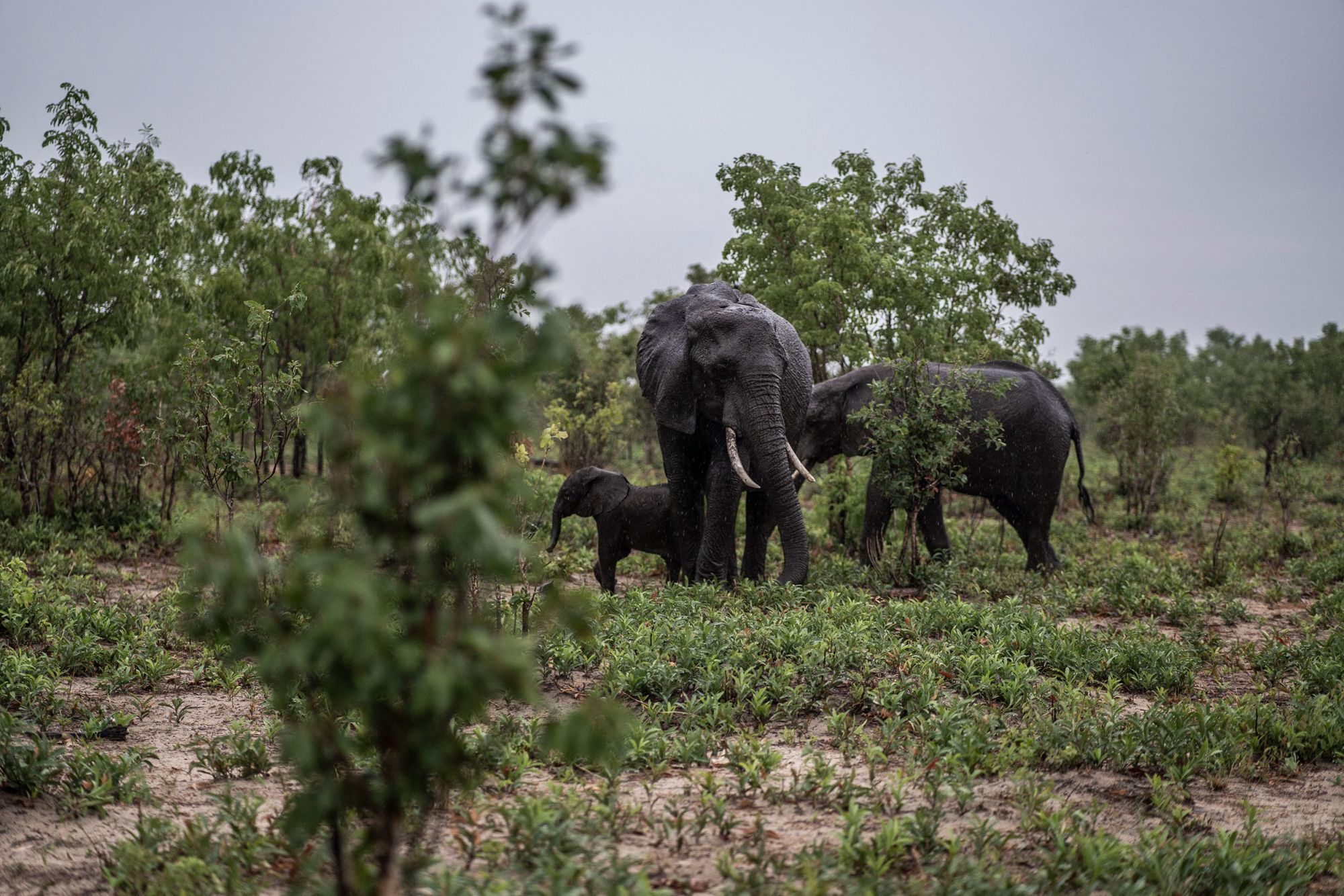
Elephants feed in Hwange National Park in northern Zimbabwe on December 16, 2023.

Elephants feed in Hwange National Park in northern Zimbabwe on December 16, 2023. Zinyange Auntony/AFP/Getty ImagesCNN — 

Drought is now so bad in parts of southern Africa that governments say they must kill hundreds of their most captivating, majestic wild animals to feed desperately hungry people.

In August, Namibia announced it had embarked on a cull of 723 animals, including 83 elephants, 30 hippos and 300 zebras. The following month, Zimbabwe authorized the slaughter of 200 elephants.

Both governments said the culls would help alleviate the impacts of the region’s worst drought in 100 years, reduce pressure on land and water, and prevent conflict as animals push further into human settlements seeking food.

But it’s triggered a fierce argument.

Conservationists have criticized the cullings as cruel and short-termist, setting a dangerous precedent.

The decision to offer up some of Namibia’s elephants to trophy hunters — tourists, often from the US and Europe, who pay thousands of dollars to shoot animals and keep body parts as trophies — has further fueled opposition and raised questions about governments’ motivations.

For some supporters of the cull, however, critics misunderstand conservation at best, and are “racist” at worst — telling African countries what to do and valuing wildlife over people.
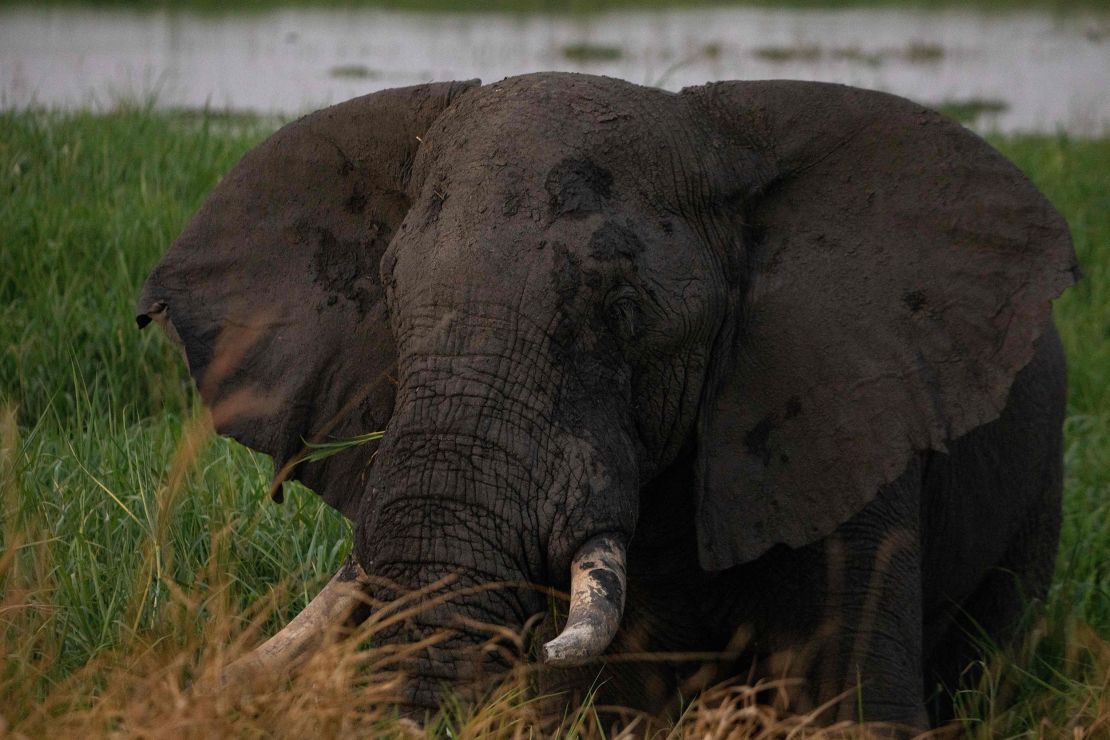
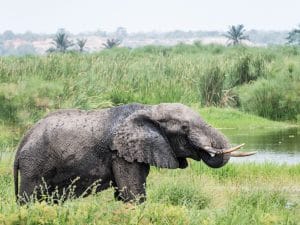
An elephant grazes inside the Murchison Falls National Park in northwest Uganda on February 20, 2023.

An elephant grazes inside the Murchison Falls National Park in northwest Uganda on February 20, 2023. Badru Katumba/AFP/Getty Images
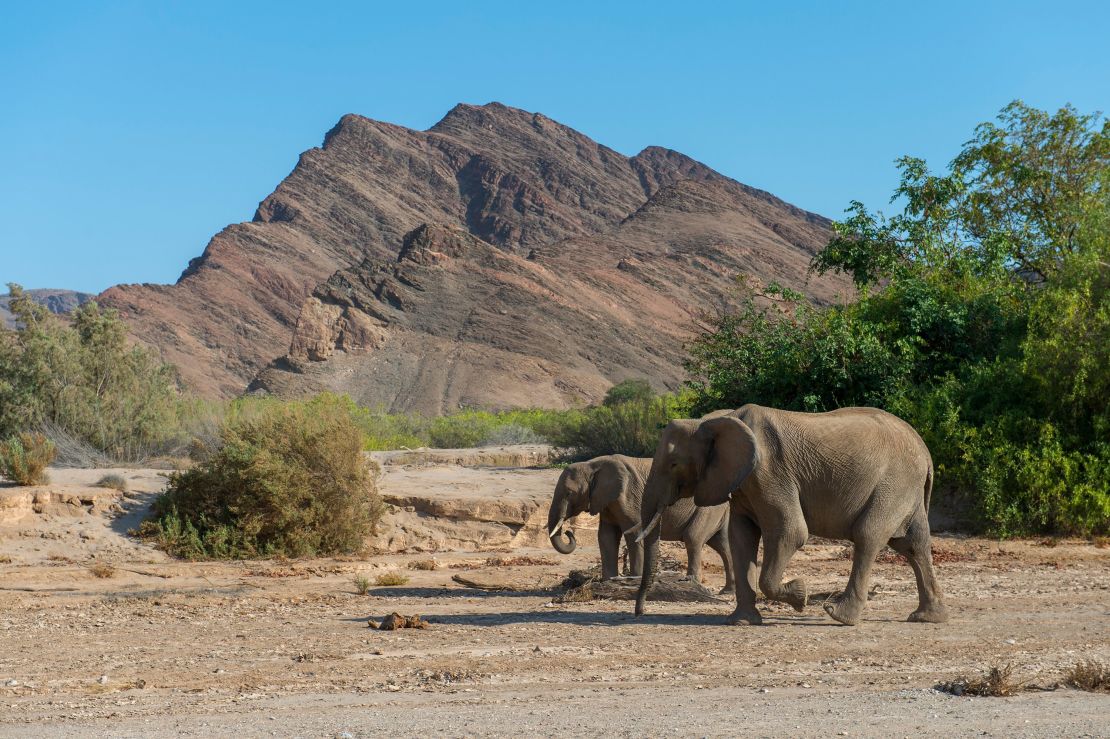
Elephants in the Huanib River Valley in northern Damaraland and Kaokoland, Namibia.

Elephants in the Huanib River Valley in northern Damaraland and Kaokoland, Namibia. Getty Images

It’s a heated debate that goes to the heart of what conservation looks like and how countries will deal with deep, devastating droughts that are only becoming more frequent as humans burn fossil fuels and heat up the world.

‘Immense suffering’

The situation facing southern Africa is dire. Crops have failed, livestock has died and nearly 70 million people are desperately in need of food.

Zimbabwe declared a national disaster in April. Namibia followed in May, declaring a state of emergency as drought left around half its population facing high levels of acute food insecurity.

The drought has been driven by El Niño — a natural climate pattern which has led to sharply reduced rainfall in the region — and exacerbated by the human-caused climate crisis.

“The reality is we are seeing an unprecedented increase in droughts,” said Elizabeth Mrema, deputy executive director of the United Nations Environment Programme. “There is immense suffering.”

Legal harvesting and consumption of wild game for food is common practice in cultures across the world, Mrema told CNN. “Provided the harvesting of these animals is done using scientifically proven, sustainable methods … there should be no cause for concern.”
A field of failed corn crops due to drought at a farm in Glendale, Zimbabwe, on Monday, March 11, 2024. A swathe of southern Africa about the size of France suffered the driest February in decades, killing crops and precipitating a power shortage that threatens to hit copper mines in a key producing region. Photographer: Cynthia R Matonhodze/Bloomberg via Getty Images

Related articleTens of millions facing hunger and water shortages as extreme drought and floods sweep southern Africa

Both countries say the culls won’t threaten the long-term survival of wild animal populations. They say it’s the opposite: reducing numbers will help protect remaining animals as the drought shrinks food and water resources.

All the animals in Zimbabwe and most in Namibia will be killed by professional hunters.

The animals will be shot, said Chris Brown, an environmental scientist at the Namibian Chamber of Environment, an association of conservation groups, which supports the cull. “Mostly it’s done at night with a silencer and an infrared spot so you can get very close to the animals. Headshot, animals drop,” Brown told CNN.

It’s “very humane,” he said, in contrast to farm animals squeezed into trucks before being killed in slaughterhouses. The meat will then be distributed to those in need.

Around 12 of the 83 Namibian elephants earmarked for the cull, however, will be killed by trophy hunters, Romeo Muyunda, spokesperson for Namibia’s Ministry of Environment, Forestry and Tourism, told CNN.

This has led to an outcry. A report by 14 African conservationists, who say they must remain anonymous due to the risks of speaking out, says courting trophy hunters raises questions about “the real motive.”

Muyunda said none of the money would go to the government, instead the aim is to generate money for communities affected by human-wildlife conflict.

‘Cruel and misguided’

Elephants may be a prized sight on safari, but they can be dangerous for those living alongside them.

In Namibia, which has around 21,000 elephants, according to a 2022 survey, some areas have so many they have become “almost intolerable for people,” Brown said, with elephants destroying crops, harming livestock and even killing people.

The country has attempted to offload elephants before. In 2020, it announced an auction of 170, but only managed to sell a third of them. They cannot be sold or given away, Brown said, “the truth of the matter is that no one wants elephants.”

But others don’t buy the overpopulation argument.

“Namibia’s wildlife have survived but diminished over the last 12 years of droughts,” said Izak Smit, chairperson of Desert Lions Human Relations Aid, a Namibian non-profit. This is especially true in areas of the country where the culls will take place, he told CNN.
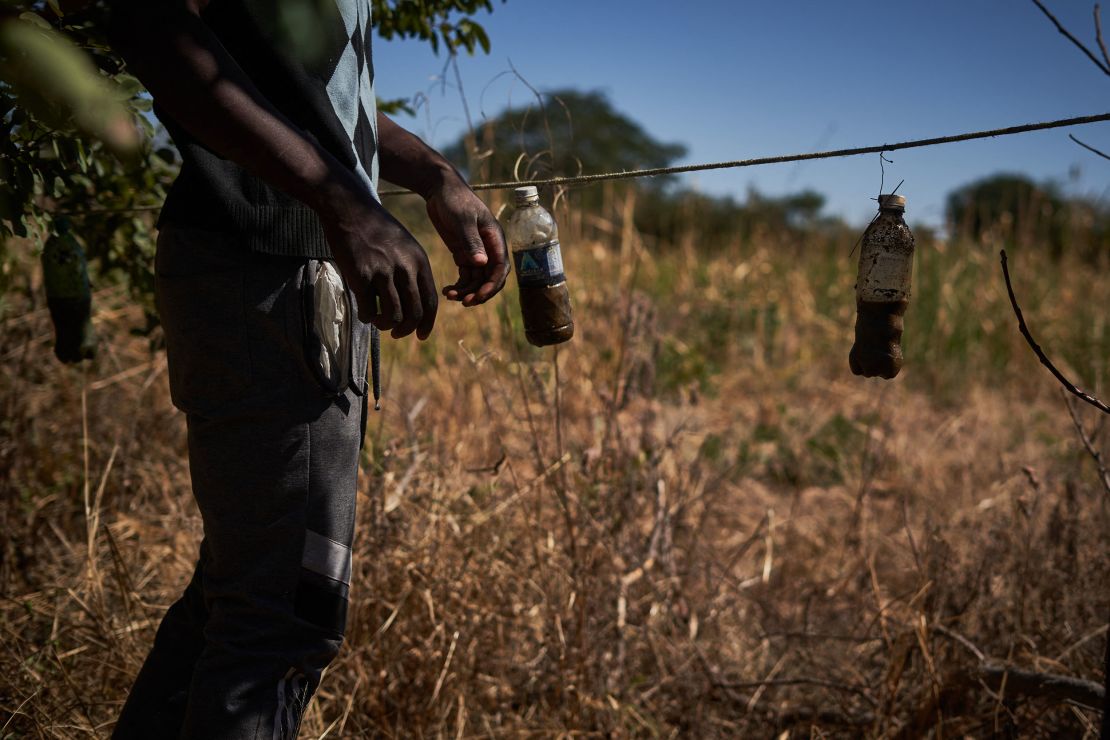
Bottles with homemade, non-lethal repellents around a perimeter fence at a homestead in Dete near Hwange National Park, Zimbabwe on May 25, 2022.

Bottles with homemade, non-lethal repellents around a perimeter fence at a homestead in Dete near Hwange National Park, Zimbabwe on May 25, 2022. Zinyange Auntony/AFP/Getty Images

In Zimbabwe, where the government says there are more than 85,000 elephants, some experts are concerns numbers have been overinflated.

It’s “a myth,” said Farai Maguwu, founding director of the Centre for Natural Resource Governance, because it takes no account of the fact elephants roam freely between countries in the region.

Safari operators in Hwange National Park in Zimbabwe, one of the areas earmarked for cullings, “are actually complaining about a declining number,” Maguwu said.

Elephants are not the problem, he argued, pointing to poor land management and the increase of human settlements next to national parks and in buffer zones designed to separate animals and people.
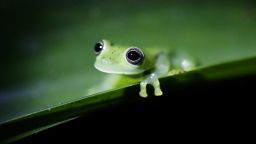
An emerald glass frog (Espadarana prosoblepon) in the Chuchanti reserve, in Darien, Panama, 28 March 2023 (issued 05 April 2023). In the reserve area there are more than 40 camera traps, twenty in the canopy - the layer of branches and leaves formed by the tops of neighboring trees - and the others in the understory - the variety of vegetation that grows in the areas closest to the floor-. The idea is to collect data that allows understanding "the dynamics" of this neotropical forest.
Chucanti, a reserve  in the Darien of Panama with an overwhelming biodiversity - 28 Mar 2023

Related articleGlobal loss of wildlife is ‘significantly more alarming’ than previously thought, according to a new study

Conservationists are also concerned that killing these wild animals will push the delicate ecology of the two countries out of balance, making them even less resilient to drought.

It could also inadvertently increase human-elephant conflict, said Elisabeth Valerio, safari operator and conservationist in Hwange Park, Zimbabwe. The trauma of family members being killed can make elephants more aggressive, she told CNN.

Both Namibia and Zimbabwe say professional hunters will ensure entire groups are killed to prevent this.

Perhaps one of the biggest criticisms is that culls can’t do anything meaningful in the face of severe drought.

It’s a “false solution” when so many millions of people need food aid, Maguwu said. “A lot of us are hearing for the first time that elephant meat can be eaten,” he added, and expecting poor families to eat this meat is “an insult.”

The culls will do nothing to address hunger in anything but the most short-term way, said Megan Carr a senior researcher at the EMS Foundation, a South African social justice organization, calling them “misguided and cruel.”

Conservation biologist and natural resources consultant Keith Lindsay, also worries the culling could be used to push for a weakening of international rules on wildlife trading, such as selling ivory.

It could set up the narrative that “people who are opposed to wildlife trade, are opposed to starving people,” he told CNN.
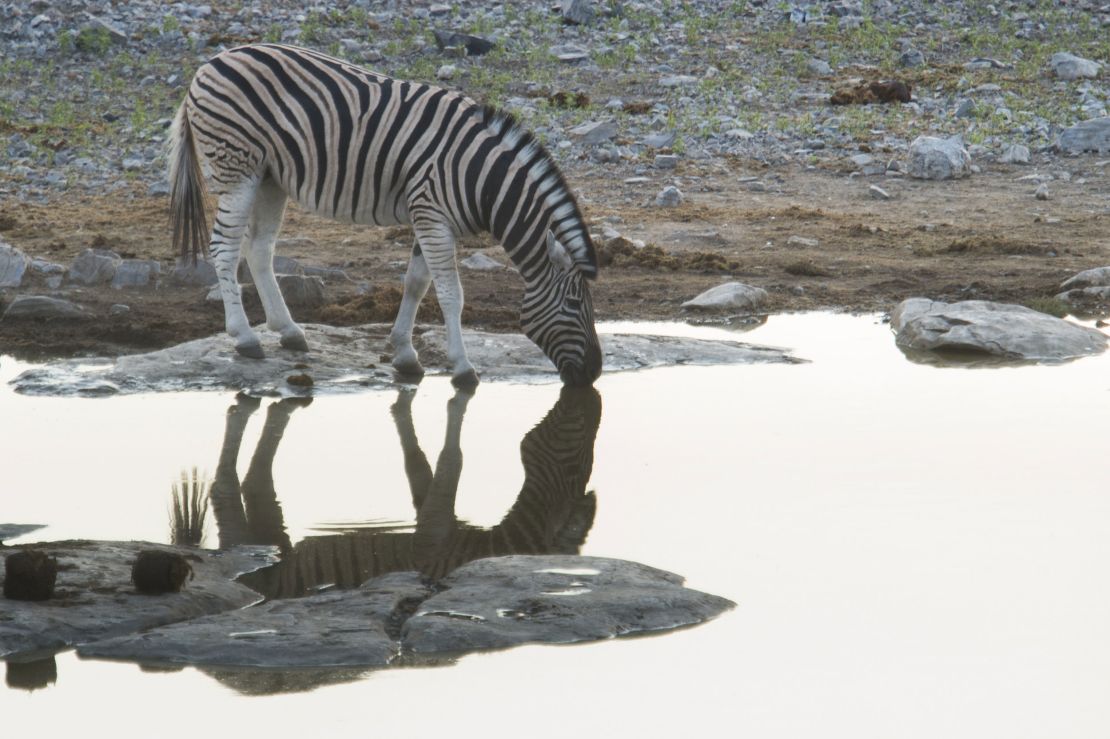
A zebra at a waterhole in May 2015 at Halali in Etosha park in Namibia.

A zebra at a waterhole in May 2015 at Halali in Etosha park in Namibia. Martin Bureau/AFP/Getty Images

Namibian government spokesperson Muyunda said many of the criticisms ignore the suffering the drought is causing to both people and animals.

There is hypocrisy, too, he added, as Western countries have also culled animals. “Just because it’s Namibia and it’s an African country, then the decision is questioned.”

Brown, from the Namibian Chamber of Environment, went further: “It’s actually a racist thing: ‘Africa, they can’t manage their wildlife. We need to tell them how they should do it.’”

But as fossil fuel pollution helps drive increasingly severe and devastating droughts, many conservationists fear these culls will open the door to much more extensive wild animal killings.

The government may start something which they won’t be able to finish,” Maguwu said. “Something that will go on and on.”

Four Horrific Trophy Hunting Stories That Shook the World

6 hours ago

By Trinity Sparke

trophy hunter

Image Credit :Canon Boy/Shutterstock

 Add-Free Browsing

Subscribe to Newsletter

FoodMonster App

Support Us

Buy our Cookbooks

Sign Our Petitions

Help keep One Green Planet free and independent! Together we can ensure our platform remains a hub for empowering ideas committed to fighting for a sustainable, healthy, and compassionate world. Please support us in keeping our mission strong.Pay

Pay $49.99/Year + Go Ad-Free!

Trophy hunting, often framed as a controversial pastime, has long been a point of contention among wildlife enthusiasts and conservationists. While some argue that regulated hunting contributes to Conservation efforts, the grim realities behind certain hunts reveal a darker truth. Stories of creatures hunted for sport, often with little regard for their ecological importance or emotional impact, highlight the disturbing nature of this practice.

1. Cecil the Lion

Source: ABC News/Youtube

by Taboola

Sponsored Links

You May Like

AdYETI CoolersNever Watered Down

Take A Hot Plunge

Take It Stronger

Lasts Through Every Season

The ongoing global outrage over Walter Palmer’s killing of Cecil the lion highlighted serious ethical concerns regarding trophy hunting, particularly after investigations revealed he lacked a legal hunting permit. Critics argued that such practices, often defended as beneficial to Conservation, actually undermined efforts to protect endangered species and ecosystems. Palmer’s previous illegal hunting incident exemplified a troubling disregard for wildlife laws, suggesting that the purported Conservation funding from trophy hunting was often overstated.

2. Trophy Hunter Kills Sleeping Lion

Source: PETA/Youtube

According to this video, “many lions killed for “sport” in South Africa are captive-bred, making them habituated to humans and ultimately “easier” targets for trophy hunters.” PETA released video footage showing a group of hunters ambushing a captive-bred lion resting under a tree. After being shot and wounded by one of the hunters, the lion roared and charged, only to be met with four more shots from the hunter and his guides before he was finally killed.

3. Trophy Hunter Kills Giraffe

Source: CBS Evening News/Youtube

American trophy hunter Tess Talley faced significant backlash after posting a photo of herself with a giraffe she killed, prompting her to defend the image. In a segment titled “Trophy Hunting: Killing or Conservation,” Jim Axelrod explored the controversy surrounding her hobby of hunting big game, which often involves animals kept in captivity. Talley drew criticism after the photo of her killing the giraffe went viral on social media. She claimed that the pictures were part of her effort to display respect for the animals, attempting to justify her actions amidst outrage.

4. Girl Poses With Giraffe and Zebra

Source: ABC News/Youtube

A 12-year-old girl named Ariana Gordin ignited fierce outrage after posting photos of her trophy hunts on social media, revealing her passion for hunting exotic animals. Despite her young age, Ariana had already become a skilled sharpshooter and traveled abroad for big game hunts, including a recent safari in Africa with her father. While she defended her actions, expressing pride in her experiences, the online backlash was overwhelming, with many condemning her and even issuing death threats. Her father stated that they were offered the opportunity to hunt a problematic giraffe, which sparked further debate over the ethics of hunting.

The stories of trophy hunting show us the serious problems with this practice. They remind us how important it is to protect wildlife and the natural world. Each case highlights the need to rethink how we treat animals and work towards better ways to care for them. By standing against trophy hunting, we can help ensure that animals live freely and that future generations can enjoy the beauty of wildlife without the threat of unnecessary harm.

Being publicly-funded gives us a greater chance to continue providing you with high-quality content.

Why Tanzania is doubling down on elephant hunting

Martin K.N Siele

Oct 8, 2024, 12:27am PDT

africaAfrica

Monicah Mwangi/Reuters

PostEmailWhatsappCopy link

Sign up for Semafor Africa: A rapidly-growing continent’s crucial stories. Read it now.Your Email addressSign Up

In this article:

The Scoop

Know More

Martin’s view

The View From Zimbabwe

Notable

Title icon

The Scoop

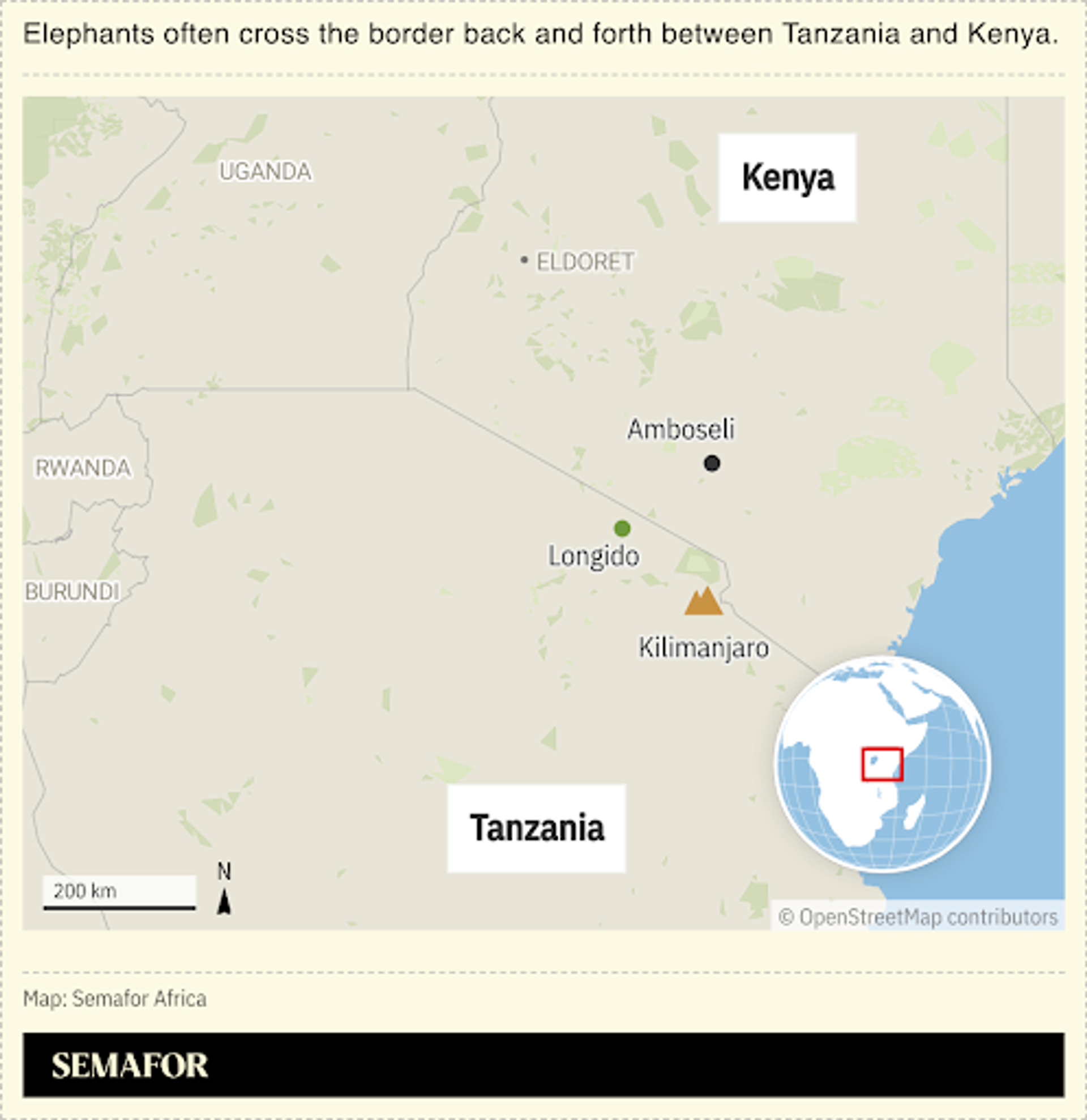
NAIROBI — Tanzanian authorities are keen on issuing more hunting permits despite mounting international pressure for the country to ban elephant trophy hunting in the areas surrounding its border with Kenya.

Legal killings of elephants for sport in northern Tanzania have risen over the last year prompting concerns over a dwindling elephant population. This has led to international conservationist groups calling for a ban on the hunting of cross-border elephants.

While elephant hunting is permitted in Tanzania, it has been illegal in Kenya since 1973. Elephants which roam freely between the border areas have traditionally been protected by a gentleman’s agreement between the two countries, but conservationists say this has been ignored in the past year.

AD

At least five elephants were legally targeted and killed by trophy hunters in northern Tanzania over the previous eight months, according to various conservation groups.

But, in a letter dated Sept. 18, seen by Semafor Africa, senior Tanzanian officials and researchers doubled down on allowing the hunting of elephants in the area. They cited human-wildlife conflicts and the economic benefits derived from hunting.

“Fourteen villagers in the Longido district and more than 500 acres of crops have been trampled,” it reads in part. “At the same time, trophy hunting brings in huge benefits, funding conservation, paying rangers’ salaries, and building water wells, schools and other critical infrastructure for the communities.”

AD

The letter’s authors, who include representatives of the Tanzania Wildlife Management Authority, Tanzania Hunting Operators Association and the MP for Longido, wrote that Tanzania has “transparent hunting regulation” geared towards protecting both wildlife and the communities living alongside them. It was addressed to the executive editor of Science Magazine.

The New York-based journal in June published a letter by more than 20 elephant biologists and conservationists calling for a stop to the hunting of elephants in the borderlands and a harmonized conservation strategy involving Kenya and Tanzania.

Title icon

Know More

The greater Amboseli-West Kilimanjaro elephant population, spanning both sides of the Kenya-Tanzania border, is made up of approximately 2,000 individual elephants. Around 600 are males, of which 10 are super tuskers — elephants whose tusks weigh over 100 pounds each or touch the ground.

AD

In their letter, Tanzanian officials criticized Science magazine for failing to publish various responses submitted by Tanzanian researchers to the call by conservationists to stop elephant hunting in northern Tanzania. They accused the magazine of discrimination.

“The original letter you published, written predominantly by white authors, none of whom come from Tanzania (many instead from the Global North), only told one side of the story,” they insisted.

In response Science magazine told Semafor Africa that it had received numerous letters in response to a published letter calling for an end to elephant hunting in Tanzania and would not have space to publish all but would be publishing a subset of them.

A spokeswoman for the magazine also pushed back at suggestions of discrimination. “The Science family of journals is very focused on elevating the voices and concerns of authors based in Africa, through efforts including research, commentary, and news.”

Title icon

Martin’s view

Unlike Kenya, Tanzania’s embrace of hunters has led to the development of a booming trophy hunting industry in the country. In 2022, Tanzania’s trophy hunting industry generated a reported 63.03 billion Tanzanian shillings ($23 million).

Earnings from hunting permits are a significant revenue source for the government. Hunting licenses cost around $60,000 a year, with additional fees for hunting elephants and lions.

Communities seriously affected by human-wildlife conflict could also be more likely to support hunting. However, the killings of elephants by hunters and the supposed economic benefits may not be sustainable in the long term. according to conservationists. They project that the remaining 10 super tuskers in the area could be dead in three years.

Kenya’s wildlife conservation strategy, anchored on tourism as opposed to trophy hunting, would also be affected by a dwindling elephant population in the famed Amboseli region. It is therefore important for authorities in both countries to devise effective joint strategies for conservation in the borderlands.

Title icon

The View From Zimbabwe

Authorities in Zimbabwe last month decided to cull up to 200 elephants to help feed local communities facing acute hunger after the country’s worst drought in four decades. It would be the country’s first elephant culling since 1988 and take place in Hwange, Mbire, Tsholotsho and Chiredzi districts. Authorities said the culling would help towards decongesting the country’s main parks which can only sustain 55,000 elephants but the country is home to 84,000.

Title icon

Notable

In April, the president of Botswana threatened to send 20,000 elephants to Germany in a dispute over conservation, reported the BBC.

Zimbabwe’s elephant culling plan stirs debate

Zimbabwe’s elephant culling plan stirs debate (msn.com)

Enock Muchinjo  23 hrs agoLike|12


Drones shot down over Iraqi airbase housing US troops and coalition forcesHow a WWII Japanese sub commander helped exonerate a U.S. Navy…

Harare, Zimbabwe – Africa’s elephant population has been dangerously declining – but not in Zimbabwe.a baby elephant standing next to a body of water: Authorities estimate more than 100,000 elephants live within Zimbabwe's boundaries [File: Philimon Bulawayo/Reuters]© Authorities estimate more than 100,000 elephants live within Zimbabwe’s boundaries [File: Philimon B… Authorities estimate more than 100,000 elephants live within Zimbabwe’s boundaries [File: Philimon Bulawayo/Reuters]

Authorities in the southern African country estimate that the number of its mammoth mammals currently stands at slightly more than 100,000 – up from 84,000 in 2014, when the last census was conducted – for a carrying capacity of about 45,000.https://www.dianomi.com/smartads.epl?id=3533

The surplus has prompted the government in recent weeks to mull the mass killing of elephants – something the country last did in 1988 – as a population-control option in order to protect other wildlife, as well as the country’s vegetation.

“We are overpopulated when it comes to elephants in this country,” Tinashe Farawo, spokesman of the Zimbabwe Parks and Wildlife Authority (ZimParks) told Al Jazeera.

Authorities maintain the growing elephant population poses a risk to other animals by causing habitat destruction, and has also led to an increase in the instances of dangerous human-wildlife interaction, with dozens of deaths reported in recent years.

“We have vultures that breed in trees. The vultures are no longer breeding in Hwange (National Park); they have moved to other places because elephants have the habit of knocking down trees,” Farawo said.

He noted that the plan is still in its “formative stages” and a final decision has yet to be made, but stressed that culling is permitted by Zimbabwe laws.

But the Centre for Natural Resource Governance (CNRG), an environmental and human rights watchdog in Zimbabwe documenting poaching, opposed the plan.

“Culling will eventually lead to extinction of these elephants,” spokesperson Simiso Mlevu told Al Jazeera.

“This is just the beginning,” he said. “Very soon we will be forced to travel to other countries just to see an elephant.”

Earlier this year, the International Union for Conservation of Nature (IUCN) listed the African forest elephant as “critically endangered” and the African savanna elephant as “endangered”, citing a surge in poaching and loss of habitat for the declining numbers.

According to the Swiss-based group’s latest assessments, the number of African forest elephants dropped by more than 86 percent over a period of 31 years. Meanwhile, the population of African savanna elephants fell by at least 60 percent over the past half a century.

Zimbabwe has the continent’s second-largest elephant population after Botswana, which boasts about a third of Africa’s 415,000 remaining elephants.

Other options

Besides culling, another option considered by Zimbabwean authorities is to move elephants from areas with a high population. But both are hampered by lack of funds, Farawo said.

“It’s an expensive process and right now we have no money,” he added. “In 2018, we moved 100 elephants and the exercise cost us $400,000.”

Farawo said ZimParks, a government body, requires at least $25m annually for its operations. But the body has not received any funding from Zimbabwe’s cash-strapped government since 2001.

Farawo said his organisation needed revenue to conserve elephants but its finances took a big hit in 2020 as the coronavirus pandemic severely affected the country’s tourism industry.

In late April, Zimbabwe said it was planning to sell hunting licenses to kill 500 elephants to generate revenue. Trophy hunters are expected to pay between $10,000 and $70,000 depending on elephant size.

The 500-elephant hunting quota, which is separate from the culling plan, is allowed by the Convention on International Trade in Endangered Species of Wild Fauna and Flora (CITES), according to Farawo, who said that “elephants must pay for their upkeep”.

“The elephants also have to take care of themselves, so we must be allowed to trade in order for that to happen,” Farawo said.

“[This] means that money must be generated, revenue coming off the elephants. Right now, tourism is dead, so people aren’t coming to see the elephants.”

But Mlevu, of CNRG, said that culling would affect tourism – a position echoed by John Robertson, a prominent Zimbabwean economist.

“It inflicts serious damage on wildlife,” Robertson told Al Jazeera. “Losing wildlife also reduces the prospects of tourism, which the country heavily relies on.”

Audrey Delsink, wildlife director of Humane Society International/Africa, said killing elephants has “a traumatic effect on the remaining population”. She said it is for that reason that authorities in South Africa are using contraception as a population-control option.

Noting that 76 percent of elephant populations in Africa cross borders, Delsink told Al Jazeera: “Management actions taken at an incorrect scale can have massive consequences and ripple effects that extend far beyond the targeted zone, area or population.

“Therefore, Zimbabwean management choices could have devastating consequences for transient elephants. The situation in Zimbabwe appears to be not so much about elephant numbers per se, but rather about funding the management authority – the elephants are simply a means to this end.”

JFK Passenger Had 35 Live Finches In His Pants, Jacket: Feds

https://patch.com/new-york/new-york-city/jfk-passenger-caught-35-live-finches-clothes-feds?fbclid=IwAR12-TzEoPNgayAYSs5Bq02nIibgxQtU5gSJEZhKqUm1umIr9yoC3WhbzY0

A man from Guyana — Kevin Andre McKenzie, 36 — is accused of smuggling the birds that are prized in singing contests, authorities said.

Matt Troutman, Patch StaffVerified Patch Staff BadgePosted Tue, Apr 27, 2021 at 4:45 pm ET|Updated Tue, Apr 27, 2021 at 5:02 pm ET

Reply

One of 35 finches found stuff in hair curlers that customs officials said they found on a man accused of smuggling the birds through JFK Airport.
One of 35 finches found stuff in hair curlers that customs officials said they found on a man accused of smuggling the birds through JFK Airport. (United States District Court Eastern District Of New York)

NEW YORK CITY — A passenger flying into John F. Kennedy International Airport tried to smuggle a flock of finches into the country, authorities said.

Customs officials found 35 live finches stuffed in hair curlers concealed on the passenger — Kevin Andre McKenzie, 36 — Monday, according to a federal criminal complaint.

The birds are prized for singing contests in Brooklyn and Queens, a U.S. Fish and Wildlife Service agent who filed the complaint wrote.https://45560797dd1b5e4c83b3b21ac05689ab.safeframe.googlesyndication.com/safeframe/1-0-38/html/container.html

“In such contests, often conducted in public areas like parks, two finches sing and a judge selects the bird determined to have the best voice,” the complaint states. “Many who attend the singing contests wager on the birds. A finch who wins these competitions becomes valuable and can sell for more than $10,000. Although certain species of finch are available in the United States, species from Guyana are believed to sing better and are therefore more valuable.”

McKenzie is a resident of Guyana, authorities said. He flew from the South American country and arrived at JFK, where customs agents searched him, the complaint states.
Subscribe

They found the birds stuffed in hair rollers concealed beneath his pants legs and jacket, the complaint states.

A criminal complaint shows bird-stuffed hair curlers authorities said they found Monday on a man they accused of smuggling. (United States District Court Eastern District of New York)

“The defendant told agents that he had been offered $3,000 to smuggle the birds into the United States,” the complaint states. “He was paid $500 before the flight, and he expected to
receive the remaining $2,500 when he exited Customs.”

United States law prohibits importing wildlife and specifies commercial birds must be quarantined for 30 days to prevent the spread of diseases such as bird flu.

McKenzie faces a charge of intentionally and unlawfully importing and bringing into the United States merchandise contrary to law. He was released on a $25,000 bond.

AFRICA: Migration as a solution to the overpopulation of elephants in Botswana?

By Jean Marie Takouleu – Published on November 5 2020 / Modified on November 5 2020

AFRIQUE : la migration comme solution à la surpopulation des éléphants du Botswana ?©Steffen Foerster/Shutterstock

The governments of Botswana and Angola have set up a joint initiative to promote the migration of elephants to Angola. This solution could save Botswana’s elephants, which are at the root of tensions between the authorities and farmers.

Botswana has long been regarded as Africa’s elephant sanctuary and is now seeking to reduce its pachyderm population. The animals, whose range is gradually shrinking, are also being hunted by farmers, who are accused of destroying plantations. The problem is such that the elephant issue is now at the heart of election campaigns, with politicians no longer hesitating to propose the culling of pachyderms outright.

But the solution may lie elsewhere, including the migration of these animals to other wilderness areas. The Botswana authorities are seriously considering this option. In fact, they have launched an initiative with the Angolan government to create crossings to allow elephants to move from northern Botswana to southern Angola. This is in fact an ancient migration route that elephants used to use to escape the harsh dry seasons of northern Botswana and spend this time in the lush vegetation of south-eastern Angola.

Demining the migratory corridor

But Angola’s civil war between 1991 and 2002 reduced the movement of pachyderms and other wildlife, forcing them to confine themselves to Botswana and other neighbouring countries. According to the Angolan authorities, before the civil war Angola had a population of 100,000 elephants. Today, the country has only 10,000. Although calm has since returned to the Angolan reserves, elephants are still reluctant to return to Angola and their migration corridor is still littered with mines laid during the civil war.

This is why the Angolan and Botswana authorities are now working to clear the pachyderm migration corridor of mines. In addition, the Angolan government has already allocated 60 million dollars for mine clearance in the south of the country. But more funds will be needed to facilitate the migration of the largest land mammal.

Financing the development of migration corridors

According to the authorities in both countries, additional funds are needed to remove obstacles to elephant movement, including the dismantling of cattle fences, the protection of migration corridors and the education of local communities. “Angola needs to prepare for the planned migration and restocking of elephants and other wildlife in the country,” says Tamar Ron, an ecologist and biodiversity consultant with the Angolan government.AFRICA: Migration as a solution to the overpopulation of elephants in Botswana?

An elephant in Kissama National Park in northwest Angola ©Gabs 1510/Shutterstock

“Southern Angola provides prime habitat for elephants and, if conditions are safe for elephants, they will return to Angola in large numbers. It is natural for elephants to leave areas with high elephant numbers and seek out areas with fewer elephants for safe food and water,” says Mike Chase, founder of Elephants Without Borders, an organisation that works on elephant research.

A deconfinement solution for elephants

The migratory solution advocated by the Angolan and Botswana governments should deconflict the 135,000 elephants of Botswana, the vast majority of which live in an area of 520,000 km2, in the Kavango-Zambezi Transboundary Conservation Area (Kaza). It is located in a five-border region in Southern Africa. Kaza includes most of the Upper Zambezi River Basin and the Okavango Basin and Delta. The area includes the Caprivi Strip in Namibia, the south eastern tip of Angola, southwestern Zambia, the northern Botswana wilderness and western Zimbabwe.

Rare animal photographed alive for the first time in the wild

https://thehill.com/changing-america/sustainability/environment/546138-rare-animal-photographed-alive-for-the-first-time

WildCRU is trying to make a difference.ByChristian Spencer | April 2, 2021https://imasdk.googleapis.com/js/core/bridge3.448.1_en.html#goog_1373678144Volume 20%This video will resume in 10 seconds 

Story at a glance

  • A rare species was spotted.
  • Scientists can now use camera traps, instead of bushmeat hunters, to find an animal’s whereabouts.

Camera traps, devices used to capture wildlife using motion sensors, are saving the animals from bushmeat hunters and spotting rare animals in the process.

In the West African country of Togo, researchers were able to see images of the Walter’s duiker, a petite African antelope species, for the first time in the wild, according to Gizmodo.

Rare species of aardvarks and a mongoose were also discovered roaming the wild in Togo using camera traps. 

“Camera traps are a game changer when it comes to biodiversity survey fieldwork,” University of Oxford wildlife biologist Neil D’Cruze told Gizmodo. “I’ve spent weeks roughing it in tropical forests seemingly devoid of any large mammal species. Yet when you fire up the laptop and stick in the memory card from camera traps that have been sitting there patiently during the entire trip—and see species that were there with you the entire time —it’s like being given a glimpse into a parallel world.”


America is changing faster than ever! Add Changing America to your Facebook or Twitter feed to stay on top of the news.


For bushmeat hunters, who specialize in gathering wildlife in rural communities, their services, considered illegal and an unsustainable over-hunting practice, are no longer needed for biologists to gather information. Some bushmeat hunters would kill rare animals to sell their rare carcasses to market.

The Walter’s duiker was discovered in 2010 when bushmeat specimens were compared to other known duiker specimens. However, recent images of the Walter’s duiker are the first scientists have ever seen. Few and far between, some rare species do not make the endangered listing because of the International Union for Conservation of Nature classifies them as “data-deficient.” 

The Wildlife Conservation Research Unit, a Department of Zoology at the University of Oxford in England, also known as WildCRU, is trying to make a difference.

“This graceful antelope has, for the last 200 years, displayed a great talent for avoiding scientists, but proven tragically less adept at avoiding nets, snares and hunting dogs,” zoologist at the University of Oxford David Macdonald said. “Plotting their whereabouts in bushmeat markets is roughly analogous to plotting the habits of deer in the UK by mapping their occurrence on butchers’ slabs.”

Should Trophy Hunting remain legal?

http://www.dgschapter.com/should-trophy-hunting-remain-legal/?fbclid=IwAR2BT-BaYMh7IkLRa5buUOjFZxQw3_GrqVLUEyyoLss5dgYvS55QE3FC4mU

Omila, Science And Environment WriterOpinion / Science And Environment

Read Time:4 Minutes

“Ever since we arrived on this planet as a species, we’ve cut them down, dug them up, burnt them and poisoned them. Today we are doing so on a greater scale than ever.” – Sir David Attenborough

I start my article with this quote not only out of respect to its author, climate change activist David Attenborough, but due to its succinct message.

This quote is so brilliant because it can be interpreted in so many ways. This quote encapsulates how we, as the human species, have affected every element of the earth’s circle of life through our insensitive desire to be at the top of the food chain.

The “them” can apply to anything: fossil fuels, wildlife, the ocean and, most importantly, the animals that we live side by side with.

In my eyes, I see this quote as a message to the world and its leaders on why trophy hunting (the act of killing a wild animal for sport) should not remain legal any longer.

Most people struggle to understand why hunters want to take life from such beautiful animals.

The statistics from a 2016 report from the International Fund for Animal Welfare found that 1.7 million hunting trophies were traded between nations between 2004 and 2014, of which 200,000 were endangered.”

Even though this data was collected a few years ago, it still highlights the ever increasing number of trophies being exported and traded, meaning more and more animals are being killed. Which I believe needs to stop.

There is an ongoing biodiversity crisis on our planet. Biodiversity refers to the variety of animals and life on earth and sadly this is ever decreasing. A statistic from CareOurEarth says that the current rate of global extinction is 100 times higher than the average over the last million years.

Serious action needs to take place in order to prevent any more of the Earth’s biodiversity from being lost- and this must start with change. Trophy hunting laws might be a good place to start.

File:Cecil the lion at Hwange National Park (4516560206).jpg
Walter Palmer’s killing of Cecil made international news in 2015. It is estimated that hunting has led to the lion species’ gene pool shrinking by 15 percent in the space of 100 years.

This lion, Cecil, lived in Hwange National Park in Matabeleland, Zimbabwe. On the 2nd July 2015, he was killed by American trophy hunter Walter Palmer. Cecil was allegedly lured out of his enclosure then shot with a bow and arrow and left there in extreme pain. Palmer then came back the next day to shoot the lion. On discovery that Palmer had a permit, making the murder legal, controversy arose. A petition was created to change laws on big game hunts in Zimbabwe.

There have been numerous cases where hunters have told journalists and news broadcasters that there is a conservation side to trophy hunting. Some argue that the land allocated for trophy hunting provides protection to species’ habitats and can benefit local communities with both employment and wildlife (when done correctly).  Canned hunting in particular means the animals are bred and the species are saved from otherwise definite extinction in the wild.

And yet the UN Food and Agriculture Organisation found that that only 3% of hunting revenue went to causes such as helping communities. This tells us that there is only a minor contribution to communities and they are able to cope with or without the revenue brought in, even before any ethical considerations.

These so called acts of conservation make the wildlife into an economical asset, which does not solve the problem- rather, it endangers species by giving them an economic value that humans might seek out. The treatment of species which are not yet endangered as assets to be collected or traded will surely lead them to the same fate as those already under threat.

Fortunately, there are wildlife conservation examples to be seen, mainly in Africa, which help preserve suffering species from game hunting. An example is The Makalali Game Reserve ,which is one of South Africa’s private reserves. Their aim is to counteract illegal hunting and wildlife trade by game hunters preying on critically endangered animals. The conservation area gives shelter to the animals known as ‘The Big 5’: lions, elephants, leopards, buffaloes and rhinos.

File:Herd of Elephants.jpg
Elephants are in the top five most sought after animals for trophy hunters.

These animals are the most likely to be hunted due to their distinctive features; whether that is tusks from an elephant or a fur coat from a leopard- these are financial opportunities to hunters, who will either illegally or legally sell these items as commodities, or keep them for their own display.

The ban of trophies being imported to the UK through new laws has seen improvement, and is expected to dis-incentivise hunters who can no longer bring their trophies home. This is a glint of hope but there is a lot that still needs to be done.

I end this article with yet another quote by Sir David for the younger generation to ponder on.

“Cherish the natural world, because you are a part of it and you depend on it.”

Feature lion image © Kevin Pluck via Wikimedia Commons

Cecil the lion picture via Wikimedia Commons © Daughter#3

Antelope in the grass © Stevepb via Wikimedia Commons

Elephants picture © Benh Lieu Song via Wikimedia Commons

Test drilling for oil in Namibia’s Okavango region poses toxic risk

Test drilling for oil in Namibia’s Okavango region poses toxic risk (msn.com)

Jeffrey Barbee  4 hrs ago


Colorado and Wyoming brace for severe snowstorm and potential blizzard conditions this weekendBrazil plunges into crisis as a second wave and deadly new variant overwhelm hospitals

The Canadian oil and gas company ReconAfrica began exploratory drilling in Namibia upstream of the wildlife-rich Okavango Delta in January. According to the company’s aerial imagery and an independent review, they don’t appear to have taken what experts say is an environmentally responsible measure to protect the local water supply from contamination.a group of giraffe standing on top of a grass covered field: Botswana. Okavango Delta. Khwai concession. Pack of African wild dogs (Lycaon pictus) looking out for prey.© Photograph by Danita Delimont, Alamy Stock Photo Botswana. Okavango Delta. Khwai concession. Pack of African wild dogs (Lycaon pictus) looking out for prey.

Namibia is a water-scarce country, and when news of the company’s project became more widespread, communities expressed concern that contaminants from drilling would seep into shallow aquifers that supply drinking water and irrigation for crops.https://www.msn.com/en-us/news/us/test-drilling-for-oil-in-namibia-s-okavango-region-poses-toxic-risk/ar-BB1ewtEC?ocid=msedgdhp

Conservationists also worry that contamination from the test drilling could affect wildlife in the vicinity—elephants, Temminck’s ground pangolins, African wild dogs, martial eagles—and in the UNESCO-recognized Okavango Delta some 160 miles downstream.

A large waste, or reserve, pit next to the first test well appears in a video that ReconAfrica posted on its website on January 10. Such pits are for storing the mud, fluids, and other materials—which may contain dangerous chemicals or be hypersaline—that come up when drilling for oil or natural gas. In British Columbia, Canada, where ReconAfrica is based, it’s standard industry practice to line these pits with an impermeable barrier that prevents chemicals from seeping into the earth and groundwater.a train is parked on the side of a dirt field: tktk© Photograph by John Grobler tktk

ReconAfrica spokesperson Claire Preece told National Geographic in October 2020 that drill cuttings would “be managed in lined pits.” She also said that “ReconAfrica follows Namibian regulations and policies as well as international best practices.” According to Namibian law, the company must “control the flow and prevent the waste, escape or spilling” of petroleum, drilling fluid, water or any other substance from the well.

In the company’s video, no lining is visible.

Namibian journalist John Grobler, who visited the site on January 23, confirmed to National Geographic that the reserve pit was unlined and had liquid pooling in it.

“From an environmental aspect this is grossly unacceptable, and from a social aspect [it] is reckless and disgraceful,” says Jan Arkert, a consulting engineering geologist based in Uniondale, South Africa, who has worked for decades on drilling-related projects. “The communities are totally dependent on groundwater for domestic and agricultural purposes, and any contamination to the aquifer will be all but impossible to contain and clean up.”

Video: Radioactive contamination (AFP)

a man and a woman looking at the camera: WH: Microsoft Exchange hack 'significant'
Associated Press Logo
a man wearing a suit and tie
FOX News Logo
Andrew Cuomo looking at the camera
FOX News Logo

Arkert says that if the company chose to line the pit now, after drilling has started, it would be complicated. It would involve multiple steps, including removing the waste already there and disposing of it at a suitable facility, preparing the underlying gravel layer to ensure it won’t puncture the liner, and then installing the liner itself, which might have to be imported. Each step, Arkert says, is time consuming and likely would take at least three to four weeks.

“It looks to me like drilling fluids from the rig are being discharged into the unlined reserve pit,” says Matt Totten, Jr., a former exploration geologist for the oil and gas industry who has worked on projects in the United States, after he examined ReconAfrica’s video and still images. “Notice the dark brown discolored areas in the pond next to the rig where drilling fluids would be discharged.”

After reviewing another aerial video from drill site published by the German news program VOX on March 4, Totten confirmed that the now very full pit still “appears unlined and likely filled with a mixture of rainwater and drilling fluids.”

ReconAfrica did not respond to multiple requests for comment about its reserve pit.

To get permission from the Namibian government to drill exploratory wells, ReconAfrica had to do an assessment of their environmental impacts. The company’s resulting report referred to a waste “pond” and noted that it would “scrape all waste that has collected in the pond and dispose of these and the pond lining at a suitable site.”

Arkert, who joined a Zoom conference on oil and gas development in Africa on February 17 hosted by the European Association of Geoscientists and Engineers, asked Scot Evans, the CEO of ReconAfrica, why the company didn’t line the pit.

Evans didn’t answer the question directly but said that in Canada the fluid “is used as fertilizer.” He added, “We are going to have a little experiment when we are done with the local [agriculture] people to introduce fertilizers to the community.”

According to Arkert, that answer “can only be described as bizarre,” because Evans is referring only to the drill fluid. But what’s particularly dangerous are naturally occurring compounds such as benzene, ethylene, toluene, and zylene, as well as radioactive water, which come to the surface if petroleum is discovered. The “brew that is stored in the unlined containment pond will be a cocktail of toxic liquid waste, fit only for disposal in a hazardous landfill site,” Arkert says.

Other experts agree. Water coming up the well when drilling into oil and gas formations “is typically saline, contains oil and grease, and can contain toxic organic and inorganic compounds, and naturally occurring radioactive materials,” says Surina Esterhuyse, a geohydrologist with the University of the Free State, in Bloemfontein, South Africa. Some of those chemicals have been proven to cause cancer, birth defects, and reproductive disorders in people, according to a 2016 study in the journal Environmental Health Perspectives.

According to a 2009 U.S. Fish and Wildlife Service report, reserve pits can contaminate farmland, streams, and drinking water sources and “can entrap and kill migratory birds and other wildlife.”

It is unclear what protocols ReconAfrica has followed for its first Namibian test well reserve pit to protect the area’s fragile ecosystem.

Wildlife Watch is an investigative reporting project between National Geographic Society and National Geographic Partners focusing on wildlife crime and exploitation. Read more Wildlife Watch stories here, and learn more about National Geographic Society’s nonprofit mission at nationalgeographic.org. Send tips, feedback, and story ideas to NGP.WildlifeWatch@natgeo.com

Algeria declares state of emergency over bird flu

OIE detected bird flu hotspot in Ain Fakroun town Tuesday

Abdurrazzak Abdullah   |10.02.2021Algeria declares state of emergency over bird fluFILE PHOTO

ALGIERS, Algeria

Algeria declared a state of emergency after World Organization for Animal Health (OIE)’s announcement of H5N8 bird flu outbreak in the country’s east, said Minister of Agriculture Abdelhamid Hamdani Tuesday. 

In a press conference, Hamdani said: “The source of this virus is migratory birds and we [Algeria] have put all regions on alert in anticipation of any emergency.”

He stressed that “the epidemic was contained in Ain Fakroun town which appeared in there.”

On Tuesday, OIE detected a bird flu hotspot in Ain Fakroun town of Oum El Bouaghi city.

Laboratory analyses revealed the spread of bird flu in the town, which infected 51,200 chickens before isolating the town.

The risk of humans potentially contracting the highly pathogenic H5N8 bird flu virus cannot be excluded, although the likelihood is low, according to the World Health Organization.

*Bassel Barakat contributed to this report from Ankara

https://www.aa.com.tr/en/africa/algeria-declares-state-of-emergency-over-bird-flu/2139509