


Here’s Mine:


Here’s Mine:
Mother and half-sister of animal ‘definitely showing signs of distress’
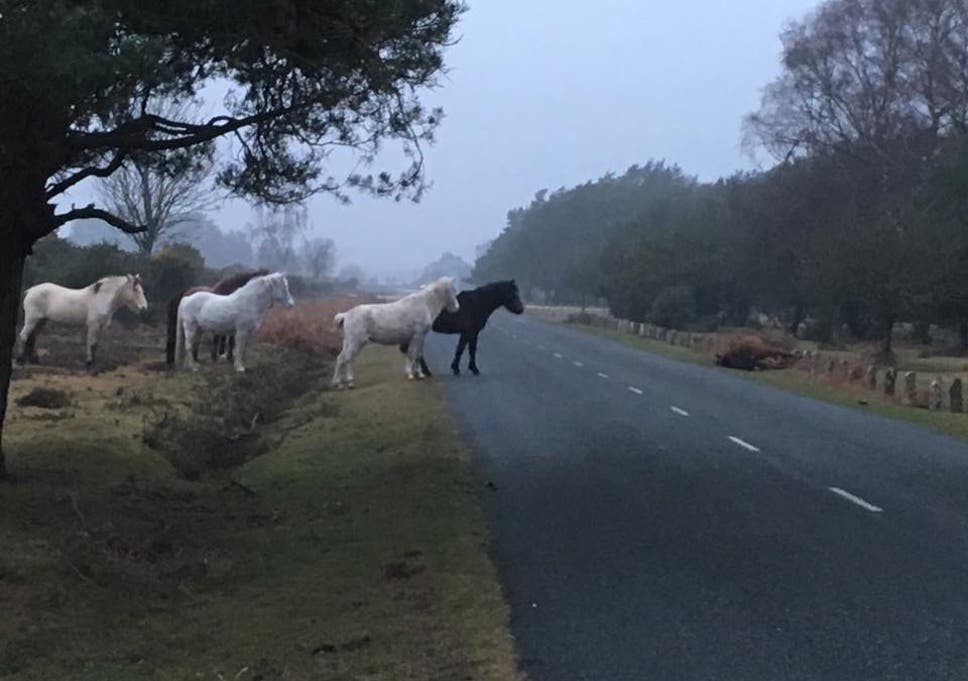
A herd of “grieving” ponies appeared to keep an all-night roadside vigil after one of their family members was killed by a motorist.
Sarah Simmons shared an image of the scene on social media in a bid to urge drivers to slow down in the New Forest, where ponies are allowed to roam freely.
“Broke my heart this morning seeing another pony killed on the Forest Road. Even more that her friends were looking on,” Ms Simmons wrote.
“In this case, Hazelhill’s mother and stepsister stood especially close vigil, and that makes sense as they were quite likely to have been emotionally close to Hazelhill.”
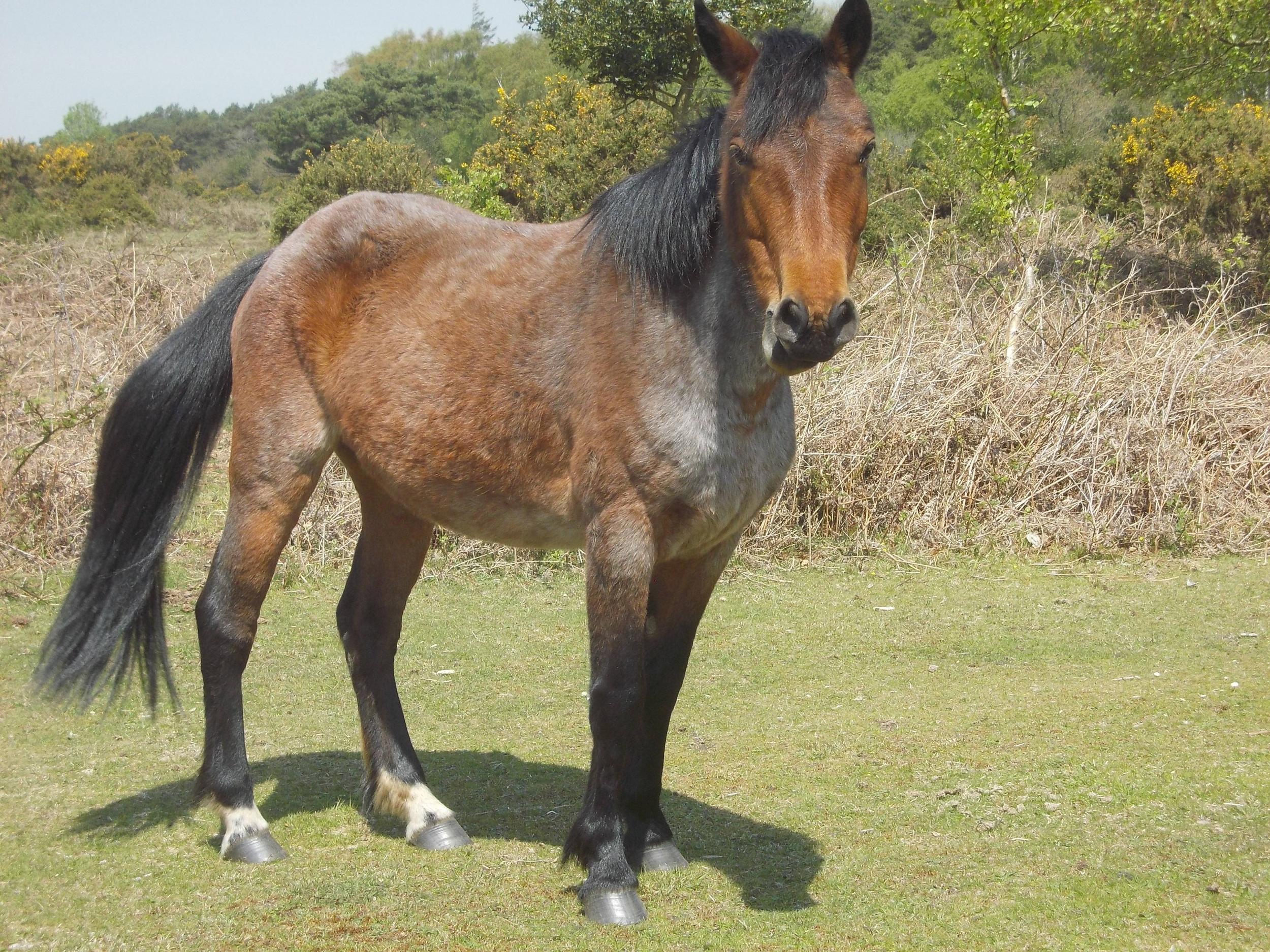
She added: “Horses feel deeply – joy as well as grief – and they think about their lives.”
The nine-year-old pony, which died from internal injuries and a broken leg, was Ms Stride’s third to be killed on the same stretch of road. She said it would have taken around 20 minutes to die.
“I don’t know what the answer is apart from to keep trying to educate the drivers,” Ms Stride said, adding: “They do grieve, and maybe that might make the drivers think.”
Ms Simmons, whose post has been shared thousands of times, wrote: “I hope by posting this it may make people realise that it’s not just the owner who it upsets but their herd members too.
“Slow down day/night on forest roads, these ponies have more rights to these roads than you do.”

When we think of compassionate, intelligent creatures, cows normally don’t come to mind.
However, cows actually communicate how they feel to one another through their moos, according to a new study. The animals have individual vocal characteristics and change their pitch based on the emotion they’re feeling, according to research at the University of Sydney.
Alexandra Green, a Ph.D. student at the university and the study’s lead author, said:
“Cows are gregarious, social animals. In one sense it isn’t surprising they assert their individual identity throughout their life.”
She said it’s the first time they’ve been able to study voices to obtain evidence of this trait.
Studying a herd of 18 Holstein-Friesian heifers over the course of five months, Alexandra found that the cows gave individual voice cues in different positive and negative situations. This behavior helps them communicate with the herd and express excitement, arousal, engagement, or distress.
Talking about the animals she studied, Ms. Green said:
“They have all got very distinct voices. Even without looking at them in the herd, I can tell which one is making a noise just based on her voice.”
She would record and study their “moos” to analyze their moods in various situations within the herd.
“It all relates back to their emotions and what they are feeling at the time,” she said.

Previous research has discovered that cow moms and babies use their voices to communicate individuality.
However, this new study shows how cows keep their individual moos throughout their lives, even if they’re talking to themselves. The study found that the animals would speak to each other during mating periods, while waiting for or being denied food, and when being kept separate from one another.
The research analyzed 333 cow vocalizations and has been published in Scientific Reports.
“Ali’s research is truly inspired. It is like she is building a Google translate for cows,” said Cameron Clark, an associate professor at the university.
Ms. Green said she hoped this study would encourage farmers to “tune into the emotional state of their cattle, improving animal welfare.”

Studies have shown that animals communicate with one another in similar ways to humans, taking turns in conversations. This is beneficial in the animal kingdom to communicate needs, such as where food sources are at or if the herd needs to move locations. It can also help animals communicate about an incoming threat so they can respond accordingly.
This research shows that animals are intelligent, sentient beings and deserve our respect. Vegetarianism and veganism are on the rise as people are waking up to how eliminating meat from our diets can positively impact health as well as show compassion to other living beings. Also, cows contribute greatly to greenhouse gas emissions, producing 37% of methane emissions resulting from human activity. One study showed that one cow, on average, produces between 70-120 kg of methane a year.
This is significant because across the globe, there are around 1.5 billion cattle. Many scientists are coming together to talk about how a plant-based diet could greatly help to slow down climate change.
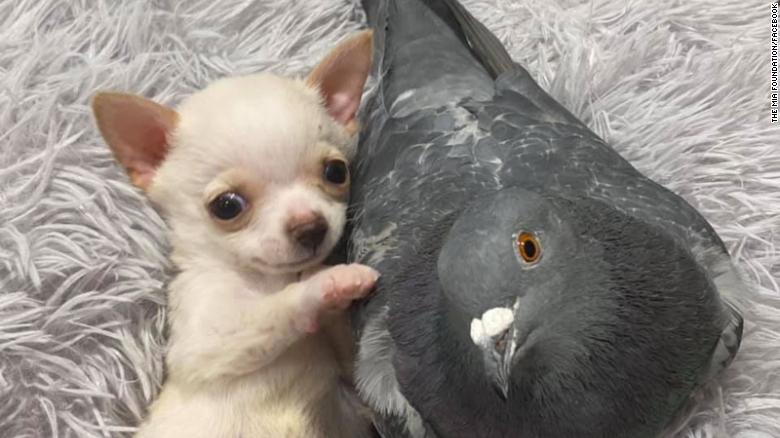
(CNN)Meet Herman and Lundy, recent cuddle buddies and rescue animals.
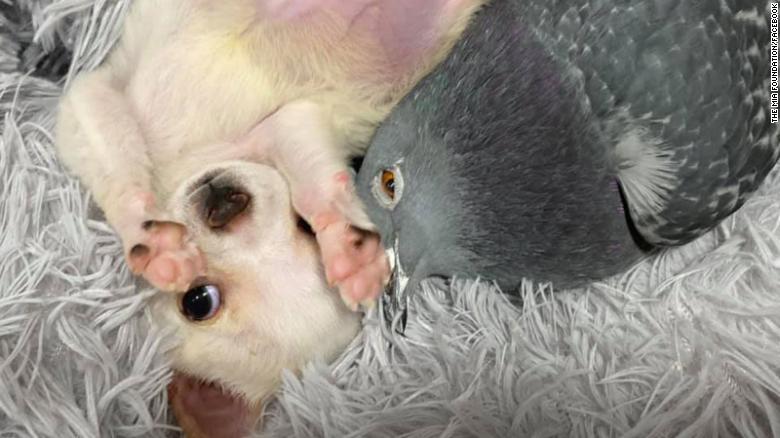
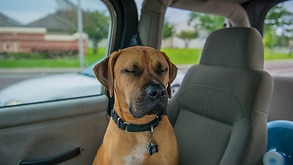
Many recent studies have confirmed what you always knew: your dog has feelings.
Dogs can read human emotions. So, it appears, can horses. Whales have regional accents. Ravens have demonstrated that they might be able to guess at the thoughts of other ravens — something scientists call “theory of mind,” which has long been considered a uniquely human ability. All of these findings have been published within the past several weeks, and taken together they suggest that many of the traits and abilities we believe are “uniquely human” are, in fact, not so unique to us.
That statement probably sounds as if it is veering perilously close to anthropomorphism, and if you know anything about research concerning animal behavior, you likely know this: Anthropomorphism is bad. Animals are animals, and people are people; to assume that an elephant, for example, experiences joy in the same way a human does is laughably unscientific. This has been the prevailing mode of thought in this line of scientific inquiry for most of the last century — to staunchly avoid, and even ridicule, any research project that dared to suggest that animals might be thinking or feeling in the same way that humans do.
But new studies like these, along with a slew of recent books by respected biologists and science writers, are seriously considering the inner lives of animals. Now some prominent scientists are arguing that, though the impulse was well-intentioned, decades of knee-jerk avoidance of all things anthropomorphic may have mostly served to hold this field back. “It ruined the field,” biologist and author Carl Safina told Science of Us. “Not just held it back — it’s ruined the field. It prevented people from even asking those questions for about 40 years.”
New studies … are seriously considering the inner lives of animals. Though the impulse was well-intentioned, decades of knee-jerk avoidance of all things anthropomorphic may have mostly served to hold this field back.
The theme of Safina’s book Beyond Words: What Animals Think and Feel pairs nicely with a forthcoming title from famed primatologist Frans de Waal called Are We Smart Enough to Know How Smart Animals Are? Both scientists make the case for something the biologist Gordon Burghardt called “critical anthropomorphism” — using your own human intuition and understanding as a starting point for understanding animal cognition. “Thus, saying that animals ‘plan’ for the future or ‘reconcile’ after fights is more than anthropomorphic language: These terms propose testable ideas,” de Waal writes.
Animal behavioral science began in the 1910s and 1920s by focusing on description in order to combat superstition (cats are not witches’ familiars, tortoises are not especially tenacious, and grasshoppers are not lazy, etc). The problem is that, eventually, “[d]escription — and onlydescription — became ‘the’ science of animal behavior,” Safina writes in his book, which was published last summer. “Wondering what feelings or thoughts might motivate behavioral acts became totally taboo.” Here’s an example Safina uses: A “good” scientist’s notes might say something like, “The elephant positioned herself between her calf and the hyena.” A bad, anthropomorphic-leaning scientist, on the other hand, would observe the same scene and write, “The mother positioned herself to protect her baby from the hyena.” How can the scientist prove what the mother elephant was intending to do? You can’t see a thought; you can’t observe a feeling. Therefore, to presume that animals possessed either of these things was considered unscientific.
Even raising the mere question of animal awareness was once enough to potentially ruin a career. In the 1970s, the biologist Donald Griffin published a book that did almost exactly that: Question of Animal Awareness. Griffin at this point was a well-respected scientist who had recently made the discovery that bats use echolocation, or sonar, to navigate their surroundings. But after the publication of his book, his professional reputation was largely ruined. Even Jane Goodall caught some flak for going so far as to “humanize” her chimp research subjects by giving them names, and as recently as the 1990s, a writer in the prestigious journal Science advised that research concerning animal cognition “isn’t a project I’d recommend to anyone without tenure.”
Even raising the mere question of animal awareness was once enough to potentially ruin a career.
Better data, including advances in neuroimaging technology and videos from scientists doing fieldwork, is now forcing many to reconsider some very basic questions of animal cognition. Today it sometimes seems like barely a week goes by without the publication of some new study that shows evidence of one species or another demonstrating what might’ve once been considered a strictly “human” ability or emotion.
A recent study proposed that the humble prairie vole, a rodent found across the United States and Canada, appears to console its fellow vole after mean scientists stress it out by giving it a (small) electric shock.
Behaviors that look a lot like consolation have also been observed in animals known for their sociability, like elephants. When one Asian elephant sees that another elephant is agitated, scientists have observed that the calmer one will respond by touching the distressed animal with its trunk. “I’ve never heard that vocalization when elephants are alone,” Joshua Plotnik, who led the study, told Discovery. “It may be a signal like, ‘Shshh, it’s okay,’ the sort of sounds a human adult might make to reassure a baby.”
Contagious yawning, some scientists argue, is another signal of empathy and has recently been observed and recorded in chimpanzees.
The best way scientists currently have of measuring this admittedly abstract concept is the mirror recognition test (though some recent work has called the accuracy of this method into question). This usually involves marking the subject with some kind of conspicuous, but odorless, dye and placing it in front of a mirror. Passing the test involves examining the mark in the mirror, and then examining it on their own body; this suggests that the animal grasps that the reflection is a representation of them. Apes and monkeys seem to be able to figure the game out.
In the early 2000s, a pair of scientists found that bottlenose dolphins could also pass the mirror test with flying colors. In her new book Voices in the Ocean, science writer Susan Casey nods to that study, and notes that, in subsequent years, elephants and magpies have also taken the mirror test and passed. (For context, humans don’t pass this test until they are about two.)
Beyond the raven’s newly discovered behaviors, there is evidence that scrub jays are able to see the world from another scrub jay’s viewpoint, which helps them hide their food. Male Eurasian jays seem to be able to make a good guess at what sort of food female Eurasian jays might like to eat. “It was long thought that only humans could do this,” University of Cambridge psychologist Nicola Clayton told Wired of the jay research. “What we’ve shown in a series of experiments is that doesn’t seem to be the case.”
To be sure, in an era of viral videos, it’s easy to take this idea —Anthropomorphism is okay now! — and get carried away with it. A perfect recent example is a back-and-forth over a picture of a trio of kangaroos. According to the Facebook caption accompanying the photo, the female had recently died, and the male and baby were “mourning” it. Media outlets took this at face value and ran with it, with headlines like “Dying Kangaroo Mom Spends Last Moment Holding Her Baby.”

Getty Images/iStockphoto
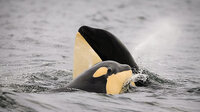
Do animals grieve? Do they have language or consciousness? For a long time, scientists resisted the urge to look for human qualities in animals. This hour, TED speakers explore how that is changing.
♫

♫
♫
On Thursday, ecologists at the University of California, Berkeley, released a study published in Science Magazine that indicates animals are adjusting their habits to avoid the stresses of human encroachment on their habitat.
According to the research from Kaitlyn M. Gaynor, Cheryl E. Hojnowski, Neil H. Carter, and Justin S. Brashares, human population growth is having a profound influence on the way animals go about their business—specifically, when they choose to go about their business.
It seems that a number of mammalian species have become nocturnal in an effort to avoid us.
Scientists admit that this probably works for the animals, but could have potential “ecosystem-level consequences” we don’t yet fully understand.
It’s been acknowledged in the past that mammals have been adjusting to the presence of humans by moving less, retreating to remote areas, and spending less time looking for food, according to Phys.org, who spoke with Gaynor, the leader of the study. All these altered behaviors contribute to overall stress in the animals.
Gaynor’s study indicates that even things like camping and hiking could be having a negative effect on wildlife.
“It suggests that animals might be playing it safe around people,” said Gaynor. “We may think that we leave no trace when we’re just hiking in the woods, but our mere presence can have lasting consequences.”
The research was a cumulative meta-analysis of 76 studies of 62 species from six continents. That analysis revealed an increase in the nocturnality of animals in response to disturbance from humans by an average factor of 1.36.
It didn’t matter what continent they looked at, the findings were fairly consistent across species, habitats, and the activities of humans in the area, from hunting to farming.
While this shows remarkable adaptability in the animals, scientists warn “such responses can result in marked shifts away from natural patterns of activity, with consequences for fitness, population persistence, community interactions, and evolution.”
Some of the animals in the study included Tanzanian lions, otters in Brazil, coyotes in California, wild boars in Poland, and tigers in Nepal, showing a remarkable diversity of animal behavior changing across environment and species.
But it’s not necessarily all bad. There are animals that can be suited to life as night owls.
“Humans can do their thing during the day; wildlife can do their thing at night,” added Gaynor.
This would allow humans to share the environment with “many other species that are just taking the night shift while we’re sleeping.”
The comprehensiveness of the data is remarkable to other scientists, as this sort of information hasn’t been so exhaustively compiled before. Ecologist Marlee Tucker of Goethe University Frankfurt in Germany, helped with some aspects of the study, and remarked how it changed her perspective on the effect humans have on other living creatures.
“It’s a little bit scary,” she said. “Even if people think that we’re not deliberately trying to impact animals, we probably are without knowing it.”
8 Eco-Friendly Alternatives for a Sustainable Celebration

A sea otter cracks open mussels with a rock at Elkhorn Slough, near the study site. (Jessica Fujii/Monterey Bay Aquarium)
Archeologists dig up clues about the lives of ancient humans by studying the tools and piles of trash they left behind. Now, it turns out they can do the same thing with another species of skilled tool users in the midst of their own “Stone Age” — sea otters.
This kind of “animal archeology” could open up a new window into the past and has already generated new discoveries, such as the fact that most otters appear to be right-handed, researchers say.
Sea otters use stones as tools to pound and crack open snails, mussels, clams and other seafood that can be hard to open with their teeth and paws.
It turns out all that pounding can also be damaging to the shell-cracking tools involved — that is, the stones — “creating a distinctive archeological record that parallels and may even pre-date that of the humans they currently live alongside,” reports a new study led by Michael Haslam, an independent archeologist based in London, England.
Within their first hour of being out there, they had already found something that we’d missed for decades.– Tim Tinker, biologist
Canadian biologist Tim Tinker, a co-author of the new paper published today in the journal Scientific Reports, has been studying sea otters on the California coast with his team for decades. He had noticed their pounding leaves the shells unusually damaged.
“They’re the most destructive things in the natural environment other than humans,” said Tinker, an adjunct professor at the University of California, Dalhousie University and the University of Victoria, who is now based in Halifax. “There’s really nothing that can smash a clam or urchin or snail with the same sort of force that a sea otter can.”

Sea otters enjoy mussels crusted to drainage pipes at Bennett Slough Culverts. (Michael Haslam)
Several years ago, Haslam, then a research fellow at Oxford University, invited Tinker to a meeting about the new field of “animal archeology.” Haslam had studied the use of stone tools in monkeys and apes using archeological techniques, and proposed doing similar research on sea otters.
Tinker said he was skeptical, since sea otters mostly use rocks that they collect in the bottom of the ocean. After use, they drop the rocks back into the sea, where they would be very difficult to find again.
But he invited Haslam and Natalie Uomini, an archeologist and anthropologist at Max Planck Institute for the Science of Human History, to California to see the otters.

A sea otter eats a mussel that it opened with a stone that it rests on its belly. (Jessica Fujii/Monterey Bay Aquarium)
After visiting several sites where sea otters were floating on their backs, carrying rocks on their chests and using them to crack food open, Tinker and his team took their visitors to Bennett Slough Culverts in Moss Landing, Calif., where otters pull off and eat mussels encrusted on a series of drainage pipes. The otters can’t collect stones from the bottom there because it’s muddy. But humans had piled rocks along the side of the road that the otters were pounding the mussels on.
Tinker, a biologist, said the archeologists “immediately did something we’d never done — climbed down, scrambled over the rocks, right down into the water, basically, and started studying the rocks that the otters were pounding their mussels on.”
Uomini recalls that initially, they didn’t see anything unusual about the rocks. Then they started noticing broken mussel shells piled up in certain places.
“At first we thought, ‘Hey, that’s funny. Somebody must have come here, and had a picnic and eaten loads of mussels,'” said Uomini, who mostly studies stone tools made by ancient human relatives 500,000 to a million years ago..
Then it occurred to her that since the mussels were raw, that “somebody” was probably otters, not humans.
“And then we realized these piles of mussels were everywhere, and that there were damaged rocks near them.”

Natalie Uomini sets up her camera to observe otters at Elkhorn Slough, close to Bennett Slough Landing in Moss Landing, Calif. (Michael Haslam)
Tinker said he was dumbfounded: “Within their first hour of being out there, they had already found something that we’d missed for decades.”
That highlights the power of researchers from very different disciplines working together on problem “and bringing different ways of looking at nature together,” he added.
The team examined the piles of shells, which the archeologists call middens — the same word used to describe the trash heaps left by ancient humans that are also a rich source of archeological information.
They shot video of the otters pounding the mussels against the rocks and mapped the rocks themselves.
They found the otters tend to pound on points and ridges on the side of the rocks facing the water, leaving them smooth, worn down and lighter in colour.

The otters pound mussels on ridges and points on the side of the rocks facing the water, causing characteristic damage. (Michael Haslam)
The pounded shells also show an unusual pattern — the right shell is always broken, and the left never is.
Tinker said video observations showed the otters were holding the shells in a very precise way as they pounded.
“Right before they hit the rock, they slightly twist the shell so that their right hand is the one that’s really smashing it on the rock,” he said. The finding suggests that most otters — like most humans — are right handed.

Wild sea otter at Bennett Slough Culverts opening mussels using emergent anvil stone. (Jessica Fujii/Monterey Bay Aquarium)
Jessica Fujii, a senior research biologist with the Monterey Bay Aquarium and co-author of the paper, says the team hopes to see if they can find similar patterns on similar rocks at other locations used by otters. So far, they’re not sure if those patterns apply just to otters eating mussels or if they’re similar for other shellfish.
In any case, Fujii said using archeological methods opens up lots of new research opportunities.
“It’s kind of a whole new field.”
By looking for those sea otter signatures from the past, researchers may be able to uncover new information, such as how widely they were distributed before they were nearly wiped out by the fur trade in the early 20th century. (They are currently still listed as endangered on the IUCN Red List, threatened in the U.S., and a species of special concern in Canada). It may even be possible to get information about how sea otters’ diets have evolved over time or how and when tool use evolved in sea otters, the researchers suggest.
And knowing what rocks — and piles of shells — look like after being pounded by a feasting otter can prevent archeologists from confusing them from those left behind by ancient humans, the researchers note. Previously, Tinker said, biologists had assumed that because sea otters moved so much from place to place, they never left big piles of shells in any one place. But it turns out some underwater otter middens at Bennett Slough Culverts could contain more than 100,000 shells. Similar piles may well have been mistaken for human middens in the past.

Sea otters leave the right side of the mussel shell broken and the left side unbroken. Observations suggest they tend to be right-handed. (Michael Haslam/Neil Smith/Scientific Reports)
Erin Rechsteiner is a research ecologist with the Hakai Institute and a PhD candidate at the University of Victoria who studies sea otters on the B.C. coast. She wasn’t involved in the study, but has worked with some of the co-authors.
She says B.C. sea otters use rocks to pry abalone off boulders or break open shells.
“You rarely see them eating snails without using a rock.”
She has never seen them using fixed boulders like the ones at Bennett Slough Culverts, but wonders if they break mussel shells open the same way with individual rocks.
Rechsteiner said she thinks looking for an archeological record for otters is a “cool idea.”
“I think it could give us a lot of insights into the past.”
The new study was funded by the European Research Council, the Max Planck Institute for the Science of Human History, the Monterey Bay Aquarium, the US Geological Survey and the University of California, Santa Cruz.
Posted Mar 09, 2019
“We like to see ourselves as special, but whatever the difference between humans and animals may be, it is unlikely to be found in the emotional domain.” (Frans de Waal)
A recent New York Times easy by renowned Emory University primatologist Dr. Frans de Waal called “Your Dog Feels as Guilty as She Looks” with the subtitle “Animals are no less emotional than we are” has generated a good deal of interest including a good number of emails to me that arrived yesterday and overnight. Dr. de Waal’s piece is an excerpt from his new book titled Mama’s Last Hug: Animal Emotions and What They Tell Us About Ourselves that was reviewed by Sy Montgomery in which she writes, “In this book, de Waal sets the record straight. Emotions are neither invisible nor impossible to study; they can be measured. Levels of chemicals associated with emotional experiences, from the ‘cuddle hormone‘ oxytocin to the stress hormone cortisol, can easily be determined. The hormones are virtually identical across taxa, from humans to birds to invertebrates.” She also notes that to avoid charges of being anthropomorphic, “researchers have invented a glossary of contorted terms: Animals don’t have friends but ‘favorite affiliation partners’; chimps don’t laugh when tickled, but make ‘vocalized panting’ sounds. This isn’t just silly; it’s dangerous. Instead of worrying about anthropomorphizing animals, we should fear making a far worse mistake, what de Waal calls ‘anthropodenial.’ When we deny the facts of evolution, when we pretend that only humans think, feel and know, ‘it stands in the way of a frank assessment of who we are as a species,’ he writes.”
Dr. de Waal similarly ends his piece by writing, “For the longest time, science has depicted animals as stimulus-response machines while declaring their inner lives barren. This has helped us sustain our customary ‘anthropodenial’: the denial that we are animals. We like to see ourselves as special, but whatever the difference between humans and animals may be, it is unlikely to be found in the emotional domain.”
I couldn’t agree more with the above views, and it astounds me that there still are some people who ignore the results of ample comparative research on the emotional lives of nonhuman animals (animals). According to a colleague who wrote a detailed email about all that we really know about animal emotions, the denialists’ views are “anti-scientific & dumb.” A good number of emails weren’t as friendly, because so many people are simply sick and tired of people ignoring what we know and making sweeping and false claims about how other animals simply are automatons and don’t experience emotions. For those who want to peruse all that we know about animal emotions please click here for numerous essays in popular and scientific media and for a long list of scientific studies click here. You’ll easily see that ignoring the rich and deep emotional lives of animals truly is “anti-scientific & dumb.”
What do we really know about dogs and guilt?
The title of Dr. de Waal’s essay also caught my eye because I’m interested in everything “dog.” So, when he writes, “Your Dog Feels as Guilty as She Looks,” I immediately thought of discussions along the lines that research shows that dogs don’t experience guilt. This isn’t so. (For a more detailed discussion see Canine Confidential: Why Dogs Do What They Do, Unleashing Your Dog: A Field Guide to Giving Your Canine Companion the Best Life Possible, many essays here, and links and references therein.) In an essay called “Dogs and Guilt: We Simply Don’t Know,” I wrote about how the results of an experiment by noted Barnard College dog researcher, Dr. Alexandra Horowitz, have routinely been misinterpreted by many people who haven’t read what she actually wrote. In an essay published in 2009 titled “Disambiguating the ‘guilty look’: salient prompts to a familiar dog behaviour,” Dr. Horowitz discovered that we are not very good at reading guilt, but this does not mean that dogs can’t or don’t feel.
I asked Dr. Horowitz to comment on this and she wrote:
“Spot on, on ‘guilt.’ Thanks so much for alerting me to and correcting the ubiquitous error about my study, some years back, which found that dogs showed more ‘guilty look’ when a person scolded or was about to scold them, not when the dog actually disobeyed the person’s request not to eat a treat. Clearly what the results indicated was that the ‘guilty look’ did not most often arise when a dog was actually ‘guilty.'”
“My study was decidedly NOT about whether dogs ‘feel guilt’ or not. (Indeed, I’d love to know…but this behavior didn’t turn out to indicate yay or nay.) I would feel dreadful if people then thought the case was closed on dogs (not) feeling guilt, which is definitely not the case. Many secondary sources got this right, but it must require reading the study to appreciate exactly what I did.”
So, I’m glad Dr. de Waal selected the title he did for his essay because while we really don’t know if dogs feel guilt, I do agree that when the proper research is done we’ll learn they do. It’s extremely important to get things right, and it’s essential to pay attention to what researchers actually study and discover in their research. There’s also no reason why dogs shouldn’t be able to feel guilt, as do other mammals, so let’s wait and see what we learn in future work.
There have been similar discussions of whether or not dogs feel jealous, with some people saying something like, “Of course they don’t” and others saying “Yes they do.” In fact, after the proper studies were done, we’ve learned they do. (See “Jealousy in Dogs: Brain Imaging Shows They’re Similar to Us” and “Dogs Know When They’ve Been Dissed, and Don’t Like It a Bit” in which I discuss a research essay called “Jealousy in Dogs.”) It’s not clear why some people continue to ignore what we know and strip dogs of jealousy and guilt and rob other animals of their emotions, but that another story.
Evolutionary continuity
“It’s time to accept these strongly supported facts and accept that the real question at hand is why have emotions evolved, not if they have evolved, and learn more about them.”
In the description of Mama’s Last Hug, we read, “De Waal discusses facial expressions, the emotions behind human politics, the illusion of free will, animal sentience, and, of course, Mama’s life and death. The message is one of continuity between us and other species, such as the radical proposal that emotions are like organs: we don’t have a single organ that other animals don’t have, and the same is true for our emotions.” Also recall Charles Darwin’s ideas about evolutionary continuity, in which differences among species are seen to be variations in degree rather than kind: “If we have or experience something, ‘they’ (other animals) do too.” Arguments based on continuity support the claim that discovering jealousy in dogs is not all that surprising, and it won’t be all that surprising to learn that dogs also experience guilt. But, of course, we need to wait for the proper studies to be done. Along these lines, Dr. de Waal writes, “We like to see ourselves as special, but whatever the difference between humans and animals may be, it is unlikely to be found in the emotional domain.”
All sorts of scientific research, ranging from observational studies to neuroimaging projects, strongly supports the fact that we are not alone in the emotional arena. So, it’s time to accept these strongly supported facts and accept that the real question at hand is why have emotions evolved, not ifthey have evolved, and learn more about them.
What makes the field of cognitive ethology—the study of animal minds—so exciting is that there is so much fascinating research to be done. There’s no doubt that many animals experience rich and deep emotions. We must never forget that our emotions are the gifts of our ancestors, our nonhuman animal kin. We have feelings and so too do other animals.



 Exposing the Big Game