Animals are Conscious, but Do Hunters Have a Conscience?

Not that it should come as a surprise to anyone who’s ever befriended a dog or cat, or watched birds in their backyard, but in July 2012, respected scientists met in Cambridge and went on record to affirm that non-humans are conscious. Belated as the matter has been in gaining acceptance, their “Cambridge Declaration on Consciousness” was a welcome step in the right direction for the world’s most continually oppressed and victimized—those born of species other than human.

The declaration asserts:

The absence of a neocortex does not appear to preclude an organism from experiencing affective states. Convergent evidence indicates that non-human animals have the neuroanatomical, neurochemical, and neurophysiological substrates of conscious states along with the capacity to exhibit intentional behaviors. Consequently, the weight of evidence indicates that humans are not unique in possessing the neurological substrates that generate consciousness. Nonhuman animals, including all mammals and birds, and many other creatures, including octopuses, also possess these neurological substrates. …

Okay, that may sound like a bunch of academic hullabaloo, but in layman’s terms, animals are indeed conscious beings. Though not really a profound revelation, the fact that non-humans are not automatons runs counter to hundreds of years of accepted belief (thanks to the fifteenth century French mathematician, Rene Descartes) that’s been used to justify untold animal cruelties for far too long.

In recent decades, the science of cognitive ethology has clearly put to rest grandiose notions of human superiority—besides perhaps the extent of human narcissism.  Nowadays, none but the most agenda-driven or willfully ignorant can claim unfamiliarity with the fact that non-human animals exhibit awareness and have the capacity to experience pain and fear, along with pleasurable feelings and emotions.

So if irrational Cartesian rationale for cruelty to animals is outmoded thinking, how then do hunters justify the virtually unprecedented abuse of our fellow Earthlings going on in the name of sport today? Could it be that sport hunters lack a conscience for all but our own kind?

As you’ve probably heard, British rocker and staunch animal rights activist, Morrissey, canceled his scheduled performance on the “Jimmy Kimmel Live” show this week due to a planned appearance on the same night by the cast of “Duck Dynasty” (a “reality” program which focuses on a family that became wealthy by making tools for their fellow duck hunters.)  The singer released a statement on Monday saying he “cannot morally be on a television program where the cast members of Duck Dynasty will also be guests.”

Morrissey also stated: “As far as my reputation is concerned, I can’t take the risk of being on a show alongside people who, in effect, amount to animal serial killers.”

Serial Killers? How can he liken avid, good ol’ boy duck hunters to serial killers, one might ask? Well, easy. Both serial killers and duck hunters act without conscience toward their multiple victims, whom they depersonalize and objectify. And both kill others to boost their self-esteem, some even going so far as taking trophies of their victims’ body parts.

The next question scientists need to address is, assuming that hunters are conscious animals, why don’t they have a conscience?

Text and Wildlife Photography ©Jim Robertson, 2013. All Rights Reserved

Text and Wildlife Photography ©Jim Robertson, 2013. All Rights Reserved

Good Questions

561599_4740870687337_1697822471_n

On Facebook this morning a friend had posted a photo of a cruelly confined pig at a factory farm desperatly chewing on the bars of her cage. A caption read, “If your God had wanted us to eat animals, do you really think he would have given them the ability to feel pain and fear? What kind of sadistic individual would that make him?!”

Good questions. Taking it a step further, I have to wonder…if god had wanted us to eat animals, do you really think he would have given us the ability to feel their pain and fear?!

Unfortunately, empathy and compassion are not doled out equally to all.

Some people feel them so strongly it literally pains us to hear about the brutalities inflicted on nonhumans by their fellow man. The sadness is outweighed only by the understanding that many of the animal cruelties are so widespread and so accepted by society it will require nothing short of a major revolution in thinking to put an end to them. For those of us so well-endowed with empathy and compassion, every KFC, Arby’s or McDonalds commercial, every shiny photo ad for this weeks’ meat and dairy specials at the local market, every camo-clad nimrod in a pickup truck sporting an NRA bumper sticker inspires feelings of grief, anguish or anger.

There are those, Temple Grandin, for instance, may be able to feel empathy but apparently not compassion. Her autism allegedly allows her to experience the fear and anxiety factory farmed animals go through, yet her lack of compassion allows her to work for the animal industries, helping to spread the absurd, feel-good myth that some animals are “humanely” raised (and slaughtered), thereby giving consumers a license to ignore any twinges of empathy or compassion they might have.

And there are many who are completely incapable of feeling empathy for others. They’re the lucky ones—if hollowness, selfishness and superficiality are to be considered enviable traits.

More Unnecessary Animal Suffering

At the risk of inciting absurd accusations of misanthropy, I want to talk a little bit about animal experimentation. Don’t worry; I won’t make you hear about all the hellacious, gruesome, twisted and/or morbid things non-human animals are put through in the name of medical science. (If you don’t already know what goes on in those torture chambers they call animal testing labs, please go here or Google animal experimentation.)

What I want to look at is just how unnecessary all that animal suffering is. Not only are there other ways to reach the same conclusions, sans the insanity of experimentation, but the fact is, many of the drugs on the market today are simply superfluous. And many of the illnesses and conditions big pharmaceutical companies and the medical industry have us fearing on a daily basis—through obnoxious and irresponsible ads for their products in every medium—are avoidable, preventable or unlikely to ever threaten us.

How many times have their drugs, though tested endlessly on animals, done people more damage through side effects than the ailment they were said to protect us from? And how many nonhuman animals continue to suffer needlessly because of a national obsession with health care created and fueled by the world’s fastest growing industry?

HPIM1199


The Infertile Union

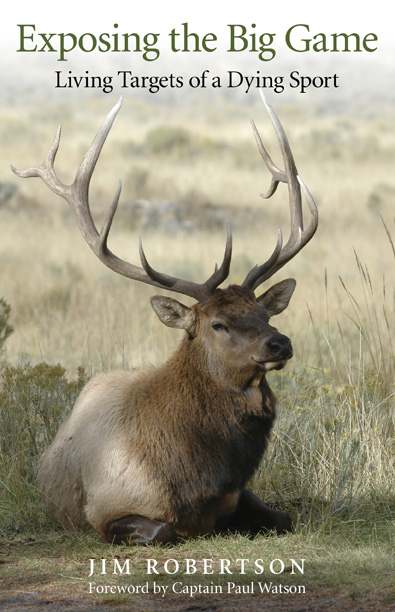
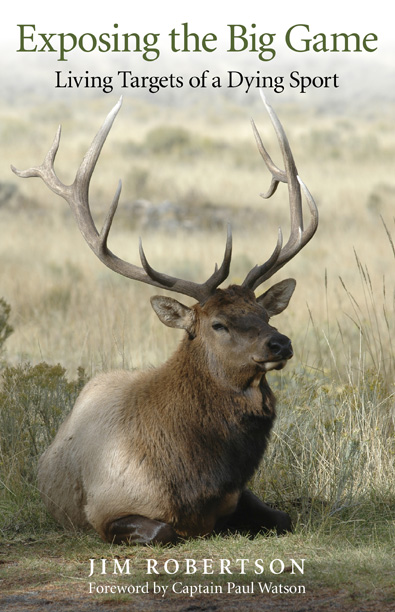
So you don’t get the idea I go around unfairly picking on small grassroots groups, here’s an excerpt from my book, Exposing the Big Game: Living Targets of a Dying Sport, wherein I take on the Goliath of all national green groups for siding with hunting…

Sport hunters have enjoyed so much laudation of late they’re beginning to cast themselves as conservation heroes. What’s worse is that many modern, influential green groups are swallowing that blather, hook, line and sinker. Maybe they ought to reread the words of Sierra Club founder, John Muir:

“Surely a better time must be drawing nigh when godlike human beings will become truly humane, and learn to put their animal fellow mortals in their hearts instead of on their backs or in their dinners. In the meantime we may just as well as not learn to live clean, innocent lives instead of slimy, bloody ones. All hale, red-blooded boys are savage, fond of hunting and fishing. But when thoughtless childhood is past, the best rise the highest above all the bloody flesh and sport business…”

Henry David Thoreau, another nineteenth-century nature-lover whose forward-thinking writings were an inspiration to Muir, cautions, “No humane being, past the thoughtless age of boyhood, will wantonly murder any creature which holds its life by the same tenure he does. The hare in its extremity cries like a child. I warn you, mothers, that my sympathies do not make the usual philanthropic distinctions.”

If those dated messages and mockery are lost on twenty-first-century Sierra-clubbers, Edward Abbey’s sentiment should be obvious enough for anyone, “To speak of harvesting other living creatures, whether deer or elk or birds or cottontail rabbits, as if they were no more than a crop, exposes the meanest, cruelest, most narrow and homocentric of possible human attitudes towards the life that surrounds us.”

Early vanguards of ecological ideology recognized Homo sapiens as just one among thousands of animal species on the planet, no more important than any other in the intricate web of life. They also abhorred sport hunting.

But a shocking turn-around is taking place in the current bastardization of the environmental movement. The Sierra Club and other large, corporate green groups are embracing (read: sleeping with) powerful hunting groups like the Safari Club International and the National Rifle Association (NRA). In a transparent effort to appear down-home and therefore more in touch with nature, they’re making the fatal mistake of joining frces with sportsmen whose conservation “ethic” exists only so their preferred prey species can be slain again and again.

The infertile union between super-sized modern green groups and mega-bucks hunting clubs must have been sired by their shared conviction that humans are the most crucial cogs in the wheel of life (or at least the squeakiest wheels in the dough machine). As the only animal capable of coughing up cash when the collection plate comes around, human beings (every last gourmandizing, carnivorous one of them) are the primary concern; their wants must be given priority over those of all other species. Contemporary environmental organizations, seduced by a desire to engage as many paying members as they can get their hands on (regardless of their attitudes towards animal life), must believe blood-soaked money is as green underneath as any.

Forever stagnating in “thoughtless childhood,” members of hunting groups like the NRA live for the day they can register a record-breaking trophy with the Boone and Crocket Club—formed by Roosevelt “to promote manly sport with rifles.” Fund for Animals creator, Cleveland Amory, took issue with the sporty statesman in his anti-hunting epic, Man Kind? Our Incredible War on Wildlife. A benevolent humanitarian for humans and nonhumans alike, Mr Amory wrote, “Theodore Roosevelt…cannot be faulted for at least some efforts in the field of conservation. But here the praise must end. When it came to killing animals, he was close to psychopathic. Dangerously close indeed (think: Ted Bundy). In his two-volume African Game Trails, Roosevelt lovingly muses over shooting elephants, hippos, buffaloes, lions, cheetahs, leopards, giraffes, zebras, hartebeest, impalas, pigs, the not-so-formidable 30-pound steenbok and even (in what must have seemed the pinnacle of manly sport with rifles) a mother ostrich on her nest.

But don’t let on to a hunter your informed opinion of their esteemed idol, because, as Mr Amory points out, “…the least implication anywhere that hunters are not the worthiest souls since the apostles drives them into virtual paroxysms of self-pity.” Amory goes on to say:

The hunter, seeing there would soon be nothing left to kill, seized upon the new-fangled idea of “conservation” with a vengeance. Soon they had such a stranglehold [think: Ted Nugent] on so much of the movement that the word itself was turned from the idea of protecting and saving the animals to the idea of raising and using them—for killing. The idea of wildlife “management”—for man, of course—was born. Animals were to be “harvested.” They were to be a “crop”—like corn.

Fortunately, a faithful few are seeing through the murky sludge spread where green fields once thrived. Sea Shepherd Conservation Society’s Captain Paul Watson (founder and president of about the only group still using the word conservation to mean protecting and saving animals) recently took another in a lifetime of steadfast stands by resigning from his position on the Board of Directors of the Sierra Club. He refused to be a part of their whorish sleeping with the enemy—their pandering to sportsmen by holding a “Why I Hunt” essay contest, complete with a grand prize trophy hunt to Alaska. To think of how many trees were needlessly reduced to pulp for this profane effort when the answer to why hunters hunt was so succinctly summed up in just one sentence by Paul Watson, “Behind all the chit-chat of conservation and tradition is the plain simple fact that trophy hunters like to kill living things.”

Just as the naïve young girl who falls for the charms and promises of a sunny sociopath learns, the hard way, about his hidden penchant for abuse and violence, the Sierra Club and other middle-ground eco-friendly groups may soon learn the dangers of looking for Mr. Goodbar in all the wrong places. How will they divorce themselves from this unholy alliance when the affair goes sour and sportsmen reveal their malicious, hidden agenda by calling for another contest hunt on coyotes or cull on cougars, wolves or grizzly bears to do away with the competition for “their” deer, elk, moose or caribou?

front-cover-low-res6

Remember, Tuesday Is Soylent Green Day

As with Christmas, Thanksgiving has become a rather hedonistic holiday these days. You’d have to pin your ears back, with empty cornucopias held tightly against them, to hear even a faint reference to the giving of thanks through the din of loud chatter about seemingly more important things like football, where to get the best deals on Black Friday, or how to deep fry a turkey. But any thanks you heard would be to “the lord above,” rather than to the victims of the decadent feast.

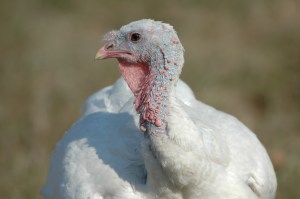
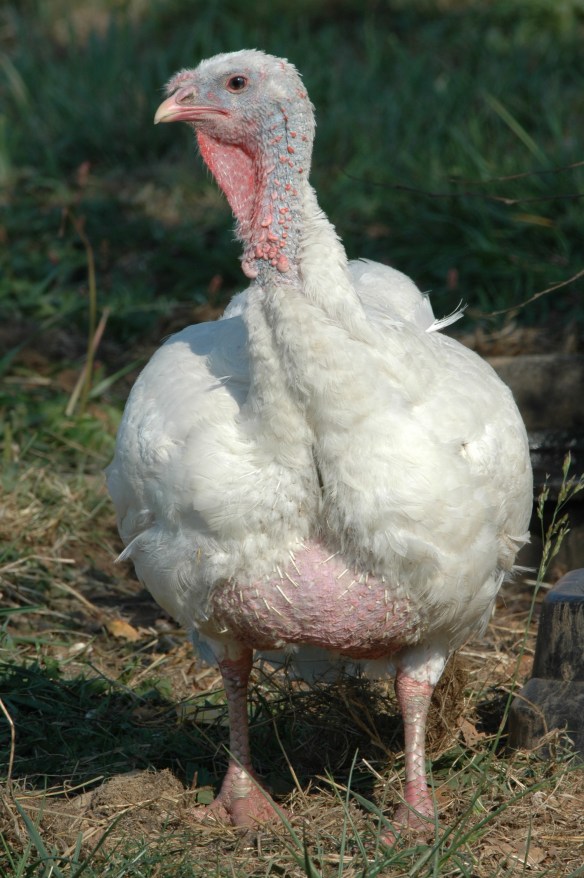
Completely lost in the hype of “tradition” and “Turkey-day” is any mention of giving even a passing “thank you” to the birds who suffered more indignities than space would allow me to mention here. Indignities that include the fact that turkeys on factory farms receive less than three square feet of personal space. And after they hatch, their beaks are cut off—a standard practice for chickens as well. No anesthesia or painkiller is used for either species. This process, which is known as “debeaking”, has been compared to having the ends of your fingers sliced off. It deprives birds of one of their most important sources of sensory input.

A debeaked bird cannot eat properly or explore his or her environment fully, nor can they preen themselves or their flockmates.  They may also experience acute and chronic pain in their beak, head, and face. In addition to being debeaked, turkeys also have the ends of their toes and their snoods cut off, often with nothing more than a pair of scissors (and as with debeaking, performed without anesthesia).

According to Liberation BC, both chickens and turkeys on modern factory farms have been genetically engineered and pumped with antibiotics; as a result they grow much faster than ever before. For example, in the 1960’s, it took a turkey 32 weeks to reach slaughter size, but now it takes only 13-16 weeks. In the 1950’s, it took a chicken 84 days to reach five pounds. Today, it takes 45 days, meaning that they are not even old enough to cluck yet when they die.

And PETA adds, their unnaturally large size also causes many turkeys to die from organ failure or heart attacks before they are even 6 months old. According to an investigative report in the Wall Street Journal on the miserable conditions on turkey farms, “It’s common in a rearing house to find a dead bird surrounded by four others whose hearts failed after they watched the first one ‘fall back and go into convulsions, with its wings flapping wildly.

Factory farm operators walk through the shed to kill the slow-growing turkeys (so that they don’t eat any more food), such as those who fall ill because of the filthy conditions or become crippled under their own weight.

In Canada, turkeys and chickens can legally be transported for up to 36 hours without food, water, or rest, and there are no limits as to the length of the journey. They are transported in open-air crates, resulting in high mortality as the birds are exposed to all sorts of weather.  Each bird is worth so little, however, that it is cheaper overall for the industry to use open-air crates.  Every year in Canada, 2 million broiler chickens and 20,000 turkeys are already dead when they arrive at slaughterhouses.  An additional 8 million broiler chickens and 200,000 turkeys arrive so diseased or injured that they are considered “unfit for human consumption”.
The surviving birds are handled roughly at the slaughterhouse, where they are unloaded by forklift and dropped onto a conveyor belt. With thousands of birds to be processed every hour, there is no reason for employees to stop and pick up the individual birds who miss the belt and fall to the ground.

When it comes time to slaughter the birds, they are hung by their feet on a moving rail and dragged through the stunning tank, an electrified water bath meant to stun and immobilize them. These are often set lower than is necessary to truly render the birds unconscious out of concerns that high voltage might damage the carcass and therefore diminish its value.

They are then carried past the tank to have their throats cut either by a mechanical blade or a plant employee. Often, struggling birds are cut improperly. As a result they are moved, fully conscious, to the scalding tank, where they are boiled alive.  Estimates place the number of affected birds at about one in twenty; at any rate, this occurrence is so common that the industry has a term for it: “redskins.”   …

Clearly, nobody gives much in the way of thanks to the “most important guest” at the table (as a recent Safeway ad described the turkey carcasses they were selling). You’d be damned lucky to overhear even a cursory mention of the miserable existence their edible “guest” underwent prior to the killing and plucking process. There is scarcely a sign that the hundreds of millions of Americans who gorge on the bodies of 45 million turkeys each year give a whit about whether these amazing and impressive birds had—prior to “harvest”—a life that allowed even a modicum of the freedom they would have experienced before the grossly over-populated human world made them their food-slaves.

Appropriately, I watched the timeless 1970s movie Soylent Green last night. Set in 2022, the film opens with a slide show of earlier eras, back when the Earth was covered with forests and open fields, and there were only a few scattered settlements of people who travelled in horse-drawn wagons.

As the images pass quickly by, we see the first automobiles (tail pipes spewing toxic carbon gases), followed by a massive blacktop parking lot jam packed with Model Ts. The pictures begin to flash almost more rapidly than we can focus, but we catch glimpses of factories with smokestacks billowing and crowds of people barely able to

move without trampling one another. (Come to think of it, what we are witnessing looks a lot like the inside of an average modern-day poultry barn, where Thanksgiving turkeys are forced to live out their lives in intense confinement.)

The first scene of action takes place in a cramped little New York City apartment, the dwelling of the film’s two main characters, Thorn, a semi-corrupt detective, and his elderly room-mate and research partner, Sol, who is constantly going on about the good old days—a world that Thorn can’t possibly envision or relate to.

They are among the lucky few; most people sleep on the stairways or in the hallways or anywhere they can find shelter from the oppressive heat caused by an out of control greenhouse effect. We overhear a program on their worn out old TV which is an interview with the governor of New York, touting a new food product called “Soylent Green,” ostensibly made from the ocean’s plankton. (Everyone in that day and age knows that the land is used up, but they’re told the oceans can still provide for them).

Food in this depressing, human-ravaged world comes in the form of color-coded wafers, distributed under strict government supervision. Hordes of people stand in line for their ration of Soylent yellow or blue made from soy, or other high protein plants grown behind the fortress-walls of heavily guarded farms.

Signs remind the throng that “Tuesday is Soylent Green day.”

The multitudes are exceptionally unruly on Tuesday. Brimming with anticipation, they can’t wait to obtain a ration of the special new product. When they get out of hand, “scoops” (garbage trucks fitted with backhoe-like buckets on the front) are called in to scoop them up and haul them off…

Spoiler Alert:

To make a long story short, by the end of the film, Thorn learns that the oceans are dead and the actual ingredients of Soylent Green are something a bit harder to stomach than plankton. In the final scene, a mortally-wounded Thorn is carried away on a stretcher as he desperately tries to tell skeptical onlookers, “Soylent Green is People!” “They’re making our food out of people. Next thing, they’ll be breeding us like cattle for food!”

Could it ever happen? Could the human race ever stoop so low? If the scenario seems too hard to swallow­, consider this: the conditions animals are forced to endure on today’s factory farms would have seemed unimaginable to people living a hundred years ago.
­­

Taking Trophies

“You’re the last one there…you feel the last bit of breath leaving their body. You’re looking into their eyes and basically, a person in that situation is God! You then possess them and they shall forever be a part of you. And the grounds where you killed them become sacred to you and you will always be drawn back to them.”

The words of a hunter triumphantly reliving his conquest?

Well, if by hunter you mean a person who stalks and kills an innocent, unarmed victim, then yes.

The quote is from serial killer Ted Bundy, as he sat on death row and mused over his murders to the authors of The Only Living Witness. It seems that, whether the perpetrator is engaged in a sport hunt or a serial kill, the mentality is roughly the same.

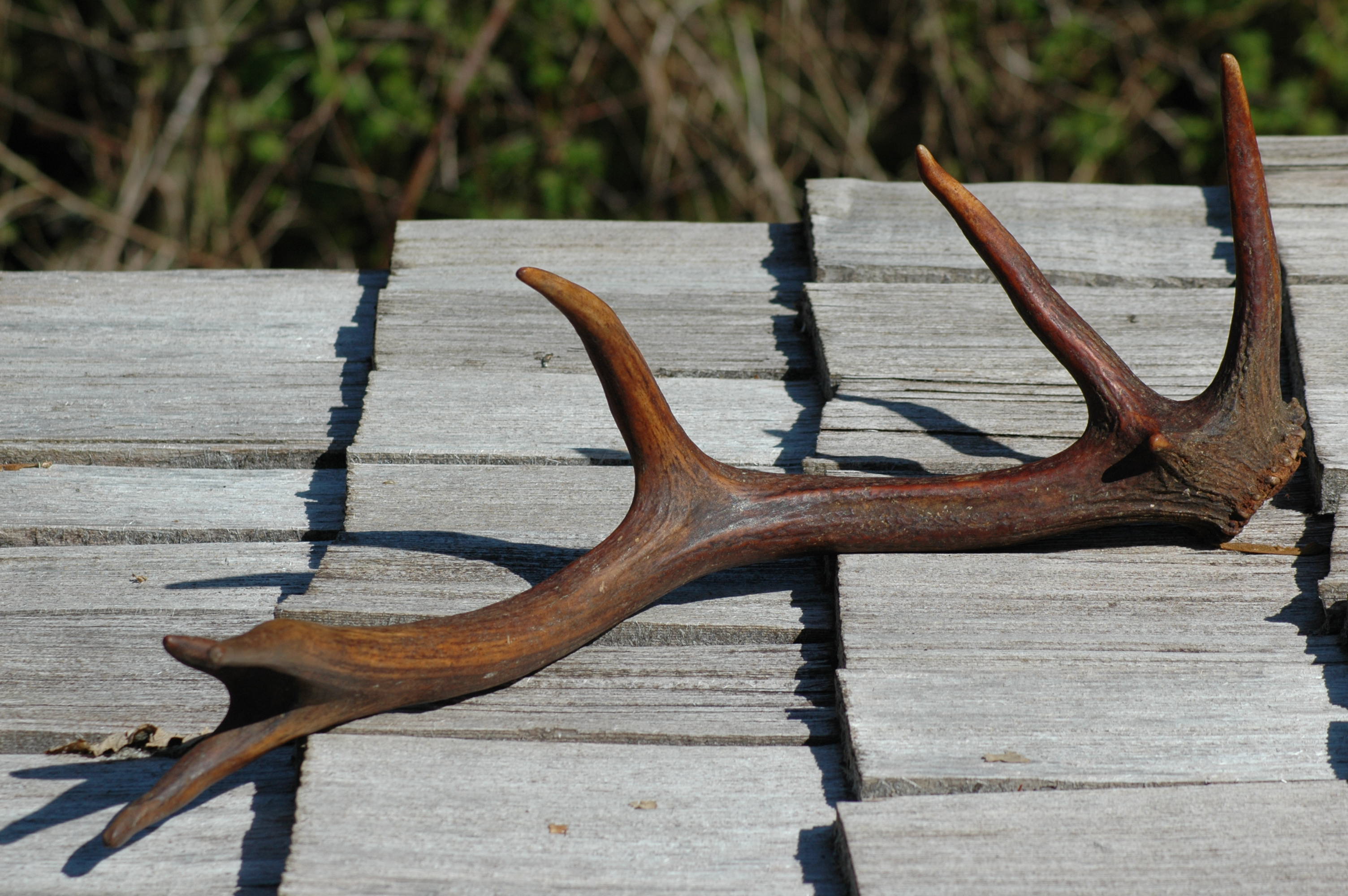
Try as I might, it’s a mindset I really can’t relate to. But this quote helped answer a question I’ve been pondering since I came across a freshly shed elk antler on a hike in the forest behind my place. It was thrilling to find a tangible sign of such a proud and noble soul, willingly discarded to make way for this year’s even larger adornment. I’ve experienced a similar feeling of exhilaration many times before when capturing images of wildlife with my camera. The key component for me is the knowledge that the animal is still roaming free.

Image

I hung the keepsake over my doorway. It serves as a reminder that the bull elk made it through another season alive. Conversely, when a hunter proudly displays a “rack” of antlers, they are the result of a killan animal’s life was taken so they could claim their trophy.

So why can’t hunters be satisfied with finding a naturally shed horn?

Clearly, they are after more than just a souvenir or symbol of a beautiful living creature. There’s something sinister about their motive—something akin to what drives a trophy-taking serial killer.

For the likes of Ted Bundy, a memento such as a pair of panties or a Polaroid photo helps them to recall the heightened state of arousal they felt while slaying their prey. As with the serial killer, the ultimate goal of a hunter is to play God over a helpless victim and to possess not just their image or their antler, but their very being.

Road Hazard?

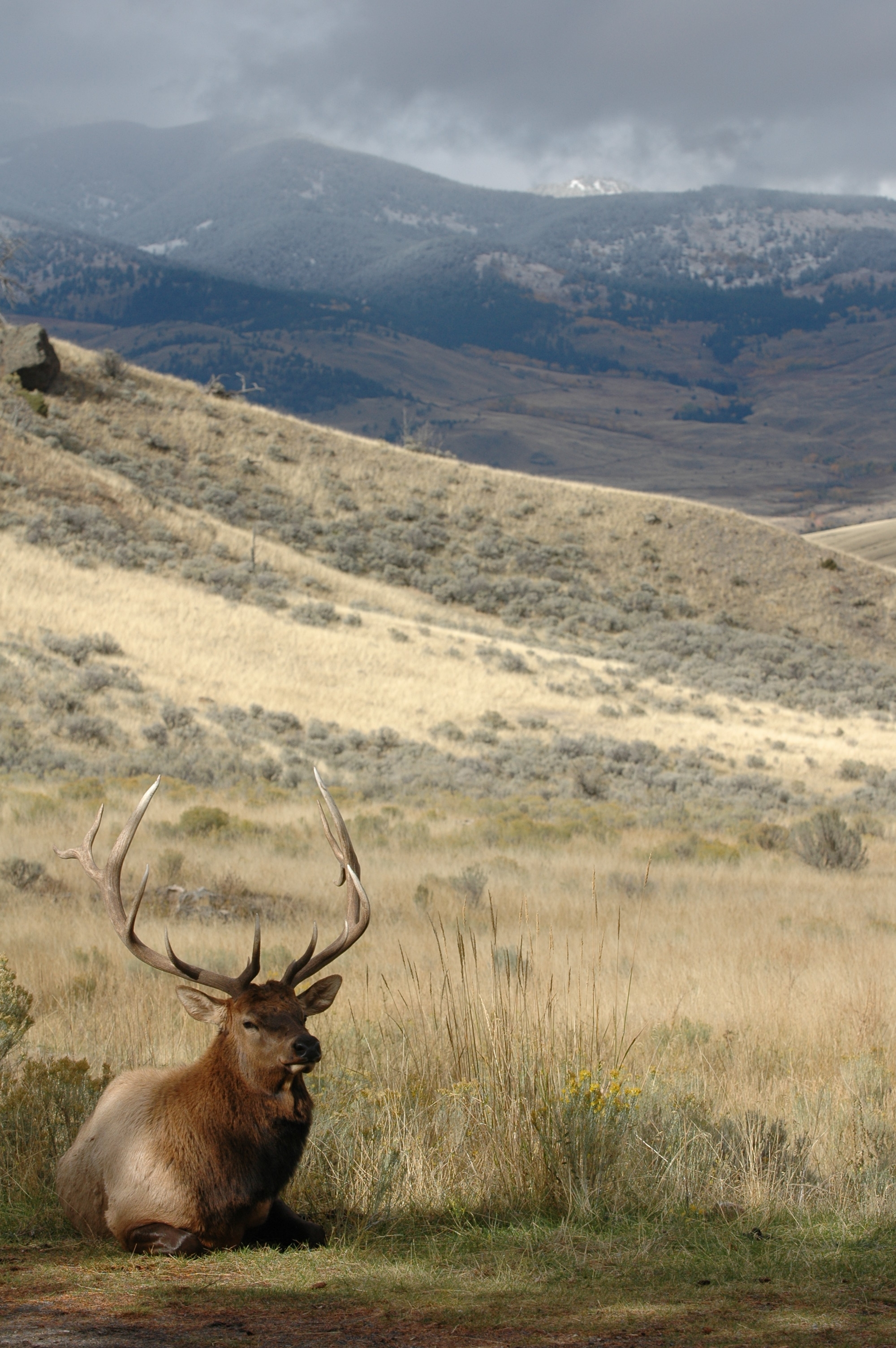
Driving to work early the other morning, I came within inches of hitting a bull elk who decided, at the last minute, to run across the highway right in front of me. Fortunately no one else was on that lonely stretch of road at the time, for if I hadn’t stomped on the brakes and cranked the wheel to the left, we would probably both be dead. I saw up close and personal how hitting an animal as large as that could do lethal damage. But the experience did not change my attitude on whether migratory wildlife should be considered a road hazard.

There’s no doubting the fact that we humans—in our full metal jacketed projectiles, lumbering headlong 60 mph through the former wilderness—are the real hazards. We’re the ones breaking nature’s rules by inventing machines that can go so fast they can put an end to anyone they run into. But, we drive like we’re saying, “We have important places to go—everyone else beware or be damned! No lowly animal better get in our way!”

If this incident had proven fatal for us, I would have wanted my epitaph to read: “I’m sorry beautiful creature. There’s nowhere I had to be that was worth the risk of ending your precious life.”

Vegans—Not Hunters—Are the Best Environmentalists

You’ve probably heard the cliché, “Every day is Earth Day to an environmentalist.” Well, it’s true actually, at least to a true environmentalist—the kind of person who makes daily choices based solely on their concern for our planet and the life it supports. The gal, for example, who chooses not to eat farmed animals because of the enormous amount of abuse (not to mention gargantuan carbon footprint) inherent in those Styrofoam and shrink-wrapped packages that clog the sprawling meat isles across the country; or the guy who does not hunt because wild animals are a part of the living Earth he loves and respects.

Eager to look like the sensible ones, conventional environmentalists often assume the wobbly, half-hearted stance of dismissing, rather than embracing, the animal rights movement. On the other hand, dedicated animal rights advocates don’t shy away from calling themselves environmentalists. They know that only by adopting a vegan lifestyle can one truly be an environmentalist. Vegans understand that the Earth cannot sustain billions upon billions of hungry bipedal carnivores and they recognize that the surest way to ease suffering for all is to eat lower on the food chain—in keeping with our proven primate heritage.

Absurd as it sounds to folks who really do care for the planet, certain atypically adroit sportsmen have been caught spreading the dogma that gun-toting Bambi-slayers actually have a “love for the land” and a concern for the animals they kill—that murdering animals is a wholesome Earth Day activity. Proselytizing hunter-holy-men try to downplay the obvious lethal impacts hunting has on individual animals and entire populations, wielding one of the weariest—and wackiest—of all clichés, “Hunters are the best environmentalists,” despite well-documented proof that hunting has been—and continues to be—a direct cause of extinction for untold species throughout the world.

Over-zealous hunters completely eradicated the once unimaginably abundant passenger pigeon and the Eskimo curlew (both killed en masse and sold by the cartload for pennies apiece), the Carolina parakeet (the only species of parrot native to the US) and the great auk (a flightless, North Atlantic answer to the penguin).

Hunting is the antithesis of environmentalism. The very notion of the gas-guzzling, beer-can-tossing hunter as an environmentalist is laughable even to them. Show me a hunter who is not antagonistic toward the rights of animals and I’ll show you a rare bird indeed.

     ____________________________________________________

Portions of this blog were based on excerpts from the book, Exposing the Big Game: Living Targets of a Dying Sport: http://www.earth-books.net/books/exposing-the-big-game

Image