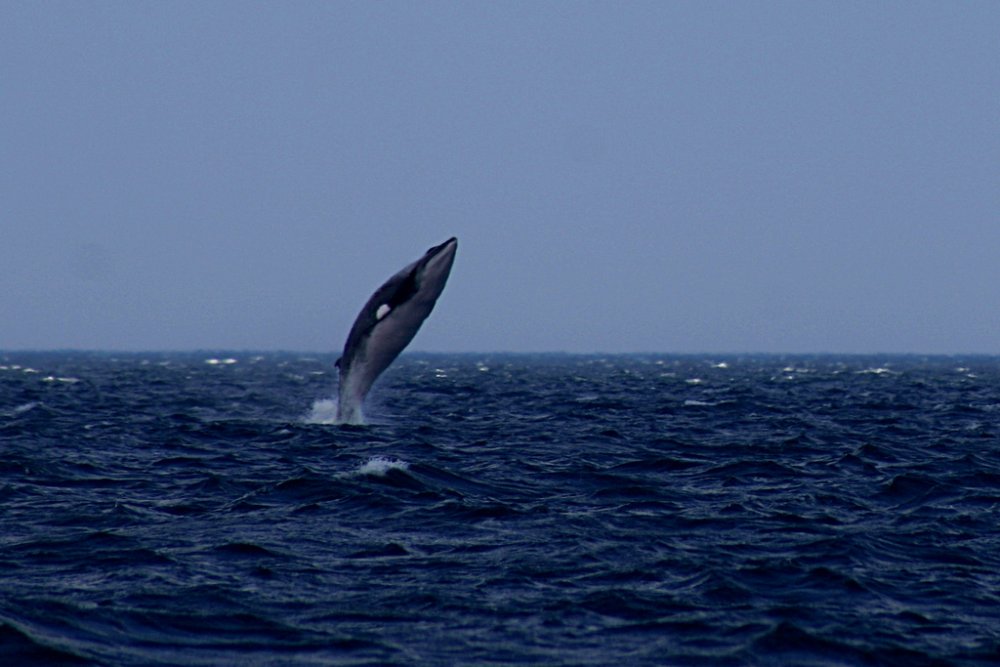
Washington state tribe’s whale hunting request triggers new backlash

dead whale

http://planetark.org/wen/73140

Date: 30-Apr-15
Country: USA
Author: Eric M. Johnson

A Native American tribe’s request to resume its sacred canoe and harpoon hunts of federally protected gray whales off the Washington state coast has drawn fresh opposition while the treaty-enshrined proposal is weighed by U.S. fisheries managers.

The application is at the heart of a decades-long quest by the Makah Tribe to hunt the marine mammals for both subsistence and religious purposes, which the tribe says it has done over millennia in the Pacific Ocean and Strait of Juan de Fuca.

Conservationists have criticized the practice as an unnecessary and barbaric death for animals that have high sentience and intelligence levels.

“The bottom line is that the Makah don’t have a legitimate need to kill the whales,” said D.J. Schubert, a biologist with the Animal Welfare Institute, a non-profit group.

The Makah Tribe is the only Native American tribe outside Alaska to hold whaling rights, enshrined in an 1855 U.S. treaty, according to the National Oceanic and Atmospheric Administration (NOAA), which is evaluating the request.

The Makah tribe ceased the practice in the early 20th century as whale populations dropped. But after gray whales were de-listed under the Endangered Species Act in 1994, tribe members harvested one whale in 1999 with the U.S. government’s approval.

In 2004, a U.S. appeals court ruled the Makah must seek a waiver from the Marine Mammal Protection Act to hunt whales, and that NOAA officials must analyze the environmental impact of the request.

The tribe sought a waiver a year later, asking to take as many as five gray whales annually from an estimated stock of 20,0000, NOAA said.

The tribe did not respond to requests for comment. It says on its website that “whaling and whales are central” to its culture, describing capturing an animal that can weigh 80,000 pounds (36 metric tonnes) using little more than a harpoon thrown from a canoe. NOAA says whalers use .50-caliber gun for the final kill.

In 2007, lacking government approval, Makah whalers killed a gray whale.

A NOAA study from March looked at range of options, including allowing the tribe to hunt up to five whales a year during limited seasons and under other restrictions.

The final analysis, which NOAA hopes to finish by year’s end, will be evaluated during a hearing by an administrative law judge who will decide whether to grant the hunting request.

(Editing by Daniel Wallis and Bill Trott)

Reuters


Makah Whaling – Whales Must Be Protected in U.S. Waters

Makah Whaling – Whales Must Be Protected in U.S. Waters

March 11, 2015 

http://www.seashepherd.org/commentary-and-editorials/2015/03/11/makah-whaling-whales-must-be-protected-in-us-waters-692

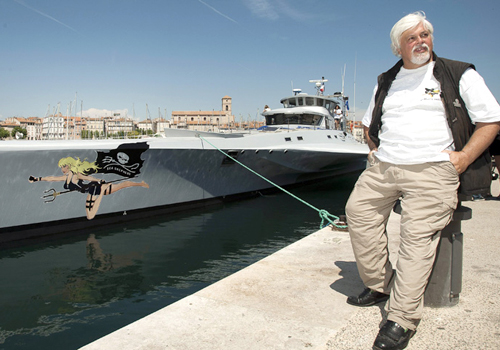
Commentary by Sea Shepherd Founder, Captain Paul Watson

Gray WhaleGray Whale
Photo courtesy of Wiki media commons.

Sea Shepherd Legal (SSL) will make a presentation on April 27th in Seattle at a hearing to be held by NOAA Fisheries on the proposal by the Makah Tribe to kill gray whales in the waters off Washington state. SSL’s position is that this permission should not be granted and that whales must be protected 100% in U.S. waters.

SSL is also exploring legal avenues of opposition to this proposal. Tradition and culture must never be a justification for the killing of whales and dolphins or for violating international conservation law.

In 1998, Sea Shepherd exposed documents released under the Freedom of Information Act that exposed negotiations between the Makah and the Japanese whaling industry that would have sold meat from the “traditional” hunt to the Japanese market.

As Makah Tribal Elder Alberta Thompson said at the time, “This is not tradition. It was part of our culture to weave baskets and to pick berries in the mountains. It was part of our culture to speak our language. No one want to weave baskets or to speak Makah. What they want to do is to kill a whale with an anti-tank gun – and that has never been a part of Makah culture.”

Sea Shepherd Legal is a 501(c)(3) entity, operating separately from Sea Shepherd Conservation Society.

Makah tribe grey whale hunt question reopened by NOAA report

Makah Want Another Whale

Makah whalers celebrate atop a dead gray whale in Neah Bay after the successful hunt in this May 17, 1999, photo. — Elaine Thompson/The Associated Press

Makah whalers celebrate atop a dead gray whale in Neah Bay after the successful hunt in this May 17, 1999, photo. — Elaine Thompson/The Associated Press

Makah group marks anniversary of whale hunt (AP)

…Meanwhile, federal officials are in the process of finalizing an environmental review that could lead to another hunt, the Daily News reported. The tribe is currently seeking authorization from the National Oceanic and Atmospheric Administration (NOAA) Fisheries agency under the Marine Mammal Protection Act to hunt gray whales for subsistence purposes.

In 2012, NOAA scrapped a 2008 draft environmental impact statement of Makah whaling and began a new draft environmental impact statement, after new scientific information found that a group of gray whales that frequents the Washington coast may be different than the 20,000 whales that migrate past the state each year on their way between Alaskan and Mexican waters.

Donna Darm, associate deputy administrator for the NOAA’s west region, said a new statement incorporating that information should be ready for public review by the fall.

“There’s been a lot of new science that we received since the 2008 draft,” Darm told the Daily News Thursday.

That information will not necessarily affect the tribe’s hunt, but it will require that tribal hunters carefully identify what group any future whales they take come from, according to the Daily News.

“Nothing we’ve learned really changes what the tribe has proposed in the first place,” Darm said. “It just changes what we see as far as impacts.”

http://www.peninsuladailynews.com/article/20140517/NEWS/305179987/makah-group-plans-to-mark-whale-hunt-anniversary-saturday-in-neah-bay

….Animal welfare and other groups decried the 1999 killing and later sued to stop the hunts.

Legal challenges then put the whale hunts on hold.

In 2004, the 9th U.S. Circuit Court of Appeals said the Makah could not obtain a waiver under the Marine Mammal Protection Act until an environmental assessment was prepared.

An illegal whale hunt in 2007 led to the death of gray whale and federal prison sentences for two Makah tribal members, including Johnson.

Makah whalers commemorate 15th anniversary of last legal whale kill

http://www.peninsuladailynews.com/article/20140518/NEWS/305189969/makah-whalers-commemorate-15th-anniversary-of-last-legal-whale-kill

By Joe Smillie
Peninsula Daily News

Also see:  Makah group plans to mark whale hunt anniversary Saturday in Neah Bay

NEAH BAY –– Fifteen years after returning from their tribe’s last legal whale kill, some members of the crew of Makah whale hunters who led that hunt set out again into the bay aboard the Hummingbird whaling canoe Saturday.

“It gives me chills. It just gives me chills,” said Charlotte Williams King.

Descended from a long line of whalers, King thought of her ancestors as she watched the canoes paddle in Neah Bay.

Her great-grandfather, John “Hiska” McCarty, dove underwater to tie closed the mouths of harpooned whales.

“I didn’t really realize it, but 15 years is a long time,” she said.

Saturday’s paddle, which included a chase canoe, was organized by the Makah Whaling Commission.

It commemorated the anniversary of the tribe’s successful whale hunt on May 17, 1999. It was the first time in 50 years that the Makah had harpooned a whale, and it happened aboard Hummingbird.

Members of the 1999 hunt crew led by Capt. Wayne Johnson were Theron Parker, Mike Steves, Darrell Markishtum, Glenn Johnson, Keith Johnson, Arnie Hunter, Franklin Wilson, Bruce Gonzelas, Dan Greene, Gordon Parker, Andy Noel, Donald H. Swan and Greg Arnold.

Most were aboard Hummingbird on Saturday.

Keith Johnson, president of the whaling commission, recalled the controversy that surrounded the 1999 kill of a gray whale, nicknamed “May,” whose skeleton now hangs in the Makah Cultural and Research Center in Neah Bay.

“Last time we had a whaling crew in that [canoe], those terrorists, those eco-terrorists, that were out there in their Zodiacs waking our boat and throwing smoke canisters at us,” Keith Johnson remembered.

The last whale killed by Makah tribal members was in 2007, when a group of five illegally shot dead a gray whale.

Members of the 2007 crew were Wayne Johnson, Parker, Noel, Gonzales and William Secor Sr.

Wayne Johnson served five months in federal prison and Noel 90 days for their roles in the kill.

Hummingbird was retired in 2006 after it capsized, killing Joseph Andrew “Jerry” Jack, a hereditary chief of the Mowachaht/Muchalaht tribe of Vancouver Island, during an InterTribal Canoe Journey.

Some had called for Hummingbird to be burned, Keith Johnson said, saying it had been cursed.

“You don’t burn a whaling canoe,” he said Saturday. “You bless it.”

The Makah voluntarily stopped hunting gray whales in the 1920s when populations diminished. Gray whales were listed as endangered species in 1970.

When the species was taken off the list in 1994, the Makah worked to resume subsistence hunting.

In the 15 years since the legal kill, the tribe’s right to hunt whales, guaranteed in the 1855 Treaty of Neah Bay, has been embroiled in court reviews over science.

After being allowed to hunt in 1998 and 1999,which ended in the killing of one whale, whale hunts were stopped shortly thereafter by a federal court order saying the Makah needed an environmental impact statement to obtain a waiver from the federal Marine Mammal Protection Act.

The International Whaling Commission in 2007 granted the tribe the right to kill as many as 20 whales over five years — with no more than five in a single year — but it still must get a federal waiver to conduct a hunt.

“We have judges that are animal rights activists that will do anything to put a road block in front of our treaty right to hunt whales,” Keith Johnson said.

“Just leave us alone.”

Conservationists say they are pleased that it’s been 15 years since the last legal hunt.

“We feel differently about the 15th anniversary,” said Margaret Owen, who formed Peninsula Citizens for the Protection of Whales with her husband, Chuck, to speak against the tribe’s whale hunts.

“There’s 60 whales that could have been killed in that time,” Owens said.

A draft environmental impact statement underway in 2008 was stopped by new scientific information that found the group of gray whales that frequents the Washington coast has distinctive genetic markers that differentiate them from the 20,000 gray whales that migrate along the West Coast.

“Those resident whales would have been gone,” Chuck Owens said.

Donna Darm, associate deputy administrator for NOAA’s west region, said Thursday a new statement incorporating that information should be ready for public review by the fall.

Darm and Keith Johnson noted that the tribe’s hunt plan calls for kills of transient whales only.

The 1999 hunt was uplifting for many members of the tribe, according to Makah General Manager Meredith Parker.

“There’s a lot of pride that has stuck with us from that 1999 hunt,” Parker said, “because we did it the right way.”

But the rogue 2007 hunt created divisions, Keith Johnson said, pointing out there was no event to mark the 10-year anniversary of the 1999 hunt.

“Do you see the whole tribe here?” he asked as he pointed to the three dozen people on the beach before Saturday’s commemorative paddle.

Saturday’s paddle began with a prayer for more unity from Gordon Lyons and a song for good luck from Darrell Markishtum.

Keith Johnson expressed hope that divisions within the tribe could be closed.

“It’s our traditional food, and people still want it,” Johnson said. “And if for no other reason, a lot of people here will support us for the treaty right.”

Johnson also pointed to the tribe’s cohesion in 1999.

“When we all get attacked, we all stick together. Because we’re one community.”
DSC_0036


In the Words of Farley Mowat

The world has suffered another great loss with the death of author, naturalist and avid animal advocate, Farley Mowat. I never had the opportunity to meet him, but I do feel extremely fortunate to have received an endorsement for my book from him, just two short years before his passing.

He didn’t use the internet, so I sent a manuscript to his assistant, who had to hand deliver it (presumably on snowshoes) to him at his place in eastern Canada. This is what he had her send back to me, which now holds a special place on the back cover of the book:

“Robertson’s new book could be titled The Big and Dirty Game, because that’s what it is about — the dirty, bloody business of killing other animals for sport and fun. Fun? Sure, that’s what the Sportsmen say . . but read about it for yourself . . .”   ~ Farley Mowat, Author of Never Cry Wolf and A Whale for the Killing

One of Farley Mowat’s many classic books, A Whale for the Killing, written in1972, was an autobiographical account of his moving to Newfoundland because of his love for the land and the sea, only to find himself at odds with herring fishermen who made sport of shooting at an 80-ton fin whale trapped in a lagoon by the tide. Although he had started off thinking folks around there were a quaint and pleasant lot, he grew increasingly bitter over the attitudes of so many of the locals who, in turn, resented him for “interfering” by trying to save the stranded leviathan.

Mr. Mowat writes, “My journal notes reflect my sense of bewilderment and loss. ‘…they’re essentially good people. I know that, but what sickens me is their simple failure to resist the impulse of savagery…they seem to be just as capable of being utterly loathsome as the bastards from the cities with their high-powered rifles and telescopic sights and their mindless compulsion to slaughter everything alive, from squirrels to elephants…I admired them so much because I saw them as a natural people, living in at least some degree of harmony with the natural world. Now they seem nauseatingly anxious to renounce all that and throw themselves into the stinking quagmire of our society which has perverted everything natural within itself, and is now busy destroying everything natural outside itself. How can they be so bloody stupid? How could I have been so bloody stupid?’”

Farley Mowat ends the chapter with another line I can well relate to: “I had withdrawn my compassion from them…now I bestowed it all upon the whale.”

And Farley Mowat writes here of the wrongheadedness of hunting intelligent animals, such as geese, in his foreword to Captain Paul Watson’s book Ocean Warrior:

“Almost all young children have a natural affinity for other animals, an attitude which seems to be endemic in young creatures of whatever species. I was no exception. As a child I fearlessly and happily consorted with frogs, snakes, chickens, squirrels and whatever else came my way.

“When I was a boy growing up on the Saskatchewan prairies, that feeling of affinity persisted—but it became perverted. Under my father’s tutelage I was taught to be a hunter; taught that “communion with nature” could be achieved over the barrel of a gun; taught that killing wild animals for sport establishes a mystic bond, “an ancient pact” between them and us.

“I learned first how to handle a BB gun, then a .22 rifle and finally a shotgun. With these I killed “vermin”—sparrows, gophers, crows and hawks. Having served that bloody apprenticeship, I began killing “game”—prairie chicken, ruffed grouse, and ducks. By the time I was fourteen, I had been fully indoctrinated with the sportsman’s view of wildlife as objects to be exploited for pleasure.

“Then I experienced a revelation.

“On a November day in 1935, my father and I were crouched in a muddy pit at the edge of a prairie slough, waiting for daybreak.

“The dawn, when it came at last, was grey and sombre. The sky lightened so imperceptibly that we could hardly detect the coming of the morning. We strained out eyes into swirling snow squalls. We flexed numb fingers in our shooting gloves.

“And then the dawn was pierced by the sonorous cries of seemingly endless flocks of geese that cam drifting, wraithlike, overhead. They were flying low that day. Snow Geese, startling white of breast, with jet-black wingtips, beat past while flocks of piebald wavies kept station at their flanks. An immense V of Canadas came close behind. As the rush of air through their great pinions sounded in our ears, we jumped up and fired. The sound of the shots seemed puny, and was lost at once in the immensity of wind and wings.

“One goose fell, appearing gigantic in the tenuous light as it spiralled sharply down. It struck the water a hundred yards from shore and I saw that it had only been winged. It swam off into the growing storm, its neck outstreched, calling…calling…calling after the fast-disappearing flock.

“Driving home to Saskatoon that night I felt a sick repugnance for what we had done, but what was of far greater import, I was experiencing a poignant but indefinable sense of loss. I felt, although I could not then have expressed it in words, as if I had glimpsed another and quite magical world—a world of oneness—and had been denied entry into it through my own stupidity.

“I never hunted for sport again.”

DSC_0254


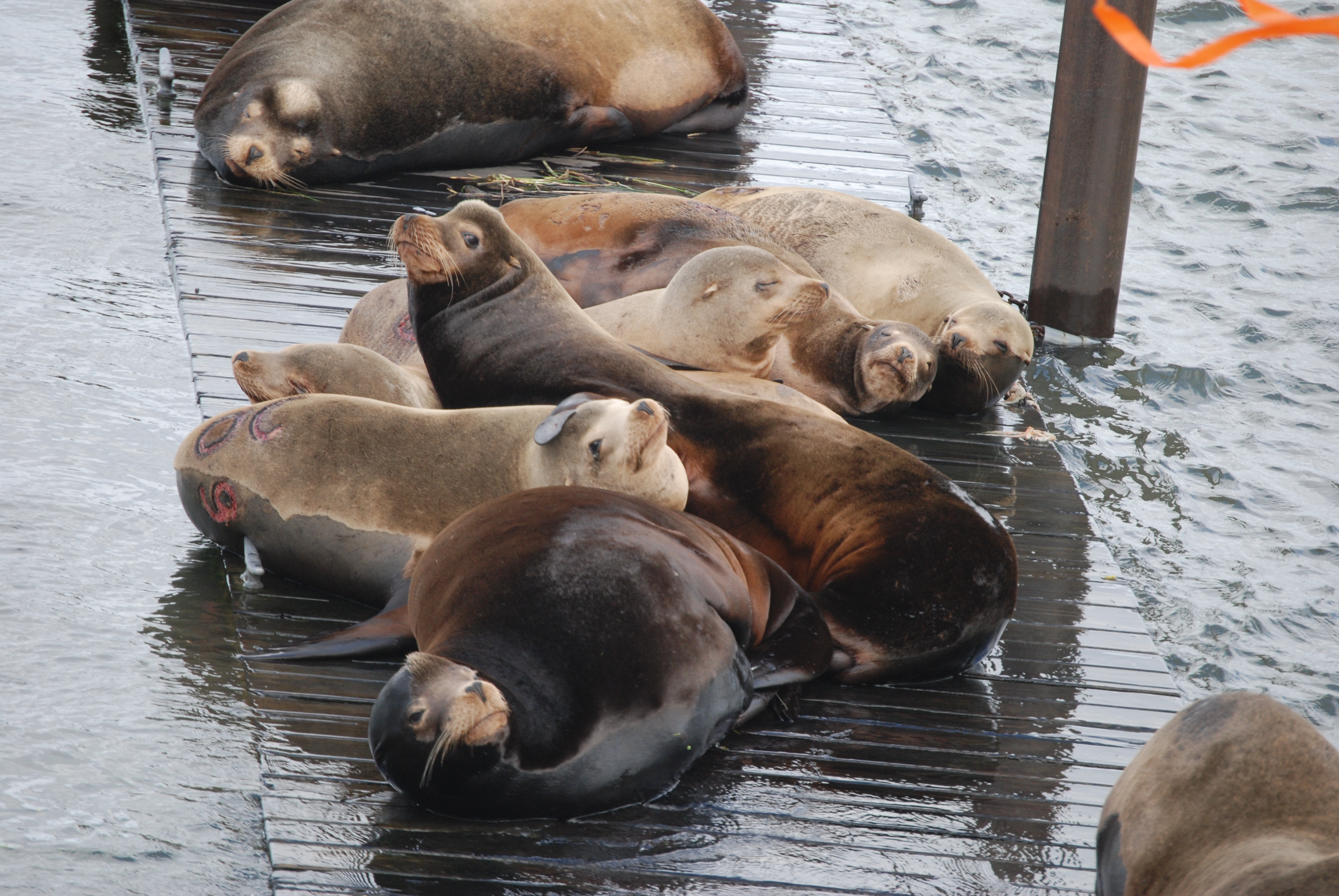
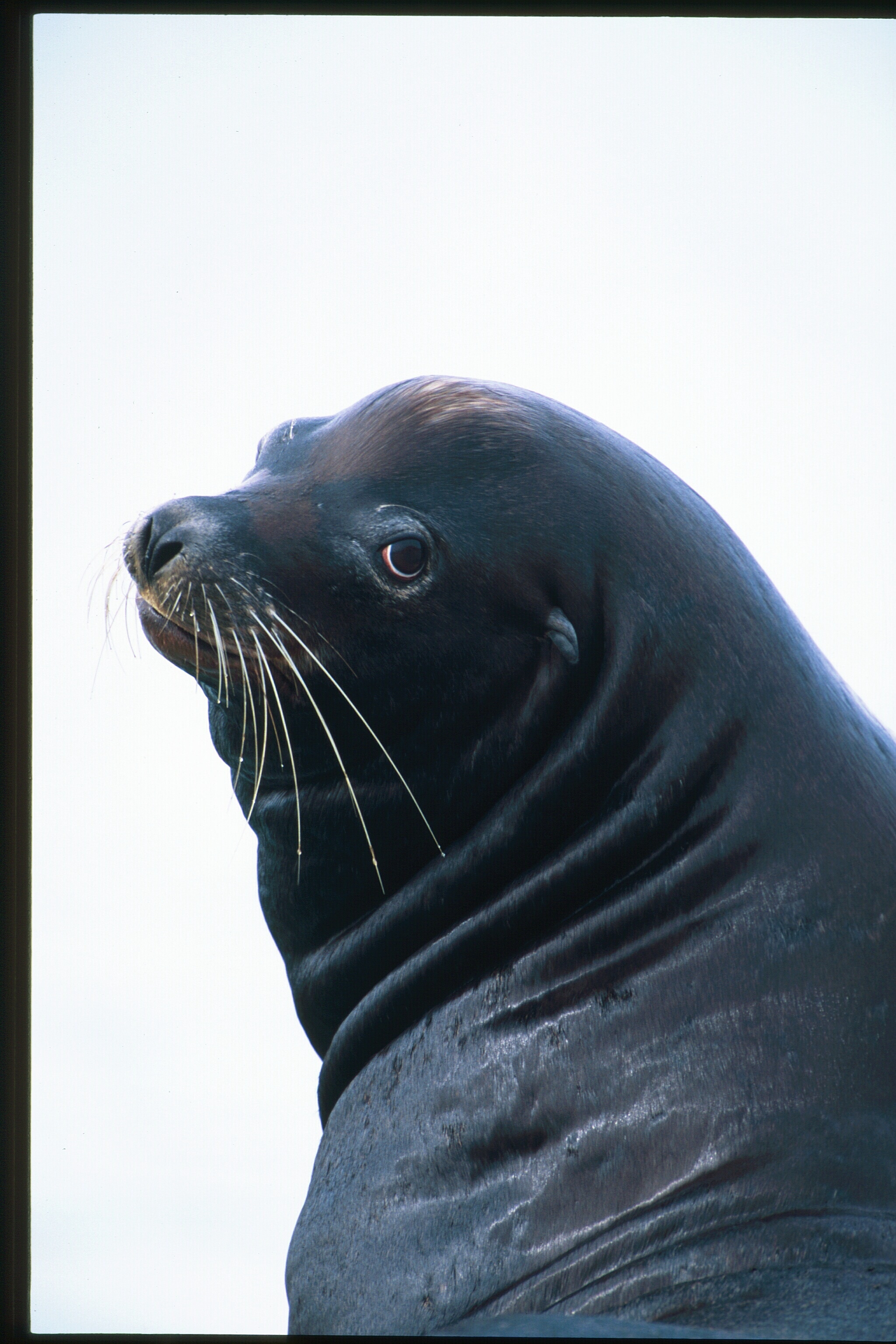
When Humans are Gone, Who’ll be Around to Brand the Sea Lions?

The hot iron is something right out of the Inquisition era. But while the Spanishlittleboyc09 Inquisition was a necessary evil to prevent heresy and extract confessions from witches, branding sea lions serves no real purpose. Oh sure, the modern day inquisitors will argue that the tortuous process helps them decide which individual sea lions are most responsible for the capital crime of eating salmon at the Bonneville dam upriver.

What you don’t hear them say is that sea lions have been eating fish for some 50 million years, ever since they left the land and evolved back into sea creatures. For the ensuing millennia, everyone got along just fine—until humans came by to fuck things up.

First, the humans strung nets and placed weirs out into the salmon’s migration path. Next they built canneries along the Columbia River; and while some people were busy killing off the salmon in droves, sealers murdered all the seals and sea lions and otters they could find, to fuel the booming, psychotic fur trade (for which the town of Astoria was first made famous). California sea lions were primarily rendered into oil by the equally-debased whaling industry.

The many dams built along the river were the coup de grace for any salmon still surviving the ever-advancing human onslaught. Not only do spawning salmon have to make it up past the massive new impediments, but warmer water behind the manmade reservoirs is hard on the young fish fry. And then there was the threat of the dam turbines…

Now, when a few sea lions are seen eating fish—as they’ve always done—they’re practically burned at the stake.

Text and Wildlife Photography© Jim Robertson

Text and Wildlife Photography© Jim Robertson

Sea Shepherd Founder to Bill Maher: ‘If Oceans Die, We Die’


http://ecowatch.com/2014/04/08/sea-shepherd-bill-maher/

| April 8, 2014

You can always expect to see Captain Paul Watson on the front lines of the battle to conserve and protect marine ecosystems for wildlife. He and his Sea Shepherd Conservation Society have been doing it for nearly 40 years.

A late-night, cable television got the chance to learn more about Watson’s mission during the most recent episode of Real Time with Bill Maher. He discussed some of his biggest enemies—Japanese whalers—and his joy regarding last week’s International Court of Justice ruling that Japan’s “research whaling” is illegal. It marked a big moment for Watson, who says he has been labeled an “eco-terrorist” for years.

“I’m not an eco-terrorist—I don’t work for BP,” he said to a round of applause from the studio audience.

Paul WATSON, Brigitte BARDOT

Back in February, chapters of Watson’s organization hosted “World Love for Dolphins Day” demonstrations in large cities, calling for an end to brutal dolphin hunts in Taiji, Japan’s killing cove.

Watson has also been jailed for his cause. He was arrested two years ago in Germany for extradition to Costa Rica for ship traffic violation as he exposed an illegal shark finning operation on Guatemalan waters run by a Costa Rican company.

——–

YOU ALSO MIGHT LIKE

International Court Rules Japan’s ‘Research’ Whaling Illegal in Landmark Case

250+ Bottlenose Dolphins Captured in Japan’s Taiji Cove Hunt

Sea World Responds to Blackfish Documentary, Sea Shepherd Sets the Record Straight

Japan mulls over Pacific research whaling

Japan is considering whether to conduct research whaling in1625686_10153991126600648_6519826837941566402_n the northwestern Pacific Ocean later this month as planned.

The International Court of Justice in The Hague ruled in March that Japan’s whaling program in the Antarctic cannot be recognized as serving research purposes in its current form.

Japan also carries out research whaling in the northwestern Pacific, including waters off the country’s coast.

This year’s activities are scheduled to start off the coast of Ishinomaki City, northeastern Japan, on April 22nd. There are plans to conduct it farther out into the northwestern Pacific next month.

The court’s decision does not directly cover Japan’s research whaling in those areas.

But the government thinks the court’s ruling could be applied to those waters depending on methods used, including the number caught.

The concern is prompting the government to assess its research procedures. It plans to decide as early as next week whether to go ahead with research whaling in the northwestern Pacific.

Some in the government claim that it should conduct the Pacific research whaling as planned. But others argue that Japan could be sued again if it continues the program without due consideration to the court’s ruling.

Apr. 10, 2014  http://www3.nhk.or.jp/nhkworld/english/news/20140411_03.html

Sea Shepherd Applauds the World Court for Protecting the Whales of the Southern Ocean Whale Sanctuary

http://www.seashepherd.org/news-and-media/2014/03/31/the-whales-have-won-icj-rules-japans-southern-ocean-whaling-not-for-scientific-research-1569

The International Court of JusticeThe International Court of Justice
Photo courtesy Wikimedia Commons

In a stunning victory for the whales, the International Court of Justice (ICJ) in The Hague announced their binding decision today in the landmark case of Australia v. Japan, ruling that Japan’s JARPA II whaling program in the Antarctic is not for scientific purposes and ordering that all permits given under JARPA II be revoked. The news was applauded and celebrated by Sea Shepherd Conservation Society USA and Sea Shepherd Australia, both of which have directly intervened against Japanese whalers in the Southern Ocean.

Representing Sea Shepherd in the courtroom to hear the historic verdict were Captain Alex Cornelissen, Executive Director of Sea Shepherd Global and Geert Vons, Director of Sea Shepherd Netherlands. They were accompanied by Sea Shepherd Global’s Dutch legal counsel.

The case against Japan was heard by the ICJ in July of last year to decide whether Japan is in breach of its international obligations in implementing the JARPA II “research” program in the Southern Ocean, and to demand that Japan cease implementation of JARPA II and revoke any related permits until Japan can make assurances that their operations conform with international law.

In a vote of 12 to 4, the ICJ ruled that the scientific permits granted by Japan for its whaling program were not scientific research as defined under International Whaling Commission regulations. It ordered that Japan revoke the scientific permits given under JARPA II and refrain from granting any further permits under that program.

A minke whale spyhops in the middle of iceA minke whale spyhops in the middle of ice
Photo: Sea Shepherd
Prior to the verdict, there had been some speculation that the ICJ would not permit the hunting of endangered fin and humpback whales, but it would compromise and allow the hunting of minke whales. However, it has been Sea Shepherd’s contention all along that — no matter the species — no whales should be killed, especially in a sanctuary. Sanctuary means “a place of refuge or safety; a nature reserve” where animals are protected. To allow killing in an internationally designated sanctuary is to make a mockery of international agreements made by those countries who established the sanctuary in 1994. At that time, 23 countries supported the agreement and Japan was the only IWC member to oppose it.

Even the Ambassador from Japan to the U.S., Kenichiro Sasae, during a public meeting in Los Angeles in December 2013 attended by representatives of Sea Shepherd USA, had this to say about whales and whaling: ”As an individual, I like whales and if you go out and see the whales, there is no reason for us to kill this lovely animal. But it’s history and it’s politics, I would say. There are a small number of Japanese people still trying to get this won. But mainstream Japanese are not eating whale anymore.” At the same meeting, Ambassador Sasae stated that Japan will abide by the ICJ ruling.

Ambassador Kenichiro Sasae

Read the transcript here

Sea Shepherd Conservation Society’s international volunteer crew stood on the frontlines in the hostile and remote waters of Antarctica for eight years and then Sea Shepherd Australia took up that gauntlet for the last two years and will keep confronting Japanese whalers in Antarctica until we can once and for all bring an end to the killing in this internationally designated “safety zone” for whales. Over the years, Sea Shepherd has been the only organization to directly intervene against Japan’s illegal commercial whaling conducted under the guise of research, with their claims of research globally questioned. Indeed, Sea Shepherd has been the only thing standing between majestic whales and the whalers’ harpoons, as these internationally protected species — many of them pregnant — migrate through Antarctic waters each year.

“With today’s ruling, the ICJ has taken a fair and just stance on the right side of history by protecting the whales of the Southern Ocean Whale Sanctuary and the vital marine ecosystem of Antarctica, a decision that impacts the international community and future generations,” said Captain Alex Cornelissen of Sea Shepherd Global.

“Though Japan’s unrelenting harpoons have continued to drive many species of whales toward extinction, Sea Shepherd is hopeful that in the wake of the ICJ’s ruling, it is whaling that will be driven into the pages of the history books,” he said.

“Despite the moratorium on commercial whaling, Japan has continued to claim the lives of thousands of the gentle giants of the sea in a place that should be their safe haven,” said Sea Shepherd Founder, Captain Paul Watson. “Sea Shepherd and I, along with millions of concerned people around the world, certainly hope that Japan will honor this ruling by the international court and leave the whales in peace.”

Sea Shepherd Global will have the ships prepared to return to the Southern Ocean in December 2014 should Japan choose to ignore this ruling. If the Japanese whaling fleet returns, Sea Shepherd crew will be there to uphold this ruling against the pirate whalers of Japan.

Earthrace Conservation, applauds International court verdict on Japanese whaling

Pete Bethune, Earthrace Conservation, applauds International court verdict on Japanese whaling.

The International Court of Justice in The Hague today (Monday, 31 March 2014) found in favor of Australia and New Zealand in the court case against Japan’s so-called Research Whaling in Antarctica.

Earthrace Conservation founder Pete Bethune, who was at the court for the original case in June 2013 and today to hear the verdict, said, “I am absolutely thrilled. Today will go down in history as a great day for whales, for conservation and for justice.”

Minke%20whale%20creative%20commons%20Smudge9000%20on%20flickrHe said, “The verdict makes Japan’s Research Whaling program, which has killed many thousands of whales in the name of science, illegal. It also halts any likely copycat programs from the likes of Russia and Korea which had the decision favored Japan had been expected to introduce research whaling programs of their own”.

Bethune had his boat, the Ady Gil, destroyed when it was run over by a Japanese security vessel in Antarctica in January 2010. He then spent five months in a maximum-security prison in Japan after he illegally boarded the vessel that had nearly taken the lives of himself and his crew.

This period saw such intense public outcry over research whaling, that the Australian government announced it was taking Japan to the International Court of Justice. Bethune remembers the day when he heard the news in prison. “I went down to meet my lawyer, and the first thing she said to me was Australia had taken the court action against Japan over whaling. I burst into tears. I was optimistic that any decent judicial system would find against Japan, and to finally see it become a realityis amazing.”

Bethune always felt that Japan’s case was weak. “They used a loophole in the original IWC regulations that allowed for nations to conduct their own research-whaling program”, he said.

“Japan argued the court had no jurisdiction to decide what legitimate research was, and that Japan could choose its research programs as it liked. They also presented some of their research findings, although none but the most one-eyed would accept them as being valued by the Scientific-community”.

The verdict is binding for all three countries and cannot be appealed. Japan has little choice now but to cease their whaling program in the Southern Ocean Whale Sanctuary.

Bethune spoke to several senior Japanese delegates after the verdict was announced and says they indicated that while they were very disappointed with the outcome, they would abide by the ruling and not go back to Antarctica.

According to Bethune, the one drawback with the court case is it only addressed Japan’s scientific whaling program in Antarctica. The verdict has now made this illegal, but it still leaves Japan free to continue with research whaling in the Northern Pacific.

Bethune said, “I have no idea why Australia and New Zealand left the Northern Pacific out of their case. If the research program in Antarctica is illegal, then by definition so is the program in the Northern Pacific but it will require another court action to make this illegal also.”

Bethune now feels that his actions back in 2010 were not in vain and hopes that in some small way what happened to him contributed to today’s verdict.
“I lost my boat, spent five months in prison for peacefully protesting against what has now been confirmed as illegal activities, and was paraded around in Japan as a dangerous criminal which was difficult to take at the time. If all that was even a small part of the means to this happy ending, then I’m bloody happy to have gone through it all.”