Along the coast of the Bering and Chukchi seas in the American state of Alaska discovered a large number of dead seals. Killing at least 60 animals of the three species – ringed seals, the spotted and sea hares. While the cause of death of these marine mammals is not established, according to the National oceanic and atmospheric administration (NOAA).
Carcasses of seals were found in cities Kotlik, Kotzebue, Kivalina, and the Islands of Stuart and the St. Lawrence. While scientists analyze samples.
Some of the dead animal was without hair. Experts are trying to figure out whether it happened in the decomposition of, or was caused by an abnormal shedding that was observed during another mass death of seals in the 2011-2016 years. Then failed to install by the deaths of 657 individuals.
The problem is serious for the region, as the seals are an important food resource for Alaska natives. Some people believe that it could happen because of pollution. Others reported that this year the seal is unusually thin, which tells about the availability of their prey.
Mass deaths of seals in recent years were also found in other regions of the world. So, in 2014, victims of a bird flu outbreak became 4.5 thousand animals in Germany, Denmark and Sweden. Then it was noted that the real tragedy is impossible to know. In reality, could have been dead tens of thousands of seals.
And in 2017, was killed 132 ringed seals in lake Baikal. Then dozens of carcasses were found on three sites of Baikal coast near the village of Novyy enkheluk in Buryatia, near the village of Murino of the Irkutsk region and along the Circum-Baikal railway, between the villages of Port Baikal and Kultuk in the Irkutsk region. The cause of death of animals at the deepest freshwater lake in the world was hunger. As explained by the then experts, the lack of fodder could be caused by the fact that the population of Baikal seals in recent years has increased significantly.
Dr. Kathy Burek, a veterinary pathologist, slices through the blubber layer on a gray whale that was beached outside Anchorage, Alaska, earlier this month. Scientists are trying to figure out why so many gray whales are dying.
Nat Herz/Alaska’s Energy Desk
Cutting through a 6-inch-thick layer of blubber demands a sharp knife.
But as veterinary pathologist Kathy Burek prepared to slice into the abdomen of a dead gray whale, many of her knives were dull. Burek had used them two days earlier to collect samples from a different gray whale, 100 miles away. Then, another whale beached outside Anchorage, Alaska.
“I didn’t have time. That’s what our problem is right here,” Burek said as she struggled to pull off a slab of blubber.
As of the end of May, four dead whales had been found thus far in Alaska. But those come after at least 60 other whale deaths along the West Coast this year, according to the National Oceanic and Atmospheric Administration. That is the highest number in two decades.
Scientists say more deaths are likely in Alaska, since each spring, gray whales swim 5,000 miles from Mexico to their Arctic feeding grounds.
“The level of strandings we’ve seen on the West Coast means Alaska should brace itself for probably some significantly elevated numbers of gray whale strandings,” said John Calambokidis, a research biologist at the Washington state-based Cascadia Research Collective.
A dead whale at the mouth of the Placer River, at the eastern end of the Turnagain Arm, near Anchorage, Alaska. The deaths of at least 60 whales along the Pacific Coast this year have scientists concerned and looking for answers.
Nat Herz /Alaska’s Energy Desk
Burek was hired by NOAA to take samples from the stranded whale outside Anchorage. The whale had been floating for nearly two weeks, and Burek wasn’t planning an extensive necropsy — the animal version of an autopsy.
“It’s just not worth the time and effort because once we get inside the abdomen — the kidneys, the liver are just going to be kind of liquefied,” she said.
The whale, she added, looked “skinny.”
Experts say it appears that many of the other gray whales died of starvation. But scientists aren’t sure why.
Reaching “carrying capacity” or climate change?
Gray whales were once hunted nearly to extinction by whalers. But they were protected by the Endangered Species Act, and the eastern North Pacific population rebounded and was removed from the endangered species list in 1994.
But researchers are also asking whether recent warming trends in the Arctic and reduced sea ice may have affected the whales’ prey.
“We have to really be on top of: Is there any relationship to climate change? And does this link to any other factors that might be affecting other species as well?” Calambokidis said. “Could gray whales be an early warning sign of other things that we need to be watchful for?”
Each spring and fall, the whales swim on one of the longest known mammal migrations — between their winter area in Baja California, Mexico, and their summer feeding grounds in the Chukchi, Beaufort and Bering seas in the Arctic. They primarily eat tiny, shrimplike creatures called amphipods, sucking them off the ocean floor and filtering mud and seawater out through their baleen.
NOAA surveys the gray whales’ feeding patterns each summer. Last year’s survey results are now getting scrutinized to see whether they can help explain this year’s deaths, said Michael Milstein, a NOAA spokesman.
“The scientists that do those surveys are going back through their records and trying to understand if there was something unusual about when and where the whales were feeding,” he said.
Enlarge this image
A sample of abdomen muscle from a beached whale in Alaska. The sample will be tested for potential clues to the whale’s death.
Nat Herz/Alaska’s Energy Desk
Milstein said they’ll be doing another survey this year, trying to determine whether more whales are competing for limited resources. Or if, for some reason, the food is less nutritious or not providing whales the energy needed to sustain them on a long migration.
NOAA also hopes to gather information from dead whales, like the one beached outside Anchorage. Initially, Burek wasn’t optimistic about the quality of samples she would get, but it turned out that the whale was in better shape than she thought.
After cutting and peeling a swath of blubber off one side, Burek cut into the whale’s abdomen, which released periodic spurts of gas and a foul smell. Internal organs slowly slid out of Burek’s incision.
“Ooh, guess what that is — that’s the kidney!” Burek said, as she sliced into the big red mass. “We got kidney!”
Burek placed tiny chunks into bags and vials — muscle, testicle, even poop. They’ll be tested later, as potential clues for researchers trying to solve the mystery of why whales are dying.
ANCHORAGE, Alaska (Reuters) – U.S. government biologists have launched a special investigation into the deaths of at least 70 gray whales washed ashore in recent months along the U.S. West Coast, from California to Alaska, many of them emaciated, officials said on Friday.
A stranded dead gray whale is pictured at Leadbetter Point State Park, Washington, U.S. in this April 3, 2019 handout photo. John Weldon for the Northern Oregon/Southern Washington Marine Mammal Stranding Program under NOAA Fisheries Marine Mammal Health and Stranding Response Program/Handout via REUTERS
The National Oceanic and Atmospheric Administration (NOAA) declared the whale die-off an “unusual mortality event,” a designation that triggers greater scrutiny and allocation of more resources to determine the cause.
So far this year, 37 dead gray whales have turned up in California waters, three in Oregon, 25 in Washington state and five in Alaska, say officials of NOAA’s National Marine Fisheries Service. Five more were found in British Columbia.
The most recent dead whale in Alaska was spotted last week near Chignik Bay on the Alaska peninsula.
Many have little body fat, leading experts to suspect the die-off is caused by declining food sources in the dramatically warming waters of the northern Bering Sea and Chukchi Sea off Alaska.
The gray whales summer there, consuming most of a year’s worth of nourishment to pack on the blubber they need to carry them through the migration south to wintering grounds off Mexico and back north to feeding grounds off Alaska.
Sea ice has been at or near record lows in the Bering and Chukchi, and water temperatures have been persistently much higher than normal, an apparent consequence of human-caused climate change, scientists say.
The conditions the whales encountered last summer could be hurting the animals now as they make their annual migration north, said scientists assembled by NOAA for a teleconference on Friday.
“The Arctic is changing very, very quickly, and the whales are going to have to adjust to that,” Sue Moore, a University of Washington oceanographer, told reporters.
Lack of sea ice may be reducing supplies of the tiny crustaceans known as amphipods that are the gray whales’ prime food source, Moore said.
In a commentary, two conservation scientists say that changes to the forests of Central and South America may mean that subsistence hunting there is no longer sustainable.
Habitat loss and commercial hunting have put increasing pressure on species, leading to the loss of both biodiversity and a critical source of protein for these communities.
The authors suggest that allowing the hunting of only certain species, strengthening parks and reserves, and helping communities find alternative livelihoods and sources of food could help address the problem, though they acknowledge the difficult nature of these solutions.
The way humans have changed the forests of Central and South America may be making it impossible for subsistence hunters to continue their way of life, according to two conservation scientists.
“No longer can subsistence hunting be seen or managed as a sustainable activity carried out by small, isolated human groups occupying large tracts of natural habitat and using traditional hunting methods,” Galo Zapata‐Ríos, who directs the science program for the Wildlife Conservation Society’s (WCS) Ecuador program, said in a statement. “Any approach to the problem must take into account the fundamentally different context in which subsistence hunting occurs in the present day.”
Scientists have generally thought that groups that rely on hunting to feed themselves and their families under these conditions — and as it has occurred for generations in some places — could do so without affecting the local survival of certain species.
An armadillo taken by hunters. Image by Galo Zapata-Ríos/WCS.
But Zapata‐Ríos and his colleague, Esteban Suárez, an ecologist and professor at Universidad San Francisco de Quito, say the widespread impacts humans have had in the “neotropical” forests of the Americas force a rethink of those assumptions.
“Any approach to the problem must take into account the fundamentally different context in which subsistence hunting occurs in the present day,” the authors write in a commentary published May 8 in the journal Biotropica.
Deforestation for timber and agriculture has carved through the region’s rainforests, leaving smaller and fewer fragmented refuges for species to inhabit. And an influx of people from outside, whether due to oil exploration, mineral extraction, or tourism, has helped fuel larger-scale hunting, sometimes even commercial-scale, they write.
Add to that even low levels of subsistence hunting pressure, and the burden could be enough to wipe out some species. Not only does that diminish the biodiversity of the surroundings, but it also robs those very communities of a critical source of food, Zapata‐Ríos and Suárez say.
A capybara in Colombia. Image by Rhett A. Butler/Mongabay.
The researchers outline several potential remedies, but acknowledge that none are perfect solutions. Wildlife managers could allow subsistence hunting only of certain animals that are numerous or reproduce swiftly enough to cope with the pressure. Parks and reserves with stronger protections could also provide places where animals can escape hunting pressure and thus keep their numbers up.
The pair’s research also looked at attempts to incentivize communities to switch to livestock rearing as a way to replace the protein in their diet that hunting historically provided, and, more drastically, projects to resettle subsistence hunters outside key areas that are home to rare or threatened species.
One study they cite found that more than two-thirds of a community in India that had been moved from the Bhadra Wildlife Sanctuary “perceived that their quality of life had improved and were satisfied with the outcome of the relocation,” but that’s not always the case.
A chestnut-eared aracari in Colombia. Image by Rhett A. Butler/Mongabay.
“There is ample evidence showing that resettlement of human populations in the name of conservation can result in severe social, cultural, and economic impacts that often affect the most marginalized groups among societies,” the team writes.
The researchers say that far-reaching initiatives are necessary if we’re to stem the loss of species from the bevy of threats they face. But they also point out the difficult situation that the outside world’s impacts on the region’s ecosystems have put communities of subsistence hunters in.
“[W]e give them the tools and expectations of the Western World, and then, we hope that they can succeed at living sustainably, even if we have constantly failed,” the authors write.
Banner image of a red howler monkey in Colombia by Rhett A. Butler/Mongabay.
Plant-based “meat” is going mainstream.Burger King
Plant-based “meat” sales are set to explode, with Barclays estimating that the market for alternative meat could grow by 1,000% over the next 10 years, reaching $140 billion.
Barclays says that climate change, animal welfare concerns, and greater interest in wellness are driving the meat-substitute revolution.
“Sustainability is increasingly more relevant as consumers, especially Millennials and Gen Z, have become more aware of the damage that food production has caused to the planet,” Barclays states in a recent report.
Plant-based “meat” is going mainstream, as grocery stores and fast-food chains jump on the alternative meat bandwagon.
The market for alternative meat could reach roughly $140 billion over the next 10 years, according to a report released this week from Barclays. Currently, the market for plant-based “meat” is just $14 billion.
Barclays posits that alternative meat could take over 10% of the $1.4 trillion meat industry. This is a goal that has been central to the rise of plant-based “meat” makers Impossible Foods and Beyond Meat as the companies target meat eaters over vegetarians.
Here are the three factors that Barclays says are driving the meat-substitute revolution.
Climate change and environmental worries
A protester attends a demonstration under the banner “Protect the climate — stop coal.”REUTERS/Wolfgang Rattay
“Sustainability is increasingly more relevant as consumers, especially Millennials and Gen Z, have become more aware of the damage that food production has caused to the planet,” Barclays states.
Global beef consumption is one of the leading environmental threats to the planet. Cows contribute more to global greenhouse gas emissions than cars, with the average cow emitting up to 500 liters of methane every day.
Plant-based products aren’t necessarily a perfect solution, with Barclays highlighting palm oil production’s links to deforestation. However, with climate change becoming “a more relevant topic,” Barclays says that companies have the “opportunity to highlight how their products address this concern.”
With more than 95% of farm animals raised on factory farms, Barclays says that concerns regarding animal cruelty are making plant-based “meat” more popular. People are becoming more aware of farming industry practices and pressuring companies to change, as well as exploring plant-based options.
“Rapid growth of animals in the interest of turning a profit more quickly saw livestock populations expand beyond available capacity, and higher densities changed the animals’ living conditions and types of confinements — such as placing chickens in windowless sheds, cattle in feedlots, and pigs in gestation crates — to the detriment of animal welfare,” the report states.
“In extreme cases, the birds may also face sleep deprivation as some factory farms keep lights on all day and night to encourage more eating rather than sleeping.”
However, most people aren’t giving up meat entirely in response to the mistreatment of animals. Barclays sees the biggest opportunity for growth coming from people who still eat meat, not vegetarians and vegans.
People around the world are more health-conscious than ever before, with Barclays saying that wellness is now a lifestyle as opposed to a trend.
Plant-based “meat” makers have the chance to cash in on people trying to be healthier. As people attempt to improve their cardiovascular health, Barclays cites meat substitutes as a way for people to cut red meat and cholesterol from their diets.
However, many people remain confused on how to actually become healthier. And, many meat alternatives have just as many calories as — and even more sodium than — traditional meat products.
“Besides people thinking that they are healthier than what they really are, they tend to address their issues with protein by focusing on taste and price, which could deter adoption of alternative meats if they don’t satisfy consumers on these counts,” the report reads.
Dave Bishop drives around PrairiErth Farm on his Gator, often with dog Molly behind or hopping on for a ride.
MADELYN BECK / HARVEST PUBLIC MEDIA
Originally published on May 20, 2019 7:33 am
Cow guts are quite the factory. Grass goes in, microbes help break it down and make hydrogen, then other microbes start converting it to another gas. In the end, you get methane, manure and meat.
One of those things is not like the other. Methane emissions are considered the second-worst greenhouse gas after carbon dioxide, according to Stanford University professor Rob Jackson.
“Methane emissions are a big deal. About a sixth of the warming that we’ve had since the start of the Industrial Revolution has been caused by methane,” said Jackson, who chairs the international emission-tracking organization known as the Global Carbon Project.
Listen
Listening…
Harvest Public Media’s Madelyn Beck looked into agricultural emissions as part of a Midwest-wide reporting project with InsideClimate News.
Agriculture is the leading producer of methane emissions in the U.S., with animal digestion producing almost as much as oil and gas operations. So, one way to reduce that is to just stop eating beef, right? That’s what researchers near and far believe, including Paul West at the University of Minnesota.
“As an individual, one of the biggest effects that we can have [to reduce greenhouse gas emissions from agriculture] is changing what we’re eating to eating a smaller amount of beef,” said West, who is co-director and lead scientist of the Global Landscapes Initiative, which aims to balance future food needs with ag sustainability.
However, West and Jackson also advocate for sustainable agriculture systems to mitigate climate change. Just don’t go getting rid of all those gassy ruminants. They’re likely a key part.
Various seedlings sprouted by the dozens in early May on PrairiErth Farm near Atlanta, Illinois.
CREDIT MADELYN BECK / HARVEST PUBLIC MEDIA
Beefing up on sustainability
Molly is not one to be left behind.
The old Great Pyrenees followed Dave Bishop’s Gator as he drove around his 350-acre operation called PrairiErth Farm. Here, Oreo cows coexist with all kinds of crops and vegetables either coming up in the fields or in hoop houses. And the friendly relationship between his two chickens and the cat? “It’s just not right!” he said, smiling and chuckling.
Dave Bishop stands in one of his hoop houses, which was heating up in the sunshine.
CREDIT MADELYN BECK / HARVEST PUBLIC MEDIA
In the mid-20th century, U.S. farms used to look a lot more like Bishop’s, but many were sold or consolidated as farmers looked to economies of scale to stay afloat.
Bishop bought this land in central Illinois as the ’80s farm crisis set in. But it was the 1988 drought that forced him to change his farm’s makeup.
“Everything burned up in the field and it became pretty apparent that we had to do something differently then,” he said. “So we just began looking for things to reduce costs. If I have livestock, I can generate some more fertility. If I have more than just corn and soybeans to sell, I have more diverse marketing opportunities.”
He’s turned to regenerative agriculture, which means creating a sustainable farming operation that isn’t too hard on the landscape and involves everything from cover crops to diverse crop rotations to drainage water management.
Climate change is a real concern of his, as is staying economically sound. That’s why he says any regenerative farm system needs to integrate animals and shift toward diversity in plants and livestock.
West also mentioned the need for crop diversity, saying that large-scale corn production is an issue in the Midwest — and not because farmers are seeing low prices on the billions of bushels grown each year.
“Even though we grow [corn] much more efficiently than a number of places around the world, because corn is a crop that is requiring a tremendous amount of fertilizer …it still affects our climate a lot,” he said.
Dave Bishop only has a few chickens, which roam about near the house and have a friendship with the cat.
CREDIT MADELYN BECK / HARVEST PUBLIC MEDIA
Remember the cow methane? Agriculture generates two other problematic greenhouse gases: carbon dioxide and nitrous oxide. The latter is boosted by excess nitrogen fertilizer applications, and is about 300 times more potent than carbon emissions (though it doesn’t last as long in the atmosphere as carbon or methane emissions).
The future of agriculture
Researchers are making inroads to reducing the amount of methane individual cows produce, feeding them seaweed or other kinds of supplements. Some are even looking to breed cows that naturally make less methane.
However, the animal’s gut microbes that produce methane also help the animal — cut out too many, and that could be toxic. Because of that, Jackson said, “there is no way, that I can see, where we reduce methane emissions completely.”
There are also some perennial crops on the horizon, like wheat and miscanthus (a grass that could be grown for biofuel), that can sequester more carbon because the root-dense soil won’t need to be disturbed to replant every year. Those will likely take years to be adopted by the agriculture sector, though.
In the meantime, Colorado State University professor Keith Paustian said we know enough to start making a dent in ag emissions.
He helped create some of the first methods to calculate greenhouse gas emissions from country to country. He also helped create the COMET-farm tool, which allows farmers to calculate their own greenhouse gas emissions and recommends ways to reduce them.
While the prospect of land use changes could help farms sequester more carbon emissions than they put off, he said that’s not the only solution for climate change or even reducing agriculture’s greenhouse gas emissions.
Brussels sprout starter plants sit in the sunshine at PrairiErth Farm. Exposing them to wind outside encourages them to grow stronger root systems, according to farmer Dave Bishop.
CREDIT MADELYN BECK / HARVEST PUBLIC MEDIA
Bishop at PrairiErth Farm said vilifying cows won’t help when it comes to finding more sustainable agriculture operations, which he said will need both plants and animals. Researchers need to listen to farmers, he said, and farmers need to listen to researchers, too.
Because at the end of the day, he said, it’s about making sure there’s food for the future, “so we’ve got to get this right.”
This story is part of a multi-newsroom collaborative project called “Middle America’s Low-Hanging Carbon: The Search for Greenhouse Gas Cuts from the Grid, Agriculture and Transportation.” The effort, led by nonprofit news organization InsideClimate News, includes 14 newsrooms in the Midwest, and aims to give readers local and regional perspectives on climate change. For more, go to the project page.
“The problem with climate change is that it’s a timed test,” the writer Bill McKibben says. “If you don’t solve it fast, then you don’t solve it.”
Photograph by S. E. Arndt / Picture Press / Redux
After years of languishing far down the list of voters’ priorities—for Democrats and even more so for Republicans—the desire for action on climate change has brought this issue to the top of many voters’ concerns, according to a CNN poll. Now Presidential candidates are competing to establish themselves as leaders on the issue, while children are making headlines for striking from school.
Bill McKibben, whose book “The End of Nature” brought the idea of global warming to public consciousness thirty years ago, tells David Remnick that the accumulation of weather catastrophes—droughts, wildfires, floods—may have finally made an impact. McKibben joined Elizabeth Kolbert in a conversation about the U.N.’s new report on species extinction. It finds that a million species could become extinct within a few decades, and that human life itself may be imperilled. While the political tide could be turning, both worry that it is too late.
This conversation has been edited and condensed.
Listen:David Remnick interviews Bill McKibben and Elizabeth Kolbert on The New Yorker Radio Hour.
david remnick:Bill, you wrote “The End of Nature,” which was really the first popular book on climate change, thirty years ago. What are you seeing now in the current moment that’s different from what you’ve seen before? We’ve had so many missed opportunities.
bill mckibben: What’s different about now? Well, one of the things that’s different is it’s much easier to see precisely what’s going on. I mean, thirty years ago we were offering warnings, even ten years ago. It was still a little hard to make out the precise shape of climate change as it started to affect the planet. Now, I mean, you watch as a California city literally called Paradise literally turns into Hell inside half an hour. You know, once people have seen pictures like that, it’s no wonder that we begin to see a real uptick in the response. In the last six months we’ve seen this rise of the demand for a Green New Deal in the Democratic Party. We’ve seen the Extinction Rebellion shut down London, the center of London, for a week, and the Tory-led Parliament and the U.K. declare a climate emergency. And, you know, most poignantly, we’ve watched a few million schoolchildren following the lead of Greta Thunberg, in Sweden, and walking out of classes. It’s not a good sign that we‘re asking twelve-year-olds to solve the problem for us, but it’s good that they’re stepping up.
Do you think that this had to be the case? In other words, that we had to see, say, Guatemala so affected by climate change that thousands of, essentially, climate refugees come to our borders. Or Syria, in many ways, was a product not only of political rebellion but also climate rebellion, in a certain sense. Did this have to be?
mckibben: I don’t think it had to be. I think that we were capable of taking the warnings from science and doing the right thing. I mean, heck, in 1988, Republican President George H. W. Bush announced that he would, quote, “fight the greenhouse effect with the White House effect.” But what happened was a thirty-year, no-holds-barred campaign by the fossil-fuel industry, the richest industry on earth, to confuse and obfuscate and deny and delay, and it‘s been remarkably successful. I mean, thirty years later, the Republican President believes that climate change was a hoax manufactured by the Chinese. So, you know, it’s that thirty years that may turn out to have been the crucial thirty years.
So, just to be clear, you’re blaming the fossil-fuel industry as the singular culprit for these lost thirty years, above all other factors.
VIDEO FROM THE NEW YORKER
Why a Psychiatrist Collected Premonitions
mckibben: Well, you know, it obviously would have been hard to change, because it’s a big problem, but imagine the alternative-history version where—I mean, this is the kind of “Man in the High Castle” approach—where, in 1988, after Jim Hansen testifies before Congress, we now know from great investigative reporting that the big oil companies knew and understood and agreed with that assessment of climate change. If the C.E.O. of Exxon had gone on TV that night and said, “You know what? Our scientists are telling us the same thing.” And that, by the way, is pretty much the least that any moral or ethical system you could come up with would demand, or so it seems to me. If that had happened, no one was going to be running around saying, “Oh, Exxon’s a bunch of climate alarmists, you know, pay them no mind.” We would have gotten to work. And thirty years ago there actually were things that weren’t that hard to do. A modest price on carbon in 1988 or ’89 would have started steering the giant ocean liner that is our economy a few degrees differently, and, thirty years later, we’d be in a different ocean. We didn’t do that. Now all our choices are very tough, and it’s going to require extraordinary political maturity and will to move as quickly as we need to move.
Betsy, I think what Bill is saying is that we’re at a certain kind of tipping point now, a political tipping point, where climate change is concerned, that hadn’t existed before. How do you perceive the politics around climate change at this moment? Because, in many ways, the Trump Administration is proactively making the problem much worse.
elizabeth kolbert: Yes, I think it’s going to be, you know, if we have a history, if we have a future that will look back on this moment, it will be a very interesting moment, because we do have these two extraordinary trends happening simultaneously. As Bill says, there is a lot of energy on the street, and for the first time, you know, you have Democratic candidates competing to be the climate candidate with some very detailed and pretty significant programs to try to wean us off of fossil fuels. At the same time you have just the most remarkably retrograde Administration in Washington, which isn’t just not making progress on these issues but actively rolling back whatever modest progress was made under the Obama Administration. That will take, at a minimum, years to undo that—if we decide to undo it, you know, if you don’t decide to give them another term. And meanwhile, on the ground, just the facts in the air, as it were, are really bad. When Bill wrote “The End of Nature,” I just checked back, and the records, CO2 levels in the atmosphere were approximately three hundred and fifty parts per million. We just hit four hundred and fifteen. So things are going in the wrong direction, and very rapidly.
What does that difference mean, qualitatively, in terms of our lives and the environment?
kolbert: Well, every increment of CO2 that we put up there is a certain amount of warming that you get out at the end of this process, and this sort of general, very, very rough rule of thumb is, if we want to keep average global temperatures from rising more than two degrees Celsius, which has been sort of defined as this threshold that you do not want to cross, this sort of general sense is we really can’t get above four hundred and fifty parts per million. Now we’re really—it’s very, very hard, if you think about how fast we’ve moved from three fifty to four fifteen. Meanwhile, CO2 emissions are increasing every year, they just increased pretty dramatically in 2018, we just got those figures. So it’s pretty hard to come up with a scenario in which we keep things under four hundred and fifty parts per million without, you know, sort of immediately ceasing globally—and this is not just in the U.S., you know—to burn fossil fuels.
Now, why would Donald Trump, who is not an executive in the oil industry, believe something like that global warming is a Chinese hoax? And why, correspondingly, why is a matter of science a matter of partisan politics? You say that the Democratic Party believes X, but a lot of Republicans believe otherwise.
kolbert: Well, this is, as Bill alluded to, this has been kind of a long history of a combination of moneyed interests and political interests colluding, as it were—the word of the hour—to make this issue seem to be one of belief. It has nothing to do with your belief. It has to do with geophysics, and geophysics that have been established for quite some time now. And so how we got into the situation here, the most technologically sophisticated society in history in the world where you still have a lot of people saying—and a lot of people in very high places, like the White House, and also at the head of the E.P.A.—and they’ve put in place, they‘ve taken people out of this, you know, denier complex, and put them into top offices in the federal government. And those guys know exactly what they want to undo, and they are pretty systematically going about doing it. I don’t know—to be honest, with all the noise there is around the Trump Administration, I’m not sure enough attention has been paid to what they’re doing to environmental regulations across the board.
Well, how sincere are they? In other words, those officials, those government officials in the Trump Administration have children and grandchildren, as well. And they have to see what the effects of climate change you’ve seen already—whether it‘s in Central America or Bangladesh, or the air quality in Delhi or Beijing. This is happening already. This is not something that we‘re projecting twenty years, thirty years, fifty years, a hundred years in the future. It is happening now.
kolbert: Well, I would think it would be extremely interesting if you could, in an unguarded moment—I don’t think any of the three of us are getting these guys in an unguarded moment—but to say, you know, how how do you sleep with yourself at night? How do you look at yourself in the mirror? I would love to be able to pose that question now. I think that one of the lessons of the last couple of years, unfortunately, is the capacity for human delusion and self-delusion is limitless. So, you know, it’s possible that you could administer truth serum to these guys and they would still be saying the same thing, because they actually, you know, quote-unquote “believe it.” I honestly don‘t know.
Bill, you made a decision in your life to become not only a writer but an activist. You wrote your book thirty years ago. It had a certain effect. And at a certain point you decided, That’s not enough, that, I have to get out from behind my desk, which is unusual for for most writers who enjoy the kind of solitude of being behind the desk—except when they’re not enjoying it, I guess. What propelled you to do this, and what complications does it cause in your own activity?
mckibben: Well, you know, I miss the solitude of my desk, too. Like most writers, I’m really an introvert. But at a certain point it became clear to me that I had made a mistake, that we were not really engaged in an argument. The argument about climate change was over by the early nineteen-nineties, when scientists had reached a very robust consensus. We’d won the argument. We were just losing the fight, because the fight was not about data and reason and evidence. It was about the thing that fights are always about: money and power. And, I mean, this goes directly to your previous question for Betsy. Look, the richest person in our society is the two Koch brothers taken together, our biggest oil-and-gas barons. They’ve purchased themselves a political party. So we knew we’d never have the money to stand up to that. But sometimes, in human history, organizing, movement-building, is enough to at least start to counterbalance that power. So that’s what we’ve been trying slowly to build over these last decade or so. And now, thank heaven, with those foundations laid, it’s an enormous number of people rushing in to do this work, which might even mean that I can get back to my desk a little more, we’ll see.
Well, what’s so striking about the movement in in large measure is that it’s led very often by kids, by teen-agers. In mid-March, nearly a million and a half kids worldwide went on a climate strike and refused to go to school. You saw this young woman, I think she’s sixteen or so, Greta Thunberg, speak in front of the E.U., in front of other political bodies. The most striking speaker one could ever imagine. Why is this generational shift happening, and what effect is it having?
mckibben: So, young people have been at the forefront of this for quite a while. When we started 350.org, it was myself and seven undergraduates here at Middlebury. And I think the reason that young people are so involved is because, well, because, you know, you and I are going to be dead before climate change hits its absolute worst pitch. But if you’re in high school right now, that absolute worst pitch comes right in the prime of your life. And if we’re not able to take hold of this, then those lives will be completely disrupted, and they’ve figured that out. That said, it’s not O.K. for the rest of us to leave it to fourth graders to solve the problem. There’s going to be—keep your eyes peeled, but I think soon there’ll be calls for adult strikes, as it were, to follow and back up the kids, beginning in the autumn. And that makes real sense. You know, it’s at some level business as usual that’s doing us in. The fact that we get up each day and do more or less the same thing that we did the day before. Even while the worst scenario that we’ve seen in our civilization is unfolding, you get a sense of that. I was just looking at the newspapers today. The U.N. just published a truly remarkable report saying that we’re going to lose a million species on the planet sometime over the next few decades. It completely backs up the work that Betsy did so brilliantly in “The Sixth Extinction.” And yet, you know, it’s in the newspapers, but it’s well below the new royal baby and the trade talks with China, and it’s that business as usual that’s literally doing us in. And we have to figure out how to disrupt it a little bit.
Betsy, I hate to be a competitive journalist, but when I read the report about “The Sixth Extinction” in the U.N. report, I said, The New Yorker had that ten years ago, when you published it, in 2009, the very same thing. What is the difference between 2009 and 2019 in terms of the extinction of hundreds of thousands of species on the planet Earth?
kolbert: Well, I think that it’s one of those cases where, as I’m sure Bill would say, you don’t like to see the news bearing out what you said. But, in this case, you know, the only difference is more documented destruction, really. And a lot more studies piled on the ones that were available to us five, ten years ago. But the general trend lines—an accelerating trend line, I do want to say, of human impacts—but the general trend line of biodiversity loss, which has been recognized for quite some time now, it’s all just playing out according to plan, unfortunately. And what this report does, I think, it’s really trying to, (a), raise the alarm, but, (b), really pointing to, there seems to be this strange disconnect, once again, out there. And it’s true that global G.D.P. is larger than ever. And at the same time species loss and destruction of the natural environment, natural world, other species is also greater than ever. And those two things are very intimately linked, and if you only pay attention to the G.D.P. part, you might say, “Oh, everything’s fine.” But I think what the point that this report is really trying to make is, those lines are going to cross. People are still dependent on the natural world—all the oxygen we breathe, all the food we eat, all the water—you know, these are biological and geochemical systems that we’re still dependent on, for better or worse, and we are mucking with them in the most profound ways. I think that that is the message, the take-home message of that report.
In other words, this so-called soaring economy that we’re enjoying now is the worst kind of illusion.
kolbert: Well, once again, it depends on how you measure it. If you measure it by stuff that we’re producing, I don’t want to say it’s an illusion. But if you look at the other side of that, the cost it’s taken on the natural world, everything from land use gobbling up habitat to plastic pollution in the oceans. The list goes on and on and on. And the question of, can you sustain that over time, we haven’t been at this project very long without really wreaking havoc with the systems that sustain us. I mean, there are two issues here. And I think they have to be separated to a certain extent, intellectually if not biologically. And one is, could humans go on like this for quite a long time, just letting the rest of the world decay around us? Is that O.K.? You know, for us as a species to just do in a million or more other species, just because we are enjoying a better and better standard of living, is that O.K.? That’s one question, and then the other question is, can that happen? You know, just physically, are we capable of sustaining this, with all of these other trends going around, or are we really threatening our own life-support systems? And I think this report is suggesting very significantly that we are threatening our own life-support systems. But I think that the other question of the ethical stance that we take toward this is also extremely important.
And yet, for years and years, if you betrayed the fact that you cared about this, you were described as a tree-hugger and mocked.
kolbert: Well, and that’s still true. I mean, we are arguing in this country right now. Even as I speak, and we speak, this goes back to the Trump Administration, and how they’re systematically trying to unravel a lot of very basic environmental protections in this country. We’re going to argue over the Endangered Species Act, which actually has been quite successful, in its own modest way. If you are a species, you get on the list, you have to have a recovery plan, and those species have tended to survive—not necessarily thrive, but survive. And now we’re going to argue about whether we should even be doing that. So these arguments are never-ending and, you know, pitting human welfare against the welfare of everything else, that doesn’t seem like a winning strategy over the long run.
Bill, I was really interested to read that you think that the great climate-change document of our time is by Pope Francis.
mckibben: Well, I think that the encyclical that he wrote three and a half years ago now, “Laudato Si,” it is amazing. Mostly because, though it takes off from climate change, it’s actually a fairly thorough and remarkable critique of modernity. And it talks really about precisely the things that Betsy has been talking about—understanding this as, yes, a problem of physics and of the need to put up a lot of solar panels and wind turbines, which we now can do because the engineers have made them affordable, but also understanding it as a problem of human beings and their relations with each other. As Francis points out, the last forty years, this period of time when we’ve worshipped markets and assumed they solved all problems has not only spiked the temperature through the roof, it’s spiked inequality through the roof. And the two are not unrelated.
How are they related? What is the essential relationship between the two?
mckibben: One of the things I spent some time doing in this new book is kind of teasing out the history that begins with Ayn Rand and kind of reaches a first zenith in the Reagan Administration, in 1980. The idea now in the air that we breathe, literally, that government is the problem, that if you leave corporations alone they’ll get done what needs doing, this reigning ideology came just at the wrong moment. It came at precisely the moment when we actually needed governments to be doing something very strong to deal with climate change. And that combination of ideology and interest has been enough to suppress our reactions in the crucial thirty years.
But have other governments that are less capitalist-oriented been any more successful in tamping down climate change than the United States?
mckibben: Sure. The first thing to be said is that same period was the period when the U.S. was ascendant over the rest of the world, so it held sway to some degree everywhere. But, go to Germany and look at what they did, beginning about 2000, with this law that made it easy for people to put up renewable energy. There will be days this month when Germany generates way more than half the power it uses from the sun, which is saying something, because no one ever went to Germany on a beach vacation, you know. Look at Northern Europe, at Scandinavia. I mean, they’re doing remarkable things. The engineers gave us an enormous gift. They dropped the price of renewable energy ninety per cent in the last decade. In China and India, thank God, that’s resulting now in very, very rapid expansion of renewable energy.
You wrote a wonderful piece for The New Yorker about solar panels in Africa. And yet you’re very—I think both of you are very wary of an excessive emphasis on technological transformation to solve all problems in climate change. Am I right?
mckibben: Well, technology is going to help enormously. We obviously have to produce a lot of electrons, and now we can, with renewable energy, but we can’t do that job—or the job of energy efficiency, or the job of starting to relocalize economies—we can’t do that without mustering political will. The reason that we build movements is not so much to pass particular pieces of legislation. It’s because one tries to change the Zeitgeist, the sense of what is natural and normal and obvious and coming next. And when you win that battle, then legislation follows. We’re getting closer. The polling last week showed that, for Democratic voters, anyway, climate change is now far and away the most important issue going into these primaries. That’s something that would have been unthinkable even a few years ago. And it’s a sign that all the movement-building, all the science, all the writing, all the engineering are reaching some kind of head, one hopes not too late.
Betsy, is Silicon Valley on the side of the angels here?
kolbert: Well, I think to the question of, is technology going to save us, which is a very big question, perhaps the question right now, I think one of the things that’s important to think about is, there are a lot of steps that we could take that would potentially mitigate or alleviate climate change that would actually be terrible for other species. So, for example, one of the real tragedies of the last couple of decades has been the transformation of Indonesia into a series of palm-oil plantations, which has really just destroyed habitats for a lot of iconic and non-iconic species, like orangutans, for example. Now, one of the—only one of the drivers behind that, but a driver, was the Europeans deciding that biofuels were good for climate change, which, on some level, they are, but if the cost of that is mowing down the world’s remaining rain forests, then the cure can be as bad as the disease. So one of my fears is that we’re moving into a lot of territory where some of the answers to climate change involve land-use change are good on a climate balance sheet, but they’re terrible on a biodiversity balance sheet. And to make all of these things add up is extremely difficult. And that is why we’re in the situation we’re in, and that is why we got that new report.
Betsy, at the forefront of political conversation where this is concerned is the Green New Deal. What do you make of the proposals, and is it sufficiently specific for you?
kolbert: Well, I think there’s a tremendous amount of thought that went into the Green New Deal, and it’s sort of the very big-tent view of who should be interested in climate change. I think it was very smart in a lot of ways, because one of the things that always happens when you try to use, for example, pricing mechanisms to drive us off of fossil fuels and toward renewable energy is you can get this terrible coalition of polluters and poor people, or people who claim to be campaigning on behalf of low-income Americans, because there’s ways, for example, to do a carbon tax that is revenue-neutral and that’s cost-neutral to people. But there are also ways to play it so that it seems like it’s a regressive tax on the poor. So we need a really big tent to get some of these key pieces of legislation passed, and I think that that’s a very smart aspect of the Green New Deal, that it’s really trying to bring as many people together, a coalition of labor interests, of people working on behalf of income equality, all sorts of causes under the same tent. Now, that being said, to get from here to there, to get to the kind of society that is envisioned in the Green New Deal, which the three of us here might very much agree with, that’s not one political battle, that’s a zillion political battles. So that’s the question, you know, is it better to try to take on all these things at one point, or would it be better to have one single piece of legislation. There is no legislation associated with the Green New Deal. It is really just as a series of aspirational goals at this point.
Bill, how do you see the Green New Deal? Do you see it the same way?
mckibben: I think it’s the first time we’ve had legislation that’s on the same scale as the size of the problem. I mean, look. It’s one of these places where I have to be careful not to be a jerk and say, “Oh if only you listened to me when . . .” Because, as I said before, there were things we could have done at a certain point that were relatively small and easy, but those options are no longer available. Like a modest carbon tax, which still makes perfect sense but by itself is nowhere big enough to get the yield, the savings in carbon emissions that we now desperately need, because we’re talking six, seven per cent a year or more now to try and meet anything like these U.N. goals. Those are enormous, on the bleeding edge of technically possible. So I think it’s really important that the Green New Deal is out there, and I think it’s really important, most of all, that we just keep ramping up pressure on this system to produce something large.
Well that’s why the first reaction to the proposal of a Green New Deal from the President of the United States and people at cpac and the rest was, “They’re going to take away your hamburgers, they’re going to ban cows.” You’re dealing with an opposition that’s working not in the spirit of science or good faith.
mckibben: Right. Which is why it’s probably not worth trying to spend a whole lot of time coming up with a solution that the President’s going to love and enjoy. What we have to do is rally the three-quarters of this country that understands we’re facing a really serious problem. I think that this is going to become one of the issues in this Presidential campaign, because I think everyone’s begun to realize how out of touch Trump is with most voters. It’s a good thing, too, because, David, we’re basically out of Presidential cycles in order to deal with this problem.
How do you mean?
mckibben: Well the U.N. Intergovernmental Panel on Climate Change last November issued their most recent report, and it was by far their most pointed to date. It said if really fundamentally transformative work was not well under way by 2030 then we were not going to catch up with the math of climate change. Physics was going to just be too far ahead in this race. And you know enough about political life in this country or any other to know that a decade is a short period of time—if we want to have anything substantial happening in a decade then we have got to be doing it right away.
Now, there’s a recent CNN poll, Betsy, that shows that Democrats care more about climate change than any other issue in the upcoming election. More than health care, more than gun control, more than impeaching or not impeaching President Trump. Did that surprise you? And do you think that will hold up somehow when it comes time for the campaign to intensify in the debates to happen?
kolbert: I will confess that I was very surprised by that. I mean, you’ve always seen climate change rank, you know, nineteenth, or something like that. And so I think that’s an extraordinary development. And you could argue it’s a positive result, and you could argue, oh, my God, that’s the scariest thing I’ve ever heard, because it does suggest that people are really seeing changes in their own lives that they find very frightening. And I think that, to get back to your point of, do the Koch brothers have grandchildren, I mean, people look at their kids. You know, I certainly do, and all the kids who are out on the street and say, “What is the world going to look like?” You know, twenty or thirty years from now, when my kids are my age—it’s scary and it’s depressing and it makes you ashamed. I mean, how could we leave a world like this to our children? I think increasing numbers of people are feeling that.
I guess they don‘t have to look very far. If you were to visit Delhi and try to breathe, if you go to Beijing or Shanghai and try to breathe, or try to be a farmer in Central America, or exist in Bangladesh, it’s not that hard to figure out it’s no longer a speculative matter, is it?
kolbert: No. And I mean, you don’t have to go as far as Bangladesh. You can go to Miami or you can go to New Orleans, you can go to, to be honest, you can go to New York City. All of these major American cities that are going to be dealing and already are dealing with sea-level rise, and a lot of places are dealing with storms that they never saw. We’re seeing tremendous flooding right now in the Mississippi, which probably has a climate fingerprint on it. So almost everywhere you go in this country, farmers are grappling with it in the U.S., you know, what is the weather going to be like. It’s changing the crops you can grow. So all of these things do have a bearing on how people see the world, which, as I say, is fortunate in some ways, but very scary in another.
Bill, in the financial crisis of 2009, as discussed, very often people say, Well, why didn’t anybody go to jail? Why didn’t anybody from various offending institutions, banks, or the like go to jail? I never hear that when it comes to the fossil-fuel industries in the late eighties and nineties.
mckibben: Well, people are really beginning to talk at least about trying to hold those companies financially accountable. As you know, the New York state attorney general is suing Exxon on the grounds that it lied to investors. New York City is suing the oil companies on the grounds that their product produced a knowable and foreseeable harm in terms of the sea-level rise. The city is now spending billions to try and cope with it. This is happening now around the country and around the world. The clearest analogy probably is to the tobacco wars of the previous generation. In fact, the oil industry hired veterans of the tobacco wars and the DDT wars to try and pull the same trick here. And they did it with, sadly, great power. That’s what happens when you have the biggest industry in the world all in behind the most consequential lie in human history.
You know, for nearly twenty years that I’ve been working together with Betsy, the running joke between us is about Betsy’s pessimism, which is well-founded, but we managed to joke about it anyway. And Bill, early on in “Falter,” your new book, you write, “There is one sense in which I am less grim than in my younger days. This book ends with the conviction that resistance to these dangers is at least possible.” And I sense in both of you, each in your own way, and it might be different, but each in your own way, some sense of hope is informing your work now, in 2019, the way it might not have five years ago. Am I right, Betsy?
kolbert: I’ll play my usual role here: Eeyore. I do see glimmers of hope on a political front but it’s sort of like mountains after mountains after mountains. And I think, as they say, the facts on the ground, climate change, the thing that distinguishes it from a lot of other environmental problems is it’s cumulative. It’s not something where you can say, at the moment you don’t like things, let’s undo them and have a chance of undoing them. There’s a lot of time lag in the system, there’s a lot of inertia in the system.
The system, meaning science?
kolbert: No, in the climate system. So we have not yet experienced the full impact of the greenhouse gases we have already put up there. And once we do, you know, in whatever, a decade or so, there’s a sort of a long tail to that, we will have put up that much more. So we’re always chasing this problem, and you can’t decide— once we decide “Oh, we really don’t like this climate,” you don’t get the old climate back for, you know, many, many, many generations. So we are fighting a very very, very uphill battle. And I think the point that Bill has made, and I agree with it, is maybe we can avoid the worst possible future. But I don’t think at this point we can avoid a lot, a lot, a lot of damage.
And we’ve been seeing it already.
kolbert: And we’re seeing it, but it’s just beginning. And it’s not just beginning and then we can turn it around, it’s just beginning and a lot more is built in.
What can be held back, Bill, and what can’t be held back at this point?
mckibben: Well, look, Betsy’s right. The problem with climate change is that it’s a timed test, and if you don’t solve it, it’s really the first timed test like this we’ve ever had. And if you don’t solve it fast then you don’t solve it. No one’s got a plan for refreezing the Arctic once it’s melted, and we‘ve lost now seventy or eighty per cent of the summer sea ice in the Arctic. So that’s a tipping point more or less crossed. The oceans are thirty per cent more acidic than they used to. So we’re not playing for stopping climate change. We’re playing maybe for being able to slow it down to the point where it doesn’t make civilizations impossible. That’s an open question. There are scientists who tell you we’re already past that point. The consensus, at least for the moment, is that we’ve got a narrow and closing window, but that if we move with everything we have, then, perhaps, we’ll be able to squeeze a fair amount of our legacy through it. But Betsy is right, an already very difficult century is going to become a lot harder no matter what we do. It’s at this point trying to keep it from becoming not a difficult and even miserable century but a literally impossible one.
You’ve both expressed your admiration for some of the movements that are generated by younger people. Are there any politicians that are running for President at the moment with whom any hope can reside where this is concerned?
mckibben: Well, from my point of view, we need this time all the at least Democratic candidates to be climate candidates. And there’s some very good people who know a lot about climate running. Jay Inslee, say, and others who are doing a terrific job of talking about it in powerful ways. Elizabeth Warren’s plan on public lands is great. Bernie [Sanders] in many ways got this conversation started on a national level in the last Presidential election. I think it’s probably in the end maybe less important precisely who the President is than what the atmosphere is like, what the Zeitgeist is like. That will push them enormously in the right direction. That’s why people have got to be working on the Presidential campaign, but that can’t be all or even most of what we’re doing, at least for the next six months or so. There’s a lot of other organizing to get done. And you can tell, I mean, here’s the hopeful case, if you want it. Fifty years ago next spring, we had the first Earth Day, in 1970. Twenty million people, one in ten of the then American population, went into the street. Now Earth Day is kind of a nice day in the park, whatever. Then a lot of those people were angry, and that anger transformed the flavor of this issue in America over the next four years. Richard Nixon, who had not an environmental bone in his body, signed every piece of legislation on which we still depend, the Clean Air Act, the Clean Water Act, the Endangered Species Act that Betsy described is now under siege. Those all came because of that outpouring of public energy that shifted the Zeitgeist. We’d better do it again. And in spades.
Now, Betsy, we’ve been talking for a while as if the only political force that’s involved here is the United States. And right-wing populism has swept not only the United States, the executive branch of United States and the Senate, but you see this all over the world. Is right-wing populism in concert with anti-environmentalism globally?
kolbert: Well, they they do tend to go hand in hand. They have tended to go hand in hand, and one of the strains to all of this, and it does get back to some of the points that Bill was making about this peculiar moment that we have lived through and live in, is climate change is a global problem. The atmosphere is the global commons. There’s just no getting around it. The atmosphere doesn’t care where the carbon was emitted, it just cares that it was emitted. And so you do need global coöperation and global action. And at precisely this moment where nothing could be more important we are seeing a resurgent nationalism. Coincidence? You know, possibly, but it is possibly also a lot of anxiety around how are we going to deal with this global problem.
And I don’t see when you look at all of the global politics involved, you know, putting even aside American politics for the moment, which are very hard to see beyond.
But that’s why I say it’s one of these problems where you scale one mountain and then you see, you know, another mountain chain ahead of you, unfortunately.
Elizabeth Kolbert, Bill McKibben—authors of really the essential works on climate change these last thirty years. Thank you so much.
A photo from the scene on Friday shows several people in the water of Boundary Bay, B.C., near the animals. (David Houston/Facebook)
54
comments
It just might be the happiest whale tale since Free Willy: a pair of grey whales stranded on the low-tide mudflats of Boundary Bay in B.C.’s Lower Mainland have escaped.
A rescue effort sprang into action Friday afternoon after the two whales — a mother and a calf — became beached near Centennial Park in Boundary Bay in Delta about a 40 minute drive south of Vancouver.
Fisheries and Oceans Canada led the effort with refloatation devices — large, inflatable airbags to lift the animals up — and a vessel. The Vancouver Aquarium was also on scene to handle any medical setbacks the animals may have suffered.
“It’s absolutely fantastic,” said Martin Haulena, the Vancouver Aquarium’s head veterinarian. “A very, very good ending.”
Haulena said the animals got stuck at approximately 2 p.m. PT. They were freed by about 6:30 p.m.
Fortunately for them, the tide was coming in to help their escape. A cheer rose from about 100 assembled onlookers as the whales began to move freely, flapping their fins.
Watch as the whales begin to right themselves in the rising tide:
CBC News Vancouver at 6
Whales get free in Delta, B.C.
WATCH
00:0000:34
After being stranded for much of Friday afternoon, a grey whale and her calf start to right themselves in the rising tide of Boundary Bay. 0:34
Dangerous position
Haulena said Boundary Bay — a wide, shallow bay straddling the Canada-U.S. border — is a place where grey whales could easily get stranded.
He described the animals as bottom feeders: they skim along the ocean floor filtering organisms from the sandy bottom through their mouths. He thinks they were likely foraging when the tide went out and became stuck.
As the tide rolled in the whales began to flap their fins and get free. (CBC)
Once out of the water, he continued, their large bodies put them in danger.
“They were never designed to bear weight,” he explained. “That can compress their lungs. They can’t breathe right. Their circulation gets very altered … it’s a very big deal potentially.”
He added that the whales are not out of the woods yet.
If they were injured too severely by their ordeal, they may still die.
Friday’s dramatic scene is one that has been happening all over the west coast of North America this year as an unusual number of grey whales have become stranded and died on their migration from their southern calving waters in Mexico to their northern feeding waters.
Some researchers are pointing to a lack of food as the cause.
Haulena said beachings tend to happen cyclically, with some years being worse than others, but agreed the population may be exhausting its food sources.
Fishing nets and ropes are a frequent hazard for olive ridley sea turtles, seen on a beach in India’s Kerala state in January. A new 1,500-page report by the United Nations is the most exhaustive look yet at the decline in biodiversity across the globe.CreditSoren Andersson/Agence France-Presse — Getty Images
Image
Fishing nets and ropes are a frequent hazard for olive ridley sea turtles, seen on a beach in India’s Kerala state in January. A new 1,500-page report by the United Nations is the most exhaustive look yet at the decline in biodiversity across the globe.CreditCreditSoren Andersson/Agence France-Presse — Getty Images
WASHINGTON — Humans are transforming Earth’s natural landscapes so dramatically that as many as one million plant and animal species are now at risk of extinction, posing a dire threat to ecosystems that people all over the world depend on for their survival, a sweeping new United Nations assessment has concluded.
The 1,500-page report, compiled by hundreds of international experts and based on thousands of scientific studies, is the most exhaustive look yet at the decline in biodiversity across the globe and the dangers that creates for human civilization. A summary of its findings, which was approved by representatives from the United States and 131 other countries, was released Monday in Paris. The full report is set to be published this year.
Its conclusions are stark. In most major land habitats, from the savannas of Africa to the rain forests of South America, the average abundance of native plant and animal life has fallen by 20 percent or more, mainly over the past century. With the human population passing 7 billion, activities like farming, logging, poaching, fishing and mining are altering the natural world at a rate “unprecedented in human history.”
At the same time, a new threat has emerged: Global warming has become a major driver of wildlife decline, the assessment found, by shifting or shrinking the local climates that many mammals, birds, insects, fish and plants evolved to survive in.
As a result, biodiversity loss is projected to accelerate through 2050, particularly in the tropics, unless countries drastically step up their conservation efforts.
Cattle grazing on a tract of illegally cleared Amazon forest in Pará State, Brazil. In most major land habitats, the average abundance of native plant and animal life has fallen by 20 percent or more, mainly over the past century.CreditLalo de Almeida for The New York Times
Image
Cattle grazing on a tract of illegally cleared Amazon forest in Pará State, Brazil. In most major land habitats, the average abundance of native plant and animal life has fallen by 20 percent or more, mainly over the past century.CreditLalo de Almeida for The New York Times
The report is not the first to paint a grim portrait of Earth’s ecosystems. But it goes further by detailing how closely human well-being is intertwined with the fate of other species.
“For a long time, people just thought of biodiversity as saving nature for its own sake,” said Robert Watson, chair of the Intergovernmental Science-Policy Platform on Biodiversity and Ecosystem Services,which conducted the assessment at the request of national governments. “But this report makes clear the links between biodiversity and nature and things like food security and clean water in both rich and poor countries.“
A previous report by the group had estimated that, in the Americas, nature provides some $24 trillion of non-monetized benefits to humans each year. The Amazon rain forest absorbs immense quantities of carbon dioxide and helps slow the pace of global warming. Wetlands purify drinking water. Coral reefs sustain tourism and fisheries in the Caribbean. Exotic tropical plants form the basis of a variety of medicines.
But as these natural landscapes wither and become less biologically rich, the services they can provide to humans have been dwindling.
Humans are producing more food than ever, but land degradation is already harming agricultural productivity on 23 percent of the planet’s land area, the new report said. The decline of wild bees and other insects that help pollinate fruits and vegetables is putting up to $577 billion in annual crop production at risk. The loss of mangrove forests and coral reefs along coasts could expose up to 300 million people to increased risk of flooding.
The authors note that the devastation of nature has become so severe that piecemeal efforts to protect individual species or to set up wildlife refuges will no longer be sufficient. Instead, they call for “transformative changes” that include curbing wasteful consumption, slimming down agriculture’s environmental footprint and cracking down on illegal logging and fishing.
“It’s no longer enough to focus just on environmental policy,” said Sandra M. Díaz, a lead author of the study and an ecologist at the National University of Córdoba in Argentina. “We need to build biodiversity considerations into trade and infrastructure decisions, the way that health or human rights are built into every aspect of social and economic decision-making.”
Scientists have cataloged only a fraction of living creatures, some 1.3 million; the report estimates there may be as many as 8 million plant and animal species on the planet, most of them insects. Since 1500, at least 680 species have blinked out of existence, including the Pinta giant tortoise of the Galápagos Islands and the Guam flying fox.
Though outside experts cautioned it could be difficult to make precise forecasts, the report warns of a looming extinction crisis, with extinction rates currently tens to hundreds of times higher than they have been in the past 10 million years.
“Human actions threaten more species with global extinction now than ever before,” the report concludes, estimating that “around 1 million species already face extinction, many within decades, unless action is taken.”
Unless nations step up their efforts to protect what natural habitats are left, they could witness the disappearance of 40 percent of amphibian species, one-third of marine mammals and one-third of reef-forming corals. More than 500,000 land species, the report said, do not have enough natural habitat left to ensure their long-term survival.
Over the past 50 years, global biodiversity loss has primarily been driven by activities like the clearing of forests for farmland, the expansion of roads and cities, logging, hunting, overfishing, water pollution and the transport of invasive species around the globe.
In Indonesia, the replacement of rain forest with palm oil plantations has ravaged the habitat of critically endangered orangutans and Sumatran tigers. In Mozambique, ivory poachers helped kill off nearly 7,000 elephants between 2009 and 2011 alone. In Argentina and Chile, the introduction of the North American beaver in the 1940s has devastated native trees (though it has also helped other species thrive, including the Magellanic woodpecker).
All told, three-quarters of the world’s land area has been significantly altered by people, the report found, and 85 percent of the world’s wetlands have vanished since the 18th century.
And with humans continuing to burn fossil fuels for energy, global warming is expected to compound the damage. Roughly 5 percent of species worldwide are threatened with climate-related extinction if global average temperatures rise 2 degrees Celsius above preindustrial levels, the report concluded. (The world has already warmed 1 degree.)
“If climate change were the only problem we were facing, a lot of species could probably move and adapt,” Richard Pearson, an ecologist at the University College of London, said. “But when populations are already small and losing genetic diversity, when natural landscapes are already fragmented, when plants and animals can’t move to find newly suitable habitats, then we have a real threat on our hands.”
The dwindling number of species will not just make the world a less colorful or wondrous place, the report noted. It also poses risks to people.
Volunteers collected trash in March in a mangrove forest in Brazil. The loss of mangrove forests and coral reefs along coasts could expose up to 300 million people to increased risk of flooding.CreditAmanda Perobelli/Reuters
Image
Volunteers collected trash in March in a mangrove forest in Brazil. The loss of mangrove forests and coral reefs along coasts could expose up to 300 million people to increased risk of flooding.CreditAmanda Perobelli/Reuters
Today, humans are relying on significantly fewer varieties of plants and animals to produce food. Of the 6,190 domesticated mammal breeds used in agriculture, more than 559 have gone extinct and 1,000 more are threatened. That means the food system is becoming less resilient against pests and diseases. And it could become harder in the future to breed new, hardier crops and livestock to cope with the extreme heat and drought that climate change will bring.
“Most of nature’s contributions are not fully replaceable,” the report said. Biodiversity loss “can permanently reduce future options, such as wild species that might be domesticated as new crops and be used for genetic improvement.”
The report does contain glimmers of hope. When governments have acted forcefully to protect threatened species, such as the Arabian oryx or the Seychelles magpie robin, they have managed to fend off extinction in many cases. And nations have protected more than 15 percent of the world’s land and 7 percent of its oceans by setting up nature reserves and wilderness areas.
Still, only a fraction of the most important areas for biodiversity have been protected, and many nature reserves poorly enforce prohibitions against poaching, logging or illegal fishing. Climate change could also undermine existing wildlife refuges by shifting the geographic ranges of species that currently live within them.
So, in addition to advocating the expansion of protected areas, the authors outline a vast array of changes aimed at limiting the drivers of biodiversity loss.
Farmers and ranchers would have to adopt new techniques to grow more food on less land. Consumers in wealthy countries would have to waste less food and become more efficient in their use of natural resources. Governments around the world would have to strengthen and enforce environmental laws, cracking down on illegal logging and fishing and reducing the flow of heavy metals and untreated wastewater into the environment.
The authors also note that efforts to limit global warming will be critical, although they caution that the development of biofuels to reduce emissions could end up harming biodiversity by further destroying forests.
An elephant in the Lewa Wildlife Conservancy at the foot of Mount Kenya, outside Nairobi. More than 500,000 land species do not have enough natural habitat left to ensure their long-term survival.CreditTony Karumba/Agence France-Presse — Getty Images
Image
An elephant in the Lewa Wildlife Conservancy at the foot of Mount Kenya, outside Nairobi. More than 500,000 land species do not have enough natural habitat left to ensure their long-term survival.CreditTony Karumba/Agence France-Presse — Getty Images
None of this will be easy, especially since many developing countries face pressure to exploit their natural resources as they try to lift themselves out of poverty.
But, by detailing the benefits that nature can provide to people, and by trying to quantify what is lost when biodiversity plummets, the scientists behind the assessment are hoping to help governments strike a more careful balance between economic development and conservation.
“You can’t just tell leaders in Africa that there can’t be any development and that we should turn the whole continent into a national park,” said Emma Archer, who led the group’s earlier assessment of biodiversity in Africa. “But we can show that there are trade-offs, that if you don’t take into account the value that nature provides, then ultimately human well-being will be compromised.”
In the next two years, diplomats from around the world will gather for several meetings under the Convention on Biological Diversity, a global treaty, to discuss how they can step up their efforts at conservation. Yet even in the new report’s most optimistic scenario, through 2050 the world’s nations would only slow the decline of biodiversity — not stop it.
“At this point,” said Jake Rice, a fisheries scientist who led an earlier report on biodiversity in the Americas, “our options are all about damage control.”
Responders examine a malnourished adult gray whale in April after it was towed to a remote beach after initially being found floating near downtown Seattle.
Cascadia Research Collective
An unusually large number of gray whales are washing up dead on their northbound migration past the Oregon and Washington state coasts this year.
The peak stranding time for gray whales in the Pacific Northwest is normally April, May and June. But the federal agency NOAA Fisheries has already logged nine dead whales washed ashore in Washington state and one in Oregon. That’s on top of 21 strandings on California beaches since the beginning of the year.
There were 25 dead gray whale strandings on the entire West Coast in all of 2018.
One 39-foot-long dead adult whale was found floating in Elliott Bay this month, right in front of downtown Seattle.
“This is looking like it is going to be a big year for gray whale strandings,” said Jessie Huggins, stranding coordinator for the Olympia-based Cascadia Research Collective.
Since February, Huggins has participated in necropsies of malnourished, mostly adult, gray whales on Whidbey Island and the Key Peninsula to Ocean Shores and Long Beach, Washington.
“We’re seeing very thin whales with little to no food in their stomachs,” Huggins said. “This is kind of leading us to believe that this is an issue of nutritional stress with a few normal-type strandings mixed in.”
Huggins said these whales probably didn’t get fat enough on their summer feeding grounds in Alaskan waters last year.
Responders in rain gear and elbow-high rubber gloves cut into the massive carcasses to examine the animals’ fat reserves and internal organs. Multiple whales exhibited dry fibrous blubber. The responders noted ribcages and vertebra sticking out, measured healed scars and took tissue samples for later analysis for contaminants.
Despite the unusual number of dead whales found, NOAA Fisheries spokesman Michael Milstein said the overall population of gray whales is fine, “probably as big as it’s ever been” in modern times.
Eastern Pacific gray whales were taken off the endangered species list in 1994. The population is now estimated at 27,000, which may be around the carrying capacity of their ocean territory.
“They’ve been coming back strong,” Milstein said.
Gray whale and humpback whale casualties from entanglement in commercial and tribal fishing gear have been a growing concern for federal officials, certain environmental groups and the fishing industry lately. None of dead gray whales found this spring on Oregon and Washington state beaches were entangled in fishing or crabbing lines, however.
Crabbers and fishing boat owners are scheduled to meet with researchers and government representatives when two separate work groups convene next month along the Oregon and Washington state coasts to hear updates about entanglement risk reduction strategies.
Sometimes it takes a village to examine and pull samples from a decomposing whale. Huggins said she has worked alongside colleagues this winter and spring from Portland State University, Seattle Pacific University, the nonprofit SR3, Washington Department of Fish and Wildlife and World Vets.


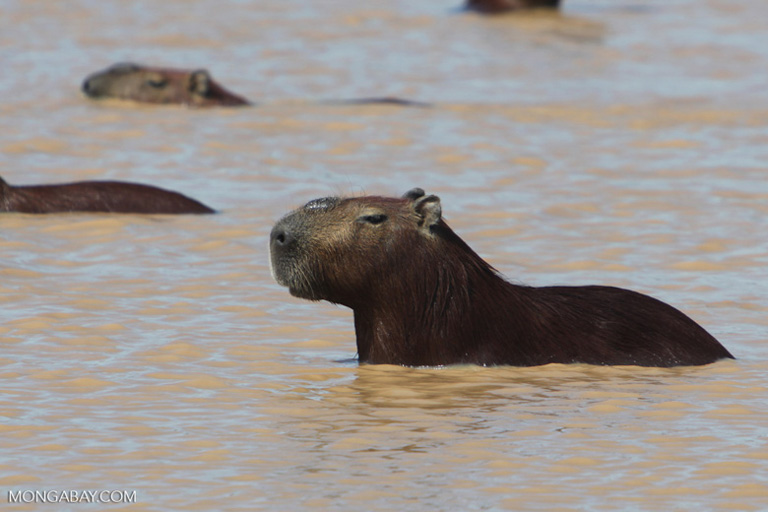
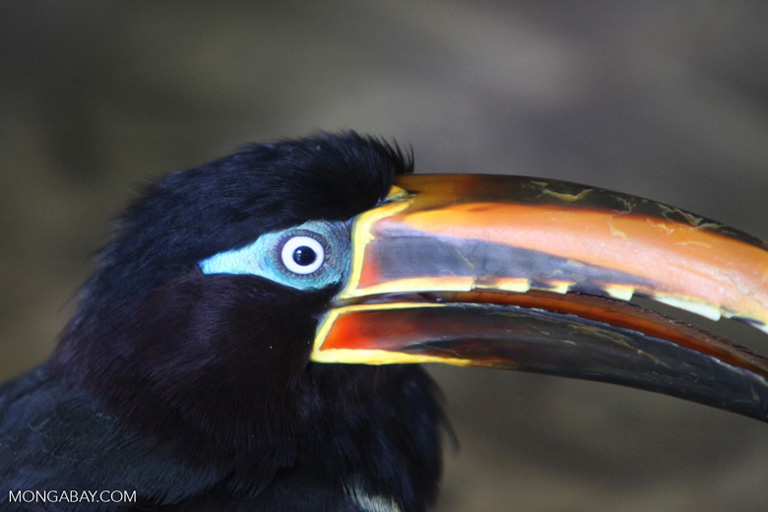








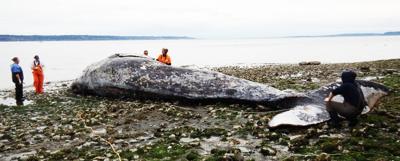
 Exposing the Big Game