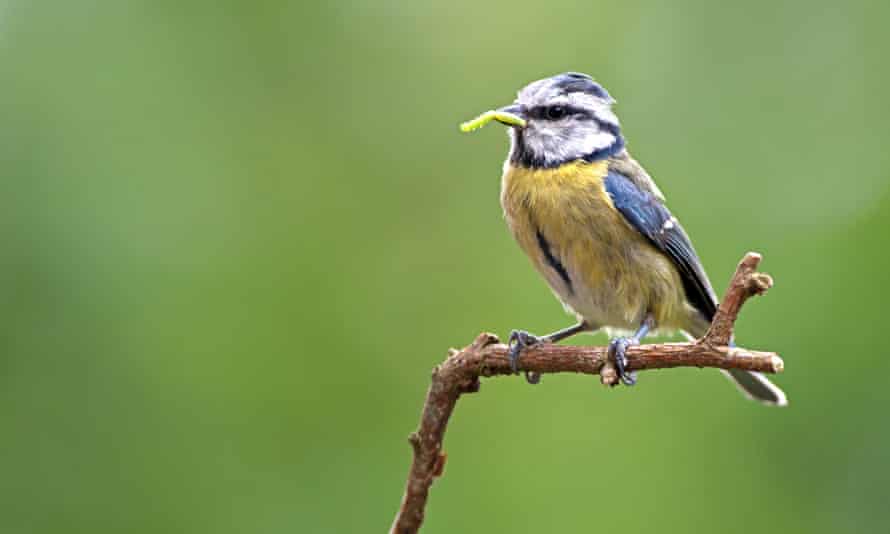
A blue tit with food for its young. If they fail to respond rapidly to earlier springs, their numbers will plummet. Photograph: Lisa Geoghegan/AlamyStephen Moss@stephenmoss_tvSun 3 Jan 2021 01.45 EST
Lockdown has sparked a renewed interest in our garden birds, with millions of us enjoying watching them from our windows. But could some species – including the common and familiar great tit – vanish from Britain’s gardens by the end of the century?
Researchers from the Norwegian University of Science and Technology, working with the University of Oxford, have modelled how great tits are reacting to the climate crisis. Specifically, are the birds able to respond to the earlier emergence of the caterpillars on which they feed their chicks?
Birds such as great tits have evolved to time their breeding cycle so it coincides with the peak of moth caterpillars that feed on oak leaves, which traditionally happens in late May and June. But as temperatures rise, so oaks are coming into leaf earlier, and the caterpillars have responded by hatching out earlier too.
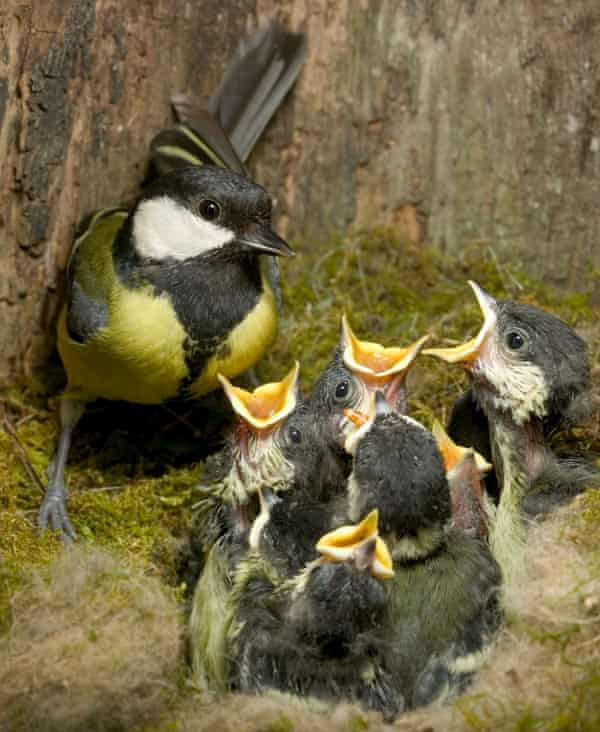
This means that when the great tit chicks are ready to be fed, the peak of caterpillars is already coming to an end. Because the parent birds need to find 1,000 caterpillars every day for their hungry offspring, any mismatch is likely to dramatically reduce breeding success.
A great tit with lots of hungry mouths to feed. Photograph: Andrew Darrington/Alamy
The researchers found that although the birds can respond to climatic shifts, they are not doing so quickly enough. Lead author Emily Simmonds estimates that the tipping point comes when oak leaves, and their associated caterpillars, appear 24 days earlier than usual.
The discovery that birds can and do respond to climate change by breeding earlier than normal was first made in the 1990s by Dr Humphrey Crick, a scientist working at the British Trust for Ornithology. He was analysing thousands of cards from the BTO’s long-running Nest Record Scheme, which had been filled in by amateur birdwatchers over the previous half-century, detailing the dates when eggs are laid and chicks hatch.Advertisementhttps://9911c2d216ab4f245f95ddb4284ceb8c.safeframe.googlesyndication.com/safeframe/1-0-37/html/container.html
Crick noticed a surprising trend: for many species, the date on which they laid their eggs had moved forward by an average of nine days. The resulting landmark paper, “UK birds are laying eggs earlier”, published in the journal Nature in 1997, provided some of the earliest empirical evidence that wild creatures were already responding to a warming climate.
A decade later, in 2006, I remember Bill Oddie introducingd Springwatch with the astonishing news that every blue tit nest they were monitoring had already fledged young – several weeks earlier than usual. Because blue tits only have one brood, they must respond very rapidly to changes such as earlier springs. If they fail to do so quickly enough, their numbers will plummet.
At the end of his 1997 paper, Humphrey Crick made this prophetic comment: “For birds, earlier nesting could be beneficial if juvenile survival is enhanced by a prolonged period before winter. Conversely, birds may be adversely affected if they become unsynchronised with the phenology of their food supplies.”
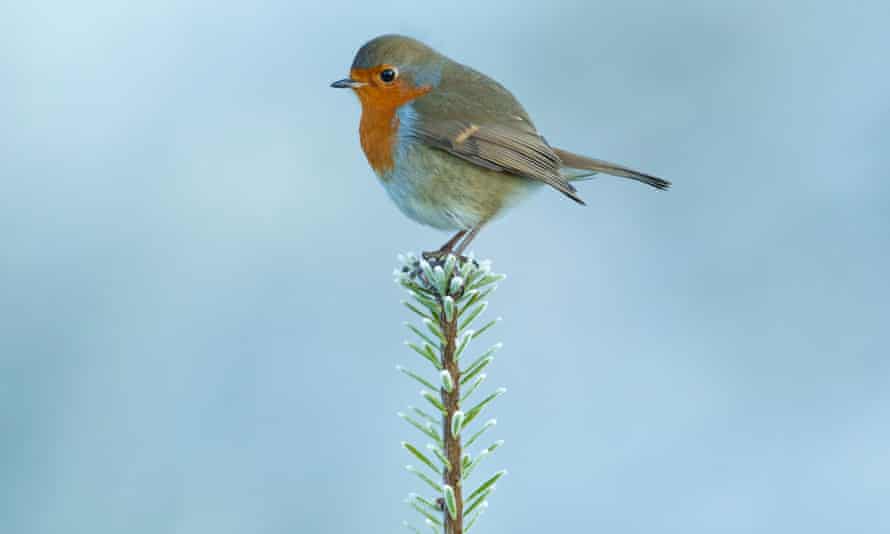
A longer breeding season benefits birds such as the robin, which produce two or more broods. Photograph: incamerastock/Alamy
Less than a quarter of a century later, both parts of that prediction appear to be coming true. In the short term, a longer breeding season has benefits, especially fr birds such as the robin, blackbird and song thrush, which produce two or more broods of young. Starting to nest earlier in the year might allow them to squeeze in an extra brood, and so produce more offspring in total.
Professor James Pearce-Higgins, the BTO’s director of science, points out that our smallest birds, such as goldcrests, wrens and long-tailed tits, are benefiting from another aspect of climate change: the much milder winters of recent years.
He also points to the positive impact of our habit of feeding garden birds, which helps species such as blue tits, great tits and goldfinches. At present, he suggests that the advantages of higher winter survival rates outweigh the failure to synchronise with the spring food supply, though that may not always be so.
Another climate-driven success is the way many species are now expanding northwards. The latest European Breeding Bird Atlas reveals that, on average, the ranges of Europe’s breeding birds have shifted north by 28km (17.5 miles) since the original survey was done in the late 1980s – almost 1km every year.
But as our climate becomes less predictable, with more extreme weather events such as storms, droughts and floods, what scientists have called the “honeymoon period” will come to an abrupt end.
As Professor Pearce-Higgins notes, ground-feeding birds may not be able to cope with prolonged summer droughts, which make it harder for them to find food: “One potential exception to this positive picture of warmer temperatures is thrushes and blackbirds, which rely on soil invertebrates. We know, from a study we have run recently asking schoolchildren to count earthworms in school playing fields, that the availability of worms – a major food source for many species – declines significantly in summer, particularly when it is dry.”
So, as we stand on the precipice of a runaway warming world, the future for many of our best-known and best-loved birds remains in the balance.
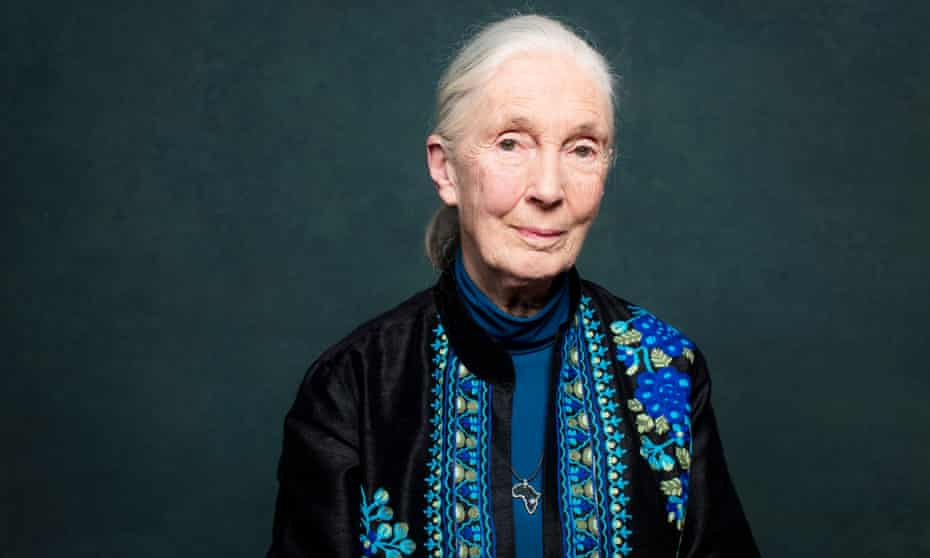
Jane Goodall: ‘Our disrespect for animals creates conditions for the emergence of zoonotic diseases.’ Photograph: David Levene/The Guardian
The primatologist and ecological activist on why population isn’t the cause of climate change, and why she’s encouraging optimism@jonathanwattsSun 3 Jan 2021 04.00 EST
895
Jane Goodall is a primatologist who is regarded as one of the world’s leading authorities on chimpanzees. She has spent 60 years studying the chimps that live in the Gombe Stream national park and she is a prominent advocate, via several foundations, of protecting the great apes and their habitats. She has been presented with awards by the UN and various governments for her conservation and environmental work. She appears in the Netflix documentary The Beginning of Life 2.
You warned last June that humanity will be finished if we don’t make drastic changes in response to the coronavirus pandemic and the climate crisis. Have you seen any indication of that drastic change? The window is closing. Business as usual – using up natural resources faster and faster – can’t carry on. In some cases, we are already using resources faster than they can be replenished. And we can see the consequences. Look at climate change. It is not something that might happen in the future; we are already seeing terrible hurricanes and floods and fires. It is building up into an inferno. When you think globally like that, it is very, very depressing.Advertisementhttps://c015c01652c1d4c024600cef2ce37a0c.safeframe.googlesyndication.com/safeframe/1-0-37/html/container.html
Do you feel that the pandemic has shifted perceptions, or created more of a sense of urgency? Maybe Covid has given a push that will make a difference. The most important lesson from this pandemic is that we need a new relationship with nature and animals. Our disrespect for animals creates conditions for the emergence of zoonotic diseases. You can see that same disrespect in factory farms, bushmeat and wildlife markets and the illegal wildlife trade. About 75% of all newly emerged diseases in humans are zoonotic.
What more needs to be done? We need to move to a more sustainable relationship with the natural world. We need a greener economy. If countries move away from fossil fuels and subsidise clean, green energy that will create a lot of jobs. If you plant trees in a city it has enormous benefits – it cools the temperature, cleans the air, stabilises the soil against flooding and improves psychological and physical health, to mention only a few. We also need to cut down on waste. I grew up in the war, when food was rationed and you did not throw anything out. We need to value food more – as aboriginal people do.
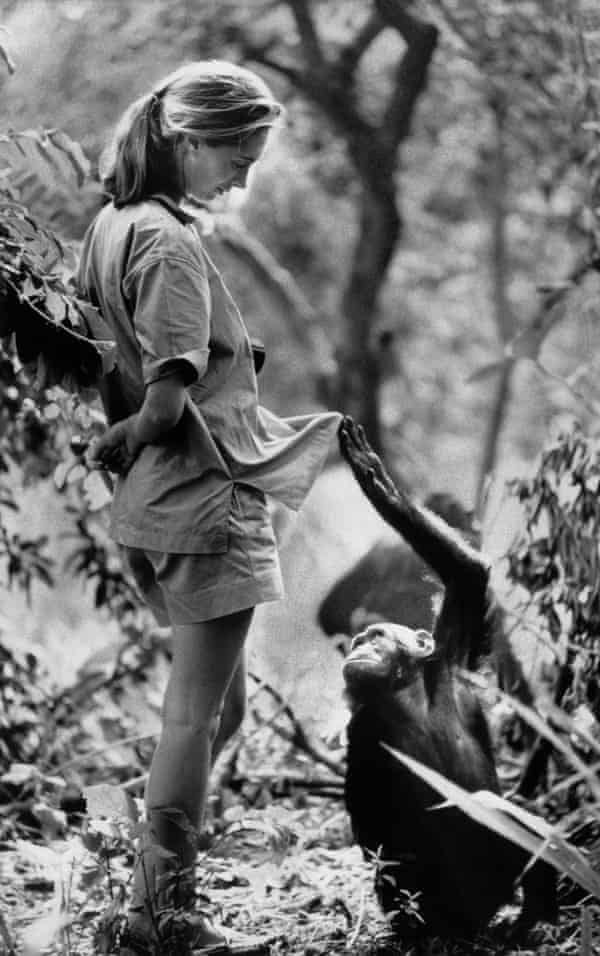
Jane Goodall and inquisitive friend, Gombe Stream Research Centre, Tanzania, January 1972. Photograph: Corbis
Do you think politicians and the public are focused enough on this challenge? As damage is coming to a peak, awareness is coming to a peak. But it does not help to focus exclusively on the problems. Yes, the media must point out the harm we are inflicting. But they should give more space to all the amazing restoration programmes happening around the world – that gives people hope and they are more likely to do their bit. If you lose hope, why bother?Advertisementhttps://c015c01652c1d4c024600cef2ce37a0c.safeframe.googlesyndication.com/safeframe/1-0-37/html/container.html
Where do you find cause for hope? Change is happening. Millions are switching to wind and solar energy, clearing up streams or picking up rubbish. Consumers are influencing the way business does its work. I am always meeting amazing people doing great projects to allow biodiversity to creep back. A lot of it in China. There are many different ways to start moving in the right way.
How about at the national and international level? The Global Biodiversity Outlook 5 report found the international community did not fully achieve any of the 20 Aichi biodiversity targets agreed in Japan in 2010 to slow the loss of the natural world. Can we expect anything better at the next big UN biodiversity meeting in Kunming, China, next year? All I have seen, to be honest, is more decision makers talking about change and making plans, but not doing enough to make it happen. At these big meetings, there is so much talk and so little follow-up action. But now we are seeing more action among the youth. Children are standing up and influencing their parents, business leaders and politicians. Voting, in democracies, can make a big difference.
You and David Attenborough both appear to be more active than ever. But has your approach changed? You have tended to focus on individual responsibility in the past. Is it now time for something more radical, for system change? I think we need many different approaches. There are instances when violent tactics are necessary to make people aware – like the anti-slavery movement. But violence can be counterproductive. I think people must change from within. If children point at dominant males and say “you are bad and we demand that you change”, the response may well be “I won’t be lectured by a young person”. My way is to tell stories, trying to reach the heart. Too often people give lip service to change but carry on with business as usual.
Our organisation, Roots & Shoots, works at the grassroots level with youth. The movement is growing very fast – all over North and South America, Africa, Europe and Asia, including over 1,000 groups in China. There are also new groups in the Middle East. Turkey and Israel, and I want to spread it further. We are linking youth from different countries together and finding partner organisations. It is really important to grow as the programme is giving young people hope. This is needed badly as we have caused so much environmental damage since we began in 1991. And without hope youth falls into apathy and does nothing. Many of of the early Roots & Shoots members are now in leadership positions.
We’re seeing the consequences of the idea that there can be unlimited economic development with finite natural resources
But this is not just a matter of changing individual behaviour. Aren’t there are deeper causes in the way the global economy is organised? We are seeing the consequences of the crazy idea that there can be unlimited economic development on a planet with finite natural resources and a growing population. Decisions are made for short-term gain at the expense of protecting the environment for the future. Now, the world’s population is estimated at over 7 billion people and it is expected to be closer to 10 billion by 2050. If we carry on with business as usual what is going to happen? To be clear, the main problem is not population growth. I have never said that, although George Monbiot claims that I did, which is disappointing because I have always admired him. It is one of three main problems – the other two are our greedy lifestyle, our reckless burning of fossil fuels, the demand for meat, poverty – and, of course, we must also tackle corruption.
To what extent do you feel that traditional conservation needs to change? We have to eliminate poverty. Because if people are really poor, they will destroy the environment because they have to feed themselves and their families. In 1990, I flew over Gombe national park [in Tanzania] and I was shocked to see the change. During the 1960s, it had been part of a vast equatorial forest. By 1990, Gombe was just a little island of trees, surrounded by land that had been stripped bare. It was then that I realised unless we could help people make a living without destroying their environment we couldn’t save chimps or forests. So we helped in many ways including providing scholarships for girls and offering microcredit opportunities, especially to women. It’s worked. If you fly over Gombe today, you don’t see those bare hills; the forest has come back. As women’s education improves, family sizes tend to drop. Women want to educate children. They don’t want to be birth machines.
In the Netflix documentary The Beginning of Life 2, you and many other biologists, conservationists and psychologists stress the mental health and social benefits that can come from a close connection to the natural world, and warn of the dangers that this is being lost among a younger, more urban generation. When I was growing up, we did not even have television, so we immersed ourselves in books and nature. Children today have less time for that because they are fascinated by iPhones, laptops and video games. Also many more children grow up in cities, surrounded by concrete. The important thing is to get them into nature – the younger the better. In the documentary, you see the expression of wonder on a child’s face – a three-year-old boy watching a snail glide along. He suddenly picked it up, ran and put it on a window pane to watch it from the other side. This kind of experience is very, very important. It is only when you care for nature that you protect it. The film is very inspiring.Advertisementhttps://c015c01652c1d4c024600cef2ce37a0c.safeframe.googlesyndication.com/safeframe/1-0-37/html/container.html
How has lockdown affected people’s relationship with nature? In some cases, it has meant closer contact, but that depends on whether people have a garden or live near parks or green areas where they can walk. So many poor people were confined to the concrete jungle.
And how has it affected you? I miss the contact with people, my friends. But I have adapted. I used to be travelling 300 days a year and meeting people face to face. Since I have been in lockdown, I do everything virtually and have reached millions more people in many more countries. So there is a silver lining. I try to find the silver lining in everything. We mustn’t lose hope.
Greta Thunberg says she has stopped buying new clothes but does not sit in judgment on others whose lifestyle choices are less environmentally friendly than her own, in an interview to mark her 18th birthday.
Thunberg, whose solo school strike in 2018 snowballed into a global youth movement, stopped flying several years ago, travelling instead by boat. She is vegan and said she had stopped consuming “things” .
Asked what she thought of celebrities who talk about the climate emergency while flying around the world, the teenager declined to criticise them, although warned that others might.
“I don’t care,” she told the Sunday Times magazine. “I’m not telling anyone else what to do, but there is a risk when you are vocal about these things and don’t practise as you preach, then you will become criticised for that and what you are saying won’t be taken seriously.”Advertisementhttps://cdb82b77503bc2e6b5e24d7b8059365a.safeframe.googlesyndication.com/safeframe/1-0-37/html/container.html
Avoiding long flights is one of the most effective ways individuals can reduce their carbon emissions but the biggest impact is from not having children, according to studies. Nevertheless Thunberg was not about to tell people not to procreate. “I don’t think it’s selfish to have children,” she said. “It is not the people who are the problem, it is our behaviour.”
While her lifestyle is far removed from that of most western teenagers, Thunberg says she does not feel she is missing out.
On clothes, she said: “The worst-case scenario I guess I’ll buy second-hand, but I don’t need new clothes. I know people who have clothes, so I would ask them if I could borrow them or if they have something they don’t need any more. I don’t need to fly to Thailand to be happy. I don’t need to buy clothes I don’t need, so I don’t see it as a sacrifice.”
Thunberg was famously told to “chill” by Donald Trump but she said her passion and concern about the environment did not get her down. “I don’t sit and speculate about how the future might turn out, I see no use in doing that,” she said. “As long as you are doing everything you can now, you can’t let yourself become depressed or anxious.”
She named her ideal birthday present as a “promise from everyone that they will do everything they can” for the planet. However, when pressed on a more tangible gift, she opted for replacement headlights for her bike, explaining: “In Sweden, it gets very dark in the winter.”
By Emily Kasriel8th December 2020Amid polarised debate, Emily Kasriel asks how dairy farmers see the role of their industry in climate change – and finds a mixture of doubt, denial and commitment to change.
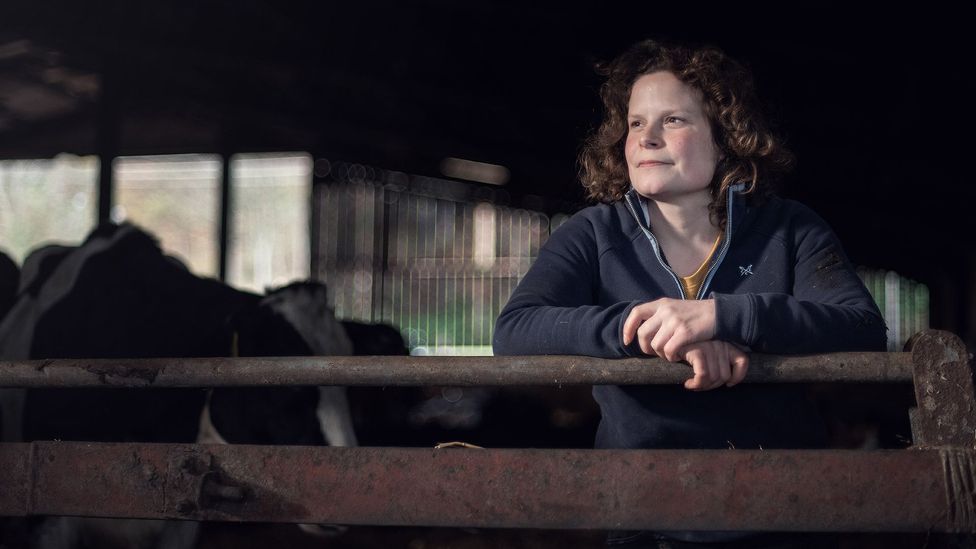
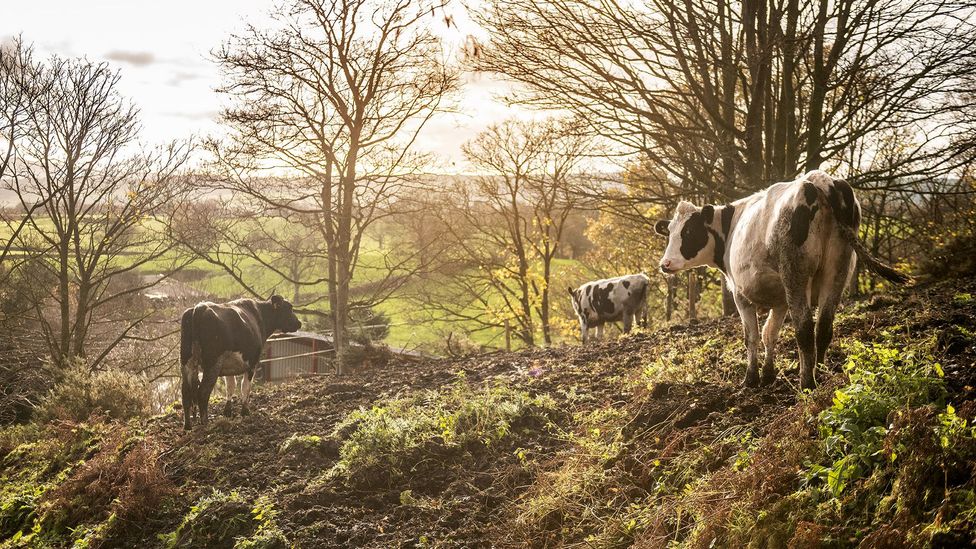
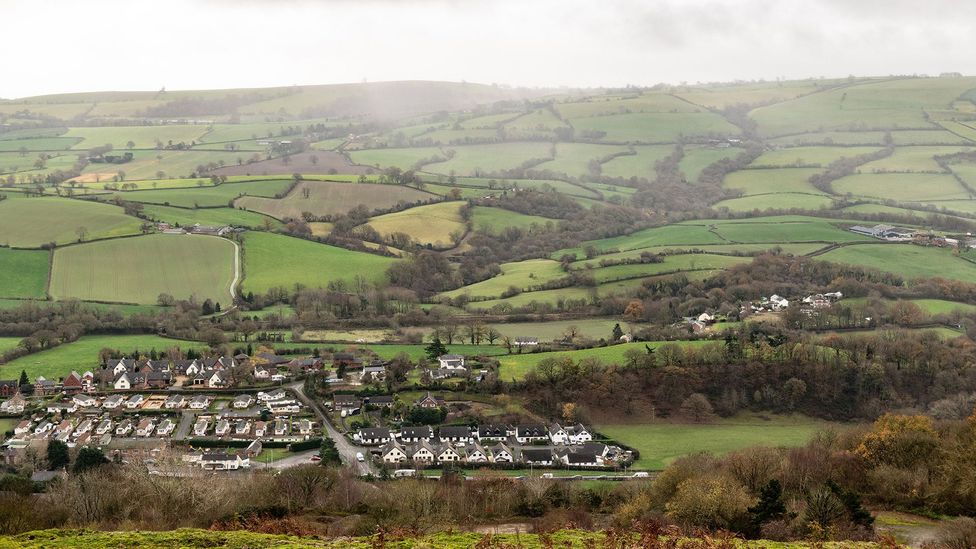
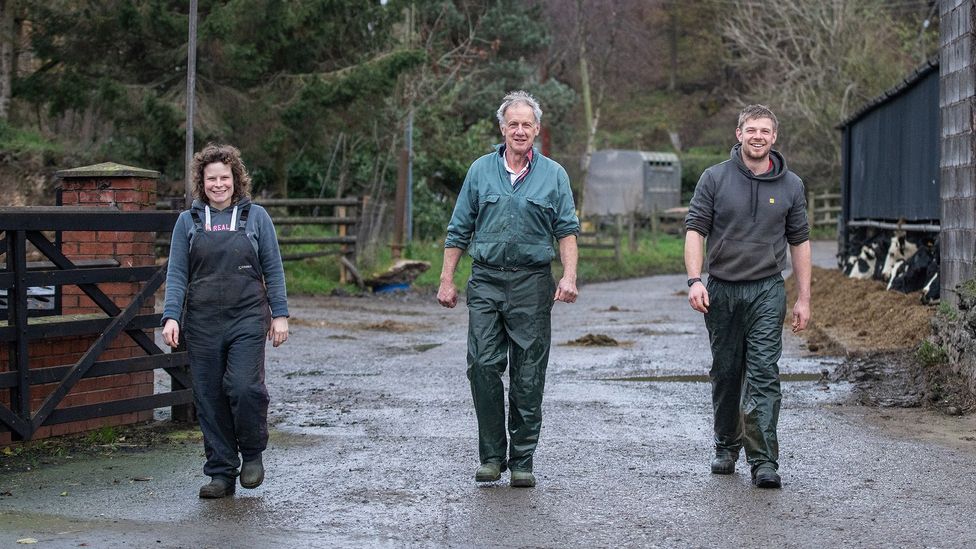
“Nothing beats the feeling when you see a cow take its first breath, after battling to get it to breathe. I milk each cow twice a day every single day of the year, so they know I want the best for them,” says Hannah Edwards, standing proudly in the midst of the herd of Holstein cows she’s tended for the last 11 years. They are grazing on her favourite hillside, high up on the farm with a commanding view of peaks and valleys. “I love coming up here. On a clear day, you can see for miles. That’s Wales, Lake Bala is over there, and there you can see Snowdonia.”
With a growing public awareness of the importance of consuming less dairy to meet tough climate change targets, I’ve come to meet Hannah to try and understand how family dairy farmers see climate change. After climbing into her tall green wellies, I drive with her and her Labrador, Marley, to the farm where she works, spread across the border between Wales and Shropshire in the west of England. I want to test whether a communication approach called deep listening could help understand better the attitudes of dairy farmers to the environment and climate change.
Dairy farming is Hannah Edwards’ profession and vocation – and the welfare of the herd is always her primary concern (Credit: John Quintero/BBC)
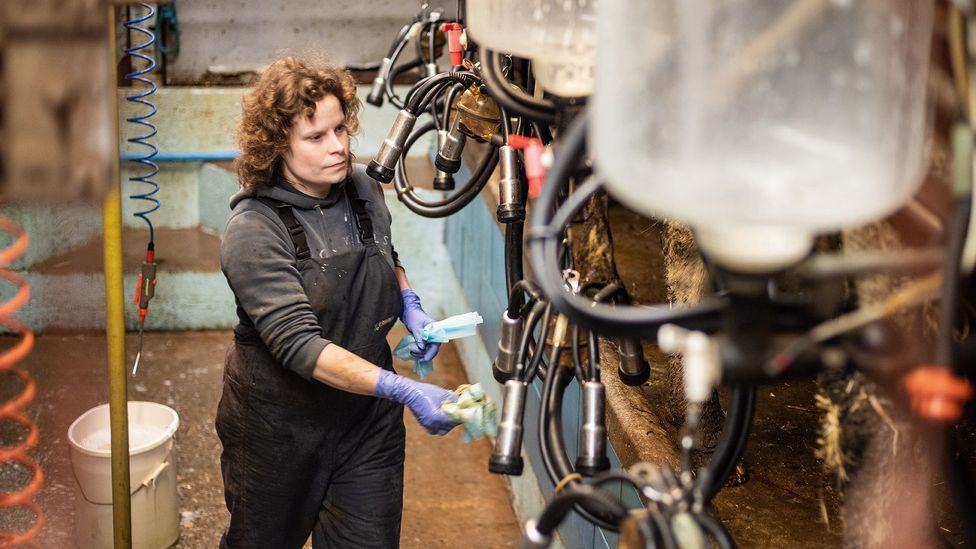
Not long after I arrive at the farm, Hannah, armed with a thick super-sized blue apron and a razor-sharp focus, announces it is time to enter the parlour, where she milks the 140 cows, in a true state of flow. Wrapped in blue gloves, her hands dance in swift parallel moves as they reach diagonally up and then across as she wipes each teat with a disinfecting cloth before attaching it on to the milk sucking equipment. Amid the flurry of muscle action I can feel Hannah’s calm aura of awareness, watching the millilitres on the glass vials track the bubbly white liquid while she reads each cows’ emotional state to pick up on any illness or mood requiring more close attention. “They can’t talk to you, just have to look out for different emotions,” she says. “Their eyes become bulgy when they are scared. It’s really teamwork, cows and farmers working together to produce milk.”
Between 2005 and 2015, the dairy cattle industry’s greenhouse gas emissions increased by 18% as demand for milk grows
The following morning, Hannah and I sit in blistering sunshine on a picnic bench in her family garden alongside her mother Ruth and brother David. “The cows don’t like the heat,” Hannah says. “They won’t sit down as the ground is too hot. Their feet get tender; they get abscesses that cause them to go lame.”
Together, the family reflects on the changing weather and climate patterns they have witnessed. “I remember we used to get frost when we were kids, but we don’t get it anymore,” says David. “We don’t get those nice crisp mornings.” Ruth recalls that when she first came to the farm, the cherry blossom tree would bloom in May. “Now it’s April,” she says. “The climate does seem to be different over the years. We don’t seem to get proper seasons anymore.”
Hannah’s opinions about climate change prove complex over the course of our conversations. “Obviously climate change is happening,” she says. “Greenhouse gases are helped by humans, isn’t it. Part of it is a natural process, like when the Ice Age ended. But it is speeded up, there’s no doubt about that.” And what about the role of farmers? “Farmers have an extra responsibility to take care both of the environment and of emissions,” she says.
But at other moments, Hannah quickly moves the subject away from dairy farming’s contribution. “There are more people, so you need more animals to feed everyone. The bottom line is that we are overpopulated,” she says. “It’s not just this country – there are more people all over the world.”
Greenhouse gas emissions from the dairy industry are rising as demand for milk grows globally (Credit: John Quintero/BBC)
These gases – mainly methane, nitrous oxide and carbon dioxide – are produced at different stages of dairy farming. Methane, the most potent of these greenhouse gases, is first produced as the cow digests its food. Then, as the manure is managed on the farm, methane as well as nitrous oxides are also emitted.
These gases all contribute to global warming. “Carbon dioxide has relatively weak warming effects, but its effects are permanent, lasting hundreds of thousands of years,” says Tara Garnett, who researches greenhouse gas emissions from food at the Environmental Change Institute at the University of Oxford. “A tonne of methane has a far stronger warming effect, but its effect disperses rapidly – in about a decade.”
I sense a conflict between the family’s shared worldview – a deep love and connection with the environment – and to the possibility that dairy farming could be harming the planet
But for Hannah, there is a level of distrust in such facts. “With regard to scientific information, you hope that it’s true,” she says. “But there’s a little bit of me that is quite sceptical. Are they just scaremongering, and forcing us to do things that they want to do?”
As I listen to Hannah and her family, I try to be completely present, using deep listening. I focus on their words, but also try to sense the meaning behind them to better understand their world view. The theory behind deep listening, first explored by psychologist Carl Rogers in the 1950s, is that you convey the attitude that “I respect your thoughts, and even if I don’t agree with them I know that they are valid for you”. When a speaker feels they are being deeply heard they are more likely to convey a richer, more authentic narrative.
I sense a conflict between the family’s shared worldview – a deep love and connection with the environment and the animals they tend – and to the possibility that dairy farming could be harming the planet. “I think [climate change] is a lot to do with cars and aeroplanes,” says Hannah’s brother David. “I don’t think it’s anything to do with farming as we look after the wildlife and the environment… We are not out to damage things.” The experience and family history of being dairy farmers is critical to the family’s identity, so an idea that appears to threaten that heart-felt identity is hard to embrace.
Hannah’s love for the cows, and desire to do everything she can for animal welfare, is the prism through which she sees the world, including climate change
I come to understand that Hannah’s love for the cows, and desire to do everything she can for animal welfare, is the prism through which she sees the world, including climate change. Whenever we talk about a potential measure to reduce carbon footprint or methane emissions, her immediate thoughts are whether the cows will benefit.
Philip Davies argues that farmers often feel “voiceless and weighted down” (Credit: John Quintero)
After we reach the main farmhouse, her Labrador Marley leads us to Hannah’s boss, Philip Davies, who denies that climate change is happening.
“Climate change is the biggest load of tosh. It’s lies beyond lies,” he says, leaning his arm on the corner of his concrete cowshed, scanning his pregnant cows lying down on the straw inside. “When I was at school not far from here, some of the boys ordered Chairman Mao’s Little Red Book. When the books arrived, the headmaster, who used to deliver the post to us boys every morning, would throw them into your porridge. I feel the same about climate change.”
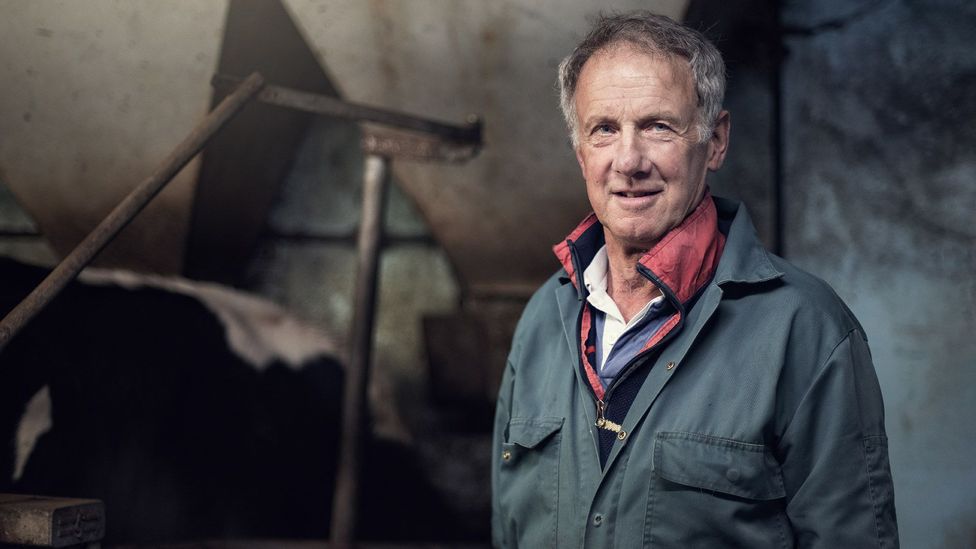
Philip is a tall man who stands erect with piercing blue eyes; he has been a dairy farmer for more than five decades. “I was born a dairy farmer milking a cow when I was six or seven. I remember that first cow, Sylvia, in that farm just down the road, and my father and grandfather before him,” he says. Each precious cow in his herd has a number, but also a name. Mabel, Beryl, Megan, Antoinette, Estelle: names that have echoed through the family herd since the 1950s. Last year, Philip and his three brothers invited 150 neighbours, friends and those they do business with to a marquee to share a meal of meat pies, and bread and butter pudding, listening to stories of their grandparents to celebrate the century their family has been milking cows.
As I hear more from Philip about his experience of farming, a pattern begins to emerge of periodic catastrophes that have shaped his history. “I remember foot-and-mouth disease in the late 1960s,” he recalls. “I was at school, it was the start of October, and I went to play sports. I could see fires all the way from Manchester with the cows burning.” Philip then tells me about the bovine spongiform encephalopathy (BSE) outbreak – better known as “mad cow disease” – when he lost 30 cows overall. He vividly remembers the day the vet condemned three of his cows in one day, putting them down in his yard. “It was a tragedy,” he says. After BSE, there has come a drive to reduce tuberculosis levels in cattle. “It changed from something we lived with to a massive issue,” he says, his voice filled with frustration and sadness.
Farmers are the most optimistic people I know, but scratch under the surface, we are carrying disappointment and anger – Philip Davies
Philip feels that cattle farmers have a raw deal. “It’s toughest on the youngsters like Hannah.” Philip is keenly aware of how hard Hannah works, not only with the cows but also in masterminding all the paperwork. He says he would love her to have a more secure future in dairy farming, in which the price of milk would reflect the extraordinary hours and hard toil she pours into the job.
The deep listening technique can be an insightful way to learn more about someone’s views, even if you disagree with them (Credit: John Quintero/BBC)
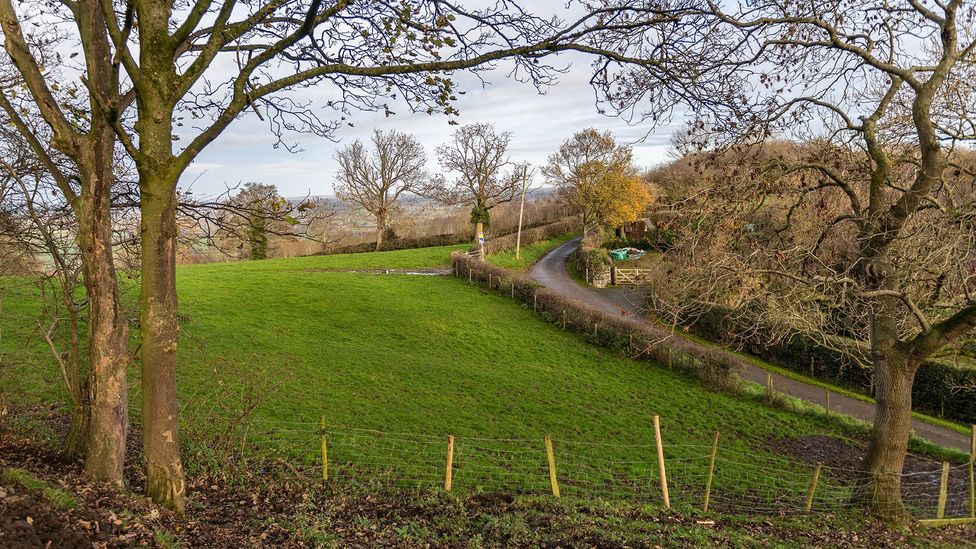
On the second day of my trip to the farm, I awake early to walk in the surrounding fields, to try and make sense of Philip’s outlook – one that rejects humanity’s huge contribution to the warming of the planet as well as the significant emissions caused by dairy farming. The dry yellow corn is thigh high, and the morning mist hangs heavy, prescient of another intensely hot day. The wide landscape gives me a sense of perspective, and an insight into Philip’s “deep story”. I sense the pride he feels about the intensity of his lifetime of labour alongside a disappointment about the lack of respect that such toil is given and a fear when he looks to the future.
Philip is uncertain whether he can sell his cows and retire in the coming years without his farm being clean of tuberculosis. He feels powerless that he’s forced to send cows who test positive for tuberculosis to be slaughtered, when he has no faith in the validity of the test, though research shows that the rate of false positives for a skin test is around one in 5,000. While on the surface tuberculosis tests have nothing to do with the evidence for climate change, I sense a wider distrust of scientific authority connecting the two.
“We feel voiceless and weighted down,” Philip says. “Farmers are the most optimistic people I know, but scratch under the surface, we are carrying disappointment and anger. We’ve been silenced by everyone pointing the fingers at us. ‘You naughty people, you are ruining the planet.'”
Two days after this conversation, Philip calls me, wanting to tell me about the very first time he felt wrongly accused as a dairy farmer. He remembers sitting round the table with his family listening to the radio in the 1970s and hearing a story about how drinking milk was causing cancer, a story later dismissed as untrue. He conveys the depth of traumatic experiences he has endured and the multiple occasions on which he feels dairy farming, his own calling, had been unjustly targeted. In his eyes, climate change is yet another example of the “faceless men in dark corridors” looking for a scapegoat and seizing on the usual suspect – farmers.
Now that Philip has had time to reflect, I want to know how he found our conversation.”It was refreshingly honest,” he replies. “I just felt that you were actually listening. You hadn’t got an agenda and came with a clean piece of paper. That was very noticeable.”
Increasingly extreme weather has been noticeable in the Shropshire countryside and has been making the jobs of dairy farmers harder (John Quintero/BBC)
On the final evening of my visit, Philip, Hannah and I eat together in the garden of the local 17th-Century pub, a focus for the community. Philip has brought reams of the farm’s paperwork, proudly pointing to a figure of 7,520 litres, the average quantity of milk produced per cow over the year. It’s a high number but less than what cows on intensive farms are producing, according to the University of Oxford’s Garnett. “We don’t push the cows – forcing them to produce more milk,” says Hannah. “We don’t think it’s good for them.”
Hannah feels that the small-scale dairy herds in her family and among those closest to her aren’t really the big greenhouse gas contributors. “When people complain about dairy farmers, they are probably thinking about the way people farm in the US, much more intensively with little regard for the land.”
How does the science stack up on small scale versus intensive dairy farming when it comes to climate change? I turn to Taro Takahashi, a sustainable livestock systems researcher at the Cabot Institute for the Environment, University of Bristol.
“While less intensive farming is generally better for animal welfare and in many cases also beneficial to local ecosystems, its carbon footprint is almost always greater per litre of milk compared to more intensive farming,” says Takahashi. “This is because much of the methane and nitrous oxide emissions attributable to a cow would happen regardless of how much milk they produce. If the cow produces more milk, the emissions per litre declines.” At the same time, Taro points me to a recent study which suggests the intensive approach is only more beneficial if it is linked to more wilderness being spared the plough.
Despite Philip’s denying climate change, the dedication to the welfare of the cows that he shares with Hannah does in fact align with one evidence-based recommendation for lowering greenhouse gas emissions from the dairy industry. Improving animal health monitoring and preventing illness is one of the 15 top measures identified by the management consultancy McKinsey to reduce farming emissions. With fewer calves dying young and less sickness, less methane and other emissions are released per litre of milk.
Hannah, Philip and Ben may have differing views on climate change, but they have a sense of duty to the environment in common (Credit: John Quintero/BBC)
Lorraine Whitmarsh, director of the Centre for Climate Change and Social Transformations at the University of Bath, studies the challenges of communicating the reality of climate change. It gets tougher when climate change messages are threatening to our values, lifestyles or political ideology. She tells me we are motivated to agree only with the parts of the climate change narrative that align with our livelihoods or core beliefs, denying our responsibilities if the implications of accepting them would be challenging for us. This is a psychological behaviour termed “motivated reasoning”, and it keeps us on the lookout for facts or opinions that reinforce our values and beliefs. I recall Hannah, who is strongly rooted in her community, telling me proudly about the positive impact on the environment of buying more locally produced food.
How can we encourage a more constructive discussion with people who either deny anthropogenic climate change or their own contributions to it? Whitmarsh points to the importance of understanding someone’s values and identity. Her research in the UK demonstrates the effectiveness of narratives emphasising saving energy and reducing waste to reach people less concerned and more sceptical about climate change. Meanwhile, research led by Carla Jeffries of the University of Queensland, Australia, suggests that framing climate change action as showing consideration for others, or improving economic or technological development, can have more impact with climate deniers than focusing on avoiding climate risk. Whitmarsh also tells me we are also more likely to trust climate change messaging if it comes from someone within our own community.
For Ben Davies, adapting the dairy industry to reduce its emissions is a top priority (Credit: John Quintero/BBC)
Back on the farm, Hannah receives a call from Philip, who wants to introduce me to his youngest brother, Peter, who owns 220 cows, the other half of the original family herd. Given that Philip is convinced the Earth is not heating up and he’s keen that I meet his brother, I anticipate that I’ll hear a similar perspective. But that’s not quite the case.
There’s a definite change in the climate – and it’s making our job a lot harder – Peter Davies
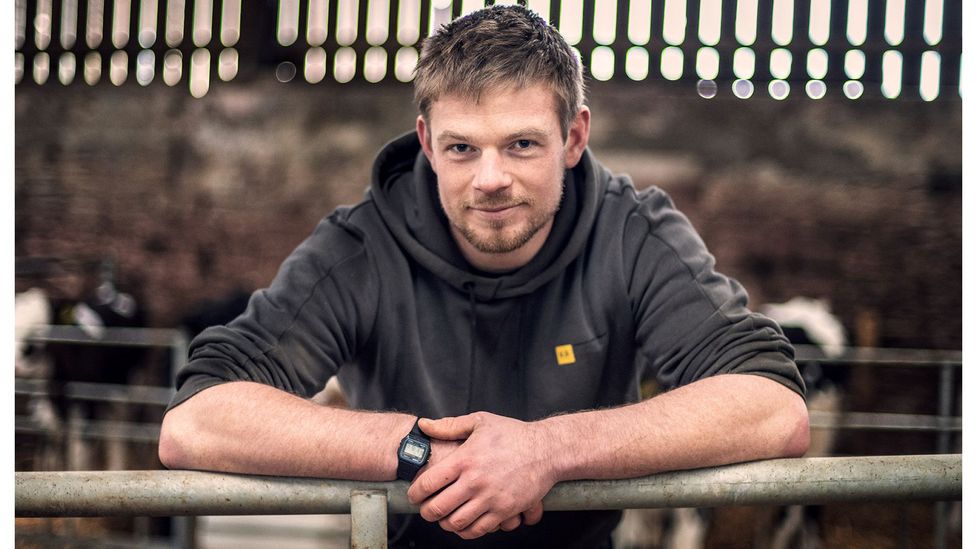
Hannah and I sit at a table in Peter’s lovingly tended garden at the edge of his fields, alongside his son Ben, 29, who works full-time with him on the farm.
“There’s a definite change in the climate – and it’s making our job a lot harder,” says Peter. His son Ben agrees that the weather is getting hotter and more extreme. “Being in the country, outdoors all day, you notice things more,” says Ben. “You see the change in weather patterns and with the rivers – you can see flooding and damage and what’s it doing.”
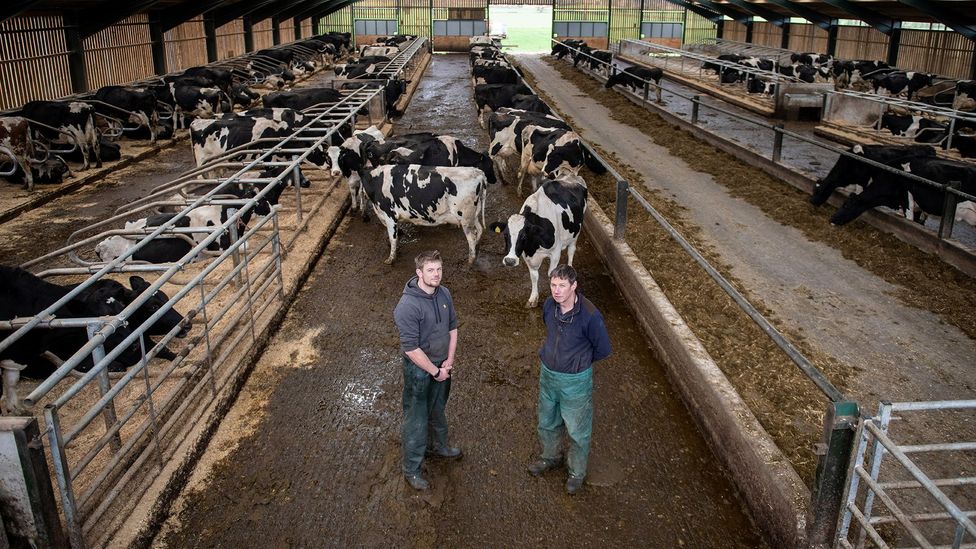
Father and son lead us round the back of the garden to the huge steel and concrete shed they have built to house the cows in separate cubicles, alongside a steel fibreglass tower that stores manure. The cows spend all winter in the shed on rubber mats, and the manure flows down with gravity into a channel. The manure then gets pumped into the tower, where it is ready to be injected into the soil as fertiliser in spring and late summer. Using this stored manure means there is less need for synthetic fertilisers, reducing costs as well as the carbon footprint of fertilising the fields. Injecting manure in this way also reduces emissions of ammonia, which can damage ecosystems and break down into nitrous oxides (a greenhouse gas).
Before moving to this system, the cows were kept on hay and mucked out every three weeks. “This new cubicle system, it’s a lot less work, with far less waste,” says Ben.
I think there is a strong need for more action, we are going too slowly – Ben Davies
I have a sense from Peter and Ben that rather than feeling like victims of the changing climate, their understanding of the bigger picture has given them a sense of agency, a desire to adapt and a willingness to take risks to do so. Peter, spurred on by Ben, has recently made these significant investments, amounting to some £400,000 ($530,000), to make their farm more efficient and reduce its climate and environmental impact. “Ben is the driving force,” Peter says. “It’s people between 25-35 years old, in their prime. You need to let them get on with it when they are at their most persuasive.”
I’m curious about how Ben came to have these insights into climate change and learn about the adaptations needed to reduce the farm’s methane and carbon footprint. “I learned on the internet. I’m self-taught, and then I taught it to others in the pub,” Ben replies.
More than just reducing his own footprint, Ben is in favour of larger policy changes, such as farms needing to meet environmental targets before they are allowed to expand. “I think there is a strong need for more action, we are going too slowly,” he says. Peter agrees: “We’ve got to change.”
Ben Davies and his father Peter have invested substantial sums in emissions-reducing technologies on their farm (Credit: John Quintero/BBC)
Among this small group of Shropshire farmers, the views on dairy and climate cover much of the spectrum of debate. So how do they make sense of each others’ differing views on climate?
“My uncle Philip is one of the old generation,” Ben says. “He will be retiring soon. I don’t think you can win over people. It’s more about our generation making an impact.”
Given his knowledge and commitment to reducing climate change, how does Ben respond to critics who argue that we may have to stop eating meat and dairy entirely to make a significant dent in emissions? He pauses. “I think it’s a small minority, who are trying to ruin our future and a business that our family has tried to develop over 100 years. Come to my farm and have a look,” he says. “I can show you what we are doing to reduce our emissions footprint, and all the infrastructure we are investing so heavily in.”
When it’s time to leave, I ask Hannah if hearing from Peter and Ben has changed her perspective. She harbours dreams of renting her own dairy farm with a small herd and setting up an ice cream business. If she is able to realise her ambitions, would she take steps to reduce greenhouse gas emissions?
“I suppose you would have to see the figures, but if we could catch the rainwater to wash the milking parlours and got wind turbines and solar panels to supply electricity, it wouldn’t affect us farmers,” she says. “If there was a way to do our bit and our country did start making steps to improve our emissions, maybe other countries would follow.” But her doubts seem to catch up with her quickly. “But maybe Philip is right? We don’t know who is right and wrong – we don’t know the facts.”
Where Hannah remains unsure about dairy farming’s climate impact, there is another certainty that she will always come back to: her guiding principle.
“Cows are the most important thing. That’s the way I look at it. As long as the cows are happy, we are happy.”
In August 2019, Iceland held a funeral for the Okjökull Glacier, the first Icelandic glacier lost to climate change. The community commemorated the event with a plaque in recognition of this irreversible change and the grave impacts it represents. Globally, glacier melt rates have nearly doubled in the last five years, with an average loss of 832 mmw.e. (millimeters water equivalent) in 2015, increasing to 1,243 mmw.e. in 2020 (WGMS). This high rate of loss decreases glacial stores of freshwater and changes the structure of the surrounding ecosystem.10 Sec
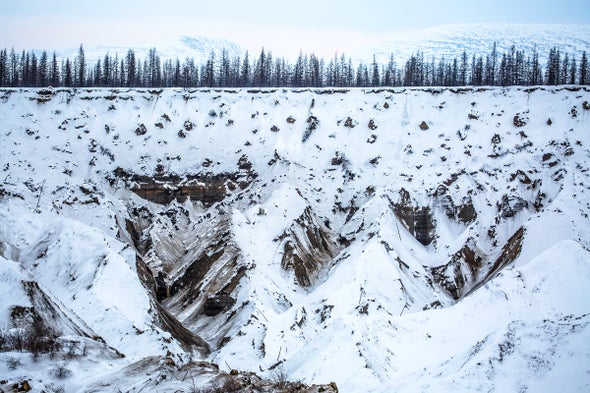
In the last 10 years, warming in the Arctic has outpaced projections so rapidly that scientists are now suggesting that the poles are warming four times faster than the rest of the globe. This has led to glacier melt and permafrost thaw levels that weren’t forecast to happen until 2050 or later. In Siberia and northern Canada, this abrupt thaw has created sunken landforms, known as thermokarst, where the oldest and deepest permafrost is exposed to the warm air for the first time in hundreds or even thousands of years.
As the global climate continues to warm, many questions remain about the periglacial environment. Among them: as water infiltration increases, will permafrost thaw more rapidly? And, if so, what long-frozen organisms might “wake up”?ADVERTISEMENT
Permafrost covers 24 percent of the Earth’s land surface, and the soil constituents vary with local geology. Arctic lands offer unexplored microbial biodiversity and microbial feedbacks, including the release of carbon to the atmosphere. In some locations, hundreds of millions of years’ worth of carbon is buried. The layers may still contain ancient frozen microbes, Pleistocene megafauna and even buried smallpox victims.As the permafrost thaws with increasing rapidity, scientists’ emerging challenge is to discover and identify the microbes, bacteria and viruses that may be stirring.
Some of these microbes are known to scientists. Methanogenic Archaea, for example metabolize soil carbon to release methane, a potent greenhouse gas. Other permafrost microbes (methanotrophs) consume methane. The balance between these microbes plays a critical role in determining future climate warming.
Others are known but have unpredictable behavior after release. New evidence of genes moving between thawing ecosystems indicates a restructuring at multiple levels. In the Arctic Ocean, planktonic Chloroflexi bacteria recently acquired genes used for degrading carbon from land-based Actinobacteria species. As melt-swollen Arctic rivers carried sediments from thawing permafrost to the sea, the genes for processing permafrost carbon were also transported.
Permafrost thaw in Siberia led to a 2018 anthrax outbreak and the death of 200,000 reindeer and a child. But the hardy spores of Bacillus anthracis may represent an exception to the brutal freeze-thaw cycle that degrades more delicate bacterial and viral pathogens. Their adaptable characteristics have allowed them to remain frozen and viable over centuries of inactivity.
Organisms that co-evolved within now-extinct ecosystems from the Cenozoic to the Pleistocene may also emerge and interact with our modern environment in entirely novel ways. A potential example, the emerging Orthopoxvirus species Alaskapox causing skin lesions, has appeared and disappeared in Alaska twice in the last five years. It is possible that the virus was transmitted through animal-human contact, but this novel virus’s origin remains unknown.https://112a65d74e1de1d0ca21c1453242b3e1.safeframe.googlesyndication.com/safeframe/1-0-37/html/container.htmlADVERTISEMENT
The microbiomes of the Arctic contain resilient and tenacious cold-adapted microbes. Some species survive as psychrophiles, a type of specialist specieshighly adapted to prolonged exposure to subfreezing conditions. These species may be lost with warming. Others survive by being highly adaptable, inhabiting many, varied niches. Understanding more about these generalists’ ecology and genomic diversity offers a window into the microbiome of the New Arctic. These generalist microbes that adapt to diverse conditions are the likely winners, as we lose the cryosphere.
And then there are microbes that are entirely unfamiliar to scientists, which may represent a novel threat.
It is clear that the warmer we make the Arctic, the weirder it will get, as temperatures at the surface become more extreme and thawing deepens. With the coalescence of microbes reawakening from the deep and surface conditions unprecedented in human history, it is challenging to assess risks accurately without improved Arctic microbial datasets. We should pay attention to both known unknowns, such as antibiotic-resistant bacteria,and unknown unknowns, including the potential risks from the resurrection of ancient and poorly described viral genomes from Arctic ice by synthetic biologists.
Nicholas Stern, the former chief economist of the World Bank, calls climate change the ‘greatest and widest-ranging market failure ever seen’. Photograph: David McNew/Getty Images
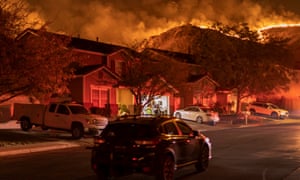
The massive wildfires that have been rampaging across the American west this year are not purely natural disasters. They are partly products of theunnatural disaster of climate change – “unnatural”, in that the ultimate responsibility for global warming belongs not to physics but to our economic system. Nicholas Stern, the former chief economist of the World Bank, calls climate change the “greatest and widest-ranging market failure ever seen”. Sadly, climate change is only one – albeit a whopper – of the countless market failures that degrade our lives.
Though it sounds like a generic phrase, “market failure” is actually a technical term. It doesn’t refer to scams like insider trading or corporate fraud. A failure occurs when the marketplace allocates resources in a way that does not optimally deliver wellbeing. We understandably focus a lot of attention on the depredations of greedy tycoons and corporations, but many of the most consequential market failures stem from innate characteristics of our current market system.
Many of us probably already have a gut feeling that our current market system often fails. In order to build a more sustainable, just and prosperous economy, however, it’s vital that we better comprehend the shortcomings deep in the market’s DNA. Greater awareness would reduce blind faith in the market and enable people to see the market for what it is: a tool. It can be an excellent tool when used for the right job, but relying on the market to deal with something like climate change is like trying to pound nails with a saw.Advertisement
One major inherent flaw involves communication. In an ideal version of the market, continuous indirect communication between consumers and producers leads to the best allocation of society’s resources. Consumers make their desires known by the prices they’re willing to pay, and producers convey their costs by the prices they charge.
However, producers only communicate a narrow range of costs. For example, an oil company will account for typical expenses, like payments to its employees, and then set its prices accordingly. Consumers will receive those price signals and decide whether to buy that company’s gasoline. But markets enable businesses to scrub most social and environmental costs from these signals, which garbles communication with consumers. For instance, the price of gas doesn’t reflect the cost of the revved-up wildfires we suffer due to the additional global warming caused by burning that oil company’s gasoline. Numerous studies estimate that the true cost of gas is two to four times higher than what we pay at the pump.
Incomplete communication misleads us consumers into buying products laden with hidden costs. Countless goods and services bear the stains of harms such as pollution, habitat destruction, floods, child labor, extinctions and disease. When we fill up at the gas station the price we are charged doesn’t tell us that our purchase increases the odds that a wildfire will burn down our community. Making such partially informed choices is like buying a house having seen only the kitchen.
Another characteristic of the market that leads to failure is its inability to provide incentives for businesses to produce or protect public goods, such as fire departments or city parks. Most important, the market doesn’t generate the public goods sometimes known as “ecosystem services”, such as nutrient cycling, soil formation, oxygen creation and a livable climate. Many of these essential services operate in the background; like plumbing and wiring, they go unnoticed and unappreciated unless they fail.
Purposeful collective action is the overarching solution to market failures
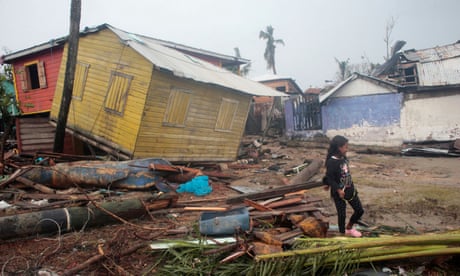
Take the flooding that drowned parts of coastal Louisiana and Mississippi in 2005 when Hurricane Katrina thrashed the Gulf coast. More than 1,800 people died, cherished communities disintegrated, and the price tag swelled to more than $100bn. Much of the devastation occurred because oil and gas development had decimated the coastal marshes that previously had tamed storm surges. The protection those marshes provide is an extremely valuable ecosystem service, yet no entrepreneurs hustle to produce that protection.
And why would they? The market doesn’t give private businesses a profit motive to produce public goods. For example, even if a company were to restore a marsh, they wouldn’t be able to sell that service because they couldn’t exclude anyone living on that coast from using that protection for free.
Private restoration companies exist, of course, and some make a profit by rehabilitating marshes. But market forces didn’t spawn these outfits. At some point somebody recognized the value of the marshes and made a conscious choice to try to preserve or restore them. Most likely a number of somebodies made that choice and pressed their government to hire a restoration company. More broadly, environmental and social projects happen when a great many somebodies vote for candidates who support such efforts. Such purposeful collective action is the overarching solution to market failures. Instead of passively counting on supply and demand to provide everything we need, we sometimes need to exert our judgment.
And there it is, the J-word: “judgment”. Free-enterprise disciples view most efforts to use our collective judgment to shape the economy as central planning that will foul the gears of the market. But banishing judgment about how to allocate our resources will result in a world with plenty of video game consoles and fashionable shoes and precious little biodiversity and climate stability – and, all too soon, biological poverty and climate chaos will also cripple the economy of stuff, and video game consoles and shoes will become scarce, as well.
Citizens who scorn judgment should note that we’ve exercised some collective judgment to help guide the economy since the advent of government. The problem is that we’re not exercising it enough. In recent decades we’ve gotten out of balance and are leaning too far toward an unrestrained market even when it’s the wrong tool for the job.
Consider your toaster. It’s loaded with hidden costs that the market doesn’t communicate and that individual consumers can’t be expected to discover. But government (well, good government that pays attention to science) has the expertise to evaluate your toaster. If we citizens decide that we want to address climate change and air pollution, then government can do our bidding by devising energy efficiency standards for our appliances.
In fact, they did, decades ago. According to the American Council for an Energy-Efficient Economy, those regulations have saved more than $1tn to date and have reduced greenhouse gas emissions by the equivalent of the annual emissions of 800m cars. And we don’t even know the standards are there – hardly the heavy hand of government that haunts free-marketeers’ fever dreams.
So let’s use our judgment to create an economy that better aligns with our values. Instead of surrendering our autonomy to the soulless mechanics of the market, we can freely choose to grow beyond being mere consumers and become forceful citizens.
Robert S Devine is the author of Bush Versus the Environment and The Sustainable Economy: The Hidden Costs of Climate Change and the Path to a Prosperous Future
Humanity is beyond the point of no return when it comes to halting the melting of permafrost, a new study says.
To stop the warming, “enormous amounts of carbon dioxide have to be extracted from the atmosphere.”
Some experts are skeptical of the computer model used in the study.
Even if human-caused greenhouse gas emissions can be reduced to zero, global temperatures may continue to rise for centuries afterward, according to a scientific study published Thursday.
“The world is already past a point of no return for global warming,” the study authors report in the British journal Scientific Reports. The only way to stop the warming, they say, is that “enormous amounts of carbon dioxide have to be extracted from the atmosphere.”
The burning of fossil fuels such as oil, coal and gas release greenhouse gases such as carbon dioxide and methane into the atmosphere, causing global temperatures to increase and sea levels to rise.
“According to our models, humanity is beyond the point of no return when it comes to halting the melting of permafrost using greenhouse gas cuts as the single tool,” lead author Jorgen Randers, a professor emeritus of climate strategy at the BI Norwegian Business School, told AFP.
The study said that by the year 2500, the planet’s temperatures will be about 5.4 degrees Fahrenheit warmer than they were in 1850. And sea levels will be roughly 8 feet higher.
The authors suggest that global temperatures could continue to increase after human-caused greenhouse gas emissions have been reduced as the continued melting of Arctic ice and carbon-containing permafrost increase water vapor, methane and carbon dioxide in the atmosphere.Get the Coronavirus Watch newsletter in your inbox.
Stay safe and informed with updates on the spread of the coronavirusDelivery: VariesYour Email
The melting of Arctic ice and permafrost also would reduce the area of ice reflecting heat and light from the sun.
According to the study, to prevent the authors’ projected temperature and sea-level rises, all human-caused greenhouse gas emissions would have had to be reduced to zero between 1960 and 1970.
To prevent global temperature and sea level rises after greenhouse gas emissions have ceased, and to limit the potentially catastrophic effects on Earth’s ecosystems and human society, at least 33 gigatons of carbon dioxide would need to be removed from the atmosphere each year from 2020 onward through carbon capture and storage methods, according to the authors.
That’s roughly the total amount of carbon dioxide the global fossil fuel industry emitted in 2018, according to Business Insider.
One expert, Penn State University meteorologist Michael Mann, told USA TODAY that he was skeptical of the computer model used in the study: “The climate model they have used is a very low complexity model. It doesn’t realistically represent large-scale atmospheric circulation patterns, such as ocean circulation, etc.
“While such models can be useful for conceptual inferences, their predictions have to be taken with great skepticism. Far more realistic climate models that do resolve the large-scale dynamics of the ocean, atmosphere and carbon cycle, do NOT produce the dramatic changes these authors argue for based on their very simplified model.
“It must be taken not just with a grain of salt, but a whole salt-shaker worth of salt,” Mann said.
“What the study does draw attention to is that reducing global carbon emissions to zero by 2050 is just the start of our actions to deal with climate change,” Maslin said.
The study authors urge other scientists to follow up on their work: “We encourage other model builders to explore our discovery in their (bigger) models, and report on their findings.”
From the Pope to Greta Thunberg, there are growing calls for the crime of “ecocide” to be recognised in international criminal law – but could such a law ever work?I
In December 2019, at the International Criminal Court in the Hague, Vanuatu’s ambassador to the European Union made a radical suggestion: make the destruction of the environment a crime.
Vanuatu is a small island state in the South Pacific, a nation severely threatened by rising sea levels. Climate change is an imminent and existential crisis in the country, yet the actions that have caused rising temperatures – such as burning fossil fuels – have almost entirely taken place elsewhere, to serve other nations, with the blessing of state governments.
Small island states like Vanuatu have long tried to persuade large powerful nations to voluntarily reduce their emissions, but change has been slow – so ambassador John Licht suggested that it might be time to change the law itself. An amendment to a treaty known as the Rome Statute, which established the International Criminal Court, could criminalise acts that amount to ecocide, he said, arguing “this radical idea merits serious discussion”.
Campaigners are calling for the destruction of nature to be recognised as an international crime (Credit: Getty Images)
Ecocide – which literally means “killing the environment” – is an idea that seems both a highly radical and, campaigners claim, a reasonable one. The theory is that no one should go unpunished for destroying the natural world. Campaigners believe the crime should come under the jurisdiction of the International Criminal Court, which can currently prosecute just four crimes: genocide, crimes against humanity, war crimes and crimes of aggression.
If something’s a crime, we place it below a moral red line – Jojo Mehta
While the International Criminal Court can already prosecute for environmental crimes, this is only possible within the context of these four crimes – it does not place any legal restrictions on legal harms that occur during times of peace. While individual countries have their own rules and regulations to prevent such harms, ecocide campaigners argue that mass environmental destruction will continue until a global law is in place.
This wouldn’t be the fluffy and arguably toothless rulemaking that often emerges from international processes – such as the Paris Agreement on climate change, where countries set their own emissions reductions targets. By adding a fifth crime of ecocide to the Rome Statute of the International Criminal Court, the perpetrators of environmental destruction would suddenly be liable to arrest, prosecution and imprisonment.
But it would also help to create a cultural shift in how the world perceives acts of harm towards nature, says Jojo Mehta, co-founder of the Stop Ecocide campaign.
“If something’s a crime, we place it below a moral red line. At the moment, you can still go to the government and get a permit to frack or mine or drill for oil, whereas you can’t just get a permit to kill people, because it’s criminal,” she says. “Once you set that parameter in place, you shift the cultural mindset as well as the legal reality.”
Jojo Mehta argues that a law against ecocide would hold to account people who cause significant damage to the environment (Credit: Ruth Davey/Look Again Photography)
Campaigners believe the crime of ecocide should only apply to the most serious harms, encompassing activities like oil spills, deep-sea mining, industrial livestock farming and tar sand extraction. In 2010, Polly Higgins, a British barrister, defined ecocide as “extensive damage… to such an extent that peaceful enjoyment by the inhabitants of that territory has been or will be severely diminished.”
The mother of all battles is international: to ensure that this term is enshrined in international law – Emmanuel Macron
Last year, Higgins died aged 50, after being diagnosed with cancer. It was a blow for the ecocide movement – she had been its leading legal light and fiercest advocate, selling her house and giving up her high-paying job in order to dedicate her life to the campaign. Despite her passing, that the movement now appears to be gaining momentum. After decades of existing at the radical fringes of the environmental movement, ecocide is now being discussed by parliamentarians and leaders across the world.
Among them is Emmanuel Macron, the president of France, who has become one of ecocide’s highest profile supporters. Earlier this year, more than 99% of the French citizens’ assembly, a group of 150 people selected by lot to guide the country’s climate policy, voted to make ecocide a crime. That prompted Macron to announce that the government would consult with legal experts on how to incorporate it into French law. But he went further. “The mother of all battles is international: to ensure that this term is enshrined in international law so that leaders… are accountable before the International Criminal Court,” he responded to the assembly.
Elsewhere in Europe, Belgium’s two Green parties have introduced an ecocide bill that proposes addressing the issue at both a national and international level – an idea that also has support among Swedish parliamentarians. “We have all the conventions, we have all the goals. But the beautiful visions must go from paper into action,” said Rebecka Le Moine, the Swedish MP who submitted a motion to her national parliament. “If these actions should be anything more than goodwill or activism, it must become law.”
Pope Francis has also called for ecocide to be recognised as a crime by the international community, and Greta Thunberg has backed the cause too, donating €100,000 (£90,000) in personal prize winnings to the Stop Ecocide Foundation.
Supporters of a law against ecocide argue it would place emphasis on the environmental and human costs of issues such as climate change (Credit: Getty Images)
Even so, the concept of ecocide has its limitations. David Whyte, professor of socio-legal studies at the University of Liverpool and author of a book called Ecocide, warned that an international law would not be a silver bullet that eradicates environmental destruction. Corporations cannot be prosecuted under international criminal law, which only applies to individuals, Whyte points out – and bringing down a CEO may not actually rein in the business itself.
“It’s really important to change our language and the way we think about what’s harming the planet – we should push through this crime of ecocide – but it’s not going to change anything unless, at the same time, we change the model of corporate capitalism,” he says.
“You can never say never – and it’s gaining momentum that we maybe would never have imagined previously – but the challenges are still so significant. First of all, you have political resistance. I think the chance of an assembly of state parties agreeing to an additional crime is unlikely, particularly one that might curb economic expansion,” she says.
Greta Thunberg is among those calling for ecocide to be recognised as a crime (Credit: Getty Images)
An international law on ecocide would also be difficult from a legal perspective, adds Killean – lawyers would have to ensure that there were sufficient grounds for prosecution.
“If you think about all the parts of the criminal prosecution, you need to have an individual – so who’s the individual that’s responsible for ecocide? There needs to be intention – so how do you prove intention for the destruction of a territory? All these different things that build up a criminal trial become really complicated when you’re thinking about ecocide.”
Campaigners like Mehta understand these difficulties. Her campaign group, Stop Ecocide, is currently pulling together a panel of top international lawyers to write a “clear and legally robust” definition of ecocide that countries could propose at the International Criminal Court.
Once that’s in place, the next step would be for a country to back it at The Hague. While Vanuatu has raised the issue, it did not submit a formal proposal to amend the Rome Statute, and whether there will be a government brave enough to do so remains an open question – leading on such an issue requires a certain level of diplomatic clout. Mehta believes that such a move is becoming more likely due to the growing number of governments that have expressed their theoretical support. “There’s safety in numbers,” she says. “It’s less of a political risk.”
But the journey wouldn’t end there. Once a proposal is submitted, it would have to be adopted by a two-thirds majority vote – in practice, that means it needs the support of 82 countries. No country has veto power, and all nations have the same voting power regardless of size or wealth. It’s a process that Mehta envisages taking anywhere between three and seven years.
Whether or not the process happens so quickly, or if it even happens at all, ecocide has proved to be a powerful idea. It has crystallised a concept that often gets lost in discussions of policy and technology: that many see that there is a moral red line when it comes to destroying the environment. And it is a reminder that it is not a victimless act: when forests burn and oceans rise, humans are suffering around the world. Moreover, the perpetrators of these acts are not blameless. For campaigners like Mehta, criminalising ecocide is a way to call time on the destruction of the Earth’s ecosystems and those who live in them.
Greta Thunberg: ‘The climate crisis is just one symptom of a much larger crisis.’ Photograph: Jessica Gow/AP
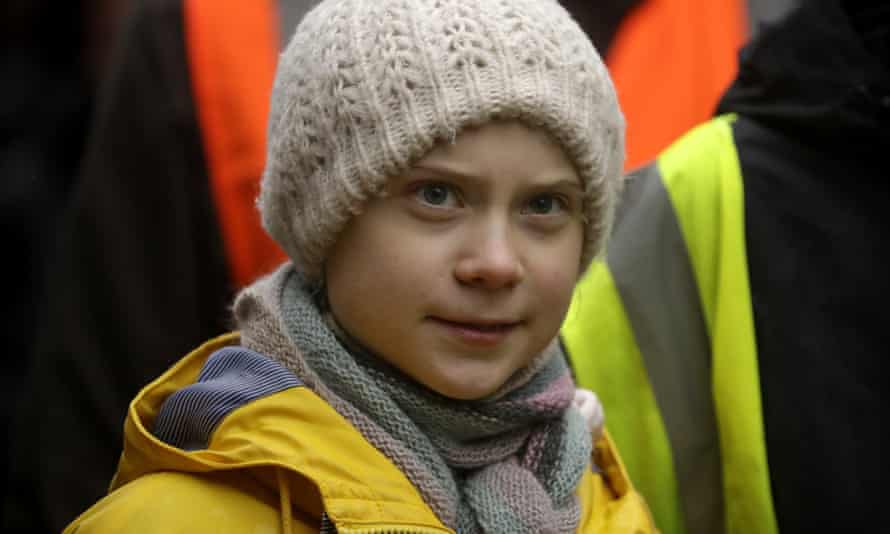
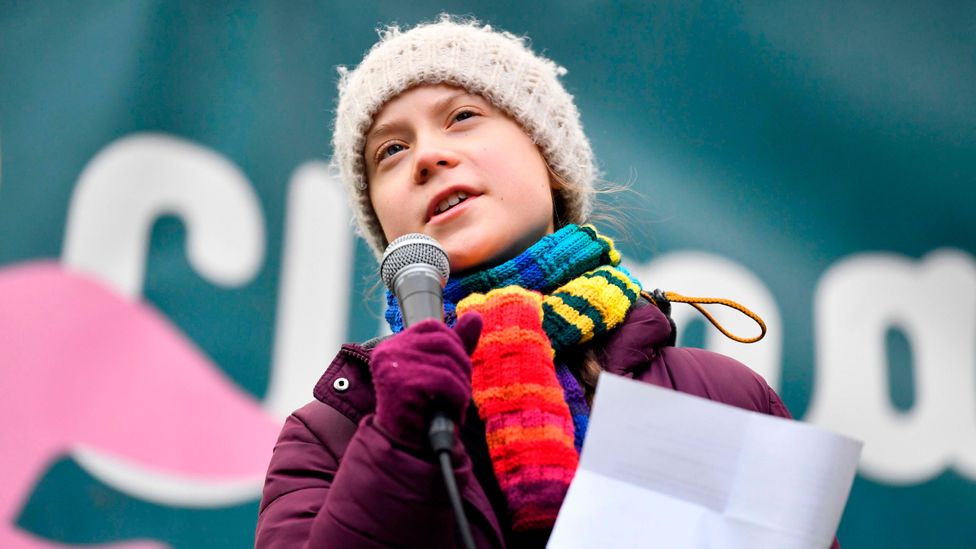
Greta Thunberg has blasted politicians as hypocrites and international climate summits as empty words and greenwash. Until humanity admits it has failed to tackle the climate crisis and begins treating it as an emergency like the coronavirus pandemic, society will be unable to stop global heating, she said.
In an interview with the Guardian, Thunberg said leaders were happy to set targets for decades into the future, but flinched when immediate action to cut emissions was needed. She said there was not a politician on the planet promising the climate action required: “If only,” said the teenager, who will turn 18 in January.
But she is inspired by the millions of students who have taken up the school strike she began by herself in Sweden 116 weeks ago. Since then she has addressed the UN and become the world’s most prominent climate campaigner. She also has hope: “We can treat a crisis like a crisis, as we have seen because of the coronavirus. Treating the climate crisis like a crisis – that could change everything overnight.”
Thunberg said the scale and speed of the emissions reductions needed to keep global temperature close to the limit set by the Paris climate agreement are so great that they cannot be achieved by the normal operation of society. “Our whole society would just shut down and too many people would suffer,” she said.
“So the first thing we need to do is understand we are in an emergency [and] admit the fact that we have failed – humanity collectively has failed – because you can’t solve a crisis that you don’t understand,” Thunberg said.
A vital UN climate summit had been scheduled to begin on Monday in Glasgow but has been postponed for a year because of Covid-19. Thunberg, however, said she was not disappointed by the delay: “As long as we don’t treat the climate crisis like a crisis, we can have as many conferences as we want, but it will just be negotiations, empty words, loopholes and greenwash.”
She is also unimpressed with pledges by nations including the UK, China and Japan to reach net zero by 2050 or 2060. “They mean something symbolically, but if you look at what they actually include, or more importantly exclude, there are so many loopholes. We shouldn’t be focusing on dates 10, 20 or even 30 years in the future. If we don’t reduce our emissions now, then those distant targets won’t mean anything because our carbon budgets will be long gone.”
Thunberg is particularly scathing about the EU’s MEPs who in October approved almost €400bn (£360bn) in subsidies for farmers, the majority of which has weak or non-existent green conditions attached. Agriculture is responsible for about a quarter of all greenhouse gas emissions, and Thunberg said: “It is a disaster for the climate and for biodiversity.”Advertisementhttps://2081d9291720d49e1841522c8d8e9036.safeframe.googlesyndication.com/safeframe/1-0-37/html/container.html
She said MEPs had asked for her support in September when the EU was deciding its target for emissions cuts by 2030. “When it’s about something that is in 10 years’ time, they are more than happy to vote for it because that doesn’t really impact them. But when it’s something that actually has an effect, right here right now, they don’t want to touch it. It really shows the hypocrisy.”
Thunberg said she will back the best party available when she reaches voting age, but that there were no politicians she rates as good: “If only. I wish there was one politician or one party that was strong enough on these issues. Imagine how easy it would be if you could just support a politician.”
Justice is at the heart of her campaigning, Thunberg said. “That is the root of all this,” she said. “That’s why we are fighting for climate justice, social justice. They are so interlinked, you can’t have one without the other.”
“The climate crisis is just one symptom of a much larger crisis, [including] the loss of biodiversity, the loss of fertile soil but also including inequality and threats to democracy,” she said. “These are symptoms that we are not living sustainably: we have reached the end of the road.”
On campaigning, Thunberg said: “We need to do everything we can to push in the right direction. But I don’t see the point of being optimistic or pessimistic, I’m just realistic. That doesn’t mean I’m not happy, I’m very happy. You need to have fun, and I’m having much more now than before I started campaigning for this. When your life gets meaning you become happy.”
She said she was inspired by fellow school strikers. “It is so inspiring to see them because they are so determined and so brave,” Thunberg said. “In some countries, they even get arrested for striking. For instance, Arshak Makichyan in Russia, he had troubles with the police, but he just continues because he knows what he’s doing is right. And then also in places like China, Howey Ou is incredibly brave.”
The school strikers brought headline-grabbing crowds to the streets of cities and towns around the world before the coronavirus pandemic, but are now largely confined to online activism. “We are still around and we will have to keep pushing, unfortunately. But we will. We’re not planning to go away,” Thunberg said.
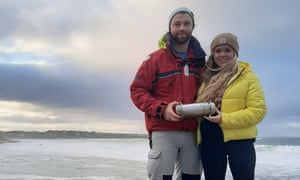
Conor McClory and Sophie Curran found the metallic tube along Bloody Foreland in Gweedore, County Donegal on Sunday.
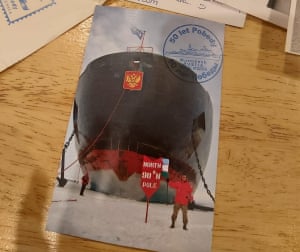
When the crew and passengers of the nuclear-powered icebreaker ship 50 Years of Victory reached the north pole in 2018, they placed a time capsule in the ice floe.
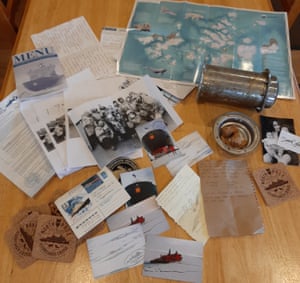
The metal cylinder contained letters, poems, photographs, badges, beer mats, a menu, wine corks – ephemera from the early 21st century for whomever might discover it in the future.
The future came pretty swiftly. The cylinder was found this week on the north-western tip of Ireland after floating an estimated 2,300 miles from the Arctic Circle, where global heating is melting a record amount of ice.
The contents of the cylinder.
Conor McClory and Sophie Curran, surfers from the village of Gweedore in county Donegal, were checking sea conditions when they spotted the tube on the shore at Bloody Foreland, a beauty spot named for the red hue of the rocks at sunset.
“When I saw it, first I thought it was a steel pipe of a ship, then I lifted it and saw there was engraving on it. I thought it was a bomb then,” McClory told the Donegal Daily. “When I saw the date on it I thought it could be somebody’s ashes, so I didn’t open it.”Advertisementhttps://56a5ffc8ecb2dc7753d9591f63a5eb94.safeframe.googlesyndication.com/safeframe/1-0-37/html/container.html
A Russian friend of a friend translated the engraving and told McClory it was a time capsule, so he opened it and discovered messages in Russian and English from the 50 Years of Victory’s polar expedition.
One letter in English, dated 4 August 2018, said: “Everything around is covered by ice. We think that by the time this letter will be found there is no more ice in Arctic unfortunately.”
McClory tracked down one of the letter’s authors, a Russian Instagram blogger in St Petersburg known as Sveta. In a Zoom call, Sveta said the crew and passengers had thought the cylinder might be discovered in 30 or 50 years and expressed shock it was found so quickly, McClory said.
The metal cylinder contained ephemera from the early 21st century.
In the past decade, Arctic temperatures have increased by nearly 1C. Arctic sea ice has reached its second-lowest extent in the 41-year satellite record.
Last year the Greenland ice sheet lost a record amount of ice, equivalent to 1 million tonnes every minute. With annual snowfall no longer enough to replenish snow and ice lost during summer melting, scientists fear it has passed the point of no return.
A Nature Climate Change study predicts that summer sea ice floating on the surface of the Arctic Ocean could disappear entirely by 2035.
For €29,600 (£26,740) the Russian-owned 50 Years of Victory takes passengers on 14-day expeditions to the north pole, calling it a “magical destination”.


 Exposing the Big Game