The way we farm animals is likely to lead to further pandemics, says Dr. Greger
The COVID-19 pandemic may just be a ‘dress rehearsal for the coming plague’, according to acclaimed plant-based doctor Dr. Michael Greger.
Dr. Michael Greger, who has a background in infectious disease, is an internationally recognized speaker on nutrition, food safety, and public health issues. He is the author of Bird Flu: A Virus Of Our Own Hatching, which looks at infectious diseases and human’s role in them – as well as how we can protect ourselves.
Now his new book How To Survive A Pandemic* looks at the pathogens that cause pandemics and how to face them – and the role chicken farming is playing in the risk of future pandemics.
‘Just a dress rehearsal’
In a promotional video for the book, Dr. Greger says: “The current COVID-19 pandemic, as deadly as it may be, may just be a dress rehearsal for the coming plague.
“Decades ago, a flu virus was discovered in chickens that would forever change our understanding on how bad pandemics could potentially get. It was named H5N1 and appeared capable of killing more than half the people it infected. Half. Imagine if a virus like that started spreading explosively human to human. Consider a pandemic 100-times worse than COVID-19, not the fatality rate of two in 100, but more like one in two. A coin toss.
“Thankfully, H5N1 has so far remained more poultry than people, but it – and other new deadly animal viruses like H7N9 are still out there, still mutating, with an eye on that eight billion-strong buffet of human hosts. With pandemics, it’s always a matter of when not if. A universal outbreak with more than just a few percent mortality wouldn’t just threaten financial markets, but civilization itself as we know it.”
How To Survive A Pandemic
Dr. Greger goes on to discuss how the new book contains ‘everything you need to help protect yourself and your family from the current threat’ as well as tackling the question of what can we do to stop the emergence of pandemic viruses in the first place.
According to Dr. Greger, many infectious diseases including tuberculosis, measles, AIDS, and COVID-19 ‘share a common origin story: human interaction with animals’. So when it comes to limiting the risk of H5N1, Dr. Greger’s proposals including changing the farm system.
He says first we should move away from factory farms, where stressed chickens are kept in cramped, dirty conditions, and fed antibiotics to smaller free-range operations, and then stop eating birds completely.
He said: “The pandemic cycle could theoretically be broken for good. Bird flu could be grounded…[but] as long as there is poultry, there will be pandemics. In the end, it may be us or them.”
*How To Survive A Pandemic is available on Kindle and in audiobook format, and in paperback from August 20.
While governments act aggressively to save lives, stop any further spread of COVID-19, and reopen their economies, let’s not wait to prevent the next virus. More will come. Pandemics are picking up their pace. Thankfully, prevention is entirely possible — especially now that behavior change is on the table.
All it takes is a willingness to reconsider how we consume, trade, and treat animals. Big ask? Maybe. But everything should be on the table when hundreds of thousands of lives are at stake.
Here’s the opportunity: If we stop packing animals into crowded, confined areas — to be slaughtered for protein or parts — and if we stop cutting down and endangering their habitat, we can avoid infectious, animal-borne diseases like COVID-19, SARS, the swine flu, and more. (For these reasons, and more, Goldman Sachs now says livestock commodities are looking as ‘precarious as oil’ and U.S. Senators Elizabeth Warren and Cory Booker are calling for a ban on factory farms.)
That’s right. No more lockdowns. No more makeshift morgues. No more market crashes.
It’s that simple. If we want to save human lives and prevent mass casualties from COVID-like catastrophes, all we have to do is rethink and reconfigure our relationship with the animal world.
Now that social distancing is a common practice among most populations, to prevent the transmission of the virus, that’s now what animals need to be able to do, too. But in nature. We’ve already altered 75 percent of their land habitat and two-thirds of their marine habitat. That has to stop, now.
A failure to do so — or worse, by locking them up in factory farms in Waco, Texas, and wet markets in Wuhan, China — makes it all the more likely that another deadly pathogen, which should’ve stayed in nature, gets passed to humans.
While presidents and governors will prefer to emphasize that the next deadly virus is controllable primarily through better detection, monitoring and quick response — which is, of course, essential, too — the only real way to truly safeguard society is to stop the industrial and factory farming of animals.
Here’s how bad it’s become: globally, concentrated animal feeding operations — or CAFOs — account for 72 percent of the poultry we consume, 42 percent of eggs, and 55 percent of pork production. In the United States, over 50,000 facilities classify as CAFOs, with another 250,000 industrial-scale facilities just below that classification.
How many animals are confined in these crowded and virus-friendly conditions? In the U.S., that’s 9 billion chickens, 250 million turkeys, 113 million pigs, and 33 million cows — annually.
That’s almost 10 billion ways to start a virus — in just one year in the U.S. alone. And we know that America’s pigs, as just one example, here — most of which are farmed in industrial facilities without fresh air or sunlight — can kill thousands of Americans with a simple swine-flu virus. Over 12,000 Americans died from H1N1 in 2009 — and remember that was from factory farms in the United States.
Seemingly, no federal guidelines are governing how these animals are used and abused. And many U.S. states are trying to punish those who speak out against these cruel factory farms, which is why Animal Legal Defense Fund, and others, are providing these animals fair representation in court. It’s good someone is. A failure to protect these animals results in a failure to protect our health.
Compounding these health concerns, of course, is industrial animal farming’s heavy use of antibiotics, which ends up leaving humans — who consumed antibiotic-laden animal products — all the more vulnerable to bacteria during a pandemic. The result of all of this? People are more susceptible to attack from a diseased, factory-farmed animal.
And if health reasons weren’t sufficient to win the hearts and minds, perhaps economics will. Industrial animal farming is the least efficient and most expensive way to provide protein to humans. It’s two-three times as valuable as plant-based proteins and incredibly inefficient use of cropland, grains, and water for animal consumption (akin to have multiple middle-managers in a supply chain). Turn those crops into direct plant-protein providers for humans — a much more efficient plant-to-mouth supply chain — and we could easily, and nutritiously feed our growing population — as many as 10 billion by 2050.
That’s the opportunity here. And sure, we could also talk about all of the environmental problems associated with industrial animal farming, which include toxic waste, dangerous and deadly pesticide use, and excessive and exorbitant greenhouse gas emissions that come from animal products. Beef protein’s carbon footprint, for example, is 150 times as high as the same amount of plant protein. But if that hasn’t yet motivated people to switch off their factory-farmed animal food, perhaps the prospect of another pandemic will.
All of this seems way too risky to continue. And until we leave this practice behind, putting animals in unhealthy, crowded and immune-compromised positions — as we are doing globally with our factory farms, wet markets, and more — will continue to put us in similarly immune-compromised positions and kill tens of thousands, perhaps even hundreds of thousands of people, each time these pandemics pop up. It’s time to do better. It’s time to save human lives. It’s time to shut down industrial animal farming.
Michael Honda is a former Member of Congress Honda now serves on the board of local Silicon Valley startups and is working on the legislative campaign to repeal the Alien Enemy Act of 1798. Michael Shank is a former congressional staffer and adjunct faculty at New York University’s Center for Global Affairs.
Image copyrightESTELLE LUCASImage captionEstelle Lucas has lost nearly all her income during the coronavirus outbreak
With social distancing rules in place and strip clubs and brothels closed, sex workers around the world have seen their incomes disappear almost overnight as a result of the coronavirus pandemic. Fearing for their livelihoods, as well as their health, some are offering services online to keep their business going, while others are turning to charities for help.
Estelle Lucas has worked as an escort for the past 10 years in Melbourne, carefully building relationships with her clients. But the spread of Covid-19 and the need for social distancing has prompted a ban on sex work, leaving her worried those efforts will go to waste.
“It’s fair to say that if I’m not working for six months, a lot of people are going to forget me,” she says.
“I can’t contact my clients and just have a conversation with them. That doesn’t work in my industry. We need to build intimacy and that’s just not possible in the current environment.”
Before the coronavirus outbreak, Estelle says she was earning an above-average income, and had hoped to soon pay off the mortgage on her home in Melbourne’s inner suburbs.
Now nearly all her income has been lost. She has tried to adapt by moving her business online, but says that cannot replace physical contact.
Image copyrightESTELLE LUCASImage captionEstelle Lucas has organised an online support group to help other sex workers during the crisis
“Unfortunately, there are things that can’t be translated,” she says. “I have made efforts to go online but not everyone is tech savvy. Some of my clients don’t even really know how to use a smartphone.”
While the regional government has outlined a clear roadmap to reopening restaurants and cafes, there has been no plan for the sex industry. That uncertainty, coupled with the many unknowns surrounding the virus itself, has left many sex workers with deep anxiety.
“I’m scared that all my work will come back to zero and I will just have to start hustling like I did when I first started out,” Estelle says. She also fears for her clients’ health. “Are they even going to be there?” she says. “There’s a lot of nervous energy going around.”
Financial assistance from the Australian government is available to those who have lost their income because of the Covid-19 crisis, but to qualify for the payments workers need to be able to show they have been paying tax – something that unregistered sex workers including migrants and trans people, often won’t be able to do.
It’s a problem facing sex workers in dozens of countries around the world, according to Teela Sanders, a criminology professor at the University of Leicester.
“Governments have been very good at providing social protection for the majority of people, particularly self-employed people, but sex workers are not included,” she says.
That’s left sex worker collectives and advocacy groups calling for members of the public to donate to emergency funds.
So far, an online appeal by the Las Vegas Sex Worker Collective has raised $19,300 (£15,680) while a campaign by a coalition of support groups in Italy has raised almost €21,700 (£19,500).
“These have been a real lifeline to sex workers for immediate bill paying, access to food etc,” says Prof Sanders.
Some sex workers have been forced to continue working, risking hefty fines or exposure to the virus.
Media captionThe BBC investigation revealed some brothels were still trading
“In developing countries, sex workers are often the main breadwinner for the whole family, for their siblings, their children and their grandparents. So this affects the whole extended family,” Prof Sanders says.
Niki Adams from the English Collective of Prostitutes echoes that view. She told the BBC most sex workers in the UK are mothers and if they are continuing to work, it is because they are desperate for money.
But some sex workers find themselves unable to keep working – even if they would choose to.
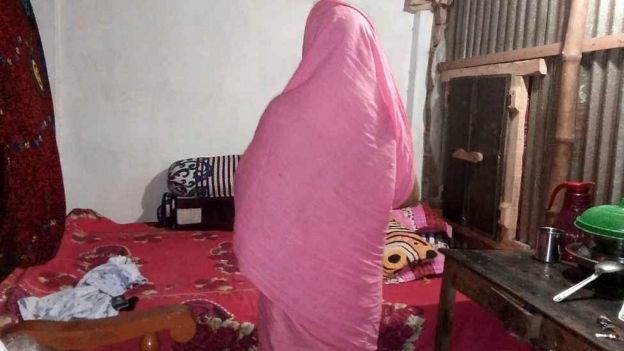
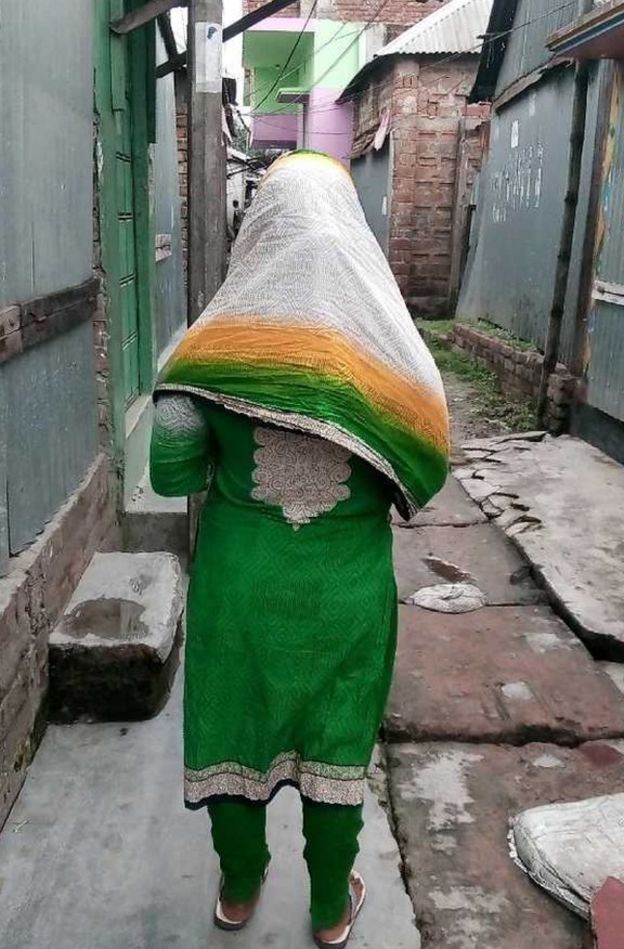
In Daulatdia brothel in Bangladesh, police guard the entrance, preventing customers from entering.
Image caption“Nazma” says even if the brothel were open, she would be scared to see clients in case they had the virus
It is one of the world’s biggest brothels, a shanty town made up of tin sheds and narrow alleyways that is home to 1,300 women and their 400 children.
The brothel has been closed since March, leaving many of the women struggling to buy essential items and relying on donations from charities.
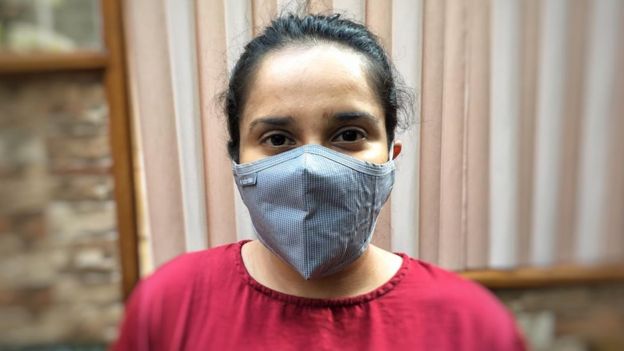
“We cannot work now, so we don’t have any income, which is scary,” says “Nazma”, who didn’t want to give her real name.
Nazma supports three children who live with her sister back in her village. She came to the brothel 30 years ago when she was just seven. Although she needs money, she worries about the dangers of working during the pandemic.
“Even if we could work, people’s lives are at risk from the virus. We’d be scared to go to bed with our clients anyway, as we don’t know who is affected,” she says.
Daulatdia sits on the banks of the Padma River, near a major ferry terminal. It is the main transport hub that connects the Bangladeshi capital Dhaka with the country’s southern districts.
Image captionSome 1,300 women live in the shanty town brothel, which is now closed for business
Prior to the coronavirus outbreak, thousands of truck drivers would pass through the area every day, delivering agricultural products and other goods to Dhaka.
Many of the women and children who live in the brothel are victims of trafficking.
“A lot of them who were kidnapped as children were sold there,” says Srabanti Huda, a lawyer and human rights activist based in Dhaka.
While the Bangladeshi government and local aid organisations have delivered some emergency funds to the women, Srabanti says it hasn’t been enough and some women received nothing at all.
“The amount of donations they’ve received from the government does not even cover a packet of powdered milk for the children,” she says.
In early May, Srabanti organised a private aid delivery, distributing packets of basic supplies for each of the 1,300 women registered at the brothel.
“There was one woman who said she has not been able to get her insulin or diabetic medications for over a month,” Srabanti says. “Another said she has not been able to buy her blood pressure medications since the lockdown started two months ago.”
Image captionSrabanti Huda organised an emergency aid delivery to Daulatdia brothel in Bangladesh
Reduced access to healthcare services is an issue facing sex workers globally, according to Prof Sanders. The problem is particularly acute in areas where there is high demand for regular antiviral drugs from those living with HIV.
“There’s been real issues around access,” she says.
Prof Sanders is working with a team in Nairobi to develop an “Uber-style” app that will enable sex workers to order medication using their phones and have it delivered.
“It’s sent directly to them via a mode of transport rather than the person coming into the clinic,” she says.
Back in Daulatdia brothel, another sex worker who didn’t want to be named is returning from a trip to see her daughter, who lives in a nearby home for the children of sex workers.
Even when the brothel reopens, it will take a long time for the industry to recover, she says.
“People are afraid if they come to us, they might get infected,” she says. “We are afraid too. We might get infected from them. This fear of getting infected will come up all the time.”
Smoking kills more than 8 million people a year, according to the World Health Organization. Valery Sharifulin/TASS/Getty Images
Editor’s Note: Kelly Henning is the director of public health at Bloomberg Philanthropies. The views expressed in this commentary are her own.
Protecting people from the dangers of tobacco products — and holding tobacco companies accountable for their global actions — is a critical component in the fight against Covid-19.
Smokers are more likely than non-smokers to develop severe complications with Covid-19, according to a review of studies by public health experts convened by the World Health Organization. And, a new study of 169 hospitals in Asia, Europe and North America found that smokers have nearly double the likelihood of in-hospital death than non-smokers.
But just as important, tobacco use — a pandemic in its own right — is costly to individual smokers and to society. Smoking kills more than 8 million people a year, mainly in low- and middle-income countries. These deaths are preventable and come mostly from cancer, heart disease, stroke, chronic lung disease and diabetes — conditions that also contribute to high rates of Covid-19 mortality. The human price is exacerbated by the economic toll in health care costs and lost productivity costs that reaches $1.4 trillion annually worldwide.
We’ll be better able to fight this pandemic, and future ones, if we commit ourselves to improving the world’s health. Helping smokers quit will reduce the amount of people with underlying conditions that could make them more susceptible to Covid-19 and other infections. At the same time, to adequately fund efforts to fight coronavirus and prepare for unknown health emergencies to come, we must lower health care costs for households and health care systems and shift our economy away from production and purchase of harmful products, such as tobacco.
“In accordance with this guidance and in coordination with governors across the country, the Department of the Interior and the National Park Service are working to reopen the American people’s national parks as rapidly as possible,” Interior Secretary David Bernhardt said in a statement.
But before you go, check each park’s website for the latest information on what’s open and what’s not. In each case, it depends on where states are in their reopening plans.
Postpone challenging hikes. Having to rescue and treat stranded hikers could divert first responders and medical professionals from the pandemic response.
Trash collection and restroom facilities may not be available. Campgrounds are generally closed.
Stay in groups from your own household and maintain social distance from other groups. Prepare to cover your nose and mouth when other people are around.
Here’s what’s going on at the 10 most-visited national parks:
The park is the nation’s most visited, with 12.5 million visitors annually. Roads, trails, picnic areas and restrooms are open. Visitors centers, campgrounds and concessions remain closed. Some roads are closed to vehicles but open to hiking and biking.
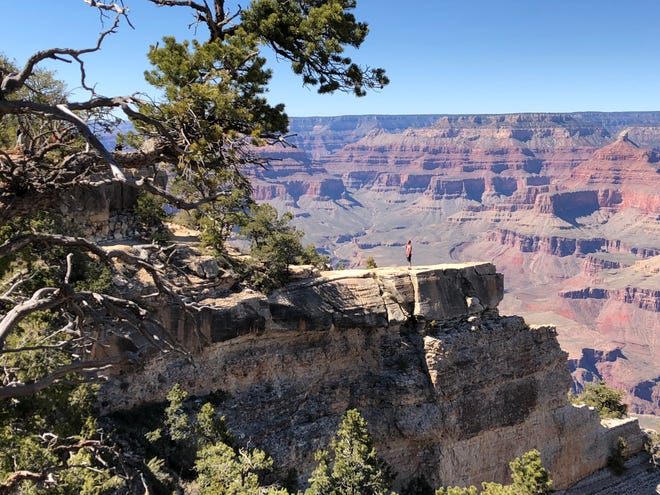
The Grand Canyon is America’s second-most visited national park, with 5.97 million annual visitors. The South Rim opened to limited access on May 15. On June 5, the South Rim will be open 24 hours, and the Mather Campground will be open for existing reservations. The North Rim will open for day use on June 5, with the campground closed for construction until July 1. The Colorado River will reopen to recreational use with existing permits beginning June 14. North and South Rim lodging will reopen in phases throughout June.
Rocky Mountain National Park, Colorado
Starting June 4, the park will implement a timed, reserved entry system that will last through the summer. Visitors will reserve and pay the entrance fee in advance at recreation.gov and enter the park within a two-hour window between 6 a.m. and 5 p.m. In this phase, 60% of the park’s capacity, or 4,800 vehicles and 13,500 visitors a day.
“This system will more safely manage the pace and flow of visitor use, reduce crowding, and provide an improved visitor experience in alignment with the park’s safe operational capacity,” said park superintendent Darla Sidles.
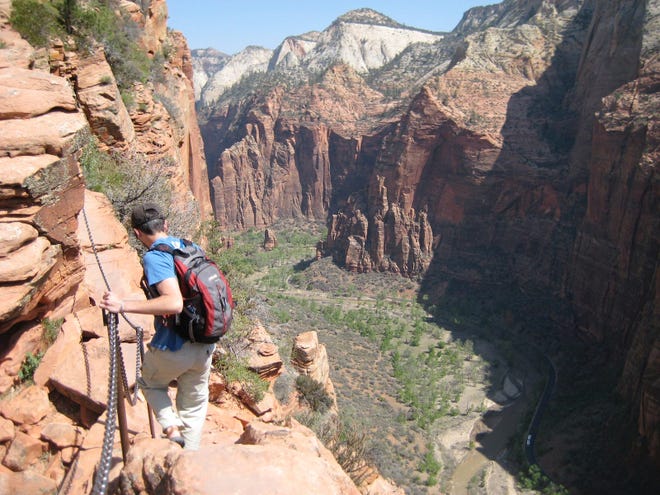
The park has been open during daylight hours since May 13. The Zion Canyon Scenic Drive is open to private vehicles until parking capacity is reached, and the last entry is at 6 p.m. The 6-mile road has about 400 parking spots. The park’s shuttle operation is suspended. Trails are open to day hiking but not to overnight backpacking. The Zion Lodge is open with limited rooms and amenities.
The park’s Montana entrances opened Monday, as the state lifted its 14-day quarantine requirement. The Wyoming and Idaho entrances are also open. The park is day-use only, with campgrounds, visitors centers and other facilities closed. Limited overnight accommodations will start later in June. The Grand Loop Road is open, except for a segment from Canyon to Tower that’s under construction.
The park partially reopened Monday, though Maine visitors are under a 14-day quarantine order. The Park Loop Road is now open, along with most nearby restrooms. Hiking trails are open, and trash collection has resumed. The Carriage Roads will open June 5 for pedestrians, but they will remain closed to bicycle and equestrian riders. The Hulls Cove Visitors Center is open with limited outdoor information services from 8:30 a.m. to 4:30 p.m. Campgrounds remain closed and will reopen no earlier than July 1.
The park reopened May 18 for limited recreational use. Primary roads are open, as are hiking trails for day access. Riverbank and lakeshore fishing is permitted, as are limited biking and wildlife tours. Campgrounds, overnight lodging, visitors centers, marinas and food service remain closed. Boating on lakes and rivers is prohibited.
The park is partially open to day use recreation. All coastal areas, however, remain closed. That includes beaches, parking areas, trails and facilities. No areas of the park are open to camping. Visitors’ centers and ranger stations remain closed. Limited lodging and take-out dining are open.
The park is closed, but a phased reopening is set to begin this month. The first phase will reopen roads, restrooms and some trails. In the second phase, campgrounds, retail, lodging and dining will reopen on a limited basis. Personal boating will be allowed and backcountry permits will be issued. The parks will relax those limits in the third phase as conditions allow.
In early April this year, a video was being circulated amongst animal rights activists in Karnataka: A mahout stating that since the lockdown, his 55-year-old captive elephant has not had anything to eat.
The elephant belonged to a temple in Mudhol district, and for the past 40 years, had been living off offerings of jaggery, sugarcane, fruits and grains provided by the people visiting the temple. Since the lockdown, the mahout had not been able to step out and the temple was running out of fodder. The video ends with the mahout appealing for help.
Ever since the lockdown, there have been several such stories that have been doing the rounds on social media, seeking donations to provide food for starving captive elephants.
Joseph Barretto, owner of Jungle Book Resort in Goa, has five elephants in captivity, which are typically used for rides and “showers” for tourists. He released a video seeking donations for “his starving elephants”.
The elephant owners of Amer Fort in Jaipur, Rajasthan, known for using at least a hundred elephants for tourist rides, also complained about the lack of income that disabled them from getting fodder for their elephants. Similarly, elephants held captive by individual owners in Kerala and religious institutions in Karnataka have been seeking help.
“It takes one pandemic to throw things out of gear,” said Suparna Ganguly of Wildlife Rescue and Rehabilitation Centre, an animal rights non-profit based in Bangalore, Karnataka. “It just goes on to show how precarious their situation is when they are in private custody.”
‘Owning’ an elephant
There are 2,675 captive elephants in India, according to the information received by Tamil Nadu-based animal welfare activist Antony Clement Rubin via a Right to Information response from the Ministry of Environment, Forest and Climate Change in November 2019 and available to Mongabay-India.
Of these, 1,821 are in private custody and the rest are under the care of the forest department of various states. Among the elephants in private custody, some are owned by individuals and others by institutions like temples and circuses.
The Indian Elephant is protected under Schedule one of the Wildlife Protection Act, 1972, which affords maximal protection. It is listed as “Endangered” in the Red List of Threatened Species of the International Union for Conservation of Nature.
Under Section 1(5) of the Wildlife Protection Act, a captive animal is “captured, or kept or bred in captivity”. Section 40 of the Act gives special status regarding possession, inheritance, or acquisition of the animal. “This exception was originally created for the elephants that were already in captivity at the time, to regularise their possession. But it is being used to capture more elephants and issue new ownership certificates,” said Alok Hisarwala, a Goa-based lawyer who manages the Elephant Rights Campaign for Federation of Indian Animal Protection Organisations.
Explaining it further, he said, “It’s like this. If I step into the forest and see a wild elephant and if I get caught trying to capture it, I have committed an offence. But if the next morning, I happen to walk to the Chief Wildlife Warden’s office, telling him that I have an elephant in my backyard and that he/she is listening to all my commands, I will get the ownership certificate. They won’t ask me how I acquired the elephant.”
There are 2,675 captive elephants in India. Credit: Radhika Agarwal/Mongabay
Currently, there are 1,251 captive elephants with ownership certificates and 723 elephants whose ownership certificates are still under process. “These captive elephants are brought as baby calves from the Northeast to Rajasthan and trained for tourist rides,” said Abhishek Singh, an animal welfare activist based in Jaipur. “A [memorandum of understanding] was passed between the Forest Department and some of the non-profits in the area, about four to five years back that no more new elephants will be brought to the state,” he said. “But the rules continue to be flouted.”
Moreover, elephants are used for commercial purposes. Under the Performing Animals Registration Rules, 2001 – part of Prevention of Cruelty to Animals Act 1960 – using captive elephants for commercial purposes such as tourism is strictly prohibited unless specific permission is obtained by the Animal Welfare Board of India. There are several state-specific laws, as well.
Elephants under stress
In 2017, members of the Animal Welfare Board of India attempted to conduct health checks on the elephants in Jaipur. Out of the 102 elephants tested, at least ten showed symptoms of tuberculosis, a zoonotic disease. The report also revealed that elephants were suffering from blindness, had their tusks removed, and were under extreme psychological stress. However, no action was taken at the time.
“We tried to organise a health camp earlier this year, but that was also cancelled at the last minute,” said Singh. In fact, earlier in March, PETA wrote a letter to the chief minister of Rajasthan, urging him to stop the elephant rides because of the potential risk to tourists of contracting tuberculosis.
“The elephants are constantly abused, they are made to stay in concrete stalls, they have foot diseases, ankush [a sharp instrument used by mahouts] is used to control them, and they are constantly under stress,” said Singh.
In August 2019, a study assessing physiological stress in captive Asian elephants was published by scientists at CSIR- Centre for Cellular and Molecular Biology, Hyderabad. The study checked the amount of stress hormones called glucocorticoids in 870 dung samples from 37 captive elephants. The samples were collected from elephants that were engaged in different activities – from Mysore zoo, Mysore Dussehra temporary elephant camp, Mudumalai Tiger reserve elephant camp, and Bandhavgarh Tiger reserve elephant camp.
The elephants from the Mysore Dussehra camp, which were made to perform at religious ceremonies had a higher amount of stress hormones than others. The study explained that heightened levels of stress can cause infertility, hyperglycemia, suppression of immune response, imperfect wound healing, and neuronal cell death.
“Elephants are social animals, they need other elephants around them, and when they are kept isolated environments such as temples, it automatically elevates their stress hormones,” said Sreedhar Vijayakrishnan, a researcher on elephant behavior at National Institute of Advanced Studies, Bangalore.
“In females, this disrupts their reproductive cycle,” he said. Male elephants go into musth at around 20-21 years of age. Their testosterone level goes up and their raging behavior increases. “This means they travel a larger distance than normal, in search of a mate. When you keep them in captivity in one place, it automatically increases their stress level,” he said.
“Some of the manifestations of stress include stereotypic behaviour – rocking, swaying, head-bobbing, and other repetitive movements,” said Dr Shantanu Kalambi, wildlife veterinarian and consultant at Wildlife Rescue and Rehabilitation Centre, based in Bangalore. “This sometimes causes them to walk in an awkward manner, leading to arthritis and spondylosis.”
Further explaining the physiological problems captive elephants go through, feet are the “biggest issue” for them, he said. “Thanks to constantly standing or walking on unsuitable hard surfaces, they have bad feet, abscess in the foot and hips, broken nails, and develop arthritis over time,” he added.
Other issues they face include blindness and cataract, “since they are out in the sun all the time.” If they had their own will, they would find shade, he said.
Elephants in captivity are often not allowed to have mud baths. “Mud acts like sunscreen for them, and keeps away ectoparasites,” said Kalambi. As a result, they develop skin problems.
“Increasing cases of conflict in captivity, manifested in the form of property damages and human casualties, is another issue in captive conditions,” said Vijayakrishnan. Several times a year, local papers report headlines such as “Elephant runs amok during temple festival in Kerala” or “Elephant crushes mahout to death”. “This is an area that is often overlooked, and is also a result of stress and inadequate rest for the elephant,” he said.
Research shows that isolation, confinement and increased workload causes stress in elephants, which manifests itself in various physiological problems. Credit: Shantanu Kalambi via Mongabay
Response to pandemic
Conservationists and activists say that an average middle-aged healthy elephant needs 100-150 kg of food per day, consisting of grass, foliage, hay, banana stock, ragi, rice, gingelly oil, vegetables, pulses and fruits, along with 5,000 gallons of water. Captive elephants are heavily dependent on human intervention for their well-being, especially their mahouts, who play an active role in their positive reinforcement. The ones that are medically unfit require regular veterinary assistance. On average, the bare minimum cost for providing nutrition, medical needs and logistic support for one captive elephant amounts to approximately Rs one lakh per month.
In response to the current Covid-19 crisis, Singh explained that each elephant handler in Jaipur was given Rs 600 per day for the food and upkeep of the elephant, by the Rajasthan forest department. “This is too less an amount,” said Singh. “One needs at least Rs 2,000-Rs 3,000 per day for an elephant.”
In Kerala, the state government released Rs five crore for animal welfare, which includes the 479 privately-owned captive elephants in the state. In Karnataka, the high court passed an order on April 9, asking the state’s forest department to ensure the upkeep of the state’s privately-owned elephants.
In Tamil Nadu, activist Antony Rubin sent a letter to the forest department, requesting them to allocate appropriate funds, food and veterinary attention to the state’s captive elephants, as well as to the mahouts. The confidential letter is available with Mongabay-India.
Need of the hour
While a long term policy change is the need of the hour, experts offer a variety of views for handling the gentle giants in captivity. The CSIR-Centre for Cellular and Molecular Biology study on captive elephant stress recommends “minimising participation in religious activities, processions” and creating opportunities “for elephants to interact with other elephants in the facility.”
“We need an urgent policy change to completely ban the ownership of elephants in private hands,” said Ganguly. “Whether it is owned by an individual or an institution, this needs to be stopped by law.”
She further added, “There are many captive elephants that are currently in good condition, and many in a bad condition. There needs to be formed a neutral committee, that consists of experts in the field, that can make a detailed report on the kind of housing and facility these elephants need.
Scientists claim to have found more clues about how the new coronavirus could have spread from bats through pangolins and into humans, as India reported its worst single-day rise in new cases, and the number of Covid-19 infections worldwide neared 6 million.
Writing in the journal Covid-19 Science Advances, researchers said an examination of the closest relative of the virus found that it was circulating in bats but lacked the protein needed to bind to human cells. They said this ability could have been acquired from a virus found in pangolins – a scaly mammal that is one of the most illegally trafficked animals in the world.
‘I’m stuck in limbo’: will the Covid generation of young people face long-term fallout?
Read more
Dr Elena Giorgi, of Los Alamos national laboratory, one of the study’s lead authors, said people had already looked at the pangolin link but scientists were still divided about their role in the evolution of Sars-Cov-2, the virus that causes Covid-19.
“In our study, we demonstrated that indeed Sars-Cov-2 has a rich evolutionary history that included a reshuffling of genetic material between bat and pangolin coronavirus before it acquired its ability to jump to humans,” she said, adding that “close proximity of animals of different species in a wet market setting may increase the potential for cross-species spillover infections”.
The study still doesn’t confirm the pangolin as the animal that passed the virus to humans, but it adds weight to previous studies that have suggested it may have been involved.
However, Prof Edward Holmes, an evolutionary biologist at the University of Sydney, in Australia, said more work on the subject was needed. “There is a clear evolutionary gap between Sars-Cov-2 and its closest relatives found to date in bats and pangolins,” he said. “The only way this gap will be filled is through more wildlife sampling.”
The findings came as Donald Trump announced that the United States was severing its ties with the World Health Organization because it had “failed to reform”.
In a speech at the White House devoted mainly to attacking China for its alleged shortcomings in tackling the initial outbreak of coronavirus, Trump said: “We will be today terminating our relationship with the World Health Organization and redirecting those funds to other worldwide and deserving urgent global public health needs.”
The US is the biggest funder of the WHO, paying about $450m (£365m) in membership dues and voluntary contributions for specific programmes.
Trump’s declaration was condemned in the US and around the world, with Australian experts joining counterparts in the UK and elsewhere in voicing their support for the WHO. Prof Peter Doherty, a Nobel laureate and patron of the Doherty Institute, which is part of global efforts to find a Covid-19 vaccine, said the WHO had the “full support of the scientific community”.
Deaths in the US have climbed to more than 102,000, with 1,747,000 infections. It is by far the biggest total in the world. On Friday it emerged that one person who attended the controversial pool parties in the Ozarks last weekend had tested positive for the virus.
In Brazil, there was another large rise in deaths. More than 27,000 people have died from the disease and the country has the world’s second highest number of cases, at 465,000.
Iran also recorded its biggest daily increase in deaths –232 in 24 hours – bringing the total to 4,374. President Hassan Rouhani nevertheless said mosques were to resume daily prayers throughout the country, despite some areas reporting continuing high levels of infections. He added that physical distancing and other health protocols would be observed in mosques. He did not say when they were due to reopen.
India, meanwhile, reported a record daily jump of 7,964 new infections. With the latest tally, India has now reported 173,763 coronavirus cases and 4,971 deaths, making it the ninth most-affected country, according to Reuters. While the fatality rates in India have been lower than in worse-hit countries, experts fear the peak has not been reached. The latest numbers would appear to confirm that prediction.
Egypt registered 1,289 new cases and 34 deaths, the health ministry said, marking another record of daily increases on both counts despite stricter curfew rules.
Other developments across the world include:
A leading UK government adviser has warned that it is too early to lift lockdown restrictions as planned next month because the number of new infections is still too high. John Edmunds, a professor of infectious disease modelling at the London School of Hygiene and Tropical Medicine, said he wanted the level of new cases to be “driven down further” before larger gatherings are allowed as the government has said it wants to do. Tory MPs are still being bombarded by constituents with calls for Boris Johnson’s top adviser to quit after he appeared to breach lockdown rules.
In Australia, where states are expected to move to relax the rules to allow gatherings of more people from Monday, anti-vaccine protesters gathered in several cities to claim that they believed Covid-19 was a “scam”.
Also in Australia, scientists are examining the sewage waste in a town in Queensland where a 30-year-old man died this week from the virus. Nathan Turner is the youngest victim in the country so far and the case has baffled experts because he had not left the remote town of Blackwater.
The global death toll passed 365,000, according to data compiled by Johns Hopkins University, with the number of cases just short of 6 million. The true number of infections is likely to be much higher, however, given the vast number of unrecorded and asymptomatic cases.
(CNN)A deep dive into the genetics of the novel coronavirus shows it seems to have spent some time infecting both bats and pangolins before it jumped into humans, researchers said Friday.
But they said it’s too soon to blame [“blame”?? Not their fault humans captured and dragged them to wet markets] pangolins for the pandemic and say a third species of animal may have played host to the virus before it spilled [?] over to people.
What is clear is that the coronavirus has swapped genes repeatedly with similar strains infecting bats, pangolins and a possible third species, a team of researchers from Duke University, Los Alamos National Laboratory and elsewhere reported in the journal Science Advances.
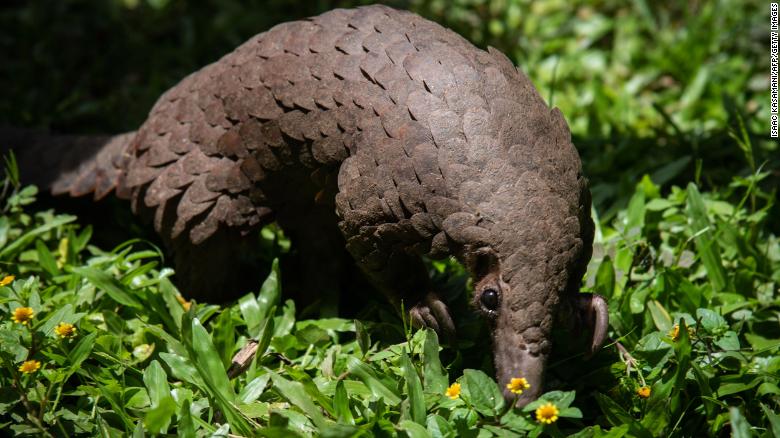
A white-bellied pangolin rescued from local animal traffickers at the Uganda Wildlife Authority office in Kampala, Uganda, on April 9, 2020.
What’s also clear is that people need to reduce contact with wild animals that can transmit new infections, the researchers concluded.
Content by CNN Underscored
The comfiest pants for lounging around the house
With the anxiety and distress you may be feeling, wearing clothes that are in any way uncomfortable is simply not an option.
The team analyzed 43 complete genomes from three strains of coronaviruses that infect bats and pangolins and that resemble the new Covid-19 virus.
close dialog
“In our study, we demonstrated that indeed SARS-CoV-2 has a rich evolutionary history that included a reshuffling of genetic material between bat and pangolin coronavirus before it acquired its ability to jump to humans,” said Elena Giorgi, a staff scientist at Los Alamos National Laboratory who worked on the study.
But their findings may let pangolins off the hook. The animals, also known as scaly anteaters, are sold as food in many countries, including China, and have been a prime suspect as a possible source of the pandemic.
“The currently sampled pangolin coronaviruses are too divergent from SARS-CoV-2 to be its recent progenitors,” the researchers wrote.
Whether the mixing and matching between bat viruses and pangolin viruses was enough to change the virus into a form that now easily infects humans remains unclear, the researchers said.
“It is also possible that other not yet identified hosts (can be) infected with coronaviruses that can jump to human populations through cross-species transmission,” the researchers wrote. “If the new SARS-CoV-2 strain did not cause widespread infections in its natural or intermediate hosts, such a strain may never be identified.”
But people are setting themselves up to be infected with new viruses via “wet markets” where many different species of live animals are caged and sold, and by moving deeper into forests where animals live, the researchers said.
“While the direct reservoir of SARS-CoV-2 is still being sought, one thing is clear: reducing or eliminating direct human contact with wild animals is critical to preventing new coronavirus zoonosis in the future,” they concluded.
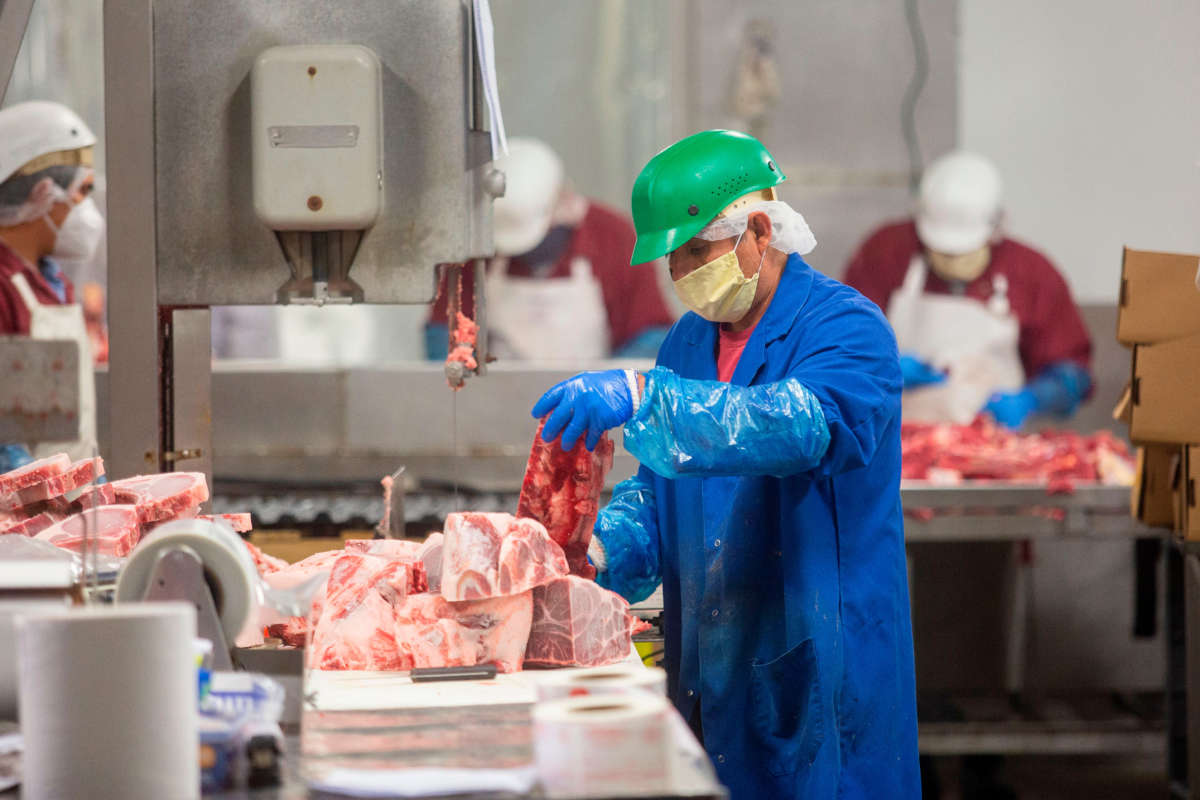
President Donald Trump issued an executive order in late April requiring all meat processing plants in the U.S. to remain open, despite reports of coronavirus infections and related deaths being prevalent at a number of the plants.
Since that order was issued, the number of COVID-19 cases that have been identified at meat plants across the country has likely tripled, according to estimates from a nonprofit watchdog group.
At the time of Trump’s executive order, the Centers for Disease Control and Prevention (CDC) had identified around 5,000 employees across 20 meat processing plants who had contracted COVID-19, and 17 workers at those plants who had died from the disease. In spite of concerns about the disease spreading at these and other locations, the president issued his order, utilizing the Defense Production Act to classify processing plants as essential infrastructure.
The executive order prevented local governments and health officials from enforcing plant closures in the event of an outbreak and it’s now apparent that the disease has indeed spread at these meatpacking locations since the order.
More than 100 plants across the country have seen a high number of cases of COVID-19. The Food & Environment Reporting Network (FERN), a nonprofit journalism watchdog group dedicated to food and agricultural issues, estimated in a report published last week that 17,000 workers may have now contracted the disease, with at least 66 COVID-related deaths recorded among employees at meat processing plants.
In light of this, other organizations are demanding the federal government take a more proactive approach toward limiting the spread of COVID-19. Citing the large numbers of workers at meat processing plants contracting coronavirus, the Center for Food Safety produced a petition in which it demanded the U.S. Department of Labor’s Occupational Safety and Health Administration (OSHA) issue new emergency standards to protect employees’ health.
“Protecting workers in meatpacking plants is important not just for the workers, but also for our food safety,” the organization wrote in its letter. “Unprotected and sick workers are more likely to make mistakes, making it more likely that tainted meat gets onto store shelves. The last thing we need during this pandemic is a major foodborne illness outbreak.”
Colder temperatures in the plants may also be helping the virus linger longer on surfaces or in air particles, and ventilation systems may be spreading coronavirus throughout the buildings.
Among the U.S. population in general, it’s feared that coronavirus will likely continue to spread even more than it already has, as several states begin transitioning away from stay-at-home orders that were previously issued.
“The whale watching industry is pretty unique in this part of the world,” Mark Malleson of the Center for Whale Research says. “We cover so much area and … have so many eyes out there.”
This story was originally published by Hakai Magazine and is reproduced here with permission.
In late April, residents of Nanoose Bay on southeastern Vancouver Island, British Columbia, gathered on the shoreline of a local park to observe a juvenile gray whale. For several days, they watched and waited, and were occasionally rewarded for their patience when mist erupted from the ocean surface like compressed air exploding from a giant barrel. The whale would take a deep breath, arch its barnacled back, and dive out of sight.
The sightings were brief, but memorable — not just because they happened to them, but because they didn’t happen to anyone else. On a normal day, the gray whale would have been shadowed by commercial whale watching boats. COVID-19 has changed all that.
The pandemic has constrained vessel traffic around the world, probably to the benefit of whales. Ship strikes can kill or injure, while underwater engine noise and a vessel’s physical presence can disrupt whales’ ability to feed, rest, socialize, navigate, and communicate. “Generally, less noise resulting from a reduction in all manner of vessel traffic right now is probably not a bad thing for the whales,” says John Ford, a whale researcher emeritus with Fisheries and Oceans Canada (DFO).
“Generally, less noise resulting from a reduction in all manner of vessel traffic right now is probably not a bad thing for the whales.”
Commercial whale watching is not immune to COVID-19. The whale watching fleet from British Columbia and Washington state totaled about 138 vessels in 2019, according to Soundwatch, a program of the Whale Museum in Friday Harbor, Washington, which monitors vessel compliance in the San Juan Islands. That represents more than 500,000 customers annually.
But the pandemic has left the fleet docked.
In April, the Canadian government announced that all passenger vessels with a capacity of more than 12 passengers are prohibited from engaging in nonessential activities, including whale watching, until at least June 30.
Since then, the industry has conducted talks with Transport Canada aimed at getting the fleet back on the water, with the potential for British Columbia, perhaps through the Ministry of Health, deciding when to green-light commercial whale watching. The industry is putting together a blueprint for how that might happen, including staff training, frequent sterilization of vessels, and the wearing of face masks.
Meanwhile, whales in the Salish Sea are enjoying a rare respite from tourists and repeated boat traffic. That includes endangered southern resident killer whales, whose numbers have dropped from 98 in 1995 to an estimated 72 individuals.
The Pacific Whale Watch Association, representing Canadian and American companies in the Salish Sea, says the downside to COVID-19 extends beyond their lost revenues.
Every day the fleet is idled due to the pandemic, scientists cannot benefit from a GPS-based app developed by the industry in 2019 that provides real-time information on when and where whales are sighted. “That cannot be replicated by science, even on a good day,” says association spokesman Kelley Balcomb-Bartok.
Brad Hanson, a researcher with the Northwest Fisheries Science Center, is among more than 20 scientists who have received permission to access the app’s data for specific study periods. “It is much more efficient,” he says. “I don’t like to go out and spend a lot of time searching for whales.” Such data can also help to track a sick whale or identify larger trends in whale numbers and species in the Salish Sea.
Mark Malleson has a foot in both camps: he is a veteran captain for Prince of Whales in Victoria, and does contract work for DFO and the Center for Whale Research in Washington State, mainly taking identification photos of killer whales. He documented the first fin whale in the Juan de Fuca Strait in 2005. “The whale watching industry is pretty unique in this part of the world,” he says. “We cover so much area and … have so many eyes out there.”
“Absolutely, there is going to be less data. Whether or not the absence of those data would compromise our efforts or understanding … long-term, I’m not sure.”
Individual whale watching companies also support conservation organizations through a variety of initiatives, including donating one percent or more of ticket sales or a fixed donation such as $2 per ticket, and offering free seats or free charters of vessels for education, fundraising, or research purposes.
One major beneficiary is the Center for Whale Research, founded by Balcomb-Bartok’s father, Ken Balcomb. The center receives up to $30,000 per year from whale watching companies, evidence of the intertwining of whale commerce and whale conservation. On the Canadian side of the border, the Vancouver-based Pacific Salmon Foundation reports that whale watching companies contributed about CAN $105,000 to the organization in donations and gifts in kind in 2019.
All of which offsets — but does not eliminate — the industry’s impact on whales.
“We need to embrace what’s best for the southern residents while still having a viable economy,” asserts Balcomb-Bartok. “I can’t say we are benign. It is a factor. Let’s find the best balance.”
The absence of data from the whale watching fleet comes at a time when whale researchers also struggle to get onto the water due to the pandemic.
Thomas Doniol-Valcroze, head of DFO’s cetacean research program on the west coast, says research by government organizations such as his own and the National Oceanic and Atmospheric Administration has largely ground to a halt. Physical distancing can be problematic for boat crews, while going for fuel and handling study equipment carries the risk of contamination. Fieldwork by small organizations may still continue, he says, including using drones to document whales’ physical condition. Hydrophones are also collecting data on underwater sound levels resulting from reduced vessel traffic.
As for the whale watching industry’s contribution, he says: “Absolutely, there is going to be less data. Whether or not the absence of those data would compromise our efforts or understanding … long-term, I’m not sure.”
Stay up to date on the West with our free newsletter
Ultimately, all manner of vessels, whether they contribute to research or not, can be disruptive to whales, Doniol-Valcroze concludes.
“Everybody who is honest knows that when you’re out there — whether you are a researcher or whale watcher or anything else — you’re having an impact on these animals. It all comes down to whether it’s worth the impact or not.”
It makes you wonder what the whales would say. A question left to humans to debate.
Larry Pynn is a veteran environmental journalist who has received some 30 awards for his newspaper and magazine writing, including eight Jack Webster Awards. Email High Country Newsat editor@hcn.org or submit a letter to the editor.














 Exposing the Big Game