Valencia County NM weighs animal hunting contest resolution

Resolution would officially “oppose” contests

By Chris McKee Sunday, December 1, 2013

LOS LUNAS, N.M. (KRQE) – Following protests and attempted legislation, a New Mexico county is now trying to tackle the issue of animal hunting contests that could inspire some change.

Valencia County commissioners will soon review and vote on a resolution to oppose the contests. Over the last year, the state has seen several contests targeting coyotes and prairie dogs. At least four of those contests have been held in Valencia County.

Commissioner Alicia Aguilar is behind the resolution’s proposal. In a phone interview with News 13 on Saturday, Aguilar said she’s heard from several people, including a wildlife biologist, who are concerned about the contests impact on wildlife populations.

Other commissioners say residents have raised even more issues with the contests.

“They think it’s a negative look on the county promoting this contests,” said Aragon.

Commissioner Jhonathan Aragon has a background in veterinary medicine. He says he hasn’t made his mind up about which way he’ll vote on the resolution. However, he says the targeted animals are a real problem.

“It is devastating, you know these ranchers put a lot of money and time into these animals to have these coyotes just come in and just you know, ruin their entire life’s work,” said Aragon.

Aragon says despite the vote, it may be time for a change in how the hunting is done.

“Maybe they could work with some of these activist groups to kind of see how they can … just do things differently so that both sides are happy about the outcome,” said Aragon.

Commissioners will debate and vote on the resolution on Wednesday. If it passes, it won’t change any local laws but just serve as the county’s official opinion saying it “opposes animal hunting contests.”

Two of the Valencia County gun shops that have held animal hunting contests for coyotes this year say they plan to hold more in the near future.

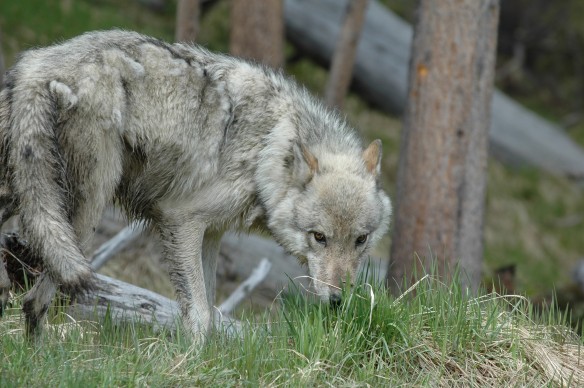
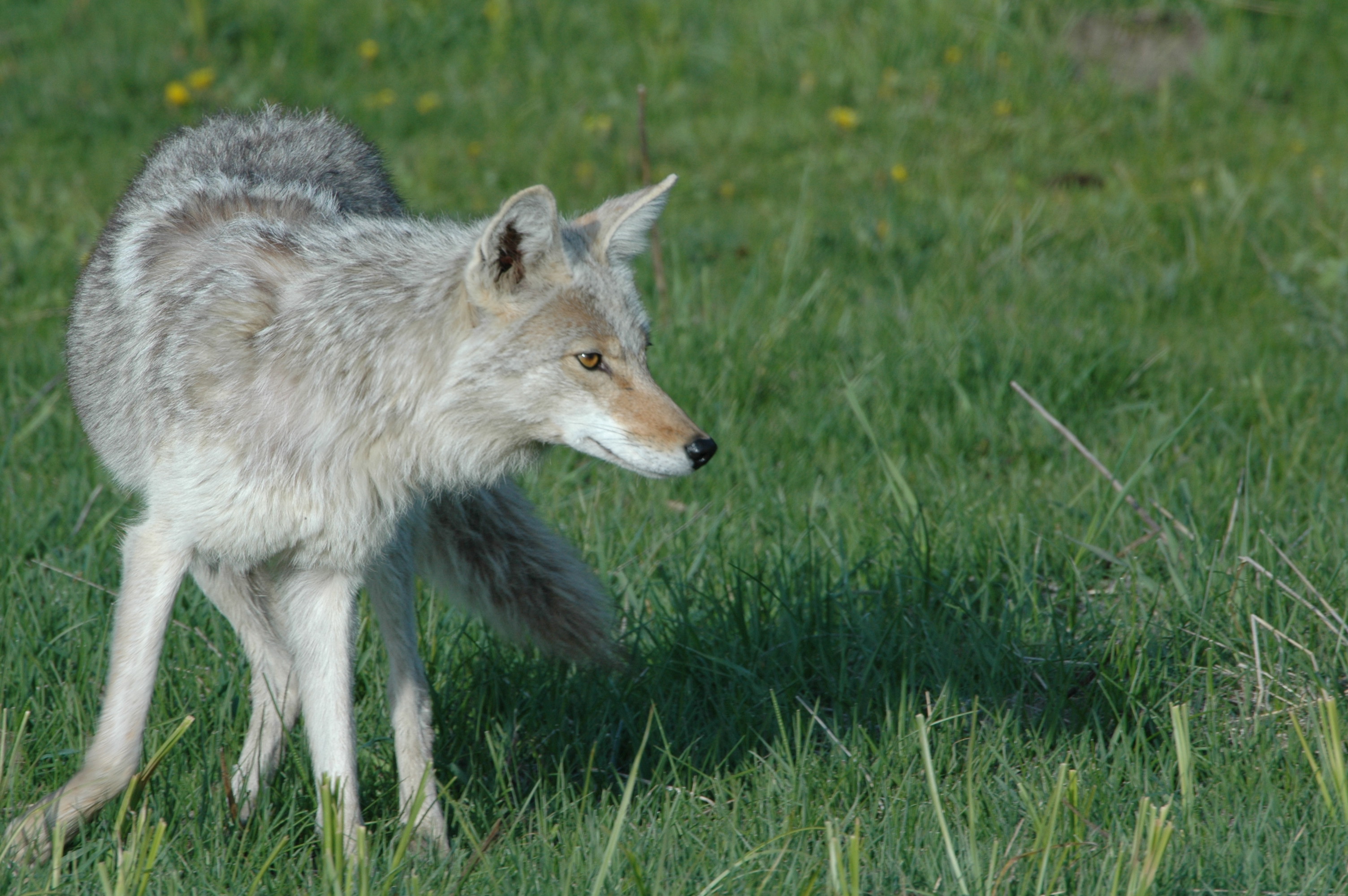
Coyote photo Copyright Jim Robertson

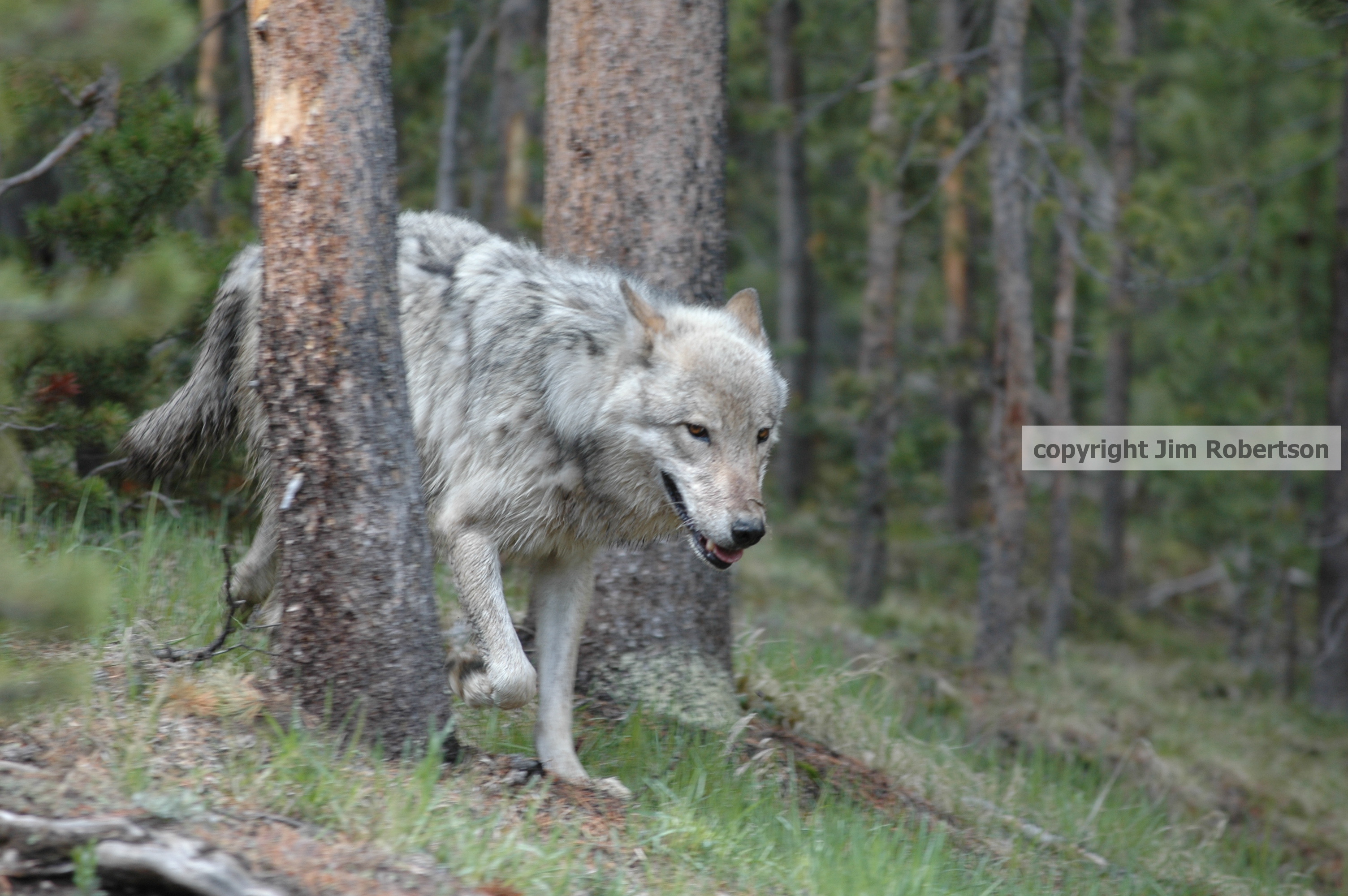
Coyote photo Copyright Jim Robertson

Lead-ing the Way in California

From Wayne Pacelle’s blog, A Humane Nation

October 11, 2013

Bullets should not keep killing long after they’ve left the barrel of a firearm. Soon, in California, they won’t.

In an act that will have major national reverberations for hunting and ammunitions manufacturing in the United States, Gov. Jerry Brown today signed legislation to make California the first state in the nation to halt the use of lead ammunition in hunting. The HSUS led the fight, along with Audubon California and Defenders of Wildlife, besting the National Rifle Association, the National Shooting Sports Foundation, and other hunting-rights lobby groups that called for the status quo and the continued incidental poisoning of countless birds and mammals, including endangered California condors, in the Golden State. Gov. Brown also signed legislation today to forbid the trapping of bobcats around Joshua Tree National Park and other national parks and wildlife refuges – a second major wildlife victory for us.

Thank you, Gov. Brown. We are immensely grateful.

The lead ammo bill, AB 711, was authored by Assemblymembers Anthony Rendon and Dr. Richard Pan, and the bobcat bill, AB 1213, was authored by Assemblymember Richard Bloom. We are also so grateful to these legislative champions for pushing these important policies over the finish line.

Last year, Gov. Brown signed legislation to outlaw the use of dogs in hunting bears and bobcats, and the year before put his signature on a bill to ban the sale and possession of shark fins. He’s also signed more than 25 other animal welfare bills, protecting mountain lions, banning cruel traps and a wide range of other practices. In all, since voters passed Proposition 2 in California in 2008, state lawmakers and two governors have together enacted more than 40 new statutes for animals – including bans on tail docking of dairy cows and forbidding the sale of shell eggs that don’t meet the standards of Prop 2. Hats off to my colleague, California senior state director Jennifer Fearing, and the rest of our team for leading the advocacy efforts and skillfully working with so many lawmakers and with Gov. Brown. This incredible raft of legislation cements California’s place as the nation’s leading state on animal welfare.

When the NRA and other groups fought efforts more than two decades ago to ban the use of lead shot for waterfowl hunting, they said that a legal prohibition on its use would result in the end of duck and goose hunting. Such outlandish claims, which we can now evaluate in a very tangible way, have proven false. In this year’s legislative fight in California, the National Shooting Sports Foundation – the trade association for gun and ammunition makers, based in Newtown, Conn., of all places – spent tens of thousands of dollars running print and radio ads attacking The HSUS, but their expenditures were all for naught.

Lead has been removed from paint, gasoline, and other consumer products because lead kills. A preponderance of scientific evidence demonstrates that there are significant public health, environmental and wildlife health risks associated with lead from ammunition. One estimate says that there are more than 10 million doves a year who die from lead poisoning. When you consider that there are more than 130 species known to suffer from the toxic effects of spent lead ammunition, it’s quite a staggering toll. Scavenging birds like condors, owls, eagles, and hawks, as well as mammals like coyotes, are all at risk and known to be suffering. Death from lead poisoning is painful, and even when lead exposure isn’t high enough to kill an animal, it doesn’t take much to weaken an animal to the point that it succumbs to predation or disease.

With an alternative product available – including steel, copper and bismuth ammunition – why not make the switch?

Editorial support for AB 711 from newspapers across California has poured in – The Los Angeles Times, the Monterey County Herald, the San Jose Mercury News, the Fresno Bee, the Sacramento Bee, the Riverside Press-Enterprise and the Bakersfield Californian, to name a few. The president and the vice president of California’s Fish and Game Commission backed the bill, as did Department of Fish and Wildlife director Chuck Bonham.

This is an enormous win for our movement. Committed conservationists and animal welfare advocates know it is wrong to allow random poisoning of wildlife. It is inimical to any sound principle of wildlife management and other states should follow California’s lead. With the signing of these two bills, today is a great day for condors, bobcats, and more than 130 other species of wildlife in California!

00-intro

Advice to a Young Wolf Advocate

Here’s a question I received today, followed by my reply…

Q. Hey, Love your blog . I have a question .I live in New York and I am 18 . I hate what is happening to the wolves and coyotes In the U.S . I see all of these horrid pictures of dead wolves and coyotes . I feel so useless . I need to help save them .But I have no idea what to do .Or where to start . If you can help me in anyway , it would be highly appreciated.

A. I’m glad to hear you’re on the side of the wolf. All I can say about the pictures of dead wolves and coyotes is try to meter your viewing of them with appropriate activism on your part. Don’t let them burn you out. If you don’t have time to take action, don’t view the photo. But whenever you can, follow up on the action suggested by the pro-wolf groups and make your feelings known. You may not see instant results, but you’ll know you’re doing whatever you can. Keep the faith–the anti-wolf a-holes are far outnumbered and they know it!

copyrighted Hayden wolf walking

And We Call Ourselves Civilized?

In agreeing with President Obama’s plan to strike Syria, Representative Nancy Pelosi was quoted as saying we must respond to actions “outside the circle of civilized human behavior.” Nice to hear that the U.S. Government thinks it has the moral authority to respond to such actions. While they’re at it, I can think of a whole lot of other actions which should be considered “outside the circle of civilized human behavior” that are desperately in need of responding to.

I’m referring, of course, to the innumerable abuses of non-human animals by humans—many that go on every day right here in the U.S. of A. I’m afraid if I were to try to list all the instances of human mistreatment of other animals which should fall outside the “circle of civilized human behavior,” the pages would fill the halls of justice, spill out onto the streets and overflow the banks of Potomac River in an unending tsunami of savagery.

So here’s just a partial list…

Wolf Hunting—No sooner did grey wolves begin to make a comeback in the Lower 48 than did the feds jerk the rug out from under them by lifting their endangered species protections and casting their fate into the clutches of hostile states. Now, hunters in Wyoming have a year-round season on them while anti-wolf fanatics in Montana have quadrupled their per person yearly kill quota.

Trapping—Only the creepiest arachnid would leave a victim suffering and struggling for days until it suits them to come along for the “harvest.” Yet “law abiding trappers” routinely leave highly sentient, social animals clamped by the foot and chained to a log to endlessly await their fate.

Hound-Hunting—“Sportsmen” not content to shoot unsuspecting prey from a distance of a hundred yards or more sometimes use hounds to make their blood-sport even more outrageously one-sided.

Bowhunting—Those who want to add a bit of challenge to their unnecessary kill-fest like to try their luck at archery. Though they often go home empty-handed, they can always boast about the “ones that got away”… with arrows painfully stuck in them.

Contest Hunts—Prairie dogs, coyotes, and in Canada, wolves, are among the noble, intelligent animals that ignoble dimwits are allowed to massacre during bloody tournaments reminiscent of the bestial Roman Games.

Horse Slaughter—After all that our equine friends have done for us over the centuries, the administration sees fit to send them in cattle trucks to those nightmarish death-camps where so many other forcibly domesticated herbivores meet their tragic ends.

Factory farming—Whether cows, sheep, pigs, chickens or turkeys, the conditions animals are forced to withstand on modern day factory farms fall well outside even the narrowest circle of civilized human compassion. To call their situations overcrowded, inhumane or unnatural does not do justice to the fiendish cruelty that farmed animals endure each and every day of their lives.

Atrocious conditions are not confined to this continent. Chickens in China (the ancestral home of some new strain of bird flu just about every other week) are treated worse than inanimate objects. Bears, rhinoceros and any other animal whose body parts are said to have properties that will harden the wieners of hard-hearted humans are hunted like there’s no tomorrow. And let’s not forget the South Korean dog and cat slaughter, or Japan’s annual dolphin round up…

Far be it from me to belittle the use of chemical weapons—my Grandfather received a purple heart after the Germans dropped mustard gas on his foxhole during World War One. I just feel that if we’re considering responding to actions “outside the circle of civilized human behavior,” we might want to strike a few targets closer to home as well. Or better yet, reign in some of our own ill-behaviors so we can justifiably call ourselves “civilized.”

Text and Wildlife Photography ©Jim Robertson, 2013. All Rights Reserved

Text and Wildlife Photography ©Jim Robertson, 2013. All Rights Reserved

Who got Caught in Wolf Traps in Idaho

From the High Country News: April 29, 2013 P 3

What got caught in wolf traps in Idaho 2011-2012.

123 Wolves trapped

143 Number of people setting traps

557:111 greatest number of traps set and foot hold traps set

45:33 White-tailed deer caught and released alive

45:1 Coyotes caught and released alive

9:3 Lions caught and released alive

39:22 Others caught and released alive. Bobcats, geese, skunks, raccons, golden eagles and ravens.

$37,115 to $1,256,966 Estimated monetary value of ONE Northern Rockies wolf, based on tourism revenue.

$38.25: $333.50 Idaho residential tag and Non- resident tag

Based on a survey of 460 people who took the Idaho wolf trapper course and purchased a 2011-2013 license.

copyrighted Hayden wolf in lodgepoles

Beware the Beaver

Apparently some folks need to be reminded: don’t try to manhandle a beaver that doesn’t want to be touched.

A fisherman in Belarus learned that the hard way; when he reached down to pick it up, the beaver—no doubt feeling cornered—bit him in what was unfortunately a major artery. The 60 year old angler died of his wounds, but he was probably too old to learn from the experience anyway. Perhaps others can learn from it instead.

Again, in case you missed it above, DON’T TRY TO PICK UP WILD ANIMALS! Humans aren’t known for being the most benign of creatures, especially to a beaver, whose species we once hunted and trapped practically to extinction. It’s perfectly understandable that they would distrust an approaching two-legger, especially one who is intent on hooking fish. Any animal will do what it can to defend itself against the threat of being killed and/or eaten. Beavers have a couple of very sharp, tree-lopping teeth to resort to when push comes to shove.

Some papers reported that the human victim was trying to pick the animal up to pose with it for a photo. If so, it was another case of stupidity for the sake of vanity. Still, it won’t necessarily earn him a coveted Darwin Award; others have him beat. I knew a photographer that used to frequent Yellowstone (past tense, since he’s no longer with us) who would creep up to within a few yards of a grizzly bear’s fresh kill, hoping for a close-up shot.

Although the aim of wildlife photography is non-lethal, photographers shouldn’t take it as a free pass to disturb animals at will. Unfortunately, some who “shoot” with a camera have a mind-set similar to that of a typical trophy hunter. Wearing face paint and cammo from head to toe (some are in fact off-season hunters, while others just enjoy dressing up like one), these self-serving photographers are often seen standing along the roadway photographing animals who are quite obviously aware of their presence. Believing themselves invisible (cleverly disguised as a tree or a bush), they crowd in and get as chummy as they want to their quarry, no matter that their urge for closeness isn’t mutual.

I couldn’t count how many times I’ve seen people, both professionals and point-and-shooters, run right up to a bison, elk, moose or bear hoping for a trophy shot or souvenir. Every year, irresponsible photo-getters are gored, trampled or charged by animals annoyed enough to feel they must defend themselves. But untouchably elite Homo sapiens don’t like being put in their place, and over-protective parks’ departments routinely execute a one-strike-you’re-out policy in response to any defensive actions taken by ordinary nonhumans.

Careless behavior by photographers can force animals to leave their familiar surroundings, separate mothers from their young or interrupt natural activities necessary for survival. Hardly a day goes by without the inevitable park visitor committing the amateurish, impatient act of yelling or honking at a peaceful herbivore so he or she will quit grazing and look up towards the camera. And there’s always some joker who throws part of his sandwich out the window to draw in a bear or coyote.

Once in Yellowstone I reported such an incident to a ranger who pointed at the coyote and asked, “Is that the culprit?” “No,” was my exasperated reply, “The culprit is the guy who threw out his sandwich!”

Portions of this post were excerpted from the book, Exposing the Big Game: Living Targets of a Dying Sport

Text and Wildlife Photography ©Jim Robertson, 2013. All Rights Reserved

Text and Wildlife Photography ©Jim Robertson, 2013. All Rights Reserved

Speak Out Against Coyote and Fox Penning in VA

Coyote photo copyright Jim Robertson

Coyote photo copyright Jim Robertson

From Project Coyote:

Penning, the practice of confining coyotes and foxes in fenced enclosures and allowing packs of dogs to chase and often maul them for “sport” and “entertainment”— with little opportunity for protection or escape— is a cruel and vicious practice that is prevalent in Virginia and several other states. Every year, thousands of wild canids are traded and sold to penning operations, both legally and illegally— after being trapped in the wild.

Aside from the suffering and inhumane treatment, penning also leads to the spread of diseases within and between domestic and wild canids. Tests reveal evidence of canine distemper and a variety of viral diseases, including canine parvovirus, canine coronavirus, canine herpesvirus, and canine parainfluenza virus, as well as over 20 species of parasites.

In 2012, the Virginia state legislature considered bills from the Senate and House of Delegates proposing to ban penning, but unfortunately the bills died in committee. Now the Virginia Department of Game and Inland Fisheries (VDGIF) is proposing to amend state regulations on penning.

However, the proposed regulations would not ban the practice outright, but merely establish standards that will allow much of the cruelty to continue. They can also be waived at the discretion of the VDGIF director, should they be deemed too “onerous” for a penning facility operator. Although the regulations would prohibit the use of coyotes in penning facilities, they do not offer the same protection to foxes, which can still be chased and torn apart by the dogs. Moreover, they do not mandate that operators obtain rabies vaccinations for dogs used in penning trials, thereby promoting the spread of disease.

What You Can Do:

Please contact VDGIF today and request that it ban penning outright. Note: Letters from outside of Virginia will be considered in the official record; however you MUST include personal contact information in your emails/letters or the VDGIF may discount your comments. Please submit your comments no later than May 31, 2013 by 5 p.m. EDT.

The channels for submitting written comments during the proposed regulation public comment period are:
• Online at http://www.dgif.virginia.gov
• Email regcomments@dgif.virginia.gov Be sure to include full personal identifying information
• Postal mail:
Virginia Department of Game and Inland Fisheries
Attn: Policy Analyst and Regulatory Coordinator
4010 West Broad Street
P.O. Box 11104, Richmond, VA 23230-1104
• Comment forms available at public input meetings
If you live in Virginia please consider attending and testifying at the next public meeting on the topic (individuals will have 3 min. to testify):

When: Thursday, June 13, at 9:00 a.m.
Where: 4000 West Broad Street in Richmond, VA
More info.: http://www.dgif.virginia.gov/meetings/

Suggested talking points:
• Capturing, transporting, marketing, and penning wild animals for dog training is inherently cruel, and should be banned for this reason alone. Pitting domestic canines against their wild cousins is ethically indefensible and parallels dog fighting- a practice now banned in the U.S. At least 3,600 foxes have died in pens in Virginia in the last three years alone. In many cases, the wild canids are mauled to death by the dogs.
• Penning facilities transmit diseases between wild canids and domestic animals, including rabies and parasites. Wild animals sold into these facilities are often transported from out of state without regulation or inspection.
• Virginia lacks the resources to enforce the proposed regulations. There are too few conservation officers to properly oversee that penning facilities follow the regulations.
• By allowing penning operators to waive out of minimal requirements, such as providing food and water to the foxes, the proposed regulation (4VAC15-290-160) effectively leaves penning operations unregulated.
• The Florida Fish and Game Commission banned coyote and fox banning statewide in 2010 because of ecological, ethical, and economic concerns; Virginia should do the same.
Thank you for taking action for our canine friends. Please share this action alert far and wide!

See Also: Coyote and Fox Penning: A Blood “Sport” That Must End, by Project Coyote’s Camilla Fox.

2010-06-22-coyotes

HCN: Trappers catch a lot more than wolves

From High Country News – From the April 29, 2013 issue by Jodi Peterson

As the feds handed management of gray wolves to Idaho, Montana and Wyoming over the last few years, reactions were mixed. Conservationists worried that wolf numbers would plummet, while hunters and trappers were thrilled they’d get to legally pursue the predators. All three states have hunting seasons now. Idaho started allowing wolf trapping last year; this year, Montana had its first season.

Despite mandatory state-run education classes, though, trappers have been catching a lot more than wolves — mountain lions, coyotes, bobcats, eagles, fishers, deer, moose, even family pets. Hikers and skiers have encountered wolf traps on public lands close to trails. In January, a National Park Service employee accidentally stepped into one, just outside Glacier National Park; the next month, a dog got three of its legs caught in two different traps at once south of Livingston, Mont. Below are some figures from Idaho’s 2011-2012 wolf trapping season. (Complete data from the current season aren’t yet available for either state.)

123 Total wolves trapped

143 Number of people who reported setting traps for wolves *

557; 111 Greatest number of wolf snares set in one night in one game-management unit; foothold traps set *

45; 33 White-tailed deer caught; released alive *

45; 1 Coyotes caught; released alive *

9; 3 Mountain lions caught; released alive *

9; 7 Domestic pets caught; released alive *

39; 22 Other non-target animals caught, including bobcats, geese, skunks, raccoons, golden eagles and ravens; released alive *

$37,115 to $1,256,966 Estimated monetary value of one Northern Rockies wolf **

$38.25; $333.50 Cost for license and tag to trap one wolf for Idaho residents; for nonresidents

* Based on responses to a survey sent to 460 people who took Idaho’s wolf trapper education class and purchased a 2011-2012 trapping license.

** according to 2011 Duke University study

Sources: Idaho Fish and Game Department, Duke University.

Recreational Shooting Might Just Be Relaxing

Sometimes I get the urge to go out shooting things for sport. You know, recreational shooting, like hunters do, except instead of shooting quail or coyotes or pronghorn or prairie dogs, the targets would be quail or coyote or pronghorn or prairie dog hunters.

There’s probably nothing more relaxing than pecking off quail hunters as they take flight, lying in wait or setting out traps for wolf or coyote hunters, or blasting at prairie dog or pronghorn hunters from a distance of 200 yards or more. Shooting can sure be soothing and killing is the ultimate sport.

Sound like crazy talk? Maybe, but the thing is, while I’m just being facetious about taking lives in the name of a hobby, sport hunters are dead serious.

Text and Wildlife Photography ©Jim Robertson, 2013. All Rights Reserved

Text and Wildlife Photography ©Jim Robertson, 2013. All Rights Reserved

Who’s the “Varmint?”

Who the fuck do the South Dakotians (or South Dakotites, or whatever the hell they’re called) think they are, labeling wolves “varmints”? Last week, their state legislators passed a bill to reclassify wolves from protected to “varmint,” lumping them in with coyotes, foxes, skunks, gophers, ground squirrels, chipmunks, jackrabbits, marmots, porcupines, crows, and prairie dogs, all of whom were native to the state before modern humans came along and branded them with that degrading epithet.

The reclassification of wolves in South Dakota seems a bit hasty, as there are currently no known wolves living there. Sure, they occasionally pass through the state in search of greener, or wilder, pastures. Three such adventuresome lone wolves (probably young males) were killed in different parts of the state in 2012—one was hit by a car near Pine Ridge, one died in a lethal trap set for coyotes and another was shot outside the town of Custer, in a case of “mistaken identity” (mistaken, no doubt, for a coyote—a “varmint” species which can be killed on sight year-round).

Wolf advocates should know that the malicious evil the wolves have been forced to endure at the hands of humans for the past couple of years is the same kind of brutality coyotes have suffered from the get go. Now, with their reclassification, anyone with a South Dakota hunting license that allows them to shoot predators will be able to shoot wolves too.

There isn’t a more arrogant term than “varmint” for a species far better suited to life on the open plains and prairies than humans could ever hope to be.

Var•mint
noun. Informal [vahr-muhnt] Chiefly Southern and Mid-U.S.
Definition:
a. One that is considered undesirable, obnoxious, or troublesome.
b. An objectionable or undesirable animal, usually predatory, as a coyote or bobcat.
c. A despicable, obnoxious, or annoying person.

Considering the kind of mindset displayed in the following quote, “My only real regret, is that there aren’t more days in the week and more hours in a day and more days off to hunt coyotes!” the burning question is, who’s the real varmint?

The quote is from one of the operators of “Varmint Safari.”

To give you an idea what kind of people hunt “varmints,” below are their ads for a series of hunting videos this particular brand of varmint sells.

(Note the comment, “Filmed almost entirely on public land” as well as their unabashed exuberance in stating, “Hundreds of spectacular kills”)…

Four great varmint hunting videos!
Varmint Safari 4 features:
• 90 minutes of action packed coyote hunts!
• 40 kills by recreational callers just like you!

Varmint Safari 3 features:
• Western Rock Chuck hunting at its finest!
• Filmed almost entirely on public land

Varmint Safari II features:
• 3 Hours of solid varmint hunting action!
• Coyotes, Prairie Dogs, Chucks, Rabbits

Varmint Safari features:
• 2 Hours of hunting and information!
• Hundreds of spectacular kills!

Still not sure who the varmints are? See Definition c., above.

Text and Wildlife Photography ©Jim Robertson, 2013. All Rights Reserved

Text and Wildlife Photography ©Jim Robertson, 2013. All Rights Reserved