The Hummingbird Is Getting to be a Pest

DSC_0272Humans aren’t all bad—not all the time, anyway. We may be the most parasitic plague and destructive mutants ever to evolve on Earth, but occasionally our actions can actually help certain other animals.

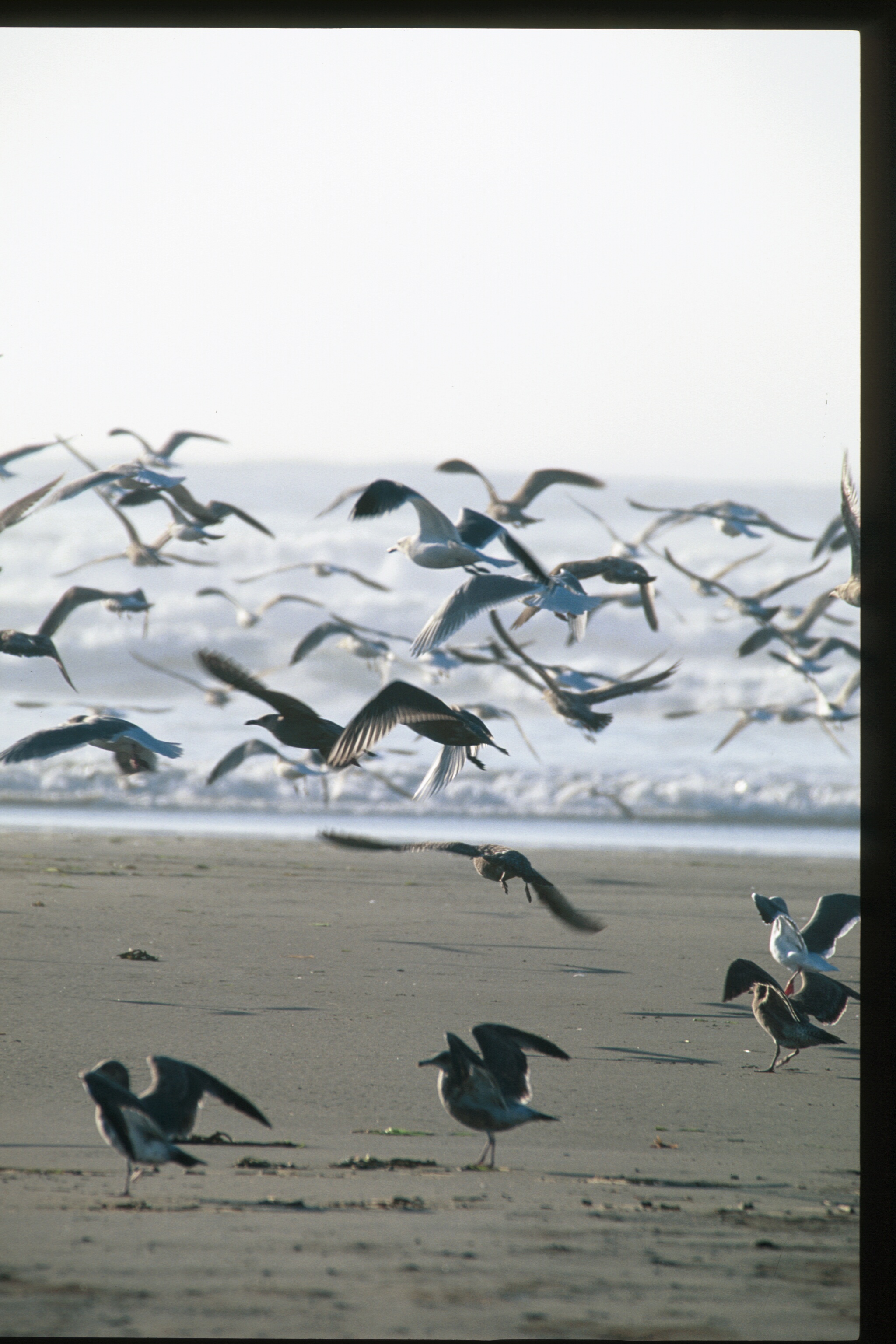
Sometimes it’s unintentional, such as when people are driving the sandy beaches here030 on the Pacific coast. Vehicles on the soft, upland sand can disrupt or damage endangered snowy plover nests, and when people drive too fast right along the surf they’ve been known to run over migratory shorebirds feeding there. But on exceptionally windy days, while driving the beach in search of pelagic birds, like murres or grebes, washed up after brutal storms and now in need of rehabilitation, I’ve noticed that the shorebirds take refuge in deep tire tracks, hunkering down in the only cover they can find (especially if beachcombers have trucked off all the driftwood logs).

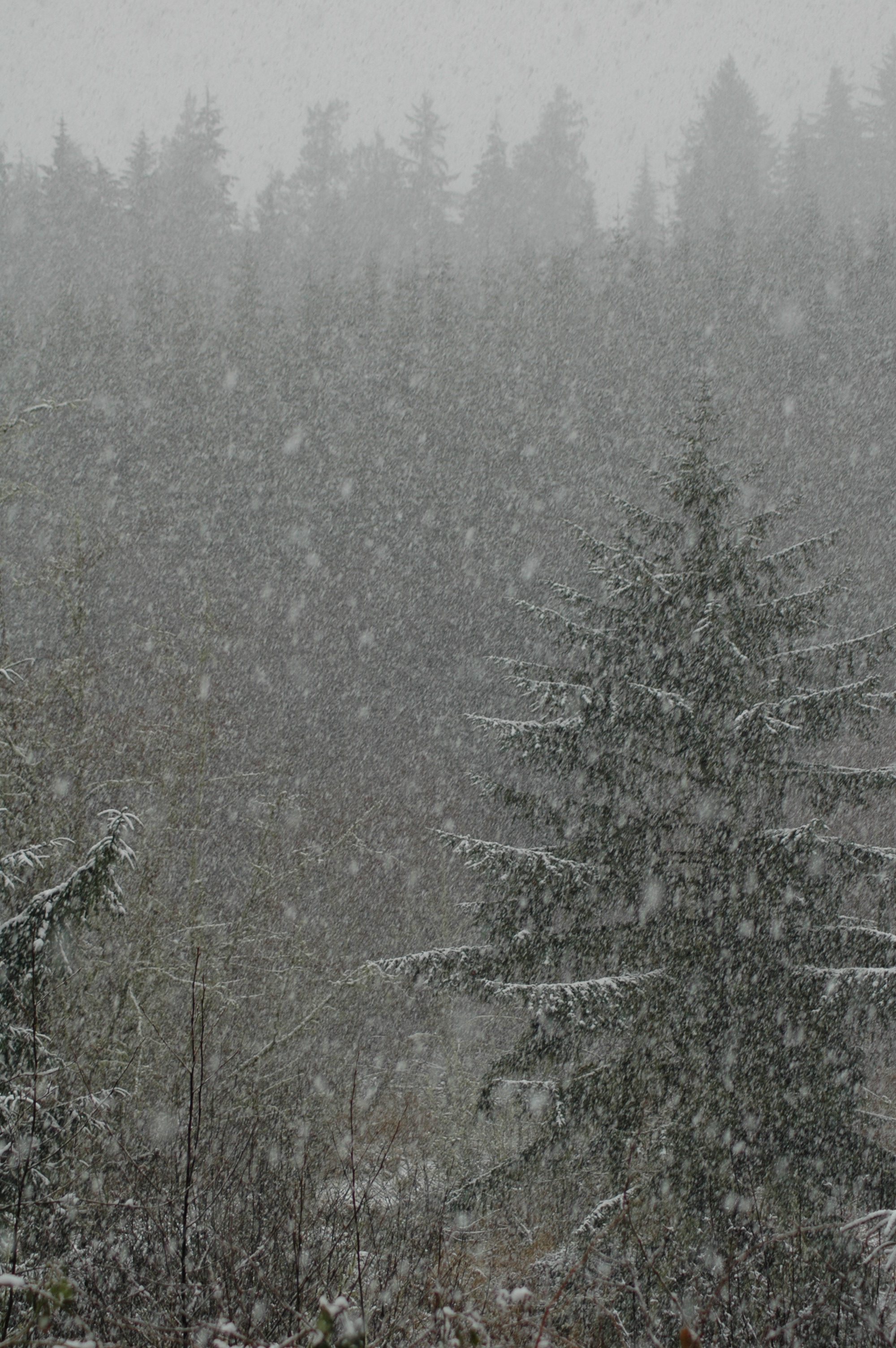
While leaving deep tire tracks in the sand can’t really be considered a direct, intentional act of kindness for an animal, keeping fresh, thawed sugar-water out for the straggler humming bird we’ve had here all winter surely can. The poor bird must have stuck around this normally mild, coastal region, rather than migrating further south, because of the late-blooming honeysuckle and early blossoming salmonberry shrubs. But now an arctic air mass has encroached for a week, bringing with it temperatures in the teens and wind-chills in the single digits. Frozen ponds and snow coating on the Sitka spruces and western hemlock complete this late Christmas-card scene, but I can imagine, to a high strung hummingbird, it must feel like the ice age is back to stay.

Photo Thanks to Linda Delano

Photo Thanks to Linda Delano

My wife has been the one diligently keeping watch over the feeder, being sure to exchange it for a thawed one every other hour on these iciest of days. But at first light this morning, while the coffee was brewing, I went out in my bathrobe before filling the other birds’ feeders and replaced his liquid refreshment. As it was, the hummingbird didn’t show up at until after 8:00.a.m. It must have been hard to leave the thicket he was crouched in and face the frozen wasteland to find out whether or not the human handout had turned into a sugar-water popsicle. He was lucky this morning. Hardly a steaming cup of hot coffee, but it must have seemed like the nectar of the gods to someone with such a high metabolism—especially after a long night spent burning precious energy trying to stay warm.

Were I of a different mindset (i.e., not an animal lover) I might say, “That hummingbird is becoming a pest. It could be considered a safety hazard, or maybe even a road hazard. It could be an exotic or even an invasive species. It might be time to call for a cull, or even a contest hunt on him.” But, fortunately for him, I’m not like that.

DSC_0022


New Yorkers in Uproar Over Planned Mass-Killing of Swans

By Brandon Keim

http://www.wired.com/wiredscience/2014/02/mute-swan-controversy/all/

A mute swan in Prospect Park, Brooklyn. Image: Brandon Keim/Wired

In the menagerie of human mythology, mute swans occupy a special place. Across millennia they’ve symbolized transformation and devotion, light and beauty. Now a plan to eradicate the birds from New York has made them symbols of something else: a bitter and very modern environmental controversy.

The debate swirls around a host of prickly questions. Are mute swans rapacious destroyers of wetlands, or unfairly demonized because they’re not native to this area? Are some species in a given place more valuable than others, and why? Which deserves more protection, the animals that inhabit our landscapes, or the ones that might thrive in their absence? The answers depend on whom you ask.

“Mute swans always attract controversy, and tend to polarize people. And, as with most things, the truth probably lies somewhere in the middle,” said waterfowl researcher Chris Elphick of the University of Connecticut. “The real issue is that there are no simple answers.”

Mute swans are not native to North America. New York’s population descended from escapees imported for ornamental gardens in the late 1800s. Weighing up to 40 pounds apiece, they can eat 10 pounds of aquatic vegetation daily. In their absence, that food might be eaten by native wildlife. Mute swans are also aggressive during nesting season, and have been blamed for attacking ducks and pushing out other waterfowl.

Late in January, New York’s Department of Environmental Conservation issued a draft of a plan to reduce New York’s wild mute swan population to zero by 2025. Nests and eggs would be destroyed; a few adults might be sterilized or permitted to live on in captivity, but the rest would be killed.

“They are large, destructive feeding birds, and as much as they are beautiful, they can wreak havoc on the underwater habitat that a lot of other fish and wildlife depend on,” said Bryan Swift, a DEC waterfowl specialist and lead author of the plan. “We have an obligation to sustain native species. The question then is, ‘At what level?’ But in the case of introduced species, I don’t think we have that same obligation.”

That’s one way of looking at it. “We have so little opportunity to experience wildlife in New York City,” said David Karopkin, director of animal advocacy group GooseWatch NYC, “and now they’re targeting the most beautiful animals that we do have. The fact of the matter is, they’re part of our community.”

Were mute swans not so beautiful, the plan might not have caused much outcry. But unlike other animals tagged as invasive and pestilential — like Burmese pythons, feral hogs, and snakehead fish — mute swans are widely beloved. For people who live near wetlands around Long Island and the Hudson Valley, where most of New York’s mute swans live, they’re also a part of everyday life.

‘The real issue is that there are no simple answers.’

To their defenders, the fact that mute swans are non-native carries little weight. As one Queens resident told the New York Times, “If they were born here, they should be considered native by now.” And some think the swans’ heritage is being held arbitrarily against them.

“If Mute Swans were native to North America, they would not be viewed negatively by state wildlife agencies,” said ornithologist Don Heintzelman, an author of bird-watching field guides who is working with Friends of Animals, a New York-based animal advocacy group, to oppose the plan. Complaints that that mute swans harm other wildlife “are greatly overblown,” he said.

Over the last few years, some scientists have argued that non-native species are unfairly persecuted, their negative effects too frequently assumed rather than conclusively demonstrated. In fact, the evidence for ecological harm by mute swans is somewhat mixed.

In a review of mute swan impacts on wetlands published this month, French ecologists said the swans sometimes attacked other birds — but sometimes they did not. Likewise, their feeding habits sometimes damaged aquatic plant communities, but not always.

“The consequences of mute swan presence may strongly differ from an ecological context to another, so that no simple rule of thumb can be provided,” wrote the researchers. They did, however, say that the risk of mute swans reproducing prolifically and out-competing other species could justify their eradication from North America “as a safety measure.”

Swan defenders say the need for a safety measure is far from clear. In Maryland’s Chesapeake Bay, where a controversial mute swan eradication program was enacted in 2003 to help restore aquatic vegetation, the U.S. Fish and Wildlife Service previously said that swans had likely done little harm to seagrass beds.

“That’s a good example of how the science on this is incomplete,” said Brian Shapiro, New York state director of the Humane Society of the United States. Whatever effects New York’s 2,200 swans may have, he said, is a drop in the bucket compared to human-generated pollution and habitat destruction.

But scientists argue that the effects would be much more severe if mute swan populations grow as anticipated, and more difficult to control. “The dilemma wildlife managers face is that if they wait until there is no doubt that native species are being adversely affected, it will be much, much harder to do anything about it,” said Elphick. And although human impacts on habitat and native wildlife are undoubtedly greater, mute swans could consume a disproportionate amount of resources.

“Introduced species are a major cause of extinction and biodiversity loss, and the concern is that if they’re not controlled then we will see the world’s biota become much more homogenous,” Elphick said. “Mute swans are just one example of many.”

Mute swans’ lives are not the only ones that matter, said Michael Schummer, a waterfowl ecologist at the State University of New York at Oswego. People care so deeply about mute swans because they’re aware of them — but if they paid more attention to birds they impact, they might care about those as well.

Migratory tundra swans, said Schummer, which fly every year between the Arctic and southeastern United States, rely on those same wetlands. If they land after a 1,000-mile flight and can’t find a meal, it’s a disaster. “But maybe people don’t recognize that, or even realize that there’s a native swan that migrates,” Schummer said.

Swift noted that two dozen other duck species share the mute swans’ habitat, yet people are frequently unaware of them. And unlike migratory birds, mute swans stay in the same locale year-round, feeding through the growing season. “It’s like pulling up corn every time it sprouts,” Swift said. “It has a much more lasting and damaging effect.”

“I value the long-term stability of the ecosystem for the individuals that live within it,” said Schummer, who supports the DEC plan. “When that is threatened by one species, and the well-being of the collective is at risk, then something needs to be done.”

Given these competing and deeply-entrenched views, a compromise seems unlikely. Yet there may yet be a middle ground, says behavioral ecologist Marc Bekoff, a pioneer of an emerging discipline called “compassionate conservation,” which tries to balance species- and population-level considerations with the well-being of individual animals.

“The take of compassionate conservation is that individuals count. Our motto is, ‘Do no harm.’ In this case, it would be worth pursuing every single possible non-lethal alternative,” said Bekoff. Rather than killing mute swans outright, as is happening in Maryland, wildlife managers could try to prevent eggs from hatching by shaking them or spraying them with oil. Swans might also be sterilized.

These are just possibilities, said Bekoff. What matters is that people try to find alternatives to killing. In the end, non-lethal measures may prove to be the only control palatable to a public that’s come to adore swans, whatever their impacts.

Of course, non-lethal methods tend to be more expensive than killing. Volunteer assistance from the public may be required. Shapiro said the Humane Society would be open to helping. “We want there to be a focus on non-lethal management,” he said, noting that Humane Society volunteers have helped to non-lethally control Canada geese by scaring them with dogs or shaking their eggs. “We’d like to have a dialogue on this.”

Swift said he’s open to such a discussion, and would welcome the help. “There’s definitely room to work on this issue,” he said. Following public outcry, he’s also considered treating New York’s mute swan populations differently. Those around Lake Ontario, which are growing by about 13 percent every year, might be eliminated, while Long Island’s swans could be managed to balance their impacts with public sentiment.

“I can’t speak for the whole agency,” Swift said, “but I’m certainly going to entertain that idea and discuss it with other people involved in management.”

New York’s DEC is accepting public comment on the plan until February 21st. If things go their way, those non-native swans might just become fully naturalized ecological citizens.

Bill to Fund Killing up to 500 Wolves Survives Committee

http://magicvalley.com/news/local/govt-and-politics/bill-to-fund-killing-up-to-wolves-survives-committee/article_1dbf6eec-87dd-11e3-bbcb-0019bb2963f4.html

January 28, 2014
By Kimberlee Kruesi –

BOISE • Gov. C.L. “Butch” Otter’s proposed $2 million fund to kill as many as 500 wolves barely passed its preliminary vetting Monday by the House Resources and Conservation Committee.

Committee members quizzed sponsors state Sen. Bert Brackett, R-Rogerson, and Rep. Marc Gibbs, R-Grace, on the effectiveness of creating a separate fund — which would come with a five-member oversight board — when the state already funds a predator damage board.

Bracket and Gibbs responded that the proposed expense would keep the focus on wolves instead of splitting resources on the state’s Animal Damage Control Board.

Federal support to control wolves will stop in 2016, Brackett said. In Fiscal Year 2013, the federal government provided $650,000 of the state’s $1.4 million wolf management budget.

If the bill passes, the $2 million would be a one-time appropriation with the livestock industry and hunting license fees contributing $110,000 each year.

“The priority of this whole effort is to keep the wolves delisted,” Brackett said.

Idaho’s wolves were taken off the endangered species list in 2011. Today, the state’s wolf population is estimated to be around 680 animals, according to the Idaho Department of Fish and Game. If it falls below 150, the species will be once more classified as endangered by federal regulators.

The committee repeatedly questioned the need for two boards dedicated to killing predator animals that cause damage to livestock or Idaho’s elk population.

“How is this a more cost-effective approach to start a new board than to put a little more money into Idaho Fish and Game?” asked state Rep. Illan Rubel, D-Boise.

Gibbs countered that a separate board allows the state to be flexible.

The new wolf fund would not pay for livestock killed by wolves but to kill wolves that cause damage, Gibbs said.

“There are no new ways to control wolves being projected or being created by this bill,” Gibbs said. “They are simply subject to the tools we have today, which is sport hunting, trapping and aerial gunning.”

The committee voted 9-8 to move the legislation forward, with the chairman initially declaring the bill failed before Gibbs speaking out he hadn’t voted and provided the “yes” needed for the bill to be printed.

This is the second consecutive year lawmakers have tried to secure funding dedicated wolf control. Last year, Otter vetoed a bill that would have diverted money from Fish and Game to a wolf management fund. The bill was sponsored by Rep. Judy Boyle, R-Midvale, who voted against Brackett’s and Gibbs’ proposal.

Boyle said committee recommendations from the summer of 2013 supported added money to the Animal Damage Control Board for wolf damage.

“I feel like this is a breach of contract of what was promised in that committee,” she said.

Brackett said that while a committee may have submitted recommendations, their bill was based on what the governor wanted.

Idaho’s wolf control management strategies have received criticisms recently after Fish and Game hired a trapper for the first time to kill two packs in the Middle Fork of the Salmon River.

Wolf activists also spoke out against Idaho’s elk management plan during a recent public hearing updating the document.

copyrighted wolf in river

Idaho hunter hired to kill wolves “gets the job done”!

[This answers the question, “How many are left?”]

http://www.oregonlive.com/pacific-northwest-news/index.ssf/2014/01/idaho_hunter_hired_to_kill_wol.html

by Associated Press, January 29th 2014

KETCHUM, Idaho — A professional hunter has been called out of a federal wilderness in central Idaho because he succeeded in killing all the wolves in two packs, a state agency spokesman said.

Idaho Department of Fish and Game spokesman Mike Keckler tells the Idaho Mountain Express in a story on Wednesday that the hunter killed eight wolves with traps and a ninth by hunting.

Gus Thoreson of Salmon started hunting and trapping in the Frank Church River of No Return Wilderness in mid-December as part of a state plan to eliminate wolves to boost elk numbers. The state agency had planned to keep Thoreson hunting through the winter.

“He had been pretty effective early on, but it had been two weeks since he had taken any wolves, so we decided there was no reason to keep him in the area any longer,” Keckler said.copyrighted wolf in river

Keckler said the average size of a wolf pack in Idaho is five wolves, so the agency determined it had reached its goal of eliminating the Golden Creek and Monumental Creek packs. Officials announced Monday that Thoreson was coming out.

Fish and Game Director Virgil Moore’s acknowledgement that Thoreson’s hunt relied on the use of the U.S. Forest Service’s backcountry airstrips and cabin had prompted strong emotions, including from wolf advocates who sued in federal court to force him to quit.

Defenders of Wildlife, Western Watersheds Project and Wilderness Watch filed the lawsuit Jan. 6 asking the judge to stop the plan immediately to give the case time to work through the courts. The environmental groups were joined by Ralph Maughan, a former Idaho State University professor, conservationist and long-time wolf recovery advocate from Pocatello.

They lost their initial bid on Jan. 17 when a federal judge rejected their request for a temporary restraining order. The conservation groups argued that Thoreson’s activities violated the 1964 Wilderness Act and other federal acts.

The groups had appealed that decision to the 9th U.S. Circuit Court of Appeals when the state agency announced the hunter was being pulled out.

“I am happy that the Idaho Department of Fish and Game has relented, but it is unfortunate that so many wolves have been taken in this senseless plan to manhandle wildlife in an area that Congress recognized as a wilderness,” said Ken Cole, National Environmental Policy Act coordinator at the Boise office of Western Watersheds Project.

Wolves were reintroduced to Idaho in the mid-1990s and have since flourished in backcountry regions, including the Frank Church wilderness.

Last year, state game managers estimated Idaho’s wolf population at 683, an 11 percent drop from 2012. The highest total was in 2009, when it estimated 859 wolves were in the state.
___

Information from: Idaho Mountain Express, http://www.mtexpress.com

Last chance to stop bowhunting in Cayuga Heights

PUBLIC HEARING –  Weds, Jan. 29th, at 7 PM

Marcham Hall, 836 Hanshaw Rd, Ithaca, NY

Across from Community Corners, same building as the police station

Dear friends,

In December, we wrote to you about a new proposed law that will allow bowhunters and their deadly weapons into Cayuga Heights. Since then, the Cayuga Heights board of trustees has held two public hearings and made small adjustments to the law, which you can see in its latest form here: http://www.cayuga-heights.ny.us/doc/PLL-A-2014.pdf . Before they pass this new draft of the law, they are required to hold another public hearing, happening this Wednesday, Jan. 29 at 7 PM at the Village Hall (address above). Please attend. Even better, speak out. Better still, encourage others to join you.

This new law will allow deadly crossbows and compound bows to be discharged in residential neighborhoods — outside of hunting season, at all times throughout the year, including Summer, and even at night. In other words, there will be no time of year that it is safe for the people and animals in and around Cayuga Heights.

 Every hunting season, stories come out about dogs, cats and other “non-target” animals being wounded and killed by hunters. In a recent TV news story from Wisconsin, a woman tearfully described how she found her poor dog under a hunter’s tree stand, dead from a mortal wound from an arrow. The dog was left there for 3 days, to painfully die in a pool of her own blood. Please watch and share this news story, as it demonstrates the kind of tragedy that can easily unfold when hunters are introduced into a densely settled community like ours: http://tinyurl.com/kw3ryo9

Bow hunting is notoriously cruel. Numerous studies show that more than half the deer who are shot with arrows are never retrieved, running off to painfully bleed to death or live with a debilitating open wound. Their prolonged agony and deaths are no less horrific than the one the Wisconsin woman’s dog experienced. Desensitization to the killing of deer leads to other forms of desensitization and violence. Let’s teach our community’s children to respect wildlife and other animals, not condone their killing.

And what about the children? At the Jan. 13 meeting of the Village government, Cayuga Heights trustee Stephen Hamilton identified the most likely area where bowhunting will occur, based on available open space: A piece of land between Cornell and Cayuga Heights. A citizen in the audience commented that there is a daycare center in that area. This appeared to be of little concern to Mayor Kate Supron (former co-president of the Cayuga Heights PTA) or her fellow trustees. However, during the discussion, trustees Liz Karns and Diana Riesman expressed their preference for having deadly weapons discharged by professional contractors overseen by the Village government. It is yet to be seen whether they will vote in favor or against the law.

Mayor Kate Supron is obsessed with killing. How else can you explain this latest move when nearly 100% of the does in Cayuga Heights are now sterilized? Numerous residents are commenting on how they have noticed fewer fawns this year, and less deer browsing. After paying $150,000 of taxpayers’  money to sterilize an estimated 95% of the does in 2012, the Village spent nearly $3,000 per deer to sterilize the remaining 12 at the end of 2013. So how does the mayor justify killing these same deer? The answer is, she has no justification other than her opinion that there are still “too many deer.” She contends there should be only a fraction of the deer that the village currently has, yet she refuses to allow the sterilization program play out long enough to achieve the desired result. She also refuses to address questions from her constituents about how she plans to prevent fertile does in surrounding areas from moving in to take the place of sterile does who have been killed by the bowhunters she now wants to allow in. Sadly, as we have seen over and over again, logic, reason, science and ethics have no role in the Mayor’s agenda.

This new law poses a threat to ALL of us, not just those who live in the village. Most of us drive on Cayuga Heights roads, many of us take walks, jog or ride bikes there. Hundreds of people live in proximity to the village border. The safety of their families and companion animals are threatened by the discharge of deadly weapons that could just as easily maim or kill a human as a deer. These neighboring residents are just as likely to have bowhunters trespassing on their land, and injured/dying deer show up in their yards, as Cayuga Heights residents.

The opposition is growing. Earlier this month, an open letter protesting the law, signed by 44 residents, was sent out to people who live in and around Cayuga Heights. Please join these engaged citizens and be a voice for safety, non-violence, and common sense!

Thank you for staying involved throughout this long struggle. We know it hasn’t always been easy, but there is no denying that our work together thus far has prevented the mass-slaughter of the Cayuga Heights deer, and all the violence and ugliness that an annual wildlife killing program would bring.

Your friends,

Jenny, James and Eric, on behalf of CayugaDeer.org

WHAT YOU CAN DO:

Attend Wednesday’s hearing and speak out! Please also encourage others to join you, especially those who are most affected by this new law, and may not realize the potential risks to their safety.

If you can’t attend, please take a moment now to send a quick email to the trustees expressing your opposition to this new law. It can just be one sentence, the important thing is that they hear from people who are against the new law before they vote on it on Wednesday night. Their addresses are: mayor@cayuga-heights.ny.usrrobinson@cayuga-heights.ny.uspsalton@cayuga-heights.ny.usccrooker@cayuga-heights.ny.usekarns@cayuga-heights.ny.usdriesman@cayuga-heights.ny.usshamilton@cayuga-heights.ny.usjsteinmetz@cayuga-heights.ny.us

CITIZENS FOR SAFE, ETHICAL AND RATIONAL APPROACHES TO REDUCING DEER-HUMAN CONFLICT

[Here’s an example of the unethical and irrational]:

E0AF0B4E-024A-431C-AE14-90CB22CA791B

The Guns of Mid-Winter

When I wrote my book, Exposing the Big Game, its subtitle, Living Targets of a Dying Sport, was appropriate. But like so many things in this rapidly changing world, by the time the book came out, that subtitle was becoming obsolete. Now, in the second decade of the 21st century, the sport of blasting birds, murdering deer, culling coyotes and plunking at prairie dogs—in a word, hunting—is seeing a seemingly inexplicable resurgence.

Lately we’re seeing longer hunting seasons on everything from elk to geese to wolves, with more new or expanded “specialty” hunts like archery, crossbow, spear (and probably soon, poison blow gun) in states across the country, than at any time in recent memory. Meanwhile, more Americans are taking up arms against the animals and wearing so much camo—the full-time fashion statement of the cruel and unusual—that it’s starting to look ordinary and even, yuppified.

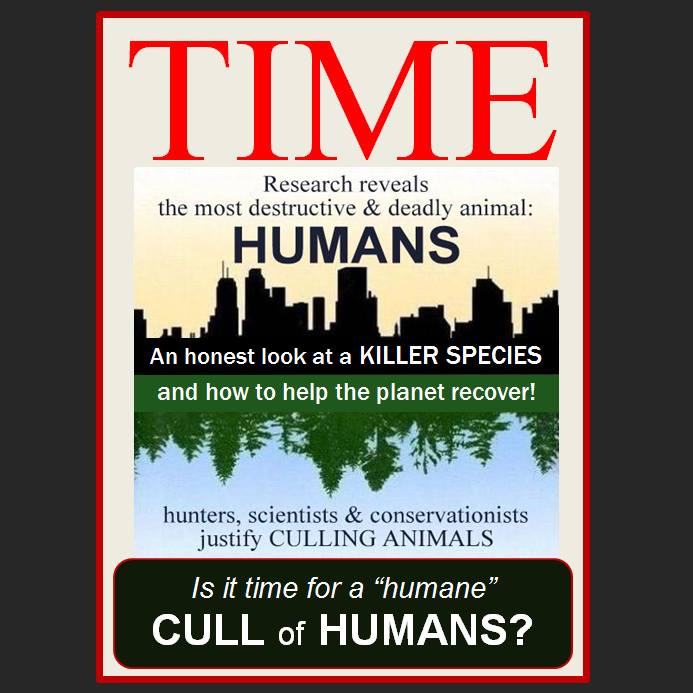
So, when did cruel become the new cool and evil the new everyday? Are the recruiting efforts of the Safari Club and the NRA finally striking a cord? Did the staged “reality” show “Survivor” lead to the absurdly popular thespian cable spin-offs like, “Call of the Wildman,” “Duck Dynasty” and a nasty host of others? Is “art” imitating life, or is life imitating “art?” Did the author of the Time Magazine article, “America’s Pest Problem: It’s Time to Cull the Herd,” ratchet up the call for even more animal extermination?

Whatever the reason, I don’t remember ever hearing so many shotguns and rifles blasting away during the last week of January. By the sound of the gunfire, coupled with the unseasonably dry and warm weather here in the Pacific Northwest, you’d swear it was early autumn.

Text and Wildlife Photography ©Jim Robertson, 2014. All Rights Reserved

Text and Wildlife Photography ©Jim Robertson, 2014. All Rights Reserved

Cormorant hunt in South Carolina Must Be Stopped

[This cormorant cull is just the kind of thing that the infamous Time Magazine piece on the resurgence of hunting was meant to prepare us for. As with so many articles from the mainstream media, this one saves the real story for the end (where they know many readers won’t see it).

Here, then, are the last lines first:  …The cormorant population went into serious decline with the use of the now-banned DDT. The increase of birds on the lakes means the population is re-establishing itself.

“We should be celebrating that, it seems to me,” he said. The removal “is a sad thing.”

http://www.postandcourier.com/article/20140125/PC16/140129561/cormorant-hunt-in-marion-moultrie-lakes-rouses-controversy

Cormorant hunt in Marion-Moultrie lakes rouses controversy
by Bo Petersen

Saturday, January 25, 2014

Cormorants aren’t a favorite bird for very many people. They are snaky necked, ravenous fish eaters that can kill a tree with their acidic feces if they roost there thickly enough.

Cormorant facts

The double-crested cormorant

One of 38 species worldwide, one of 6 in the U.S.

Found in waterways from Alaska to Florida.

Long-lived waterbird, nests in colonies that can be as large as a few thousand.

An estimated 2 million in North America. Population increased rapidly 1970s-1990, slowed in the 1990s.

States permitted to conduct cormorant depredation removals include Alabama, Arkansas, Florida, Georgia, Kentucky, Louisiana, Minnesota, Mississippi, North Carolina, Oklahoma, South Carolina, Tennessee, and Texas.

Sources: U.S. Fish and Wildlife Service, U.S. Department of Agriculture.

And this time of year they descend on the Marion-Moultrie lakes by the “thousands and thousands and thousands,” according to one fishing guide, ready to feast on the shad and herring runs that provide food for the lakes’ trophy game fish.

That’s why anglers and state legislators have been pushing for a cormorant removal hunt scheduled to start Feb. 2 on the lakes. Avian conservationists oppose it. As a migratory bird, the cormorant, craw and all, is a protected species, meaning federal regulations restrict harassment or taking of the birds.

“These are native birds. They have always been here. Someone now perceives that to be a problem,” said Norman Brunswig, Audubon South Carolina state director. The S.C. Department of Natural Resources has no credible scientific evidence that the onslaught of winter migrating birds does any substantive damage to the fishery, he said. “To kill a bird without a really, really good reason to do it is kind of barbaric.”

‘Look at the flocks’

DNR is holding the removal “event” after years of angling groups seeking it, and after a proviso was tacked onto the 2013-2014 budget directing the agency “through the use of existing funds” to manage public participation in “cormorant control activities.”

Truman Lyon, the South Carolina Guides Association representative for Berkeley County, makes no bones about it.

“We definitely need to have this hunt,” he said. “Look at the roosts. Look at the banks. Look at the flocks and flocks of (cormorants) on the lakes. There are many, many more than there ever were. There’s nothing to kill them,” he said.

Studies have shown that the birds eat a tremendous amount of fish. But that’s alongside other birds and, of course, the fish themselves.

How much the feasting might be depleting the game fish isn’t clear. The lakes – relatively shallow, stagnant and heavily fished – have long been a problematic fishery to manage. Previous declines in game fish species have been blamed on factors such as overfishing, aquatic cover removal and drought, as well as competition for food. The recent cold snap killed bait fish.

Striped bass, or stripers, were the trophy fish that turned the lakes into what has been touted as a $300 million-per-year tourism destination. In the early 2000s the striper numbers went into a precipitous decline, but aggressive stocking and tighter catch restrictions, among other measures, brought them back.

“There’s loads of stripers,” Lyon said, but crappie and bream numbers are not where they should be, he said, and catfish have depleted to the point where DNR is now imposing a limit of 20 fish per day per person in the boat.

Cormorants increasing

How many cormorants there actually are around the lakes isn’t clear, although observers generally agree there are a lot, and they are increasing.

The removal hunt was given a depredation permit “to protect public resources” by the U.S. Fish and Wildlife Service, the federal agency in charge of managing protected species. The permit doesn’t require population numbers to be reported, just the harvest, said Tom McKenzie, Southeast region media relations chief.

Santee Cooper, the quasi-state utility that manages the lakes, officially is staying hands-off.

DNR manages the fish and game for Lake Marion and Lake Moultrie, said Santee Cooper spokeswoman Nicole Aiello; it is the agency’s role to make decisions such as this one.

DNR staff have concerns about the “event.” Staff will fly over the lakes before and afterward to do counts of cormorants, along with other protected bird species such as bald eagles, anhingas and wood storks. That data will be reviewed to decide – among other things – whether to hold the hunt again.

800 hunters qualified

“We’re not concerned about the future of the migrating cormorant population, because it has grown so much,” said Derrell Shipes, DNR Wildlife Statewide Projects, Research and Survey chief. The birds are now so numerous they routinely are caught in the lakes’ fish passage, he said.

More than 800 people have qualified to hunt the birds, making the “public removal” so labor-intensive that the agency doesn’t have the staff to enforce bag limits. The hunters each have taken part in a training session that includes warnings not to mistakenly shoot other similar-looking, protected species such as anhingas and wood ducks or face arrest.

The scheduled two-month “event” can be stopped at any time by DNR, Shipes said.

“All of us should pay attention to what we’re doing,” he said. “When we have the harvest information, we’ll step back, look at the problems and issues and go from there.”

Brunswig isn’t buying it. DNR wouldn’t hold this hunt if it wasn’t being pressured to, he said. The cormorant population went into serious decline with the use of the now-banned DDT. The increase of birds on the lakes means the population is re-establishing itself.

“We should be celebrating that, it seems to me,” he said. The removal “is a sad thing.”

1459861_559462450790007_563882710_n

Park Service Not Budging on Rock Creek Park Deer Culling Debate

By: Jonathan Wilson
January 15, 2014

For the second year in a row, the National Park Service is using the practice of bringing in sharpshooters to kill deer in Rock Creek Park in an effort to thin the local herd and allow park vegetation a chance to regrow.

The lethal method of controlling the deer population continues to draw strong criticism from some local residents and from groups such as the Humane Society, but the Park Service isn’t budging.

Stephanie Boyles-Griffin, the Humane Society’s senior director of Wildlife Response, says everyone can agree that not managing the deer in Rock Creek park would be a disaster for the deer and local citizens who enjoy the park. But, she says, there are better ways to do it than what the Park Service has proposed.

“We put men on the moon — we can manage animals like deer living in Rock Creek without having to kill them,” she says.

Boyles-Griffin says that long before the Park Service got final approval for its management plan, it solicited public opinion and got more than that from her group. The Humane Society advocated for immunocontraception as a way to thin the herd — and even offered to pay more than half the cost — an offer that still stands.

“It just seems a little outrageous that they wouldn’t take a route that might take a little longer, but would let everyone achieve their management goals, but would make everyone happy and more importantly would be something NPS could be proud of instead of something they have to be ashamed of,” she says.

Jenny Anzelmo-Sarles of the National Park Service says her agency has a responsibility to manage the entire park. And she says getting deer down from more than 70 per square mile to 15 to 20 per square mile needs to happen fast.

“We’re in a crisis right now — and we need to quickly and effectively bring the population down to allow forest regenerate and to allow other plant life to flourish in Rock Creek Park,” she argues.

Anzelmo-Sarles says NPS has rejected immunocontraception thus far because no method that can be remotely injected has been proven effective over a multi-year period without leaving chemical residue or changing behavior in deer.

BE SURE TO POST COMMENTS

http://wamu.org/news/14/01/15/park_service_not_budging_on_rock_creek_park_deer_culling_debate

Photo by Jim Robertson

Photo by Jim Robertson

Seven Wolves Killed In Idaho’s Frank Church Wilderness by Government Hired Trapper

If wolves can’t live in a such a large and inaccessible wilderness area, then where?

http://networkedblogs.com/SEGKp

By Ken Cole On January 8, 2014

Plaintiffs in the case against the wolf killing plan for the Frank Church-River of No Return Wilderness in Idaho have learned that at least 7 wolves have been killed by the Idaho Department of Fish and Game hired trapper as of January 2nd. It is possible that more have been killed but communication with the trapper is conducted only when the trapper calls out using a satellite phone which is kept turned off most of the time.

From the court filing:

Plaintiffs learned from counsel for defendant Virgil Moore that, as of January 2, 2014, IDFG’s hired hunter-trapper had killed seven wolves within the targeted wolf packs, six by trapping and one by hunting, and that more wolves may have been killed as of today. Defendant Moore’s counsel further advised that IDFG’s only means of communication with the hunter-trapper is a satellite telephone in the hunter-trapper’s possession, and that, to preserve the phone’s batteries, the hunter-trapper turns on the phone only when he places a call.

In response, the plaintiffs have filed a second motion for a Temporary Restraining Order (TRO) with an expedited briefing schedule.

acrobat pdfRead Second Motion for TRO

Plaintiffs, represented by Tim Preso of Earthjustice, include Ralph Maughan and three conservation groups—Defenders of Wildlife, Western Watersheds Project, Wilderness Watch, and Center for Biological Diversity. The case, which was filed yesterday, challenges US Forest Service’s approval of the Idaho Department of Fish and Game’s plan to exterminate two wolf packs in the Frank Church-River of No Return Wilderness on the grounds that it violates several laws, management plans, and policies which are meant to protect wilderness characteristics, wildlife, and natural processes within wilderness.

528624c939a88_preview-620