Wildlife Service Eyes Migratory Canada geese Next

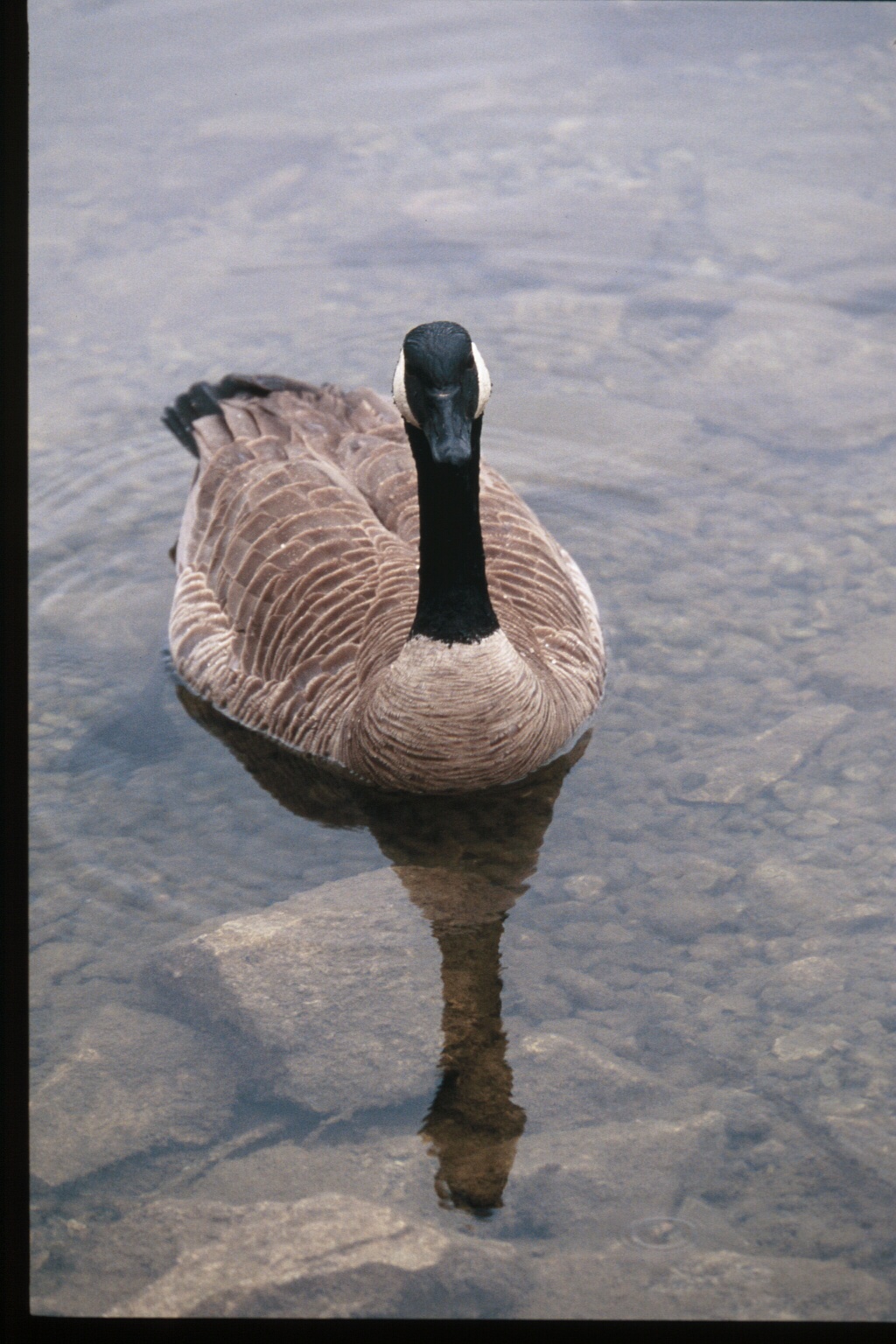
Wildlife Photography ©Jim Robertson

Wildlife Photography ©Jim Robertson

http://www.theglobeandmail.com/news/british-columbia/avian-flu-detected-at-two-more-farms-in-bc-as-outbreak-continues-to-spread/article22035682/

Avian flu detected at two more farms in B.C. as outbreak continues to spread

Birds at two more farms in southwestern British Columbia have tested positive for avian influenza, the Canadian Food Inspection Agency said Wednesday — underscoring the difficulty facing officials attempting to contain the virus.The outbreak began last week, when turkeys and chickens at two farms in the Fraser Valley tested positive for the H5N2 strain of the disease.

The virus has now been detected at eight locations on seven farms, leaving 155,000 birds either dead or set to be euthanized. The outbreak has prompted surveillance and control measures affecting half of the province, as well as a growing list of trade restrictions on B.C. or Canadian poultry.

Dr. Harpreet Kochhar, Canada’s chief veterinary officer, said the new infections did not come as a surprise and he suggested more could turn up in the coming days. Indeed, another farm was also being investigated as suspicious, he said.

“The identification of additional farms is not unexpected, given that avian influenza is highly contagious,” Kochhar said during a conference call with reporters.

“Our efforts are directed to controlling the avian influenza virus from spreading. In spite of those measures, there is a possibility that this could show up at other farms. This is something that is attributed to the highly virulent, highly pathogenic nature of the avian influenza virus.”

The affected farms are clustered within several kilometres of each other in Abbotsford and Chilliwack.

In each case, the farms were immediately placed under quarantine and plans were made to destroy any birds that had not already been killed by the virus.

Earlier this week, the Canadian Food Inspection Agency announced a control zone covering the southern half of B.C., where restrictions have been placed on the movement of poultry. Those restrictions are more strict in the area immediately around the affected farms.

It’s not yet clear what caused the outbreak, though two farms where the virus was detected had received chickens from a previously infected facility.

Officials are looking into the possibility that migrating wild birds introduced the virus into the region, though Kochhar said there’s nothing conclusive yet. He said there was no evidence the virus had been circulating among migrating birds and a wild bird monitoring program hadn’t found any unusual increases in animal deaths.

Avian influenza poses little danger to people as long as poultry meat is handled and cooked properly.

It can, however, put the poultry industry at risk.

Previous outbreaks in B.C. and elsewhere in Canada similarly led to the destruction of tens of thousands of birds. The most serious, a 2004 outbreak in the Fraser Valley, prompted federal officials to order the slaughter of about 17 million birds.

Since last week, eight countries have placed restrictions on poultry and poultry products. Singapore was added to that list on Wednesday, joining the United States, Mexico, South Africa, Japan, Taiwan, Hong Kong and South Korea.

Some of those restrictions, such as those put in place by Japan, apply to poultry from all of Canada.

Kochhar said he hoped to convince authorities in other countries to limit any trade restrictions to the region affected by the outbreak.

“We have sent our information to them in terms of our primary control zone, which is southern British Columbia, and have requested them to revisit their restrictions on poultry and poultry products from the rest of Canada,” he said.

Consumers are unlikely to notice the outbreak at the grocery store.

The marketing group the B.C. Turkey Farmers has said about 25,000 turkeys meant for the provincial Christmas market have been lost — a relatively small proportion of the 3.3 million kilograms of turkey typically produced for the holiday season.

Likewise, the number of chickens destroyed due to the outbreak pales in comparison with the 160 million kilograms of chicken produced in B.C. each year.

                                                  ………

Meanwhile, bird Fluis  rampant on B.C. chicken/turkey “farms” (read: concentration camp). Is there a scapegoat connection or is it just a coincidence?

http://www.dailyastorian.com/Local_News/20141212/geese-numbers-may-trigger-plan-revision

A new wildlife service report on the number of Canada geese wintering in the Lower Columbia River and Willamette Valley areas of Washington and Oregon shows the population surpasses the goal set for the migratory birds and may trigger a revision of management plans.

The U.S. Fish and Wildlife Service 2014 report estimates 281,300 cacklers spend the winter in the two states, where they cause considerable agricultural damage, especially to grain and grass seed fields. The 2013 estimate was 312,200. Year-to-year population fluctuations are common; the wildlife service has set a population goal of 250,000 geese.

Crop damage from geese has been a concern for decades. Farmers argue they are essentially feeding the birds and absorbing damage for the sake of maintaining the population for hunters or nature lovers elsewhere. But the latest report hopefully will open the door to discussions of a longer hunting season or more opportunities to haze geese out of fields, said Roger Beyer, executive director of the Oregon Seed Council.

However, the situation is complicated by migratory bird treaties and compacts involving Native American tribes, the U.S., Canada and the states of Oregon, Washington, Alaska and California, Beyer said. “It’s a long slow process,” he said.

The Oregon Farm Bureau’s wildlife committee will be discussing geese — and wolves and Greater sage-grouse — at the bureau’s annual convention next week in Salishan. Wildlife officials have been invited to discuss the population report.

A 1997 report by the Oregon Department of Agriculture estimated annual crop and livestock damage by wildlife at $147 million, with more than $100 million attributed to deer and elk. Damage from geese was estimated at $14.9 million.

Bill would allow hunters to sell meat

W/poll here:

http://www.app.com/story/news/local/new-jersey/2014/11/11/oh-deer-bill-allow-hunters-sell-meat/18887497/

Bob Jordan,  November 12, 2014

There is no shortage of tips for drivers on how to avoid a collision with a deer. Drive slowly. Drive defensively. Make sure your brakes are in good working order.

Here’s a new one: Pay a hunter to put Bambi on the dinner table before it gets hit on the road.

A New Jersey lawmaker wants the state’s ban on commercial deer hunting lifted. Hunters motivated more by profit than by sport would be relied on to reduce deer populations and could sell their keep to butchers, supermarkets and restaurants.

Thank you for voting!
Yes, whatever it takes to control the deer population  39.81%  (82 votes)  


Yes, we already allow the sale of other animals  20.87%  (43 votes)  


No, the ban was put in place for a reason  33.5%  (69 votes)  


No, it is cruel to kill any animal for profit  6%  (12 votes)  


Total Votes: 206

<a href=”http://polldaddy.com/poll/8442848/”>Should hunters be allowed to sell deer meat?</a>

The sale of wild game has been restricted in all 50 states for more than a century, which explains why the venison on the menu at your favorite restaurant is most likely imported from New Zealand (or else the product of a U.S. deer farm).

In New Jersey it is is illegal for hunters to sell deer meat, deer antlers or any part of a deer except deer hides, tails and the lower portion of the legs.

Deer have bounced back after being overhunted early in the state’s history to the point when only a handful of animals were left in New Jersey in the early 1900s, state wildlife officials say. Now with an overabundance, gaming officials have lengthened the hunting season, increased bag limits and provided other incentives for hunters to kill more deer, but there’s still a lot of deer.

Monmouth County Assemblywoman Caroline Casagrande said the time has come to take additional steps to reduce the number of deer because of the health and safety risks from deer-vehicle collisions and Lyme disease.

“I have a personal interest in this. I have a 3-year-old and a 6-year-old and I live in a town, Colts Neck, where deer are prevalent,” Casagrande said.

Municipal officials in Colts Neck recently enacted a controversial ordinance to allow bow hunting within 150 feet of buildings to cull a rising white-tail deer population.

The April death of a Neptune man, whose vehicle struck a deer, a guardrail and then a tree on the center median of the Garden State Parkway at mile post 112.5, is an example of the worst result of deer-human conflicts.

Casagrande says the animals are also inflicting damage on the ecosytem, browsing on shrubs and saplings and diminishing the number of young trees to fill the canopy of forests, a contention shared by environmentalists.

“Anybody who lives in Monmouth County and is driving around is able to see a deer population that has exploded,” Casagrande said. “I’m concerned about the high number of Lyme cases and I’m also very concerned about the car accidents, half of which occur between October and December.”

There are some alarming numbers:

The National Highway Safety Administration (NHSA) says there are 1.5 million deer-related car accidents across the U.S. annually, causing approximately 175-200 human fatalities every year and 10,000 injuries.

[Too many cars, perhaps?]

Stephen Schapiro, a spokesman for the state Department of Transportation, said the department has spent $230,000 per year to remove an average 6,350 deer carcasses from state highways each year over the last three years. In 2013, Monmouth County topped the counties with 853 deer carcasses removed and Ocean County had 215 removals. The data doesn’t include the deer removed by counties and municipalities on roadways under their respective jurisdiction.

Casagrande, a Republican, introduced Assembly bill A3039 in March but it still hasn’t been posted for a hearing in the Agriculture and Natural Resources Committee after eight months.

The committee chairman, Bob Andrzejczak, a Democrat from Cape May County, didn’t return a call to explain what the holdup is, but conservationists say pursuing commercial hunt legislation could become politically explosive, with pressure from animal rights groups as well as sportsmen who don’t want to compete with commercial hunters.

“The problem with deer is it’s a sacred cow. People wouldn’t be upset if we were talking about gray squirrel because they don’t have the same emotional investment as they have with white-tailed deer,” said David Drake, a University of Wisconsin wildlife ecologist.

Drake introduced a panel of scientists at the Wildlife Society’s annual meeting last year that discussed allowing the limited sale of deer meat as a way to reduce deer population and limit damage.

As is the case in New Jersey, no other states have since overhauled laws on commercial deer hunting, but Drake said, “We’re encouraged because we’re gaining traction and more and more people are talking about this.”

Jeff Tittel, state director of the Sierra Club, said policy makers “should be looking more at non-lethal deer population control methods.”

“There needs to be a holistic approach to managing our lands. If you landscape your area with bayberry and other things deer can’t eat, you have a better chance of deer not coming on your property. Controling food sources is the best way to manage population,” he said.

Tittel said the current commercial game hunting laws “are sort of silly in a state that has so many deer. It makes no sense that we have farms that grow the deer when we have parts of the state overpopulated with deer.”

1441225_10151990537383491_1309889797_n


Animal rights protestors send ‘deafening’ message to Japan to stop Taiji dolphin slaughter


Animal rights protesters demand end to the killing 

Published: Mon, November 10, 2014

Up to 1,000 furious protesters demanded an end to the dolphin ‘slaughter’

Up to a thousand furious demonstrators gathered outside the Japanese embassy in London to protest the “atrocious” killing of up to 20,000 dolphins, whales and porpoises in the country every year.

The majority of the creatures – including several thousand at the notorious Taiji Cove – are killed for meat but some are captured for zoos and aquariums.

Hunts are conducted between September and March. This year the Japanese government authorised 16,000 deaths.

The crowd, many with their hands covered in fake dolphin blood, chanted “Taiji: Set them free” and “Stop the dolphin slaughter” at the building, which was surrounded by police.

Lead activist Richard O’Barry who starred in the award winning documentary The Cove said: “It was the largest demonstration we’ve seen.

“We wanted to get the attention of the government in Tokyo and let them know that this is not acceptable. They are not their dolphins to kill.

“This is all about putting external pressure on Japan.”

http://www.express.co.uk/news/nature/533880/Animal-rights-protestors-London-tell-Japan-stop-Taiji-dolphin-slaughter

Killing Barred Owls to Save Spotted Owls? Problems From Hell

by Marc Bekoff, Ph.D. in Animal Emotions

A new essay in the magazine Conservation by science writer Warren Cornwall called “There Will Be Blood” is a must read for anyone interested in keeping up with current discussions and debates about the supposed need to kill animals of one species to save those of another species. The question at hand in this fine essay is, “Should barred owls be killed to save endangered spotted owls?” (See also “Birds and Us: Should Cormorants Be Killed to Save Salmon?“). Spotted owls are shy birds who favor ancient forests that are disappearing due to logging in the northwestern United States, and they are threatened by larger and more aggressive barred owls who have migrated west from their original homes on the east coast of the United States.

A conservation problem from hell

At the beginning of his piece Mr. Cornwall writes, “The pressure to reach for a gun to help save one animal from another is stronger than ever. And it has triggered a conservation problem from hell.” He’s right. Mr. Cornwall also notes that the history of conservation is “tinged with blood.” For example, noted conservationists John Audubon and Aldo Leopold were quite comfortable killing members of one species to save members of another species, and so too are many conservationists nowadays. Mr. Cornwall provides some summary statistics for animals who were killed for conservation. These include 1.1 million lake trout and 60 California sea lions. There also are plans in the works to kill 16,000 double-crested cormorants to protect salmon and to poison 4000 ravens to help the greater sage grouse.

The United States government also sanctions mass and wanton killing. Mr. Cornwall’s summaries of body counts of animals killed by Wildlife Services, aka Murder Inc., is truly sickening. Individuals working for Wildlife Services kill millions of animals every year, including two million European starlings and more than one million brown-headed cowbirds. It’s really heartening that their murderous ways are under investigation by members of congress and various organizations including Project Coyote and Predator Defense (see also).

Unacceptable alternatives and a planned killing experiment: Is there a suitable exit strategy?

Concerning the owls, there are varied opinions. Bob Sallinger, conservation director of the Audubon Society of Portland, Oregon, notes, “On the one hand, killing

more: http://www.psychologytoday.com/blog/animal-emotions/201411/killing-barred-owls-save-spotted-owls-problems-hell

FoA, Buffalo Field Campaign file rule-making petition to stop slaughter of buffalo in Yellowstone Park


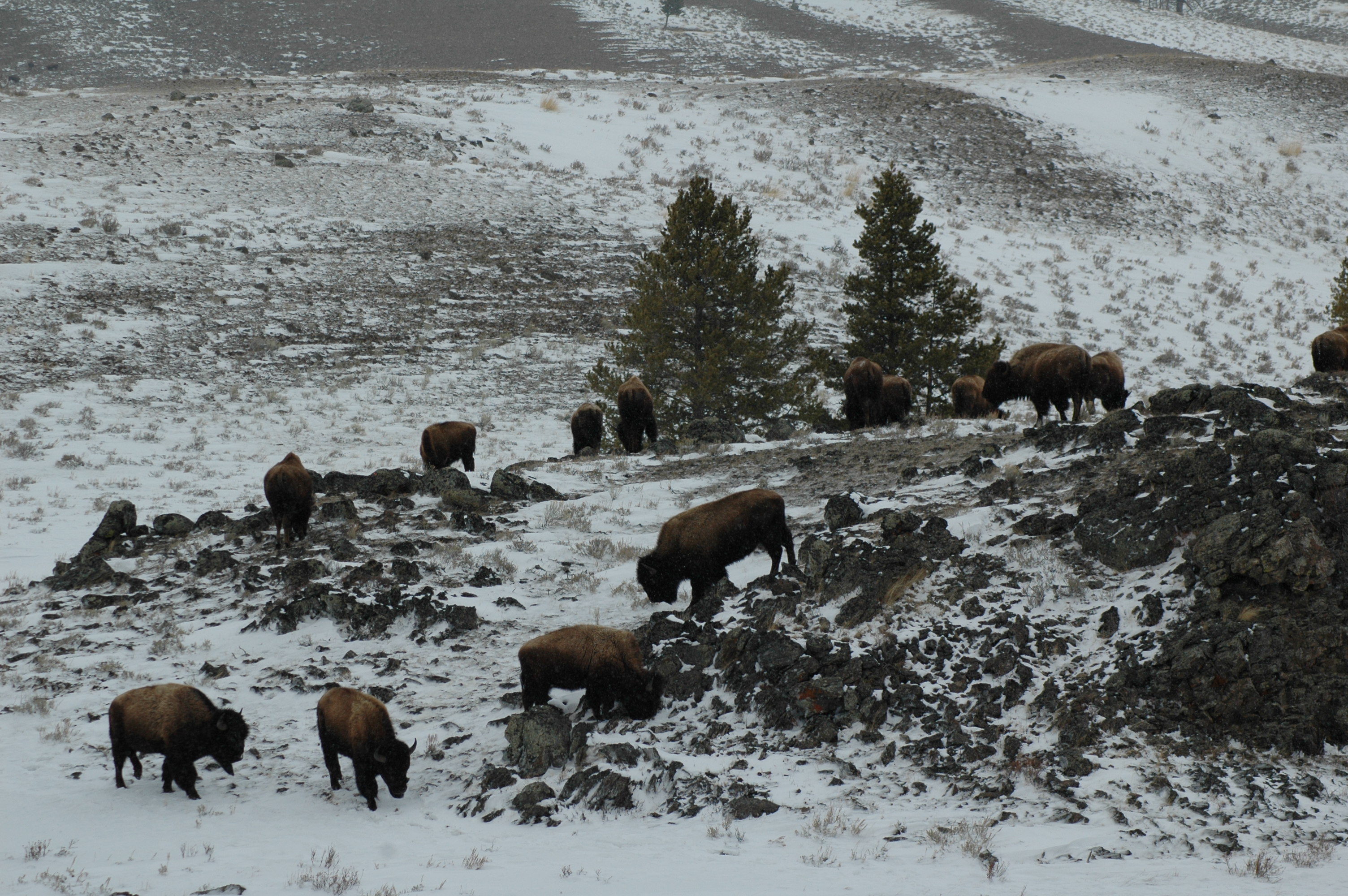
Photo Copyright Jim Robertson

Photo Copyright Jim Robertson

(West Yellowstone MT)— Did you know that Yellowstone National Park and other government agencies behind the Interagency Bison Management Plan (IBMP) are planning to slaughter 900 buffalo this coming winter under the guise of “disease risk management” even though there has never been a documented case of a wild bison transmitting brucellosis—a bacterial disease that affects livestock and wildlife—to cattle?


In an effort to avert the bloodshed, Friends of Animals (FoA) and the Buffalo Field Campaign filed an emergency rulemaking petition Sept. 15 with the National Park Service (NPS) and the U.S. Forest Service (USFS) to protect the genetic diversity and viability of the bison of Yellowstone National Park.  They are requesting that the NPS and USFS undertake a population study and revise the IBMP to correct scientific deficiencies, make the plan consistent with the best available science, and follow the legal mandates the U.S. Congress has set. Until then, the groups are also requesting that the capture, removal or killing of bison at the Stephens Creek area of Yellowstone National Park and the Horse Butte area of the Gallatin National Forest be prohibited.


“Yellowstone National Park and other federal agencies are required to follow the best available science and not the latest political whims of Montana,” said Daniel Brister, executive director of Buffalo Field Campaign.  “Our joint petition seeks redress to ensure the buffalo are protected for future generations. The IBMP currently is heavily weighted in favor of protecting the profits of the livestock industry at the expense and peril of our nation’s only continuously wild bison population.”


Every winter and spring, snow and ice cover the bison’s food and hunger pushes them to lower elevations across the park boundary in Montana. When they cross this arbitrary line, the buffalo enter a zone of violent conflict with ranchers.  Last winter 653 bison were slaughtered, and back in the winter of 2007/2008, the largest scale wild buffalo slaughter, claimed the lives of 1,631 animals. At the turn of the 20th century, similar reckless behavior nearly drove bison to extinction.


“Slaughtering wild bison is the livestock industry’s way of eliminating competition and maintaining control of grazing lands surrounding Yellowstone National Park and across the west,” Brister said. “Montana’s livestock industry continues to use brucellosis to frighten and mislead the public into supporting its discrimination against bison. There has never been a single case of wild bison transmitting brucellosis to livestock.”


The IBMP was designed to be an adaptive management plan allowing for greater tolerance for bison as new information becomes available and conditions on the ground change, but no such tolerance has been afforded to the bison. Despite new scientific research showing that the Yellowstone population is comprised of distinct herds with unique genetics and behaviors, the agencies continue to treat Yellowstone bison as though they comprise a single homogeneous herd, Brister said.


“We want to make sure that each herd has a viable population number so that we are not starting to degrade the species,” said Mike Harris, director of Friends of Animals’ Wildlife Law Program. “Right now they are managing the numbers based largely upon misinformation regarding the genetic viability of the herds. The data they are using is not the best available data right now. They are using data that doesn’t match up with what is the actual status of the herd populations in the park. The petition is asking the federal agencies responsible for protecting these animals make an effort to establish stronger scientific criteria to protect the viability of the remaining Yellowstone herds, and to stop slaughtering the last 4,000 genetically pure bison left in the United States.”

FoA’s Civil Disobedience Action for Wild Horses

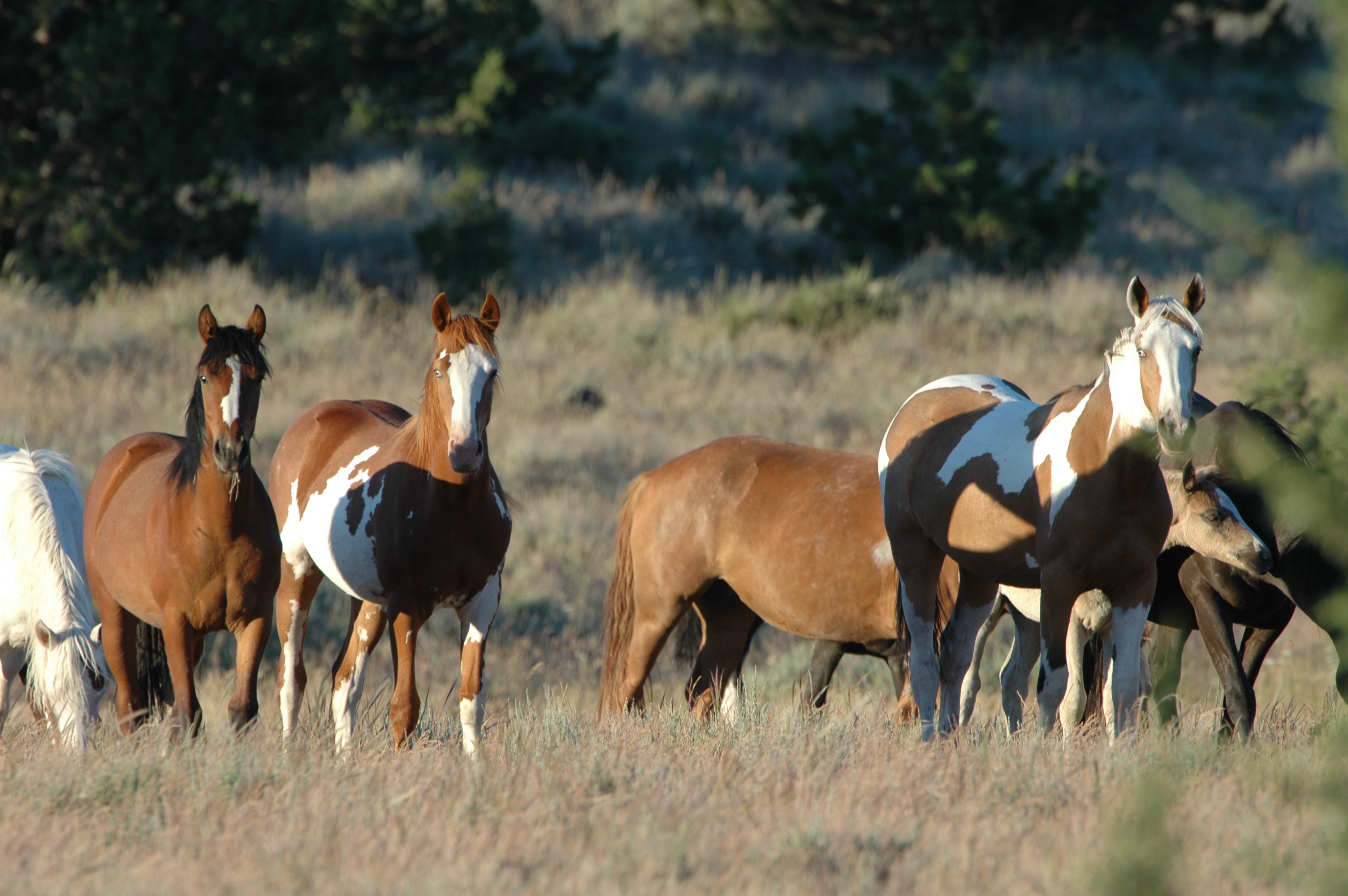
Wild Horse Photo Copyright Jim Robertson

Wild Horse Photo Copyright Jim Robertson

Monday, Sept 22, 10:30 a.m. Rock Springs, Wyoming-Press Advised to Call for Embargoed Details

In Wyoming 179 wild horses have been ripped from their families and rounded up this week-three have died as a result – due to the Bureau of Land Management’s criminal reign of terror, and hundreds more are set to be brutally removed off the land and imprisoned in barren holding facilities where many are then “adopted” and end up in slaughterhouses. Friends of Animals has had enough of the agency stealing horses from public lands and will organize a protest/civil disobedience action 10:30 a.m., Monday, Sept. 22, in Rock Springs at a location to be disclosed to media upon request.

Edita Birnkrant, Friends of Animals’ Campaign Director says, “We refuse to allow the BLM to operate without disruption while these sadistic roundups are occurring, so we’re showing up at a location we will disclose early Monday morning to loudly protest and do civil disobedience actions that will make it impossible for BLM staff to ignore. Our actions and resistance will represent the millions of Americans disgusted at the obscene actions the BLM is committing against wild horses, all to benefit cattle ranchers who want all wild horses dead. We will have a bullhorn, lots of surprises in store for the BLM employees committing crimes against wild horses. We’re taking our outrage to the scene of these crimes and to those directly responsible-the BLM.”

This week also marked the deadline for when U.S. Secretary of the Interior Sally Jewell and the U.S. Fish and Wildlife Service had to respond to Friends of Animals’ petition to list North American wild horses on public lands as threatened or endangered under the Endangered Species Act (ESA), the best hope for the survival of wild horses in Wyoming and other states since the Wild Free-Roaming Horse and Burro Act (WHBA), which was passed in 1971, has failed to protect our wild horses.

“In light of BLM’s intention to virtually wipe-out Wyoming’s remaining wild horse population, the time is now for the U.S. Fish and Wildlife Service to respond to our petition to place these animals on the list of endangered or threatened species,” said FoA’s Wildlife Law Program Director Michael Harris.

“With one agency-the BLM-already failing the horses, we ask USFWS to treat the situation in Wyoming as an emergency requiring immediate action. And given the strong evidence that wild horses are a distinct population of a reintroduced North American native species, they clearly deserve our protection.”

While such crimes have been going on for years, the roundups in Wyoming are particularly egregious as they will eliminate almost all wild horses from Wyoming. The BLM intends to round up 800 horses from the Checkerboard Herd Management Area in Wyoming after the U.S. Court of Appeals for the Tenth Circuit denied an emergency motion<http://www.thecloudfoundation.org/images/pdf/Wy9.10.14DecisionDenyingEmergencyMotionPendingAppeal.pdf> by wild horse advocates to stop the roundups.

“The BLM and cattle and sheep ranchers are responsible for the crimes currently being committed against wild horses,” said Birnkrant. “The BLM has renounced its duty to protect wild horses and burros in favor of acting solely in the interests of those whose hatred and intolerance of wild horses fuels the roundups-ranchers.

“The heartless roundups occurring right now in Wyoming are ripping families of wild horses apart, terrorizing them with helicopter chases, separating foals from their mothers and imprisoning them in squalid holding facilities where their fates are unknown and where horses can be sent to slaughterhouses,” Birnkrant said. “If FoA doesn’t get a timely response to our Endangered Species Act petition from Sally Jewell, we will immediately pursue our legal options in court. There is no more time left for America’s wild horses.”

For more details about the protest, call Edita Birnkrant at 917.940.2725 or email Edita@friendsofanimals.org<mailto:Edita@friendsofanimals.org>.

Action Alert: Contact Washington Governor to End the Slaugter of the Huckleberry Pack Wolves

copyrighted wolf in water


From another list:

Having killed one Huckleberry pup, WDFW continues aerial gunning: http://wdfw.wa.gov/news/aug2514a/

Below is an example of a letter to WA Governor Inslee. You can contact him at governor@gov.wa.gov and/or 360-902-4111. The points elucidated in the letter make it clear that WDFW is repeating the dishonest and secretive behavior that led to the slaughter of 7 Wedge Pack wolves in 2012.

The bulleted points in the letter were provide by Amaroq Weiss at the Center for Biological Diversity.

Let’s see if we can make enough noise to stop this killing…

Thanks, W

Dear Governor Inslee –

Please intervene and prevent further slaughter of Huckleberry pack wolves. The WDFW has been dishonest and misleading in its handling of this issue and it is by no means apparent, due to WDFW’s secretive behavior, that nonlethal deterrents and techniques were properly employed or even if they were used in good conscience and with serious intent. Below are points which make it very clear that lethal removal at this juncture is unjustified and unwarranted.

  • This wolf pack has denned 3-4 miles from this location – on reservation land, but still that close – for the last 3 years and WDFW knew it.


  • The terrain the sheep were being grazed in should not have been used for sheep grazing; it’s rugged terrain, there are 1800 sheep spread out all over the place; the sheep owner had his shepherd quit a month ago so the sheep had only 4 guard dogs out there with them and no human presence and even then, 1 shepherd for 1800 sheep is not enough; there should be more shepherds out there.


  • The Dept said a week ago the sheep were being moved right then to a new location; but the sheep still haven’t been moved.


  • The Dept said a  range rider would be on site on Aug 15 – he did not get out there until late the night of Aug 20 and so was not out monitoring until Aug 21, 6 days later.


  • The dept said they had staff on site – but staff went home 1-2 nights in the midst of all this.


  • The dept did not accept an offer from a conservation group early on of special lights that help deter predators.


  • The dept did not accept an offer from WA State Univ researchers early on to come help with nonlethal measures and help sheep carcasses out that would be drawing in wolves.


  • The Dept showcased only their limited nonlethal efforts on the tv news, not giving any hint to the public they would carry out a secret kill operation on a weekend morning while the public slept unaware.


  • They have betrayed the public trust in their lack of transparency and misleading assertions of having used all nonlethal possible before resorting to lethal control.


  • The sheep rancher himself had signed up this spring to participate in WSU’s nonlethal research project which would have given him assistance on the front end but then he pulled out.


  • The sheep rancher cannot expect the public to think he can reasonably monitor 1800 sheep with no shepherds present; in fact when he first discovered sheep losses the bodies were too decomposed to determine how they died, which demonstrates it had been awhile since anyone checked on them.


These sheep need to be moved. Now.

Respectfully,

Aerial Hunter Killing Washington Wolves

1920332_613143138754489_331154733_n

Hunter Hired by Washington State Kills 1 Wolf

One wolf has been killed by a hunter hired by Washington, a state where the animals have been regaining a foothold in recent years after being hunted to extinction in the early 1900s.

The state Department of Fish and Wildlife said hunters were back out Monday, targeting three more wolves in the Huckleberry Pack to protect sheep in rural southern Stevens County.

Wolves from the Huckleberry Pack this month have killed 22 sheep and injured three more, despite preventive measures, the agency said.

Environmental groups oppose the hunt.

Wolves began moving back into the state in the early 2000s from Idaho and Canada, and they are protected under state and federal law. The state exterminated an entire pack of wolves to protect a herd of cattle in mountainous Stevens County in 2012.

The most recent hunt is designed to protect a herd of 1,800 sheep owned by Dave Dashiell of the town of Hunters, located about 50 miles northwest of Spokane.

“Unfortunately, lethal action is clearly warranted in this case,” said Nate Pamplin, the agency’s wildlife program director, on Monday. “Before we considered reducing the size of the pack, our staff and Mr. Dashiell used a wide range of preventive measures to keep the wolves from preying on the pack.”

Non-lethal activities are continuing, he said.

Amaroq Weiss of the Center for Biological Diversity said the hunt proves the state prefers to kill the wolves.

“The department has never been interested in making sure sufficient non-lethal conflict measures are in place,” Weiss said. “They have wanted to gun for these wolves from the start.”

The state could have used rubber bullets or paintball rounds to harass the wolves, but instead resorted immediately to airborne snipers, she said.

On Saturday, crews found five dead and three injured sheep that were attacked Friday night or early Saturday morning, the agency said. Investigators confirmed that wolves were responsible for all of the attacks.

On Saturday evening, a marksman contracted by the Department of Fish and Wildlife killed one member of the pack from a helicopter. The agency has authorized killing three more wolves from the pack, which contains about a dozen wolves.

Wolves were driven to extinction in Washington in the early 1900s by a government-sponsored eradication program on behalf of the livestock industry. Their population has grown to at least 52 wolves today.

Some ranchers and hunters vehemently oppose the return of the wolves, saying the animals prey on livestock and deer populations.

[Deer populations? Excuse me, but yes, wolves do prey on deer–always have–long before humans started claiming them all as a “game” species. Hunters claim to be keeping the deer from overpopulating and starving, but at the same time they get upset if a natural predator returns to its historic place and does part of the job for them.]

The current situation in Stevens County meets all of the agency’s conditions for lethal removal, Pamplin said. That includes repeated wolf kills; the failure of non-lethal methods to stop the predation; the attacks are likely to continue; and the livestock owner has not done anything to attract the wolves.

[It seems to me, 1,800 sheep in one place should be considered doing something to attract wolves (not to mention cougars and coyotes). The obvious non-lethal answer: phase out the sheep.]

more: http://abcnews.go.com/US/wireStory/hunter-hired-washington-state-kills-wolf-25118910

Response to massive cormorant kill

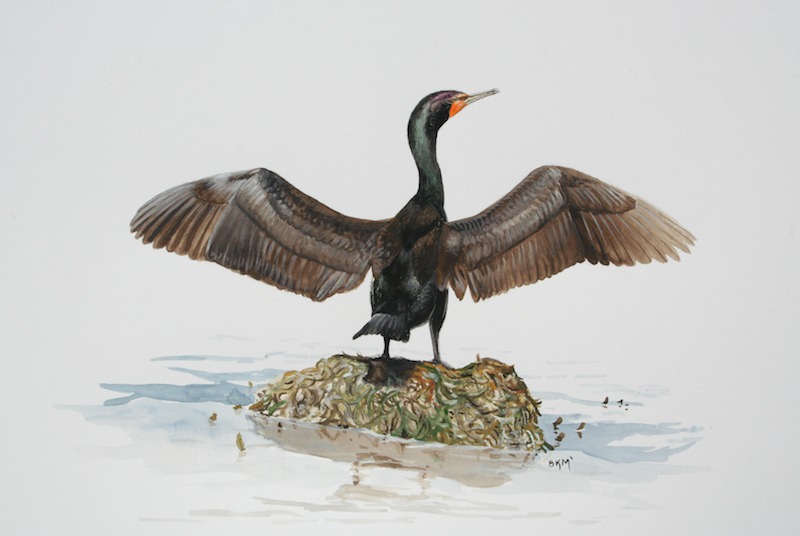
Painting Courtesy Barry Kent MacKay

Painting Courtesy Barry Kent MacKay


Comment period still open, until the 19th…send to e-mail address shown:

Sondra Ruckwardt U.S. Army Corps of Engineer, District, Portland Attn: CENWP-PM-E/Double-crested Cormorant draft EIS P.O. Box 2946 Portland, Oregon 97208-2946 USA. cormor…@usace.army.mil Response to Double-crested Cormorant Management P

Response to Double-crested Cormorant Management Plan to

 Reduce Predation of Juvenile Salmonids in the Columbia River Estuary


by Barry K. MacKay Aug 16

I am writing on behalf of Born Free USA in response to the “Double-crested Cormorant Management Plan to Reduce Predation of Juvenile Salmonids in the Columbia River Estuary”, hereafter referred to as “the Plan”.   We oppose the “Preferred Alternative”.

As the title suggests, the Plan is designed to enhance smolt survival by killing a large number of cormorants.   The Plan discusses a multiplicity of anthropogenic factors influencing smolt survival, but then has simply scapegoated cormorants – one species in a complex ecosystem.  The Plan assumes that if more smolt leave the Estuary, more adults will return to spawn thereby enhancing the salmon populations.  Our position is that this approach – based on the assumption that each predator removed results in an increase in the species equal to the number of individuals not consumed – reflects a long outdated approach to ecology and wildlife management in which no positive role is assigned to the predator.  But in fact, in a naturally-evolved predator-prey relationship, it is the number of prey that determine the number of predators.

Recent media coverage, reporting on the current presence of cormorants and other predators, suggests that the numbers of Sockeye and Chinook  Salmon taken in 2013 broke all previous records.  Yet, there appears to be no empirical evidence provided in the plan that demonstrates having the largest take of two Salmonid species is related to having a large cormorant population which the Plan alleges is having a deleterious effect?

While the Plan examines the various Salmonid populations in the Columbia River, showing  some populations increasing and some in decline, it fails to identify what Salmonid populations cormorants feed on and whether the consumption enhances, reduces or has no significant effect on the overall carrying capacity of the River for the different Salmonid populations.

I argue that such a simplistic approach to a complex system will have ecological consequences not considered in the Plan and with no guarantee that the Plan’s assumed outcome will indeed become a reality.

There are multiple human activities that affect Salmon, including fish farming, an increase in numbers of sea lice within the oceanic environment, acidification, dams and the results of various forms of land use.  The singular and accumulative effects of these impacts are not well understood.  Nor is there any real consideration of the need to modify such activities to mitigate negative impacts on Salmonids and other species.  Instead, simplistically, blame is attributed to the cormorants.  Given the enormity of the anthropogenic  changes to the river ecosystem, the simplistic notion that more salmon leaving the estuary means more salmon returning and the singular blame of one (or a few) predatory species reduces the credibility of the Plan and calls into question the management approach.

Wildlife managers tend, too often, to operate under the inherent assumption that when apex predators are reduced or removed from a region, prey species of concern will not be consumed and will survive and be part of and contribute to their respective populations.  This assumption is not based on empirical evidence or peer reviewed science but is presented as a “logical assumption”.

Dating back over a century, study after study has demonstrated that Double-crested Cormorants are rarely responsible for declines in fish species, exclusive of highly contrived situations, such as a diurnal hatchery release, or when the fish are confined by some construction.  In most cases the species of fish that are of concern typically are “game” or “commercial” species, or “forage” fish they consume (see, for example: http://www.aou.org/committees/docs/ConservationAddn) since they are of the greatest interest to commercial fishers and anglers.  Indeed, the Columbia River Estuary appears to be an example of an ecosystem that sustains a large cormorant population where at least two Salmonid species, the Sockeye and Chinook  Salmon populations are currently on the increase.

Yet cormorants are, for a variety of reasons, irresistibly attractive as scapegoats, and “traditional” reasons for blaming them are often complex, as discussed by Linda Wires in her book, The Double-crested Cormorant: Plight of a Feathered Pariah (Yale University Press, 2014) and by Richard King, in his book, The Devil’s Cormorant A Natural History (University of New Hampshire Press, 2013).

Wildlife managers single out the Double-crested Cormorant as the “villain” with no consideration of its role as an apex predator.  No weight is given to the possibility that Cormorants can enhance or maintain fish species by removing ill or genetically compromised fish, predators and competitors, or even contribute to ecological health by transferring nutriment from aquatic to terrestrial environments as is true of “sea” birds generally.  It seems likely that the species has had a role in making newly emerged islands more fertile, thus enhancing biodiversity.

The nineteenth century lethal approach to wildlife management, however politically expedient, did not then and does not now effectively resolve the concern for the decline in some species, in this case a decline in specific Salmonid at the smolt stage.  Such management approaches divert resources from efforts which, while perhaps more complex to explain, are more likely to actually work.

The decline in some Columbia River Salmonids has coincided with the decline in a variety of fish and other species of wildlife native to the region, including a variety of other seabird species.  The species involved are diverse.   But they do share a common food source, the herring (Clupea) and other small oceanic fish species such as Sand Lances (Ammodytes).

According to Iain McKechnie, a coastal archaeologist with the University of British Columbia, the archaeological record indicates that for the past 7,000 years herring population levels have been robust and steady, but now are in decline.  Herring are consumed by seabird populations including wintering loons, Western Grebes and other species that may nest in salt or fresh water, leading to the theory that, depending on the species, their decline is at least to a variable degree the result of documented and unprecedented declines in herring populations, and those of other small fish species that occurred in the region in much greater numbers than now

But the system is far more complicated than that.  For example, one of the Alcids that is increasingly rare, the Marbled Murrelet, is famous for being Old Growth forest dependent.   Thus a decline in Old Growth forests is generally cited as a causative factor in the decline in Marbled Murrelet.  This is not to suggest that the decline in Old Growth forest habitat is the only factor contributing to the decline in murrrelets, since it also apparently has a high dependence on viable herring stocks.

What is overlooked, I fear, is the effect not only of the loss of Old Growth forest on Salmonids but also the loss of all forests in the vast, Columbia River drainage, including the Snake River.  This river is 1,240 in lenth, fed by networks of other lakes, ponds, artesian wells, rivers and streams, which in turn are fed by variable amounts of precipitation and snow and glacial melt, themselves influenced by suites of other factors ranging from local to global in scope.

I mention these variables to emphasize the changing and dynamic nature of the environment and to demonstrate that no single factor can be attributed to the decline in Salmonids but that it involves s suite of interacting factors.

For example, when I visited the upper reaches of the Columbia River basin last year, I noted that the trees in the region have been influenced by heavy infestations of Mountain Pine Beetle which are considered “natural processes”.  Parks Canada writes, “Mountain pine beetle (Dendroctonus ponderosae Hopk., hereafter referred to as MPB) and fire are major natural disturbance agents for lodgepole pine ecosystems in western North America”.  This natural disturbance potentially impacts the ecosystems, including the Columbia River and may contribute to a suite of factors that impact the Salmonid populations.

Numerous other influences contribute to Salmonid survival during the sea-going stage, including a large variety of anthropogenic factors, many of relatively recent origin.  Among these one of outstanding concern is fish farming.  Areas of concern about salmon farming include the risk of escaped domestic fish interbreeding with wild Salmonids, the transference of disease associated with such contrived and intensive concentrations of fish, and the presence of artificially enhanced population sizes of sea lice (see http://www.farmedanddangerous.org/scientific-case/sea-lice-research/).

There is a relatively new potential threats as we can see from the fates of other species.  In nearby Puget Sound, north of the Columbia delta, the production of oyster larvae went from a peak of 7 billion in the 2006 – 07 season to less than a third as many by 2009, with similar catastrophic declines in shellfish up and down the coast.   These coincide with indications of stunted growth in Alaskan king and tanner crabs.  Evidence suggests the cause is likely increased acidification of the water.   A senior scientist of the National Oceanic and Atmospheric Administration’s Pacific Marine Environmental Laboratory and the University of Washington, Richard A. Feely, has predicted that in about 36 years some fifty to 70 percent of the water will be corrosive (see http://www.pmel.noaa.gov/pubs/PDF/feel2899/feel2899.pdf).

Such acidification will destroy the ability of small marine organisms with calcium-based shells or other calcium-dependent physiological components to survive, which, in turn, can deplete the foundation of food chains that end up with Salmonids, as well as whales, seals, cormorants and other species that may or may not be scapegoated.

The degree to which smolt survival is key to ultimate population goals is similarly unclear from the Plan.  It is of particular concern as it is not only smolt survival that contributes to the fishery, but also other events in the marine environment.   Positive fisheries management, which has resulted in the declines in fishery catch, seems to have led to increased populations of Salmonid populations overall.

The Plan’s calculations on smolt survival in the lower Columbia lacks empirically derived estimates. The estimates in the Plan are based on unpublished, non-peer-reviewed and non-accessible data.  Why would the authors of the Plan not access the arguably more reliable data set, provided by Passive Integrated Transponder tags (PIT tags)?

The following questions must be asked:  If the purpose of the Plan is to enhance smolt survival, which smolt species are targeted for enhancement?  Where are the scientific papers that demonstrate a carrying capacity of the river and estuary that can support a greater number of smolts and adults should they return as the Plan assumes?  Given that there are other Salmonid predators such as terns, sea lions etc, why focus on cormorants?   Indeed, are all opportunistic piscivorous species common in the region to be targeted.

There is a vast range in the amount of consumption of Salmonid smolts by cormorants in the Columbia River from year to year (see http://www.birdresearchnw.org/final%20esi%20dcco%20benefits%20analysis.pdf ) and yet fish biomass per cormorant, times the number of cormorants, is presumably more consistent.  Thus opportunistic consumption would be tied to availability.  The fewer smolt consumed, the more of other fish species which may be displacing competitors or predators of smolts.

As in any opportunistic predator-prey interaction, it is important for wildlife managers to know what species are consumed when smolt consumption is lower to make up the equivalent aquatic biomass consumed.

It appears, at the very least, to be possible that within a given population size of cormorants, consumption by the birds of predatory or competitive species within the overall Salmonid smolt habitat adjoining the Sand Island colony may be at least neutral, and possibly positive, in affecting Salmonid smolt survival.  Certainly the range of species documented as being consumed by cormorants is vast, with numbers of individuals of given species determined by accessibility, thus availability.

The positive role of predators was very poorly, if at all, understood in the 19th century.   We should do better in the 21st.

And yet I read that cormorant predation of smolt is comparable to the number of smolt lost to a dam.  This contention totally ignores the difference between impacts of man-made devices such as dams on species verses natural ecological processes.  Cormorant consumption of smolt is far more, and differently, selective, with said selectivity possibly benefiting smolt survival overall.  Losses from dams are far more random than losses to predation by any species.

As well, the authors of the Plan admit that reduction of nesting cormorants may be counterbalanced by arrival of more Double-crested Cormorants, with no particularly significant decrease in the amount of consumption of whatever the cormorant is preying upon.

Cormorants prey on individual smolts, on individuals of species that would prey upon smolts, on individuals of species that would compete with smolts for resources, and on individuals of species whose presence or absence would have a neutral effect on smolt survival.   That’s inevitable.

I would further argue that what cormorants prey upon and in what number would also be a function of the number and availability of smolts relative to other species and that there remains an unanswered question as to what has been or is the limiting factor in cormorant numbers.  Removing cormorants from the nesting site would not reduce consumption of whatever is being consumed.  If it is food availability that limits cormorant numbers, there should be some indication of it (and none is given) as demonstrated by such indicators as reduced cormorant recruitment, a decline in mean weight of adult birds, etc.

Thus reducing nest site carrying capacity, as proposed, literally by making nesting a fatal option for a percentage of the cormorant population, will not necessarily, or even likely, reduce cormorant predation of any species (smolt, smolt competitors, smolt predators, or neutral species) any time soon, or ever, given the likelihood of compensatory mortality and subsequent immigration from other locations, which will counterbalance the losses from management action.

Such a Draconian action as the massive destruction of so many individuals of a native species is completely unsupportable given that cormorants have never been demonstrated to be responsible for, nor even implicated in, the loss of a single fish species or significant population of a single fish species anywhere.

Many government regimes talk about “sustainable” consumption of renewable resources, and then proceed to do no such thing.  The current take of Columbia River Salmonid species by commercial or recreational fishers cannot be called “sustainable” so long as it is deemed necessary to augment the population with the addition of hatchery-raised smolts .  The “average” number of Chinook Salmon sub-yearlings released into the environment may annually be around 75,000,000 (half way between the low of 50,000,000 and the high of 100,000,000 given).

What is more to the point, though, is the admission that even  though some Salmonid species numbers are on the rise, there has been a steady decline in Salmonids overall “since the late 19th century”, due to various anthropogenic factors that are, as we indicate above, increasing, both in number and in kind.  Thus what Salmonids are experiencing is not different, in kind, than the losses of herring and other species in the Pacific region, as indicated above.   The loss of major Salmonid stocks from the Okanagan River system, for example, had nothing whatsoever to do with cormorants (or Caspian Terns, sealions or other Pinnipeds, Orcas, mergansers or other natural predators).

Historically there were some ten to sixteen million Salmonids breeding in the Columbia River system.  With fewer than two million anadromous Salmonids (not all Salmonids are anadromous) returning to spawn currently, there are millions not accounted for.

When Salmonids fail to recover after the killing of thousands of cormorants what other natural predator will be targeted as a causative factor impacting the Columbia River Salmonds?  We can only speculate, and the Plan does not even do that.   It is not as if fish declines only occur where there are cormorants.  Freshwater  Atlantic Salmon, once found in Lake Ontario, were completely exterminated when cormorants were absent from the environment.  There is certainly no dearth of candidate causations for Salmonid decline, and fish stock decline of species that are not eaten by cormorants are certainly widespread and widely documented.

In Toronto, near where I am based, we have the largest Double-crested Cormorant colony in eastern North America, and it is managed, but without any lethal culling. While the Plan states non-lethal procedures to reduce cormorant smolt predation have been tried and failed, the Plan does not acknowledge that the killing of cormorants in other jurisdictions has also been tried and failed.  The Plan is lacking in any scientific studies showing that cormorants negatively impact the fish biomass.

Because I do not think a case for reducing cormorants has been made in the first instance, I am reluctant to advocate for dispersal procedures, since I would prefer to focus on preventing known anthropogenic detriments to fish stock declines.   That said, hazing techniques to prevent establishment of nesting (or, in other terms, to lower the capacity of the environment in question to accommodate nests) does work and has the added advantage of being relatively humane and possibly of not removing non-target species (such as Brandt’s Cormorants).   Hazing also has the benefit of being socially more acceptable, because it is more humane, than culling.  Uet there is no indication in the Plan that a well-thought out hazing regime has been adequately tried.

I have long witnessed a scenario, now at play in the Plan, whereby a wildlife management agency assures itself that simply by removing “X” number of cormorants from a breeding colony (with “X” always being a significant percentage of the number present) a reduction to “Y” will occur, with “Y” always being a number that meets whatever the objective is, usually either to protect a given fish stock or age class within a given fish stock, and/or vegetation at risk, and/or other species dependent on that vegetation within the colony.   It never works because the population is fluid and other birds will simply replace those removed, making culling a permanent management strategy.

Lastly, I would like to address the Plan’s concern over the perceived threat of the Double-crested Cormorant to the local, endangered subspecies of the Horned Lark.  After a life devoted professionally and otherwise to an appreciation of wild birds and dedicated to their survival, with species always valued over individual, I’m naturally concerned about the survival of an endangered local race of the Horned Lark.   I believe that endangered species legislation in both our countries is correct and valid to the degree that it addresses survival at the taxon level, thus giving the subspecies consideration equal to that of the species.  The last thing I would want would be to champion a common species at the expense of an endangered species or subspecies.

But I think it is disingenuous in the extreme to suggest that the activities of Double-crested Cormorants, in any way have a negative impact on the strigata race of the Horned Lark.  There is nothing about the habitat requirements of the lark, which all literature sources I have referenced suggest are similar to the several subspecies I am familiar with, including those that nest in my home province of Ontario.   In fact, I respectfully suggest that it discredits the document overall to imply that the Horned Lark is at risk from the presence of the Sand Island cormorant colony, or would be compromised by hazing and other non-lethal, non-culling procedures.

I strongly urge rejection of the “Preferred Alternative” as the case that reducing the number of cormorants on Sand Island will result in enhanced Salmonid smolt survival has not been made.  Do not scapegoat the cormorants for the excesses of our own species.

Sincerely,

Barry Kent MacKay

Senior Programme Associate

Born Free USA

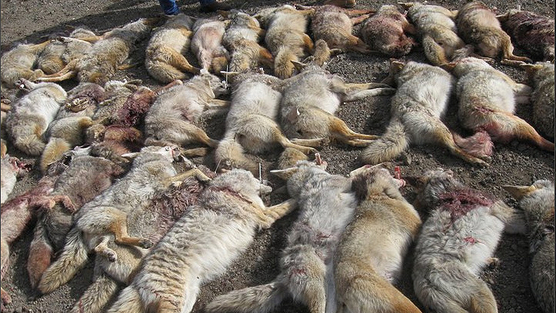
24/7/365 Coyote Extermination Contest? Are Some People Really That Tweeked?

Announcing the first FOREVER 24/7/365 Coyote Extermination Contest

by Brent Reece 

I was more than a little disturbed to read the other day this disturbing little footnote in history. 

xVHAyLEawJsheWD-556x313-noPad

by Associated Press

kgw.com

Posted on July 25, 2014 at 3:23 PM

Updated Friday, Jul 25 at 3:23 PM

PORTLAND, Ore. – An animal-rights group and the organizer of an annual coyote-killing contest in southeast Oregon have settled competing lawsuits with an agreement that there will be no more hunting contests.

Coyotes are classified as predatory animals under Oregon law, and there are no limits on killing them.

Faced with that reality, the Animal Legal Defense Fund sued on the grounds that the contest violated anti-gambling laws.

Organizer Duane Freilino said Friday he agreed to the contest-ending settlement because he ran out of money to pay attorneys.

Stephen Wells, executive director of the animal-right group, says the agreement means hundreds of coyotes can live peacefully in the wilderness.

Freilino said he started the contest almost a decade ago to increase winter tourism in the sparsely populated region and to help ranchers by reducing coyote numbers before calving season.


Well folks I was inspired to snub the “anti’s” on this one. Especially in light of the fact that HSUS is here in Maine trying to steal my Bear Hunt using lies, deception, and half-truths to get the uninformed to back them. On November 4th we are facing the loss of our bear hunting tradition in Maine under the guise of more SPORTSMAN-like euphemistic terms like fair chase/stalking/still hunting.  The anti-group is trying to repeal our right to hunt over bait, use dogs , and to legsnare/trap. (Old school toothy bear traps are illegal and have not been used in decades.) They have made no bones that if they can steal the bear hunt from us they are after an end to all hunting…and the consumptive use of all animals. So first bear hunting goes , and eventually farming.


In direct response to the events in Oregon, and to HSUS interfering in hunting here. I am hosting the first of it’s kind……FOREVER 24/7/365 COYOTE EXTERMINATION CONTEST.


The rules are simple……….KILL AS MANY COYOTES AS YOU CAN …..WHEN AND WHERE YOU CAN…24/7/365!! This contest has no end date, and costs nothing to enter so it cannot violate any gambling laws.


One, the deer and small critters need a break here in Maine. Two, they are an invasive species not natural to this or any area now that they have been hybridized with dogs and wolves. THIS IS A GENETIC FACT HERE IN MAINE!!


The cute little 35 lb. coyote of the great plains and Texas has been replaced with 65+ pound coy/dog/wolves. That will kill humans and attack pets/kids and eats “anything” including it’s own kind. (Taylor Mitchell in Cape Breton was the first documented death here in the Northeast, but not the only or the last.)


How to Enter:


  1. Kill the coyote!!!
  2. Take it’s picture with you holding it or standing/kneeling /sitting near it. (You have to be in the picture.)
  3. Email the picture along with a brief story about the hunt with the usual who/what /where/when…. To northwoodswanderings@yahoo.com (Subject: Coyote Exterminator) OR….Snail Mail: Mail your printed pic and a note to Brent Reece: 25 Garfield Street #2A, Madison Me 04950
  4. I will post all pictures on my blog and on NWW’s Facebook page. I will select one picture each month for cudos and possible prizes. Once per year..like in June I will select a YEARLY WINNER from the previous MONTHLY WINNERS.


It costs nothing to enter and I will except pictures from all 48 states and Canada!!! But they must comply with the #2 rule!!


PLEASE LIKE Northwoods Wanderings on FACEBOOK…..Visit the blog: www.skinnymoose.com/wanderings or comment on TWITTER @aroostookbasser


AS in all contests I am looking for sponsors/prizes and support …….you can help me here or you can look up the great folks listed below and help us beat back HSUS and save our hunting traditions!


Here’s a link to the good folks at SAVE Maine’s Bear Hunt, who are leading the fight to save Maine’s bear hunt.


http://savemainesbearhunt.com/about/

Read more: http://www.skinnymoose.com/wanderings/2014/07/30/announcing-the-first-forever-247365-coyote-extermination-contest/#ixzz39ijro2i7