SC hunters kill more than 11,000 cormorants

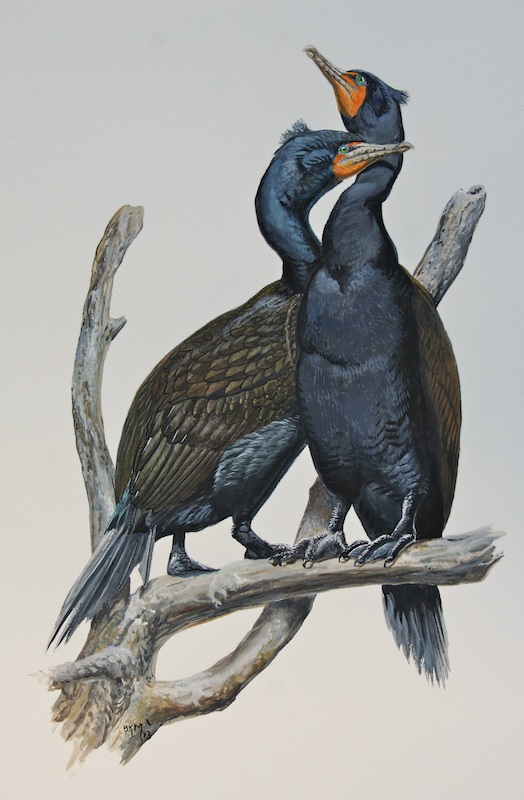
Painting Courtesy  Barry Kent MacKay

Painting Courtesy Barry Kent MacKay

EXCLUSIVE: SC hunters kill more than 11,000 cormorants

BY JOEY HOLLEMAN

THE ASSOCIATED PRESS – ROBERT F. BUKATY

COLUMBIA, SC – South Carolina hunters killed 11,653 double-crested
cormorants on Lake Marion and Lake Moultrie in one month this winter in an
effort to reduce the number of the fish-eating birds on the lakes.

One hunter, whose name was not made public, reported killing 278 himself,
according to the S.C. Department of Natural Resources, which released the
information to The State newspaper on Friday.

While hunters jumped at their first chance to shoot the long-necked, black
birds, the Audubon Society screamed in protest at the results.

“That’s a horrific number,” said Norman Brunswig, Audubon’s South Carolina
director. “It’s not a defensible action. I think DNR got bullied into doing
this and didn’t know how to get out of it, and a whole lot of birds died.”

Longtime anglers on the lake pushed their state representatives to convince
DNR to do something about the rising populations of cormorants, who they
claim eat enough bait fish to impact the game fish populations. Only one
small scientific study has been done on the impact of cormorants on the
Santee Cooper lakes, and it was done during a severe drought. That study
found an average of eight fish in the gut of cormorants.

That study estimated there were 6,000 cormorants on the lakes in 2008, but
anglers say the number has grown to closer to 25,000 in recent years.

A proviso in last year’s agency budget made it difficult for DNR to turn
down the request to set up a special cormorant hunting season.
Traditionally, cormorants are a non-game, migratory species, and hunting
them has been illegal. But the U.S. Fish and Wildlife Service in recent
years has approved special programs to reduce the cormorant

Painting by  Barry K. MacKay

Painting by Barry K. MacKay

population if
states requested permission.

In most other states, those programs allow only wildlife officers and
American Indians to shoot the birds.

In South Carolina, DNR didn’t have the manpower to make a dent in the
cormorant population, so it tried a different approach. Hunters who went
through a short training program and agreed to strict regulations were
allowed to kill the birds only on Lake Marion and Lake Moultrie, and only
from Feb. 2-March 1.

DNR leaders were stunned when nearly 800 people showed up at the first
training session. The 1,225 people who eventually were issued permits
surpassed agency estimates “by three- or four-fold,” according to Derrell
Shipes, chief of wildlife statewide projects for the agency.

Many anglers seemed eager to help reduce the cormorant numbers, but only 40
percent of the permit-holders returned the required hunt record documents by
the March 31 deadline, Shipes said. Those who didn’t record their hunting
hours and success rate won’t be allowed to get permits if there’s another
hunt next year.

Another proviso by Rep. Phillip Lowe, R-Florence, in the 2014-15 budget
compels DNR to allow a cormorant hunt next year. If there is a 2015 hunt,
Shipes expects it will be set up differently. The agency staff has to look
at what about the first season worked well, and what didn’t.

More importantly, wildlife biologists will try to determine “how significant
is that number (of birds being killed), and what will be its impact,” Shipes
said.

Brunswig wishes someone would do a large scientific study on the impact of
cormorants on the fishery. He’s certain it would prove “they’re slaughtering
a non-game species for no good reason.”

The 496 hunters who returned information forms spent 42,748 hours in the
field and averaged killing 23.5 cormorants in the one-month season.

The South Carolina numbers are much higher than in specially permitted hunts
in other states which rely on wildlife officers and American Indian tribes.
Hunts in Indiana, Michigan, Minnesota, New York, Ohio, Vermont and Wisconsin
combined killed 21,312 cormorants in 2013, according to the U.S. Fish and
Wildlife Service.

Wildlife officials in Oregon and Texas already have contacted South Carolina
to ask about details of the local hunt as they consider how to set up hunts
in their states, Shipes said.


Petition to stop the slaughter of ravens in Idaho

A couple of weeks ago, I came across a small news article explaining that the Idaho Department of Fish and Game had received a permit from the United State Dept. of Agriculture (I think it was Ag) to kill 4000 ravens. This is proposed under the guise of protecting the sage-grouse, which, I believe, is being added to the endangered species list. The sage-grouse does need protection but here’s the problem. There are 19 factors that have caused their populations to decline, most the result of human activity. Predation by other creatures is #12 and ravens are the only ones that have been singled out, although there are many. Killing ravens will do little if anything at all to mitigate the problems the sage-grouse face.

I was so upset that I took it on myself to create a petition and I hope some of you will consider signing it.

There is a bias among many people against ravens and crows–their voices are not lyrical and some people see them as bullies or as symbols of evil. But recent studies show that they are among the most intelligent creatures on earth and actually may be the most intelligent. They have complex societies, young stay with their parents for years and they even have a ritual that humans would call a funeral when one of their own dies. Killing 4000 of these remarkable birds will reverberate through their community for generations.

You’ll find my petition here: http://www.thepetitionsite.com/114/2…-4000-ravens/#

And just so you know, I have NO financial or professional interest in this. It is a simple act of love. I have long adored ravens and crows. And Edgar Allen Poe, too.

Big huge thanks to all who take the time to sign.

Photo Copyright Jim Robertson

Photo Copyright Jim Robertson

Copenhagen Zoo Kills Four Healthy Staff Members To Make Space For New Employees

http://www.theglobaledition.com/copenhagen-zoo-kills-four-healthy-staff-members-to-make-space-for-new-employees/

COPENHAGEN (The Global Edition) – The Copenhagen Zoo has killed several of its staff members early this morning in order to create four new job openings, the Zoo public relations sector reported.

Officials of the Zoo say that the four members of the staff were humanely executed after being put to sleep with a lethal injection, and then skinned and chopped up while visitors crowded around and the meat was fed to the lion population.

“Based on the recommendation of the European Association of Work and Organizational Psychology (EAWOP), we have decided to make space for new work positions, because the Zoo needs new workers, and we found that killing old staff members was the cheapest and the most efficient way to do it,” said Zoo spokesman Tobias Stenbaek Bro “Four of the oldest staff members, among them one female, were put to sleep with a lethal injection and then fed to the giraffes. However, the giraffes didn’t show interest in their meat, so they were fed to the lions,” explained the Zoo spokesman.

“Being that the oldest staff members could no longer keep track with the new Zoo technologies, and could not manage themselves in the fast and ever-changing job environment, we feel that the criticism coming from some of their family members is completely unfounded,” the Zoo spokesman was quoted as saying.

“Zoos do not own the staff, but they are in charge of their employment, and in that regard have the full right to do with them whatever is considered necessary when they are on the Zoo territory”, said Tobias Stenbeak Bro. “It was the only humane way to dispose of them, you know. We couldn’t just leave them without jobs in this economy, as some heartless observers suggested”.

The Zoo spokesman concluded that “considering that the Zoo animals were fed with the meat of the former employees, the food chain was virtually completed, which is totally in respect of the law of nature”.

APRIL FOOLS!!

8775_524935520889725_1949817662_n

Killing Healthy Zoo Animals Is Wrong—And the Public Agrees

http://news.nationalgeographic.com/news/2014/03/140327-copenhagen-zoo-giraffes-lions-animals-deaths-science-world/

Scientist calls lion, giraffe deaths “zoothanasia”—or heartless elimination.

A photo of two lionesses at the Copenhagen Zoo.

Two lionesses are seen at the Copenhagen Zoo on March 26, not long after four other lions were put to death.

PHOTOGRAPH BY JENS DRESLING, POLFOTO/AP

Marc Bekoff

for National Geographic

Published March 27, 2014

The four lions killed by the Copenhagen Zoo this week, as well as  the healthy young giraffe named Marius put to death in February, didn’t have to die.

A global uproar has followed the deaths of two African lions and their two ten-month-old cubs. Their lives ended because the zoo wants to introduce a new male to the remaining females to bear more lions.

The same outcry was heard when a healthy young giraffe named Marius, who had the wrong genes for the facility’s breeding program, was killed with a bolt to his head—so as not to contaminate his body with poisons. The giraffe was publicly dissected and then fed to the zoo’s carnivores, including lions.

None of the deaths were euthanasia, which is a mercy killing when an animal is suffering or lingering near death and must be “put down,” as zoos always refer to such situations.

Rather, it was “zoothanasia,” or killing done by zoo workers because an animal is no longer needed for one reason or another and is deemed to be a disposable object rather than a sentient being. (Related: “Opinion: Killing of Marius the Giraffe Exposes Myths About Zoos.”)

The “Marius Effect”

Many people around the world were outraged by Marius’s death. I call this the “Marius Effect.”

Many of them had never previously voiced their opinion about the common killings of what are disparagingly called “surplus animals” by zoos, or had spoken out about other animal issues. (See “National Zoo Deaths: ‘Circle of Life’ or Animal Care Concerns?“)

While some workers at the zoo and elsewhere said the giraffe had to be killed because he didn’t fit into the zoo’s breeding program, and therefore couldn’t be used as a breeding machine (like dogs at a puppy mill), countless others disagreed. An online petition asking the zoo to hold off on the killing until another home was found received tens of thousands of signatures.

Marius was killed despite the fact that another facility had offered him a home in which he could live out his life in peace and safety.

Many others and I figured that the negative attention that the late Marius brought to the Copenhagen Zoo would serve as a catalyst to change the breeding policies of zoos in Europe. We thought those responsible for killing him would reassess what they did and question their killing ways—even if such killings were required by existing regulations put forth by the European Association of Zoos and Aquaria (EAZA). (Read more about zoos and saving rare species in National Geographic magazine.)

We couldn’t have been more wrong. Now, with the deaths of the four lions, the Copenhagen Zoo wants to become a lion mill, I would argue, and still seems to think killing healthy animals is perfectly okay.

All of the newborn lions whose kin died to make way for them will spend their lives in captivity, and some will undoubtedly be “zoothanized” in the future because they, too, will be classified as disposable “surplus” animals without the right genes to pass on to future captive lions.

The zoo also argued that the new male lion brought to the zoo would kill the youngsters and the captive group, and thus the group wouldn’t resemble a wild pride of lions, as if it previously had.

Of course, there is nothing natural about the cage in which they are kept.  While some might call it an enclosure or pretty it up by calling it “lion habitat,” it is still a cage in which future lions will be mercilessly crammed, from cradle to grave.

“Perversely Justified”

I see heinous acts like killing Marius and the four lions as a perfect subject for study for researchers in the field of anthrozoology, the scientific study of human-animal relationships.

These easily avoidable deaths, perversely justified “in the name of conservation,” are horrible lessons for youngsters. They run counter to global programs in humane education and compassionate conservation, in which the life of every individual animal is valued—and not just because they can serve us in any number of ways, such as by making more of themselves for future captive breeding. (See “Is Breeding Pandas in Captivity Worth It?“)

Zoos need to change their ways and respect the caged animals for whom they are responsible as long as an individual is healthy.

Surely, people who choose to go to the Copenhagen Zoo can find other ways to spend their time and money.

Marc Bekoff is professor emeritus of ecology and evolutionary biology at the University of Colorado, Boulder. He has published numerous scientific and popular essays and 25 books, including Ignoring Nature No More: The Case for Compassionate Conservation and Why Dogs Hump and Bees Get Depressed: The Fascinating Science of Animal Intelligence, Emotions, Friendship, and Conservation.

Is Nowhere Safe? Oregon “Refuge” May Allow Elk Hunting

elk-000-home17300

March 08, 2014 12:45 am
By Bennett Hall, Corvallis Gazette-Times

Half a century ago, when the William L. Finley National Wildlife Refuge south of Corvallis was established to protect migratory waterfowl, sightings of Roosevelt elk were a rare occurrence in the Willamette Valley.

In recent years, however, the majestic animals have made quite a comeback on the valley floor. In the last decade, the Oregon Department of Fish & Wildlife estimates, the population has mushroomed from 100 to at least 600 individuals.

The biggest herd in the region makes its home on the Finley Wildlife Refuge, where an estimated 200-plus elk have become a major draw for visitors — and a growing problem for neighboring landowners.

State and federal wildlife managers say the animals cause extensive damage when they periodically wander off the 6,000-acre refuge, eating or trampling crops and knocking down fences that stand in their way.

Now, to reduce the damage, ODFW and Finley biologists are floating a plan to reduce the herd by opening the refuge to elk hunting for the first time.

If approved by the U.S. Fish & Wildlife Service, the plan would allow a three-month hunting season for antlerless elk (cows and “spikes,” or yearling bulls) in the late summer and early fall.

Five permits would be issued to Willamette Valley elk tag holders each month from August through October for a total take of up to 15 elk, and only bowhunting would be allowed the first year.

“We have a goal to reduce the size of the elk herd by 20 percent over five years,” said Jock Beall, the refuge biologist at Finley.

The plan is being welcomed by most area farmers and duck-hunting clubs, which plant corn to attract waterfowl.

But the idea is not without controversy. A large number of Finley’s 100,000 annual visitors come to the refuge to watch or photograph wildlife. To them, the elk are rock stars.

“Elk are a charismatic species,” Beall acknowledged. “(Visitors) like them and they like the viewing, and they think (the hunt) will change the opportunity or decrease the opportunity to view them.”

You can count Ricardo Small among that group.

A retired Arizona real estate appraiser who now spends most of the year in the mid-valley, he’s a regular at Finley. From his perspective, any damage the elk may be doing on private property shouldn’t be the refuge’s problem.

“The elk are a major magnet for visitors, and there is no information I can find in any Fish & Wildlife report to indicate the elk are doing any damage to resources on the refuge,” Small pointed out.

“My position is there’s no reason to open up the refuge to elk hunting. Let them open up their land to hunting — but I guess that’s not palatable to the private landowners.”

As recently as 1989, there were only about 20 elk on the Finley National Wildlife Refuge. A decade later the tally had jumped to 100, and last year the Finley herd numbered 163 animals.

A second herd of 38 elk has taken up residence since then, according to Beall, and there’s another group of 10 to 15 bachelor bulls that hangs around the fringes of the two established herds.

There’s plenty of forage and tree cover on the refuge, and because hunting currently is not allowed at Finley, it provides a safe haven for the animals during the valley elk season, which runs from August through March.

It’s good habitat for Roosevelt elk, the largest North American subspecies, which can weigh in at half a ton and stand 5 feet tall at the shoulder. In fact, the biggest Roosevelt bull on record was taken just south of the refuge boundary in 2002. The taxidermied trophy is now on display at Cabela’s sporting goods store in Springfield.

Even though the refuge proposal would not allow hunting of mature bulls (which tend to be targeted by off-refuge hunters and are underrepresented in the Finley herd), some wildlife lovers fear any hunting would make Finley’s elk skittish.

“I oppose the plan mainly because of what it would do to the recreational aspect — viewing elk on the refuge,” said Phil Hays, another refuge regular, in an email to the Gazette-Times.

“The (environmental assessment) specifically states that hunting causes elk to remain hidden during the day, and they come out to feed at night,” he added. “The refuge is open dawn to dusk. Seems to me that hunting will make the already elusive herd less visible to visitors at the refuge.”

more: http://www.gazettetimes.com/news/local/refuge-may-allow-elk-hunting/article_c93d5bb6-a665-11e3-befe-0019bb2963f4.html

Hunters: the More you Harvest, the Faster they Breed

1897936_534225470025483_669736540_n

The hunter population has gotten out of control and it’s time to do something about it.

Certain do-gooders have envisioned a policy of targeting only the males and displaying their manly parts above the fireplace or barn door as trophies. Other self-appointed regulators submit that that would unfairly skew the sex ratio of the species, especially in light of the rapidly increasing epidemic of female hunters. They suggest the best way to ease the overpopulation of hunters is to sell tags for both sexes. To recruit more hunter hunters, children aged ten or younger would be encouraged to join in the cull.

But, unfortunately, the notion that we can control their numbers through regulated harvest is a myth. The more you take down, the more their survivors breed to make up for their losses.

A Big Deal Out of Nothing?

As most of you know, this blog, as a rule, does not allow comments from self-proclaimed wildlife killers or their apologists, for the same reason a victim’s rights group might have a policy not to approve comments from abusers of vulnerable human victims. However, once in a while I post a hunter’s comment if it gives us particular insight into how their minds work.

According to the following comment to the post “High School Class Sponsoring Crow Hunting Tournament,” crows, coyotes, deer, hogs and ducks are “nothing,” but domesticated chickens may have some value…

“I think you are all making a big deal of out of nothing. I grew up in Sasakwa, I graduated from Sasakwa, and I hunt deer, ducks, and hogs. I don’t see why crows or coyotes are any different. My family lives in the country and we have animals. Coyotes will come and kill our chickens if we don’t keep an eye out for them.

“And we are not ruthless killers. Many kids and adults in Sasakwa have taken Hunter Safety Courses and hunt. Just because our community puts a hunting event together doesn’t mean there will be a big school shooting.”

Well, that’s what the shooters from Columbine would have said. Granted, not every bully becomes a serial killer, but the shooting of crows or coyotes for the sake of a sporting event is abusive in its own right. The contest-killing of sentient beings may not qualify as mass murder according to the laws of the day, but it’s certainly not “nothing.”

Text and Wildlife Photography ©Jim Robertson, except where noted

Text and Wildlife Photography ©Jim Robertson, except where noted

Yellowstone National Park bison slaughter has begun – please take action to stop it!

Wild bison die because of Montana’s livestock industry Late last week we posted an article about Yellowstone National Park’s plan to kill between 300-600… bison. According to the Buffalo Field Campaign, the article failed to mention that the slaughter already began on Friday, February 7, when Yellowstone officials captured 25 bison, confined them in a trap for five days and then shipped the terrified bison to a slaughterhouse in Ronan, MT! The bison slaughter is made possible because of an Interagency Bison Management Plan (IBMP) developed by the USDA-Forest Service, USDA-Animal &amp; Plant Health Inspection Service, Montana Department of Livestock, Montana Fish Wildlife &amp; Parks and the National Park Service/Yellowstone National Park. This plan is archaic, politically motivated and represents the interests, not of bison, but only those of the Montana livestock industry, who has zero tolerance for wild animals such as wolves and bison. They use false threats of bison allegedly posing a risk of brucellosis transfer to cattle though this has never happened, as justification to murder hundreds of bison, whose rightful home is Yellowstone. <br> Tell Yellowstone Superintendent Dan Wenke’s office that America’s last standing wild buffalo population deserves to be left alone, and that you want to see a new plan that respects the lives of all bison in and outside of Yellowstone National Park! <br> Please call Yellowstone Superintendent Dan Wenke now at (307) 344-2002 and urge him to stop slaughtering America’s last wild buffalo
(photo: Jim Robertson)
Photo: Yellowstone National Park bison slaughter has begun - please take action to stop it! Wild bison die because of Montana’s livestock industry  Late last week we posted an article about Yellowstone National Park’s plan to kill between 300-600 bison. According to the Buffalo Field Campaign, the article failed to mention that the slaughter already began on Friday, February 7, when Yellowstone officials captured 25 bison, confined them in a trap for five days and then shipped the terrified bison to a slaughterhouse in Ronan, MT! The bison slaughter is made possible because of an Interagency Bison Management Plan (IBMP) developed by the USDA-Forest Service, USDA-Animal & Plant Health Inspection Service, Montana Department of Livestock, Montana Fish Wildlife & Parks and the National Park Service/Yellowstone National Park.  This plan is archaic, politically motivated and represents the interests, not of bison, but only those of the Montana livestock industry, who has zero tolerance for wild animals such as wolves and bison. They use false threats of bison allegedly posing a risk of brucellosis transfer to cattle though this has never happened, as justification to murder hundreds of bison, whose rightful home is Yellowstone.  Tell Yellowstone Superintendent Dan Wenke’s office that America’s last standing wild buffalo population deserves to be left alone, and that you want to see a new plan that respects the lives of all bison in and outside of Yellowstone National Park!  Please call Yellowstone Superintendent Dan Wenke now at (307) 344-2002 and urge him to stop slaughtering America’s last wild buffalo. (photo: Jim Robertson)

Idaho House panel backs $2 million plan to kill wolves that prey on elk, livestock

http://www.therepublic.com/view/story/b0d0c545a3e9408e8e7b7352300d4e08/ID-XGR–Wolf-Panel

THE ASSOCIATED PRESS
February 17, 2014 – 6:08 pm EST

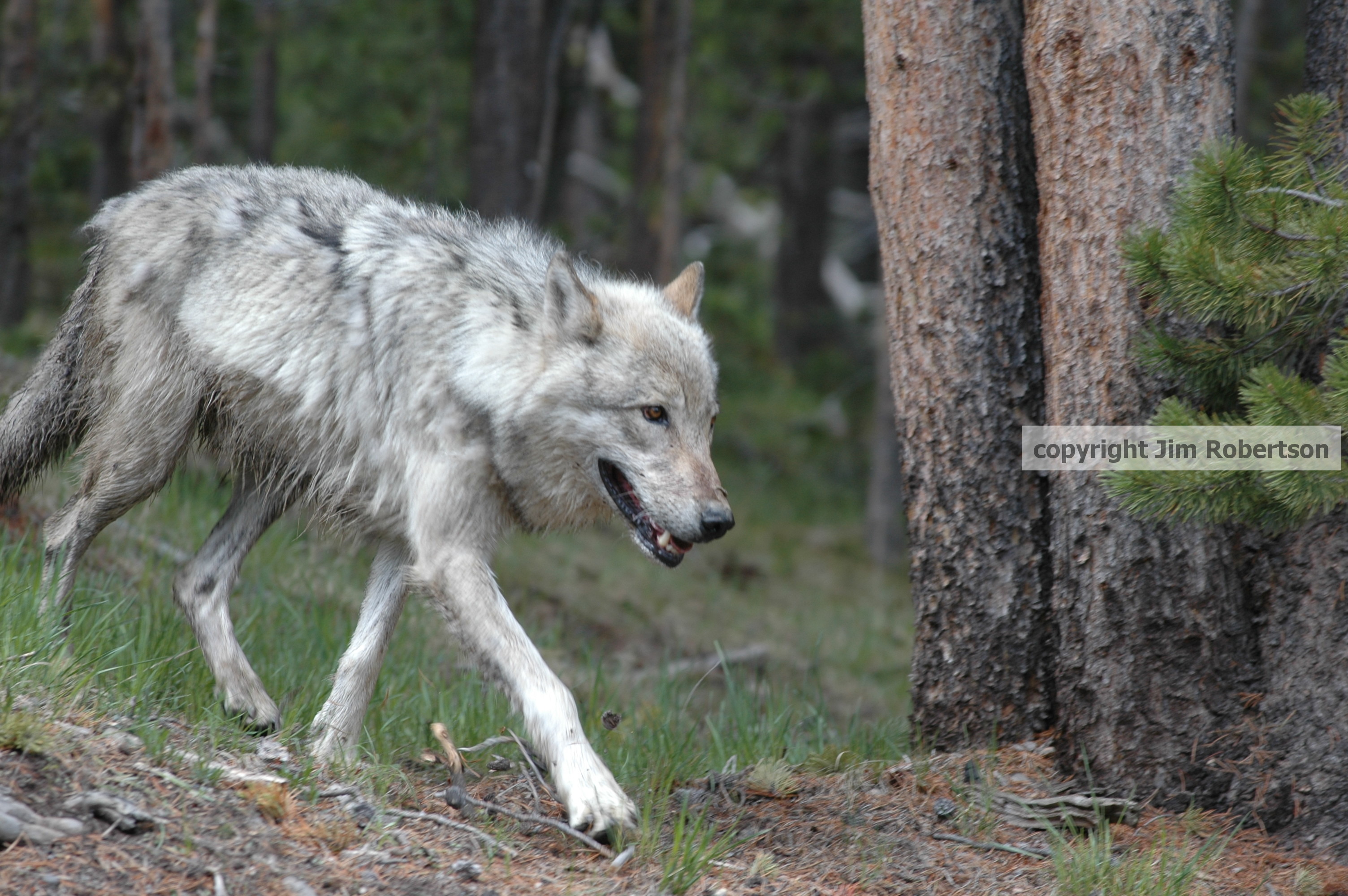
BOISE, Idaho — Idaho’s House will get to consider a measure seeking to shift $2 million in taxpayer money toward a panel that will oversee the killing of wolves that prey on livestock and elk herds. [Wolves eat elk, get over it.]

Republicans on the House Resources Committee voted Monday 14-4 for the disputed bill.

It’s being pushed by Gov. C.L. “Butch” Otter [the man is an insult to the entire weasel family], over objections labeling this a “funding mechanism for a war on wolves.”

With this cash infusion, Otter wants to target wolf packs blamed for killing too many cattle, sheep and elk. [When did elk become a domesticated species?]

Backers including the cattle and sheep industry pledged not to reduce Idaho’s wolf population, now roughly 680 animals, to levels triggering a renewed federal Endangered Species Act listing.

But foes branded it a “thinly veiled proposal aimed at the second extirpation of wolves in Idaho.”

copyrighted Hayden wolf walking

Ranchers seek to extend lethal elk removal season–right outside Yellowstone!

[This is just north of Yellowstone, where wolves should be allowed to take care of the elk “problem”…]

http://helenair.com/news/state-and-regional/ranchers-seek-to-extend-lethal-elk-removal-season/article_4ea84c0e-9548-11e3-8653-001a4bcf887a.html

BILLINGS — Cattle ranchers in the Paradise Valley asked the Fish and Wildlife Commission on Thursday to extend the season for lethal elk removals in the area to May 15 and to pay for fencing to keep elk out of feeding and calving areas.

The controversial proposals were drawn up by a subcommittee of the upper Yellowstone watershed group as a way to reduce the transmission of the disease brucellosis from infected elk to cattle during the spring, which is when brucellosis is spread through contact with aborted fetal tissue from infected animals.

Fish, Wildlife and Parks currently has a policy to pay for fencing materials to block wildlife from raiding haystacks. The fencing supplies are provided to landowners who allow public hunting.

In what has been deemed the designated surveillance area for brucellosis around Yellowstone National Park, FWP allows elk hazing and fencing to help landowners from Jan. 15 through June 15. Lethal elk removals are allowed through April 30, but the number of elk killed is limited to 10 each time. Hunters on a roster are called to remove the elk.

Defending idea

Although admitting the fencing proposal is “a little scary” because it lacks details about the type of fencing and costs, Paradise Valley rancher Druska Kinkie told the commission the finer details would be worked out by the landowner and Fish, Wildlife and Parks to address specific situations on different properties. Each project would be unique.

“The goal is not to stop elk but to get them to take a different route,” she said.

Eric Liska, the Department of Livestock’s brucellosis program veterinarian, supported the proposals, noting that landowners have only two tools to fight brucellosis infection: vaccination of their livestock, which isn’t 100 percent effective, and keeping their livestock separated from elk during the spring.

Wildlife groups opposed

The proposal immediately came under fire from people attending the meeting or listening in.

Park City resident J.W. Westman said the Laurel Rod and Gun Club was opposed to the proposals, placing the blame for spread of the disease on some ranches that provide a safe harbor for elk during the hunting season. He also pointed to the surrounding states of Idaho and Wyoming which have elk feedgrounds where disease is more easily spread as being at the root of the problem.

Kathryn QannaYahu, a Bozeman environmentalist, said such measures seem extreme and possibly expensive and said the risk of brucellosis transmission from elk to cattle is only .00024 percent.

“This is about depopulating, removing a forage competition ungulate from the landscape, sportsmen’s dollars subsidizing their socialized agriculture and game ranching,” she wrote in an email.

Working groups rapped

Others expressed concern that the group making the proposal contains no members of sporting groups, hunters or other members of the public to provide a balanced recommendation.

“These working groups have become more or less dysfunctional,” said Bill O’Connell, a Bozeman-area farmer who was once a member of a similar group in the Madison Valley.

Mark Albrecht, a Bozeman veterinarian and member of the statewide elk working group, agreed the local working groups need help. He also said that if the department decides to extend the season for lethal elk removals, an environmental assessment should be conducted. He said that without studying the issue, FWP could be promoting more elk abortions caused by stressing the animals. If that were the case, the agency would be increasing the risk of transmission by trying to remove more elk.

“Let’s not forget the science,” Albrecht said.

Public’s chance

Fish and Wildlife Commission chairman Dan Vermillion, who lives in Livingston, supported the Paradise Valley landowners for coming forth with recommendations to address the problem. He noted that some of the ranches where infection has occurred were open to public hunting, that elk numbers are within FWP’s objectives and that the elk causing problems aren’t showing up during the hunting season, but arrive in March.

But he also expressed concerns about the methods landowners proposed and the difficulty of solving an issue when Wyoming and Idaho continue to congregate elk on feedgrounds during the winter.

“It’s now time for Montanans to weigh in,” Vermillion said, noting that proposals will come before the commission again at its April 10 meeting. Comments will be taken until March 21.

“Let us know what you think, because this is huge,” he said.

Photo Copyright Jim Robertson

Photo Copyright Jim Robertson