Exposing the Big Game

Forget Hunters' Feeble Rationalizations and Trust Your Gut Feelings: Making Sport of Killing Is Not Healthy Human Behavior

Exposing the Big Game

Can dairy adapt to climate change?

https://www.bbc.com/future/article/20201208-climate-change-can-dairy-farming-become-sustainable

(Image credit: John Quintero/BBC)
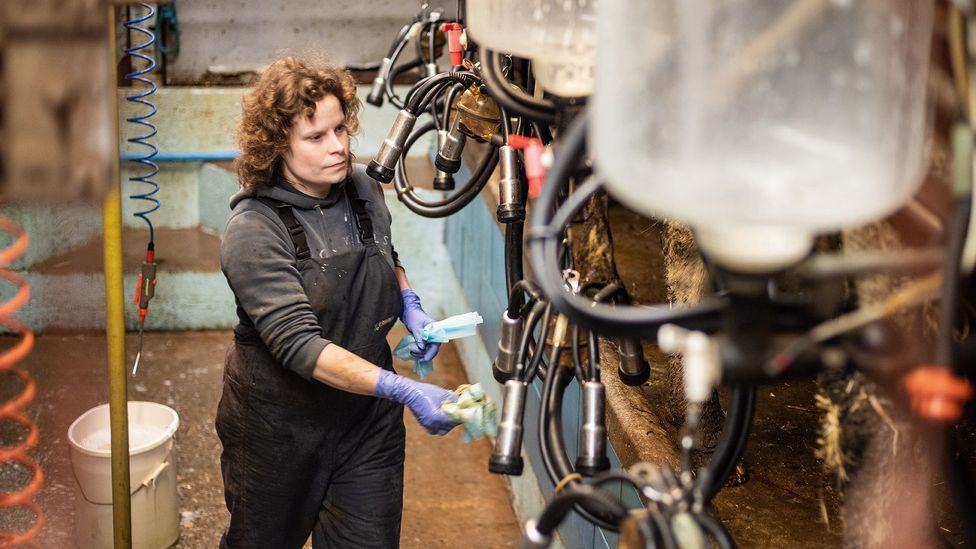
Farmers like Hannah Edwards feel a strong obligation to protect the environment, but their thoughts on climate action are not always so clear cut (Credit: John Quintero/BBC)

By Emily Kasriel8th December 2020Amid polarised debate, Emily Kasriel asks how dairy farmers see the role of their industry in climate change – and finds a mixture of doubt, denial and commitment to change.

“Nothing beats the feeling when you see a cow take its first breath, after battling to get it to breathe. I milk each cow twice a day every single day of the year, so they know I want the best for them,” says Hannah Edwards, standing proudly in the midst of the herd of Holstein cows she’s tended for the last 11 years. They are grazing on her favourite hillside, high up on the farm with a commanding view of peaks and valleys. “I love coming up here. On a clear day, you can see for miles. That’s Wales, Lake Bala is over there, and there you can see Snowdonia.” 

With a growing public awareness of the importance of consuming less dairy to meet tough climate change targets, I’ve come to meet Hannah to try and understand how family dairy farmers see climate change. After climbing into her tall green wellies, I drive with her and her Labrador, Marley, to the farm where she works, spread across the border between Wales and Shropshire in the west of England. I want to test whether a communication approach called deep listening could help understand better the attitudes of dairy farmers to the environment and climate change.

Media representations of the climate change narrative have become increasingly polarised, with each side of the discussion represented by partisan outlets as a caricature. But behind these stereotypes are the nuanced stories of how people’s life experiences contribute to their worldview. By having these conversations, perhaps there is common ground that will get us closer to sustainable change.

Where better to start than dairy: in 2015, the industry’s emissions equivalent to more than 1,700 million tonnes of CO2 made up 3.4% of the world’s total of almost 50,000 million tonnes that year. That makes dairy’s contribution close to that from aviation and shipping combined (which are 1.9% and 1.7% respectively).Dairy farming is Hannah Edwards' profession and vocation – and the welfare of the herd is always her primary concern (Credit: John Quintero/BBC)
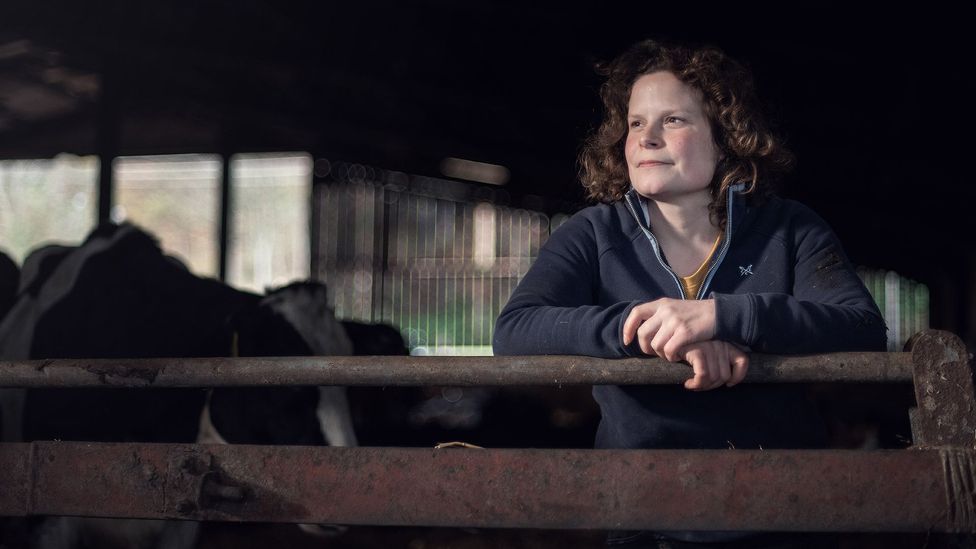
Dairy farming is Hannah Edwards’ profession and vocation – and the welfare of the herd is always her primary concern (Credit: John Quintero/BBC)

Not long after I arrive at the farm, Hannah, armed with a thick super-sized blue apron and a razor-sharp focus, announces it is time to enter the parlour, where she milks the 140 cows, in a true state of flow. Wrapped in blue gloves, her hands dance in swift parallel moves as they reach diagonally up and then across as she wipes each teat with a disinfecting cloth before attaching it on to the milk sucking equipment. Amid the flurry of muscle action I can feel Hannah’s calm aura of awareness, watching the millilitres on the glass vials track the bubbly white liquid while she reads each cows’ emotional state to pick up on any illness or mood requiring more close attention. “They can’t talk to you, just have to look out for different emotions,” she says. “Their eyes become bulgy when they are scared. It’s really teamwork, cows and farmers working together to produce milk.”

Between 2005 and 2015, the dairy cattle industry’s greenhouse gas emissions increased by 18% as demand for milk grows

The following morning, Hannah and I sit in blistering sunshine on a picnic bench in her family garden alongside her mother Ruth and brother David. “The cows don’t like the heat,” Hannah says. “They won’t sit down as the ground is too hot. Their feet get tender; they get abscesses that cause them to go lame.”

Together, the family reflects on the changing weather and climate patterns they have witnessed. “I remember we used to get frost when we were kids, but we don’t get it anymore,” says David. “We don’t get those nice crisp mornings.” Ruth recalls that when she first came to the farm, the cherry blossom tree would bloom in May. “Now it’s April,” she says. “The climate does seem to be different over the years. We don’t seem to get proper seasons anymore.” 

Hannah’s opinions about climate change prove complex over the course of our conversations. “Obviously climate change is happening,” she says. “Greenhouse gases are helped by humans, isn’t it. Part of it is a natural process, like when the Ice Age ended. But it is speeded up, there’s no doubt about that.” And what about the role of farmers? “Farmers have an extra responsibility to take care both of the environment and of emissions,” she says.

But at other moments, Hannah quickly moves the subject away from dairy farming’s contribution. “There are more people, so you need more animals to feed everyone. The bottom line is that we are overpopulated,” she says. “It’s not just this country – there are more people all over the world.” Greenhouse gas emissions from the dairy industry are rising as demand for milk grows globally (Credit: John Quintero/BBC)
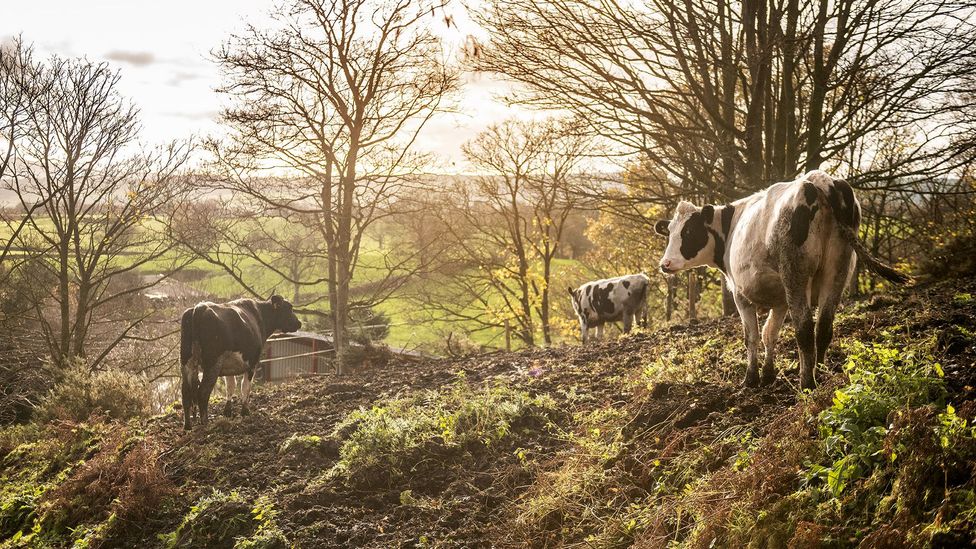
Greenhouse gas emissions from the dairy industry are rising as demand for milk grows globally (Credit: John Quintero/BBC)

Overall, a quarter of global emissions come from food. The United Nations’ Food and Agricultural Organization (FAO) calculated that between 2005 and 2015, the dairy cattle industry’s greenhouse gas emissions increased by 18% as demand for milk grows.

These gases – mainly methane, nitrous oxide and carbon dioxide – are produced at different stages of dairy farming. Methane, the most potent of these greenhouse gases, is first produced as the cow digests its food. Then, as the manure is managed on the farm, methane as well as nitrous oxides are also emitted.

These gases all contribute to global warming. “Carbon dioxide has relatively weak warming effects, but its effects are permanent, lasting hundreds of thousands of years,” says Tara Garnett, who researches greenhouse gas emissions from food at the Environmental Change Institute at the University of Oxford. “A tonne of methane has a far stronger warming effect, but its effect disperses rapidly – in about a decade.”

I sense a conflict between the family’s shared worldview – a deep love and connection with the environment – and to the possibility that dairy farming could be harming the planet

But for Hannah, there is a level of distrust in such facts. “With regard to scientific information, you hope that it’s true,” she says. “But there’s a little bit of me that is quite sceptical. Are they just scaremongering, and forcing us to do things that they want to do?” 

As I listen to Hannah and her family, I try to be completely present, using deep listening. I focus on their words, but also try to sense the meaning behind them to better understand their world view. The theory behind deep listening, first explored by psychologist Carl Rogers in the 1950s, is that you convey the attitude that “I respect your thoughts, and even if I don’t agree with them I know that they are valid for you”. When a speaker feels they are being deeply heard they are more likely to convey a richer, more authentic narrative.

I sense a conflict between the family’s shared worldview – a deep love and connection with the environment and the animals they tend – and to the possibility that dairy farming could be harming the planet. “I think [climate change] is a lot to do with cars and aeroplanes,” says Hannah’s brother David. “I don’t think it’s anything to do with farming as we look after the wildlife and the environment… We are not out to damage things.” The experience and family history of being dairy farmers is critical to the family’s identity, so an idea that appears to threaten that heart-felt identity is hard to embrace

Hannah’s love for the cows, and desire to do everything she can for animal welfare, is the prism through which she sees the world, including climate change

I come to understand that Hannah’s love for the cows, and desire to do everything she can for animal welfare, is the prism through which she sees the world, including climate change. Whenever we talk about a potential measure to reduce carbon footprint or methane emissions, her immediate thoughts are whether the cows will benefit. Philip Davies argues that farmers often feel "voiceless and weighted down" (Credit: John Quintero)
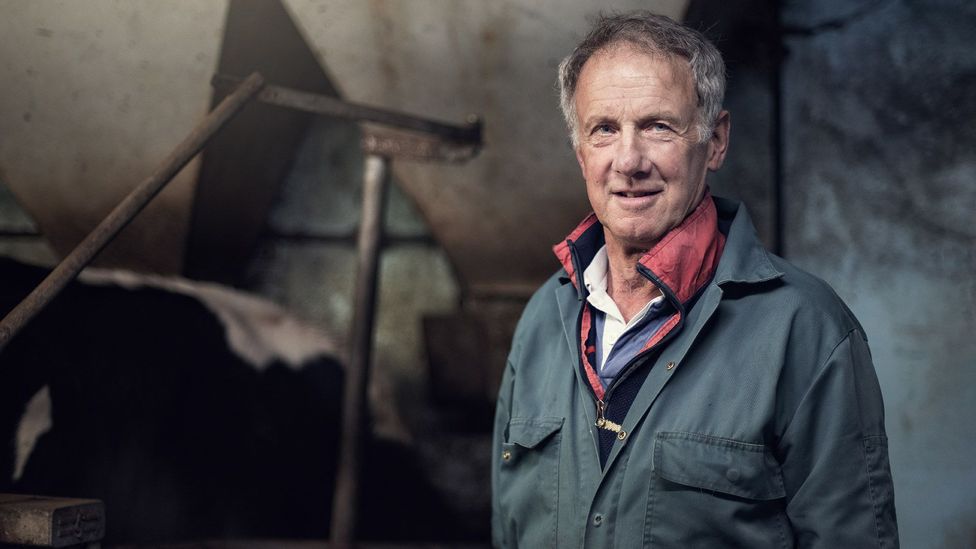
Philip Davies argues that farmers often feel “voiceless and weighted down” (Credit: John Quintero)

After we reach the main farmhouse, her Labrador Marley leads us to Hannah’s boss, Philip Davies, who denies that climate change is happening.  

“Climate change is the biggest load of tosh. It’s lies beyond lies,” he says, leaning his arm on the corner of his concrete cowshed, scanning his pregnant cows lying down on the straw inside. “When I was at school not far from here, some of the boys ordered Chairman Mao’s Little Red Book. When the books arrived, the headmaster, who used to deliver the post to us boys every morning, would throw them into your porridge. I feel the same about climate change.”

Philip is a tall man who stands erect with piercing blue eyes; he has been a dairy farmer for more than five decades. “I was born a dairy farmer milking a cow when I was six or seven. I remember that first cow, Sylvia, in that farm just down the road, and my father and grandfather before him,” he says. Each precious cow in his herd has a number, but also a name. Mabel, Beryl, Megan, Antoinette, Estelle: names that have echoed through the family herd since the 1950s. Last year, Philip and his three brothers invited 150 neighbours, friends and those they do business with to a marquee to share a meal of meat pies, and bread and butter pudding, listening to stories of their grandparents to celebrate the century their family has been milking cows.

As I hear more from Philip about his experience of farming, a pattern begins to emerge of periodic catastrophes that have shaped his history. “I remember foot-and-mouth disease in the late 1960s,” he recalls. “I was at school, it was the start of October, and I went to play sports. I could see fires all the way from Manchester with the cows burning.” Philip then tells me about the bovine spongiform encephalopathy (BSE) outbreak – better known as “mad cow disease” – when he lost 30 cows overall. He vividly remembers the day the vet condemned three of his cows in one day, putting them down in his yard. “It was a tragedy,” he says. After BSE, there has come a drive to reduce tuberculosis levels in cattle. “It changed from something we lived with to a massive issue,” he says, his voice filled with frustration and sadness.

Farmers are the most optimistic people I know, but scratch under the surface, we are carrying disappointment and anger – Philip Davies

Philip feels that cattle farmers have a raw deal. “It’s toughest on the youngsters like Hannah.” Philip is keenly aware of how hard Hannah works, not only with the cows but also in masterminding all the paperwork. He says he would love her to have a more secure future in dairy farming, in which the price of milk would reflect the extraordinary hours and hard toil she pours into the job.The deep listening technique can be an insightful way to learn more about someone's views, even if you disagree with them (Credit: John Quintero/BBC)
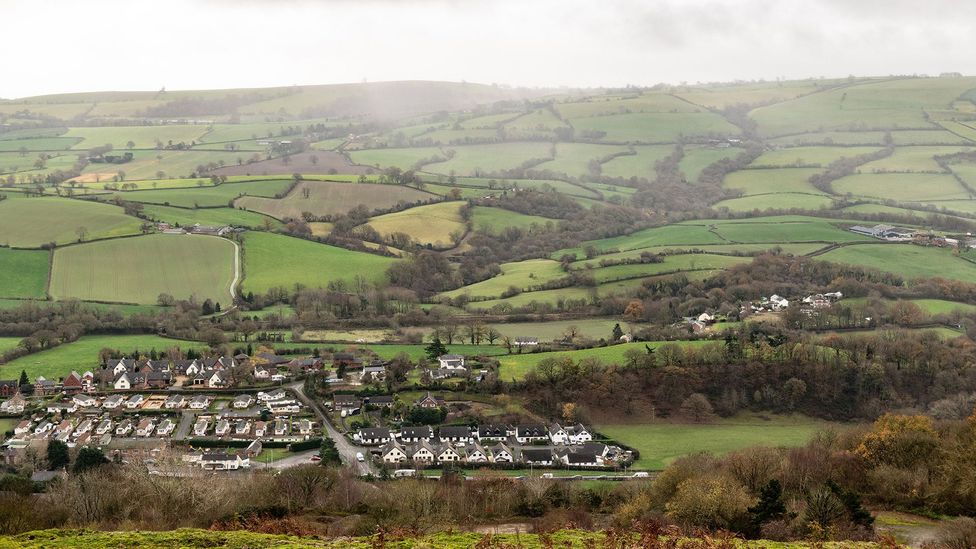
The deep listening technique can be an insightful way to learn more about someone’s views, even if you disagree with them (Credit: John Quintero/BBC)

On the second day of my trip to the farm, I awake early to walk in the surrounding fields, to try and make sense of Philip’s outlook – one that rejects humanity’s huge contribution to the warming of the planet as well as the significant emissions caused by dairy farming. The dry yellow corn is thigh high, and the morning mist hangs heavy, prescient of another intensely hot day. The wide landscape gives me a sense of perspective, and an insight into Philip’s “deep story”. I sense the pride he feels about the intensity of his lifetime of labour alongside a disappointment about the lack of respect that such toil is given and a fear when he looks to the future. 

Philip is uncertain whether he can sell his cows and retire in the coming years without his farm being clean of tuberculosis. He feels powerless that he’s forced to send cows who test positive for tuberculosis to be slaughtered, when he has no faith in the validity of the test, though research shows that the rate of false positives for a skin test is around one in 5,000. While on the surface tuberculosis tests have nothing to do with the evidence for climate change, I sense a wider distrust of scientific authority connecting the two.

“We feel voiceless and weighted down,” Philip says. “Farmers are the most optimistic people I know, but scratch under the surface, we are carrying disappointment and anger. We’ve been silenced by everyone pointing the fingers at us. ‘You naughty people, you are ruining the planet.'”

Two days after this conversation, Philip calls me, wanting to tell me about the very first time he felt wrongly accused as a dairy farmer. He remembers sitting round the table with his family listening to the radio in the 1970s and hearing a story about how drinking milk was causing cancer, a story later dismissed as untrue. He conveys the depth of traumatic experiences he has endured and the multiple occasions on which he feels dairy farming, his own calling, had been unjustly targeted. In his eyes, climate change is yet another example of the “faceless men in dark corridors” looking for a scapegoat and seizing on the usual suspect – farmers.

Now that Philip has had time to reflect, I want to know how he found our conversation.”It was refreshingly honest,” he replies. “I just felt that you were actually listening. You hadn’t got an agenda and came with a clean piece of paper. That was very noticeable.”Increasingly extreme weather has been noticeable in the Shropshire countryside and has been making the jobs of dairy farmers harder (John Quintero/BBC)
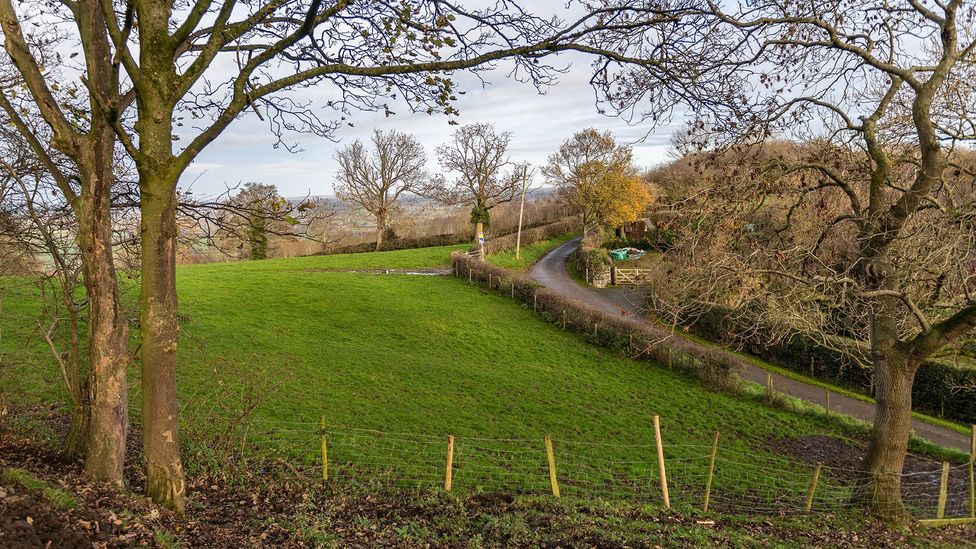
Increasingly extreme weather has been noticeable in the Shropshire countryside and has been making the jobs of dairy farmers harder (John Quintero/BBC)

On the final evening of my visit, Philip, Hannah and I eat together in the garden of the local 17th-Century pub, a focus for the community. Philip has brought reams of the farm’s paperwork, proudly pointing to a figure of 7,520 litres, the average quantity of milk produced per cow over the year. It’s a high number but less than what cows on intensive farms are producing, according to the University of Oxford’s Garnett. “We don’t push the cows – forcing them to produce more milk,” says Hannah. “We don’t think it’s good for them.”

Hannah feels that the small-scale dairy herds in her family and among those closest to her aren’t really the big greenhouse gas contributors. “When people complain about dairy farmers, they are probably thinking about the way people farm in the US, much more intensively with little regard for the land.”

How does the science stack up on small scale versus intensive dairy farming when it comes to climate change? I turn to Taro Takahashi, a sustainable livestock systems researcher at the Cabot Institute for the Environment, University of Bristol.

“While less intensive farming is generally better for animal welfare and in many cases also beneficial to local ecosystems, its carbon footprint is almost always greater per litre of milk compared to more intensive farming,” says Takahashi. “This is because much of the methane and nitrous oxide emissions attributable to a cow would happen regardless of how much milk they produce. If the cow produces more milk, the emissions per litre declines.” At the same time, Taro points me to a recent study which suggests the intensive approach is only more beneficial if it is linked to more wilderness being spared the plough

Despite Philip’s denying climate change, the dedication to the welfare of the cows that he shares with Hannah does in fact align with one evidence-based recommendation for lowering greenhouse gas emissions from the dairy industry. Improving animal health monitoring and preventing illness is one of the 15 top measures identified by the management consultancy McKinsey to reduce farming emissions. With fewer calves dying young and less sickness, less methane and other emissions are released per litre of milk.Hannah, Philip and Ben may have differing views on climate change, but they have a sense of duty to the environment in common (Credit: John Quintero/BBC)
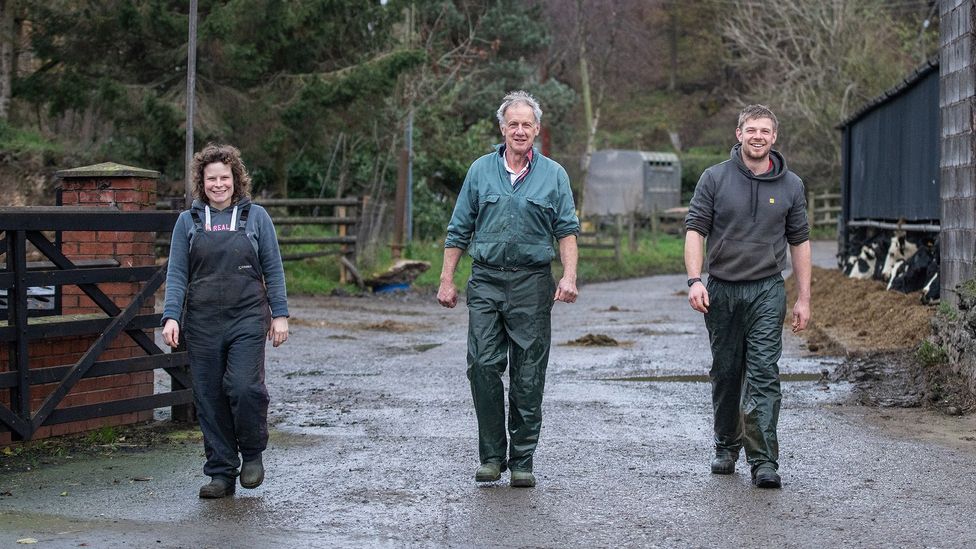
Hannah, Philip and Ben may have differing views on climate change, but they have a sense of duty to the environment in common (Credit: John Quintero/BBC)

Lorraine Whitmarsh, director of the Centre for Climate Change and Social Transformations at the University of Bath, studies the challenges of communicating the reality of climate change. It gets tougher when climate change messages are threatening to our values, lifestyles or political ideology. She tells me we are motivated to agree only with the parts of the climate change narrative that align with our livelihoods or core beliefs, denying our responsibilities if the implications of accepting them would be challenging for us. This is a psychological behaviour termed “motivated reasoning”, and it keeps us on the lookout for facts or opinions that reinforce our values and beliefs. I recall Hannah, who is strongly rooted in her community, telling me proudly about the positive impact on the environment of buying more locally produced food.

And, working alongside motivated reasoning, there is another psychological behaviour that acts to help us ignore or dismiss information that threatens our values and beliefs: “confirmation bias”. So, for example, Philip ignores the evidence for significant global warming from human activity, but is finely tuned to stories revealing mistakes by climate scientists.

How can we encourage a more constructive discussion with people who either deny anthropogenic climate change or their own contributions to it? Whitmarsh points to the importance of understanding someone’s values and identity. Her research in the UK demonstrates the effectiveness of narratives emphasising saving energy and reducing waste to reach people less concerned and more sceptical about climate change. Meanwhile, research led by Carla Jeffries of the University of Queensland, Australia, suggests that framing climate change action as showing consideration for others, or improving economic or technological development, can have more impact with climate deniers than focusing on avoiding climate risk. Whitmarsh also tells me we are also more likely to trust climate change messaging if it comes from someone within our own community. For Ben Davies, adapting the dairy industry to reduce its emissions is a top priority (Credit: John Quintero/BBC)
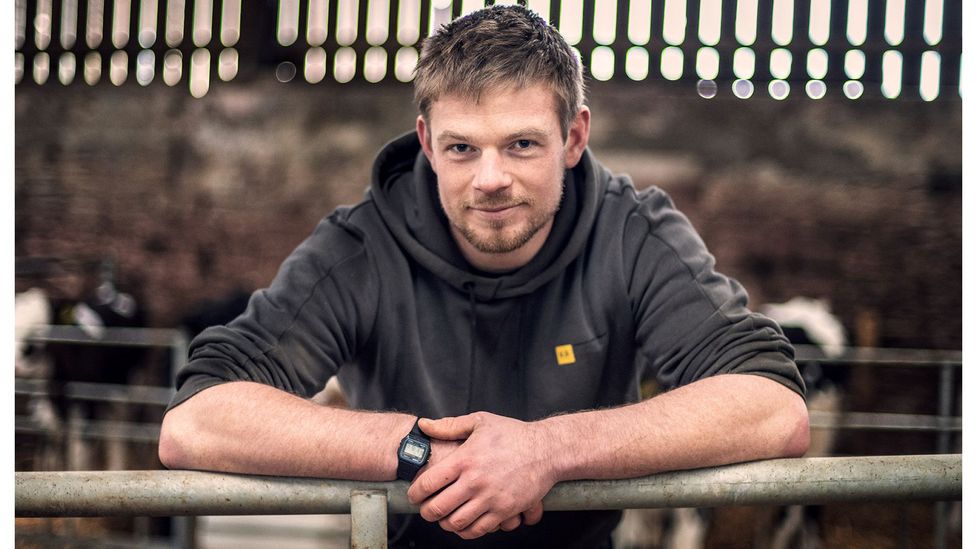
For Ben Davies, adapting the dairy industry to reduce its emissions is a top priority (Credit: John Quintero/BBC)

Back on the farm, Hannah receives a call from Philip, who wants to introduce me to his youngest brother, Peter, who owns 220 cows, the other half of the original family herd. Given that Philip is convinced the Earth is not heating up and he’s keen that I meet his brother, I anticipate that I’ll hear a similar perspective. But that’s not quite the case.

There’s a definite change in the climate – and it’s making our job a lot harder – Peter Davies

Hannah and I sit at a table in Peter’s lovingly tended garden at the edge of his fields, alongside his son Ben, 29, who works full-time with him on the farm.  

“There’s a definite change in the climate – and it’s making our job a lot harder,” says Peter. His son Ben agrees that the weather is getting hotter and more extreme. “Being in the country, outdoors all day, you notice things more,” says Ben. “You see the change in weather patterns and with the rivers – you can see flooding and damage and what’s it doing.”

Father and son lead us round the back of the garden to the huge steel and concrete shed they have built to house the cows in separate cubicles, alongside a steel fibreglass tower that stores manure. The cows spend all winter in the shed on rubber mats, and the manure flows down with gravity into a channel. The manure then gets pumped into the tower, where it is ready to be injected into the soil as fertiliser in spring and late summer. Using this stored manure means there is less need for synthetic fertilisers, reducing costs as well as the carbon footprint of fertilising the fields. Injecting manure in this way also reduces emissions of ammonia, which can damage ecosystems and break down into nitrous oxides (a greenhouse gas).

Before moving to this system, the cows were kept on hay and mucked out every three weeks. “This new cubicle system, it’s a lot less work, with far less waste,” says Ben.

I think there is a strong need for more action, we are going too slowly – Ben Davies

I have a sense from Peter and Ben that rather than feeling like victims of the changing climate, their understanding of the bigger picture has given them a sense of agency, a desire to adapt and a willingness to take risks to do so. Peter, spurred on by Ben, has recently made these significant investments, amounting to some £400,000 ($530,000), to make their farm more efficient and reduce its climate and environmental impact. “Ben is the driving force,” Peter says. “It’s people between 25-35 years old, in their prime. You need to let them get on with it when they are at their most persuasive.”

I’m curious about how Ben came to have these insights into climate change and learn about the adaptations needed to reduce the farm’s methane and carbon footprint. “I learned on the internet. I’m self-taught, and then I taught it to others in the pub,” Ben replies.

More than just reducing his own footprint, Ben is in favour of larger policy changes, such as farms needing to meet environmental targets before they are allowed to expand. “I think there is a strong need for more action, we are going too slowly,” he says. Peter agrees: “We’ve got to change.”  Ben Davies and his father Peter have invested substantial sums in emissions-reducing technologies on their farm (Credit: John Quintero/BBC)
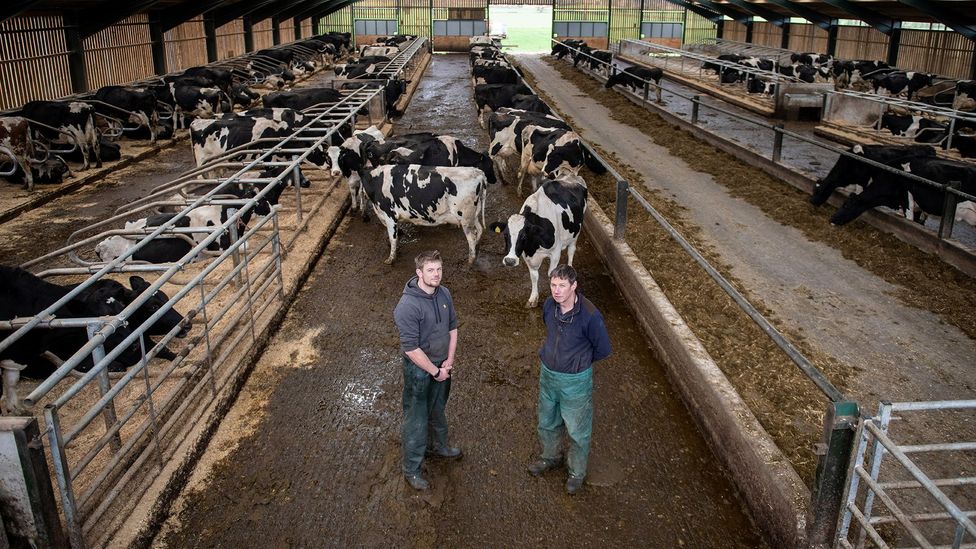
Ben Davies and his father Peter have invested substantial sums in emissions-reducing technologies on their farm (Credit: John Quintero/BBC)

Among this small group of Shropshire farmers, the views on dairy and climate cover much of the spectrum of debate. So how do they make sense of each others’ differing views on climate?

“My uncle Philip is one of the old generation,” Ben says. “He will be retiring soon. I don’t think you can win over people. It’s more about our generation making an impact.” 

Given his knowledge and commitment to reducing climate change, how does Ben respond to critics who argue that we may have to stop eating meat and dairy entirely to make a significant dent in emissions? He pauses. “I think it’s a small minority, who are trying to ruin our future and a business that our family has tried to develop over 100 years. Come to my farm and have a look,” he says. “I can show you what we are doing to reduce our emissions footprint, and all the infrastructure we are investing so heavily in.”

When it’s time to leave, I ask Hannah if hearing from Peter and Ben has changed her perspective. She harbours dreams of renting her own dairy farm with a small herd and setting up an ice cream business. If she is able to realise her ambitions, would she take steps to reduce greenhouse gas emissions?

“I suppose you would have to see the figures, but if we could catch the rainwater to wash the milking parlours and got wind turbines and solar panels to supply electricity, it wouldn’t affect us farmers,” she says. “If there was a way to do our bit and our country did start making steps to improve our emissions, maybe other countries would follow.” But her doubts seem to catch up with her quickly. “But maybe Philip is right? We don’t know who is right and wrong – we don’t know the facts.”

Where Hannah remains unsure about dairy farming’s climate impact, there is another certainty that she will always come back to: her guiding principle.

“Cows are the most important thing. That’s the way I look at it. As long as the cows are happy, we are happy.” 

Are Dairy Digesters the Renewable Energy Answer or a ‘False Solution’ to Climate Change?

Capturing the massive quantities of methane dairy farms emit could reduce overall carbon pollution. But critics say the effort is propping up Big Dairy.


logo for covering climate nowThis article is published in partnership with Covering Climate Now, a global journalism collaboration strengthening coverage of the climate story.

At first, California dairy farmer Felix Echeverria was skeptical about installing a dairy digester on his 12,000-cow operation. The process, which involved covering a pit of liquid manure and capturing the methane emissions it releases before “digesting” it anaerobically, is expensive and complex, and not something he was qualified to run. But he saw the benefits neighboring farmers in the Bakersfield area reaped from their digesters and decided to get ahead of a state law that would require him to reduce emissions by 2030.

“I realized I could stay ahead of the curve on greenhouse gas emissions,” Echeverria told Civil Eats. “To know we’ve been able to comply [with the law], that was the motive.”

The other deciding factor: Echeverria learned that he didn’t have to invest in or build the digester, as farmers in years past have. Instead, he partnered with a developer, California Bioenergy LLC (CalBio), that applied for public funding to help pay for the project and now operates the equipment. And in exchange for his manure biogas, Echeverria earns a percentage of sales from the electricity generated by the digester.

Get the latest articles in your inbox.

“There’s absolutely no drawbacks,” Echeverria said of the digester, which has operated on the farm since 2018.

Agriculture accounts for nearly a quarter of global greenhouse gas emissions, and as its role in changing the climate has become increasingly clear, farmers like Echeverria are being asked to do their part. In recent years, much of the attention—and the bulk of public dollars—has focused on anaerobic digesters, which help meat and dairy production facilities convert animal waste into energy that fuels vehicles and power grids.

Farmers, researchers, and policymakers across the U.S. see methane digestion as cost-efficient, effective, and revenue-generating for farmers. Proponents also see biogas and its cleaned-up version, biomethane (also known as renewable natural gas, or RNG) as a renewable source of energy that has a huge potential to replace more harmful legacy fuels.

Over the past decade, more than 250 digester projects have been built across the country, most of them on dairy farms. California alone has funded more than 100 digester projects, spending nearly $200 million of its ambitious California Climate Investments dollars on them. The state is poised to spend an additional $20-$25 million this year, though it’s unclear how the COVID-19 pandemic will impact the funding process going forward.

“The primary beneficiaries of these projects are the citizens of California. By reducing greenhouse gases, we are contributing to reducing global warming,” said Joyce Mansfield with the California Department of Food and Agriculture (CDFA), which runs a grant program for dairy digesters.

But digesters do have some drawbacks. They’re complex, expensive projects that farmers can’t afford on their own; they cost $3-5 million dollars each and typically require public subsidies to build—in the form of federal loans, state grants, tax credits, rebate programs, and myriad other incentives.

In the past, environmental advocates have supported digesters, but many have begun to see the technology in a new light. They say the emission reductions are not worth the massive public funding given that most manure-powered biogas comes from large-scale industrial dairy facilities known for their significant environmental impacts. (Straus Family Creamery in Northern California is one of a few exceptions.) As such, advocates say public financing of digesters amounts to supporting and helping to perpetuate large-scale factory farming—and in some cases, causing farms to grow in size—under the guise of mitigating climate change.

“Digesters are definitely reducing methane and generating fuel [and] electricity. It all sounds very good, but it’s not a clean fuel,” said Rebecca Spector, the West Coast director for the Center for Food Safety. “These enormous dairies are polluting the air and the water … and the state is promoting a false solution while propping them up.”

Ultimately, Spector said, portraying digesters as a panacea to dairies’ environmental woes is thwarting the move to a farming system that supports smaller-scale producers, reduced herd sizes, and cows on pastures. “We want dairies to move to more sustainable solutions and we support the state incentivizing that,” she said.

Pressure to Reduce Emissions

Large industrial dairies, also known as concentrated animal feeding operations, or CAFOs, clean manure out of their barns with water and store the liquid waste in large lagoons. As naturally occurring bacteria break down the manure, they release large quantities of methane, a greenhouse gas with a 25 times greater impact on global warming than carbon dioxide. In fact, more than half of California’s methane emissions come from dairies.

Manure management accounts for about 7 percent of agriculture emissions and in recent years, dairies across the U.S. have faced increased pressure to reduce that number. In California, the country’s largest dairy state, producers are required by 2030 to decrease their methane emissions by 40 percent from 2013 levels. And while much of the methane comes from cows belching, dairy manure lagoons account for approximately 25 percent of the state’s overall methane emissions.

Reducing those emissions is no small feat. In 2017, California housed 1.7 million cows—the vast majority of them residing in the Central Valley on approximately 1,300 dairies. According to the U.S. Environmental Protection Agency (EPA), an average dairy cow produces approximately 120 pounds of manure every day.

The digesters capture methane, convert the biogas to biomethane, and inject it into utility pipelines as renewable compressed natural gas (R-CNG) to power trucks, buses, and cars. In some cases, digesters also generate renewable electricity that’s used by the dairy, with the remainder sent into the grid. Dairy methane can also be turned into renewable electricity without combustion to power electric vehicles.

Because of the expense and scale of the projects, digesters are geared toward large dairies.

In the past, dairy producers built and operated their own digesters. But in recent years, as the projects have become more complex and their price tags have ballooned, big developers have largely taken over their funding, building, operating, and maintenance. Most of the digesters are now part of clusters, with the biogas sent to a centralized cleaning hub.

Because of the expense and scale of the projects, digesters are mainly geared toward large dairies—2,500 cows with support stock could support a standalone digester, according to digester developers. If a dairy is near a cluster project, it might work for it to be somewhat smaller.

While digesters may be expensive, data collected at the state level shows digester projects are cost-effective when it comes to reducing greenhouse gas emissions. In fact, the digester program is the second most cost-effective of the state’s 68 climate programs.

“Our projects are providing high value for the state in terms of return on their investment,” CalBio’s President Neil Black wrote in an email. “We are destroying methane, which has greater short-term warming impacts in initial years… [so] the climate benefits will be seen much sooner than projects that reduce carbon dioxide.”

Indeed, the greenhouse gas reductions can be substantial. Echeverria’s dairy digester was expected to cut its manure methane emissions by approximately 75 percent. It will also reduce energy costs and its use of fossil electricity from the grid. The digester delivers approximately 8 million kilowatt-hours of renewable electricity annually to state utility, Pacific Gas & Electric (PG&E). And the dairy is part of the Kern County Dairy Biogas cluster, a group of 16 dairies with approximately 60,000 milk cows that collectively produce approximately 6 million diesel gallon equivalents per year.

For large dairies, digesters can be a godsend: they cut the cost of complying with environmental rules, and offer a new source of revenue to supplement volatile milk prices. Farmers can also use electricity-engine waste heat to refrigerate their milk, resulting in further savings.

Digesters also provide benefits beyond emission reductions, Echeverria said. “We don’t have as much solids to deal with in the waste stream because a lot more material gets digested and turned into gas. We can move it around easier, our lagoons stay cleaner, and we get a better fertilizer source,” he said, referring to the fact that nutrients are broken down more thoroughly in the digester and are more available to the plants when the manure is spread on fields. And because digester projects are required to double-line the lagoons, he says nitrates don’t leach into groundwater.

Digesters also reduce emissions of hydrogen sulfide and other gases, said Black, CalBio’s president, improving air quality and reducing odors. The company is working to help convert truck fleets from diesel to natural gas, he said, which will significantly reduce nitrogen oxides, a major component of smog, in the highly polluted Central Valley where residents live with some of the worst fine particle pollution in the nation.

But Spector with the Center for Food Safety contends that while digesters do provide some benefits, they don’t solve the issue of nitrates contaminating groundwater—a major issue in the Central Valley, where low-income residents are often forced to rely on bottled water. That’s because nitrates often leach from manure applied as fertilizer into groundwater. Spector says that when digesters burn biogas they also produce air pollution. In addition, the digesters don’t address the climate impacts of enteric emissions (from cows releasing gas) which account for about half of the methane emissions from dairies.

Subsidies for Developers, Revenue to Industrial Dairies

Critics also decry the fact that much of the public funding for dairy digesters has gone into the hands of just a few developers.

In California, the CDFA has created a research and development program that is funded with the state’s cap and trade dollars. From 2015 to 2019, the program has awarded over $180 million to 108 projects, the agency told Civil Eats. And yet the vast majority of that money has gone to just two developers (only 12 developers have ever applied, the agency said).

CalBio has receive the largest amount: $99 million to date. And Maas Energy Works has been awarded $82.5 million. The CDFA grants require a 50 percent financial match, though those funds can also come from other public sources. Both companies also say they have received other public funding for their projects. Additional capital for the projects comes from investors and lenders.

CalBio currently operates five projects in California and is developing, according to its officials, more than 60 additional digesters in seven clusters of existing dairies that will produce renewable compressed natural gas for use in vehicle fleets. Maas Energy Works has a total of 27 digester projects, including 22 in California, three in Washington state, and two in Oregon.

“California has required the dairy industry to reduce their methane emissions by 40 percent. The best way to achieve that reduction is with dairy digesters,” Maas Energy Works spokesman Doug Bryant told Civil Eats via email.

The digester projects are a financial boon to both the developers and farmers. While in previous years, their value was based around renewable electricity generation and the sale of carbon credits, it now comes from the production of low carbon fuel, through the sale of natural gas, as well as the generation and sale of “credits” that can be sold to polluting companies and other organizations that use them to comply with state and federal requirements or voluntary emissions goals.

Precisely who benefits from these income streams varies from project to project. But with the new generation of digesters, it is often the developers who bring in the capital and who then own the digesters while the dairy producers rent their lagoon and provide the manure in return for a cut of the power sold. “Our company helps bring in the capital from lenders and investors. The dairies… receive the payment for contributing their manure, and the better the project performs, the more they will make,” said CalBio’s Black.

He added that dairies have an opportunity to invest in their projects, but that is optional. In Maas Energy Works projects, on the other hand, over half of the projects are 100 percent owned by the dairy farmer and the developer simply operates the digester for a fee, the company told Civil Eats.

Fight Over Renewable Gas

In the coming years, digester developers and dairy farmers may tap into an even bigger source of income as the gas industry looks to replace some of the “fossil-based” natural gas it currently sells. Natural gas companies such as SoCalGas and PG&E have heavily promoted biogas as a cost-effective, reliable “renewable natural gas.” The private utilities say that mixing RNG with regular gas in their pipelines will reduce its carbon intensity. And it appears the gas industry may get its way, at least in the short term.

While in the past, digester projects generated electricity for export to the grid, the current focus is on using the dairy biomethane—in the form of CRNG—as an alternative vehicle fuel and energy source. Out of 108 projects funded by the CDFA since 2015, 102 produce or will produce CRNG. And in recent years, these are built in a cluster of digesters that pipe gas to a centralized hub.

Two years ago, a new California law essentially mandated that a certain amount of biogas from manure and other renewable sources be included in utilities’ energy mix and for it to be injected into the gas pipeline system. The California Public Utilities Commission is currently in the process of creating a procurement standard to make that possible.

Legislators recently extended the ability to tap into $40 million in subsidies through a program that connects manure digesters to utility pipelines. And the SoCalGas settlement for the Aliso Canyon gas leak is also channeling $26.5 million toward the construction of dairy digester projects.

While some have praised this move, critics say it has created a whole set of ethical issues. Jim Walsh, a senior energy policy analyst with Food & Water Watch, says that using California Climate Investment funds to produce renewable gas from biomethane that utilities want in their portfolio supports not only factory farming but also the legacy fossil fuel industry—and could ultimately allow it to continue its polluting ways.

“These cap and trade funds are huge subsidies that utilities and other large polluters pay for to avoid their own emission reductions…. It allows them to greenwash themselves while proceeding with their practices,” Walsh said. “This is really just a shallow attempt to extend the life of their industry in the face of a growing backlash against fossil fuel development.”

Using biogas from manure as part of utilities renewables portfolio isn’t cost effective either, Walsh added, and will significantly increase rates for consumers. Methane-derived RNG can also leak through pipelines when transported, just like natural gas. And the bet on biogas from dairies is happening just as cities around the country are focusing more on electricity and passing laws to stop the building of new gas infrastructure.

In California, state officials have also pushed electricity as a strategy for cutting emissions from homes and workplaces. Meanwhile, utilities like SoCalGas counter that using biogas as part of their energy mix can reduce greenhouse gas emissions faster and cheaper than electrifying buildings.

Ultimately, what could make utilities’ move to biogas problematic is simply a problem of supply. Studies show there likely won’t be enough RNG/biomethane to meet the state’s climate goals.

Alternatives Underfunded, Lag Behind

Dairy digesters aren’t the only way to manage manure’s methane impact, but environmentalists say that other, more cost effective and sustainable methods tend to be much harder to get funded.

The CDFA runs a second methane reduction grants program called the Alternative Manure Management Program (AMMP). Those include projects focus on different ways to handle manure, such as composting and conversion to something called dry scrape collection, as well as enhanced pasture-based management practices (though few producers have applied to move their cows to pasture).

The program’s funding makes up only 20-30 percent of the total available for methane reduction programs, records show. More producers apply for the AMMP funding than for digester dollars, but in 2019 about half were rejected due to lack of funding.

The CDFA told Civil Eats that the dairy digester program has greater reductions of greenhouse gases than the alternative program. But Jeanne Merrill, policy director of California Climate and Agriculture Network (CalCAN), said the agency’s comparison is flawed. The CDFA calculates emission reduction impacts from AMMP projects on a 5-year project basis, she said, while those from the digester projects are calculated on a 10-year basis. “That’s comparing apples to oranges,” Merrill said.

CDFA officials said they use those time spans because they represent the expected duration of the projects. But Merrill said when greenhouse gas reductions are compared across both programs using similar timeframes, the AMMP projects fare quite well and sometimes do a better job with emission reductions per dollar.

AMMP projects are also faster to implement. Of the 108 digester projects awarded grants since 2015, only 13 are now complete and operational. The remaining 95 are at different stages of implementation.

Alternative methane reduction projects can also help protect water and air quality, Merrill added. Because they’re less expensive, they’re accessible to smaller farms and have greater geographic impact. And while digester projects are only guaranteed for 10 years (although Maas Energy Works told Civil Eats its digesters are expected to survive for at least 20), alternative projects are not subject to changes in complex technologies so are easier to maintain long-term.

“The trouble with digesters is that they only work for a quarter of the state’s dairies,” Merrill said. “Small and middle-sized dairies don’t have enough manure or capital to justify building digesters.”

Given the benefits, Merrill added, the CDFA should allocate half the available funding to non-digester programs.

Coronavirus May Stem the Tide of Funding

As the COVID-19 pandemic rages through California and the rest of the country, it’s still unclear how it might impact dairy digester projects. The pandemic has battered many smaller dairy farmers, with demand for dairy dropping and milk prices at historic lows. But both California Bioenergy and Maas Energy Works told Civil Eats that beyond minor delays and a slow-down in financing, the virus has had a limited impact on their operations so far.

In the near term, the impact may be financial. Before the pandemic, California’s governor Gavin Newsom proposed a budget that included a new ambitious Climate Catalyst Fund of $1 billion over the next four years. Companies—including farms and digester developers—could apply to get low-interest loans to reduce their climate impacts. That budget proposal, Newsom now says, “is no longer operable” and will have to be revised.

But given the fact that CDFA set its budget for 2020 loans last year, even the pandemic isn’t likely to stop the state’s fledgeling dairy digester industry from progressing—at least for the foreseeable future.


Top photo: The Riverview Dairy Digester in Pixley, California. It receives manure from roughly 3,000 cows, plus replacement stock. (Photo courtesy of Maas Energy Works)

Calves and ‘cries of anguish’: why Joaquin Phoenix decried the dairy industry


The best actor Oscar winner gave a speech about humanity’s treatment of cows, shining a light on the harsher realities of milk production.

https://www.theguardian.com/food/shortcuts/2020/feb/10/calves-and-cries-of-anguish-why-joaquin-phoenix-decried-the-dairy-industry

Not milk? Joaquin Phoenix at the Oscars.
 Not milk? Joaquin Phoenix at the Oscars. Photograph: Étienne Laurent/EPA

The dairy industry used to get a free pass, even from many animal rights campaigners. But with the mainstream emergence of veganism, more people are becoming aware of practices that are normal in milk production. Now, they are even talking about it at the Oscars.

In his acceptance speech for the best actor award, Joaquin Phoenix spoke of our “egocentric world view” and how we “plunder” the natural world for its resources. Turning to dairy, he said: “We feel entitled to artificially inseminate a cow and steal her baby, even though her cries of anguish are unmistakeable. Then we take her milk that’s intended for her calf and we put it in our coffee and our cereal.”

The reality of dairy farming can be shocking for people who have always assumed milking a cow is harmless. From the age of 15 months, female cows are artificially inseminated with semen drawn mechanically from a bull. Once born, the calf will usually be taken away within 36 hours. This is so farmers can take the milk the mothers are making. Experts say that a strong bond is formed quickly after birth and the separation is traumatising for both cow and calf.

If the calf is male, he will be considered a byproduct and either killed immediately or sold on to be raised as veal, which postpones his death for a few months. If it’s female, she will follow her mother in the cycle of forced pregnancies until she is too old to carry on, after which she will be killed.

The rise of veganism is hitting dairy bosses hard. Sales of plant-based milks are soaring. Last year it was revealed that almost a quarter of Britons are consuming non-dairy milk alternatives. Meanwhile, the average person’s milk consumption in the UK has fallen by 50% since the 50s.

Phoenix linked the oppression of animals with the oppression of humans. The “cries of anguish” from mother cows are finally being heard.

In first pilot of its kind, Israeli dairy won’t separate calves from mothers

Yotvata project will allow female calves to stay with mothers until weaning — but male calves will still be separated, sent off for fattening and slaughter

Dr Sivan Lacker and Ashkar Ginossar at the Yotvata Dairy in southern Israel. (Lior Nordman)

Dr Sivan Lacker and Ashkar Ginossar at the Yotvata Dairy in southern Israel. (Lior Nordman)

The Yotvata dairy farm in southern Israel is launching the first pilot project of its kind in an industrial cowshed in Israel — and will not separate female calves from their mothers right after birth.

The project will be run at a relatively new cowshed at Moshav Idan in the southern Israeli Arava desert, Zman Israel, the Times of Israel’s Hebrew language sister site, reported.

When the male calves are several days old they are sent off for fattening prior to slaughter — and that will not change. The project, planned to launch next year, will apply to newborn females, who are currently also separated from their mothers and taken after a few days of isolation to join other calves in a kind of crèche.

Veterinarian Sivan Lacker traveled to Europe to see how leaving calves with their mothers can be done. There, dairies tend to be smaller than they are in Israel, which is why Moshav Idan’s cowshed, with just 360 cows and an average of 150 births per year, was chosen.

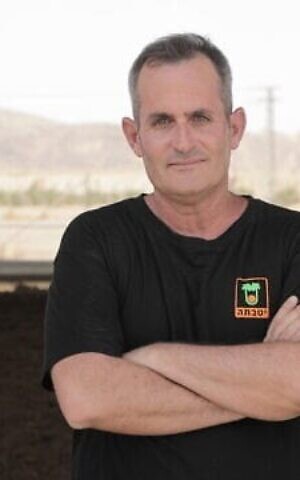
Ashkar Genosar, Milk Receiving and Manufacturer Relations Manager, Yotvata Dairy. (Lior Nordman)

“We’re starting it gradually and very much want it to succeed,” said Ashkar Genosar, milk receiving and manufacturer relations manager at Yotvata Dairy. “We think it’s very important and hope that it will work from a health and technical standpoint. There are 23 cowsheds that work with us and when we suggested it to the manager of the Idan cowshed, she was very enthusiastic.”

Health risks facing calves include exposure to disease and entry into the cowshed of predatory animals, Genosar explained.

The idea is that the female calves will stay with their mothers for three to six months until weaning, after which they separate naturally. The youngsters will then join a group of their own age.

Genosar said that while the farm would lose the milk fed by the cow to its calf, studies showed that calves fed by their mothers went on to be healthier and stronger and to give more milk in the long run than those that had been separated from their mothers at birth.

Furthermore, the current practice of keeping and feeding calves in a separate “kindergarten” had substantial costs, which would be saved by allowing mother and calf to stay together.

“To the best of our knowledge, there is no such thing [as keeping cows and calves together] in the world of industrial cowsheds,” Genosar said.

Yotvata Dairy is one of the largest producers of dairy products in Israel and jointly owned by Kibbutz Yotvata and local food giant Strauss.

For as little as $6 a month, you can help support our independent journalism — and enjoy an ADS-FREE experience, as well as special benefits and status as a Times of Israel Community member!

Read more

New Study Sheds Light on Suffering of Canadian Dairy Cows

DAMN DAIRY

http://www.upc-online.org/alerts/170911_damn_dairy.html#.WbwQ0bsBpic.facebook

 by Karen Davis, PhD

This article derives from an impromptu comment I posted on September 8, 2017 following an article in Animals 24-7:“What is ‘the dairy industry’?”

A calf being licked by her mother.

All I ever had to see of the dairy industry to hate it were images of calves torn from their mothers to be isolated, tremblingly, in solitary crates and hutches. All I ever had to hear were the mothers crying for their stolen newborns. This is not just big dairy operations; it is dairy farming. I remember back in the 1970s being taken by a friend to a small dairy farm in Pennsylvania and seeing the cows and the mud and the cement milking “parlor” and the milking machinery. That was my first glimpse of a bizarre and sickening business considered by everyone I grew up with as “normal.” In fact, it wasn’t “considered” at all.

Whenever possible, I post comments to food section articles in The Washington Post and elsewhere pushing back against claims that the mammary milk stolen from mother cows and goats is “necessary” for human calcium; in reality, interspecies mammary milk is not even digestible by the majority of the human population. Even if it were, the business would be what it is, ugly. Despite the machinery, packaging and other things between themselves and the cow or goat, consumers of mammary-gland products are essentially sucking the nipples of a nursing mother robbed of her baby and her baby’s birthright.

I’m one of those people who never realized for the longest time that in order to produce milk, a cow, like all mammals, has to be pregnant. Reading “The Cookbook for People Who Love Animals” in 1983 turned on a light bulb in my brain. That cookbook described how dairy cows have been genetically manipulated to produce such an unnatural amount of milk for human consumption that their udders drag on the milking parlor floor and workers tramp on those swollen, dragging udders without a thought.

The cows, meanwhile, are drained of the calcium they need for their own bones, which are being depleted in order to produce milk for cheese pizzas and anything else it can be poured into for profit. Like hens manipulated for excessive egg shell production, dairy cows develop osteoporosis and painful lameness. They develop mastitis, a painful infection in their udders that leaks pus into their milk. A man who grew up on a family dairy farm in Maryland once told me that they sometimes inserted large antibiotic syringes directly into the cow’s udders to treat the infection.

The bodies of dairy cows are disproportioned by the weight and drag of their abnormal udders, and the cows have to be gotten rid of as soon as they no longer pay their way. Like hens bred for egg production, the cows’ bodies are mere envelopes for their ovaries; after that, they’re done with.

In her book Slaughterhouse, Gail Eisnitz writes that every hamburger contains about 100 “spent” dairy cows. Think about that the next time you pass by the wormy messes in the meat display counter.

Book cover: Slaughterhouse

Slaughterhouse was first published in 1997. Twenty years ago, Gail Eisnitz bore witness to events that are the same today as they were then: Your worst nightmares are “normal agricultural practices.” (See my review of Slaughterhouse.)

Articles I’ve read in agribusiness publications about cows, chickens, turkeys, pigs and other farmed animals being locked in a building in which a fire broke out, quote the “humane” family farmer: “At least no one got hurt.” I recall an article about a small dairy farm’s cows – those who did not die in the barn fire but were suffering badly from smoke inhalation – being held without help on the farm until the auction truck came to take them away.

Farmers are not sentimental about “their” animals, and this is a source of pride with them. Yet they have no problem creating smarmy, cloyingly sentimental and dishonest ads on TV and elsewhere about their “wholesome” enterprise and their “humane” animal care – anything to anesthetize the public. Each time I see one of these “dairy pure” types of ads with a farmer holding an inert newborn calf (just taken away from his or her mother), I want to puke and weep with sadness and disgust.

I want all forms of animal agribusiness to be abolished forever asap. I support whatever will make that happen. I will never stop working for an animal-free food supply and for animals themselves until I die trying.

Karen Davis, PhD, President, United Poultry Concerns