Reports of bullet-riddled raptors increase as bird season opens

One had bullet holes through its wing feathers, narrowly missing the humerus bone. Another had a body peppered with lead shot. They were the lucky ones.

Red-tailed hawks and other raptors fall as unintended or illegal targets each October as upland game bird season resumes in Montana. Those that survive the blast occasionally wind up in the care of raptor rehabilitators like Rob Domenech of Wild Skies Raptor Center.

“Most of it goes untold because the birds just drop and that’s it – end of story,” Domenech said. “But last week, I got a call from the manager at the Missoula landfill who had a raptor there. He found it right near the scale house. We think it was shot in that area, because it couldn’t have gone too far with those pellets all over its body. It was lead shot, probably for upland game birds.”

The hawk is slowly recovering at a clinic on Missoula’s south side under the care of Brooke Tanner, a licensed raptor rehabilitator.

“This one was the worst I’ve seen in all my years doing rehab,” Tanner said. “Usually it’s one piece of metal. This bird had nine. It must have been far enough away because the injuries were superficial. But the bird had been on the ground several days, and the wounds smelled pretty bad. We’ll let the bones heal and treat for infection before we try to dig out the pellets.”

Tanner has also treated owls, crows and numerous other non-game birds for firearms injuries. The red-tailed hawk with the blasted wing feathers was still able to fly, so she left it in the wild.

Federal law and the Migratory Bird Treaty Act prohibit the killing of migratory raptors such as red-tailed and rough-legged hawks, and all owls. Crows don’t have that kind of protection, but most of the corvids Tanner’s seen were shot inside Missoula’s city limits, where discharging firearms is illegal.

“I get several crows every year when the babies are fledging and they’re pretty vocal,” Tanner said. “People don’t like the noise.”

With raptors, the problem may be a mistaken assumption that the birds of prey compete with two-legged hunters for pheasants and other game birds.

“Rough-legged hawks are not predators of upland birds,” said Ben Deeble, president of the Big Sky Upland Bird Association. “They have a real small foot, and eat nothing but smaller rodents. Red-tailed hawks are more generalist, and they catch the occasional upland bird. But we don’t consider hawks to be a predation problem where there’s good habitat.”

Most hawks seek mice and voles that compete with pheasants for forage in fields and meadows. Golden eagles will kill game birds, but there aren’t many of them in the Missoula or Mission valleys where bird hunters are active.

Pheasant season started Oct. 12, while other upland game birds like grouse and partridge have been legal since Sept. 1.

“Among some, there’s sentiment raptors are big birds that kill things and don’t have much other purpose,” Domenech said. “There’s some anti-predator sentiment out there. It’s disheartening someone would kill these birds. This (birdshot hawk) is a young bird, and they have 60 (percent) or 70 percent mortality in their first year of life anyway. It’s tough out there if you’re a raptor. All it takes is one bad person with a shotgun and they take out a lot of hawks.”

Feds Reopen Waterfowl Hunting Areas in MT

“They’re willing to accommodate hunters thanks to intense pressure from hunting groups and the NRA…WTF!!!” ~ JB

http://missoulian.com/news/local/feds-reopen-waterfowl-areas-including-ninepipe/article_f9fef894-32b7-11e3-a27c-001a4bcf887a.html

By Vince Devlin

RONAN – Cancel that.

The U.S. Fish and Wildlife Service on Friday afternoon reopened waterfowl production areas to the public, 11 days after they – and other public lands, ranging from national parks to national wildlife refuges – were closed because of the federal budget impasse.

National wildlife refuges administered by FWS, such as the Bison Range and the Lee Metcalf National Wildlife Refuge, remain closed.

The decision came on the eve of opening day of pheasant season in several states, including Montana – and after earlier warnings to hunters that the areas were closed to all public access because of the partial government shutdown.

Federal wildlife officer Mike Koole, who had posted “closed” signs at entrances to the nine separate WPAs in the Ninepipe area to help hunters know where they weren’t supposed to be, was assisting at the Lee Metcalf Metcalf Refuge in the Bitterroot Valley on Friday afternoon when the decision was made in Washington.

Koole, who is furloughed from his job and working without pay, said it was his intention to return to the Flathead Indian Reservation, where he works out of the National Bison Range, and have all the “closed” signs down in the Ninepipe area before pheasant season starts Saturday.

“If I have to stay until midnight, I’ll make every effort to take them down,” he said. “Depending on how dark it gets, I might miss one or two.”

Koole said he would also try to post some copies of the news release announcing the decision to reopen the public lands. The Ninepipe area, a patchwork of federal, state, tribal and private lands, includes 3,268 acres designated as FWS waterfowl production areas.

***

In Friday’s news release, FWS spokesman Bruce Decker said that “despite limited staffing, the Service has undertaken an assessment to determine what, if any, potential exists to open lands to public use with our obligations under the government-wide shutdown. It has been determined that allowing public access to Waterfowl Production Areas will not incur further government expenditure or obligation, and is allowable under a government shutdown.”

Koole received the advisory at 2:22 p.m. Friday, saying that “effective immediately, all WPAs will reopen to public use.”

Decker acknowledged that the closures had come “at an extremely difficult time with hunting seasons just underway, fall migratory bird migrations at their peak, and hundreds of communities forced to cancel events as part of National Wildlife Refuge Week.”

Initially, he went on, “with the approximately 78 percent of its employees furloughed, we determined it would be difficult for the remaining, non-furloughed workforce to ensure the safety of facilities, lands and resources, in a manner that incurs no further financial obligation to the U.S. government.”

Decker said the closures could be reinstated if the stalemate in Washington continues, and the service determines that keeping the waterfowl production areas open is costing money that Congress has not authorized it to spend.

Doing so would violate the Anti-Deficiency Act, Decker said.

The decision to reopen waterfowl production areas was likely to please Pheasants Forever and Quail Forever, national organizations that early in the week “demanded” Congress and the service reopen WPAs, wildlife refuges “and other publicly purchased lands for recreational use by hunters and the general public.”

“Waterfowl production areas are the most used publicly owned resources by waterfowl and upland hunters,” Dave Nomsen, Pheasants Forever vice president of governmental affairs, had said Monday. “Now, after years of supporting these lands through their purchase of federal duck stamps, hunters are locked out during the brief season they are allowed to pursue their hunting passion.”

Photo copyright Jim Robertson

Photo copyright Jim Robertson

Man killed in duck hunting accident in Hubbard County

Monday, October 07, 2013 10:39 a.m. CDT                                  by Bonnie Amistadi


Duck Hunting
NEVIS, MINN. (KFGO-AM) — A duck hunter died after being shot in the head by his hunting partner near Nevis.

The Hubbard County Sheriff’s Office says Adam Poole, 23, of Nevis, and his partner were in a boat on 4th Crow Wing Lake. They both stood up to shoot at a duck and the partner lost his balance, and the gun went off.

Poole died at the scene.

Secretary Jewell Should Look Up the Word “Refuge”

On September 26th 2013, just in time for “National Hunting and Fishing Day,” Sally Jewell, our new (and allegedly improved) Secretary of the Interior announced a U.S. Fish and Wildlife Service proposal to expand hunting opportunities throughout the National Wildlife Refuge System. The plan would open up hunting on six refuges currently free from armed ambush and expand existing hunting and fishing on another 20 “refuges.” The new rule would also modify existing regulations for over 75 additional refuges and wetland “management” districts.

The proposal is yet another nod to the “hunter’s rights” movement that has been sweeping the nation.

But what about the wildlife’s right to a true refuge, free from human hunting? Oh that’s right, animals don’t have rights, only humans—even including hunters—do. It is such an arrogant and absurd notion that sport hunters—arguably the lowest creatures to ever crawl out of the primordial ooze—have rights, while all other species of life do not, that I sometimes forget it’s the currently accepted law of the land.

In 1997, the U.S. Sportsmen’s Alliance (USSA) pushed for changes in wildlife laws to ensure that hunting and fishing were priority public uses on “refuge” lands. Thanks in part to USSA’s self-serving effort, the National Wildlife Refuge System Improvement Act was signed into law. As they openly boast, “The language of the Refuge Improvement Act has been essential in opening new Refuge lands to sportsmen.”

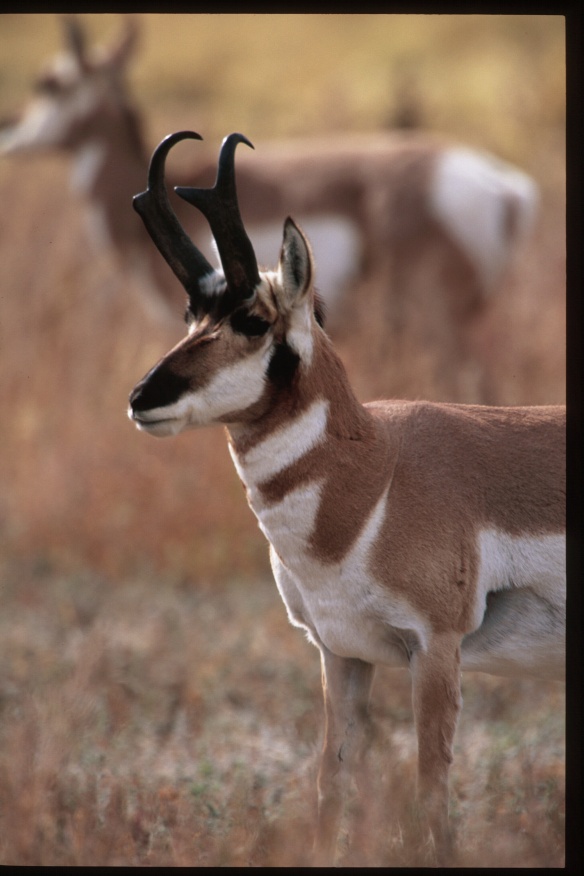
Meanwhile, Interior Secretary Jewell recently stated, “Sportsmen and women were a major driving force behind the creation and expansion of the National Wildlife Refuge System more than a century ago…” Of course they were, Sally, they were the ones who nearly hunted most of America’s wild species—including bison, elk, pronghorn, bighorn sheep, swans, sandhill cranes and too many others to mention here—to extinction. Jewell also suggested that, “Keeping our hunting and angling heritage strong” would “help raise up a new generation of conservationists.” Well, that depends on your definition of “conservation.”

There is so little land left in today’s world where wildlife can breathe easy, free from the constant fear that every human they see might be intent upon shooting them or taking the lives of their herd, pack or flock-mates. Studies have shown that animals suffer from the stress of hunting season in the same way that people during wartime suffer from Post-traumatic Stress Disorder. Yet, hunting is permitted on over 330 wildlife “refuges.”

According to the National Survey of Fishing, Hunting and Wildlife-Associated Recreation, published every five years by the USFWS, more than 90 million Americans, or 41 percent of the United States’ population age 16 and older, pursued wildlife-related recreation in 2011. Nearly 72 million people observed wildlife, 33 million fished, while 13 million hunted. In other words, while 80% of the total number of Americans who pursue “wildlife-related recreation” do so in a peaceful, non-consumptive, appreciative and respectful manner, only 14% hunt. And yet the rules are made—and everyone else is effected—by those who feel compelled to hunt down and kill our wildlife.

Hunting is not compatible with the quiet enjoyment of our nation wildlife refuges. It’s hard to watch birds while someone’s busily blasting at them. As a wildlife photographer, I can always tell by an animal’s nervous and elusive behavior that they are living in an area open to hunting. This was made abundantly clear on a photo tour of Alaska. In Denali National Park, which is closed to hunting, people are regularly rewarded with quality, up-close wildlife viewing. Conversely, wildlife sightings of any kind are extremely rare in national parks such as Wrangle-Saint Elias, where hunting is permitted.

Encarta defines the word “refuge” as “a sheltered or protected place, safe from something threatening, harmful, or unpleasant.” Given that hunting is indeed threatening, harmful and unpleasant, how can the blood sport be considered compatible with our national wildlife refuges?

______________

Your written comments about the 2013-2014 proposed Refuge-Specific Hunting and Sport Fishing Regulations can be submitted by one of the following methods:

Federal eRulemaking Portal Follow the instructions for submitting comments to Docket No. [FWS-HQ-NWRS-2013-0074]; or

U.S. mail or hand-delivery: Public Comments Processing, Attn: [FWS-HQ-NWRS-2013-0074]; Division of Policy and Directives Management; U.S. Fish and Wildlife Service; 4401 N. Fairfax Drive, MS 2042–PDM; Arlington, VA 22203.

Comments must be received within 30 days, on or before October 24, 2013. The Service will post all comments on regulations.gov. The Service is not able to accept email or faxes.

Comments and materials, as well as supporting documentation, will also be available for public inspection at regulations.gov  under the above docket number. In addition, more details on the kinds of information the Service is seeking is available in the notice.

Here are some of the refuges which the U.S. Fish and Wildlife Service proposes opening to hunting for the first time ever:

New York:

Shawangunk Grasslands National Wildlife Refuge: Open to big game hunting.

Oregon:

Baskett Slough National Wildlife Refuge: Open to migratory bird hunting.

Nestucca Bay National Wildlife Refuge: Open to migratory bird hunting.

Siletz Bay National Wildlife Refuge: Open to migratory bird hunting.

Pennsylvania:

Cherry Valley National Wildlife Refuge: Open to migratory bird, upland game and big game hunting.

Wyoming:

Cokeville Meadows National Wildlife Refuge: Open to migratory bird, upland game and big game hunting.

Meanwhile, under the proposal, the Service would expand hunting and sport fishing on the following refuges:

California:

Colusa National Wildlife Refuge:  Expand migratory bird and upland game hunting.

Florida:

Arthur R. Marshall Loxahatchee National Wildlife Refuge: Add big game hunting. The refuge is already open to migratory bird hunting.

St. Marks National Wildlife Refuge: Expand migratory bird hunting, upland game hunting and big game hunting.

Idaho:

Kootenai National Wildlife Refuge: Expand upland game hunting. The refuge is already open to migratory bird hunting and big game hunting.

Illinois:

Cypress Creek National Wildlife Refuge: Expand migratory bird hunting, upland game hunting and big game hunting.

Middle Mississippi River National Wildlife Refuge: Expand migratory bird hunting, upland game hunting and big game hunting.

Indiana:

Patoka River National Wildlife Refuge and Management Area: Expand migratory bird hunting, upland game hunting and big game hunting.

Iowa:

Neal Smith National Wildlife Refuge: Expand migratory bird hunting, upland game hunting and big game hunting.

Northern Tallgrass Prairie National Wildlife Refuge: Expand migratory bird hunting, upland game hunting and big game hunting.

Port Louisa National Wildlife Refuge: Expand migratory bird hunting, upland game hunting, big game hunting and sport fishing.

Maine:

Rachel Carson National Wildlife Refuge: Expand migratory bird hunting, upland game hunting and big game hunting.

Missouri:

Mingo National Wildlife Refuge: Expand migratory bird hunting, upland game hunting and big game hunting.

New Mexico:

San Andres National Wildlife Refuge: Expand big game hunting.

Oregon:

Bandon Marsh National Wildlife Refuge, OR and WA: Expand migratory bird hunting. The refuge is also already open to sport fishing.

Julia Butler Hanson Refuge for the Columbian White-Tailed Deer, OR and WA: Expand migratory bird hunting. The refuge is already open to big game hunting.

Malheur National Wildlife Refuge: Expand migratory bird hunting and sport fishing. The refuge is already open to upland game hunting and big game hunting.

Texas:

Aransas National Wildlife Refuge: Add migratory bird hunting. The refuge is already open to big game hunting.

Balcones Canyonlands National Wildlife Refuge: Expand hunting for migratory birds, upland game and big game.

Vermont:

Silvio O. Conte National Fish and Wildlife Refuge: Expand migratory bird hunting, upland game hunting and big game hunting.

Washington:

Willapa National Wildlife Refuge: Expand migratory bird hunting and big game hunting. The refuge is already open to upland game hunting.

More info:  http://www.doi.gov/news/pressreleases/interior-department-proposes-expansion-of-hunting-fishing-opportunities-in-national-wildlife-refuge-system.cfm
Text and Wildlife Photography ©Jim Robertson, 2013. All Rights Reserved

Text and Wildlife Photography ©Jim Robertson, 2013. All Rights Reserved

Near Death Experience in Hunting Accident Inspires Book on Miracles

[Where, pray tell, is God’s protection for ducks?]

Author’s Near-Death Experience in Hunting Accident Inspires Book on Miracles

By Tyler O’Neil , CP Reporter

September 17, 2013|6:28 pm

Don Jacobson, a Christian publisher who nearly died from a hunting accident in 1980, shares how his miraculous survival inspired him to encourage others to tell their miracle stories.

Don Jacobson almost died in a hunting accident, but God saved and transformed his life through a series of miracles, he says, inspiring him to publish other Christians’ tales about God’s amazing deeds.

“I ended up shooting myself in the stomach with a 12-gauge shotgun,” Jacobson, creator of the forthcoming project and book It’s A God Thing: When Miracles Happen to Everyday People, and author of God Makes Lemonade: True Stories that Sweeten & Inspire, told the Christian Post in a recent interview. He said his own miraculous survival led him to try to open other people’s eyes to the miracles God performs every day.

Jacobson’s story goes back to 1980, when as a 24-year-old, he was working in construction. One day he had his shotgun fixed, but the gunsmith accidentally drove a screw into the barrel. When the young hunter used the barrel to shove his dog away from some ducks, the weapon exploded.

Shell-shocked, Jacobson slowly realized that he’d shot himself. “I prayed a very intelligent and quick prayer – God, I’m going to need some help on this one,” he told CP.

“My gun was laying in half. I yelled, I hollered, I shot SOS shots. Nobody came, so I tried to walk, but my leg wouldn’t move.” When his leg stayed put, he realized he’d damaged it, and the “unbelievable pain” in his chest alerted him to his critical condition.

Twelve BBs entered his right side, with one on his left entering his heart and lodging itself in his lung. “If a BB had come out, I’d have bled to death,” Jacobson said. He credits God that none did.

Noticing his absence, his wife Brenda became anxious, but had no idea where he was. At 11:30 pm, his brother told her Jacobson had asked him to go hunting, and they rushed to find him in the woods.

The rescue party got lost on the way to the lake, and so they ended up in a spot the hunter had never visited before. In this foreign territory, they saw a little glint in the woods, and found his car. They finally reached him, “right on the edge of hypothermia.”

Once they’d found him, Jacobson was very thirsty, and asked for a drink. A man offered a can of grape juice, which the construction worker could have easily opened normally, but no one there was able to open it under the circumstances. “That was God’s protection,” Jacobson explained, because it he’d have swallowed that juice he would likely have drowned.

The medical helicopter sent to pick him up almost turned around due to fog, but just as it was arriving at his location, the fog cleared. It returned once the copter had picked him up.

Jacobson remembered an orderly at the hospital telling him “you’re in luck.” A missionary doctor who gained experience healing gunshot wounds worked at that hospital one in every eight weekends, and he just happened to be working that day. A Christian also, the doctor attended Jacobson’s church, but the two had never met.

After a tense surgery, the doctor told Jacobson’s wife that her husband would never walk again. God had other plans.

After 28 days in the hospital, Jacobson’s life was completely altered. “That took away my ability to work in construction, so I went back to college and into publishing,” he explained.

“Many people will say the miracles in the Bible are silly,” he said. “Maybe they are, but let me tell you about something else that’s happened.”

Jacobson’s upcoming project It’s a God Thing chronicles the stories of approximately 45 different modern miracles – from stories of survival involving 9/11 and the Boston Bombing, to a daughter getting saved in a capsized canoe, to a father catching a baseball for his son. The book is scheduled for release in December.

DSC_0035

I’m Not one of those Duck Dynasty Douchebags

Make no mistake; though my last name is Robertson, I’m no relation to those imposters from that stupid “reality” TV show, “Duck Dynasty” whose ugly mugs grace the front of a new line of T-shirts for sale at Wal Mart.

How do I know they’re ugly when I don’t get cable and have only seen their show once, for less than a minute? It’s true you can’t really tell what they look like under all that facial hair, but like I said, I saw their show once—for almost a minute. That’s all it took to see how ugly they are on the inside.

Before I realized what I’d stumbled upon and could flip the channel away from the enticing ignorance, I was forced to endure a tactless, feeble joke about roadkill and the approving chortles that followed.

The attitude toward wildlife exhibited by the “cast” of Douche Dynasty is an insult to the Robertson’s good name and a blasphemy to ducks and geese everywhere.

My great grandfather didn’t immigrate here from Scotland only to have the Robertson name sullied by a bunch of celebrity-wanna-bes or ZZ Top impersonators, sans the fuzzy guitars.

zz32

Early hunting season to begin for wood ducks, teal

Photo copyright Jim Robertson

Photo copyright Jim Robertson

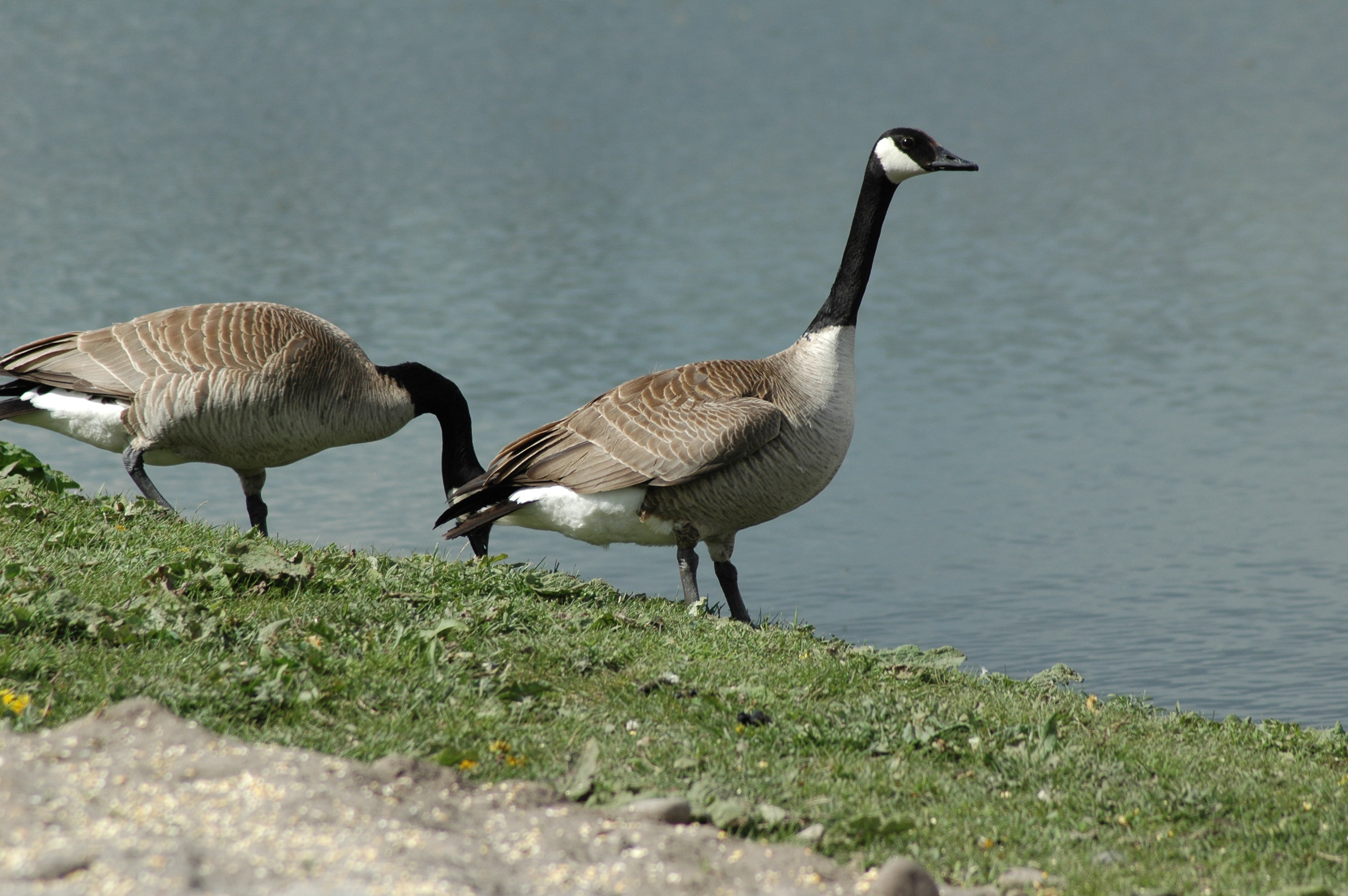
Canada geese are currently being hunted in Tenn.

The Associated Press, September 9, 2013

Early hunting season for wood ducks and teal begins this week.

NASHVILLE, Tenn. (AP) – Early hunting season for wood ducks and teal begins this week.

According to the Tennessee Wildlife Resources Agency, the season runs from Saturday to Sept. 18 with a daily bag limit of four, not to exceed two wood ducks.

Hunters must have a valid state hunting license in their possession as well as a Tennessee Migratory Bird Permit.

Hunters aged 16 and older also must have a Federal Duck Stamp.

The early hunting season for Canada geese began Sept. 1. It continues through Sept. 15 with a daily bag limit of five.

More information on Tennessee’s waterfowl season can be found on the TWRA website at http://www.tnwildlife.org under the “for hunters” section.

Information on the 2013-14 late waterfowl seasons will be available in late September.

The “Conservationists” are about to go hunting – again

The following blog post is from the Friends of Edie Road (a group of  bird watchers and wildlife watchers who are proposing repurposing the Edie Road area to non-hunting for three primary reasons:

1. Having hunters and other visitors present in quantity at the same time, in the same area, is an accident waiting to happen.

2. The growing base of non-hunting visitors is seriously under-represented in the WDFW land use decision making process. There are many more birders and photographers visiting the site than hunters.

3. This site is unique for birding because it is flat, easily accessible, and most important: a large variety of bird species love it.

http://friendsofeideroad.org/blog/blog_index.php?pid=10&p=&search=#blt

August 21st, 2013

I never meant this website to become a sounding board for a debate on the appropriateness of hunting as exemplary human behavior. However, I have received so many emails alleging that hunters are conservationists, I feel compelled to offer a few comments that hopefully some of the email writers may consider.
Conservation, according to my dictionary, is the act of conserving; prevention of injury, decay, waste, or loss; preservation, as conservation of wildlife.
The word conservation has been hijacked by people who take pleasure in doing the exact opposite of the definition. They inflict injury, kill and maim without any emotional regret of compassion, and lay waste to entire flocks of wild creatures every season. Hunting is bloody, emotionless killing for pleasure, and changing the description to “recreational opportunity” does not change the act. Nor does the use of “harvesting” make migrating waterfowl into a crop. Nor does describing a hunter as conservationist make that true. The pheasant season is once again upon us. The state sponsored killing of tame, farm-raised pheasant will frighten most of the shorebirds away from Eide Road until the end of November. This is not the way to demonstrate conservation.
But if you hunters look out along the paved road and parking area, you will see that there is an new and growing group of real conservationists emerging. They have invaded your hunt club by posting their yellow Discover Pass inside their windshield. They don’t carry guns but field guides, spotting scopes, and cameras. They exhibit a combination of awe and respect for the wild creatures they encounter, and shock and dismay at seeing them needlessly killed.
Your email comments talked about hunting’s wonderful heritage, all the land hunters paid for with “duck stamps” and how no species can thrive without scientific management. You have bought into the justification propaganda the NRA fashions to sell more guns and ammo. All the land hunters may have helped set aside does not justify killing the animals that occupy that land — for their own good.
Cruelty by any other name is still cruelty.

Some hunter apparently couldn’t wait for a pheasant so he unloaded his 12 gauge on the Discover Pass sign at Eide Road – mid-August 2013.

Oklahoma Doesn’t Need Wildlife “Services” to Kill Thousands of Geese…

…, they just encourage sport hunters to do it.

Oklahoma Saturday hunting news:

The Okla. Wildlife Conservation Commission approved the season dates for the next water-fowl season.The most significant change from last season is the increase in the daily limits for geese.

The daily limit for Canadian geese has increased from three to eight.

The daily limit for light geese has increased from 20 to 50. [50? Did they say FIFTY!!]

A migratory game bird biologist for the Okla. Dept. of Wildlife Conservation
hopes the increased bag limits will lure more people back to hunting geese.

He states “Hopefully, having eight birds (as the daily limit for Canadian geese) will get some folks back into the sport.”

Geese continue to cause nuisance problems in the state. He adds “We are trying to increase the harvest.”

For duck hunters, the daily limit during the Sept. teal season has increased from four to six birds. The limit of scaups during the duck seasons has been reduced from six to three birds daily. The daily limit for canvasbacks has increased from one to two.

Wildlife Photography © Jim Robertson

Wildlife Photography © Jim Robertson

Please Don’t Eat the Aliens

Though they’re often seen as invaders, “alien” animals didn’t choose their current status or situation. Practically without exception, unwanted, unwelcome, “exotic” or “alien” animals were brought to this country by humans or followed some anthropogenic path (on a ship or along a freeway median), usually into some freshly human-degraded habitat.

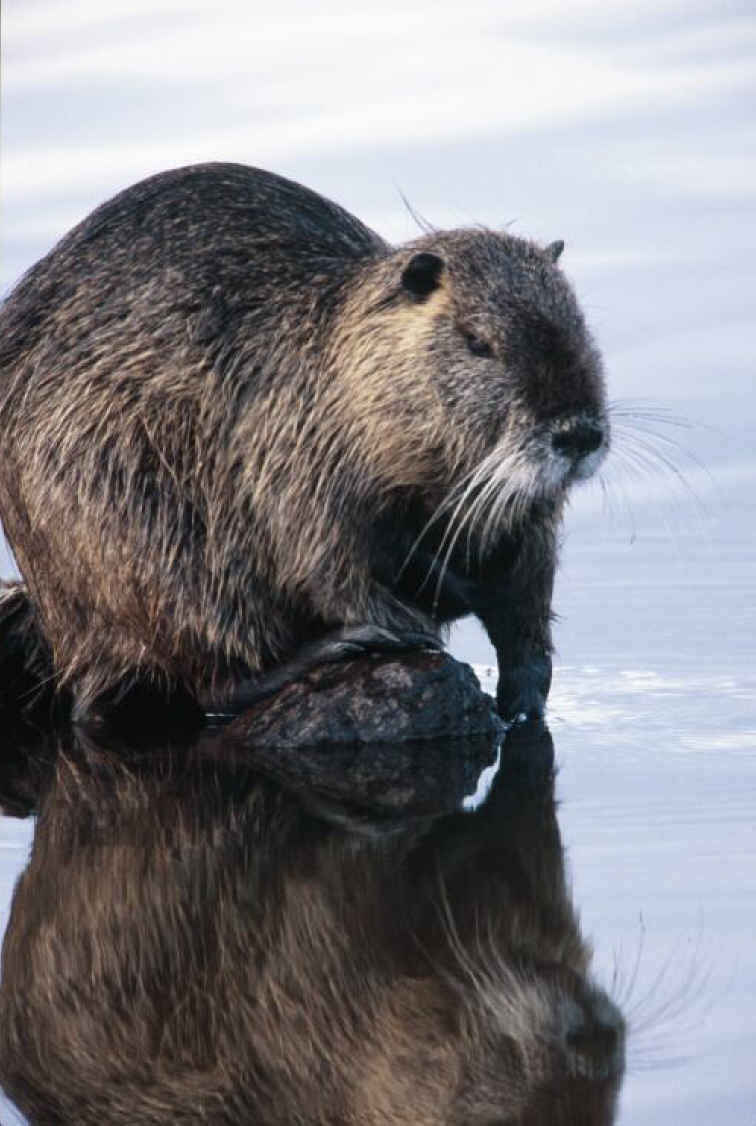
In the case of the nutria, the now reviled aquatic rodent was brought into this country from South America to live as captives for the fur trade, after trappers had nearly decimated all the indigenous muskrat and beaver. How soon people forget history when they decide to label an animal a “pest” and call for their extermination when said species has successfully adapted to their new surroundings. Instead they use exotic species to justify the continued cruelty of trapping, snaring and sometimes gassing or poisoning.

One self-promoter even wrote a hip pro-hunting book called, “Eating Aliens,” in the vein of idiotic reality TV shows like “Duck Dynasty” or “Swamp People.” I’ve had more folks contact me to purchase the rights to use my nutria photos in their publications than any other species in my files, but I always end up having to turn them down after asking them what their article is going to be about.

I don’t allow my photos to be used in any publication that promotes lethal “control” of some poor animal who is a victim of human expansion. The producers of Swamp “People” found that out when I refused to let them use this nutria photo on their stupid show…

Text and Wildlife Photography ©Jim Robertson, 2013. All Rights Reserved

Text and Wildlife Photography ©Jim Robertson, 2013. All Rights Reserved