Impossible to Imagine

To those of us who care deeply about wildlife issues and the abuse of non-humans, it seems that no matter how many horrors you hear about, there’s always something else happening to animals somewhere we’re shocked to learn. Even after writing a book against hunting and trapping, I guess there are still places my mind doesn’t want to go.

That’s how I felt when I read the article, “Montana, Idaho trappers catching more than just wolves,” in the Ravalli Republic, which I mentioned in yesterday’s blog post, “Stop the Spread of Psychopathy—End Hunting and Trapping.”
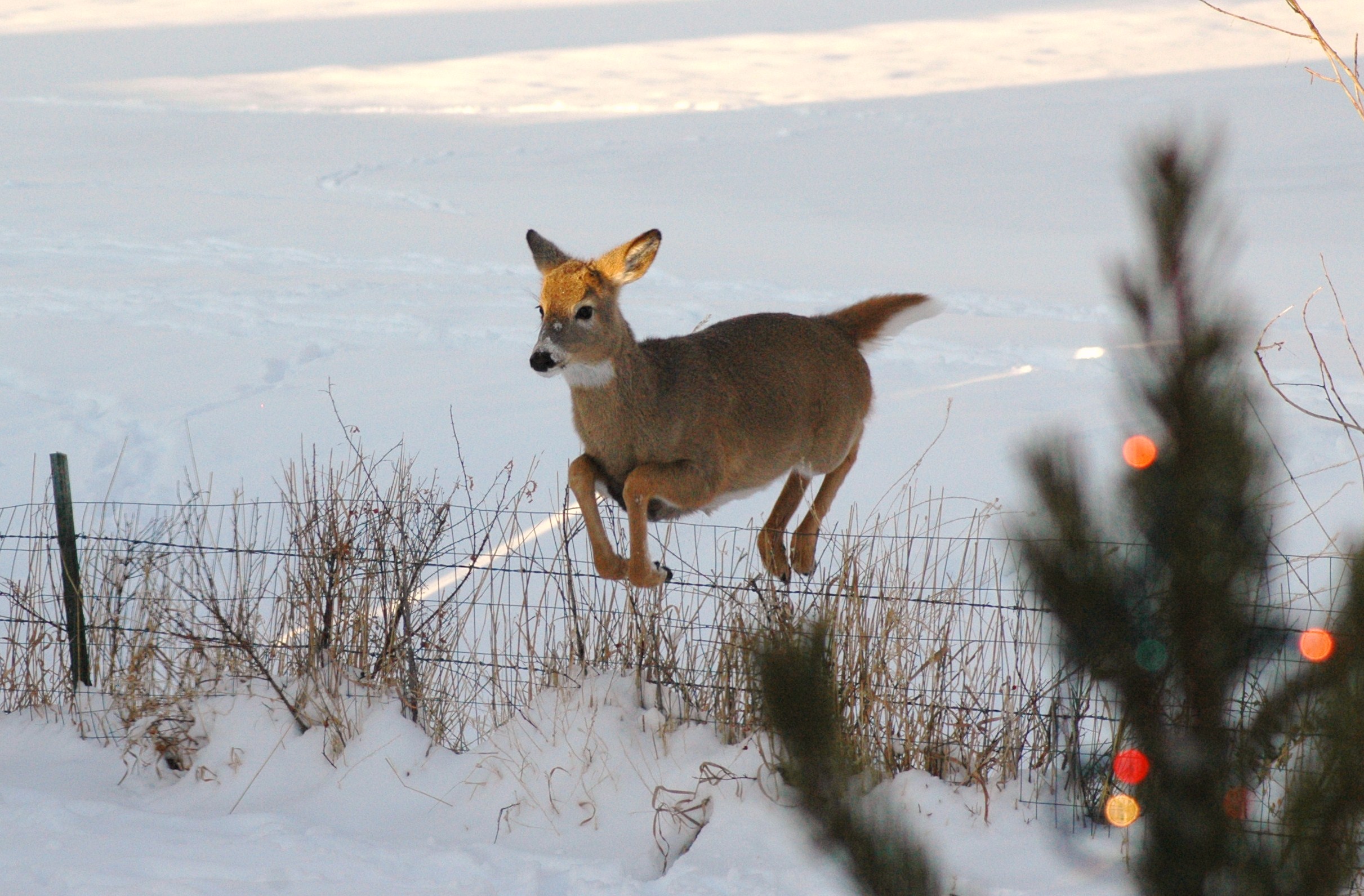
Text and Wildlife Photography ©Jim Robertson, 2013. All Rights Reserved

Text and Wildlife Photography ©Jim Robertson, 2013. All Rights Reserved

For a few years my wife and I lived in a house surrounded by a small field on a forested hill above Washington’s Willapa River valley. The field was once an upper pasture of a now long-defunct dairy. We were happy to see it returning to nature. Sword ferns, wildflowers and Douglas fir trees were starting their advance across the expanse of grass, finding soil churned up by moles for their seeds to take root.

Common wildlife there included black-tailed deer, black bear, raccoons, coyotes, field mice and the red-tailed hawks attracted by the latter. Meanwhile, our feeders attracted everyone from squirrels and chipmunks to a varied assortment of birds—Steller’s jays, juncos and chestnut-backed chickadees, as well as flocks of band-tailed pigeons and American goldfinch, the Washington state bird.

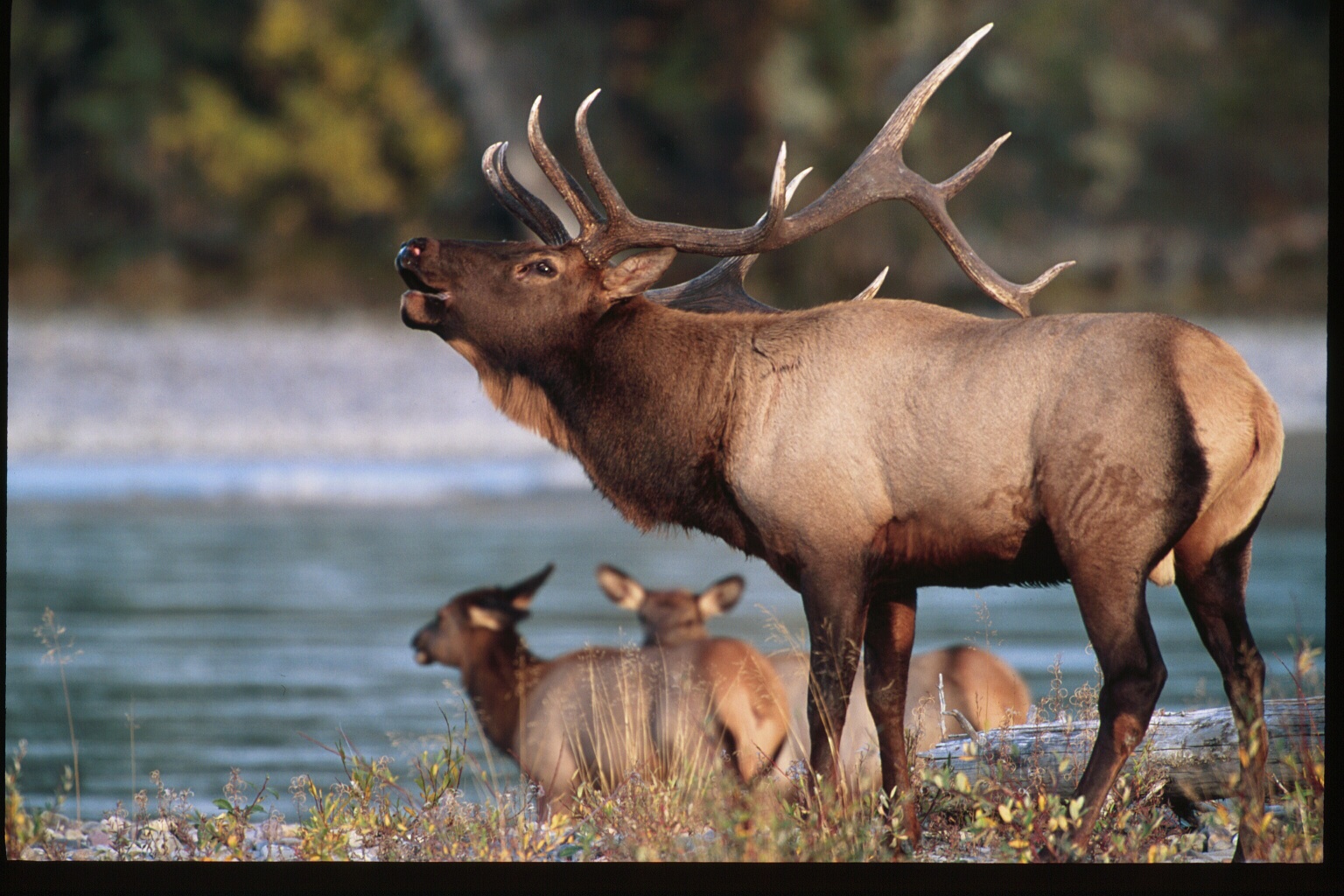
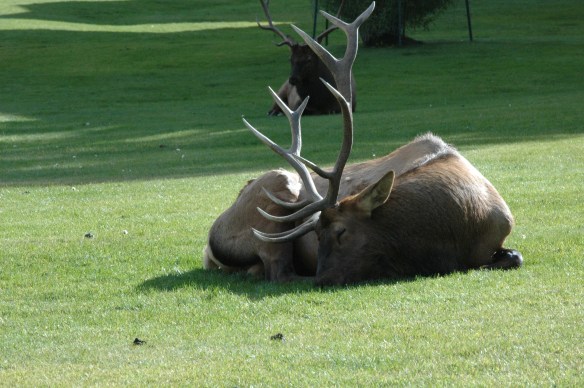
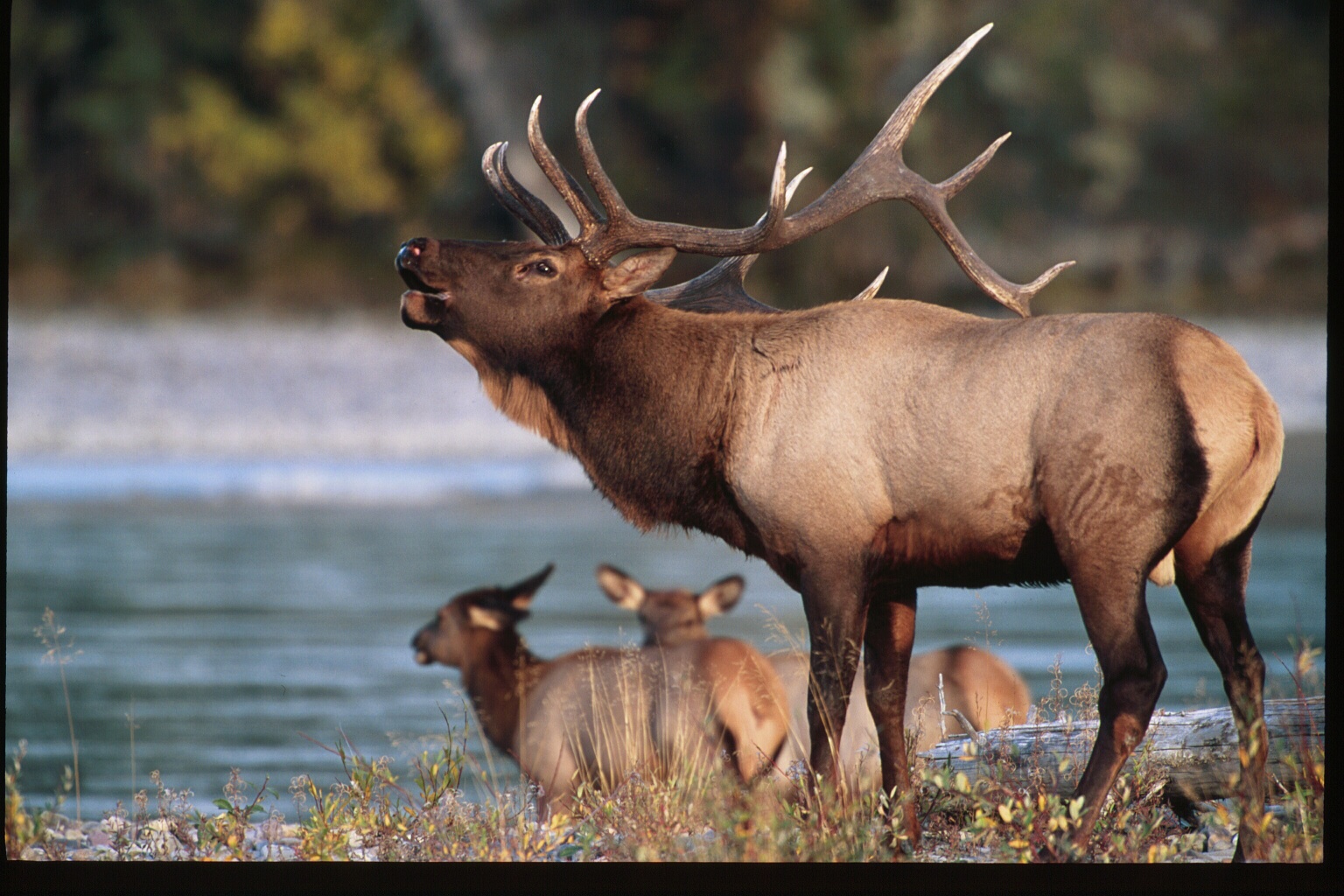
But it was always a special treat to wake up to the sight of the local elk herd bedded down in the upper corner of the field, less than 50 yards from the house.

People often panic at the thought of 20 or 30 large animals competing with their cows for pasture grass, but elk are anything but sedentary grazers—they’re always on the move. Sticking together as a group, they make a circuit around their range through forests and across rivers to find themselves in a new place every day for a week or two, before starting the circuit anew. It was always sad to see them move on from the protection of our posted private property, yet you could almost predict to the day when they’d show up again.

But there was one lone elk cow who seemed to shadow the herd, always a few days behind. We saw her far more often than the herd, and we soon figured out that she was staying nearby in the surrounding forest rather than migrating over the miles-long circuit like the rest of her kind. The reason became obvious—she had a pronounced limp as though barely able to use her right front leg.

When we got a good look through binoculars we saw that her foot was in fact missing! What the hell could have happened to cause that? My first thought was that she caught her leg in some overgrown barbed wire, a familiar threat since “livestock growers” almost never remove unnecessary fencing when they finally quit the business.

Asking around to the locals, their standard reaction was a snicker and a half-assed guess that someone must have shot it off during hunting season. Either scenario seemed remotely possible, but not necessarily all that probable, considering the horse-like size of the animal in question. One bullet or a strand of barbed wire shouldn’t do that much damage.

Twice over the years I’ve found dogs caught in steel-jawed foot-hold traps in other parts of the state (one of them had to have his lower leg amputated) and I started to wonder if the elk might have stepped into a trap set for coyotes (whom the locals hate with extreme prejudice).

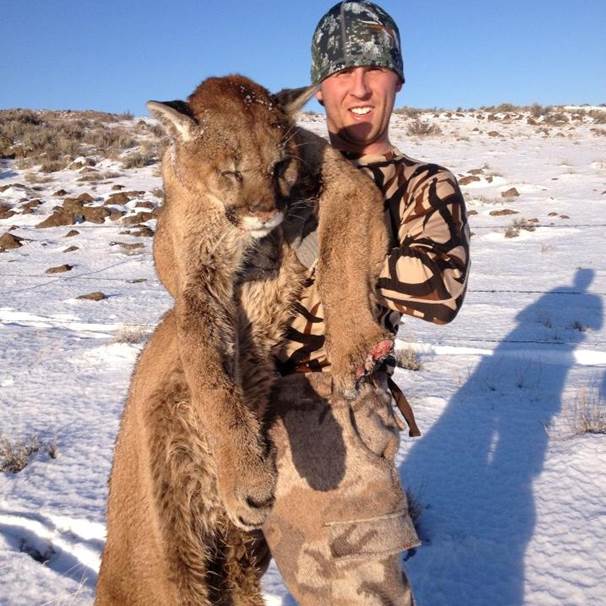
I knew that smaller mammals, as well as hawks and eagles, were often unintended victims of trapping; but the thought of an animal as large as a deer or elk being caught in a trap was just too hard to get my mind around. It wasn’t until I read the following lines in “Montana, Idaho trappers catching more than just wolves,” and then saw a photo of a hunter-killed cougar who had earlier lost his toes in a trap, that I suddenly knew for sure—that’s how she lost her foot!: “Trappers reported capturing 45 deer. Twelve of those died. They also captured 18 elk and four moose. One of the elk died.”

The article goes on to quote the Idaho Department of Fish and Game’s state “game” manager, looking out for his cronies while objectifying the animals, “No one wants to catch a deer. It costs them a lot of time.” I don’t even want to try to imagine what an ungulate like that goes through to try to escape a trap—even before seeing an approaching trapper.

Traps are often compared to landmines set for any passing animal. But the difference is that while a landmine blows an appendage off instantly, a steel-jawed trap works its evil slowly—the more its victim struggles to escape, the more damage is done.

In the case of the elk, escape meant not only catching up with the rest of the herd, but also getting away from anyone who might happen by. If determined enough, an animal as powerful as that could eventually pull herself free of a trap’s steel jaws, but freedom would likely come at the expense of a foot.
Text and Wildlife Photography ©Jim Robertson, 2013. All Rights Reserved
Text and Wildlife Photography ©Jim Robertson, 2013. All Rights Reserved
Stop the Spread of Psychopathy—End Hunting and Trapping

In light of the rise in violent crime, many have pondered the question: “How do I know if my neighbor is a psychopathic serial killer?” Well, unfortunately, it’s not easy. Unless of course you happen to live in any number of rural areas across the country where hunters are required to wear blaze orange—then the psychopathic serial killers stand out like a bunch of sore thumbs.

Okay, so maybe it’s a bit hyperbolic to compare hunters to serial killers. Yes, they both obsess on and stalk their victims, whom they objectify and depersonalize in their single-minded quest to boost their self-esteem, and the kills made by both hunters and serial killers are followed by a cooling off period, but serial killing usually has a sexual component to it.

Let’s hope hunters aren’t literally getting off on their exploits.

Maybe a better comparison for a hunter would be to a mass murderer: the inadequate type who snipes with a hunting rifle at innocent passers-by from a clock tower, or fires an AR-15 at cars from an embankment over a freeway.

Either way, the plain fact is cruelty to animals often leads to the killing of people. The perpetrators of the Columbine mass school shooting in Colorado honed their slaying skills by practicing on woodpeckers with their hunting rifles. David Berkowitz, the self-proclaimed “Son of Sam” serial killer, who habitually took sport in shooting lovers in parked cars along the streets of New York City, began his criminal career by shooting his neighbor’s dog.

Why does the public put up with these people in their midst?

The mainstream media downplays the behavior of serial animal killers as though hunting was just another “sport” to report on; like they were covering some Boy Scout Jamboree. They repeat by rote hunter/”game” department jargon like the animals were inanimate objects, using emotionally void terms such as “crop” for deer or “wolf harvest” for the unnecessary torture and murder of sentient beings vastly more admirable than their pursuers.

Worse yet are the noxious spread of anything-goes anti-wolf/anti-wildlife websites and chat rooms now widespread in social media. Consider the following comments made in response to a hunter showing off the cougar he killed (photo below)…

February 11 at 8:34am – “Nice cat bud.”

February 11 at 8:34am via mobile – “Colter! I had no idea you were into cougars.”

February 11 at 8:39am via mobile – “Hahahaha only old hairy ones like this one!!”

February 11 at 8:51am via mobile – “Good cat man congrats.”

February 11 at 9:15am via mobile – “That’s a nice cat bud!”

February 11 at 10:25am via mobile – “Thanks! Damn fun hunt.”

February 11 at 4:39pm – “what did you do, shoot its paw off!”

February 11 at 5:25pm via mobile – “It had been stuck in a trap at some point. Either chewed it off or pulled it off.”

In other words the poor cougar suffered, possibly for days, in a trap, before being shot by a trophy hunter. “Non-target” species like cougars often end up in traps set for other undeserving animals.

The Ravalli Republic reports (in typical mainstream media passionless fashion) in their article, Montana, Idaho trappers catching more than just wolves

In the first year that wolf trapping was allowed in Idaho, trappers captured a total of 123 wolves.

But according to a survey by the Idaho Fish and Wildlife Department, those same trappers in 2011-2012 also inadvertently captured 147 other animals, including white-tailed deer, elk, moose, mountain lions, skunks and ravens.

Trappers reported that 69 of those animals died as a result.

Trappers reported capturing 45 deer. Twelve of those died. They also captured 18 elk and four moose. One of the elk died.

The same number of coyotes ended up in traps as deer. Trappers reported that 38 were killed. Mountain lions also took a hit. Nine were captured and six died.

“There are a heck of a lot of people out there trapping furbearers,” said the Montana Fish, Wildlife and Parks wildlife management chief. “And there also are a lot of people trapping coyotes, which aren’t even regulated.”

Meanwhile, Idaho allows trappers to use wire snares that collapse around an animal’s neck as it struggles to free itself.

The Idaho Department of Fish and Game’s state wildlife game manager vacuously adds, “No one wants to catch a deer. It costs them a lot of time.”

Any society that looks the other way when people murder animals for fun does so at its peril. Marine biologist, Rachel Carson, author of Silent Spring, had this to say about the growing problem:

“Until we have the courage to recognize cruelty for what it is—whether its victim is human or animal—we cannot expect things to be much better in this world. We cannot have peace among men whose hearts delight in killing any living creature. By every act that glorifies or even tolerates such moronic delight in killing we set back the progress of humanity.”

It doesn’t get much more cruel or moronic than this…

cougar kill

Go Manage Yourself

Whenever I hear people use words like “manage” or “control” in reference to wildlife,wolf in water my first thought is: go manage yourself. How arrogant of “game” departments, hunters or even so-called conservationists to pretend they know better than Mother Nature.
Wolves and elk have been managing themselves for eons. If elk were too numerous, wolves thrived; if elk populations dropped, wolf numbers were sure to follow. And whenever either of their populations got too far out of hand, Nature would step in with a few tricks up her sleeve to restore the balance.

By the time humans dreamed up notions like wildlife “management,” they’d so severely disrupted the natural order that nothing short of a reintroduction of elk or wolves could ever put it right. Of all the Earth’s invasive species, Homo sapiens is the one in dire need of controlling. Yet, we’ve been able to cleverly avoid or survive every effort Nature has so far come up with to regulate our numbers.

Know this, lowly human: Mom N still has a few tricks to throw at us if we aren’t willing to manage our own population.

382317_114375108747245_762037891_n

“Game” Laws Are a Slap in the Face to the Majority

After posting “Crippling Animals Should Weigh on One’s Conscience” yesterday, I remembered that I actually do know someone who said he swore off bowhunting after his arrow went clear through a deer, which ran off somewhere far away to die. He was an avid “modern rifle” hunter and Forest Service employee I worked with in Montana.

He certainly wasn’t going to go so far as to quit hunting completely—every time we saw a deer his eyes would glaze over; he was clearly daydreaming about hunting season. I didn’t get the idea he felt all that bad about the deer he mortally wounded—he just thought it was a “waste of meat” to shoot an animal with a weapon that’s not up to the task of outright killing.

Unfortunately, bowhunting is growing in popularity. Because local governments and town councils don’t want people getting shot by stray bullets in parks or other semi-urban areas where “game” animals thrive—yet they don’t want to upset hunters by outlawing hunting—they all-too-often allow bowhunting, just to pacify the bloodthirsty, who in turn are fond of portraying themselves as selfless do-gooders out to save the animals from overpopulation. (Funny that you never hear them mention immunocontraception, or the fact that hunting unnaturally increases ungulate populations.)

A case in point of a city council deciding to allow bowhunting is found in the article I mentioned yesterday with a headline that reads, “Shotguns and bow hunting will be allowed in Ecola reserve.”

Here are a few highlights from that article:

CANNON BEACH — Hunters using either bows and arrows or shotguns with slugs will be allowed to hunt in the Ecola Creek Forest Reserve for the next five years.

Although hunting had been allowed temporarily for bow hunters only during the deer and elk season last fall, the Cannon Beach City Council agreed 4-1 Tuesday night to extend the hunting period five years. The council also decided to allow hunters who use shotguns with slugs as well.
 
The proposed area set aside for hunting in the reserve took up half of the reserve’s acreage… (One city council member) said she supported a public survey taken by a professional survey company that indicated most of the respondents opposed hunting in the reserve. In addition, (Councilmember) Cadwallader said, hunting didn’t meet the definition of the “passive recreation” promised during the campaign to seek voter support for the ballot measure. Using “a firearm on a wild creature in the reserve does not seem to be passive to me,” Cadwallader said.

Herman Bierderbeck, district wildlife biologist for the Oregon Department of Fish and Wildlife, told the council that shotgun slugs had an effective range of 80 yards for killing an elk or a deer. The slugs travel about 150 yards, he said.

Although the council had closed the hearing several weeks ago and didn’t accept public testimony Tuesday night, Cannon Beach resident Ed Johnson told the council he was “very upset” at the decision. He suggested the council submit a referendum to voters.

“I feel like I’ve been slapped in the face,” Johnson said. “You not only included bow hunting, you went further and allowed shotguns.”

“The bottom of my heart aches,” he said. “Guns are not the answer.”

Text and Wildlife Photography ©Jim Robertson, 2012. All Rights Reserved

Text and Wildlife Photography ©Jim Robertson, 2012. All Rights Reserved

Who’s in “Season” Now?

I just came in from a long walk with our dog. For the most part, it was completely quiet out there. Not a breath of wind today, only the sound of our footsteps and the dog’s hot breath as she dragged me from scent to scent. Just as I started to consciously appreciate how peaceful it all was, the silence was extinguished by some damn neighbor shooting his gun.

What the hell was he shooting at? Who’s in “season” now? Deer and elk “season” are over. There’s an ongoing open season on ducks and geese, but this was no “pop, pop” of a shotgun; it was the echoing report of a high-powered rifle.

Coyotes can be shot on sight year-round, but thanks to assholes like this guy, there’s not much chance of seeing them out this time of day.

No, whoever it was, they were probably just firing off their gun for the fun of it. All’s I know is, it was fuckin’ irritating—and I’m sure the local wildlife found it even more annoying than I did.

Text and Wildlife Photography ©Jim Robertson, 2012. All Rights Reserved

Text and Wildlife Photography ©Jim Robertson, 2012. All Rights Reserved

Just Out for a Bit of Fun

“I think it’s cruel that they would take sport in stuff like that. Very cruel. It’s just sophomoric, juvenile.”

That quote could just as easily have been a humane person’s reaction to witnessing any legal goose, pheasant, elk or wolf hunt, but in this case it was in reference to a speeding driver running over 92 protected shorebirds on the Washington coast (on the same stretch of beach mentioned in this earlier post, Compassion for All, Not Just the Endangered).

Shorebirds, like the dunlins who were senselessly killed, huddle close together on the beaches this time of year, which makes the act of running over nearly eight dozen of them at one time no great challenge for anyone willing to stoop to such an act.

The driver was most likely just out for a bit of fun when they spotted the flock of migratory birds dead ahead. After plowing through the birds—who have an uncanny knack of flying off at the last minute to avoid any vehicle following the posted speed limit of 25mph, but who must not have been ready for someone going twice that speed—chances are the driver said to his passengers something like, “that was pretty neat.”

That same line was uttered by a Dubois taxidermist and outfitter, Joe Hargrave, who, on Oct. 5, just four days after their season opened, became one of Wyoming’s first hunters to legally kill a wolf since 1974.

“It was pretty neat to be able to hunt them because they’re a magnificent animal,” Hargrave said. “I like to see them in the wild just like elk, moose and everything else. It is nice to be able to have the opportunity to hunt them.” (The U.S. Fish and Wildlife Service removed wolves from the endangered species list in Wyoming on Sept. 30, kicking off the first hunting season since wolves were placed on the list in 1974. Conservation groups have filed three lawsuits seeking to re-list the wolves; they are expected to be decided sometime in 2013.)

People for the Ethical Treatment of Animals and the Wildlife Rehab Center of North Coast are offering a reward for information leading to the arrest of the person responsible for the illegal killing of the protected shorebirds. Meanwhile, thousands of unprotected migratory geese, deer, elk, cougars, coyotes and wolves are shot each year by people with the same motive as those thrill seeking, sophomoric, sociopathic beach drivers—they’re just out for a bit of fun.

Text and Wildlife Photography© Jim Robertson

Text and Wildlife Photography© Jim Robertson

Hunters: the Brainwashed Masses

Never underestimate the power of brainwashing when it comes to transforming peaceable children into violent hunters of helpless beings. If we are to assume that most children are born innocent, with a natural affinity toward animals, then brainwashing is the only explanation for their conversion to hunting. Of course, peer pressure and the mind-numbing power of constant bombardment of violent movies, TV and video games are clearly culprits in a kid’s overall corruption; but those are all just contributors to the overall brainwashing process.

There are four basic elements involved when a person is brainwashed:

  1. A severe traumatic shock
  2. Isolation—being taken away from the people or surroundings where the person feels secure
  3. Programming—hearing what the mind controller wants the subject to believe, over and over and over
  4. The promise of a reward

Applying this formula to the average animal-loving young child, in order for them to be brainwashed into thinking hunting is a normal, acceptable activity, they first need to suffer a traumatic shock. Well, surely seeing their first living, breathing deer, elk, goose or rabbit shot down (whether by gun or bow and arrow), then bled-out and butchered right before their eyes would qualify.

The isolation they would feel would be both physical and emotional, with no one out there to relate to or share in their sorrow for the poor animal so unnecessarily murdered by someone they’ve always looked up to.

The programming would have gone on well before the child witnessed the carnage. After the kill, it would become even more intense as the father (or mother) figure struggles to make their murderous act seem justified.

And the reward comes in the form of enthusiastic praise and back-patting when the child makes their first solo kill.

Before you know it, the once caring young person is fully indoctrinated into the sportsmen’s way of looking at animals—as objects to be “harvested” or “culled,” depending on its species or the whim of its assassin.

Text and Wildlife Photography© Jim Robertson

Text and Wildlife Photography© Jim Robertson

Finding the Christmas Miracle

This is the time of year when people like to find the silver lining in things. The phenomenon is especially obvious during mainstream media newscasts, as the networks are keenly aware that their viewers might abandon them and move on to a different channel if they stick too close to the reality of a given situation on this, the holiest of nights.

So, in the spirit of silver linings, I’m going to try to be positive and find the “Christmas miracle” in everything (at least until December 26th anyway). Okay, here we go…

-Although the Earth’s climate is changing faster than scientists originally predicted—due to the ongoing, rampant, anthropogenic burning of fossil fuels like coal, oil and natural gas, resulting in worsening droughts, more intense hurricane and fire seasons and a record melt-down of the Arctic ice cap—at least we survived the Mayan Apocalypse.

-Even if Ted Nugent personally poached and otherwise killed an inestimable, undisclosed number of bear, deer, elk and other undeserving victims this year, at least his silly T.V. show was cancelled.

-Though there was an increase in the number of noble, majestic elk who were senselessly yet legally “harvested” (read: murdered) by sportsmen in Montana this year, the numbers are in from hunter check stations for the final weekend of the general big game season across the state and overall it looks like 2012 saw fewer hunters taking fewer animals….(That one was easy; I just put a positive spin on the original end of the year report by the Montana game department that read, “The numbers are in from hunter check stations for the final weekend of the general big game season across Montana and overall it looks like 2011 saw fewer hunters taking fewer animals. One bright spot seemed to be a small increase in the elk harvest in several areas.”)

-Despite widespread trapping of mink, marten, otter, raccoon, beaver, muskrat, bobcat, fox and about every other “furbearer” in the state of Montana, the wolverine are off the hit-list there…for now.

-While gun sales set a record on Black Friday and spiked even higher since the Sandy Hook school massacre, at least some of this year’s crazed gunmen did the world a favor and eventually turned their weapons on themselves.

-Although 115 wolves have been sadistically slaughtered in Wisconsin (in addition to hundreds of others shot and trapped in the Lower 48 so far this year), that state has reached its “quota,” so no more wolves there can be legally killed by hunters…at least until the next hunting season (hunters there are calling for an unlimited quota next time).

-Despite the fact that we’re in the midst of the sixth mass extinction event in the planet’s history with so many species going extinct per year that no one can possibly keep track, remote cameras recently photographed both an ocelot and a jaguar in southern Arizona.

-And on a personal note: although, due to his failing health, my 87 year old father was spaced out and barely able to whisper a word or acknowledge anything the entire day yesterday, he suddenly started smiling and became animated and engaged when he found himself winning nearly every hand at poker last night (by the end of the game, he had amassed an enormous pile of chips and the rest of us were bankrupt).

Seasons Greetings and always keep an eye out for that elusive silver lining!

Text and Wildlife Photography ©Jim Robertson

Text and Wildlife Photography ©Jim Robertson

New Review of Exposing the Big Game

Veg News, January-February, 2013 (Thanks, Claudine, for spotting this!):

A September 24, 2012 article in USA Today proclaimed “Hunting, Fishing Rebound in US.” Not so fast. Nature writer and wildlife photographer Jim Robertson would beg to differ, and does, in Exposing the Big Game.

Robertson—along with Sea Shepherd Captain Paul Watson, who penned Big Game’s foreword—puts forth a scathing critique of hunters, whose numbers are now the same as anti-hunting activists, about 5% of the population.

Big Game is a thin though powerful volume, a quick study into all that’s wrong with hunting and hunters. Robertson’s stunning black and white photos grace nearly every page and one would hope that he expand both text and (color) photography into a larger, more robust work. The material is here.

______________

Author’s Note: As the purpose of Exposing the Big Game is to shed new light on the evils of sport hunting, incite outrage and spark a firm resolve to help counter these atrocities worldwide, I decided to go with the current paperback format to keep the purchase price down, in hopes of spreading the word for wildlife as far and wide as possible. My publisher has promised to print a full-color coffee table book, once sales of this edition reach 5,000 copies. We’ve still got a ways to go…

front-cover-low-res6

Hello Mass Extinction

In yesterday’s post, “Bye Bye Biodiversity,” I mentioned the hundreds of miles of Iowa cornfields where nothing else grows or lives. Humans have seen to it that nothing else lives in that region, at first by physically killing off the birds and mammals through hunting and trapping, and next with poisons to eradicate those species they deemed “pests:” the insects and burrowing mammals, along with any competing plants, collectively known as “weeds.”

To see to it that only the resultant monoculture thrives, their chosen plants are genetically modified to repel any other life that might find its way into the wasteland 524958_3325028303604_654533903_n(also so they won’t reproduce on their own without the parent corporation’s seed stock). Much of the corn is grown to serve as feed for those other monoculture “crops:” cows, pigs and chickens stuck on factory farms.

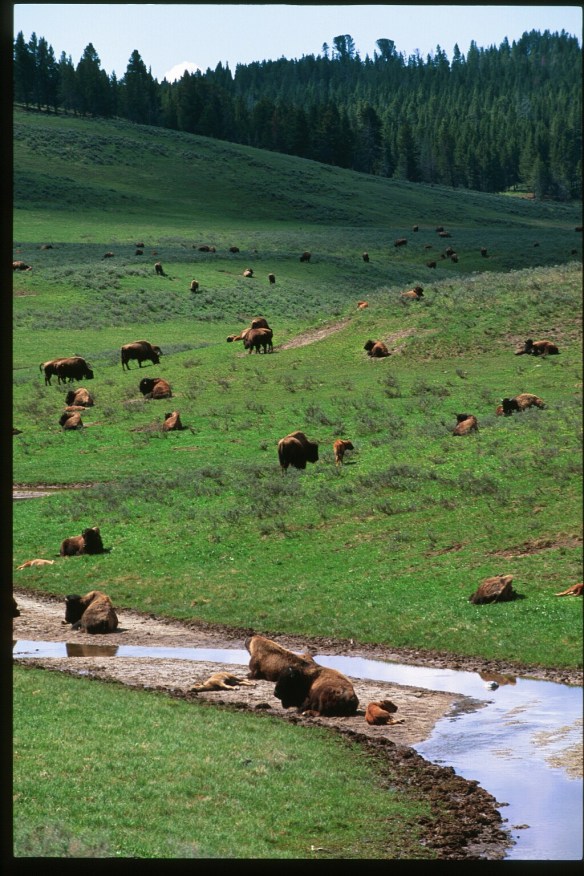
It requires huge tracts of open, flat land to allow for this kind of whole-Earth manipulation to go on, and the Midwest, once known as The Great Plains—the former home to vast herds of migratory bison and elk, pronghorn and prairie dogs, wolves, grizzly bears and more—was just the ticket.

As long as there are still miles of farm roads to speed their pickup trucks along and an occasional deer, coyote or “planted” pheasant to hunt, folks growing up there consider it to be the “country,” blissful in their ignorance of the biological diversity that thrived across the once wild land they call home.

It’s a similar story out west, where so much of the ancient forests have been removed and replanted with single-species tree plantations. Though the slopes are still mostly green, much of the wondrous diversity of life has been lost, along with the memory of whom and what once lived there.

By the same token, anyone arriving by transatlantic schooner would have no way of knowing that mass extinction in North America had already begun with the arrival of the first human hunters to cross the Bering land bridge a dozen centuries before. The megafauna which evolved on the Western Hemisphere—in glorious isolation from predacious human primates, whose greatest achievement may well be the complete undoing of all that evolution has created during this, the tail end of the age of mammals—would have brought to mind the African savanna; an American Serengeti.

Futuristic films, such as Soylent Green and Silent Running, suggest that when humans inevitably destroy the planet, there will be absolutely nothing left. But mass extinction does not necessarily equate to a totally denuded planet. The otherwise lifeless Midwest monoculture cropland, where one or two dominant species have displaced all others, is closer to what a mass extinction looks like.

In other words, we aren’t on the “verge of causing” a mass extinction, as the mainstream media (loath to report on anything that might affect the stock market) would tell you; we are among the living-dead in the midst of a human-caused mass extinction. It may not be the “Zombie Apocalypse,” but as far as life on Earth is concerned, it’s pretty damned scary.

Text and Wildlife Photography© Jim Robertson

Text and Wildlife Photography© Jim Robertson