Bye Bye Biodiversity

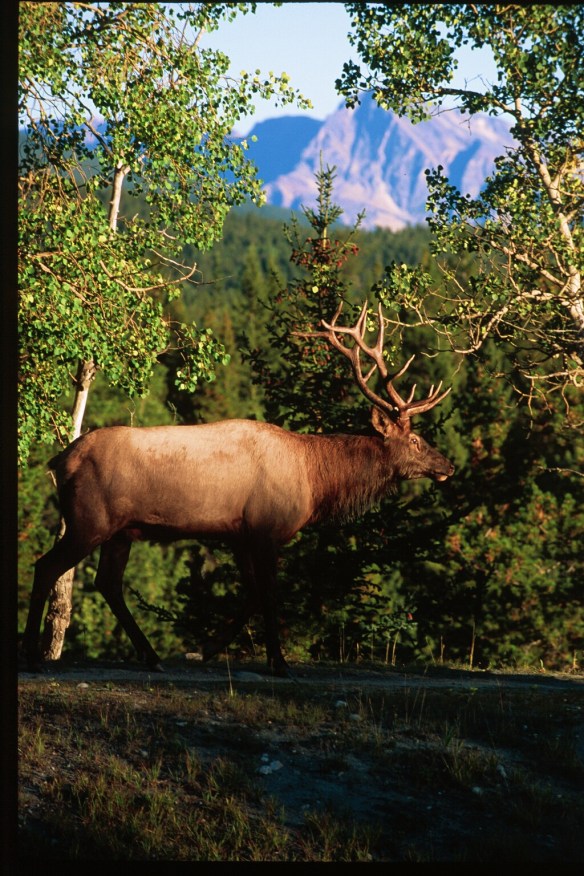
I’ve said it before and I’ll probably say it again, you can’t really be a wolf advocate or an elk advocate, or any kind of advocate for the environment, and continue to eat beef. That message was driven home by a new Montana Fish, Wildlife and Parks Department elk “management” proposal which includes reducing the numbers of not only elk, but also of wolves (who, logically, could have done some of the “management” for them) near Yellowstone National Park, all in the name of safeguarding cattle from the negligible threat of brucellosis—a disease which, in the past hundred years, has come full circle from livestock to wildlife and now back to livestock.

So far, it’s been the bison migrating out of Yellowstone during hard winters who have suffered the brunt of the rancher’s brucellosis paranoia. “Solutions” have included “hazing” bison back into the park and creating holding areas outside the park to warehouse bison before shipping them off to slaughterhouses—those nightmarish death camps where so many of their forcibly domesticated bovine cousins meet their ends. (In a country where some 60 million bison once roamed free, 97 million beef cattle are sent to slaughter each year.) Still other Yellowstone bison are murdered during newly imposed state “hunting” seasons—right outside the park.

Speaking of hunting, it’s interesting (to put it nicely) that hunters in Montana and Wyoming have claimed that elk populations in those states have declined as a result of the wolf reintroduction programs, yet the latest report suggests that elk numbers and density are “too high” (at least for rancher’s sensitivities) in parts of Montana.

Typical of state “game” department bureaucrats and their ideas of a “solution” to any perceived wildlife/livestock “conflict,” their preferred proposal is to reduce the number of wild animals—in this case, both elk and wolves!

It’s the kind of mentality that’s destroying the planet’s biodiversity at every turn: mile after mile of monoculture cornfields in Iowa (grown primarily to fatten cattle crammed onto feedlots)—places where, a century ago, 300 species of plants, 60 mammals, 300 birds and hundreds of insects would have lived—are now devoid of all other life forms other than cornstalks and an occasional tiny ant or a mushroom the size of an apple seed; cows grazing on pastures in Pennsylvania and Louisiana are dying from toxic fracking wastes that have made their way to the surface and meanwhile, arctic ice is melting faster than previously predicted, disrupting ocean currents and weather patterns life on Earth has come to depend on.

Call it “growth” or “progress” or just “our way of life,” but this locomotive is speeding towards a brick wall—yet we keep shoveling fuel into it like there’s no tomorrow…


Not that Montana FWP are likely to listen to anyone except fellow hunters and/or their cattle baron buddies, but the public comment period is now open, so feel free to let them know what you think about their elk “management” proposal here: http://fwp.mt.gov/hunting/publicComments/2012elkMgmtGuidelinesBrucellosisWG.html

You can view the working group’s recommendations by clicking on the “Interested Persons Letter” link on this webpage. That site also includes the opportunity to submit online comments about the recommendations. Written comments can be mailed to “FWP – Wildlife Bureau, Attn: Public Comment, P. O. Box 200701, Helena, MT 59620-0701. All comments must be received by 5:00 p.m. Mountain Standard Time on December 20, 2012
Text and Wildlife Photography ©Jim Robertson
Text and Wildlife Photography ©Jim Robertson

This Christmas, Show the Hunters that You Care

Judging by the frost on the grass and the ice on the birdbath, it’s time to start thinking about Christmas shopping. This year, your gifts can make a statement—they can show the hunters that you care.

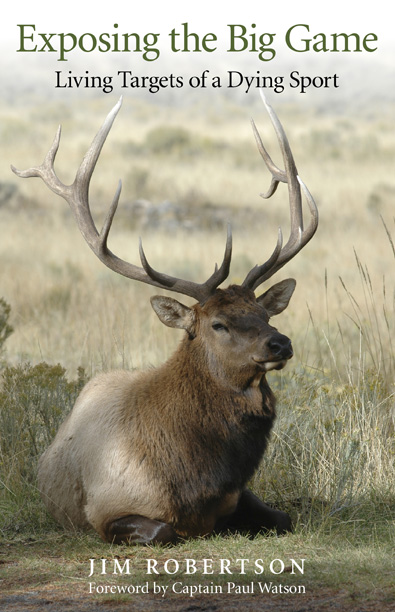
Now don’t get me wrong, I don’t mean you should show hunters that you care about them—no, quite the opposite—I mean you can show the hunters that you care about wildlife. And what better way than purchasing a pro-wildlife/anti-hunting book, like Exposing the Big Game: Living Targets of a Dying Sport?

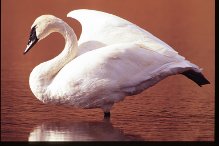
There’s a common misconception that hunters are the only ones who “care” about wild animals. For example, when I brought some of my framed wildlife photos (such as the trumpeter swan seen here) to a small-town art gallery, the owner said, “Well, you might be able to sell them to a hunter…” My first reaction was an under-the breath “What the hell?” quickly followed by a resolute, “Never mind, I’m not hanging them here.”

I don’t know if it’s a sign of the self-absorbed, economocentric times we live in, but it seems Black Friday is garnering more attention than Thanksgiving these days. Across the country, you’ll find headlines like, “2 seriously hurt as driver plows through crowd of shoppers,” “Massachusetts bargain hunter took home TV, left tot” or “Earlier Black Friday kicks off shopping season.”

That last article reports: “This year’s Black Friday shoppers were split into two distinct groups: those who wanted to fall into a turkey-induced slumber and those who’d rather shop instead.” I’m guessing (hoping, really) that readers of this blog fall into still another category altogether.

The article goes on to say: “Stores typically open in the wee hours of the morning on the day after Thanksgiving that’s named Black Friday because of retail folklore that it’s when merchants turn a profit for the year. But after testing how shoppers would respond to earlier hours last year, stores such as Target and Toys R Us this year opened as early as Thanksgiving evening. That created two separate waves of shoppers.

Lori Chandler, 54, and her husband, Sam, 55, were a part of the early group. By the time they reached the Wal-Mart in Greenville, S.C. early Friday, they had already hit several stores, including Target and Best Buy. In fact, they had been shopping since midnight.

‘It’s a tradition,’ Lori said as she looked at some toys she bought for her four grandchildren….”

I’m sure you get the idea.

You’re probably not the type to camp out in front of Wal-Mart for the best deals on Asian sweatshop-produced, future landfill-clogging plastic trinkets, or you wouldn’t be here reading this post. But don’t worry, you won’t have to stand in line and risk being “plowed through” by some crazed shopper driving a Humvee or lose your “tot” in a crowded superstore while attempting to purchase Exposing the Big Game. You can order copies online from the comfort of your own home. If you’re not a fan of Amazon or Barnes and Noble, feel free to email me at exposingthebiggame@gmail.com for signed copies sent directly to your doorstep. Or you can ask your local “brick and mortar” bookstore (which is more than likely on the verge of going out of business) to order in a copy or copies for you. And of course, Exposing the Big Game is also available in e-book form.

There are around a butcher’s dozen new pro-hunting books on the market this year, while Exposing the Big Game is the only anti-hunting book to come out in decades, and the only one still in print. Don’t let the hunters think you’re indifferent about this issue. Together we can put an end to the absurd misconception that they’re the only ones interested in wildlife. While we don’t have the kind of financial support that the hunting industry gets from the NRA or the Safari Club, here’s our chance to show them that we’re the ones with the passion!

What People are Saying about Exposing the Big Game

What People are Saying about the book, Exposing the Big Game

I read this book with wonderment at what our species has done to other species, and with admiration for how staunchly Jim Robertson comes to the defense of those other species, with intelligence, humor, understanding, but above all, compassion. Jim ends his book with these ringing words, both true and eloquent: “Sooner or later, the obdurate hunter crouching in the darkness of ages past must cave in and make peace with the animals or rightfully, if figuratively, die off and be replaced with a more evolved earthling—one who appreciates nonhumans as unique individuals, fellow travelers through life with their own unassailable rights to share the planet.”                                                                                                                     ~Jeffrey Masson, Author of When Elephants Weep, and Dogs Make Us Human

Hard hitting, on target, forthright and foreceful.                                                         ~Ingrid Newkirk, President of People for the Ethical Treatment of Animals

Exposing the Big Game blends spectacular photography, indisputable facts and clear reasoning. Jim does not mince words in describing the senselessness and depravity of hunting and the psychopaths who kill for pleasure.                                                   ~Peter Muller, President of the League of Humane Voters

Exposing the Big Game, a passionate and informed indictment of America’s hunting culture, exposes the savagery, cruelty, environmental recklessness and yes, the pathology of this most murderous of sports. Jim Robertson is that rarest of breeds, a talented writer with a gift for telling a story who is also a lifelong outdoorsman with a profound knowledge of the natural world as well as a compassionate human being with a deep love for all living creatures. Exposing the Big Game is quite simply a masterpiece, a treasure not to be missed by anyone who cares about wildlife, the environment and living gently on planet Earth.                                                         ~Norm Phelps, Author of The Longest Struggle: Animal Advocacy from Pythagoras to PETA

Jim Robertson has a gifted eye for wildlife photography and his writing incorporates humor, insight and factual observations. Look at each and every animal in this remarkable book as individual self-aware beings deserving of our respect and admiration. If we all could see these magnificent creatures as Jim sees them, there would be hope, not just for their survival, but for our own survival also.               ~Captain Paul Watson (from his Foreword), Founder and President of Sea Shepherd Conservation Society

Not since Cleveland Amory’s Man Kind? Our Incredible War on Wildlife has a book been more explosive in exposing the politics, hypocrisies and brutality of big game hunting in North America. Exposing the Big Game reveals the suffering, decimation and endangerment of America’s wild animals who are targeted by sportsmen.                        ~Laura Moretti, Founder of The Animals Voice

For years, Jim Robertson has inspired reverence for wildlife through his photography. Now he has created a book that ought to be mandatory reading for those who still think there’s reverence in hunting.                                                                                     ~Ethan Smith, Author of Building an Ark: 101, Solutions to Animal Suffering

For more information, visit: http://www.earth-books.net/books/exposing-the-big-game

Signed copies can be ordered by emailing: exposingthebiggame@gmail.com

Love the Country, Hate the People

“Love the country, hate the people.” I heard that thought first put into words by Sea Shepherd’s Captain Paul Watson and I’ve never forgotten it—no doubt because I’ve so often shared that sentiment myself.

Captain Watson was referring to coastal New Brunswick, Canada (where he grew up) and the type of people who club seals to death without a second thought. I have had the same kind of reaction many times over the years I’ve spent living in rural America, especially this time of year when camo-clad, orange-vested A-holes troll up and down the roads hoping some hapless deer or elk will step out of the lush, verdant forest and into their kill zone.

I had another kind of love-the-country, hate-the-people moment just yesterday during a walk with my wife and our dog on a dike that doubles as a narrow road bordering a river when a small, rattletrap freight truck pulled out of the driveway at a neighbor’s property. Unaware of the insidious, horrific evil the occupants of the vehicle had just been involved in, I raised my hand in friendly greeting (hoping they might stop so I could tell them their rig was leaking oil profusely).

Never again will I give someone driving by the benefit of the doubt. They waved back exaggeratedly and wore overstated smirks that bordered on malevolent. As it turns out, I’m glad they kept on going. When they passed by we noticed the cartoon drawings of a happy cow and pig and the name of their business, “Patriot Packing,” that were hand-painted on the back of the truck.

We knew instantly what kind of vehicle it was—a mobile slaughter service. Travelling abattoirs are an increasingly popular method among ruralites for killing the cows they supposedly took great care in raising. My wife then remembered she had heard cows bellowing (like they do when their young are taken away) and the sound of a power saw, but hadn’t put two and two together.

Touted as a more humane alternative to factory farming and conventional slaughterhouses, the down-home practice of “growing” your own cows is deceitful and in its own way horrendously cruel—especially when herd mates are forced to bear witness to such butchery right in front of them in their own pasture.

Though it’s an accepted part of country living for people to embrace or personally partake in the butchering of animals, it can hardly be called a “way of life;” it’s more a way of death—a culture based on killing.

Holocaust survivor and founder of Farm Animal Rights Movement (FARM), Alex Hershaft, made this recent fitting statement:

“I see a striking parallel between the deceptive bucolic images of pigs cavorting in green meadows on Farmer John’s murals and the cynical inscription ‘Work makes you free’ over the gate to Auschwitz.

“And, I do see a striking parallel in the mindsets of both sets of oppressors: their self-image as upstanding members of their communities, their abject objectification of their victims, their callous use of cattle cars for transport, their continuous refinement of killing line technology, their preoccupation with record keeping and cost-effectiveness, their eagerness to hide and masquerade their horrendous deeds.”

Author Farley Mowat, another selfless Canadian animal advocate in league with Captain Paul Watson, ultimately came around to the “love the country, hate the people” sentiment in A Whale for the Killing. The 1972 book is an autobiographical account of Mowat’s moving to Newfoundland because of his love for the land and the sea, only to find himself at odds with herring fishermen who made sport of shooting at an 80-ton fin whale trapped in a lagoon by the tide. Although he had started off thinking folks around there were a quaint and pleasant lot, he grew increasingly bitter over the attitudes of so many of the locals who, in turn, resented him for “interfering” by trying to save the stranded leviathan.

Mowat writes, “My journal notes reflect my sense of bewilderment and loss. ‘…they’re essentially good people. I know that, but what sickens me is their simple failure to resist the impulse of savagery…they seem to be just as capable of being utterly loathsome as the bastards from the cities with their high-powered rifles and telescopic sights and their mindless compulsion to slaughter everything alive, from squirrels to elephants…I admired them so much because I saw them as a natural people, living in at least some degree of harmony with the natural world. Now they seem nauseatingly anxious to renounce all that and throw themselves into the stinking quagmire of our society which has perverted everything natural within itself, and is now busy destroying everything natural outside itself. How can they be so bloody stupid? How could I have been so bloody stupid?’”

Farley Mowat ends the chapter with another line I can well relate to: “I had withdrawn my compassion from them…now I bestowed it all upon the whale.”

Chapter Titles

Here’s the Table of Contents for Exposing the Big Game?
Foreword by Captain Paul Watson

Introduction

Chapter 1) Hide-hunting Holocaust Survivors Still under Fire

Chapter 2) An Act of Bison Altruism

Chapter 3) War on Coyotes an Exercise in Futility and Cruelty

Chapter 4) Time to End a Twisted Tradition

Chapter 5) Avian Superstar Both Athlete and Egghead

Chapter 6) From the Brink of Oblivion and Back Again?

Chapter 7) A Day in the Sun for the Hayden Wolves

Chapter 8) Critical Cornerstone of a Crumbling Castle

Chapter 9) Bears Show More Restraint than Ursiphobic Elmers

Chapter 10) The Fall of Autumn’s Envoy

Chapter 11) Inside the Hunter’s Mind

Chapter 12) A Magical World of Oneness

Chapter 13) Living Targets of a Dying Sport

Chapter 14) A Few Words on Ethical Wildlife Photography

In Closing

Acknowledgements:

Looking back, this was not, at the outset, planned as a podium from which to lambaste anyone’s hobby or heritage, but was originally intended as a venue for relating some of the behaviors and capabilities I’d observed among animals living in the wild, and as a celebration of life along the compassion continuum. However, after delving deeper into the histories of the species covered here—thanks in part to the invaluable references listed below—I found it impossible to simply depict their natural activities without also chronicling the shocking stories of abuse they have suffered at the hands of man. It would have been doing the animals a disservice to merely record how they naturally lived without at least alluding to the far-reaching and pervasive ways that human actions have altered their lives and sometimes their very natures. And the facts are clear: there has been no greater direct human impact on wildlife than the ongoing threat of hunting. As with the other pertinent and profound quotes from a variety of enlightened sources, this one from Edward Abbey proficiently puts it in a nutshell, “It is not enough to understand the natural world. The point is to defend and preserve it.”

Live With It, Elmers!

Sorry Elmers, it’s time to snuff out one of the most overused and overstated rationalizations for your beloved sport.

Hunters would have you ingest the preposterous pabulum that hunting helps animals; that hunters are their philanthropic fairy godparents (well-armed well-wishers, if you will) performing the gallant duty of keeping animal populations in check; that animals won’t go on living unless they kindheartedly kill them (this of course is all the more outrageous in light of how many species have been wiped off the face of the earth, or perilously close to it, exclusively by hunting).

But deer, along with most other animal species—besides Homo sapiens, have built-in mechanisms that cause their reproduction rate to slow down when their population is high or food is scarce.  Though state “game” departments are usually loath to share any information that might work against one of their arguments for selling hunting licenses, even they know that in reality the wildlife can ultimately take care of their own. According to the Western Association of Fish and Wildlife Agencies, “A mule deer herd that is at or above the carrying capacity of its habitat may produce fewer fawns than one that is below carrying capacity.”

The fact is, hunting encourages ungulates to reproduce more, thus seemingly warranting the alleged need for population controls via, you guessed it, more hunting.

Hunting industry propagandists have a lot of people convinced that culling is a necessary evil for controlling animal overpopulation. Lethal removal is their one-size-fits-all solution, no matter the circumstance. But there are always alternatives to that fatal fallback position. When we finally get past the viewpoint of animals as objects, or “property of the state,” and start to see them instead as individuals, the justifications for culling begin to wear thin.

Many places that provide habitat for healthy populations of deer could also support the natural predators who evolved alongside them. All that’s required of humans is to get out of the way and let nature take its course, or, in some cases, repair the damage they’ve done by reintroducing wolves or other native carnivores who were fool-heartedly eradicated. Yet, in the western US and Alaska, as well as in Canada, natural predators are still being killed to allow deer, moose or elk hunters a better chance at success. While some people complain that these browsers and grazers have gotten too tame, hunters in states like Idaho and Montana are whining that wolves make the elk too wild and thus harder for them to hunt.

I tend to be even more cynical about areas where humans have claimed every square inch for themselves and aren’t willing to share with native grazers. When I hear grumbling about deer, elk or geese pooping on a golf course, I have a hard time relating to people’s grievances. It’s the height of speciesism to expect that these animals should face lethal culling for successfully adapting to an unnaturally overcrowded human world.

Ours is the invasive species, overpopulating and destroying habitats wherever we go. We wouldn’t want some other being jumping to a knee-jerk “cull them all” reaction every time humans reached their carrying capacity in a given area.

Sooner or later Mother Nature will tire of humans’ destructive dominance and come up with a way to bring life back into balance. I can just hear her telling off the hunters: “Other animals have a right to be here too—just live with it, Elmers!”

______________________________________________________________

Portions of this post were excerpted from the book, Exposing the Big Game: Living Targets of a Dying Sport 

Text and Wildlife Photography ©Jim Robertson
The Dreaded Day is Upon Us

I awoke this morning to the sound of angry gunfire. Not just the occasional, distant pop, pop but a constant blam, blam, blam symptomatic of wartime—or of people shooting blindly into a whole flock or herd of fleeing animals. I knew it was almost “general deer season,” but this sounded more like the kind of mindless blasting that goes on during goose and duck season in the winter months around here. So I checked the Washington “game” regulations and sure enough, an all-out “incredible war on wildlife” (as Cleveland Amory put it) had begun!

Not only is Oct. 13th (fittingly) the opening day of deer season, it’s also an early opener on ducks and geese today as well. From now until the end of November, no deer, elk, goose, duck or bear is safe from human harm. Meanwhile, species like cougar, bobcat, fox or raccoon will be under the gun until mid-March. And coyotes, crows and other “common” animals can be killed year-round in this supposedly blue state. The only beings not on the list of allowable targets are six endangered species (who of course were driven to the edge of extinction by overhunting decades ago).

I knew this dreaded day was coming; I just hoped it wouldn’t get here this soon. On the bright side, this is also the first day of a long streak of steady fall rain storms which should make for some rusty guns, water-logged campsites and miserably wet nimrods.

Text and Wildlife Photography ©Jim Robertson