WASHINGTON, DC – SEPTEMBER 17: Greta Thunberg, the 16-year-old climate change activist from Sweden, casts a wary eye on Sen. Edward Markey during a Senate Climate Change Task Force meeting on Capitol Hill. (Photo by Mark Wilson/Getty Images)
GETTY IMAGES
Greta Thunberg’s rebuke of Congress last week took no prisoners and showed no favor to heroes of the left who have styled themselves friends of the environment.
Though Thunberg did not utter the words “Green New Deal,” she characterized partisan efforts that envision an idealized future as unhelpful dreams, and her criticism culminated in these words:
“No matter how political the background to this crisis may be, we must not allow this to continue to be a partisan political question. The climate and ecological crisis is beyond party politics. And our main enemy right now is not our political opponents. Our main enemy now is physics. And we can not make ‘deals’ with physics.”
The Achilles’ Heel of the Green New Deal is that it deploys the climate crisis as a liberal cause, which ensures conservative opposition.
The climate crisis is a universal cause.
Conservatives need a way to get on board. It’s difficult for them to support a policy that evokes the New Deal. And conservative opposition will relegate the Green New Deal to the realm of fantasy at least until a cataclysm arrives like the one that inspired the original New Deal.
To explain Greta’s sudden, global impact, people have begun speaking of her superpowers. One might be that at 16 she understands political reality better than some who have spent their lives in politics.
PROMOTED
Best Labor Day Sales 2019: Shop Deals on Home, Tech, Fashion and More
UNICEF USA BRANDVOICE
Ebola Crisis In DRC Declared A Public Health Emergency
UNICEF USA BRANDVOICE
Family-Friendly Policies: A Winning Investment For Children And Society
Massachusetts Sen. Edward Markey has been in Congress more than 40 years, often leading the climate charge there, if we can call it a charge. Markey is one of the good guys on climate, by all accounts, one of the best. I’ll long remember the night he and I walked out of the Copenhagen Climate Conference at the same moment and strolled together toward the bus stop. How nice, I thought, Markey is taking the bus. But halfway there a long black limousine sidled up to the curb and Markey climbed in. You see, he’s no Greta.
Maybe that mixture of partisan fantasy and convenient compromise explains why Markey, climate’s champion in Congress, hasn’t gotten the job done. It is perhaps why even in a Democratically-controlled Congress, with a Democratic president, the Waxman-Markey Bill failed. His Green New Deal may get us no closer.
Greta:
“Wherever I go I seem to be surrounded by fairytales. Business leaders, elected officials all across the political spectrum spending their time making up and telling bedtime stories that soothe us, that make us go back to sleep. These are ‘feel-good’ stories about how we are going to fix everything. How wonderful everything is going to be when we have ‘solved’ everything. But the problem we are facing is not that we lack the ability to dream, or to imagine a better world. The problem now is that we need to wake up. It’s time to face the reality, the facts, the science. And the science doesn’t mainly speak of ‘great opportunities to create the society we always wanted’. It tells of unspoken human sufferings, which will get worse and worse the longer we delay action – unless we start to act now. And yes, of course a sustainable transformed world will include lots of new benefits. But you have to understand. This is not primarily an opportunity to create new green jobs, new businesses or green economic growth. This is above all an emergency, and not just any emergency. This is the biggest crisis humanity has ever faced.”
Greta can’t remember the last time we learned this lesson about partisanship, because she hadn’t been born yet. But Markey must remember it.
The Republican Party used to support climate action. We owe our participation in the Paris Agreement not just to Barack Obama, who committed us to it, but to George H.W. Bush, who ratified the treaty that created the United Nations Framework on Climate Change.
But when Al Gore ran for president in 2000, climate change became a partisan issue, and the climate denialism that had been lurking in damp, self-interested corners of the culture went mainstream in the Republican Party. What better way to discredit the candidate they called “Ozone.”
Before long, Republicans could scarcely admit that science was true without being ousted from office by the Tea Party. And now denialism is personified in the Commander in Chief.
That’s what partisan politics gets you.
So Greta resists the temptation to side with the friendlies. It was Obama who told Greta, over a fistbump last week, “You and me, we’re a team.” And though Greta went along with that, she didn’t change her message.
Moments later, speaking to Obama’s Capitol Hill allies, including Markey, she said, “I know you’re trying, but just not hard enough.”
To me, Greta’s most important superpower is her integrity. She’s not going to take a limo back to the hotel. She’s not going to compromise for convenience. She’s not going to compromise for feel-good friends or would-be allies. She’s not going to seduce us with utopian palliatives. She’s going to keep telling the truth.
She sailed here just to insist that we read and heed the science.
Integrity secures her a place in the history of activism. For a quality so simple, so straightforward, she appears in the company of lions of non-violence, endurance and compassion—Gandhi and King, Mandela, Mother Theresa and Tenzin Gyatso—this prescient Swedish teen with an uncompromising call for us to hear the unvarnished truth.
But she doesn’t want our praise. She wants us to take real action. Let’s do.
US Representative Alexandria Ocasio-Cortez, Democrat of New York, and US Senator Ed Markey (R), Democrat of Massachusetts, speak during a press conference to announce Green New Deal legislation to promote clean energy programs outside the US Capitol
Vineyards and farmland along the Russian River near Healdsburg, California, are inundated by widespread flooding following days of torrential rain as viewed on January 11, 2017.GEORGE ROSE / GETTY IMAGES
Climate change action plans often call for less fossil fuel usage, reduced carbon dioxide emissions and a shift toward renewable energy sources. But one area that hasn’t received the broader attention it deserves is industrial farming.
The latest report released by the Intergovernmental Panel on Climate Change (IPCC) determined that the turning over of more and more land to commercial agriculture has resulted in increasing net greenhouse gas emissions, the loss of natural ecosystems and declining biodiversity. And so, “sustainable land management can contribute to reducing the negative impacts of multiple stressors, including climate change,” the report finds.
This IPCC offering followed on the heels of the National Academies of Sciences study into negative emissions technologies and carbon sequestration, which also found that efforts to store more carbon in agricultural soils generally have “large positive side benefits,” including increased productivity, water holding capacity and yield stability.
According to the Environmental Protection Agency (EPA), agriculture accounts for 9 percent of national greenhouse gas emissions, though others argue that number should be larger when taking into account the “food system” as a whole. But the broader role agriculture plays in driving climate change is complex. Soils can hold about three times more carbon than the atmosphere, for example, and intensive industrial farming has led to massive amounts of carbon loss from the world’s agricultural soils. How much untapped potential is there beneath our feet?
The pathway toward more sustainable farming practices, however, is one littered with all sorts of cultural, political and economic obstacles. On top of that, there’s one very powerful political force actively stymieing efforts toward that end, and that’s the agribusiness behemoth, which spends more on lobbying than even the defense sector.
Lara Bryant, deputy director of water and agriculture within the Nature Program at the Natural Resources Defense Council, told Truthout the voices of those leading the regenerative farming movement are not being heard by lawmakers in Congress.
“And that includes lawmakers in all parties,” she said.
How the Farm Bureau Pushes Destruction Practices
At the vanguard of the agribusiness political armament is the American Farm Bureau Federation, the single largest farm lobby in the nation and the self-described “voice of agriculture.” The Farm Bureau makes clear its stance on climate change, opposing regulatory measures that corral mainstream public and political support — cap-and-trade provisions, for example, or laws requiring agricultural entities to report their greenhouse gas emissions.
The Farm Bureau uses its political clout to actively shape climate change policy, closely aligning itself with the fossil fuel industry, in which it has extensive investments. The Farm Bureau played a vital role in quashing a comprehensive energy and climate bill — one that would have capped climate emissions — early in President Obama’s tenure, for example, and vehemently opposed his Clean Power Plan.
In 2001, the U.S. pulled out of the Kyoto agreement, which attempted to set internationally binding emissions reductions targets. “The Farm Bureau was absolutely critical in derailing Kyoto,” Stuart Eizenstat, President Clinton’s chief U.S. negotiator on the Kyoto Protocol, told InsideClimate News.
The many-tentacled Farm Bureau also throws its weight behind the Department of Agriculture’s crop insurance program, a safety net for farmers during market fluctuations, and for those who have lost crops through things like drought and flooding. Critics argue that the program performs a necessary function but offers few incentives for farmers to abandon the intensive farming practices that are exacerbating global warming.
The crop insurance program, said Bryant, is “reliant on yield” and on having a “history on your land of growing a certain crop” so that only a small number of crops receive the bulk of the subsidies for crop production. This offers farmers little reason to invest in crop diversity, an integral component of sustainable farming, said Bryant. “Farmers might feel trapped on growing the same things over and over again like a factory,” she added.
Seth Watkins, a regenerative farmer in Iowa who raises livestock alongside hay and corn crops for feed, believes the program incentivizes farmers to cultivate land as intensively as possible, including wetlands and highly erodible lands unsuited for farming. Indeed, as much as one-third of Iowan farmland that is used for corn and soybean is unprofitable, a recent study finds. “We need to take a giant step back and ask ourselves, ‘why are we doing this?’” Watkins said. “Why are we trying to raise cops on these hills where the only profit comes from this federal crop revenue? Our grandparents wouldn’t have done it.”
More broadly, in its resistance to a regulatory approach to fighting climate change, the Farm Bureau is ideologically aligned with the current administration, which actively suppresses climate change science in a number of ways.
“A Movement With Growing Power on Its Own”
The movement toward more sustainable agriculture is a daunting proposition, further complicated by a farming landscape shaped by increasing land commodification, agribusiness mega-mergers, and flatlining public funding of agricultural research and development.
A recent Environmental Defense Fund analysis of family farm budgets from across the Midwest finds that conservation practices can drive economic value, but at the same time, farming margins remain relatively slim. Indeed, in his book, Eating Tomorrow, environmental writer Timothy Wise describes the situation in Iowa, where an increasing amount of land appears to be owned by non-farmers, including Wall Street investors. “I can’t say I get it,” he writes. “The farmland prices sure look and smell like a bubble waiting to burst, and the returns are terrible, and unlikely to be made better by smart-ass city managers.”
On top of that, mergers like that between Monsanto and Bayer “send a very loud message that we haven’t been able to figure out a way to have any new innovation that helps people,” said Watkins. “We haven’t figured out a way to really come up with something to revolutionize the industry, so instead, we just merge our two companies to keep a bigger share of the profit.”
Consolidation isn’t confined to crop production — rather, it has given rise to factory farming, and Concentrated Animal Feeding Operations. Just four companies accounted for 85 percent of the nation’s beef packing industry in 2015, for example. But as the Coller FAIRR Protein Producer Index has discovered, companies like these are largely failing in their responsibilities to tackle climate change.
The index ranks 60 of the world’s largest global meat, dairy and fish producers in terms of risk factors like use of antibiotics, deforestation and greenhouse gas emissions. According to the index, only one in four meat, fish and dairy producers measures its greenhouse gas emissions, and none of the 50 meat and dairy companies examined have a deforestation policy. This, despite the livestock industry being the largest driver of habitat loss worldwide.
All of which explains why Bryant believes lawmakers need to hear a wider array of voices outside those of the politically powerful agribusiness sector. “When I go and listen to the farmer conferences, the farmers are getting word out to each other, and that’s happening independent of Washington and the USDA,” she told Truthout. “It’s a movement with growing power on its own.”
Internationally, initiatives like 4 per 1000 and Soil4Climiate are geared toward governments and a wide coalition of organizations in an effort to broaden the impact of restorative farming. In the U.S., what’s striking is the diversity of approaches undertaken. Brown’s Ranch in North Dakota, for example, employs a variety of “holistic” farming practices. Meanwhile, just over the state border in South Dakota, buffalo ranchers are tackling desertification of the Great Plains. Their efforts are having an impact.
And yet, Bryant added, “If that movement had more help from USDA, from lawmakers in Congress; if more farmers were able to hear how these [other] farmers are making things work, and if more consumers knew… how to make better choices in the food that they purchase, I think we would see a much bigger change.”
This story is part of Covering Climate Now, a global collaboration of more than 220 news outlets to strengthen coverage of the climate story.
The White House booked a room so Trump could attend a gathering in the same building as the UN climate summit.JABIN BOTSFORD / THE WASHINGTON POST VIA GETTY IMAGES
Donald Trump is set to attend the United Nations headquarters during Monday’s key summit on the climate crisis – but will be there to take part in a meeting on religious freedom instead.
A senior UN official confirmed to the Guardian that the White House has booked one of the large conference rooms in the New York headquarters on Monday so that the president can address a gathering on religious freedom.
The move is likely to be seen as a blatant snub to the UN climate summit, to be held in the same building on the same day. Leaders from around the world, including the UK prime minister, Boris Johnson; France’s president, Emmanuel Macron; and India’s prime minister, Narendra Modi, are expected at the summit as part of a major UN push to heighten the response to the escalating climate crisis.
“No one was really expecting the president to come to the climate summit,” the official said. It’s understood that senior UN staff have realistic expectations of Trump and do not expect him to engage on the climate crisis, even for a summit held in his home town. Trump has vowed the US will withdraw from the landmark Paris climate agreement.
“He’ll clog up the whole system,” said Mary Robinson, former Irish president and ex-UN high commissioner for human rights. “He won’t go to the climate summit and he wants the distraction factor, I suppose.”
Even if Trump were to attend it is unlikely he would have been called to the podium to speak. Representatives from about 60 countries are expected to address the UN on Monday on the further commitments they are making to slash greenhouse gas emissions and deal with the flooding, storms and other impacts of global heating.
The speakers will outline “only the best plans, only the most committed leaders will be on the stage”, according to Luis Alfonso de Alba, the UN’s special envoy for the climate summit.
Still, Trump’s presence in the UN building, at a time when climate protests swept around the world on Friday, will prove provocative. “Not participating and yet showing up at the building is throwing down a gauntlet,” said David Waskow, director of the International Climate Initiative at the World Resources Institute.
“It’s most importantly a snub to the young people pleading for action on climate change. Donald Trump has made very clear internationally and domestically he has no interest in the science or this issue. It’s up to the rest of the world to get on with its business.”
The Guardian has contacted the White House for comment.
A farmer named Haladu grooms shoots to become new trees in a Farmer Managed Natural Regeneration zone in Gangara, a village in the Republic of Niger’s Maradi Region.TONY RINAUDO / FOOD SECURITY AND NATIONAL RESOURCES TEAM, WORLD VISION AUSTRALIA
Reading these headlines, I’m tossed back to the late ’60s when our culture was gripped by what I came to call the “scarcity scare,” as Paul Ehrlich’s ThePopulation Bomb exploded into public consciousness spewing images of mounting hunger.
Really? Areour unstoppable numbers dooming us? I had to know.
Obsessed with a desire to share this discovery, in 1971 I wrote Diet for a Small Planet to expose and help transform our scarcity-creating food system.
Yet today, we seem not to have learned.
The world now produces more than enough food for each of us — 2,900 calories a day, roughly a third more than in 1961. And that’s just with the “leftovers” — with what remains after a third of the world’s cropland goes into feeding livestock, a practice that shrinks the calories available to us.
This summer, the UN’s Food and Agriculture Organization revamped its hunger counts. To its “severe” food insecurity estimate of 821 million, it added a category “moderate food insecurity,” and it reported that 2 billion of us — one-quarter of humanity — are food insecure. We’re either lacking calories we need or we’re unsure about our continued access to enough; or we’re forced to reduce the quality and/or quantity we eat just to “get by.”
Intensifying the crisis is a related global trend: Calories and nutrition are parting ways as corporate, processed food floods the planet. Even two decades ago in rural India, I saw along the roadway whole groves of Eucalyptus trees whose trunks were painted with huge Pepsi ads.
One result of this disconnect between eating enough calories and getting the nutrients we need is that more than a fifth of young children worldwide experience stunted growth, a condition bringing life-long harms; and a third of us suffer from anemia, doubling the risk of maternal death and, in infants, associated with ongoing mental and psychomotor impairment.
That’s where a narrow focus on increasing food production, reinforced by the “scarcity scare,” has helped take us.
Now, nearly half a century since my own life-altering aha moment, the UN’s new Intergovernmental Panel on Climate Change (IPCC) report, “Climate Change and Land,” has triggered another frenzy of worry about our food supply.
Running over 1,500 pages, the report itself offers vital understanding of how the climate crisis threatens our food supply and quality; and, at the same time, how farming, eating and food waste contribute between 25 percent and 30 percent of total greenhouse gas emissions. (Livestock alone, I learned elsewhere, contribute 14.5 percent of such emissions globally.) The report also helpfully identifies ways that reworking our food system can become part of the solution to climate change.
You’d think I’d be thrilled that a key takeaway in this new report is that cutting back on grain-fed meat would trim greenhouse gas emissions as well as lessen pressure on our food supply. After all, wasn’t the latter the whole point of my book, Diet for a Small Planet?
Well, no … and yes.
First, the “no.”
In my first book I sought to awaken readers to the destructive and inefficient channeling of so much land and water into livestock.
Inefficient? Yes, very. As Americans, we imagine our farming as the best — the most modern and efficient. Yet, in large measure because of our meat-centered diets, as well as so much corn going to agrofuel, it feeds fewer people per acre than does Indian or Chinese agriculture.
Most important, I wanted my readers to see how the rules of our political and economic system were twisted to serve a minority, undermining food security.
So, for me, choosing a plant-and-planet-centered diet became an act of rebel reason. I’d reframed the hunger crisis: Its root is not scarcity of food but scarcity of democracy. And I wanted my daily choices to reject the illogic of our anti-democracy system.
On many levels, we still do not see this core truth.
The IPCC report, for example, lays out five scenarios, two of which could eliminate malnutrition by 2050. Among the necessary ingredients to get us there it mentions “high income and reduced inequalities, effective land-use regulation, less resource intensive consumption [i.e. less grain-fed animal food], including food produced in low-GHG emission systems and lower food waste.”
Together, taking such steps constitute an about-face on multiple fronts — one that’s conceivable only in a democracy where public policies serve what our constitution’s preamble calls the “general welfare.” By democracy I mean both the small “d” variety that includes community and worker empowerment; and I mean the formal, capital “D” variety, i.e., government accountable to citizens.
First, consider the “small d” variety and climate solutions. Perhaps the most dramatic success story for me — and missing in the IPCC report — is the work of poor but empowered farmers cooperating to transform their lives and confront climate change in Niger, the world’s poorest country, which is mostly desert.
In just a few decades, Niger’s farmers have rehabilitated 12.5 million acres by managing the natural regeneration of 200 million trees that sequester carbon, improve soil fertility, often double crop yields, as well as provide livestock fodder and firewood — all ensuring food security for 2.5 million people.
Niger’s progress — led by small farmers together making and enforcing rules — has been celebrated as perhaps the largest regreening transformation in all of Africa. Now, many other nations are interested in adapting the approach; and related farming breakthroughs are arising in India and elsewhere.
And, now to capital “D” democracy essential for governments to face the climate emergency and end needless hunger.
Democratic government is under attack in much of the world, and here in the U.S. to a degree unprecedented in my lifetime. But something else feels new: a growing citizens’ Democracy Movement focusing on remaking the anti-democratic rules and norms that brought our nation to climate-denier status and even wider dysfunction.
In Daring Democracy, Adam Eichen and I share stories of this movement that has changed our lives and is achieving vital breakthroughs, sadly missing from the headlines. In the 2018 midterm elections alone, many who’d never been politically engaged helped pass key democracy reforms in nine states, eight cities and one county — ranging from those addressing gerrymandering to protecting voting rights. For me, the future of our precious Earth depends on more and more of us jumping in to achieve such system-correctives to what can accurately be called “privately held government.”
But, now to my “yes” — to why I’m psyched that the IPCC report emphasizes choosing plant-and-planet-centered diets and how my democracy obsession relates to what I put into my mouth.
Consciously eating what is good for my body, for others, and for our planet is a choice that changes me — daily. It keeps me in a relational world, reminding me that the only choice I don’t have is whether to change the world. I know that every act and inaction send out ripples. Someone is always watching.
I often think of it this way: Making positive daily choices based in consciousness of connection doesn’t “change the world,” but the process changes me. I become more convincing to myself, so maybe I become more convincing to others: a stronger agent in the collective struggle to change the world. Just this morning, a stranger approached me to tell me that my first book had started her on a “new path.” Who knows, but I can hope her experience has been similar to mine.
I want a world where we all can experience such power. And in working for a fairer, inclusive democracy, we are enabling more and more of us to have this satisfaction: that of making choices that are both good for us and the planet.
So, yes, I’m psyched that the IPCC report includes plant-and-planet-centered diets as part of the solution, and we need not let fear trap us into another regressive scarcity scare that obscures the roots of the crisis in anti-democratic economic and political rules.
Instead, we can work to ensure that personal choices we can make to align with nature fortify our determination to dig still deeper, aware that fighting for real democracy is fighting for tackling climate change and the end of hunger.
This story is part of Covering Climate Now, a global collaboration of more than 220 news outlets to strengthen coverage of the climate story.
Bremerhaven, Germany — Three hundred scientists have been training in sub-zero temperatures in preparation for the trip of a lifetime. They will spend months trapped in sea ice, as part of a year long Arctic expedition, called MOSAiC, studying the effects of climate change. The expedition sets off from Norway on September 20.
“We are looking at creating a whole picture of what the Arctic is going to do in the coming years,” said Alison Fong, who heads up MOSAiC’s ecosystems research team.
Polar bears are a major concern, and she might have to swap her microscope for a rifle scope.
“All of our scientists are trained in polar bear safety, which includes carrying a rifle for protection. When we work in remote sites on the ice, we will take small electrical fences with us and personnel carrying rifles and flare guns and other types of safety equipment,” Fong said.
Home base is a German icebreaker, the Polarstern. It will be fitted with scientific equipment, turning it into a floating laboratory.
The Polarstern will serve as home base for scientists studying climate change in the Arctic. CBS NEWS
What happens in the Arctic doesn’t stay in the Arctic. It’s generally considered an early warning system for the impact of climate change, and scientists are hoping the expedition on this ship will raise their understanding of it to a whole new level.
Getting a taste of what lies ahead, the scientists practiced using a remotely controlled device which measures light through the ice, and drilling through the core to assess ice thickness.
The Arctic is warming faster than anywhere else on Earth but scientists have never been able to conduct research in the remote northern parts of it during winter. Now they will attempt an unprecedented scientific mission. The crew will sail close to the North Pole, cut the engine and wait for water to freeze around the vessel. They will then simply drift with the ice flow.
“You have seen that in the U.S. at the beginning of this year when the snowstorms and blizzards went down to Florida — that is all driven by climate change in the Arctic, and we need to understand that to understand how our extreme weather in the future will look like,” said Markus Rex, the expedition leader.
Scientists will brave the Arctic in order to study the effects of climate change. CBS NEWS
Mental fortitude during this mission is a formidable challenge. The scientists are bracing themselves for long periods of total isolation and complete darkness. In the winter months they will never see daylight. But freezing yourself in ice is worth it, they believe, if it helps save humanity from the extreme consequences of a warming world.
CBS News, along with more than 250 news outlets worldwide, is participating in the Covering Climate Now project, a joint initiative founded by the Columbia Journalism Review and The Nation magazine. CBS News, the only broadcast network, is devoting this week to covering climate change, leading up to the United Nations Climate Action Summit in New York on September 23.
The world is drifting steadily toward a climate catastrophe. For many of us, that’s been clear for a few years or maybe a decade or even a few decades.
But others have known that a reckoning was coming for much longer. A Swedish scientist first calculated in 1896 that adding carbon dioxide to the atmosphere could lead to warmer global temperatures. By the 1930s, scientists were measuring the increase, and in the late 1960s, they had documented the impact of melting ice in Antarctica. By 1977, Exxon-Mobil had recognized its own role in the warming of the ocean, the polar ice melt and the rising sea level.
For obvious reasons, Exxon-Mobil launched a massive public disinformation campaign to muddy the science and downplay the danger. But in retrospect, it needn’t have bothered. Because even after the facts became incontestably clear, the world did shockingly little to protect itself. In the first 17 years after the Kyoto protocol committed its signatories to reducing greenhouse gas emissions, global emissions continued to rise. Decades of studied ignorance, political cowardice, cynical denialism and irresponsible dithering have allowed the problem to grow deeper and immeasurably harder to solve.
But today, we are at an important turning point. The changing climate is no longer an abstract threat lurking in our distant future — it is upon us. We feel it. We see it. In our longer and deeper droughts and our more brutal hurricanes and raging, hyper-destructive wildfires. And with that comes a new urgency, and a new opportunity, to act.
Climate change is now simply impossible to ignore. The temperature reached a record-breaking 90 degrees in Anchorage this summer and an unprecedented 108 degrees in Paris. We can watch glaciers melting and collapsing on the web; ice losses in Antarctica have tripled since 2012 so that sea levels are rising faster today than at any time in the last quarter-century. Human migration patterns are already changing in Africa and Latin America as extreme weather events disrupt crop patterns, harm harvests and force farmers off their land, sending climate refugees to Europe and the United States.
It’s often difficult to attribute specific events to climate change but, clearly, strange things are happening. In India, entire cities are running out of water, thanks, scientists say, to a dangerous combination of mismanagement and climate change. In Syria, the civil war that has killed hundreds of thousands of people and displaced more than 11 million is believed by many scientists to have been sparked at least in part by climate-related drought and warming. Closer to home, two invasive, non-native mosquito species that have the potential to transmit viruses, including dengue, Zika and yellow fever have recently been found in several California cities.
According to NASA, 18 of the 19 warmest years ever recorded have occurred since 2000. The last five years have been the hottest since record-keeping began in 1880. July set an all-time record.
Here’s another reason we’re at a turning point (at least in the United States): An election is coming.
For three years, Americans have been living under the willfully blind, anti-scientific, business-coddling rule of President Trump, who has stubbornly chosen climate denial over rationality. We now have an opportunity to resoundingly reject his policies by voting him out of office, along with congressional Republicans who enable him. There are plenty of reasons to fight for Trump’s defeat in November 2020, but his deeply irresponsible climate policies — including moving to pull the U.S. out of the Paris climate agreement, roll back Barack Obama’s emission limits on coal-fired plants, rescind rules governing methane emissions and relax national fuel emission standards — are among the strongest.
It is late — terribly late — for action, but with some luck, perhaps it is not too late to avoid some of the worst impacts of climate change. In nations across the world, people finally recognize climate change as a top or very serious threat, according to the Pew Research Center. In the U.S., even Republican voters — and especially younger ones — are waking up to the realities and dangers of a warming planet.
Fewer and fewer people today doubt the overwhelming scientific evidence: By burning fossil fuels for energy, humans have added so much carbon (and other greenhouse gases) to the atmosphere that we are changing nature itself, imperiling the delicate interdependence among species and putting our own survival at risk. Scientists say with certainty that we must radically transform how we make and use energy within a decade if we are to have any chance of mitigating the damage.
There are plenty of reasons to fight for Trump’s defeat in November 2020, but his deeply irresponsible climate policies … are among the strongest.
But figuring out what must be done at this late stage is complicated. There are a wide range of emissions sources and many ways to approach them, ranging from the microsteps that can be taken by individuals — Do you have to take that car trip? That airline flight? — to the much more important macro-policies that must be adopted by nations.
Globally, 25% of greenhouse gas emissions today comes from burning fossil fuels to create heat and electricity, mostly for residential and commercial buildings; another 23% is the result of burning fuel for industrial uses. And 14% comes from transportation.
All that burning of carbon fuels needs to end; yet unless policies and politics change dramatically, it won’t end. Even in this time of heightened clarity, two-thirds of new passenger vehicles bought in the U.S. last year were gas-guzzling pickup trucks and SUVs. Those SUVs will be on the road an average of eight years, and the pickups for more than 13 years, as the time to address the climate problem slips away. Blame for this falls not just on consumers, but also on the manufacturers and the government, which has done too little to disincentivize the driving of gas-powered cars.
In the years since Kyoto, the world has undertaken significant efforts to ratchet down energy consumption, curtail coal burning (the dirtiest of the fossil fuels) and turn to renewable energy sources, yet overall emissions have increased. Today there are 7.7 billion people on the planet — twice as many as 50 years ago — and more people means more demand for power, especially in fast-growing countries such as India and China. Last year saw a global acceleration of emissions, as total carbon levels in the atmosphere reached 414.8 parts per million in May, the highest recorded in 3 million years. The richer human society becomes, it seems, the more we poison the world.
At this point, the mission is no longer to avert or reverse climate change, but to mitigate its worst effects (by continuing to reduce emissions and slow warming) and to adapt to others. Adaptation might mean retreating from coastal developments as the seas rise or elevating roads and installing flooding pumps (as the city of Miami is already doing), or creating carbon sinks to remove carbon dioxide from the atmosphere, all while continuing to try to curtail further emissions.
None of this is cheap or easy, but neither is the alternative. 2017 ranks as the costliest year for severe weather events and climate disasters worldwide; in the U.S. there was more than $300 billion in cumulative damage, according to the National Oceanic and Atmospheric Administration. Obviously, the cost of dealing with inundated coastal areas — home to as many as 650 million people, or 8% of the world’s population — will be extraordinarily high. And that’s only one of the dangers on the horizon. We can expect people to be displaced by drought, river flooding, hurricanes and typhoons. Parts of the world can expect more food shortages, which some experts believe will lead in turn to political instability, civil unrest and mass migration. The U.S. military rightly refers to climate change as a “threat multiplier.”
Fighting the rise in temperature and sea levels will be tough. Our democracy doesn’t encourage politicians to take bold stances; our economic system doesn’t encourage companies to sacrifice profits for the common good. And we humans are understandably disinclined to live differently or to make sacrifices. But we must stop dawdling and forge ahead if we are to protect ourselves and our planet.
This is Part 1 of a three-part series on climate change.
2019 could feature some of the most extreme weather in 20 years. And yes, climate change is a major catalyst.
The UN says that the climate crisis is the greatest threat ever to human rights.
Why are hurricanes getting stronger? Three reasons.
British farmers say we don’t need to stop consuming beef to address the climate crisis.
And more…
2019 has not been a good weather year — and that’s an understatement. It could be one of the most disastrous in 20 years before we move into 2020. According to the Internal Displacement Monitoring Center in Geneva, extreme weather events displaced a record 7 million people globally during the first six months of this year.
There was Cyclone Fani in May in Bangladesh and India (3.4 million evacuated), and Cyclone Idai in southern Africa in March, which killed more than 1,000. There was flooding in Iran in March and April that affected 90% of the country, and massive flooding throughout the US Midwest and South in the first half of the year.
Alexandra Bilak, director of the Internal Displacement Monitoring Center, told the New York Times:
With the impact of climate change, in the future these types of hazards are expected to become more intense. Countries that are affected repeatedly like the Bahamas need to prepare for similar, if not worsening, trends.
And we’re not done yet, as we’re still in storm season. “The monitoring center estimates that the number of disaster-related displacements may grow to 22 million by the end of the year.”
Michelle Bachelet, the UN high commissioner for human rights, addressed climate change in her opening statement on September 9 during the global update at the 42nd session of the Human Rights Council.
She made five major points that she thinks should guide the world in climate action:
Climate change undermines rights, development, and peace.
Effective climate action requires broad and meaningful participation.
We must better protect those who defend the environment.
Those most affected are leading the way.
Business will be crucial to climate action.
Bachelet said, “the world has never seen a threat to human rights of this scope.” Her entire speech can be read here.
As we’re at the height of storm season, the Environmental Defense Fund spells out very clearly and simply how climate change makes hurricanes more destructive on their website. In a nutshell:
More evaporation fuels storms. Evaporation intensifies as temperatures rise, thus increasing the water vapor pulled into the storms.
Sea level rise makes storm surges worse. As ice melts due to warmer ocean water, higher seas result in higher surges.
Storm-related flooding is on the rise. Intense single-day rain events are increasing.
And for those of you who prefer visual learning, Vox made this video in 2017 that explains how climate change makes hurricanes worse:
The British National Farmers’ Union says that farming can become climate neutral by 2040 without cutting out beef consumption. Agriculture causes about 10% of carbon emissions in the UK. (Farmers say they want to combat climate change; they work outside, and it affects their crops.) Their plan? Here’s a paraphrase from the Guardian:
Offsetting half of farming emissions “by growing willow, miscanthus grass, and other energy crops to use in bioenergy with carbon capture and storage power plants.”
Doubling of wind, solar, and biomethane energy on farms.
Storing more carbon in soils, peatlands, woodlands, and hedgerows offsets another fifth of agricultural emissions.
Cut one-quarter of farming emissions by raising animals and growing crops more efficiently. This includes feed additives to cut methane in animals, gene editing to improve crops and livestock, and controlled-release fertilizers.
Germany is planning to spend up to €75 billion ($83 billion) by 2030 to combat climate change, according to a proposal from the Transport Ministry.
Germany’s governing coalition parties will meet Friday to discuss measures targeting the transportation sector to ensure the country meets its 2030 goals to combat climate change.
Proposals call for tax breaks and subsidies to bolster electric car purchases, the construction of new cycle paths, improving public transportation, promoting alternative fuels, and overhauling the railway network, among other measures, to tackle the destabilization of Earth’s climate system.
The German government is expected to present a program by September 20.
Eight US states have banned single-use plastic bags. (That’s California, Connecticut, Delaware, Hawaii, Maine, New York, Oregon, and Vermont.) Cities who have bans as well are Boston, Chicago, Los Angeles, San Francisco, and Seattle. And on Sunday, September 15, Anchorage, Alaska, will be joining them.
Anchorage retailers will no longer be allowed to hand out plastic bags to customers. This also includes biodegradable bags, because the Alaskan city-states that they don’t biodegrade well in their climate.
“Sellers may provide non-plastic bags, such as paper, at a minimum cost of $0.10 per bag up to a maximum of $0.50 per trans action,” according to the Municipality of Anchorage’s website. Produce and meat bags have unfortunately escaped the ban. Weirdly, so has plastic bags for newspapers or an unfinished bottle of wine. (People, finish your wine and skip the bag.)
The Alaskan city is rightly pushing reusable bags. But while the single-use ban is welcome, perhaps it could have been a bit more stringent.
Commissioners are made up of world leaders in such sectors as government, business and NGOs, from Bill Gates to Ban-ki Moon to Paris mayor Anne Hidalgo and Kristalina Georgieva, CEO of the World Bank.
The 5 areas the commission recommends we invest in are:
Strengthening early warning systems
Making new infrastructure resilient
Improving dryland agriculture crop production
Protecting mangroves
Making water resources management more resilient
The commission states that if these five areas were implemented, total net benefits would be worth $7.1 trillion. The commission recommends paying for it with public sector, private sector, and international financial support in developing countries.
For those of you who are educators and want and/or need to teach their students about climate change, Yale Climate Connections provides a handy list of nine climate-change books to use. (Or hey, maybe you just want to learn more about it yourself.) You can peruse the list of nine by reading their article, but here are three books to start with:
Swedish activist Greta Thunberg, 16, attends a protest outside the White House on Friday. She launched the Friday school strikes last year, and since then, her notoriety has steadily grown. She is known for speaking in clear and powerful terms about why people — particularly young people — must pay attention to Earth’s climate.
Mhari Shaw/NPR
Greta Thunberg led a protest at the White House on Friday. But she wasn’t looking to go inside — “I don’t want to meet with people who don’t accept the science,” she says.
The young Swedish activist joined a large crowd of protesters who had gathered outside, calling for immediate action to help the environment and reverse an alarming warming trend in average global temperatures.
She says her message for President Trump is the same thing she tells other politicians: Listen to science, and take responsibility.
Thunberg, 16, arrived in the U.S. last week after sailing across the Atlantic to avoid the carbon emissions from jet travel. She plans to spend nearly a week in Washington, D.C. — but she doesn’t plan to meet with anyone from the Trump administration during that time.
“I haven’t been invited to do that yet. And honestly I don’t want to do that,” Thunberg tells NPR’s Ailsa Chang. If people in the White House who reject climate change want to change their minds, she says, they should rely on scientists and professionals to do that.
But Thunberg also believes the U.S. has an “incredibly important” role to play in fighting climate change.
“You are such a big country,” she says. “In Sweden, when we demand politicians to do something, they say, ‘It doesn’t matter what we do — because just look at the U.S.’
“I think you have an enormous responsibility” to lead climate efforts, she adds. “You have a moral responsibility to do that.”
Thunberg is known for promoting school strikes among students concerned by climate change. On Aug. 20, 2018, she skipped school to protest by herself outside Sweden’s parliament.
Her notoriety has grown steadily, thanks to the clear terms in which she speaks about why people — particularly young people — must pay attention to Earth’s climate. She gave a TED Talk about the issue last November; one month later, she made a powerfulspeech at a U.N. climate change conference in Poland.
Greta Thunberg has now inspired student protests in dozens of countries — and in the U.S., she plans to lead protests ahead of the U.N. Climate Action Summit next week in New York City.
Mhari Shaw/NPR
“You are not mature enough to tell it like it is. Even that burden, you leave to us children,” Thunberg, who was then 15, told the grownups at the conference, in a video that’s been watched millions of times online.
Asked when she became so passionate about climate change, Thunberg says it started before she was 10 years old, during a school lesson that, as she recalls, made the entire class very sad.
“We saw these horrifying pictures of plastic in the oceans and floodings and so on, and everyone was very moved by that. But then it just seemed like everyone went back to normal,” Thunberg says. “And I couldn’t go back to normal because those pictures were stuck in my head. And I couldn’t just go on knowing that this was happening around the world.”
She began researching the issue, reading about climate science and asking questions. Her sense of activism grew gradually — and at a time when she says she was dealing with depression. At the time, Thunberg was 11.
“How I got back from that depression was by telling myself I can do so much good with my life instead of just being depressed,” she says.
She became an activist, attending marches and talking to people inside the environmental movement. When the pace seemed too slow, she hit on the idea of a school strike, and a new movement was born. But Thunberg is quick to note that much work remains to be done.
Greta Thunberg says she wants people to use the power of their votes to elect leaders who will work to reduce carbon emissions and slow global warming.
Mhari Shaw/NPR
“Even though this movement has become huge and there have been millions of children and young people who have been school striking for the climate,” Thunberg says, “the emission curve is still not reducing … and of course that is all that matters.”
In the past, Thunberg also has spoken about being diagnosed with Asperger syndrome — and how that has helped her.
“My diagnosis helps me helps me see things a bit more clearly sometimes,” she says. “When everyone else seems to just compromise and have this double moral that’s, ‘Yeah. That’s very important, but also I can’t do that right now and I’m too lazy and so on.’
“But I can’t really do that.”
Thunberg continues, “I want to walk the talk, and to practice as I preach. So that is what I’m trying to do. Because if I am focused on something and if I know something and if I decide to do something, then I go all in. And it seems like others are not doing that right now. So yeah, it has definitely helped me.”
Thunberg has now been nominated for the Nobel Peace Prize. In the U.S., she plans to lead protests ahead of next week’s U.N. Climate Action Summit in New York City. Her arrival in Washington helped kick off that plan.
“Protect our future!” young demonstrators chanted as they marched across the grass north of the White House. One girl held a sign reading, “Make Earth Cool Again.”
The only things that seemed to slow Thunberg were the many admirers and journalists that thronged around her on the sidewalks around the White House. The crowd was repeatedly asked to move back, and the diminutive Thunberg was able to inch along, pausing occasionally to acknowledge a question or comment from passers-by.
“Thank you, Greta!” several onlookers shouted. Another yelled out, “We’re all here for you — and the climate!”
After the protesters marched around the White House to the lower portion of the Ellipse, Thunberg delivered a short speech, speaking through a megaphone to tell the crowd she’s grateful for their support and proud of them for coming to the march.
“This is very overwhelming,” Thunberg said, noting the large turnout.
.@NYCSchools will be sharing guidance with parents, educators and students on how students will be able to participate in next Friday’s events in the next few days. #ClimateStrikehttps://twitter.com/nycmayor/status/1172186264075984896 …
“Never give up,” she told the protesters, adding, “See you next week, on Sept. 20.”
The international protest that’s planned for next Friday will likely be large. New York City’s public school system recently announced that it will excuse the absences of any students who participate in the climate strike.
“Students will need parental consent,” the school system said, adding, “Younger students can only leave school with a parent.”
And if students elsewhere need an excused-absence note, Amnesty International Secretary General Kumi Naidoo has written a letter to more than 30,000 schools, urging them to allow their students to join the climate strikes.
Thunberg says that along with boosting people’s awareness of the dangers of climate change, she wants them to use their voting power to elect leaders who will work to reduce carbon emissions and slow global warming.
When asked what her parents think of her activism and the demands on her time, Thunberg says, “Of course they are concerned that I am doing all this and and that I am not going to school.”
The young activist adds, “I think they also see that I am happier now than I was before, because I’m doing something meaningful.”
She’s taking a gap year away from school to focus on her burgeoning youth movement.
Noting her parents’ concerns about living a very public life and being out of school, Thunberg says, “I think they support me in at least some way. They know that what I am doing is morally right.”
Elizabeth Weise, USA TODAYPublished 6:00 a.m. ET Sept. 9, 2019 | Updated 1:34 p.m. ET Sept. 9, 2019
A new climate report, Volume II of the National Climate Assessment, says that the effects of global warming are intensifying and getting costlier. USA TODAY
Instead, utilities and energy companies are continuing to invest heavily in carbon-polluting natural gas. An exclusive analysis by USA TODAY finds that across the United States there are as many as 177 natural gas power plants currently planned, under construction or announced. There are close to 2,000 now in service.
All that natural gas is “a ticking time bomb for our planet,” says Michael Brune, president of the Sierra Club. “If we are to prevent runaway climate change, these new plants can’t be built.”
It also doesn’t make financial sense, according to an analysis by the Rocky Mountain Institute, a Colorado-based think tank that focuses on energy and resource efficiency. By the time most of these power plants are slated to open their doors, the electricity they’ll provide will cost more to produce than clean energy alternatives.
By 2023, the U.S. Energy Information Administration estimates the average cost of producing a megawatt hour of electricity will be $40.20 for a large-scale natural gas plants. Solar installations will be $2.60 cheaper and wind turbines will be $3.60 cheaper.
Catastrophic effects ahead unless we make changes
The world needs to reduce its carbon emissions rapidly – by 50% within the next decade – or face the prospect of a global temperature rise of more than 2.7 degrees within decades, said Michael Mann, a professor of atmospheric sciences at Pennsylvania State University.
That’s enough warming to kill off the coral reefs, melt large parts of the ice sheets, inundate coastal cities and to yield what Mann calls “nearly perpetual extreme weather events.”
“By any definition, that would be catastrophic,” he said.
We’re seeing the start of it now. There’s strong data to suggest that global warming is already causing changes in the jet stream and other weather systems. That can cause hurricanes to slow down and wreak devastation in single areas for longer, said Marshall Shepherd, director of the atmospheric sciences program at the University of Georgia.
“With Dorian, we saw it stall over the Bahamas. We saw that with Harvey in Houston and Florence in the Carolinas,” he said.
More gas = more carbon dioxide
Adding dozens of new natural gas plants in the coming decades is going in the exact opposite direction of what we need, clean energy advocates say.
“If the current pipeline of gas plants were to get built, it would make decarbonizing the power sector by 2050 nearly impossible,” said Joe Daniel, a senior energy analyst with the Union of Concerned Scientists, a nonprofit based in Cambridge, Massachusetts.
An analysis by the Rocky Mountain Institute published Monday looked at 88 gas-fired power plants scheduled to begin operation by 2025. They would emit 100 million tons of carbon dioxide a year – equivalent to 5% of current annual emissions from the U.S. power sector.
The institute calculated the cost of producing a megawatt-hour of electricity of a clean energy portfolio in each state that would provide the same level of power reliability as a gas plant. It determined that building clean energy alternatives would cost less than 90% of the proposed 88 plants.
It would also save customers over $29 billion in their utility bills, said Mark Dyson, an electricity markets analyst who co-authored the Rocky Mountain Institute paper.
Get the News Alerts newsletter in your inbox.
Get alerted to the latest stories to stay on top of the news.
Delivery: Varies
Your Email
“If you look at how things pencil out, we’re at a tipping point,” he said. “Here’s evidence that the switch from gas to clean energy makes economic sense and is compatible with utility companies’ need for reliability.”
More power plants coming to a state near you
USA TODAY compiled its own list of 177 planned and proposed natural gas plants through August, using data from S&P Global Market Intelligence, which tracks power plants that have been officially announced, and the Sierra Club, which tracks proposed plants.
Of those, 152 have a scheduled opening date of between 2019 and 2033, though only 130 have specific locations chosen. An additional 25 are part of companies’ long-term planning processes and don’t have estimated opening dates yet.
The plants are a mix of large-scale installations meant to provide lots of electricity much of the day and smaller plants used for short periods when demand for energy is particularly high.
Texas has the most proposed plants, with 26. Next is Pennsylvania with 24, North Carolina with 12, Florida with 10, California with nine and Montana with eight.
Not all will be built. Power companies are required to estimate future needs and plan as much as 15 years out, and this list includes plants which the companies may eventually decide they don’t need.
But the numbers show that greenhouse gas-producing natural gas is still on the table for many power producers, despite warnings that the energy sector needs to be quickly moving away from carbon-producing power sources.
Another concern raised by clean energy advocates is that once built, natural gas plants typically have a 30-year lifespan. Many of these plants will end up as “stranded assets,” unused because they’re too expensive to run, while consumers will still be on the hook for the cost of the construction, said Daniel.
It’s also true that power companies are building out solar and wind generation. Over the next two years, clean energy is expected to be the fastest-growing source of U.S. electricity generation, according to the U.S. Energy Information Administration.
Even so, that will only bring the share of wind and solar in the United States electricity market to slightly under 11%.
By 2020, EIA expects natural gas will make up about 36% of U.S. electricity generation. In comparison, coal is at 23%, nuclear at 20% and hydroelectric at 7%.
Why are we still building natural gas plants?
If natural gas plants contribute to global warming and most of them are going to be more expensive, why are so many still on the drawing board? The reasons are varied.
Energy companies say gas is more reliable than renewables and cheaper and less carbon polluting than the coal it often replaces.
But renewable energy advocates say the incentives for utilities and energy producers aren’t always in line with those of consumers.
For regulated utilities, one of the easiest ways to make money is to invest capital in large building projects, such as natural gas plants. Regulators allow utilities to set rates so that they get a return on invested capital of about 10%, Dyson said. That gives energy companies an incentive to build as much as possible.
In contrast, utilities that procure wind and solar power via commonly available purchase contracts earn no returns for these projects.
“There’s a perverse incentive for some utilities to build as big as they can, rather than to build as smart as they can,” said Ben Inskeep, an analyst with EQ Research, a clean energy policy consulting firm in Cary, North Carolina.
Companies also focus on reliability. Duke Energy, a power company based in Charlotte, North Carolina, has more than 7 million customers. As it transitions away from coal, it has embraced natural gas, announcing last week that it was considering as many as five new gas plants.
Today 5% of Duke Energy Carolinas’ electricity comes from solar, a percentage it plans to increase to between 8% and 13% by 2034, according to its most recent filing with state regulators. The state has almost no wind energy because of laws restricting the placement of wind turbines.
“We know our customers and communities want cleaner energy, and we’re doing our part to deliver that,” said spokeswoman Erin Culbert.
But she emphasized that Duke doesn’t believe solar and wind can be cost-effective and reliable enough to meet all its customers’ energy needs.
“Continued use of natural gas is key to our ability to speed up coal retirements, and its flexibility helps complement and balance the growing renewables on our system,” she said.
Government regulators favor gas
Another hurdle for renewable energy, some supporters say, is a combination of state-level rate-setting requirements and regional market rules that have led to a compensation structure for companies that favors coal and natural gas.
Who sets those rules depends on where the plant is.
In states where retail utilities own their own power generation facilities, the rates are approved by public utility commissions. Commissioners are typically appointed by state governors.
The process is less clear in the Midwest, Northeast, Mid-Atlantic, California, and Texas, where utilities buy and sell their power through organized markets run by regional transmission organizations.
These are run by boards that by law must be independent. They are typically composed of people from the business and energy world and are chosen by complex systems. In some cases they are voted on by existing board members.
The boards set the rules, which are then approved by the Federal Energy Regulatory Commission.
Ultimately these commissions and boards are supposed to decide what’s cost-effective for both the companies and ratepayers, said Scott Hempling, an adviser to regulators, law professor at Georgetown University in Washington, D.C., and author of two books on public utility law and regulation.
“A utility’s preference for profit is neither surprising nor wrong. But it’s not the utility’s job to balance its self-interest against the customers’ interest. It’s the job of regulators to constrain the private profit impulse with public interest principles,” he said.
It’s not news that there is bias towards profit, which can disadvantage customers. “The question is why it’s allowed to persist,” he said.
There are signs that what clean energy advocates have called an automatic rubber stamp for natural gas is beginning to change.
In April, the Indiana Utility Regulatory Commission denied a permit for a southern Indiana utility named Vectren South to build a $780 million natural gas plant. The regulators weren’t convinced the utility had chosen the best option to ensure its customers weren’t in danger of being “saddled with an uneconomic investment” in the future, it said.
In Michigan last year, local utility DTE won a bruising battle to build a 1,100 megawatt natural gas plant that will open in 2022 and cost nearly $1 billion. Critics complained the projections DTE used to make its case to regulators made wind and solar look less attractive.
The three members of the Michigan Public Service Commission, who are appointed by the governor, ended up approving the project. But the board’s 136-page opinion was not complimentary toward the utility, noting it was “concerned” about the constraints DTE built into the models it used to estimate whether renewable energy would be a viable alternative.
Some utilities choose clean energy
Not every utility company is ignoring warnings about the planet’s health, or customers’ pocketbooks.
Michigan utility Consumers Energy decided last year not to build new natural gas plants and instead focus on a combination of energy efficiency, renewable energy and batteries, which it says will be cheaper for customers.
The company, which has more than 4 million customers, plans to use 90% clean energy by 2040, said Brandon Hofmeister, senior vice president for governmental, regulatory and public affairs.
When the utility was putting together its existing energy plan, it took a new approach, balancing the cost to consumers and to the Earth.
“Honestly, there was some pushback. There were several pretty tense meetings,” Hofmeister said. “You’d hear someone ask in a meeting, ‘Is that really the right thing to do for Michigan and the planet?’”
A similar story played out in Indiana, one of the nation’s top 10 coal-producing states. A few years ago, Northern Indiana Public Service Company, based in Merrillville, Indiana, was getting ready to retire its old, expensive coal-fired power plants. An analysis in 2016 said they should be replaced with natural gas plants.
To be on the safe side, Joe Hamrock, president and CEO, checked again last year.
“We knew this is moving pretty fast and we needed to take a new look. A 30-year bet on a gas plant is a long time,” he said.
When his team sat down to look at the 90 project proposals that had come in, the answer came as a shock – natural gas wasn’t even in the picture anymore.
“The surprise was how dramatically the renewables and storage proposals beat natural gas,” Hamrock said. “I couldn’t have predicted this five years ago.”
The company is now set to retire all its coal-fired power plants, which produce 65% of its electricity today, and replace them all with renewables. In nine years, it expects to get 65% of its electricity from renewables and 25% from natural gas.
What will U.S. energy look like in the future?
Electricity generators counter that it’s impossible to get entirely away from natural gas because solar and wind are intermittent. When it comes time to turn on the lights, consumers can’t wait for the sun to come up or the wind to blow.
“We believe that natural gas has a role in a clean future because we believe it will be needed to balance out renewables,” said Emily Fisher, general counsel for the Edison Electric Institute in Washington, D.C. EEI is the trade association that represents investor-owned electric utilities in the United States.
“But we’ve also got to make sure the power supply stays affordable and reliable,” she said.
Electricity generators have a point, say energy analysts who aren’t necessarily in the pro-renewable camp. But those same analysts suggest a lot less natural gas is needed than we’re using today.
“The cheapest way to reduce carbon is to replace coal with a combination of renewables and as little natural gas as you can get by with to keep the lights on,” said Arne Olson, a senior partner with Energy and Environmental Economics, a San Francisco-based energy consulting firm that works with multiple states to craft energy plans.
That makes getting to the goals of the Paris Agreement on climate change – cutting greenhouse gas emissions at least 26% below 2005 levels by 2025 – not quite so daunting. The United States initially pledged to join the agreement but President Donald Trumpsaid in 2017 that the nation would not uphold the deal.
In fact, the electric industry is already undergoing a major restructuring. Largely because of the rapid rise of cheap natural gas, coal went from producing almost 45% of U.S. electricity in 2010 to a predicted 23% next year, according to EIA data.
The energy sector has shown it can move quickly when the prices are right, said Dyson of the Rocky Mountain Institute. And, he said, it’s imperative that a similar shift happen now with natural gas – and fast.
“Constructing these gas plants is incompatible with a low carbon future,” he said.
“There is infinite hope,” Kafka tells us, “only not for us.” This is a fittingly mystical epigram from a writer whose characters strive for ostensibly reachable goals and, tragically or amusingly, never manage to get any closer to them. But it seems to me, in our rapidly darkening world, that the converse of Kafka’s quip is equally true: There is no hope, except for us.
I’m talking, of course, about climate change. The struggle to rein in global carbon emissions and keep the planet from melting down has the feel of Kafka’s fiction. The goal has been clear for thirty years, and despite earnest efforts we’ve made essentially no progress toward reaching it. Today, the scientific evidence verges on irrefutable. If you’re younger than sixty, you have a good chance of witnessing the radical destabilization of life on earth—massive crop failures, apocalyptic fires, imploding economies, epic flooding, hundreds of millions of refugees fleeing regions made uninhabitable by extreme heat or permanent drought. If you’re under thirty, you’re all but guaranteed to witness it.
If you care about the planet, and about the people and animals who live on it, there are two ways to think about this. You can keep on hoping that catastrophe is preventable, and feel ever more frustrated or enraged by the world’s inaction. Or you can accept that disaster is coming, and begin to rethink what it means to have hope.
Even at this late date, expressions of unrealistic hope continue to abound. Hardly a day seems to pass without my reading that it’s time to “roll up our sleeves” and “save the planet”; that the problem of climate change can be “solved” if we summon the collective will. Although this message was probably still true in 1988, when the science became fully clear, we’ve emitted as much atmospheric carbon in the past thirty years as we did in the previous two centuries of industrialization. The facts have changed, but somehow the message stays the same.
Psychologically, this denial makes sense. Despite the outrageous fact that I’ll soon be dead forever, I live in the present, not the future. Given a choice between an alarming abstraction (death) and the reassuring evidence of my senses (breakfast!), my mind prefers to focus on the latter. The planet, too, is still marvelously intact, still basically normal—seasons changing, another election year coming, new comedies on Netflix—and its impending collapse is even harder to wrap my mind around than death. Other kinds of apocalypse, whether religious or thermonuclear or asteroidal, at least have the binary neatness of dying: one moment the world is there, the next moment it’s gone forever. Climate apocalypse, by contrast, is messy. It will take the form of increasingly severe crises compounding chaotically until civilization begins to fray. Things will get very bad, but maybe not too soon, and maybe not for everyone. Maybe not for me.
ome of the denial, however, is more willful. The evil of the Republican Party’s position on climate science is well known, but denial is entrenched in progressive politics, too, or at least in its rhetoric. The Green New Deal, the blueprint for some of the most substantial proposals put forth on the issue, is still framed as our last chance to avert catastrophe and save the planet, by way of gargantuan renewable-energy projects. Many of the groups that support those proposals deploy the language of “stopping” climate change, or imply that there’s still time to prevent it. Unlike the political right, the left prides itself on listening to climate scientists, who do indeed allow that catastrophe is theoretically avertable. But not everyone seems to be listening carefully. The stress falls on the word theoretically.
Our atmosphere and oceans can absorb only so much heat before climate change, intensified by various feedback loops, spins completely out of control. The consensus among scientists and policy-makers is that we’ll pass this point of no return if the global mean temperature rises by more than two degrees Celsius (maybe a little more, but also maybe a little less). The I.P.C.C.—the Intergovernmental Panel on Climate Change—tells us that, to limit the rise to less than two degrees, we not only need to reverse the trend of the past three decades. We need to approach zero net emissions, globally, in the next three decades.
This is, to say the least, a tall order. It also assumes that you trust the I.P.C.C.’s calculations. New research, described last month in Scientific American, demonstrates that climate scientists, far from exaggerating the threat of climate change, have underestimated its pace and severity. To project the rise in the global mean temperature, scientists rely on complicated atmospheric modelling. They take a host of variables and run them through supercomputers to generate, say, ten thousand different simulations for the coming century, in order to make a “best” prediction of the rise in temperature. When a scientist predicts a rise of two degrees Celsius, she’s merely naming a number about which she’s very confident: the rise will be at least two degrees. The rise might, in fact, be far higher.
As a non-scientist, I do my own kind of modelling. I run various future scenarios through my brain, apply the constraints of human psychology and political reality, take note of the relentless rise in global energy consumption (thus far, the carbon savings provided by renewable energy have been more than offset by consumer demand), and count the scenarios in which collective action averts catastrophe. The scenarios, which I draw from the prescriptions of policy-makers and activists, share certain necessary conditions.
The first condition is that every one of the world’s major polluting countries institute draconian conservation measures, shut down much of its energy and transportation infrastructure, and completely retool its economy. According to a recent paper in Nature, the carbon emissions from existing global infrastructure, if operated through its normal lifetime, will exceed our entire emissions “allowance”—the further gigatons of carbon that can be released without crossing the threshold of catastrophe. (This estimate does not include the thousands of new energy and transportation projects already planned or under construction.) To stay within that allowance, a top-down intervention needs to happen not only in every country but throughout every country. Making New York City a green utopia will not avail if Texans keep pumping oil and driving pickup trucks.
The actions taken by these countries must also be the right ones. Vast sums of government money must be spent without wasting it and without lining the wrong pockets. Here it’s useful to recall the Kafkaesque joke of the European Union’s biofuel mandate, which served to accelerate the deforestation of Indonesia for palm-oil plantations, and the American subsidy of ethanol fuel, which turned out to benefit no one but corn farmers.
Finally, overwhelming numbers of human beings, including millions of government-hating Americans, need to accept high taxes and severe curtailment of their familiar lifestyles without revolting. They must accept the reality of climate change and have faith in the extreme measures taken to combat it. They can’t dismiss news they dislike as fake. They have to set aside nationalism and class and racial resentments. They have to make sacrifices for distant threatened nations and distant future generations. They have to be permanently terrified by hotter summers and more frequent natural disasters, rather than just getting used to them. Every day, instead of thinking about breakfast, they have to think about death.
Call me a pessimist or call me a humanist, but I don’t see human nature fundamentally changing anytime soon. I can run ten thousand scenarios through my model, and in not one of them do I see the two-degree target being met.
To judge from recent opinion polls, which show that a majority of Americans (many of them Republican) are pessimistic about the planet’s future, and from the success of a book like David Wallace-Wells’s harrowing “The Uninhabitable Earth,” which was released this year, I’m not alone in having reached this conclusion. But there continues to be a reluctance to broadcast it. Some climate activists argue that if we publicly admit that the problem can’t be solved, it will discourage people from taking any ameliorative action at all. This seems to me not only a patronizing calculation but an ineffectual one, given how little progress we have to show for it to date. The activists who make it remind me of the religious leaders who fear that, without the promise of eternal salvation, people won’t bother to behave well. In my experience, nonbelievers are no less loving of their neighbors than believers. And so I wonder what might happen if, instead of denying reality, we told ourselves the truth.
First of all, even if we can no longer hope to be saved from two degrees of warming, there’s still a strong practical and ethical case for reducing carbon emissions. In the long run, it probably makes no difference how badly we overshoot two degrees; once the point of no return is passed, the world will become self-transforming. In the shorter term, however, half measures are better than no measures. Halfway cutting our emissions would make the immediate effects of warming somewhat less severe, and it would somewhat postpone the point of no return. The most terrifying thing about climate change is the speed at which it’s advancing, the almost monthly shattering of temperature records. If collective action resulted in just one fewer devastating hurricane, just a few extra years of relative stability, it would be a goal worth pursuing.
In fact, it would be worth pursuing even if it had no effect at all. To fail to conserve a finite resource when conservation measures are available, to needlessly add carbon to the atmosphere when we know very well what carbon is doing to it, is simply wrong. Although the actions of one individual have zero effect on the climate, this doesn’t mean that they’re meaningless. Each of us has an ethical choice to make. During the Protestant Reformation, when “end times” was merely an idea, not the horribly concrete thing it is today, a key doctrinal question was whether you should perform good works because it will get you into Heaven, or whether you should perform them simply because they’re good—because, while Heaven is a question mark, you know that this world would be better if everyone performed them. I can respect the planet, and care about the people with whom I share it, without believing that it will save me.
More than that, a false hope of salvation can be actively harmful. If you persist in believing that catastrophe can be averted, you commit yourself to tackling a problem so immense that it needs to be everyone’s overriding priority forever. One result, weirdly, is a kind of complacency: by voting for green candidates, riding a bicycle to work, avoiding air travel, you might feel that you’ve done everything you can for the only thing worth doing. Whereas, if you accept the reality that the planet will soon overheat to the point of threatening civilization, there’s a whole lot more you should be doing.
Our resources aren’t infinite. Even if we invest much of them in a longest-shot gamble, reducing carbon emissions in the hope that it will save us, it’s unwise to invest all of them. Every billion dollars spent on high-speed trains, which may or may not be suitable for North America, is a billion not banked for disaster preparedness, reparations to inundated countries, or future humanitarian relief. Every renewable-energy mega-project that destroys a living ecosystem—the “green” energy development now occurring in Kenya’s national parks, the giant hydroelectric projects in Brazil, the construction of solar farms in open spaces, rather than in settled areas—erodes the resilience of a natural world already fighting for its life. Soil and water depletion, overuse of pesticides, the devastation of world fisheries—collective will is needed for these problems, too, and, unlike the problem of carbon, they’re within our power to solve. As a bonus, many low-tech conservation actions (restoring forests, preserving grasslands, eating less meat) can reduce our carbon footprint as effectively as massive industrial changes.
All-out war on climate change made sense only as long as it was winnable. Once you accept that we’ve lost it, other kinds of action take on greater meaning. Preparing for fires and floods and refugees is a directly pertinent example. But the impending catastrophe heightens the urgency of almost any world-improving action. In times of increasing chaos, people seek protection in tribalism and armed force, rather than in the rule of law, and our best defense against this kind of dystopia is to maintain functioning democracies, functioning legal systems, functioning communities. In this respect, any movement toward a more just and civil society can now be considered a meaningful climate action. Securing fair elections is a climate action. Combatting extreme wealth inequality is a climate action. Shutting down the hate machines on social media is a climate action. Instituting humane immigration policy, advocating for racial and gender equality, promoting respect for laws and their enforcement, supporting a free and independent press, ridding the country of assault weapons—these are all meaningful climate actions. To survive rising temperatures, every system, whether of the natural world or of the human world, will need to be as strong and healthy as we can make it.
And then there’s the matter of hope. If your hope for the future depends on a wildly optimistic scenario, what will you do ten years from now, when the scenario becomes unworkable even in theory? Give up on the planet entirely? To borrow from the advice of financial planners, I might suggest a more balanced portfolio of hopes, some of them longer-term, most of them shorter. It’s fine to struggle against the constraints of human nature, hoping to mitigate the worst of what’s to come, but it’s just as important to fight smaller, more local battles that you have some realistic hope of winning. Keep doing the right thing for the planet, yes, but also keep trying to save what you love specifically—a community, an institution, a wild place, a species that’s in trouble—and take heart in your small successes. Any good thing you do now is arguably a hedge against the hotter future, but the really meaningful thing is that it’s good today. As long as you have something to love, you have something to hope for.
In Santa Cruz, where I live, there’s an organization called the Homeless Garden Project. On a small working farm at the west end of town, it offers employment, training, support, and a sense of community to members of the city’s homeless population. It can’t “solve” the problem of homelessness, but it’s been changing lives, one at a time, for nearly thirty years. Supporting itself in part by selling organic produce, it contributes more broadly to a revolution in how we think about people in need, the land we depend on, and the natural world around us. In the summer, as a member of its C.S.A. program, I enjoy its kale and strawberries, and in the fall, because the soil is alive and uncontaminated, small migratory birds find sustenance in its furrows.
There may come a time, sooner than any of us likes to think, when the systems of industrial agriculture and global trade break down and homeless people outnumber people with homes. At that point, traditional local farming and strong communities will no longer just be liberal buzzwords. Kindness to neighbors and respect for the land—nurturing healthy soil, wisely managing water, caring for pollinators—will be essential in a crisis and in whatever society survives it. A project like the Homeless Garden offers me the hope that the future, while undoubtedly worse than the present, might also, in some ways, be better. Most of all, though, it gives me hope for today.
· Jonathan Franzen is a frequent contributor to The New Yorker

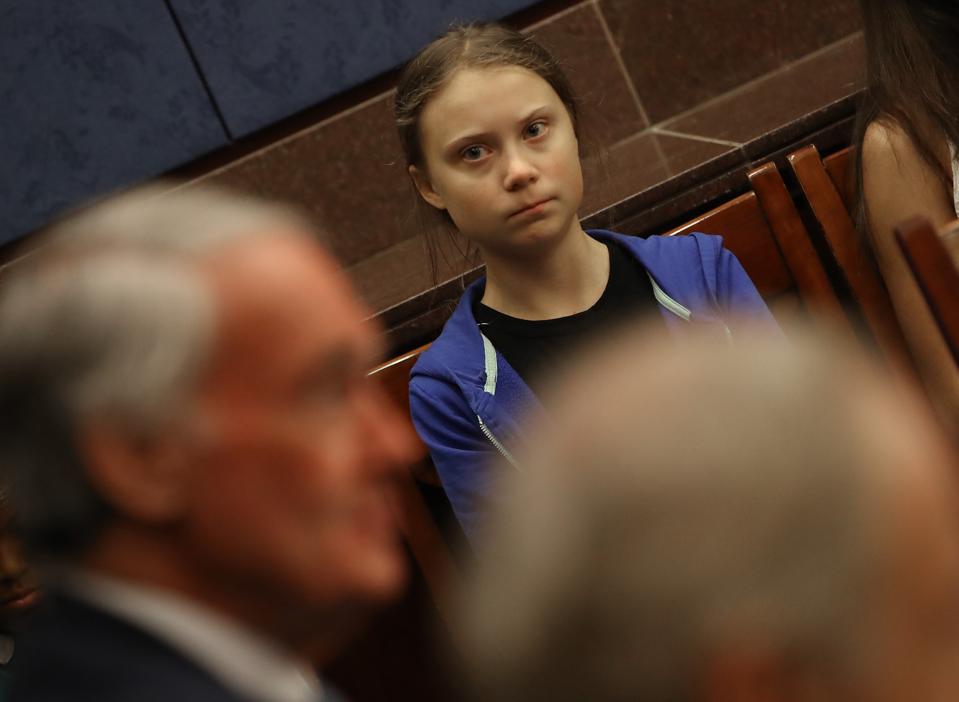
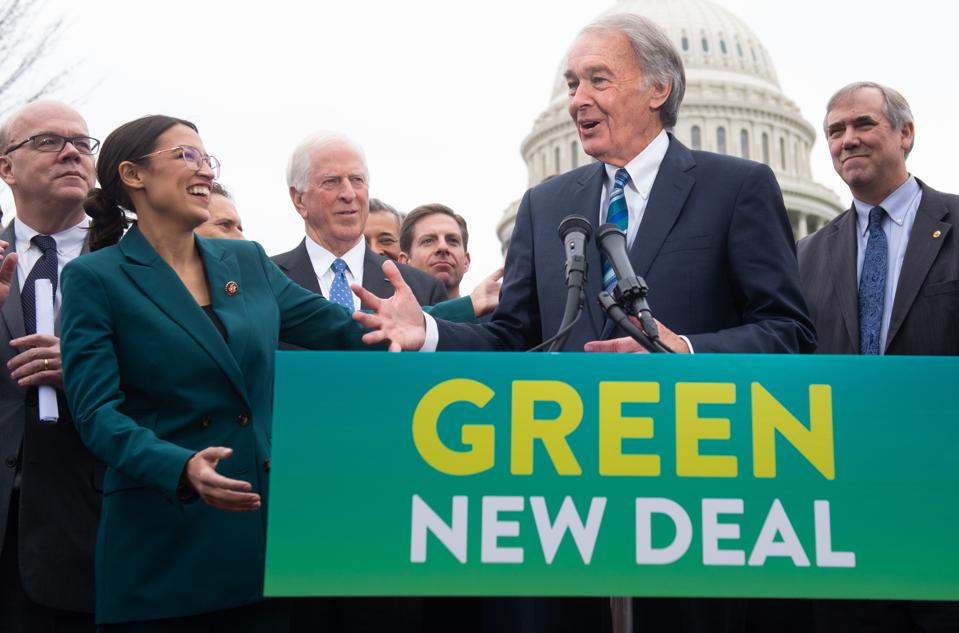
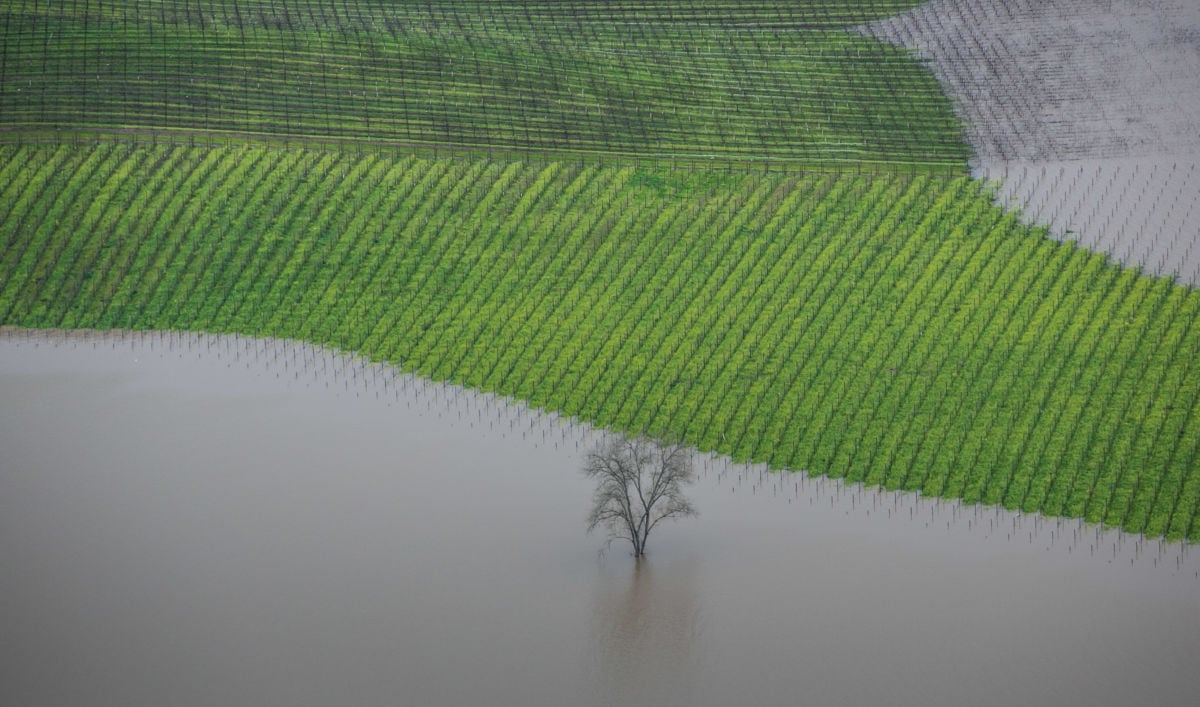

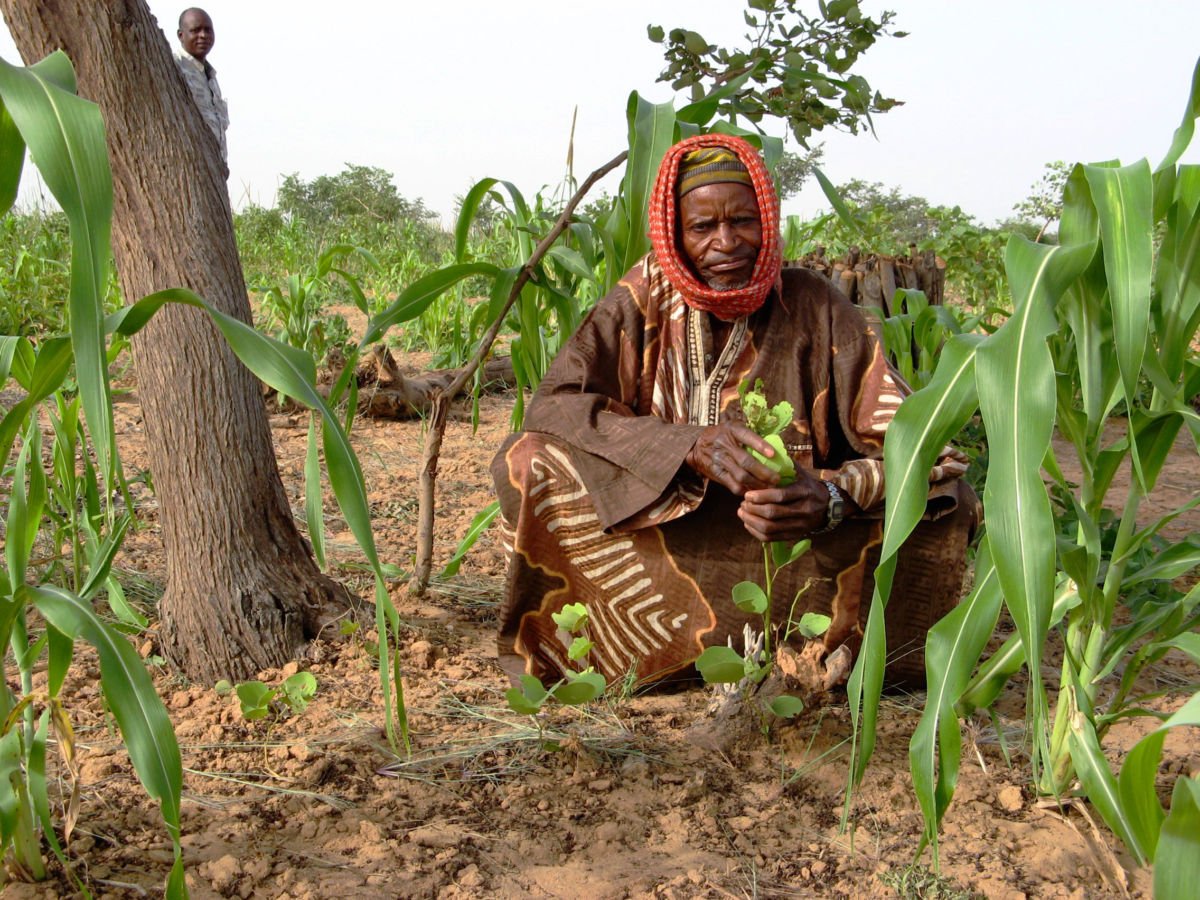
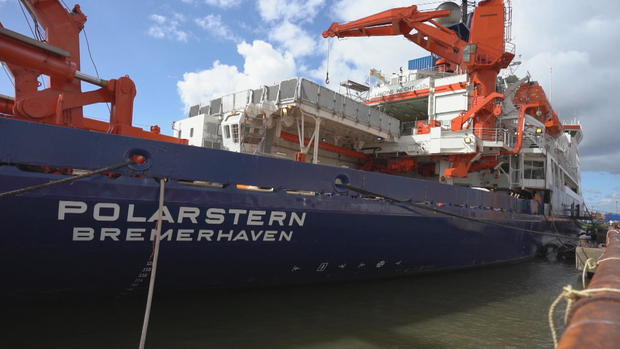




 Exposing the Big Game