Don’t Be an Ursiphobe

The first half of this post was excerpted from the chapter “Bears Show More Restraint than Ursiphobic Elmers” in my book, Exposing the Big Game: Living Targets of a Dying Sport

An irrational fear of bears dates back to the earliest days of American history and is customarily accompanied by obtuse thinking and quirky spelling. The most famous inscription (carved into a tree, naturally) attributable to Daniel Boone (that guy who went around with a dead raccoon on his head) bragged how he “…cilled a bar…in the year 1760.” The bears Boone killed (and there were many) in North Carolina and Tennessee were black bears, a uniquely American species that, like coyotes, evolved on the Western Hemisphere.

Greatly fearing the grizzly bears they discovered on their voyage up the Missouri River to the Pacific, Lewis and Clark were among the first frontiersmen responsible for leading them down the path to near-extinction. In a May 5, 1805, entry in their journals, Lewis quilled of the “turrible” grizzly, “It was a most tremendous looking anamal and extreemly hard to kill.” Clark and another member of their party pumped the unarmed bear with ten shots of lead before he finally succumbed.

Between 50,000 and 100,000 grizzlies once inhabited the western continental US before incoming settlers shot, poisoned and trapped them out, quickly snatching up prime valley bottoms (the preferred habitat of grizzly bears) for themselves and their livestock. Thus driven into desolate high country, the rare grizzlies who hold on in the lower 48 are allowed only two percent of their historic domain. The current population of 500 is essentially marooned on islands of insufficient wilderness, cut off from one another by freeways, urban sprawl and a network of barbed wire fences that spell “keep out” to any grizzly who knows what’s good for ’em.

In the vein of fables handed down for generations, bear tales have been told, embellished upon, amplified and retold by sportsmen wanting to justify hounding, baiting and just plain killing. As Charlie Russell, author of Grizzly Heart: Living without Fear among the Brown Bears of Kamchatka, tells it:

“Hunting guides describe bears as ferocious, unpredictable and savage predators. They tell one horrifying story after another about people being torn apart. The victims are always those who approached the encounter poorly armed. Then the guides move on to recount countless acts of sportsman bravery: tales of real men stopping huge angry bears just short of the barrel of their guns. They keep it up until their clients are shaking in their boots, barely able to muster the courage to face the dreadful foe.”

Slowly but surely, hyperbolic bear tales are being replaced by the honest truth about bears and folks are waking up to the reality that bears aren’t really out to get them, as evidenced in this recent article from the Calgary Herald:

http://www.calgaryherald.com/Overcoming+fear+grizzlies+survival+species+says+author/8323704/story.html

Overcoming fear of grizzlies key to survival of species, says author

Albertans need to stop being afraid of grizzly bears and learn to live with the animals to protect the threatened species in the province, says the former superintendent of Banff National Park.

Kevin Van Tighem, a fourth-generation Calgarian who worked with Parks Canada for three decades, said it’s time to reconsider how bears are managed in the province.

“If we really want bears to have a future, we need to manage them without fear,” he said in an interview with the Herald about his new book, Bears Without Fear. “We are primarily managing around a risk averse, keep-bears-scared-of-people paradigm.

“I don’t support bear hazing, I don’t support the Karelian bear dog program or the long-distance relocations.”

The strategies are all part of Alberta’s Grizzly Bear Recovery Plan 2008-2013, which was implemented after studies found there were fewer than 700 grizzly bears in the province — a number that led to their status as a threatened species.

All but one of the 15 grizzly bear deaths on provincial land (another two bears were hit and killed by a train in Banff National Park) in 2012 were caused by humans.

In addition, a total of 31 grizzly bears have been relocated by the province after threatening public safety, attacking livestock or damaging property — up from last year’s 24 “problem” bears.

Research shows relocation can triple the mortality of grizzly bears, which has raised concerns among conservationists.

Van Tighem said moving bears out of their habitat is part of the problem, pointing to the relocation of a mother grizzly bear and her three cubs out of Canmore last spring as an example.

“These were totally harmless bears,” he said. “They weren’t scared of people and because they weren’t scared of people, whenever they were surprised by a bicyclist or a dog walker, nothing bad happened. The mother would basically look and say, ‘Well, that’s people. They aren’t scary, so I don’t have to react in a scary way.’

As a result, he said the province took the best possible bears to live around and relocated them because they were worried about what could go wrong.

“We just can’t do that anymore,” said Van Tighem.

Text and Wildlife Photography ©Jim Robertson, 2013. All Rights Reserved

Text and Wildlife Photography ©Jim Robertson, 2013. All Rights Reserved

Hunting is Legal Animal Cruelty

When is an act of cruelty to animals not considered a crime?

When it’s committed in the name of sport.

“Injuring or killing any animal, outside of its permitted hunting season, is a crime.”

That quote was from Putnam County SPCA Chief Ken Ross, in response to the shooting of a Canada goose by a man annoyed that geese leave their droppings in an area where human children might play. The entire quote read: “In New York State, all animals are protected under cruelty statutes. Injuring or killing any animal, outside of its permitted hunting season, is a crime” (my emphasis added).

Clearly, even in a state as progressive as New York, “sportsmen” like hunters, fishers and trappers are given a free pass to get away with the crime of animal cruelty. At the risk of undermining the few laws currently in existence protecting non-humans, it’s time to recognize the tradition of hunting as nothing more than legalized cruelty to animals.

Text and Wildlife Photography ©Jim Robertson, 2013. All Rights Reserved

Text and Wildlife Photography ©Jim Robertson, 2013. All Rights Reserved

Hunters Say the Darndest Things

One of the hunter trolls who reads this blog (to see how the enlightened, humane people think) just reared his ugly head in comment to the post “Top 10 Retorts to Hunter Fallacies” (soon to be 20…). He unimaginatively cited yet another one of the most common excuses hunters use to justify killing innocent, inoffensive animals for sport:

11) “You do realize that even if you are a vegitarian [sic] you killed the plants you eat. So plants can’t feel pain but all other animals can?”

Well, yes, that’s right, in fact. Apparently the guy hasn’t heard that animals (presumably including him) have a central nervous system and a brain—two things lacking in plants which spare them the experience of feeling pain when stepped on or fear when they’re about to be eaten. There must be something about being consciously aware that he can’t relate to.

His comment went on, “You stand up for the rights of helpless animals but then kill some plants probably eating them while they are still alive you sick sick people.” (Ahem…look who’s talking. Does that mean he doesn’t eat potatoes with his meat?) According to his (il)logic, those who ascribe to a raw food diet are eviler than any hunter or trapper. But of course, his reasoning runs counter to both science and common sense.

For a grand finale, he ends with, “Or how about the irony of wasteing [sic] valuable resouces [sic] so that you could put this on the internet, think of all the distructive [sic] mining that was done to generate electricty [sic] so you could put this on the internet. Have a nice day.”

A good point—I promise not to waste any precious resources answering to his comments in the future. Of course any hunter who makes a statement such as his must surely see the irony in the fact that they just wasted time and resources trolling and commenting to a blog with a policy of not approving hunters’ comments without making a mockery of them.

Text and Wildlife Photography ©Jim Robertson, 2013. All Rights Reserved

Text and Wildlife Photography ©Jim Robertson, 2013. All Rights Reserved
Anti-Wildlife Legislation Introduced to Congress

Here’s a glimpse at things from the point of view of the dark side–an article in the “Daily Caller” in the “Guns and Gear” section from the Safari Club International (the self-proclaimed keepers of “common sense”) touting pro-hunting bills (which need to be stopped)…

Essential legislation to protect hunting introduced in U.S. Congress

Washington, D.C. – Safari Club International (SCI) supports the Recreational Fishing and Hunting Heritage and Opportunities Act introduced by Congressman Dan Benishek (MI) and Senator Lisa Murkowski (AK). H.R. 1825 and S. 170 will require the U.S. Forest Service (FS) and the Bureau of Land Management (BLM) to manage their lands for hunting, angling, and target- shooting based recreation. Members of Safari Club International will be traveling to Washington, D.C. on May 9th to advocate for H.R. 1825 and S. 170.

“For hunters, it is critical that legislation be passed that will ensure future generations of sportsmen and women have every opportunity to enjoy the great outdoors,” said SCI President John Whipple. “We are extremely thankful for the leadership that Congressman Dan Benishek of Michigan and Senator Lisa Murkowski of Alaska have shown with the introduction of this needed legislation.”

The U.S. House of Representatives passed this language with bi-partisan support as part of the Sportsmen’s Act of 2012, whereas the Senate never took final action during the 112th Congress.

“We hope to have this common sense legislation move quickly through both the House and Senate,” concluded Whipple.

Other legislation that is critical to sportsmen includes: H.R. 1818 (Young-AK) and S. 847 (Crapo-ID) allowing the importation of a small number of already harvested polar bears; H.R. 1819 (Young-AK) reinstating sustainable use importation of polar bears by U.S. citizens; and H.R. 322 (Miller-FL) protecting traditional hunting and fishing equipment and other policy issues important to all hunters.

More than 200 meetings will take place on May 9, 2013, as part of Safari Club International’s overall advocacy efforts to protect the future of hunting. The grassroots involvement from SCI members enhances the year-round efforts of SCI’s D.C. office. While SCI is headquartered in Tucson, Ariz., a team of attorneys, policy experts, and dedicated hunters lead SCI’s advocacy efforts in Washington.

Contact: Nelson Freeman; media@safariclub.org

Source: http://dailycaller.com/2013/05/06/essential-legislation-to-protect-hunting-introduced-in-u-s-congress/#ixzz2SikUh8Cc

6,000 coyotes killed in Utah’s bounty program

“Can they demonstrate that the bounty hunt actually helped boost mule deer populations? I think they’d be hard pressed to show this.” –- Camilla Fox, executive director, Project Coyote

Take the poll: http://www.ksl.com/?sid=25052737&nid=148&fm=most_popular&s_cid=popular-4
Are coyote bounties a good thing for Utah?
Results so far:
1. Yes 67% (3218)
2. No 33% (1573)
Total Votes: 4791

6,000 coyotes killed in Utah’s bounty program
By Grant Olsen, ksl.com Contributor May 6th, 2013

SALT LAKE CITY — More than 6,000 dead coyotes have been redeemed by hunters since Utah’s Division of Wildlife Resources launched its coyote bounty program last September.

The DWR hopes its ambitious plan will eliminate a significant portion of the state’s coyote population, which in turn will benefit the deer herds on which they prey. Officially known as the Predator Control Program, the incentive-based program pays hunters $50 for every coyote they kill.

Other states have implemented bounty programs over the years, but rarely on this scale. Even the New York Times has taken note of Utah’s Predator Control Program, calling it “one of the nation’s largest hunter-based efforts to manage predatory wildlife.”

John Shivik, mammals coordinator for the Division of Wildlife Resources, is proud of how his team worked together to start the Predator Control Program from scratch and get it “up and running so quickly.”

While few can argue that the Predator Control Program enjoyed a smooth launch, the effect it has had on wildlife is debatable. Camilla Fox, executive director of Project Coyote, says that the Predator Control Program is “ecologically reckless, economically unjustifiable and ethically reprehensible.”

According to Fox, most government agencies acknowledge that coyote bounties are not only ineffective at reducing coyote populations, but are often counterproductive. She asserts that decades of research suggests that the systematic killing of coyotes increases reproduction, immigration and survival.

Dr. Robert Crabtree, founder of the Yellowstone Ecological Research Center, agrees with this perspective. “It cannot be over-emphasized how powerfully coyote populations compensate for population reductions,” he says.

Fox maintains that there is “no science that demonstrates that bounty programs are effective at reducing coyote populations over the long-term.” She questions the DWR’s methods and how it will measure the program’s success. “Can they demonstrate that the bounty hunt actually helped boost mule deer populations? I think they’d be hard pressed to show this.”

According to Shivik, the DWR has been “collecting what looks like it will be excellent data to help us evaluate how effective our efforts are.” He says it’s too early to assess the program’s impact and that the biggest challenge his team faces is identifying the deer populations that are most affected by coyotes, because the DWR is “trying to be as efficient and effective as possible with our resources.”

The topic of resources brings up another criticism that bounty programs often face — that they are susceptible to fraud. When all that is required for a payout is portions of a carcass (such as paws, jaws or ears), it’s difficult for authorities to be sure the coyotes weren’t killed in other parts of the country. The DWR attempts to address this by requiring hunters to document the date and location of each kill before paying a bounty, but critics point out that the information could easily be fabricated.

An example of this kind of fraud reportedly occurred in Canada when Saskatchewan offered a coyote bounty. To collect the $20 bounty, hunters were required to remove the paws from every coyote killed and give them to authorities. As a result, piles of dead coyotes were found in other parts of the country with their paws cut off. More than 70,000 coyotes were killed as part of Saskatchewan’s bounty program and it’s impossible to know how many were killed elsewhere and then illegally redeemed in the province.
Fox points to these past problems as proof that bounty programs are a waste of money. “These programs are very often fraught with illicit activity,” she says. “I would ask: How many of the coyote body parts turned in for the $50 bounty were actually killed in other states?”

Despite these lingering questions, Utah’s Predator Control Program has received enthusiastic support from many local hunters. You can learn more about the program and register for the bounty by visiting the official website at http://www.wildlife.utah.gov/predators.

Wildlife Photography ©Jim Robertson, 2013.

Wildlife Photography ©Jim Robertson, 2013.

Sarah Palin Has Found Her Niche with the NRA

The other night I watched the HBO movie Game Change, about John McCain’s selection of Alaska Governor Sarah Palin as his presidential running mate in 2008. After Tina Fey’s hilarious portrayal of Palin on Saturday Night Live I was half expecting a comedy, but this fact-based film stayed so close historical reality it should have been billed a horror flick. The thought of Sarah Palin a heartbeat away from the red button that could launch our 7,000+ nukes on a president’s whim is beyond scary.

While Julianne Moore usually doesn’t do anything for me, her depiction of Palin at her highest, lowest and airheaded-est was spot on. It was almost painful watching a potential American VP be so clueless about foreign policy, domestic policy, or any other policy for that matter. Ed Harris as Senator John McCain was a bit of a stretch, but Woody Harrelson did a great job as McCain’s strategist, Steve Schmidt, who was partly responsible for suggesting Palin in the first place—and who spent the rest of the movie regretting it and desperately trying to coach her. After she goes catatonic during a Q&A session and later tries to seize power from her running mate, someone asks Schmidt, “Have you ever considered that she might be mentally unstable?30973_4756818474045_484772904_n

Well I consider it every time I see her. To me she’s little more than a female Ted Nugent—especially when she dons her hunting garb.

Near the story’s end, Harrelson’s Schmidt asks Rick Davis, his co-conspirator in picking Palin, “Still think she’s fit for office?” to which Davis answers, “Aw, who cares. In forty-eight hours no one will even remember who she is.” Unfortunately, Davis’ hopeful prediction did not come to pass.

The film leaves you wondering how the hell someone like Palin ever got tapped for VP and how she thinks she has any credibility left after monumental blunders like her interview with Katie Couric. Well, apparently Sarah Palin has found her niche as a mouthpiece for the National Rifle Association—a group clearly unconcerned with credibility (and collectively as mentally unstable as Palin herself).

Sporting a t-shirt making the simplistic yet inexplicable statement “Women Hunt” (including an obscenely suggestive line-drawing that probably went over her head), she called the NRA crowd she spoke to Friday her “brothers and sisters” during her 12-minute speech in which she told the crowd that Trigger is her son Trigg’s nickname and that Remington is her nephew’s middle name.

The creepy thing is, she received standing ovation.
Although Sarah Palin came off in the movie as a power-tripping right-wing extremist bordering on evil, if anything, Game Change was too nice in its representation of her. What sort of woman hunts? A woman like Sarah Palin.

74490788

Animal rights activists call for ban on “traditional” hunting games

2013/05/02 Taipei, By Yang Shu-min and Maia Huang

May 2 (CNA) Animal rights activists on Thursday called for a ban on traditional hunting contests by indigenous tribes, saying such competitions are a form of animal abuse.

The indigenous peoples’ traditions of hunting animals to show respect for their ancestors and Mother Earth often involve cruel actions such as torture of the animals, said the the Environment and Animal Society of Taiwan and some indigenous activists.

Furthermore, catching animals for fun and hunting pregnant creatures shows no respect for life and violates tribal traditions, said Chen Yu-min, director of the society.

The organization displayed video footage of a contest that showed about 200 people hunting squirrels and tearing the live creatures apart.

Such abuse hurts not only the indigenous culture, but also Taiwan’s international image and its tourism industry, the organization said.

It said that since 2009, at least 28 animal hunting contests have been held in 18 townships in nine counties across the country — all in the name of passing on traditions and cultural heritage.

Although hunters from indigenous tribes are excluded from the country’s wild animal protection laws, participants in such competitions could face animal abuse charges, said Lin Tzu-ling, general secretary of the Wild at Heart Legal Defense Association.

Lin urged the Council of Indigenous Peoples, Council of Agriculture and tourism-related agencies to help promote animal rights and push for the abolition of hunting games across the country.


Top 10 Retorts to Hunter Fallacies

Hunters’ arguments and rationalizations for their sport are so repetitive and predictable that, to save valuable time and precious mental energy, it might help to have your responses printed out ahead of time like flash cards, and kept at the ready in your back pocket. Here, then, are the Top 10 Retorts to Hunter Fallacies you’re most likely to hear the next time you debate a sportsman. (I would apologize to David Letterman, but this isn’t meant to be a joke.)

10) Hunting is”sustainable.”                                              
In today’s world of 7 billion people? Never mind, that’s a joke if I’ve ever heard one.
Do we really want to encourage 7 billion humans to go out and kill wildlife for food as if wild animal flesh is an unlimited resource? The only way hunting could be sustainable for humans these days is if we drastically reduced our population…and killed off all the natural predators. Overhunting has proven time and again to be the direct cause of extinctions, from the passenger pigeon to the Eastern and the Miriams Elk. Now wolves in the Rockies and Great Lakes are being hunted and trapped to oblivion—for the second time.

9) Animals kill other animals, so we can too.
That’s an example of what’s known as the naturalistic fallacy—the notion that any behavior that can be found in nature is morally justifiable. But wolves and other natural predators need to hunt to survive, humans don’t—for them it’s nothing more than a thrill kill. Human beings have moved beyond countless other behaviors such as cannibalism or infanticide, so why can’t some people tear themselves away from hunting?

8) Humans have teeth like carnivores                                                                     Human beings have mostly flat teeth, designed primarily for chewing plant-based foods, as our primate cousins do. Our canines, or “fangs,” are teensy compared to those of gorillas, who are strict vegetarians and only show them to appear fierce. Also, our intestinal tract is long to allow for the slow digestion of high-fiber foods, while true carnivores have short intestines as needed to process meat and dispose of the resulting toxic wastes quickly.

7) Wild game meat is health food.
All animal flesh is rife with cholesterol throughout, and the protein in animal flesh is acidic, causing bone calcium losses as it is metabolized. According to the American Dietetic Association, a diet high in animal products has been linked to obesity, diabetes, colon and other cancers, osteoporosis, kidney stones, gallstones, diverticular disease, hypertension and coronary artery disease. New studies have found that another culprit in causing heart disease may be a little-studied chemical that is burped out by bacteria in the intestines after people eat meat.

6) Hunting is needed to control animal populations.
You’d really have to have no understanding of or faith in Mother Nature to make such a claim—she was doing a fine job of taking care of her own before Man came along and appointed himself “manager” and “game” keeper. No niche goes unfilled for long before some natural predator finds it and fixes a “problem”…if we allow them to. Besides, hunting animals like deer makes them breed more, resulting in more deer, not fewer.

5) If we don’t kill deer they’ll become a traffic hazard.
Two words: Slow the fuck Down. (Sorry, that was four words.)
More animals are hit by cars during hunting season than any other time of year, usually when fleeing from bloodthirsty sportsmen with guns.

4) Hunting teaches respect for wildlife and an appreciation for nature.
Ha! That’s like a serial killer claiming his crimes foster a respect for women. Tracking down and shooting something does not equal respect. Try using a camera or binoculars if you really want to respect them.

3) Hunting is a “manly” sport.
First of all, hunting isn’t even a sport—Sport is generally recognized as an activity based in physical athleticism or physical dexterity. Sports are usually governed by rules to ensure fair competition. A sport is played by two equally matched, or at least equally willing, sides. According to SportAccord, the second criteria determining if something is a sport: it be in no way harmful to any living creature. And anyway, real men respect animals (see above).

2) Hunting licenses pay for wildlife refuges.
In truth, hunting licenses pay for hunter playgrounds, not true wildlife refuges. Take a look at how many “refuges” have been opened up to hunting; or just try to close an area to hunting for the sake of wildlife and hear the nimrods wail. If hunters hadn’t hijacked all the refuges, more bird watchers, hikers and others who truly appreciate nature would gladly pay for a pass to frequent those places. Furthermore, non-consumptive wildlife watchers contribute far more to local economies than do hunters.

1) Hunting keeps kids out of trouble.
Sticking a gun in a child’s hand and telling him or her to shoot Bambi is likely to leave lasting psychological scars, whether it’s PTSD or a heart calloused for killing.

Bonus fallacy) God put Animals here for us to use.
Don’t flatter yourself.

Text and Wildlife Photography ©Jim Robertson, 2013. All Rights Reserved
Text and Wildlife Photography ©Jim Robertson, 2013. All Rights Reserved

Chronicling the End, Part 1

The End. Everybody has one. Some are nicer than others. The end is not necessarily a bad thing, just an inevitability. What goes up must come down, but the end of one era can be a new beginning for another. Not all endings are unwelcome.

For instance, while the NRA and the Safari Club view the end of hunting as a bad thing, it would actually spell the beginning of a more agreeable era for wildlife—a time when human beings treat animals with respect and compassion, rather than objectifying and maltreating them.

Just as the end of winter brings the promise of spring, the end of the Anthropocene age will bring hope for new life to flourish.

Now, rumor has it there are those who think I’m too negative when referring to the future of humankind. But although I’m a realist when it comes to the future of our species (or rather, the lack thereof) I don’t secretly hope for the violent demise of humanity. If I hope for anything, it’s that people will learn to accept new ways of living lightly on the planet that include eschewing meat, treading softly rather than stomping out gargantuan carbon footprints everywhere, and of course, voluntarily reducing our population in a big way.

Barring that—and if Homo sapiens continues on the currently charted course—then I’m afraid to say I feel the species’ days are numbered. Call me Malthusian (as detractors call Paul Ehrlich for his theories outlined in The Population Bomb), but I’d have to say Thomas Malthus was far ahead of his time when he published the essay, Principle of Population in 1798, wherein he wrote:

“The power of population is so superior to the power of the earth to produce subsistence for man that premature death must in some shape or other visit the human race. The vices of mankind are active and able ministers of depopulation. They are the precursors in the great army of destruction, and often finish the dreadful work themselves. But should they fail in this war of extermination, sickly seasons, epidemics, pestilence, and plague advance in terrific array, and sweep off their thousands and tens of thousands. Should success be still incomplete, gigantic inevitable famine stalks in the rear, and with one mighty blow levels the population with the food of the world.”

It’s hard to believe that Malthus saw all that as far back as 1798. Even harder to believe is that his predictions have not yet come true. The only two things preventing a “Malthusian catastrophe” are technology and mechanization—neither of which I have much faith in. Now, before you go accusing me of being negative, a pessimist or worse, a misanthropist, at least give me credit for seeing the silver lining in every instance. Why, just today I spotted the following article sharing the uplifting news that “Bird flu brings windfall for businesses”…

BEIJING, April 22 (Xinhua) — A new strain of bird flu that has been spotted across China has brought vegetable dealer Xu Jialiang mixed feelings.

For Xu, who has been selling veggies for 20 years in Wuhan, capital of central China’s Hubei Province, the virus is a cause for concern, but also a commercial opportunity.

“Cabbage that was once left to rot has become a hit,” said Xu, adding that he recently sold more than 50 tonnes of cabbage in a single day, double the amount he was selling just two months ago.

“People have become more reluctant to eat poultry, so vegetables have become much more popular,” he said.

The Wuhan municipal bureau of commodity pricing said vegetable prices have surged since the end of March.

The first human H7N9 infection was reported in late March. A total of 102 cases have been reported to date, resulting in 20 deaths.

The poultry-raising industry, restaurants that sell poultry and even producers of shuttlecocks, which are made using bird feathers, have been impacted by the virus.

Figures from the China Animal Agriculture Association showed that direct economic losses for broiler chicken breeders have exceeded 3.7 billion (593 million U.S. dollars).

However, other sectors have been boosted by the virus’s arrival. In addition to vegetable vendors, sellers of traditional Chinese medicine (TCM) have also profited.

At the Zhangshu TCM Wholesale Market, a major TCM market in east China’s Jiangxi Province, the purchase price of processed isatis root surged from 13 yuan per kilo to 22 yuan after health experts claimed that the root can prevent infection.

Lei Da, head of the purchase department at Zhangshu Tianqitang TCM Co., Ltd., said processed honeysuckle, which some have claimed can prevent bird flu, sold out after the infections were reported.

Lei said the company is watching the status of the epidemic closely to decide whether it will increase its stores of the two items.

Insurance companies are also using the virus as an opportunity to boost income. Ping An Insurance, one of China’s largest insurance companies, is selling bird flu insurance that offers 20,000 yuan in compensation if an insurant is confirmed to have become infected. Other companies, such as Taikang Life and Sinosafe Insurance, are also offering bird flu insurance.

However, health experts say poultry products are still safe to eat as long as they are purchased through regulated channels and are thoroughly cooked.

Li Lanjuan, an academic with the Chinese Academy of Engineering, said the virus is sensitive to high temperatures, ultraviolet rays and several kinds of sanitizer.

She ate chicken meat in front of reporters last week to dispel public worries.

“The virus will be killed in two minutes after the temperature reaches 100 degrees Celsius or half an hour if the temperature is 60 degrees Celsius,” said Li.

If Mr. Malthus were here today I’m sure he’d agree that the act of eating Chinese chicken (even if purchased through regulated channels) is one of those “vices of mankind” and an active and able minister of depopulation. …

Consider this the first installment of a new series which will chronicle the ways in which humans are instigating their own undoing. I’m considering starting a new blog and/or book “Chronicling the End,” depending on the feedback I receive. If you like the idea, “Like” this page, or leave a comment below…

Text and Wildlife Photography ©Jim Robertson, 2013. All Rights Reserved

Text and Wildlife Photography ©Jim Robertson, 2013. All Rights Reserved

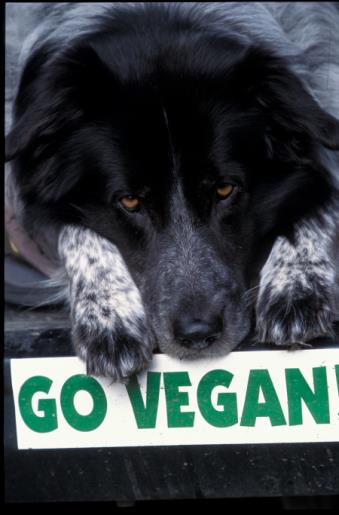
Vegans—Not Hunters—Are the Best Environmentalists

Originally posted on April 22, 2012

You’ve probably heard the cliché, “Every day is Earth Day to an environmentalist.” Well, it’s true actually, at least to a true environmentalist—the kind of person who makes daily choices based solely on their concern for our planet and the life it supports. The gal, for example, who chooses not to eat farmed animals because of the enormous amount of abuse (not to mention gargantuan carbon footprint) inherent in those Styrofoam and shrink-wrapped packages that clog the sprawling meat isles across the country; or the guy who does not hunt because wild animals are a part of the living Earth he loves and respects.

Eager to look like the sensible ones, conventional environmentalists often assume the wobbly, half-hearted stance of dismissing, rather than embracing, the animal rights movement. On the other hand, dedicated animal rights advocates don’t shy away from calling themselves environmentalists. They know that only by adopting a vegan lifestyle can one truly be an environmentalist. Vegans understand that the Earth cannot sustain billions upon billions of hungry bipedal carnivores and they recognize that the surest way to ease suffering for all is to eat lower on the food chain—in keeping with our proven primate heritage.

Absurd as it sounds to folks who really do care for the planet, certain atypically adroit sportsmen have been caught spreading the dogma that gun-toting Bambi-slayers actually have a “love for the land” and a concern for the animals they kill—that murdering animals is a wholesome Earth Day activity. Proselytizing hunter-holy-men try to downplay the obvious lethal impacts hunting has on individual animals and entire populations, wielding one of the weariest—and wackiest—of all clichés, “Hunters are the best environmentalists,” despite well-documented proof that hunting has been—and continues to be—a direct cause of extinction for untold species throughout the world.

Over-zealous hunters completely eradicated the once unimaginably abundant passenger pigeon and the Eskimo curlew (both killed en masse and sold by the cartload for pennies apiece), the Carolina parakeet (the only species of parrot native to the US) and the great auk (a flightless, North Atlantic answer to the penguin).

Hunting is the antithesis of environmentalism. The very notion of the gas-guzzling, beer-can-tossing hunter as an environmentalist is laughable even to them. Show me a hunter who is not antagonistic toward the rights of animals and I’ll show you a rare bird indeed.

____________________________________________________

Portions of this post were excerpted from the book, Exposing the Big Game: Living Targets of a Dying Sport: http://www.earth-books.net/books/exposing-the-big-game

304224_10150323421256188_1151389461_n