Exposing the Big Game

Forget Hunters' Feeble Rationalizations and Trust Your Gut Feelings: Making Sport of Killing Is Not Healthy Human Behavior

Exposing the Big Game

Tell Yahoo! to stop featuring endagered whale products on its site

Goal: 15,000 Progress: 12,919
Sponsored by:The Animal Rescue Site

It wasn’t all that long ago that online retail giant Amazon was in hot water for its sale of whale products from Japan. Now, Yahoo! is under fire for doing the exact same thing.

Yahoo! Japan features products like whale jerky, bacon, and canned whale meat from endangered whale species. Yahoo! has banned the sale of endangered animal products from its other sites, but continues to profit from the sale of whale commodities on its Japanese site. Many of the products come from species of whales that are protected by the International Whaling Commission — regulations that Yahoo! is blatantly shirking.

As one of the Internet’s most prominent corporations, Yahoo! should know better than to sell products that are harmful to any animal species. Tell Yahoo!’s CEO Ross Levinsohn to obey the international moratorium and to stop selling endangered animal products immediately.

 http://theanimalrescuesite.greatergood.com/clickToGive/ars/petition/YahooWhaleProducts
<div class=”scriptWarning”>JavaScript is required to sign this petition!</div>

Federal judge rules U.S. Navy Pacific training harms too many marine mammals

Federal judge rules U.S. Navy Pacific training harms too many marine mammals

U.S. Navy–RIMPAC 2012

In a 66-page ruling handed down today, U.S. District Court Judge Susan Oki Mollway in Honolulu ruled that the National Marine Fisheries Services should not have approved the U.S. Navy’s training activities in the Pacific Ocean a couple years ago because they harm too many marine mammals.

“The Navy and Fisheries Service had concluded that, over the plan’s five-year period, the Navy’s use of explosives and sonar, along with vessel strikes, could result in thousands of animals suffering death, permanent hearing loss or lung injuries,” stated an April 1 news release on the ruling from Earthjustice, which legally challenged the Fisheries Service approval in December 2013 on behalf of the Conservation Council for Hawaii, Animal Welfare Institute, Center for Biological Diversity and Ocean Mammal Institute. “Millions of others could be left with temporary injuries and significant disruptions to feeding, breeding, communicating, resting and other essential behaviors. In all, the Navy’s plan would cause an estimated 9.6 million instances of harm to marine mammals.”

That’s a huge number. Nearly three years ago, when I wrote this story on the Navy’s proposed Pacific testing and training activities, the estimate of instances of harm was just around 2 million. Of that, the Navy estimated, the exercises would kill 200 mammals and inflict another 1,600 injuries each year.

For its part, the Navy says it must conduct training exercises in the Pacific, especially using active sonar, to keep the nation safe. This, Earthjustice attorney David Henkin says, doesn’t give the service the right to inflict biological damage wherever they see fit.

“The court’s ruling recognizes that, to defend our country, the Navy doesn’t need to train in every square inch of a swath of ocean larger than all 50 United States combined,” said Henkin in the Earthjustice news release. “The Navy can fulfill its mission and, at the same time, avoid the most severe harm to dolphins, whales and countless other marine animals by simply limiting training and testing in a small number of biologically sensitive areas.”

Mollway’s ruling wasn’t subtle, either, and stated that the Navy exercises violate the Marine Mammals Protection Act (MMPA), Endangered Species Act and National Environmental Policy Act. Here’s her ruling on the MMPA:

“No one is disputing the importance of military readiness, but recognition of that importance does not permit the parties or this court to ignore the MMPA. Although MMPA provisions have been adjusted with respect to military activities, those adjustments do not permit the Navy to skirt the MMPA purely to avoid having its training and testing activities interrupted.”

Mollway was also downright sarcastic and even a little mean:

The government actions that are challenged in this case permit the Navy to conduct training and testing exercises even if they end up harming a stunning number of marine mammals, some of which are endangered or threatened. Searching the administrative record’s reams of pages for some explanation as to why the Navy’s activities were authorized by the National Marine Fisheries Service (“NMFS”), this court feels like the sailor in Samuel Taylor Coleridge’s “The Rime of the Ancient Mariner” who, trapped for days on a ship becalmed in the middle of the ocean, laments, “Water, water, every where, Nor any drop to drink.”

According to this Los Angeles Times story from earlier today, the Navy is still “studying the ruling and could not comment on its details.”

Photo of 2012 RIMPAC exercises: Mass Communication Specialist Seaman Apprentice Ryan J. Mayes/U.S. Navy/Wikimedia Commons

SeaWorld has new ad campaign after disparaging documentary

SeaWorld has new ad campaign after disparaging documentary
By MIKE SCHNEIDER, Associated Press Published: Mar 23, 2015
http://www.komonews.com/news/local/SeaWorld-has-new-ad-campaign-after-disparaging-documentary-297269921.html
FILE – In this Monday, March 7, 2011, file photo, park guests watch as a killer whale flips out of the water at SeaWorld Orlando’s Shamu Stadium in Orlando, Fla. (AP Photo/Phelan M. Ebenhack, File)
ORLANDO, Fla. (AP) — SeaWorld is starting an advertising campaign in the wake of declining revenue and attendance that followed the release of a highly critical documentary.

The campaign that began Monday focuses on the marine-life theme park’s efforts at caring for animals in captivity and in the wild.

SeaWorld Entertainment Inc. has faced declining revenue and attendance since the release of the 2013 documentary “Blackfish.” The documentary examined what led a killer whale to drown a trainer in 2010 at SeaWorld’s Orlando park.

Last year, SeaWorld’s revenue declined 3 percent from the previous year. Its chief executive resigned, and the company announced plans to build larger environments for its marine mammals.

SeaWorld said last week that Joel Manby will become its new president and CEO.

Immediate Help Needed: Keep Whales and Dolphins Out of Captivity

ALERT

March 5, 2015

PLEASE BROADCAST NOW

NOTE: I think it important that form letters and emails be avoided and that the calls not be identified with an organization to help prevent reactions from legislators who will vote against anything “animal”.

Immediate Help Needed: Keep Whales and Dolphins Out of Captivity

Who: All Washington State residents, any age. Young people who do not want to see whales and dolphins in captivity are encouraged to call when their parents do.

What: Contact your legislators. Washington State Legislature House Bill 2115 would prohibit captivity of whales, dolphins and porpoise for entertainment and exploitation. It is under attack and being blocked from leaving the Rules Committee which decides if a bill will proceed to debate and vote by the full Washington State House of Representatives.

When: Now. All bills must be voted out of the House by Wednesday or they die.

How:

a)      If your Representative is on the Rules Committee, call their office or email them.

b)      Call your Representatives who are not on the Rules Committee. If many people call their Representatives, your voice will flow to the Rules Committee.

c)      If you need to find who your Representatives are in Washington State, go here.

Please act now!

Why Not Become a Sea Lion Advocate?

According to an MSN news article entitled, Golden Gate Bridge jumper says sea lion saved him, “A man who jumped off San Francisco’s Golden Gate Bridge to try to take his own life and was kept afloat by a sea lion said Wednesday suicide prevention was now his life’s work.”

Witnesses who saw the incident said a sea lion kept him afloat until the Coast Guard sent a rescue boat. Kevin Hines told MSN news, “I really thought it was a shark and I thought it was going to take off a leg and I was panicking. And then it just didn’t, it just kept circling beneath me. I remember floating atop the water and this thing just bumping me, bumping me up.”

One of the witnesses told Hines, “I was less than two feet away from you when you jumped. It haunted me until this day; it was no shark, it was a sea lion and people above looking down believed it to be keeping you afloat until the Coast Guard brought a ride behind you.”

Hines stated, “[Witnesses] saw me laying atop the water and being bumped.” He added, “This thing beneath me didn’t stop or didn’t go away until I heard the boat behind me.”

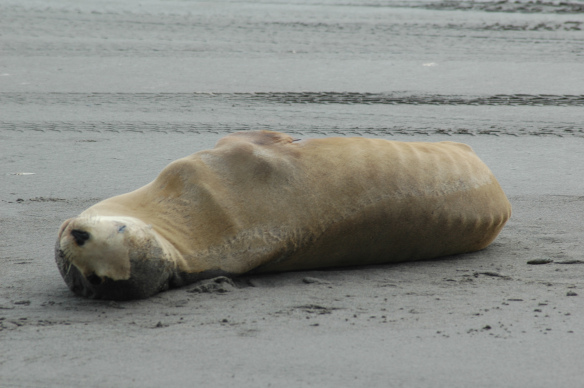
After all our species has done and continues to do to sea lions—hunted them by the thousands for their fur and oil while feeding their flesh to dogs or captive minks; vilifying and putting a bounty on their heads forDSC_0129 competing with commercial fishermen; and forcing them to perform as trained “seals” in the circus, etc.—it’s incredible that one of these “lesser” mammals would go out of his or her way to save a human.

If not for the sea lion keeping him afloat, Hines would very likely have gone under and drowned before the rescue boat arrived.  While it’s noble that he is now devoting his life to suicide prevention, if he really wants to be altruistic, why not advocate for the one who went out of their way to prevent his suicide. It seems to me that if anyone has a good reason to become a marine mammal advocate, he does—he owes them his life.

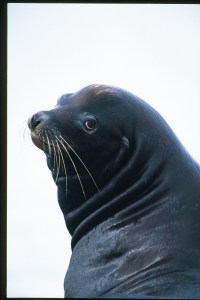
While the human population grows by 350,000 per day, Steller sea lions, dsc_0224whose total pre-persecution numbers were never more than 300,000, have been driven below 100,000 and are still in decline. In Alaska, the Western segment of Stellars is down to a mere 18% of their historic numbers. Meanwhile, starved California sea lion pups are washing up dead on the beaches.

Sea lions are still being scapegoated, branded and shot, all for eating fish—the only food they have.

Text and Wildlife Photography ©Jim Robertson

Text and Wildlife Photography ©Jim Robertson

NOAA removes the eastern Steller sea lion from the Endangered Species Act list, Oct. 2012

[This situation mirrors the removal of wolves from the ESA list. The attitude is, “It’s all here for humans, all other predators need not apply. Go away and find your own resources.”]…

http://alaskafisheries.noaa.gov/newsreleases/2013/easternssl102313.htm

NOAA removes the eastern Steller sea lion from the Endangered Species Act list

After public input and careful scientific review, NOAA Fisheries has found that the
Wildlife Photography ©Jim Robertson. All Rights Reserved

Wildlife Photography ©Jim Robertson. All Rights Reserved

eastern distinct population segment of Steller sea lions has recovered and can be removed from the list of threatened species under the Endangered Species Act. This is the first species NOAA has delisted due to recovery since the eastern North Pacific gray whale was taken off the list of threatened and endangered species in 1994.

“We’re delighted to see the recovery of the eastern population of Steller sea lions,” said Jim Balsiger, Administrator of NOAA Fisheries’ Alaska Region. “We’ll be working with the states and other partners to monitor this population to ensure its continued health.”

NOAA has concluded delisting is warranted because the species has met the recovery criteria outlined in its 2008 recovery plan and no longer meets the definition of a threatened or endangered species under the act. A threatened species is one that is likely to become endangered within the foreseeable future throughout all or a significant portion of its range. An endangered species is one that is in danger of extinction throughout all or a significant portion of its range.

The best available scientific information indicates the eastern Steller sea lion has increased from an estimated 18,040 animals in 1979 to an estimated 70,174 in 2010, the most recent year for which data are available. Eastern Steller sea lions will continue to be protected under provisions of the Marine Mammal Protection Act.

Steller sea lions were first listed as a threatened species under the ESA in 1990. In 1997, NOAA scientists recognized two distinct population segments of Steller sea lions: a western and an eastern segment. The eastern segment includes Steller sea lions from Cape Suckling, Alaska, south to California’s Channel Islands. The western population segment remains classified as endangered. NOAA is not proposing any changes to the status of the western Steller sea lion.

On June 29, 2010, NOAA Fisheries provided notice that it was initiating a status review of the eastern Steller sea lion and requested public comment. During the comment period, NOAA Fisheries received two petitions to delist the eastern Steller sea lion: one from the states of Washington and Oregon; and one from the State of Alaska.

On April 18, 2012, NOAA released a draft status review, which underwent independent peer review and proposed to remove eastern sea lions from the list of endangered and threatened wildlife. NOAA requested, received, and considered 1,144 public comments during the 60-day comment period.

With the delisting, federal agencies proposing actions that may affect the eastern Steller sea lions are no longer required to consult with NOAA Fisheries under section 7 of the ESA. However, NOAA Fisheries will continue to monitor the effects of proposed projects on the eastern population to ensure existing measures under the MMPA provide protection necessary to maintain recovered status.

NOAA Fisheries is proceeding carefully to ensure the eastern population segment remains strong. Working with affected states and other partners, NOAA has developed a post-delisting monitoring plan for this population. As a precautionary measure, the plan will be in effect for 10 years–twice the five year time requirement under the ESA. If implemented as intended, this plan takes the important steps necessary to maintain the recovered status of the eastern Steller sea lion.

The delisting of the eastern Steller sea lion will take effect 30 days after publication of the final rule in the Federal Register.

NOAA’s mission is to understand and predict changes in the Earth’s environment, from the depths of the ocean to the surface of the sun, and to conserve and manage our coastal and marine resources. Join us on Facebook, Twitter and our other social media channels at http://www.noaa.gov/socialmedia.

To learn more about NOAA Fisheries in Alaska, visit alaskafisheries.noaa.gov or www.afsc.noaa.gov.

Let Outdated Attitudes Go Extinct

Text and Wildlife Photography ©Jim Robertson. All Rights Reserved

Text and Wildlife Photography ©Jim Robertson. All Rights Reserved

Some viewpoints need to go extinct, and the hate-speak espoused by Capt. Ron Malast in his opinion piece, “Let Steller sea lions go extinct,” is at the top of the list. So, the Steller sea lion population is starting to re-grow a little after the commercial seal trade, ruthless bounties and constant shooting as “competition” drove them, and just about every other pinniped species, to the brink of extinction.

The eastern pacific population of Steller sea lions may be up to 70,000 individuals now, but the human population of 7.2 billion grows by 350,000 per day. Let that sink in for a minute… 350,000 PER DAY!

350,000 is also the total number of all other great apes alive today—every chimpanzee, bonobo, gorilla and orangutan—combined. Why is that significant? Because scientifically speaking, that’s all we humans really are—just another species of ape, somewhere between chimps and gorillas. Homo sapiens share 98% of our DNA with Pan troglodytes, the chimpanzees.

But while seals and sea lions were evolving into self-sufficient sea mammals, adapting to pelagic life by perfecting the art of holding their breath for up to a half an hour and diving to depths of 600’ or more, human-types were busy developing a profoundly narcissistic sense of entitlement that took root early in Man’s prehistory. This feeling of privilege flourished as our species spread out and usurped every other species’ habitats and resources. From the mightiest bison of the plains to the flattest fish at the bottom of the ocean, we claimed the top of every food chain we could sink our teeth into.

The anthropogenic mass extinction following close on the heels of human’s surging population explosion already saw the end of the Steller sea cow and the Caribbean seal, both hunted to extinction in centuries past. Glibly calling for the extinction of wolves or Steller sea lions to snuff out the competition summons back an outdated attitude that should have long since been dead and buried.

HSUS offers $5,000 reward for person who killed dolphin with arrow

NOAA seeks person who killed dolphin with arrow

Posted: Dec 09, 2014 1:22 PM PST <em class=”wnDate”>Tuesday, December 9, 2014 4:22 PM EST</em>Updated: Dec 09, 2014 2:01 PM PST <em class=”wnDate”>Tuesday, December 9, 2014 5:01 PM EST</em>

NOAA photo of hunting arrow that was removed from dolphin.NOAA photo of hunting arrow that was removed from dolphin.

NOAA photo of dolphin that had been shot with an arrow.NOAA photo of dolphin that had been shot with an arrow.

NOAA photo of pregnant dolphin that had been shot.NOAA photo of pregnant dolphin that had been shot.

A $5,000 reward is being offered in the disturbing case of a dolphin that washed ashore dead with a hunting arrow protruding from its side.

The National Oceanic and Atmospheric Administration is investigating the death, which happened over the weekend in Orange Beach, Alabama. The agency says it is the second human-related dolphin death in the Northern Gulf of Mexico since mid November.

NOAA scientists think the dolphin may have survived for at least five days before dying from a secondary infection caused by the wound. The dolphin was shot with a steel-tipped hunting arrow that had a yellow feather on it.

The Humane Society of the United States and the Humane Society Wildlife Land Trust are offering the reward with the hope it will lead to the arrest and conviction of the person responsible.

“This intelligent, social creature experienced tremendous suffering from this senseless act. We are grateful for NOAA’s work to investigate this heinous crime and are hoping someone with information will come forward,” said Alabama HSUS Director Mindy Gilbert in a news release.

If you have information about the incident, call NOAA’s Office of Law Enforcement in Niceville, FL, at (850) 729-8628 or the NOAA Enforcement Hotline at 1-800-853-1964 as soon as possible. Tips can be left anonymously.

It was the second human-caused death of a dolphin since mid-November. NOAA is investigating the deadly shooting of a pregnant bottlenose dolphin found dead on Miramar Beach.

To report a stranded, injured or sick dolphin, call 1-877-WHALE-HELP (1-877-942-5343)

And From

Though it remains unclear just who the perpetrators of these killings are, there has been speculation that local fishermen — disgruntled by dolphins stealing their bait or catch — may be responsible.

There have, in the past, been instances of fishermen intentionally harming dolphins. In 2009, for example, a man in Panama City, Florida, was sentenced to two years in prison after he was found guilty of making pipe bombs to kill dolphins. Several fishermen have also been slapped with fines in recent years for shooting the animals.

Japan Prevents Dolphin Activist From Entering The Country

https://www.thedodo.com/taiji-dolphin-activist-denied-869369435.html?utm_source=The+Dodo+Newsletter&utm_campaign=86a143d85e-12_10_2014_NL&utm_medium=email&utm_term=0_4342b46fc5-86a143d85e-142095821

By Melissa Cronin

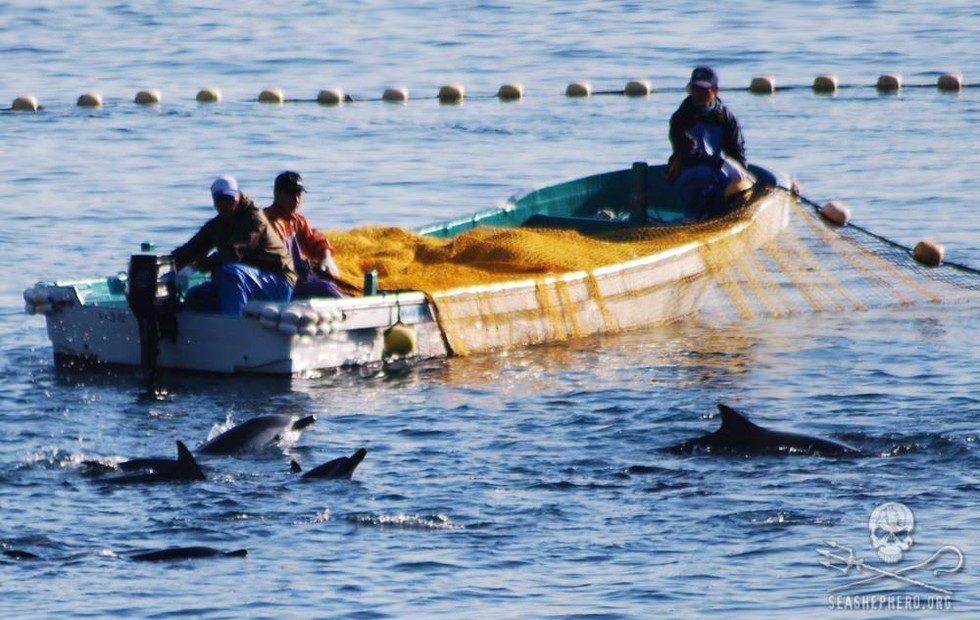
An activist flying into Japan hoping to document the annual dolphin and whale slaughter in the infamous cove in Taiji was detained by officials at Tokyo’s Narita Airport and eventually forced to leave the country.

Melissa Sehgal, a member of the Sea Shepherd Conservation Society who has documented the slaughter for four years now, says that she was questioned for nine hours and detained for 24 hours in a holding cell. She was then reportedly escorted onto a flight and forced to leave Japan.

Sea Shepherd says that several of their other staff and volunteers have been denied entry to Japan this year as well. Japanese immigration authorities say that they are not technically “tourists,” and in violation of visa restriction. The incident has not been reported in any Japanese news sources, and government representatives have not officially commented.

“Since when is taking pictures of what Japan contends is their ‘culture’ not considered a tourist activity?” said Sehgal. “Japan is so ashamed of their serial killing and kidnapping of wild dolphins that they are trying to stop activists like me from showing the world the truth. It is a testament to our effectiveness that they are trying to keep us out.”

Last year Ric O’Barry, former dolphin trainer and head of the Dolphin Project, was turned away when he tried to visit a juvenile albino calf after she had been captured. When he was denied entry by the park’s staff at the gates, O’Barry sued the marine park for discrimination.

“They don’t want people like me to go into the Taiji Whale Museum to monitor Angel,” O’Barry told AP last May in Tokyo.

Meanwhile in Taiji, the drive hunt season continues. Just this week, a pod of some 50 striped dolphins was ushered into the cove and slaughtered for their meat. Since Sept. 1, 20 pods of dolphins, nearly 300 total, have been killed in the cove.

(Sea Shepherd Conservation Society)

A Lot Of Heart For Orcas

By Steven Huxter

In December 2013, Seattle rockers Nancy and Ann Wilson of the band Heart, cancelled their concert at Sea World as a result of watching “Blackfish.” After hearing from fans and considering the implications of a decision to cancel, Heart tweeted: “Heart has chosen to decline their forthcoming performance at SeaWorld on 2/9/14 due to the controversial documentary film ‘Black Fish’.”

A year later, and true to form, Heart continues to be a supporter of Orca welfare. This past November, Nancy and Ann donated an autographed guitar that was raffled as part of the “Lolita’s Gift Holiday Auction,” a fundraising effort to support the Orca Network and a newly released documentary, “Fragile Waters” from filmmakers Rick Wood and Shari Macy. The film highlights the plight of the endangered Southern Resident Killer Whales and their home waters, the Salish Sea.

The winner of the autographed guitar generously donated it back to the auction organizer so it could be included as part of the “Orca Network Reunion Raffle” which seeks to help fund the Orca Network and traveling expenses for Orca Network founder, Howard Garrett, when he joins the “Miracle March for Lolita” in Miami, Fl. on January 17, 2015. Lolita, who was captured from the Southern Resident Orca population in 1970, has been held captive at the Miami Seaquarium for over forty years.

When Ann and Nancy Wilson of Heart were told that their autographed guitar had been donated back so it could help raise more funds for the “Orca Network Reunion Raffle,” they were so touched by the generosity that they donated more items for the raffle, to be bundled with the guitar as the “Heart for Lolita” package.

Along with the guitar they added an autographed copy of their book, “Kicking and Dreaming,” an autographed photo of Ann and Nancy, and two passes to see Heart in concert. Heart has also posted a link to the online raffle on their Facebook page.

When asked how she came by her appreciation for orca’s, Nancy Wilson said, “I got to know a family of orcas first hand when I hosted a documentary about orca’s called Baby Wild. They are magic and beautiful.”

Ann and Nancy Wilson made a strong statement when they cancelled their concert at SeaWorld in December 2013. Their continued support of advocacy efforts is testament to their sincerity and heartfelt appreciation for orcas.

Raffle tickets for the “Heart for Lolita” package, and other items, can be found here.