Exposing the Big Game

Forget Hunters' Feeble Rationalizations and Trust Your Gut Feelings: Making Sport of Killing Is Not Healthy Human Behavior

Exposing the Big Game

Ancient humans hunted monkeys for tens of thousands of years

Early Sri Lankans turned the bones of the monkeys and squirrels they hunted into these projectile points.

N. AMANO

https://www.sciencemag.org/news/2019/02/ancient-humans-hunted-monkeys-tens-thousands-years

If you picture early humans dining, you likely imagine them sitting down to a barbecue of mammoth, aurochs, and giant elk meat. But in the rainforests of Sri Lanka, where our ancestors ventured about 45,000 years ago, people hunted more modest fare, primarily monkeys and tree squirrels. Then they turned the bones of these animals into projectiles to hunt more of them. The practice continued for tens of thousands of years, making this the longest known record of humans hunting other primates, archaeologists report today.

Many scientists believed such forests lacked the resources for early humans to successfully settle. Instead, our ancestors apparently quickly adapted to this and other challenging environments (such as high elevations and deserts), in part by figuring out how to reliably hunt difficult-to-catch prey.

To conduct the research, archaeologist Patrick Roberts of the Max Planck Institute for the Science of Human History (SHH) in Jena, Germany, and colleagues analyzed animal bones recovered from Sri Lanka’s Fa Hien Cave in Kalutara during excavations from 2009 and 2012. Materials and artifacts including charcoal, faunal remains, shell beads, and bone and stone tools indicate people occupied the site from about 45,000 to 4000 years ago.

The scientists analyzed almost 14,500 animal bones and teeth from four periods of occupation and found that gazelle-size mammals were the most common. Monkeys (primarily macaques and purple-faced langurs, the latter of which inhabit the tallest trees, reaching some 45 meters) and tree squirrels made up more than 70% of the identified remains, which also included otters, fish, reptiles, and birds. Fewer than 4% of the bones came from deer, pigs, and bovids, such as buffalo. Many bones bore cut marks from butchery and had been burned, signs that humans processed them for meat.

Early humans settled in this Sri Lankan cave 45,000 years ago.

O. WEDAGE

The archaeologists also uncovered numerous microliths (minutely shaped stone tools), whose purpose is as yet unknown, but were likely used for hunting. In addition, they identified some three dozen finished or partially completed bone projectile points. These ancient humans were using “bones from the hunted monkeys to hunt more monkeys,” says study co-author Noel Amano, an archaeologist at SHH.

Finally, the remains reveal that the early Sri Lankans were sustainable hunters, primarily targeting adult animals, the scientists report today in Nature Communications. “They hunted these animals for nearly 40,000 years, without driving any to extinction,” Roberts says. “So they must have had sophisticated knowledge of monkey life cycles and an understanding of how to use resources wisely.”

The findings support the idea that, as humans spread across the world, they had to shift from hunting large, roaming animals like mammoth and bison to smaller prey that “could withstand a higher rate of predation,” says archaeologist Robin Dennell at the University of Sheffield in the United Kingdom, who was not involved in the study.

These ancient humans probably already knew how to hunt more agile and elusive game, says Steve Kuhn, an archaeologist at the University of Arizona in Tucson. People had started to hunt small animals in Eurasia about the same time they first entered Sri Lanka, he notes, and so likely arrived with these skills.

Kuhn also cautions that the early Sri Lankans might not have been such wise resource managers; more likely the human populations were small and “didn’t make much of an impact.” They hunted more monkeys and squirrels and fewer deer or pigs, he thinks, simply because the smaller animals were likely more abundant. Like those of us who don’t have time to shop and cook, and so grab a burger, these early people may have simply hunted and dined on the animals that were most readily available.

Millennials Are Killing Animals (and Now It’s a Trend)

Plus, creepy Colonel Sanders bearskin rugs have arrived

Shutterstock

Finally, something millennials aren’t killing: hunting

The number of hunters in America has been on the decline since the ‘80s, but that trend is reversing thanks in part to…millennials! That’s right, the generation responsible for killing cableAmerican cheese, and breastaurants is also killing wild geese and deer — but instead of mounting antlers on their walls, they’re looking to hunting their own wild game as a source of sustainable, local meat for dishes like goose pho and beaver-tail lardo.

This Colonel Sanders bearskin rug really ties the room together

KFC’s latest marketing stunt involves Colonel Sanders faux-bearskin rugs, just in time for an ultra-creepy Valentine’s Day rendezvous in front of the fire. Tragically, this terrifying piece of home decor isn’t available for purchase, but you can win one on Reddit.

KFC

Less beef, more beans. Experts say world needs a new diet

Plant-based diet has enough flexibility to accommodate food cultures around the world, report’s authors say

The diet encourages cooking with ingredients such as whole grains and beans. (Matthew Mead/Associated Press)

A hamburger a week, but no more — that’s about as much red meat people should eat to do what’s best for their health and the planet, according to a report seeking to overhaul the world’s diet.

Eggs should be limited to fewer than about four a week, the report says. Dairy foods should be about a serving a day, or less.

The report from a panel of nutrition, agriculture and environmental experts recommends a plant-based diet, based on previously published studies that have linked red meat to increased risk of health problems. It also comes amid recent studies of how eating habits affect the environment. Producing red meat takes up land and feed to raise cattle, which also emit the greenhouse gas methane.

John Ioannidis, chair of disease prevention at Stanford University, said he welcomed the growing attention to how diets affect the environment, but that the report’s recommendations do not reflect the level of scientific uncertainties around nutrition and health.

“The evidence is not as strong as it seems to be,” Ioannidis said.

The report was organized by EAT, a Stockholm-based non-profit seeking to improve the food system, and published Wednesday by the medical journal Lancet. The panel of experts who wrote it says a “Great Food Transformation” is urgently needed by 2050, and that the optimal diet they outline is flexible enough to accommodate food cultures around the world.

Overall, the diet encourages whole grains, beans, fruits and most vegetables, and says to limit added sugars, refined grains such as white rice and starches like potatoes and cassava. It says red meat consumption on average needs to be slashed by half globally, though the necessary changes vary by region and reductions would need to be more dramatic in richer countries like the United States.

Convincing people to limit meat, cheese and eggs won’t be easy, however, particularly in places where those foods are a notable part of culture.

Think of it [meat] like lobster — something that I really like, but have a few times a year.– Walter Willett

In Sao Paulo, Brazil, systems analyst Cleberson Bernardes said as he was leaving a barbecue restaurant that letting himself eat just one serving of red meat a week would be “ridiculous.”

In Berlin, Germany, craftsman Erik Langguth said there are better ways to reduce greenhouse gas emissions, and dismissed the suggestion that the world needs to cut back on meat.

“If it hasn’t got meat, it’s not a proper meal,” said Langguth, who is from a region known for its bratwurst sausages.

Before even factoring in the environmental implications, the report sought to sketch out what the healthiest diet for people would look like, said Walter Willett, one of its authors and a nutrition researcher at Harvard University. While eggs are no longer thought to increase risk of heart disease, Willett said the report recommends limiting them because studies indicate a breakfast of whole grains, nuts and fruit would be healthier.

He said everybody doesn’t need to become a vegan, and that many are already limiting how much meat they eat.

“Think of it like lobster — something that I really like, but have a few times a year,” Willett said.

Advice to limit red meat is not new, and is tied to its saturated fat content, which is also found in cheese, milk, nuts and packaged foods with coconut and palm kernel oils. The report notes most evidence on diet and health is from Europe and the United States. In Asian countries, a large analysis found eating poultry and red meat (mostly pork) was associated with improved lifespans. That might be in part because people might eat smaller amounts of meat in those
countries, the report says.

Reduce red meat for optimal health

Ioannidis of Stanford noted nutrition research is often based on observational links between diet and health, and that some past associations have not been validated. Dietary cholesterol, for example, is no longer believed to be strongly linked to blood cholesterol.

Under the new recommendations, consumption of fruits and vegetables would need to more than double compared with current diets. (Ted Dillon/CBC)

The meat and dairy industries also dispute the report’s recommendations, saying their products deliver important nutrients and can be part of healthy diets.

Andrew Mente, a nutrition epidemiology researcher at McMaster University, urged caution before making widespread dietary recommendations, which he said could have unintended consequences.

Still, the EAT-Lancet report’s authors say the overall body of evidence strongly supports reducing red meat for optimal health and shifting toward plant-based diets. They note the recommendations are compatible with the U.S. dietary guidelines, which say to limit saturated fat to 10 per cent of calories.

While people in some poorer counties may benefit from getting more of the nutrients in meat and dairy products, the report says they shouldn’t follow the path of richer countries in how much of those foods they eat in coming years.

Environmental benefits

Though estimates vary, a report by the United Nations said livestock is responsible for about 15 per cent of the world’s gas emissions that warm the climate.

Robbie Andrew, a senior researcher at CICERO Center for International Climate Research in Norway, said farming practices that make animals grow faster and bigger may help limit emissions.

But he said cows and other ruminant animals nevertheless produce a lot of methane, a powerful greenhouse gas.

“It’s very difficult to get down these natural emissions that are part of their biology,” Andrew said.

The environmental benefits of giving up red meat depend on what people eat in its place. Chicken and pork produce far fewer emissions than beef, Andrew said, adding that plants in general have among the smallest carbon footprints.

Brent Loken, an author of the EAT-Lancet report, said the report lays out the parameters of an optimal diet, but acknowledged the challenge in figuring out how to work with policy makers, food companies and others in tailoring and implementing it in different regions.

More than 164,000 pounds of ground turkey recalled; 52 more people sick in deadly salmonella outbreak

Salmonella 101: What you need to know

JUST WATCHED

Salmonella 101: What you need to know

MUST WATCH

Progress: 0%

Fullscreen

Salmonella 101: What you need to know 01:07

(CNN)Jennie-O Turkey Store Sales Inc. is recalling about 164,210 pounds of raw ground turkey products due to the possibility of salmonella contamination, the US Department of Agriculture’s Food Safety and Inspection Service said Friday.

The recall was announced as the US Centers for Disease Control and Prevention reported 52 new cases of illness associated with the outbreak. This brings the number of illnesses to 216 people across 38 states since the outbreak began in November 2017. Eighty-four people have been hospitalized, and one death has been reported.
In addition, the Public Health Agency of Canada said Friday there have been 22 cases of illness in four provinces. The illnesses occurred between April 2017 and this November, but nearly half of the illnesses began in October and last month. Five patients have been hospitalized, and one person died.
Jennie-O Turkey Store Sales Inc. recalled 164,210 pounds of raw ground turkey products.

“Based on the investigation findings to date, exposure to raw turkey and raw chicken products has been identified as the likely source of the outbreak,” a public health notice from the agency said. “Many of the individuals who became sick reported eating different types of turkey and chicken products before their illnesses occurred.”
According to the CDC, the cases in Canada have the same strain of salmonella as those in the US outbreak.
Health investigators have identified the outbreak strain of salmonella in samples of raw turkey pet food, raw turkey products and live turkeys, the CDC said.
The recalled raw ground turkey products were produced at Jennie-O’s Faribault, Minnesota, facility between October 22 and October 23. The recalled packages are marked on the side with establishment number P-579 and were sold in 1-pound, 2.5-pound and 3-pound packages.
On November 15, the company issued a recall of more than 91,000 pounds of raw ground turkey products from its Barron, Wisconsin, facility.
Patients who were interviewed by outbreak investigators reported buying a variety of different brands of raw turkey products from many different stores. “A single, common supplier of raw turkey products or of live turkeys has not been identified that could account for the whole outbreak,” the CDC said. And the USDA Food Safety and Inspection Service noted that additional recalls may be announced for products from other companies.
The investigation is ongoing. “The outbreak strain of Salmonella Reading is present in live turkeys and in many types of raw turkey products, indicating it might be widespread in the turkey industry,” the CDC said, adding that it and the Food Safety and Inspection Service “have shared this information with representatives from the turkey industry and asked about steps that they may be taking to reduce Salmonella contamination.”
Steve Lykken, Jennie-O Turkey Store’s president, said the company has made operational changes, including vaccinating turkeys to protect them from salmonella. He called it a much wider problem across the industry, even without the ongoing outbreak. “We know the issue of salmonella isn’t specific to us,” he said.
State health officials in Arizona and Michigan identified salmonella bacteria in unopened packages of Jennie-O ground turkey from the homes of two patients with salmonella illness. This bacteria was “closely related genetically” to the bacteria from the patients. “This result provides more evidence that people in this outbreak got sick from eating turkey,” the CDC said.
Lykken said, “As always, turkey remains safe to consume when handled and prepared properly. Jennie-O has information available on its website with step-by-step instructions on how to safely prepare and enjoy turkey.”
In the meantime, consumers should not eat any recalled products and should take steps to prevent salmonella illness. That includes washing hands and thoroughly cooking turkey to an internal temperature of 165 degrees Fahrenheit, as measured by a food thermometer. Washing raw turkey is not recommended because it can spread germs. And pet owners should not feed raw food, including turkey, to pets — the investigation for this outbreak identified three infected patients who live in homes where pets were fed raw turkey pet food.
Get CNN Health’s weekly newsletter

Sign up here to get The Results Are In with Dr. Sanjay Gupta every Tuesday from the CNN Health team.

Salmonella is to blame for 1 million cases of foodborne illness in the United States every year, according to the CDC.
Symptoms usually begin 12 to 72 hours after consuming the bacteria and can last four to seven days. They include diarrhea, fever and stomach cramps, according to the CDC. Most people recover on their own. Patients who experience severe diarrhea may require hospitalization. If severely ill patients are not treated, the illness can be deadly.

Ten simple changes to help save the planet

We know that climate change is happening – but there are plenty of things individuals can do to help mitigate it. Here’s your handy guide to the most effective strategies.

In a new report published in September 2018, the world’s leading climate scientists made their starkest warning so far: our current actions are not enough for us to meet our target of 1.5C of warming. We need to do more.

It’s settled science that climate change is real, and we’re starting to see some of the ways that it affects us. It increases the likelihood of flooding in Miami and elsewhere, threatens the millions of people living along the Brahmaputra Riverin north-eastern India and disrupts the sex life of plants and animals.

So we don’t need to ask whether climate change is happening – or whether humans are causing it. Instead, we need to ask: “what can we do?”

What can you do that will have the biggest impact? Here’s our guide.

1. What is the single most important thing humanity has to do in the coming years – and what does that mean for me?

The number one goal? Limiting the use of fossil fuels such as oil, carbon and natural gas and replacing them with renewable and cleaner sources of energy, all while increasing energy efficiency. “We need to cut CO2 emissions almost in half (45%) by the end of the next decade,” says Kimberly Nicholas, associate professor of sustainability science at the Lund University Centre for Sustainability Studies (LUCSUS), in Sweden.

The number one goal is to replace fossil fuels with renewable energy sources

To mitigate climate change, the number one goal is to replace fossil fuels with renewable energy sources (Credit: Getty)

The road towards that transition includes daily decisions within your reach – like driving and flying less, switching to a ‘green’ energy provider and changing what you eat and buy.

Of course, it’s true that climate change won’t be solved by your buying or driving habits alone – although many experts agree these are important, and can influence others to make changes too (more on that later). Other changes are needed that can only be made on a bigger, system-wide basis – like revamping our subsidy system for the energy and food industries, which continue to reward fossil fuels, or setting new rules and incentives for sectors like farming, deforestation and waste management.

One good example of the importance of this regards refrigerants. An advocacy group of researchers, business-people and NGOs called Drawdown found that getting rid of HFCs (chemicals used in fridges and air conditioning)  was the number-one most effective policy to reduce emissions. That’s because they are up to 9,000 more warming for the atmosphere than CO2. The good news is that we have made global progress on this, and two years ago 170 countries agreed to start phasing out HFCs in 2019.

This is important because we need “unprecedented changes in all aspects of society to deal with climate change, says the IPCC report. “Everyone is going to have to be involved,” says Debra Robert, co-chair of the Intergovernmental Panel on Climate Change (IPCC), the group tasked with the report.

2. Changing how industries are run or subsidised doesn’t sound like anything I can influence… can I?

You can. Individuals need to exercise their rights both as citizens and as consumers, Robert and other experts say, putting pressure on their governments and on companies to make the system-wide changes that are needed.

Another way, increasingly undertaken by universities, faith groups and recently even at a countrywide level, is to ‘divest’ funds out of polluting activities – such as avoiding stocks in fossil fuels, or banks that invest in high-emission industries. By getting rid of financial instruments related to the fossil fuel industry, organisations can both take climate action and reap economic benefits.

3. Other than that, what’s the best daily action I can take?

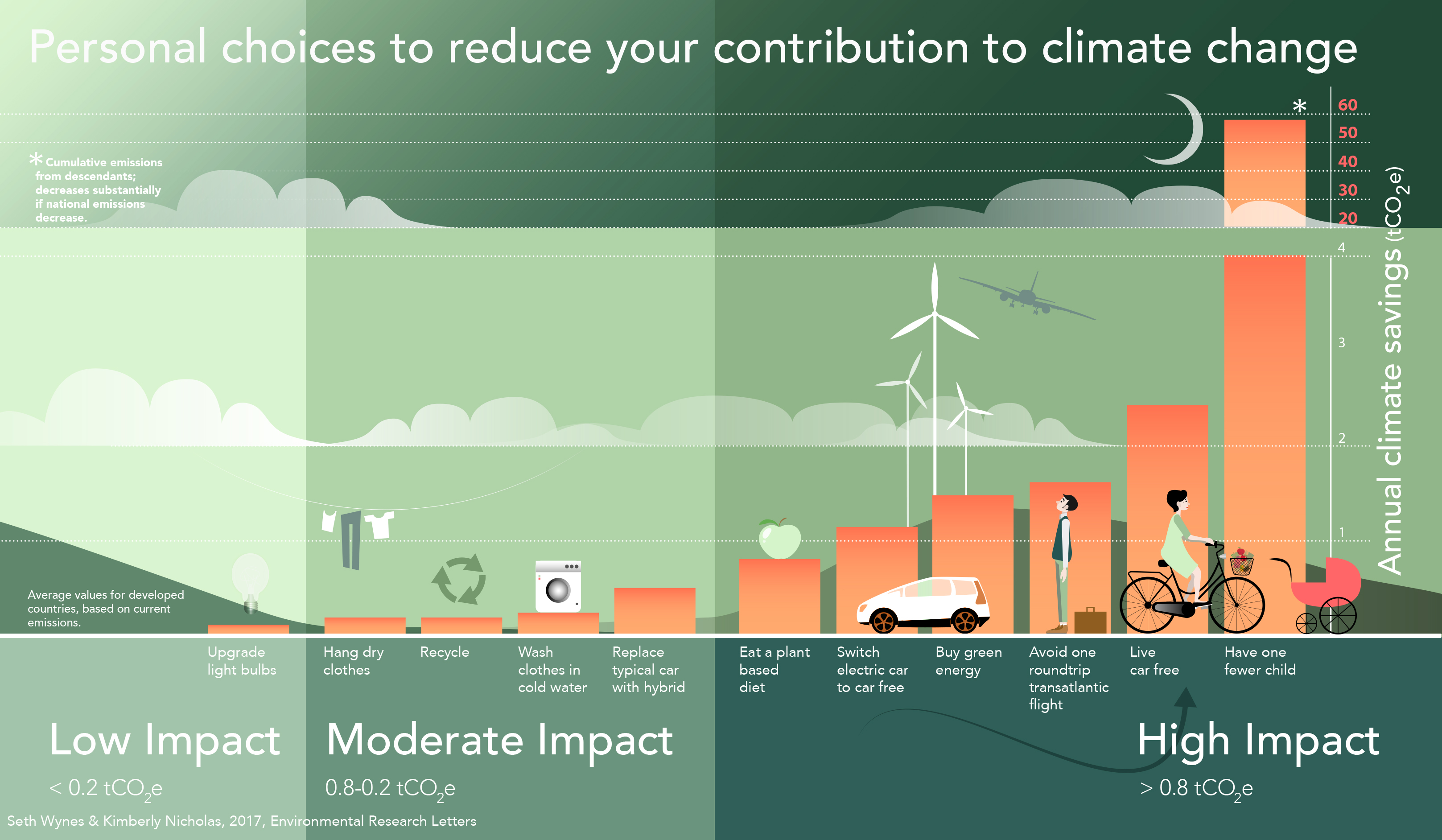
One 2017 study co-authored by Lund University’s Nicholas ranked 148 individual actions on climate change according to their impact. Going car-free was the number-one most effective action an individual could take (except not having kids – but more on that on that later). Cars are more polluting compared to other means of transportation like walking, biking or using public transport.

One ranking found that going car-free is the most effective action one person can take

One ranking found that going car-free is the most effective action one person can take (Credit: Getty)

In industrialised countries such as European nations, getting rid of your car can reduce 2.5 tonnes of CO2 – about one-fourth of the average yearly emissions (9.2 tonnes) contributed by each person in developed countries of the Organisation for Economic Co-operation and Development (OECD).

“We should choose more efficient vehicles and, whenever possible, switch directly to electric vehicles,” says Maria Virginia Vilarino, co-author of the mitigation chapter in the IPCC’s latest report.

4. But isn’t renewable energy extremely expensive?

Actually, renewables like wind and solar are becoming increasingly cheap across the world (although final costs are subject to local circumstances). The latest report from the International Renewable Energy Agency (Irena) found that several of the most commonly used renewables, like solar, geothermal, bioenergy, hydropower and onshore wind, will be on par with or cheaper than fossil fuels by 2020. Some are already more cost-effective.

Solar energy is now the cheapest source of electricity for many households

Solar energy is now the cheapest source of electricity for many households in Latin America, Asia and Africa (Credit: Getty)

The cost of utility-scale solar panels has fallen 73% since 2010, for example, making solar energy the cheapest source of electricity for many households in Latin America, Asia and Africa.  In the UK, onshore wind and solar are competitive with gas and by 2025 will be the cheapest source of electricity generation.

Some critics argue that these prices disregard the price of integrating renewables on the electricity system – but recent evidence suggests these costs are ‘modest’ and manageable for the grid.

5. Could I make a difference by changing my diet?

That’s a big one, too. In fact, after fossil fuels, the food industry – and in particular the meat and dairy sector – is one of the most important contributors to climate change. If cattle were their own nation, they would be the world’s third largest emitter of greenhouse gases, after China and the US.

If cattle were their own nation, they’d be the third largest emitter of greenhouse gases

If cattle were their own nation, they’d be the world’s third largest emitter of greenhouse gases (Credit: Getty)

The meat industry contributes to global warming in three major ways. Firstly, cows’ burping from processing food releases lots of methane, a greenhouse gas. Secondly, we feed them with other potential sources of food, like maize and soy, which makes for a very inefficient process. And finally, they also require lots of water, fertilisers that can release greenhouse gases, and plenty of land – some of which come from cleared forests, another source of carbon emissions.

By reducing your consumption of animal protein by half, you can cut your diet’s carbon footprint by more than 40%

You don’t have to go vegetarian or vegan to make a difference: cut down gradually and become a ‘flexitarian’. By reducing your consumption of animal protein by half, you can cut your diet’s carbon footprint by more than 40%. A larger-scale approach could be something like banning meat across an organisation, as office-sharing company WeWork did in 2018.

This explainer of sustainable diets by the World Resources Institute (WIR) and its longer associated reportprovides more answers to questions about food and carbon emissions.

6. How harmful are my flying habits?

Planes run on fossil fuels, and we haven’t figured out a scaleable alternative. Although some early efforts to use solar panels to fly around the world have had success, we are still decades away from commercial flights running on solar energy.

A normal transatlantic round-trip flight can release around 1.6 tonnes of CO2 – almost as much as the average yearly emissions of one person in India.

A normal transatlantic round-trip flight can release around 1.6 tonnes of CO2, according to Nicholas’s study – almost as much as the average yearly emissions of one person in India. This also highlights the inequality of climate change: while everyone will be affected, only a minority of humans fly and even fewer people take planes often.

There are groups of scientists and members of the public who have decided to give up flying or who fly less. Virtual meetings, holidaying in local destinations or using trains instead of planes all are ways to cut down.

Wondering how much your travel contributes to climate change? Measure your carbon emissions in this calculator by researchers at the University of California, Berkeley.

7. Should I be shopping differently?

Most likely. That’s because everything we buy has a carbon footprint, either in the way it is produced or in how it is transported.

For instance, the clothing sector represents around 3% of the world’s global production emissions of CO2, mostly because of the use of energy to produce attire. The hectic pace of fast fashion contributes to this figure as clothes are discarded or fall apart after short periods.

The clothing sector makes up about 3% of the world’s CO2 emissions

The clothing sector makes up about 3% of the world’s CO2 emissions (Credit: Getty)

International transport, including maritime and air shipping, also has an impact. Groceries shipped from Chile and Australia to Europe, or the other way around, have more ‘food miles’ and usually a higher footprint than local produce. But this is not always the case, as some countries grow out-of-season crops in energy-intensive greenhouses – so the best approach is to eat food that is both locally grown and seasonal. Even so, eating vegetarian still beats only purchasing local.

8. Should I think about how many children I have (or don’t have)?

Nicholas’s study concluded that having fewer children is the best way to reduce your contribution to climate change, with almost 60 tonnes of CO2 avoided per year. But this result has been contentious – and it leads to other questions.

One is whether you are responsible for children’s climate emissions, and the other is where are these babies born.

If you are responsible for your kids’ emissions, are your parents responsible for yours? And if you are not, how should we consider the fact that more people will likely have more carbon emissions? We also could ask whether having offspring is a human right beyond questioning. And we could ask if having children is necessarily a bad thing for solving climate change: our challenges may mean we will need more problem-solvers in future generations, not fewer.

Those are hard, philosophical questions – and we’re not going to try to answer them here.

Children lead to more CO2 emissions – but they may also be future problem-solvers

Children lead to more CO2 emissions – but they may also be future environmentally-minded problem-solvers (Credit: Getty)

What we do know is that no two people have the same emissions. Although the average human releases around 5 tonnes of CO2 per year, each country has very different circumstances: developed nations like the US and South Korea have higher national averages (16.5 tonnes and 11.5 tonnes per person, respectively) than developing countries like Pakistan and Philippines (around 1 tonne each). Even within national borders, richer people have higher emissions than people with less access to goods and services. So if you choose to take this question into account, you have to remember that it’s not just about how many children you have – it’s where (and who) you are.

9. But if I eat less meat or take fewer flights, that’s just me – how much of a difference can that really make?

Actually, it’s not just you. Social scientists have found that when one person makes a sustainability-oriented decision, other people do too.

Here are four examples:

Social scientists believe this occurs because we constantly evaluate what our peers are doing and we adjust our beliefs and actions accordingly. When people see their neighbours taking environmental action, like conserving energy, they infer that people like them also value sustainability and feel more compelled to act.

10. What if I just can’t avoid that flight, or cut down on driving?

If you simply can’t make every change that’s needed, consider offsetting your emissions with a trusted green project – not a ‘get out of jail free card’, but another resource in your toolbox to compensate that unavoidable flight or car trip. The UN Climate Convention keeps a portfolio of dozens of projects around the world you can contribute to. To find out how many emissions you need to ‘buy’ back, you can use its handy carbon footprint calculator.

Whether you are a coffee farmer in Colombia or a homeowner in California, climate change will have an impact on your life. But the opposite is also true: your actions will influence the planet for the coming decades – for better or for worse.

http://www.bbc.com/future/story/20181102-what-can-i-do-about-climate-change

Diego Arguedas Ortiz is a science and climate change reporter for BBC Future.

Mass wildlife loss caused by human consumption

Media captionIs your food destroying Brazil’s savanna?

“Exploding human consumption” has caused a massive drop in global wildlife populations in recent decades, the WWF conservation group says.

In a report, the charity says losses in vertebrate species – mammals, fish, birds, amphibians and reptiles – averaged 60% between 1970 and 2014.

“Earth is losing biodiversity at a rate seen only during mass extinctions,” the WWF’s Living Planet Report adds.

It urges policy makers to set new targets for sustainable development.

The Living Planet Report, published every two years, aims to assess the state of the world’s wildlife.

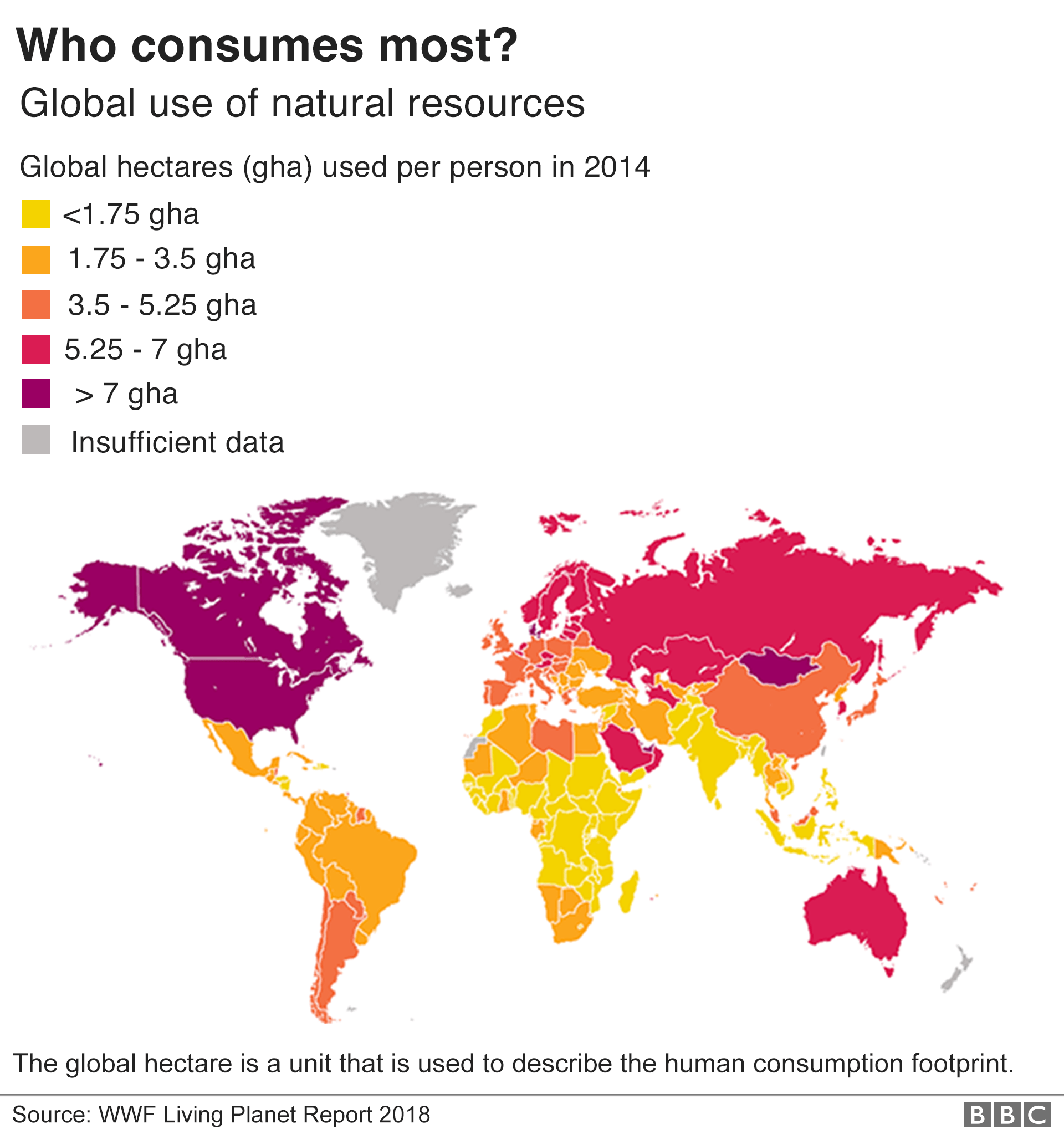
The 2018 edition says only a quarter of the world’s land area is now free from the impact of human activity and the proportion will have fallen to just a 10th by 2050.

The change is being driven by ever-rising food production and increased demand for energy, land and water.

Map showing human consumption per country as measured in global hectares
Presentational white space

Although forest loss has been slowed by reforestation in some regions in recent decades, the loss has “accelerated in tropical forests that contain some of the highest levels of biodiversity on Earth”, the report notes.

It says South and Central America suffered the most dramatic decline in vertebrate populations – an 89% loss in vertebrate populations compared with 1970.

Marine freshwater species are particularly at risk, the report says. Plastic pollution has been detected in the deepest parts of the word’s oceans, including the bottom of the Mariana Trench in the Pacific.

Freshwater species – living in lakes, rivers and wetlands – have seen an 83% decline in numbers since since 1970, according to the report.

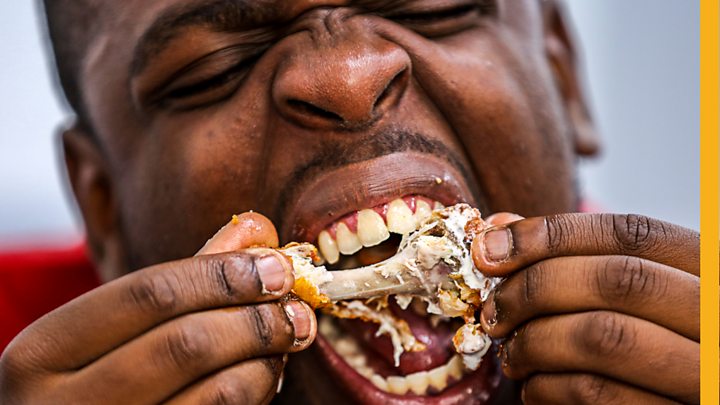
Media captionThe Truth Behind My Fried Chicken

The WWF calls for “a new global deal for nature and people” similar to the 2015 Paris agreement to tackle climate change by reducing greenhouse gas emissions.

“Decision makers at every level need to make the right political, financial and consumer choices to achieve the vision that humanity and nature thrive in harmony on our only planet,” the report says.

The data, gathered from peer-reviewed studies, covers more than 16,700 populations belonging to 4,000 species around the world.

The WWF’s methodology has been criticised. One conservationist told the BBC in 2016 that the data in the 2016 report was skewed towards western Europe, where figures were more readily available.

Presentational grey line

What the numbers show

By Robert Cuffe, Head of Statistics, BBC News

This report shows that many species are dwindling at an alarming rate. But it doesn’t tell us that we’ve lost 60% of our wildlife.

The Living Planet Index looks at the falls in each species, rather than in the total wildlife population.

A huge percentage fall in a rare species will not make much difference to the total number of animals in the world. But it will make a difference to the average fall.

Imagine there were only two species in the world: frogs and pandas. Say that fecund frogs, whose numbers remain in the millions, see zero fall. The poor, prudish pandas whose shyness has seen their number drop from 100 to only 20 see an 80% fall.

On average, there would be an average fall in the populations of species of 40%. But the total population of animals would not be much changed.

The former is what the Living Planet Index tells us about: how much individual species are growing or shrinking.

But that is not the same as stripping 40% (or 60%) of wildlife from the planet.

Is meat’s climate impact too hot for politicians?


  • 14 October 2018

Media captionFive things we can do to help prevent global temperatures rising more than 1.5C

Just a week after scientists said huge cuts in carbon emissions were needed to protect the climate, a UK minister has shown just how hard that will be.

Scientists say we ought to eat much less meat because the meat industry causes so many carbon emissions.

But the climate minister Claire Perry has told BBC News it is not the government’s job to advise people on a climate-friendly diet.

She would not even say whether she herself would eat less meat.

Ms Perry has been accused by Friends of the Earth of a dereliction of duty. They say ministers must show leadership on this difficult issue.

But the minister – who is personally convinced about the need to tackle climate change – is anxious to avoid accusations of finger-wagging.

Why Ms Perry wants to protect steak and chips

She said: “I like lots of local meat. I don’t think we should be in the business of prescribing to people how they should run their diets.”

When asked whether the Cabinet should set an example by eating less beef (which has most climate impact), she said: “I think you’re describing the worst sort of Nanny State ever.

“Who would I be to sit there advising people in the country coming home after a hard day of work to not have steak and chips?… Please…”

Ms Perry refused even to say whether she agreed with scientists’ conclusions that meat consumption needed to fall.

A dereliction of duty?

Craig Bennett from Friends of the Earth responded: “The evidence is now very clear that eating less meat could be one of the quickest ways to reduce climate pollution.

“Reducing meat consumption will also be good for people’s health and will free up agricultural land to make space for nature.

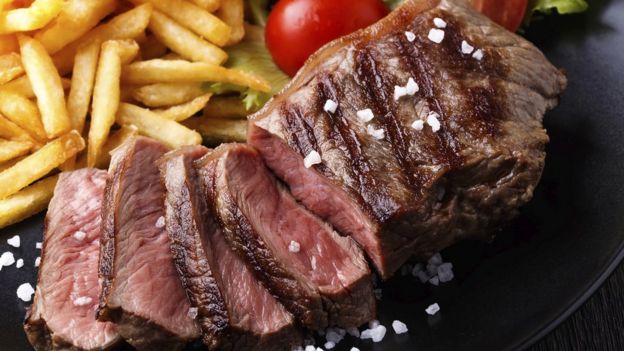
SteakImage copyrightGETTY IMAGES

“It’s a complete no-brainer, and it’s a dereliction of duty for government to leave the job of persuading people to eat less meat to the green groups.”

He said the government could launch information campaigns, change diets in schools and hospitals, or offer financial incentives.

Ms Perry said: “What I do think we need to do is look at the whole issue of agricultural emissions and do a lot more tree planting.

“But if you and I eat less meat, with all the flatulent sheep in Switzerland and flatulent cows in the Netherlands – that will just be wiped out in a moment. Let’s work on the technology to solve these problems at scale.”

She said instead of cutting down on meat, we could use (hugely expensive) equipment that sucks CO2 out of the atmosphere.

Supper with the Perry family

Ms Perry said later that her own typical family meal is not steak and chips, but a stir-fry, which brings the taste and texture of meat into a dish dominated by vegetables. But she did not want to say this on camera.

She agreed it was appropriate for the government to advise people on healthy diets because the obesity epidemic is costing taxpayers more in health bills, but implied that this principle did not apply when considering the health of the planet.

Her fear of being condemned in the media as a bossy politician highlights the difficulty of the next phase of climate change reductions.

Until now, 75% of CO2 reductions in the UK have come from cleaning up the electricity sector. Many people have barely noticed the change.

Will the climate battle get personal?

Experts generally agree that for healthy lives and a healthy planet, the battle over climate change will have to get personal.

That could mean people driving smaller cars, walking and cycling more, flying less, buying less fast fashion, wearing a sweater in winter… and eating less meat.

People will still live good lives, they say, but they’ll have to make a cultural shift.

If governments do not feel able to back those messages, they say, the near impossible task of holding global temperature rise to 1.5C will become even more difficult.

Ms Perry’s comments came as she launched Green GB week, which aims to show how the UK can increase the economy while also cutting emissions.

She will formally ask advisers how Britain can cut emissions to zero.

The ideal diet to combat climate change: Plant-based diets better for planet, study says

By LISA DRAYER IS A NUTRITIONIST, AN AUTHOR AND A CNN HEALTH AND NUTRITION CONTRIBUTOR.

Sean Gallup/Getty Images
Fresh fruits and vegetables lie on display at a Spanish producer’s stand at the Fruit Logistica agricultural trade fair on Feb. 8, 2017, in Berlin, Germany.

(CNN) – You may be aware that a plant-based diet can make you healthier by lowering your risk for obesity, heart disease and Type 2 diabetes. Now, a study suggests there’s another good reason to regularly eat meatless meals. By filling your plate with plant foods instead of animal foods, you can help save the planet.

The study, published last week in the journal Nature, found that as a result of population growth and the continued consumption of Western diets high in red meats and processed foods, the environmental pressures of the food system could increase by up to 90% by 2050, “exceeding key planetary boundaries that define a safe operating space for humanity beyond which Earth’s vital ecosystems could become unstable,” according to study author Marco Springmann of the Oxford Martin Programme on the Future of Food at the University of Oxford.

“It could lead to dangerous levels of climate change with higher occurrences of extreme weather events, affect the regulatory function of forest ecosystems and biodiversity … and pollute water bodies such that it would lead to more oxygen-depleted dead zones in oceans,” Springmann said.

“If the whole world, which continues to grow, eats more like us, the impacts are staggering, and the planet simply can’t withstand it,” said Sharon Palmer, a registered dietitian nutritionist and plant-based food and sustainability expert in Los Angeles who was not involved in the new research.

Sustaining a healthier planet will require halving the amount of food loss and waste, and improving farming practices and technologies. But it will also require a shift toward more plant-based diets, according to Springmann.

As Palmer noted, “research consistently shows that drastically reducing animal food intake and mostly eating plant foods is one of the most powerful things you can do to reduce your impact on the planet over your lifetime, in terms of energy required, land used, greenhouse gas emissions, water used and pollutants produced.”

How a meat-based diet negatively affects the environment

It might come as a surprise, but Springmann’s study found that the production of animal products generates the majority of food-related greenhouse-gas emissions — specifically, up to 78% of total agricultural emissions.

This, he explained, is due to manure-related emissions, to their “low feed-conversion efficiencies” (meaning cows and other animals are not efficient in converting what they eat into body weight) and to enteric fermentation in ruminants, a process that takes place in a cow’s stomach when it digests food that leads to methane emissions.

The feed-related impacts of animal products also contribute to freshwater use and pressures on cropland, as well as nitrogen and phosphorus application, which over time could lead to dead zones in oceans, low-oxygen areas where few organisms can survive, according to Springmann.

For an example of how animal foods compare with plant-based foods in terms of environmental effects, consider that “beef is more than 100 times as emissions-intensive as legumes,” Springmann said. “This is because a cow needs, on average, 10 kilograms of feed, often from grains, to grow 1 kilogram of body weight, and that feed will have required water, land and fertilizer inputs to grow.”

In addition, cows emit the potent greenhouse gas methane during digestion, which makes cows and other ruminants such as sheep especially high-emitting.

Other animal foods have lower impacts because they don’t produce methane in their stomachs and require less feed than cows, Springmann explained. For example, cows emit about 10 times more greenhouse gases per kilogram of meat than pigs and chickens, which themselves emit about 10 times more than legumes.

Like animals, plants also require inputs from the environment in order to grow, but the magnitude is significantly less, Springmann explained.

“In today’s agricultural system, we grow plants to feed animals, which require all of those resources and inputs: land, water, fossil fuels, pesticides, herbicides and fertilizer to grow. And then we feed plants to animals and care for them over their lifetime, while they produce methane and manure,” Palmer said.

Adopting more plant-based diets for ourselves could reduce the greenhouse gas emissions of the food system by more than half, according to the Nature study. A mainly plant-based diet could also reduce other environmental impacts, such as those from fertilizers, and save up to quarter use of both farmland and fresh water, according to Springmann.

Palmer explained that “legumes [or pulses], such as beans, lentils and peas are the most sustainable protein source on the planet. They require very small amounts of water to grow, they can grow in harsh, dry climates, they grow in poor nations, providing food security, and they act like a natural fertilizer, capturing nitrogen from the air and fixing it in the soil. Thus, there is less need for synthetic fertilizers. These are the types of protein sources we need to rely upon more often.”

Flexitarian: The healthy compromise for you and the planet

Experts agree that if you are not ready to give up meat entirely, a flexitarian diet, which is predominantly plant-based, can help. This diet includes plenty of fruits, vegetables and plant-based protein sources including legumes, soybeans and nuts, along with modest amounts of poultry, fish, milk and eggs, and small amounts of red meat.

Vegetarian and vegan diets would result in even lower greenhouse gas emissions, but a flexitarian diet “is the least stringent that is both healthy and would reduce greenhouse gas emissions enough for us to stay within environmental limits,” according to Springmann.

Palmer said that “although vegan diets, followed by vegetarian diets, are linked with the lowest environmental impacts, not everyone is interested in taking on those lifestyles. But everyone can eat more of a flexitarian diet. It doesn’t mean that you have to give up meat completely, but you significantly reduce your intake of it.”

Registered dietitian nutritionist Dawn Jackson Blatner described it this way: “A flexitarian is really someone who wakes up with the intention of being more vegetarian. It’s different from vegetarian in that there is some flexibility.”

More: https://www.wsls.com/health/the-ideal-diet-to-combat-climate-change

What is the Relationship Between Red Meat and Heart Disease?

Share on Facebook
Tweet on Twitter


red meat and heart disease
Our Reader Score

[Total: 0 Average: 0]

A recent study evaluated whether the relationship between eating more red meat and heart disease is because eating red meat increases iron levels.

Heart disease is one of the leading causes of death worldwide, and there is evidence of a relationship between eating more red meat and heart disease risk. However, it is not known how exactly red meat could increase the risk. One possible explanation is that red meat is rich in iron, and high iron levels in the blood could contribute to the development of heart disease. This theory was tested in a German study that was recently published in The American Journal of Clinical Nutrition.

The researchers performed their enquiry using participants of the European EPIC-Heidelberg study. EPIC-Hedelberg is an ongoing clinical study in which 25,000 initially-healthy male and female volunteers have been monitored since the mid-1990s. The participants had submitted blood samples and provided detailed information on socioeconomic status, lifestyle factors, and dietary habits at the beginning of the study period. To investigate the relationship between red meat and heart disease, researchers identified all members of this group that had evidence of heart disease. They found that 555 participants had survived a heart attack, 513 had survived a stroke, and 381 had died due to heart disease. They randomly selected 2,738 other study participants to serve as controls.

The researchers used the information on dietary habits to determine the amount of red meat each participant typically consumed. They also measured the amount of iron and the iron-storage proteins transferrin and ferritin in blood samples that had been frozen at the start of the monitoring study (blood tests for ferritin are commonly used in health clinics to assess whole-body iron stores). They then used a variety of statistical methods to determine if there was a relationship between iron levels, red meat, and heart disease. These methods also allowed them to account for age, gender, and other health and lifestyle factors known to be associated with increased risk of heart disease.

Increased Ferritin Levels

Eating more red meat led to increased ferritin levels in the control group. Ferritin is a protein that the body uses to store iron. However, other measures of iron storage (blood iron concentration and transferrin) did not change with red meat consumption.

Increased Risk of Heart Attack with Red Meat Consumption

The participants who had had heart attacks, stroke, or death due to heart disease ate, on average, more red meat than people in the control group. When adjusting for age and gender, every additional 50 grams (1.8 ounces) of daily red meat consumption increased the risk of suffering a heart attack by 1.18 times, of stroke by 1.16 times, and of dying from heart disease by 1.27 times.

The participants with evidence of heart disease tended to have a higher body mass index, less education, and were more likely to smoke and have high blood pressure relative to the control group. These lifestyle and health factors are all already known to be associated with increased risk of heart disease. Once these and other known risk factors (alcohol consumption, fiber intake, energy intake, menopausal status, c-reactive protein, and low-density lipoprotein levels) were accounted for, only the relationship between red meat and heart attacks remained significant.

In other words, the known risk factors aside from red meat were sufficient to explain why some participants were more likely to get strokes and die of heart disease. This implies, for example, that while eating more red meat may lead to obesity, it is the obesity that increases the risk of stroke and death, not the red meat specifically.

Risk of Heart Attack Decreased after Considering Other Risk Factors

When adjusting for just age and gender, every doubling of blood ferritin concentration increased the risk of having a heart attack by 1.09 times, and the risk of dying of heart disease by 1.13 times. However, both these relationships disappeared once the additional known risk factors were accounted for.

Furthermore, study participants with low ferritin concentrations (less than 76.5 ng/mL) did not have a lower risk of heart attack, stroke or death from heart disease than those with higher concentrations. The other measures of iron storage (blood iron and transferrin) were not associated with risk of heart disease.

Iron from Red Meat May Not Increase Risk of Heart Disease

There were several limitations of the study. All blood samples and dietary surveys were conducted at the beginning of the study, several years before many of the participants developed heart disease. It is, therefore, possible that dietary habits and iron storage status could have changed in the intervening period. Also, the causes of death for study participants were determined from death certificates rather than clinical records, which would have been more reliable. Finally, the German participants in the EPIC-Heidelberg study may not be representative of other populations, such as North Americans.

Overall, this study did not support the idea that the iron from red meat increased the risk of heart disease. Instead, increased levels of the iron-storage protein ferritin may be a marker of other health or lifestyle factors (such as obesity or smoking) that are the actual causes of heart disease. However, the study did find evidence that eating more red meat increased the chances of having a heart attack, independently of other risk factors. How exactly red meat does this remains unknown.

Written by Bryan Hughes, PhD

Reference: Quintana Pacheco, D. A., Sookthai, D., Wittenbecher, C., Graf, M. E., Schübel, R., Johnson, T., Katzke, V., Jakszyn, P., Kaaks, R. & Kühn, T. Red meat consumption and risk of cardiovascular diseases—is increased iron load a possible link? The American Journal of Clinical Nutrition 107, 113-119 (2018).

Study suggests meat and dairy industry on track to surpass oil companies as biggest greenhouse gas emitters

July 20, 2018 by Bob Yirka, Phys.org report
Study suggests meat and dairy industry on track to surpass oil companies as biggest greenhouse gas emitters
Estimated global greenhouse gas emission (GHG) targets to keep within a 1.5°C rise in temperature compared to emissions from global meat and dairy production based on business-as-usual growth projections. Credit: Emissions impossible

Researchers at the Institute for Agriculture and Trade Policy and GRAIN have released a report titled “Emissions impossible – How big meat and dairy are heating up the planet.” The report is a discussion regarding an analysis the groups did on the impact the meat and dairy industries have on global warming. One of their major findings is that large meat and dairy corporations are set to overtake large oil companies as the largest emitters of greenhouse gases. In the report, the researchers also suggest that it is time to expand the field of corporations that get the major share of attention surrounding global warming. They make the case that that meat and dairy producers have flown under the radar for years, and that now, the time has come to include them.

Researchers for the two groups report that they conducted an extensive review of production numbers released by the largest  and  and used those numbers to calculate greenhouse gas emissions. They note that very few of the largest meat and dairy corporations offer emissions data and that those that do fail to include data regarding the supply chain. They suggest further that the supply chain in the industry typically accounts for up to 80 percent of greenhouse gas emissions—it typically includes emissions from activities related to growing crops as well as methane emitted directly from livestock.

The researchers also report that a very large share of meat and dairy production occurs in just a few regions: Argentina, Brazil, the U.S., the European Union, Canada, Australia and New Zealand. They also claim that five of the biggest meat and dairy corporations are already responsible for more greenhouse gas emissions than BP, ExxonMobil or Shell. They further claim that their analysis of the industry showed that approximately 80 percent of the global allowable greenhouse gas emissions budget would be taken up by just the meat and dairy industry by 2050, if production is not reduced.

The researchers conclude their report by suggesting that soon there will be no choice—if we are to curb  to meet targets set by agreed upon protocols, meat and  production will have to be greatly reduced.

https://phys.org/news/2018-07-meat-dairy-industry-track-surpass.html#jCp

 Explore further: Meeting climate targets may require reducing meat and dairy consumption

Read more at: https://phys.org/news/2018-07-meat-dairy-industry-track-surpass.html#jCp