Exposing the Big Game

Forget Hunters' Feeble Rationalizations and Trust Your Gut Feelings: Making Sport of Killing Is Not Healthy Human Behavior

Exposing the Big Game

Detecting methane emissions during COVID-19

https://phys.org/news/2020-06-methane-emissions-covid-.html

Detecting methane emissions during COVID-19
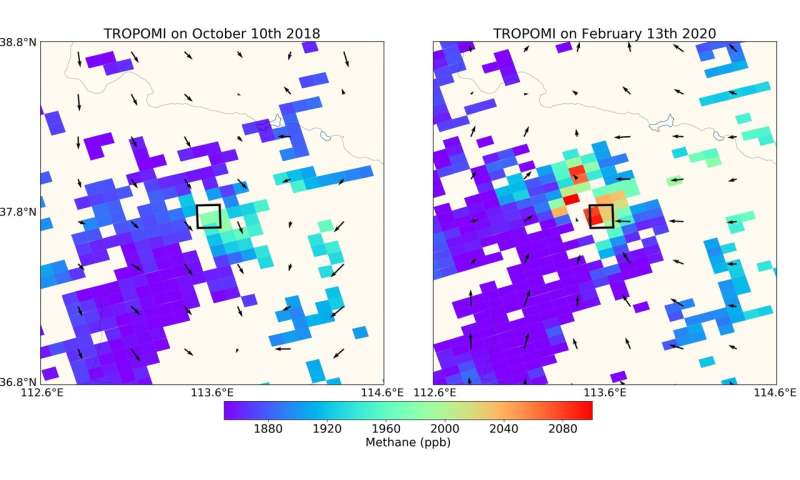
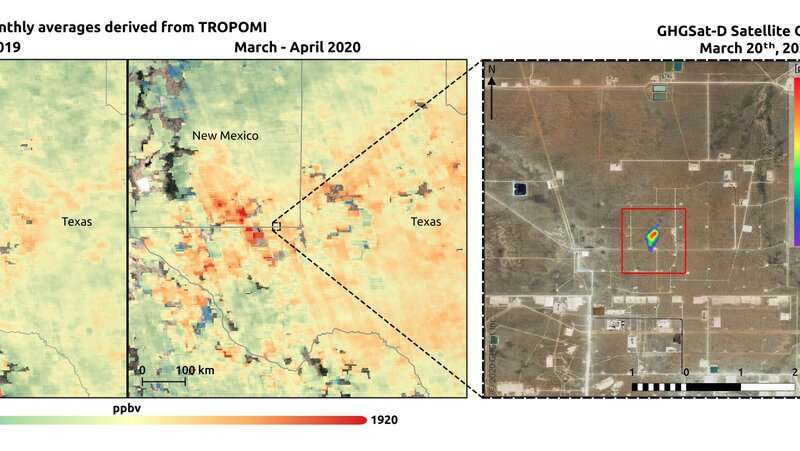
GHGSat uses data from the Copernicus Sentinel-5P satellite to detect emission hotspots in various regions – including the Permian Basin. The image on the left shows the enhanced methane concentrations over the Permian basin, while the image on the right highlights the exact facility in the Permian Basin leaking methane. Credit: GHGSat

While carbon dioxide is more abundant in the atmosphere and therefore more commonly associated with global warming, methane is around 30 times more potent as a heat-trapping gas. Given its importance, Canadian company GHGSat have worked in collaboration with the Sentinel-5P team at SRON Netherlands Institute for Space Research to investigate hotspots of methane emissions during COVID-19.

Carbon dioxide is generally produced by the combustion of fossil fuels, while fossil fuel production is one of the largest sources of methane emissions. According to the World Meteorological Organisation’s State of the Global Climate report last year, current  and methane concentrations represent respectively 150% and 250% of pre-industrial levels, before 1750.

Owing to the importance of monitoring methane, SRON’s and GHGSat’s research teams have been working since early-2019 to detect methane hotspots. The SRON team uses data from the Copernicus Sentinel-5P satellite to detect emissions on a global scale. The GHGSat team then utilises data from GHGSat satellites to quantify and attribute the emissions to specific facilities around the world.

Their work has led to several new hotspots being discovered in 2020, for instance over a coal mine in China. The team have also detected methane emissions over the Permian Basin—the largest oil-producing region in the United States. The team observed concentrations from March-April 2020, compared to the same period as last year in an effort to evaluate the impact of COVID-19 activities on methane emissions.

Detecting methane emissions during COVID-19
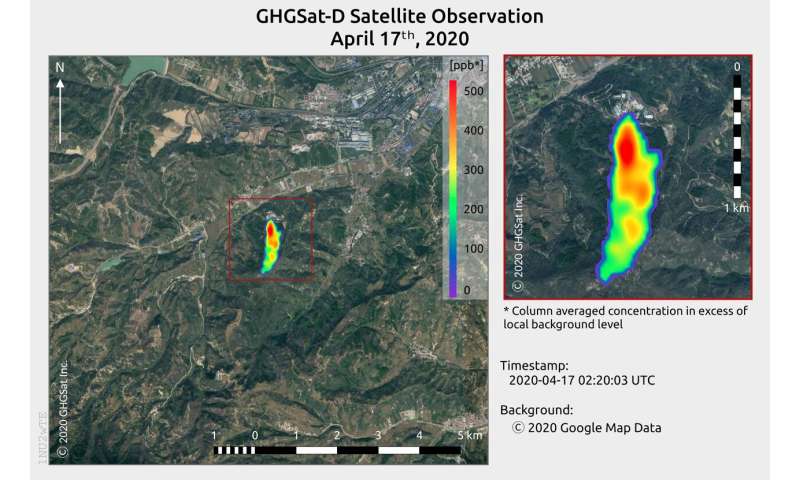
GHGSat have worked in close collaboration with the Sentinel-5P team at SRON Netherlands Institute for Space Research to investigate hotspots of methane emissions. The team uses data from the Copernicus Sentinel-5P satellite to detect emissions on a global scale, and then utilises data from GHGSat satellites to quantify and attribute emission to specific facilities around the world. This has led to several new hotspots being discovered including a coal mine in the Shanxi province, China. Credit: contains modified Copernicus Sentinel data (2018, 2020), processed by SRON

An initial look at these data suggest a substantial increase in methane concentrations in 2020, compared to 2019. Claus Zehner, ESA’s Copernicus Sentinel-5P mission manager, says, “An explanation for this could be that as a result of less demand for gas because of COVID-19, it is burned and vented—leading to higher methane emissions over this area.”

Ilse Aben, from SRON, comments, “However, these results are inconclusive when using only Sentinel-5P data in the Permian Basin as the number of observations are limited.”

The spatial distribution of Sentinel-5P concentrations in 2020 and in 2019 both indicate local enhancements of methane concentrations in the Delaware and Midland portions of the basin. But higher-resolution measurements, such as those provided by GHGSat, are needed to attribute these enhancements to specific facilities.

The joint analysis of GHGSat and Sentinel-5P regional  data will continue to explore and quantify how COVID-19 is affecting emissions from the natural gas industry on a regional scale—all the way down to the level of industrial facilities.

Detecting methane emissions during COVID-19
This image shows GHGSat methane concentrations over a coal mine in the Shanxi province, China. Credit: GHGSat

Stephane Germain, CEO of GHGSat, comments, “GHGSat continues to work closely with ESA and SRON’s Sentinel-5P science team. We are advancing the science of satellite measurements of atmospheric trace gases while simultaneously providing practical information to industrial operators to reduce facility-level emissions. GHGSat’s next satellites, scheduled to launch in June and December of this year, will help improve our collective understanding of industrial emissions around the world.”

Eric Laliberté, Director General Utilization from the Canadian Space Agency, says, “The Canadian Space Agency is committed to developing space technologies and supporting innovative missions to better understand and mitigate climate change. The results achieved by GHGSat are already having an impact and we are excited to continue working with GHGSat and ESA to better understand greenhouse gas emissions worldwide.”

Claus adds, “In order to further support the scientific uptake of GHGSat measurements, ESA has organised, together with the Canadian Space Agency and GHGSat, a dedicated Announcement of Opportunity Call that will provide around 5% of the measurement capacity of the upcoming commercial GHGSat-C1, also known as the Iris satellite, to the scientific community.”

The Copernicus Sentinel-5P satellite, with its state-of-the-art instrument Tropomi, can also map other pollutants such as nitrogen dioxide, carbon monoxide, sulphur dioxide and aerosols—all of which affect the air we breathe.


Explore further

Methane leak visible from space

Scientists understand cattle not climate villains, but media still missing message

FOR a long time emissions from cattle have been lumped in with emissions from other sources as the same destructive forces for the planet in the global climate change narrative.

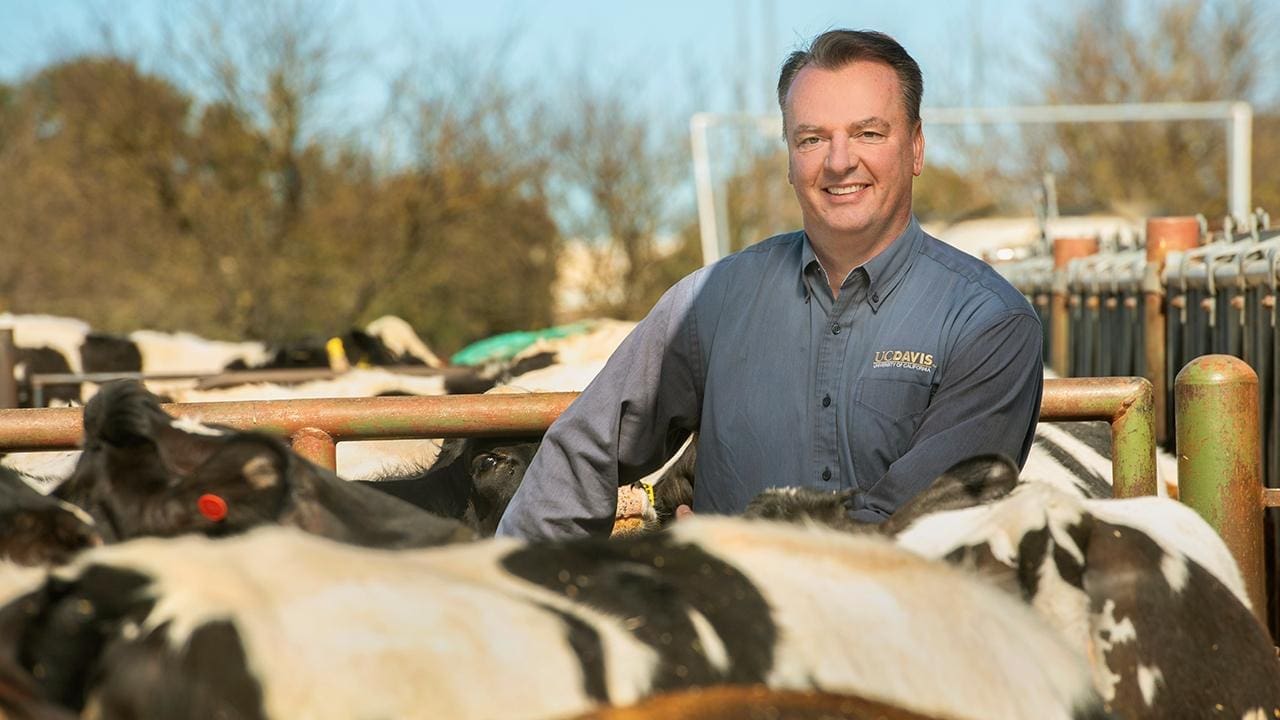
However, through research overseen by scientists including Dr Frank Mitloehner (right) from the University of California Davis and Dr Myles Allen from Oxford University, scientific consensus is starting to build around the point that livestock-related greenhouse gases are distinctively different from greenhouse gases associated with other sectors of society (more on this below).

Dr Mitloehner, an internationally recognised air quality expert, explained to the Alltech One virtual conference on Friday night (Australian time) that the concept of accounting for methane according to its Global Warming Potential, as opposed to just its volume of CO2 equivalent, which showed that not all greenhouse gases are created equal, has now made it all the way to the International Panel on Climate Change.

However, despite increasing awareness and understanding at a scientific level, the message has still not been taken up by the mainstream media.

“What I find interesting is that the one missing entity in this whole discussion so far has been the media,” he told Alltech president and CEO Dr Mark Lyons in a live streamed video interview.

“I have not seen any major reporting on this even though it’s such a hot topic.

“I mean, the world talks about what the impact of our food systems are on our environmental footprint.

“Now, this is a major new narrative. And to me, it’s very unusual and it’s very confusing as to why the same outlets that have touted this topic as being so paramount are not talking about these new findings whatsoever.

“So to me that’s problematic. And we have to think about why that is. Have we not explained it right? Is it too early for them to report about it? I don’t know, but this narrative is not going away.

“You will see it will gain momentum, and it will become the new reality.”

Why all greenhouse gases are not created equal

Dr Mitloehner said to date the global climate change debate has tended to focus only on how much greenhouse gases are emitted by different sources.

Most discussion fails to recognise that certain sectors of society, such as forestry and agriculture, also serve as a sink for greenhouse gases.

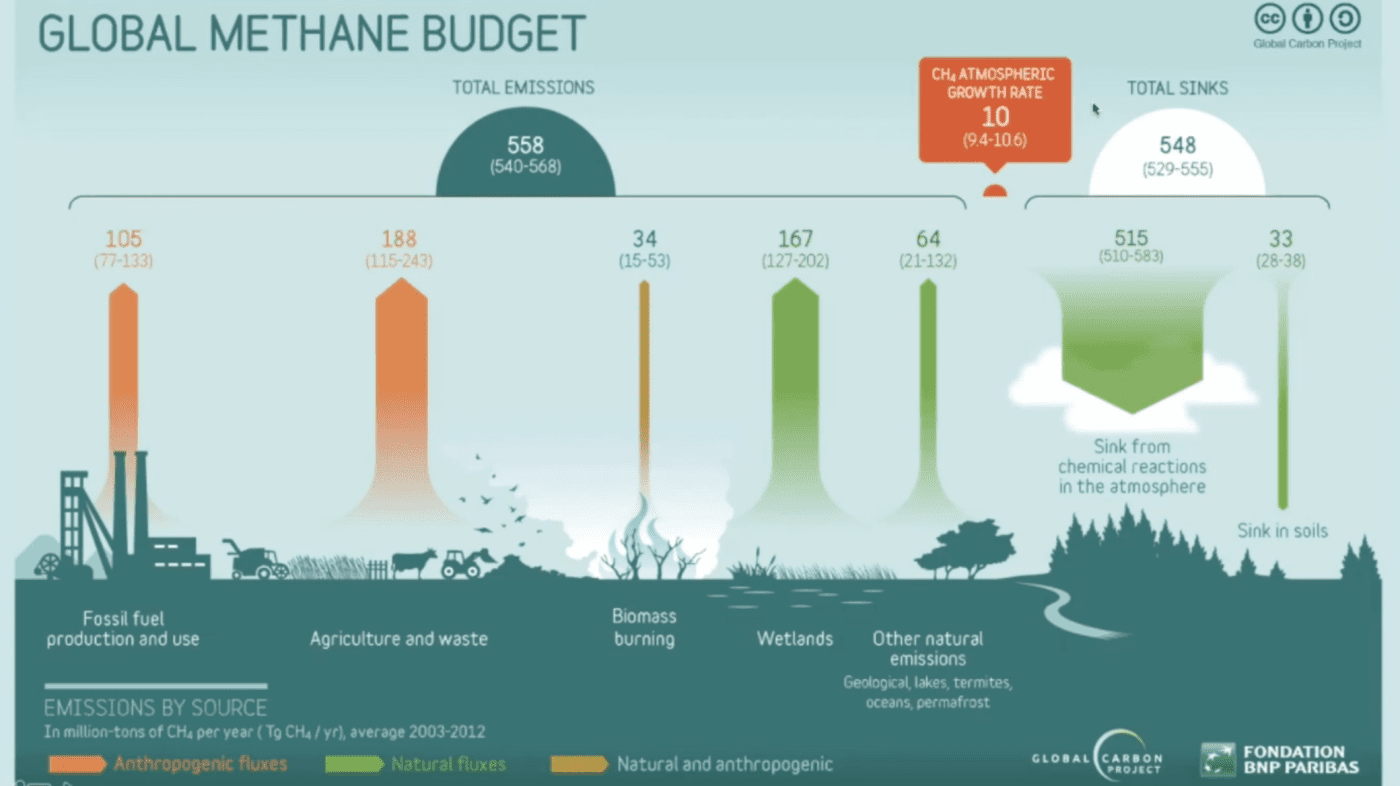
Climate debate focuses on the 560 tera-grams of methane emitted each year but tends to ignore the 550 tera-grams sequested by sinks like agriculture and forestry (right).

After the Kyoto protocol, the climate change debate centred on the 560 tera-grams of methane emitted into the atmosphere each year from all sources, including fossil fuel production and use, agriculture and waste, biomass burning, wetlands and other natural emissions.

“That is where most people stop the discussion, even though they shouldn’t,” he explained.

“Because in addition to emissions putting methane into the atmosphere, we also have sinks on the right side of this graph (above).

“And these sinks amount to a very respectable total number of 550 teragrams.

“So in other words, we have 560 teragrams of methane emitted, meaning put into the atmosphere, but then we have 550 teragrams of methane taken out of the atmosphere.

So in other words, the net emissions per year that we are dealing with is not 560, but it’s actually 10.

“Yet everybody talks about 560.”

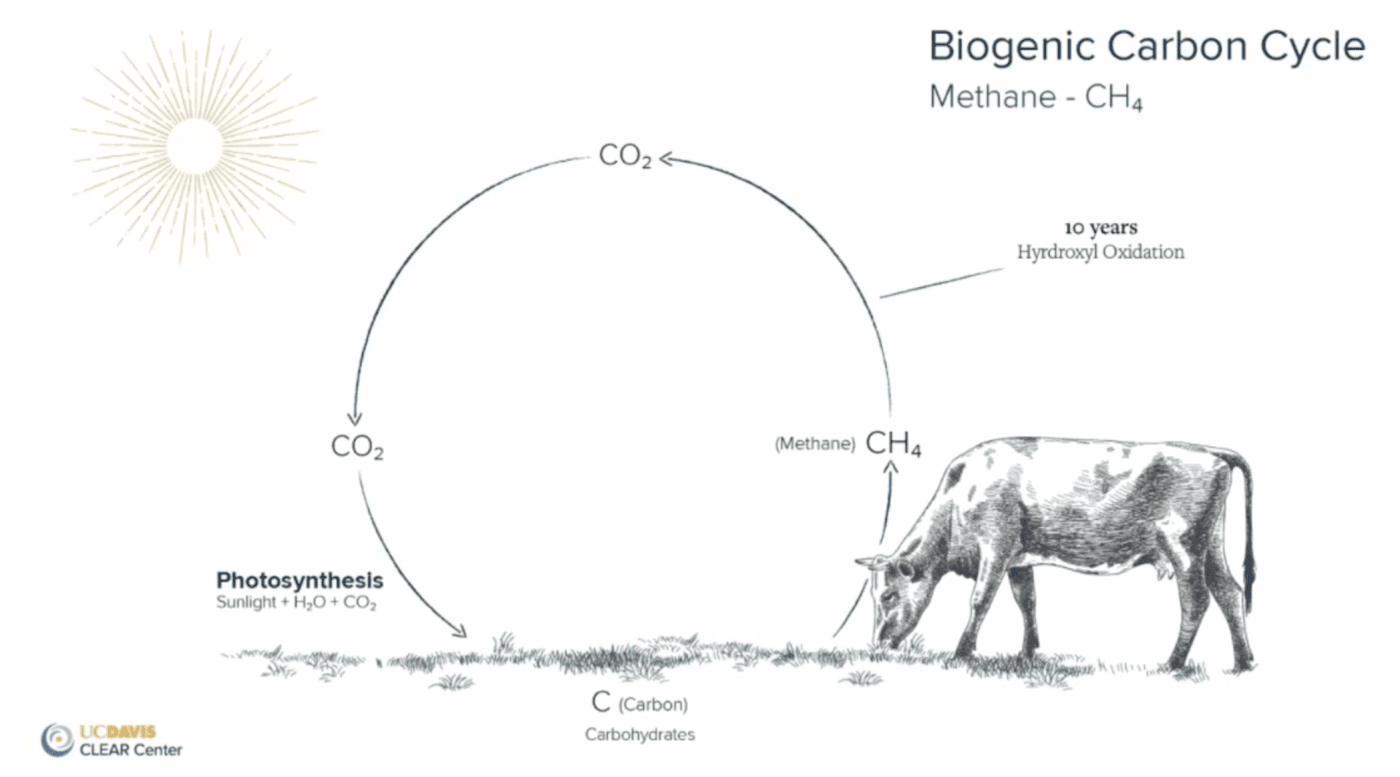
In a biogenic carbon cycle, constant livestock herds or decreasing livestock herds over time did not add additional carbon to the atmosphere, he explained.

The carbon emitted by animals is recycled carbon. It came from atmospheric CO2, captured by plants, eaten by animals and then belched back out into the atmosphere, after a while becoming CO2 again.

Methane is a heat-trapping, potent greenhouse gas, and he stressed he was not suggesting that “it didn’t matter”.

But the key question for livestock is do ruminant herds add to additional methane, meaning additional carbon in the atmosphere which leads to additional warming?

The answer he said was clearly “no”.

Oxford University authors including Professor Myles Allen have shown that biogenic methane is not the same as fossil methane.

It is the same chemically, but the origin and fate “are totally, drastically different”.

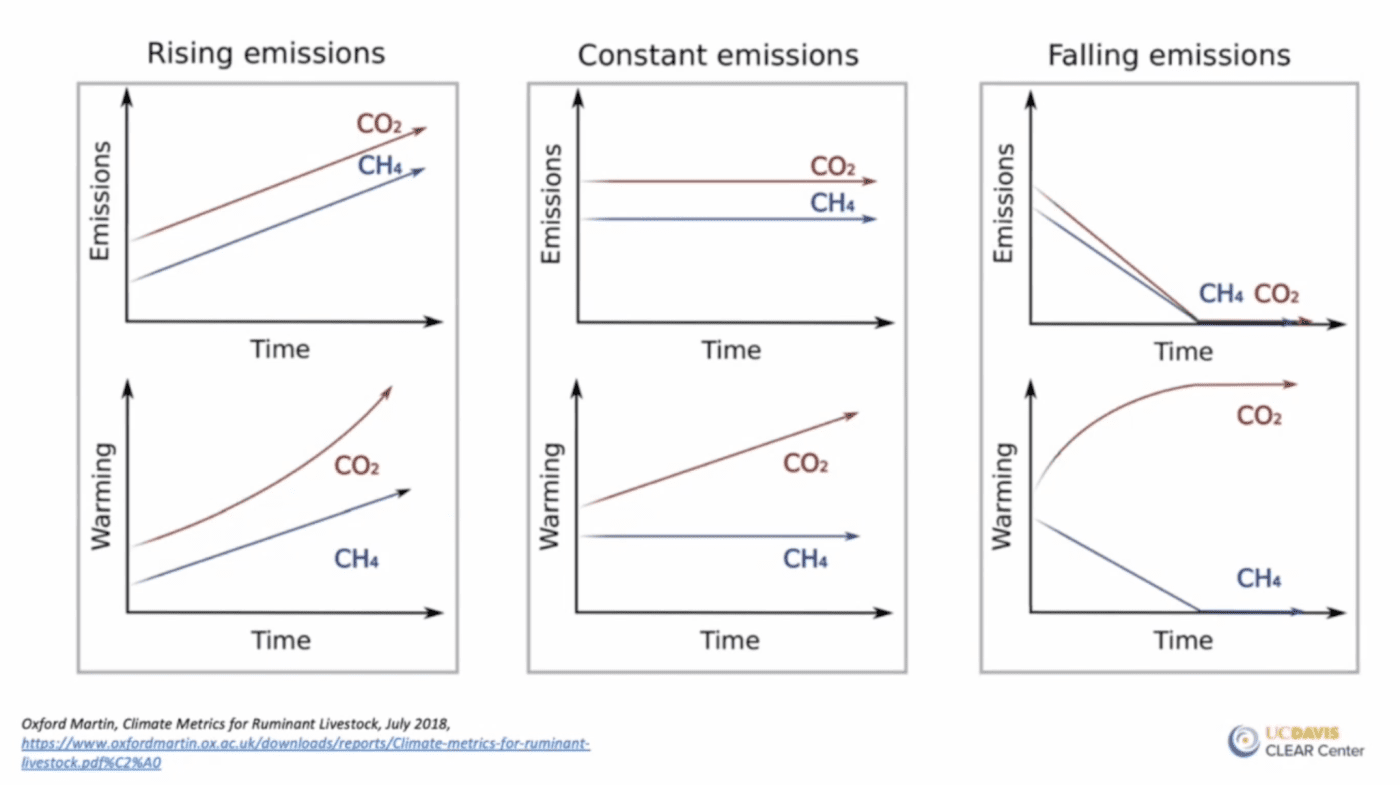
“As long as we have constant herds or even decreasing herds, we are not adding additional methane, and hence not additional warming.

“This is a total change in the narrative around livestock. And I think this will be the narrative in the years to come.”

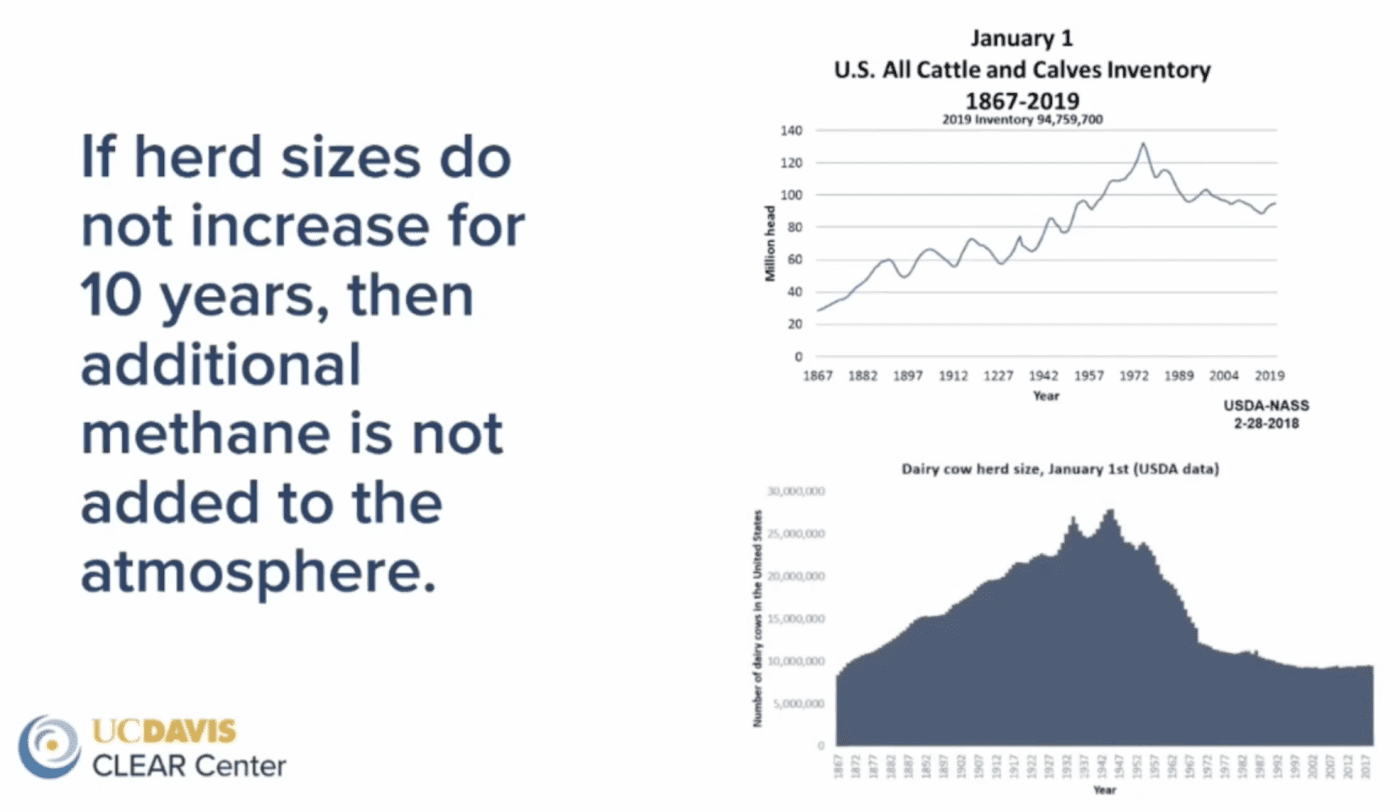
A chart documenting the size of the US cattle herd since 1867 shows it has decreased to around 90 million beef cattle and 9 million dairy cattle, down from peaks of 140 million beef cattle in the 1950s and 25 million dairy cattle in the 1970s.

The Australian cattle herd has similarly decreased from a peak of over 33 million cattle in 1976 to around 24 million today.

“We’re clearly see a decreasing number of livestock over the last few decades meaning with respect to livestock numbers, we have not cost an increasing amount of carbon in the atmosphere, but indeed we have decreased the amount of carbon we put into the atmosphere,” he said.

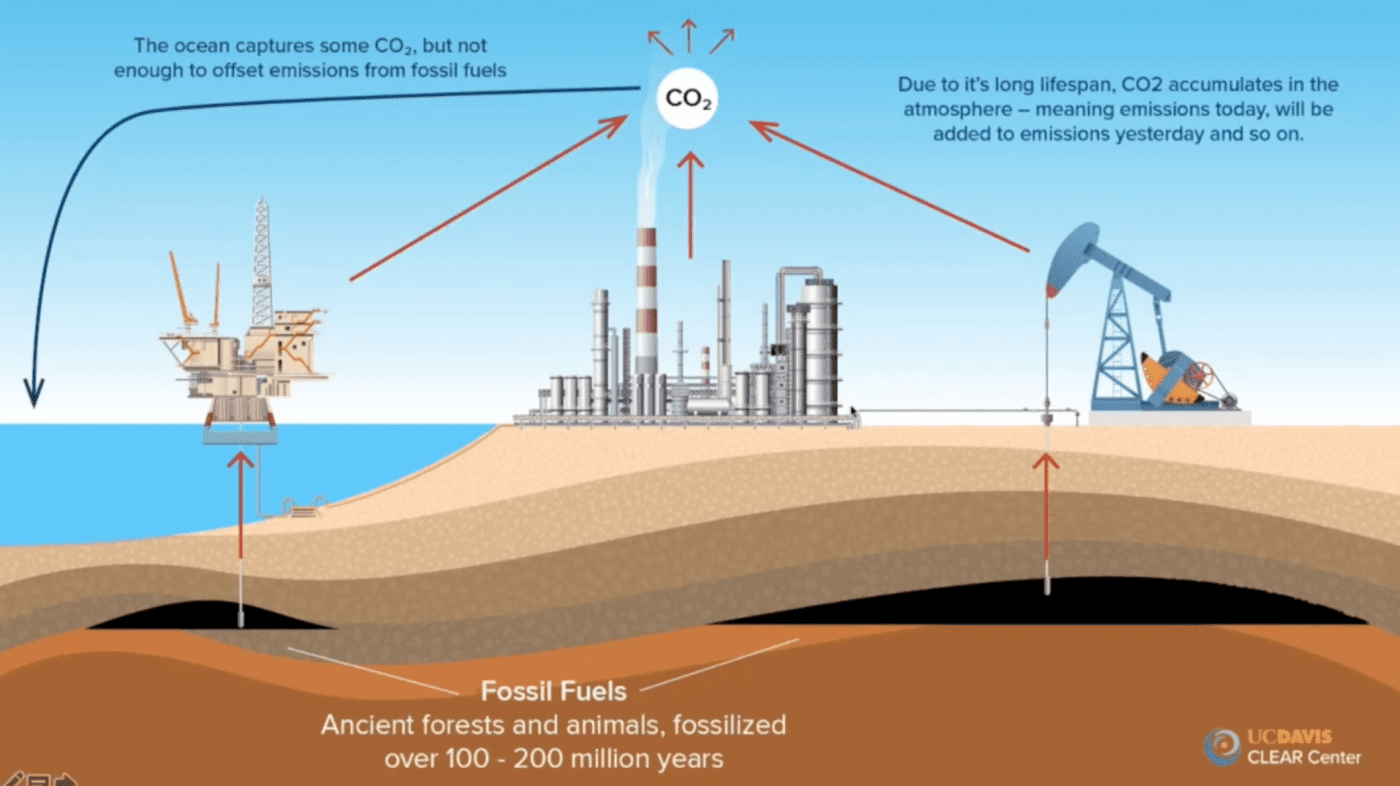
By contrast emissions from fossil fuel extractions were not part of a cycle, but “a one-way street”, because the amount of CO2 sent into the atmosphere in this process by far overpowered the potential sinks that could take up CO2, such as oceans, soils or plants.

“So here we have a one-way street. And this, ladies and gentlemen, is the main culprit of greenhouse gases in our atmosphere and the resulting warming.

“I have yet to see a climate scientist who would say that it’s the cows that are a primary culprit of warming. Most of them will agree that the primary culprit is the use of fossil fuels.”

“However, people critical of animal agriculture always point at cows, and cattle, and other livestock species. And they feel that this is a very powerful tool to ostracize animal agriculture as we know it.”

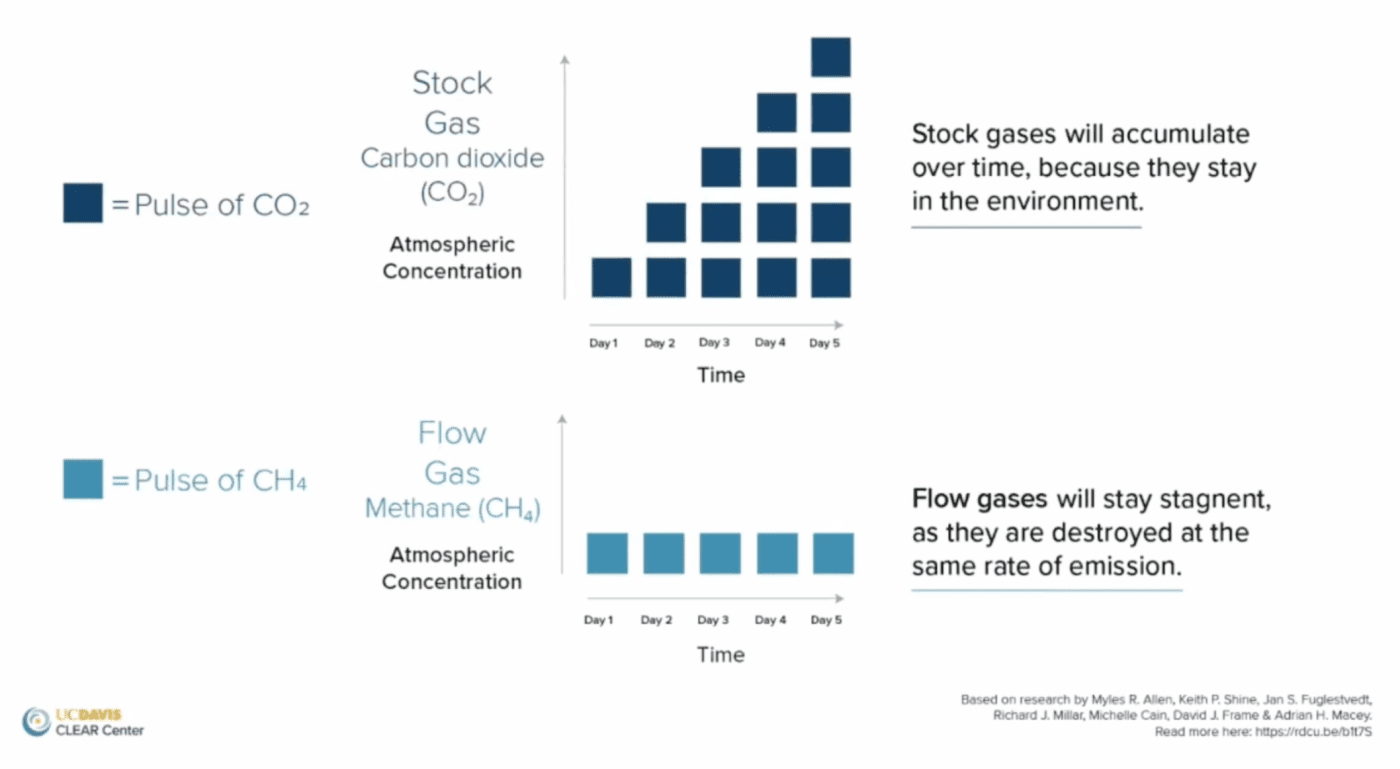
Not only were cattle not the primary culprit of global warming, they were also potentially part of the solution, as an explanation of stock gases versus flow gases demonstrated.

Long-lived climate pollutants such as Co2 were referred to as ‘stock’ gases because they last in the atmosphere for 1000 years. “Every time you put it into the atmosphere, you add to the existing stock of that gas,” he explained.

Methane (CH4) was a ‘flow’. Provided it was coming from a constant source, what was being put into the atmosphere was also being taken out.

“The only time that you really add new additional methane to the atmosphere with the livestock herd is throughout the first 10 years of its existence or if you increase your herd sizes.

“Only then do you actually add new additional methane and thus new additional warming.

“So please remember there are big differences between long-lived stock gases such as CO2 or nitrous oxide versus short-lived flow gases such as methane.”

He invited the audience to imagine a scenario where methane emissions from cattle were decreased by 35 percent.

If this could be achieved, it would have the effect of taking carbon out of the atmosphere and create a net cooling effect.

“If we find ways to reduce methane, then we counteract other sectors of societies that do contribute – and significantly so – to global warming, such as flying, driving, running air conditioners, and so on.

“So if we were to reduce methane, we could induce global cooling. And I think that our livestock sector has the potential to do it. And we are already seeing examples where that happens.”

He offered several examples of how the agricultural sector has already had success in reducing methane.

A few years ago the California legislature wrote a law called SB 1383 mandating a 40 percent reduction of methane to be achieved by the year 2030.

California’s farms and ranches have reduced greenhouse gases by 25pc since the laws were enacted.

This was achieved by using “a carrot rather than cane approach”, by rewarding farmers and ranchers who wanted to reduce emissions by giving them financial incentives to invest in anaerobic digesters or alternative manure management practices.

“I know if we can do it here, it can be done in other parts of the country and in other parts of the world.

“And if we indeed achieve such reductions of greenhouse gas, particularly of short-lived greenhouse gases such as methane, then that means that our livestock sector will be on a path for climate neutrality– on a path to climate neutrality. And that, to me, is a lifetime objective.”

Agriculture needs to work harder to tell its story

Dr Mitloehner said it was important the industry work harder to ensure the public understands the science around cattle production and greenhouse gas emissions.

“I feel that it is actually critical to get what we find in our research environment translated and communicated with the public sector.

“Because only if what we find makes its way to the light of the day, only then it matters”

It was also important that the public discussion used accurate and not misleading numbers around livestock emissions.

It is often stated that livestock emissions represent 14 percent to even as high as 50 percent of total emissions, but Dr Mitloehner said this did not reflect actual livestock emissions in developed countries such as the US were the number was closer to just 3 percent of all US emissions.

HAVE YOUR SAY

Your email address will not be published. Required fields are marked *

Name *

Comment

Your comment will not appear until it has been moderated.
Contributions that contravene our Comments Policy will not be published.

Scientists understand cattle not climate villains, but media still missing message

COMMENTS

Are Dairy Digesters the Renewable Energy Answer or a ‘False Solution’ to Climate Change?

Capturing the massive quantities of methane dairy farms emit could reduce overall carbon pollution. But critics say the effort is propping up Big Dairy.


logo for covering climate nowThis article is published in partnership with Covering Climate Now, a global journalism collaboration strengthening coverage of the climate story.

At first, California dairy farmer Felix Echeverria was skeptical about installing a dairy digester on his 12,000-cow operation. The process, which involved covering a pit of liquid manure and capturing the methane emissions it releases before “digesting” it anaerobically, is expensive and complex, and not something he was qualified to run. But he saw the benefits neighboring farmers in the Bakersfield area reaped from their digesters and decided to get ahead of a state law that would require him to reduce emissions by 2030.

“I realized I could stay ahead of the curve on greenhouse gas emissions,” Echeverria told Civil Eats. “To know we’ve been able to comply [with the law], that was the motive.”

The other deciding factor: Echeverria learned that he didn’t have to invest in or build the digester, as farmers in years past have. Instead, he partnered with a developer, California Bioenergy LLC (CalBio), that applied for public funding to help pay for the project and now operates the equipment. And in exchange for his manure biogas, Echeverria earns a percentage of sales from the electricity generated by the digester.

Get the latest articles in your inbox.

“There’s absolutely no drawbacks,” Echeverria said of the digester, which has operated on the farm since 2018.

Agriculture accounts for nearly a quarter of global greenhouse gas emissions, and as its role in changing the climate has become increasingly clear, farmers like Echeverria are being asked to do their part. In recent years, much of the attention—and the bulk of public dollars—has focused on anaerobic digesters, which help meat and dairy production facilities convert animal waste into energy that fuels vehicles and power grids.

Farmers, researchers, and policymakers across the U.S. see methane digestion as cost-efficient, effective, and revenue-generating for farmers. Proponents also see biogas and its cleaned-up version, biomethane (also known as renewable natural gas, or RNG) as a renewable source of energy that has a huge potential to replace more harmful legacy fuels.

Over the past decade, more than 250 digester projects have been built across the country, most of them on dairy farms. California alone has funded more than 100 digester projects, spending nearly $200 million of its ambitious California Climate Investments dollars on them. The state is poised to spend an additional $20-$25 million this year, though it’s unclear how the COVID-19 pandemic will impact the funding process going forward.

“The primary beneficiaries of these projects are the citizens of California. By reducing greenhouse gases, we are contributing to reducing global warming,” said Joyce Mansfield with the California Department of Food and Agriculture (CDFA), which runs a grant program for dairy digesters.

But digesters do have some drawbacks. They’re complex, expensive projects that farmers can’t afford on their own; they cost $3-5 million dollars each and typically require public subsidies to build—in the form of federal loans, state grants, tax credits, rebate programs, and myriad other incentives.

In the past, environmental advocates have supported digesters, but many have begun to see the technology in a new light. They say the emission reductions are not worth the massive public funding given that most manure-powered biogas comes from large-scale industrial dairy facilities known for their significant environmental impacts. (Straus Family Creamery in Northern California is one of a few exceptions.) As such, advocates say public financing of digesters amounts to supporting and helping to perpetuate large-scale factory farming—and in some cases, causing farms to grow in size—under the guise of mitigating climate change.

“Digesters are definitely reducing methane and generating fuel [and] electricity. It all sounds very good, but it’s not a clean fuel,” said Rebecca Spector, the West Coast director for the Center for Food Safety. “These enormous dairies are polluting the air and the water … and the state is promoting a false solution while propping them up.”

Ultimately, Spector said, portraying digesters as a panacea to dairies’ environmental woes is thwarting the move to a farming system that supports smaller-scale producers, reduced herd sizes, and cows on pastures. “We want dairies to move to more sustainable solutions and we support the state incentivizing that,” she said.

Pressure to Reduce Emissions

Large industrial dairies, also known as concentrated animal feeding operations, or CAFOs, clean manure out of their barns with water and store the liquid waste in large lagoons. As naturally occurring bacteria break down the manure, they release large quantities of methane, a greenhouse gas with a 25 times greater impact on global warming than carbon dioxide. In fact, more than half of California’s methane emissions come from dairies.

Manure management accounts for about 7 percent of agriculture emissions and in recent years, dairies across the U.S. have faced increased pressure to reduce that number. In California, the country’s largest dairy state, producers are required by 2030 to decrease their methane emissions by 40 percent from 2013 levels. And while much of the methane comes from cows belching, dairy manure lagoons account for approximately 25 percent of the state’s overall methane emissions.

Reducing those emissions is no small feat. In 2017, California housed 1.7 million cows—the vast majority of them residing in the Central Valley on approximately 1,300 dairies. According to the U.S. Environmental Protection Agency (EPA), an average dairy cow produces approximately 120 pounds of manure every day.

The digesters capture methane, convert the biogas to biomethane, and inject it into utility pipelines as renewable compressed natural gas (R-CNG) to power trucks, buses, and cars. In some cases, digesters also generate renewable electricity that’s used by the dairy, with the remainder sent into the grid. Dairy methane can also be turned into renewable electricity without combustion to power electric vehicles.

Because of the expense and scale of the projects, digesters are geared toward large dairies.

In the past, dairy producers built and operated their own digesters. But in recent years, as the projects have become more complex and their price tags have ballooned, big developers have largely taken over their funding, building, operating, and maintenance. Most of the digesters are now part of clusters, with the biogas sent to a centralized cleaning hub.

Because of the expense and scale of the projects, digesters are mainly geared toward large dairies—2,500 cows with support stock could support a standalone digester, according to digester developers. If a dairy is near a cluster project, it might work for it to be somewhat smaller.

While digesters may be expensive, data collected at the state level shows digester projects are cost-effective when it comes to reducing greenhouse gas emissions. In fact, the digester program is the second most cost-effective of the state’s 68 climate programs.

“Our projects are providing high value for the state in terms of return on their investment,” CalBio’s President Neil Black wrote in an email. “We are destroying methane, which has greater short-term warming impacts in initial years… [so] the climate benefits will be seen much sooner than projects that reduce carbon dioxide.”

Indeed, the greenhouse gas reductions can be substantial. Echeverria’s dairy digester was expected to cut its manure methane emissions by approximately 75 percent. It will also reduce energy costs and its use of fossil electricity from the grid. The digester delivers approximately 8 million kilowatt-hours of renewable electricity annually to state utility, Pacific Gas & Electric (PG&E). And the dairy is part of the Kern County Dairy Biogas cluster, a group of 16 dairies with approximately 60,000 milk cows that collectively produce approximately 6 million diesel gallon equivalents per year.

For large dairies, digesters can be a godsend: they cut the cost of complying with environmental rules, and offer a new source of revenue to supplement volatile milk prices. Farmers can also use electricity-engine waste heat to refrigerate their milk, resulting in further savings.

Digesters also provide benefits beyond emission reductions, Echeverria said. “We don’t have as much solids to deal with in the waste stream because a lot more material gets digested and turned into gas. We can move it around easier, our lagoons stay cleaner, and we get a better fertilizer source,” he said, referring to the fact that nutrients are broken down more thoroughly in the digester and are more available to the plants when the manure is spread on fields. And because digester projects are required to double-line the lagoons, he says nitrates don’t leach into groundwater.

Digesters also reduce emissions of hydrogen sulfide and other gases, said Black, CalBio’s president, improving air quality and reducing odors. The company is working to help convert truck fleets from diesel to natural gas, he said, which will significantly reduce nitrogen oxides, a major component of smog, in the highly polluted Central Valley where residents live with some of the worst fine particle pollution in the nation.

But Spector with the Center for Food Safety contends that while digesters do provide some benefits, they don’t solve the issue of nitrates contaminating groundwater—a major issue in the Central Valley, where low-income residents are often forced to rely on bottled water. That’s because nitrates often leach from manure applied as fertilizer into groundwater. Spector says that when digesters burn biogas they also produce air pollution. In addition, the digesters don’t address the climate impacts of enteric emissions (from cows releasing gas) which account for about half of the methane emissions from dairies.

Subsidies for Developers, Revenue to Industrial Dairies

Critics also decry the fact that much of the public funding for dairy digesters has gone into the hands of just a few developers.

In California, the CDFA has created a research and development program that is funded with the state’s cap and trade dollars. From 2015 to 2019, the program has awarded over $180 million to 108 projects, the agency told Civil Eats. And yet the vast majority of that money has gone to just two developers (only 12 developers have ever applied, the agency said).

CalBio has receive the largest amount: $99 million to date. And Maas Energy Works has been awarded $82.5 million. The CDFA grants require a 50 percent financial match, though those funds can also come from other public sources. Both companies also say they have received other public funding for their projects. Additional capital for the projects comes from investors and lenders.

CalBio currently operates five projects in California and is developing, according to its officials, more than 60 additional digesters in seven clusters of existing dairies that will produce renewable compressed natural gas for use in vehicle fleets. Maas Energy Works has a total of 27 digester projects, including 22 in California, three in Washington state, and two in Oregon.

“California has required the dairy industry to reduce their methane emissions by 40 percent. The best way to achieve that reduction is with dairy digesters,” Maas Energy Works spokesman Doug Bryant told Civil Eats via email.

The digester projects are a financial boon to both the developers and farmers. While in previous years, their value was based around renewable electricity generation and the sale of carbon credits, it now comes from the production of low carbon fuel, through the sale of natural gas, as well as the generation and sale of “credits” that can be sold to polluting companies and other organizations that use them to comply with state and federal requirements or voluntary emissions goals.

Precisely who benefits from these income streams varies from project to project. But with the new generation of digesters, it is often the developers who bring in the capital and who then own the digesters while the dairy producers rent their lagoon and provide the manure in return for a cut of the power sold. “Our company helps bring in the capital from lenders and investors. The dairies… receive the payment for contributing their manure, and the better the project performs, the more they will make,” said CalBio’s Black.

He added that dairies have an opportunity to invest in their projects, but that is optional. In Maas Energy Works projects, on the other hand, over half of the projects are 100 percent owned by the dairy farmer and the developer simply operates the digester for a fee, the company told Civil Eats.

Fight Over Renewable Gas

In the coming years, digester developers and dairy farmers may tap into an even bigger source of income as the gas industry looks to replace some of the “fossil-based” natural gas it currently sells. Natural gas companies such as SoCalGas and PG&E have heavily promoted biogas as a cost-effective, reliable “renewable natural gas.” The private utilities say that mixing RNG with regular gas in their pipelines will reduce its carbon intensity. And it appears the gas industry may get its way, at least in the short term.

While in the past, digester projects generated electricity for export to the grid, the current focus is on using the dairy biomethane—in the form of CRNG—as an alternative vehicle fuel and energy source. Out of 108 projects funded by the CDFA since 2015, 102 produce or will produce CRNG. And in recent years, these are built in a cluster of digesters that pipe gas to a centralized hub.

Two years ago, a new California law essentially mandated that a certain amount of biogas from manure and other renewable sources be included in utilities’ energy mix and for it to be injected into the gas pipeline system. The California Public Utilities Commission is currently in the process of creating a procurement standard to make that possible.

Legislators recently extended the ability to tap into $40 million in subsidies through a program that connects manure digesters to utility pipelines. And the SoCalGas settlement for the Aliso Canyon gas leak is also channeling $26.5 million toward the construction of dairy digester projects.

While some have praised this move, critics say it has created a whole set of ethical issues. Jim Walsh, a senior energy policy analyst with Food & Water Watch, says that using California Climate Investment funds to produce renewable gas from biomethane that utilities want in their portfolio supports not only factory farming but also the legacy fossil fuel industry—and could ultimately allow it to continue its polluting ways.

“These cap and trade funds are huge subsidies that utilities and other large polluters pay for to avoid their own emission reductions…. It allows them to greenwash themselves while proceeding with their practices,” Walsh said. “This is really just a shallow attempt to extend the life of their industry in the face of a growing backlash against fossil fuel development.”

Using biogas from manure as part of utilities renewables portfolio isn’t cost effective either, Walsh added, and will significantly increase rates for consumers. Methane-derived RNG can also leak through pipelines when transported, just like natural gas. And the bet on biogas from dairies is happening just as cities around the country are focusing more on electricity and passing laws to stop the building of new gas infrastructure.

In California, state officials have also pushed electricity as a strategy for cutting emissions from homes and workplaces. Meanwhile, utilities like SoCalGas counter that using biogas as part of their energy mix can reduce greenhouse gas emissions faster and cheaper than electrifying buildings.

Ultimately, what could make utilities’ move to biogas problematic is simply a problem of supply. Studies show there likely won’t be enough RNG/biomethane to meet the state’s climate goals.

Alternatives Underfunded, Lag Behind

Dairy digesters aren’t the only way to manage manure’s methane impact, but environmentalists say that other, more cost effective and sustainable methods tend to be much harder to get funded.

The CDFA runs a second methane reduction grants program called the Alternative Manure Management Program (AMMP). Those include projects focus on different ways to handle manure, such as composting and conversion to something called dry scrape collection, as well as enhanced pasture-based management practices (though few producers have applied to move their cows to pasture).

The program’s funding makes up only 20-30 percent of the total available for methane reduction programs, records show. More producers apply for the AMMP funding than for digester dollars, but in 2019 about half were rejected due to lack of funding.

The CDFA told Civil Eats that the dairy digester program has greater reductions of greenhouse gases than the alternative program. But Jeanne Merrill, policy director of California Climate and Agriculture Network (CalCAN), said the agency’s comparison is flawed. The CDFA calculates emission reduction impacts from AMMP projects on a 5-year project basis, she said, while those from the digester projects are calculated on a 10-year basis. “That’s comparing apples to oranges,” Merrill said.

CDFA officials said they use those time spans because they represent the expected duration of the projects. But Merrill said when greenhouse gas reductions are compared across both programs using similar timeframes, the AMMP projects fare quite well and sometimes do a better job with emission reductions per dollar.

AMMP projects are also faster to implement. Of the 108 digester projects awarded grants since 2015, only 13 are now complete and operational. The remaining 95 are at different stages of implementation.

Alternative methane reduction projects can also help protect water and air quality, Merrill added. Because they’re less expensive, they’re accessible to smaller farms and have greater geographic impact. And while digester projects are only guaranteed for 10 years (although Maas Energy Works told Civil Eats its digesters are expected to survive for at least 20), alternative projects are not subject to changes in complex technologies so are easier to maintain long-term.

“The trouble with digesters is that they only work for a quarter of the state’s dairies,” Merrill said. “Small and middle-sized dairies don’t have enough manure or capital to justify building digesters.”

Given the benefits, Merrill added, the CDFA should allocate half the available funding to non-digester programs.

Coronavirus May Stem the Tide of Funding

As the COVID-19 pandemic rages through California and the rest of the country, it’s still unclear how it might impact dairy digester projects. The pandemic has battered many smaller dairy farmers, with demand for dairy dropping and milk prices at historic lows. But both California Bioenergy and Maas Energy Works told Civil Eats that beyond minor delays and a slow-down in financing, the virus has had a limited impact on their operations so far.

In the near term, the impact may be financial. Before the pandemic, California’s governor Gavin Newsom proposed a budget that included a new ambitious Climate Catalyst Fund of $1 billion over the next four years. Companies—including farms and digester developers—could apply to get low-interest loans to reduce their climate impacts. That budget proposal, Newsom now says, “is no longer operable” and will have to be revised.

But given the fact that CDFA set its budget for 2020 loans last year, even the pandemic isn’t likely to stop the state’s fledgeling dairy digester industry from progressing—at least for the foreseeable future.


Top photo: The Riverview Dairy Digester in Pixley, California. It receives manure from roughly 3,000 cows, plus replacement stock. (Photo courtesy of Maas Energy Works)

Methane’s Rising: What Can We Do to Bring It Down?

ATMOSPHERIC SCIENCES  Editors’ Vox


Reducing methane emissions is critical for addressing climate warming, but which are the easiest and most cost-effective ways to do this?

By 

Methane emissions have increased dramatically over the past decade and a half, significantly contributing to climate warming. A recent article in Reviews of Geophysics examines how to measure methane emissions accurately from different sources, and explores various mitigation and emission reduction strategies. Here, one of the authors explains the causes of increased emissions, the imperative to address this problem, and what we might be able to do about it.

What are the main sources and sinks of atmospheric methane?

Methane comes from many sources. Roughly two-fifths of emissions are natural, such as wetlands, and three-fifths are human-caused, such as leaks from fossil fuel industries, ruminant farm animals, landfills, rice growing, and biomass burning.

Landfill site in Kuwait
Landfill site in Kuwait. Credit: D. Lowry, from Nisbet et al. [2020], Figure 3

The main sink for methane is destruction by hydroxyl (OH) in the sunlit air, especially in the tropics in the moist air a few kilometers above the surface. Other smaller sinks are chlorine in the air, and destruction by bacteria in the soil.Why has there been a sharp rise in atmospheric methane over the past few decades?

Methane emissions rose quickly in the 1980s as the natural gas industry was rapidly expanding, especially in the former Soviet Union. Then the growth rate slowed and the methane budget (the balance between emissions and their destruction) seemed to have reached equilibrium in the early years of this century. However, in 2007, unexpectedly, the amount of methane in the air started growing again, with very strong growth since 2014, much of it in tropical regions [Nisbet et al., 2019].Simultaneously, there was a marked change in the isotopic composition of atmospheric methane. For two centuries, the proportion of Carbon-13 in the methane in the air had been growing, reflecting the input from fossil fuels and fires, which is relatively rich in C-13, but from 2007, the proportion of C-12 methane has risen [Nisbet et al., 2016].

There is no clear agreement why this rise in methane began again in 2007, nor why it accelerated from 2014, nor why the carbon isotopes are shifting. One hypothesis is that biological sources of methane have increased; for example, population growth has increased farming in the tropics, and climate warming has made tropical wetlands both warmer and wetter. Another possible hypothesis is that the main sink has declined; if true, this would be profoundly worrying as OH is the ‘policeman of the air’ cleaning up so many polluting chemical species. A third hypothesis is more complex, speculating that fires (which give off methane rich in C-13) have declined while other sources have risen. Of course, these hypotheses are non-exclusive and all these processes could be happening at the same time.

Why is a focus on reducing methane emissions critical for addressing climate warming?

Methane is an extremely important greenhouse gas. In its own right, it is the second-most important human-caused climate warmer after carbon dioxide (CO2), but it also has a lot of spin-off effects in the atmosphere that also cause warming.In the 5th Assessment Report from the Intergovernmental Panel on Climate Change (IPCC) in 2013, warming from methane was assessed at about 0.5 watts per square meter (Wm-2) (the measure of solar irradiance) compared to the year 1750. That’s large, and when all its spin off impacts are added, the warming impact of methane was around 1 Wm-2 (IPCC 2013 report Fig. 8.17), which is significant when compared to about 1.7 Wm-2 warming from CO2. Sadly, both numbers of course have now much increased.

Methane’s atmospheric lifetime (the amount in the air divided by the annual destruction) is less than a decade. So, if methane emissions are quickly reduced, we will see a resulting reduction in climate warming from methane within the next few years. Over the longer-term CO2 is the key warming gas but reducing that will take much longer, so cutting methane is an obvious first step while we try to redesign the world’s economy to cut CO2. It’s rather like a dentist giving a quick acting pain reliever while making plans for a root canal procedure.What might be the some of the easiest or most cost-effective ways to cut methane emissions from different sources?

Simple box model to show the potential impact of mitigation on methane emissions
Simple box model to show the potential impact of mitigation. The purple line approximates emission levels that would be compliant with the Paris Agreement. The blue line represents no change in emissions after 2020. The other lines show a 10% (orange line), 20% (green line) and 30% (red line) cut in emissions spread linearly over the period 2020–2055 followed by stable emissions. Credit: Paul Griffiths, in Nisbet et al. [2020], Figure 22 left panel

We need to identify the major human-caused sources that we can realistically change quickly.Some relating to the fossil fuel industry are easily identified and already subject to regulatory control in most producing nations, so it should not be difficult to monitor and achieve better behavior. For example, gas industry leaks represent lost profit, while deliberate methane venting in the oil industry is simply lazy design. Meanwhile, the coal industry is rapidly becoming uncompetitive with renewable electricity.

Tropical fires are a particular problem and cause terrible pollution. Many fires are either unnecessary (such as crop waste fires and stubble burning) or very damaging (such as human-lit savanna grassfires and forest fires) so there is a very strong argument for using both financial incentives and legislation to halt fires across the tropics, although in some places there are strong vested interests.

Landfills are another significant source. Although these are highly regulated in Europe and parts of the Americas, in megacities in the tropics there are many immense landfills, often unregulated and often on fire. Just putting a half-meter of soil on top would greatly cut emissions.

And what are some of the most challenging types methane sources to address?

Changing food habits is perhaps the biggest challenge. Much methane is breathed out from ruminant animals such as cows, water buffalo, sheep, and goats. Across much of tropical Africa and India, cows tend to live in the open and their manure is rapidly oxidized so it is not an especially large methane source. But in Europe, China and the United States, cattle are often housed in barns with large anaerobic methane-producing manure facilities, that do make methane. These manure lagoon emissions should be tackled.

We could, of course, all give up food from ruminants and methane emissions would drop, but it would be countered by an increasing demand for crops. More intensive arable farming, especially in the tropics, would be needed, and likely achieved by plowing up forest and savannas, which would increase CO2 emissions, and also require increasing the use of nitrogen fertilizers.

Reducing meat and dairy consumption to only ‘organic’ grass-reared animals seems like a sensible first step for people in wealthier nations. But this needs to be seen in the context of broader issues in less developed nations. Population growth needs to be slowed if agricultural emissions are to be reduced: better schools, especially for girls, improved healthcare, and better pensions would reduce population growth and thus the burden on human food production. A focus on societal issues would ultimately address climate problems too.

Can we be optimistic that efforts to reduce methane emissions will help to meet the targets of the UNFCCC Paris Agreement?

If I’d been asked this question three months ago, I would have said “no”. Methane is rising much faster than anticipated in the scenarios that underlay the Paris Agreement. As I write we are several months in to the global COVID-19 epidemic and it is almost as if nature itself has so tragically hit the pause button. I am one of many scientists trying to measure the impact of the lockdown on CO2 and methane emissions. As we try to rebuild and find our way through the post-epidemic recovery, there will be great changes, and perhaps in many countries a pause for thought, and a chance to choose a new way forward.

—Euan Nisbet (E.Nisbet@rhul.ac.uk), Department of Earth Sciences, Royal Holloway, University of London, UK

Citation: Nisbet, E. (2020), Methane’s rising: What can we do to bring it down? , Eos, 101, https://doi.org/10.1029/2020EO143615. Published on 04 May 2020.
Text © 2020. The authors. CC BY-NC-ND 3.0

Study: Climate impact of butter 3.5 times greater than plant-based spreads


https://www.businessgreen.com/news/4012376/study-climate-impact-butter-times-plant-spreads

The climate impact of butter is higher in large part due cow's methane-heavy farts
The climate impact of butter is higher in large part due cow’s methane-heavy farts

Cow’s methane-heavy burps and farts blamed for CO2 associated with butter in study commissioned by margarine maker Upfield

The climate impact of consumer diets has yet again fallen under the spotlight, after research this week concluded butter is 3.5 times more harmful to the environment on average than margarine and plant-based spreads, due in large part to cows’ methane emissions.

The study was commissioned by global margarine maker Upfield – responsible for plant-based brands including Flora, Rama and Blue Band – in another sign of how firms are seeking to promote the climate credentials of their products to increasingly eco-conscious consumers.

It asked scientists to carry out a large-scale life cycle assessment looking at the production, transport, sale, and use of 212 plant-based spreads and margarines sold across 21 European and North American markets, and then compare their greenhouse gas emissions to the impact of 21 dairy butters.

The results found the average CO2 impact for every kilogram of plant-based spread and margarine produced was around 3.3kg, compared to 12.1kg of CO2 equivalent for dairy-based products, making emissions from butter around 3.5 times higher.

The bulk of emissions associated with butter occur during milk production, according to the study, which found enteric emissions from cows – aka methane from burping and farting – made up 39 per cent of greenhouse gases from dairy-based spreads.

It means that just one 250g of butter results in the equivalent of 1kg of cow emissions, the study estimated, with methane a particularly potent greenhouse gas which is around 80 times more powerful than CO2 at trapping heat, and responsible for around a quarter of global warming.

Every one of the 212 plant-based spreads analysed fared much better in the study in terms of carbon impact, with associated emissions ranging from less than 1kg to almost 7kg, whereas butter products generated between over 8kg to nearly 17kg of CO2 for every kilogram produced.

Beyond emissions too, the life cycle assessment – the largest of its type to date, according to Upfield – concluded that margarines and plant-based spreads consistently had lower impacts than butter in terms of climate, water and land.

Cattle feed production including cow burps, farts, and manure management “contributed significantly to climate change impacts, with a higher impact than most other factors”, the study found. Some farming groups have argued that new diet supplements and other technologies can serve to curb methane emissions from cattle, but the industry is still regarded as a large and growing source of emissions.

Sally Smith, head of sustainability at Upfield, said the study highlighted the need for a “fundamental transformation of our food system” in order to tackle climate change, arguing that people in western countries needed to cut down on their meat and dairy intake.

She also argued it was important for firms to help consumers to understand the impact of their food choices on the planet. “It is our responsibility as a forward-thinking company to understand and act to address the impact of our plant-based products on the environment,” said Smith. “A shift to regenerative agricultural practices will be key for both arable and dairy farmers. Robust lifecycle assessments help ensure that our approach is data driven and grounded on the latest scientific evidence.”

NASA Flights Detect Millions of Arctic Methane Hotspots

Thermokarst lake in Alaska
The image shows a thermokarst lake in Alaska. Thermokarst lakes form in the Arctic when permafrost thaws. Credit: NASA/JPL-Caltech
› Larger view

Knowing where emissions are happening and what’s causing them brings us a step closer to being able to forecast the region’s impact on global climate.


The Arctic is one of the fastest warming places on the planet. As temperatures rise, the perpetually frozen layer of soil, called permafrost, begins to thaw, releasing methane and other greenhouse gases into the atmosphere. These methane emissions can accelerate future warming – but to understand to what extent, we need to know how much methane may be emitted, when and what environmental factors may influence its release.

That’s a tricky feat. The Arctic spans thousands of miles, many of them inaccessible to humans. This inaccessibility has limited most ground-based observations to places with existing infrastructure – a mere fraction of the vast and varied Arctic terrain. Moreover, satellite observations are not detailed enough for scientists to identify key patterns and smaller-scale environmental influences on methane concentrations.

In a new study, scientists with NASA’s Arctic Boreal Vulnerability Experiment (ABoVE), found a way to bridge that gap. In 2017, they used planes equipped with the Airborne Visible Infrared Imaging Spectrometer – Next Generation (AVIRIS – NG), a highly specialized instrument, to fly over some 20,000 square miles (30,000 square kilometers) of the Arctic landscape in the hope of detecting methane hotspots. The instrument did not disappoint.

“We consider hotspots to be areas showing an excess of 3,000 parts per million of methane between the airborne sensor and the ground,” said lead author Clayton Elder of NASA’s Jet Propulsion Laboratory in Pasadena, California. “And we detected 2 million of these hotspots over the land that we covered.”

The paper, titled “Airborne Mapping Reveals Emergent Power Law of Arctic Methane Emissions,” was published Feb. 10 in Geophysical Research Letters.

Within the dataset, the team also discovered a pattern: On average, the methane hotspots were mostly concentrated within about 44 yards (40 meters) of standing bodies of water, like lakes and streams. After the 44-yard mark, the presence of hotspots gradually became sparser, and at about 330 yards (300 meters) from the water source, they dropped off almost completely.

The scientists working on this study don’t have a complete answer as to why 44 yards is the “magic number” for the whole survey region yet, but additional studies they’ve conducted on the ground provide some insight.

“After two years of ground field studies that began in 2018 at an Alaskan lake site with a methane hotspot, we found abrupt thawing of the permafrost right underneath the hotspot,” said Elder. “It’s that additional contribution of permafrost carbon – carbon that’s been frozen for thousands of years – that’s essentially contributing food for the microbes to chew up and turn into methane as the permafrost continues to thaw.”

Scientists are just scratching the surface of what is possible with the new data, but their first observations are valuable. Being able to identify the likely causes of the distribution of methane hotspots, for example, will help them to more accurately calculate this greenhouse gas’s emissions across areas where we don’t have observations. This new knowledge will improve how Arctic land models represent methane dynamics and therefore our ability to forecast the region’s impact on global climate and global climate change impacts on the Arctic.

Elder says the study is also a technological breakthrough.

“AVIRIS-NG has been used in previous methane surveys, but those surveys focused on human-caused emissions in populated areas and areas with major infrastructure known to produce emissions,” he said. “Our study marks the first time the instrument has been used to find hotspots where the locations of possible permafrost-related emissions are far less understood.”

More information on ABoVE can be found here:

https://above.nasa.gov/

Are we measuring ruminant methane emissions correctly?

17 January 2020

Researchers at Oxford University have developed GWP*, a new climate metric that accurately measures the impact of methane emissions on global warming – recontextualising the debate surrounding ruminant methane emissions and climate change.

ffinlo Costain, host of FAI Farm’s Farm Gate podcast interviewed Myles Allen and John Lynch from Oxford University to explore their new method of measuring the impacts of methane on climate change. GWP* is a new metric for global warming potential that measures the change in emission rates for methane instead of measuring emissions by volume. According to their research, GWP* gives a more accurate picture of the influence greenhouse gases have on the world’s climate than existing measures, which assign gases a nominal CO2 equivalent number.

Current climate measures, like GWP100, categorise ruminant-emitted methane and agricultural activities among the greatest contributors to climate change. GWP100 reaches this conclusion by comparing the total amount of emissions and extrapolating the potential impacts on the global climate. According to Roland Bonney, co-founder of FAI Farms and Benchmark Holdings plc, many farmers and farm organisations feel unfairly demonised by these conclusions and public reaction to them. Allen and Lynch echo this view and assert that the GWP100 metric doesn’t capture the full relationship between emissions and climate change.

Bonney asserts that raising ruminants sustainably can be part of the solution to climate change. Raising cattle and sheep in a mixed rotation system, ensuring they are grass-fed and that they have access to natural pastureland can reduce greenhouse gas emissions significantly. In his view, how we farm has a greater impact on global climate than what we choose to eat.

The differences between methane and carbon dioxide

Though both methane and CO2 contribute to climate change, they impact global temperatures differently. Humans emit more carbon dioxide than any other greenhouse gas and it remains the largest contributor to climate change. Though some CO2 can be absorbed by the ocean or be fixed in plant biomass, the bulk of human emissions go into the atmosphere. According to Allen, the CO2 left in the atmosphere causes a persistent warming effect over thousands of years, making its impact more cumulative than other gasses. Unless humans ramp up efforts to remove carbon, it will remain in the environment.

In contrast, methane is emitted in smaller quantities. The gas has a stronger warming effect than CO2, but it breaks down quickly. This means that after a few decades, the methane will be out of the atmosphere and any warming affects will cease.

When describing the different impacts of the gases, Lynch compared the impacts of methane emissions to drinking excessively and getting a hangover – the immediate effects will set you back, but as long as you don’t drink to excess again, the pain and nausea will dissipate. Carbon dioxide, on the other hand, is more akin to lead poisoning – exposure will cause immediate negative effects, and sustained exposure will cause significant damage in the future.

Metaphors aside, comparing one tonne of emitted CO2 to one tonne of emitted methane (CH4) doesn’t give researchers an accurate picture of the gases’ warming potential. Allen’s research indicates that for methane to have the same warming effect as CO2, humans would need to increase methane emissions by multiple tonnes per year and maintain that emissions level indefinitely. In his view, it’s more appropriate to compare the emission rates of methane with a single tonne of emitted carbon dioxide – the central aim of the new GWP* measure. The new metric will also give more accurate climate forecasting than the current GWP100 standard.

GWP* appears to capture these subtleties more effectively than GWP100. Researchers at the SRUC found that measuring the warming impact of farms with a traditional carbon calculator overestimated the impact of farm emissions on climate. When they used GWP* to analyse the same farm data however, methane emissions fell by 75 percent, halving the total climate impact of agricultural emissions.

Ruminant methane and GWP*

In Allen’s analysis, methane’s contribution to climate change is historic – we are feeling the effects of methane pulses from 50 years ago when the global ruminant herd increased. Ruminants contribute to global methane emissions as the herd expands. A new source of methane will have a huge effect, but a sustained source won’t be as impactful. If the herd remains stable or declines (which is happening currently), the methane they produce won’t add to the warming that’s already occurred. Allen argues that the methane produced by the world’s ruminants is keeping global temperatures at stasis – it isn’t contributing to warming or cooling either way.

GWP* allows researchers to differentiate between new sources of methane and existing ones, meaning that fluctuations in the global ruminant herd can be accurately accounted for. According to Lynch, analysing discrete methane sources makes GWP* more accurate and prevents overestimates of the gas’s climate effects.

In Allen’s view, removing all ruminants in order to tackle methane emissions wouldn’t provide a huge climate benefit. Culling ruminants would only give the climate a temporary pulse of cooling – a temporary reduction of 0.1 degrees at the absolute maximum. That’s the equivalent of a few years’ worth of warming from CO2 emissions. Instead of focusing solely on ruminant emissions, activists should also account for methane leakages in Britain’s natural gas infrastructure. Both Lynch and Allen agreed that eliminating CO2 emissions would do more to counteract climate change than simply reducing methane produced by ruminants.

Refocusing on carbon

Allen told Costain that though reducing methane would help the climate, tackling carbon emissions from the fossil fuel industry is more pressing. The emissions from this sector are “additional” to the world’s existing carbon cycle and cause present and future warming events. Unless the UK and other countries enact zero net carbon emissions policies, global climate change will continue. Lynch echoed these sentiments, saying that carbon emissions needed to be removed or offset to stabilise global temperatures.

Listen to the Farm Gate podcast with ffinlo Costain here.

WHAT ARE HUMAN CAUSES OF CLIMATE CHANGE?

DECEMBER 17TH, 2019
by: Murat Suner
https://www.fairplanet.org/story/what-are-human-causes-of-climate-change/

We are experiencing long shifts of climatic conditions that are characterised by a change in temperature, rainfall, winds, and other indicators.

Currently, the level of greenhouse gases in the atmosphere is much higher than in the past years, and its ability to trap heat is changing.

Burning fossil fuels and deforestation are the primary causes of climate change. It presents a substantial threat to humans and animals now and in the future. The following are some of the biggest human causes of climate change:

GREENHOUSE GAS EMISSION

These gases accumulate in the atmosphere, blocking heat from escaping, and they don’t respond to the temperature changes (the greenhouse effect). When they remain for an extended period in the atmosphere, they are likely to cause climate change.

Greenhouse gas emission is a major human causes of climate change, and their sources include transportation, electricity production, burning fossil fuel in industries, commercial and residential application, agriculture, and land use. These gases include;

• CARBON IV OXIDE

Carbon dioxide (CO2, or Carbon IV Oxide) is the main greenhouse gas produced through human activities that leads to adverse climate changes. It is a result of burning fossil fuels like coal, oil, and gas. Fossil fuel generates electricity worldwide, leading to high emissions of CO2. Locomotion is the second-largest source of carbon emission; humans contribute daily to CO2 emissions by use of transport vehicles either for leisure or business purposes.

Carbon stored in the form of fossil fuels is more stable, and when heated, they release the stored carbon in the form of CO2. If humans couldn’t burn these fuels for energy, the carbon is unlikely to reach the atmosphere.

We use fossil fuel to power cars, machines, and generate electricity, and as the human population increases, more fuel is used, leading to higher CO2 emissions.

• METHANE

Methane accounts for about 16 percent of greenhouse gas emissions. The petroleum industry and agriculture emit methane, especially from the digestive systems of grazing animals, manure management, and rice cultivation.

It also accumulates through waste decomposition in landfills. It is a far more active greenhouse gas than CO2.

• NITROUS OXIDE

Cultivation practices like the use of organic and commercial fertilisers lead to the emission of nitrous oxide. It also accumulates in the atmosphere through fossil fuel combustion, nitric acid production, and biomass burning.

• CHLOROFLUOROCARBONS

Chlorofluorocarbons and hydrofluorocarbons are used in home appliances like the refrigerator and industrial applications. They are associated with severe atmosphere impacts like ozone layer depletion and heat-trapping.

• SULPHUR HEXACHLORIDE

They are primarily used in dielectric materials like the dielectric liquids and for special medical procedures. Also, they act as insulators in high voltage applications like the transformers and grid switching gear.

DEFORESTATION

Deforestation is one of the major human causes of climate change; trees capture greenhouse gases such as CO2, preventing them from accumulating on the atmosphere, which could result in warming our planet. Most forests are getting cleared to create space for agriculture, buildings, and other human activities.

Trees take in carbon dioxide and release oxygen to the atmosphere during photosynthesis; hence, surplus carbon iv oxide is stored in the plants to help in growth and development. When we cut trees, their stored CO2 gets emitted to the atmosphere, which contributes to global warming.

Trees also help in regulating regional rainfall which prevents floods and drought in the area, cutting down trees influences the rainfall patterns globally. Deforestation also leads to changes in the landscape and the earth’s surface’s reflectivity, which leads to increased absorption of energy from the sun that results in global warming leading to changes in climate patterns.

AGRICULTURE

Food is a basic human need, but before you get it on your table, it goes through production, storage, processing, packaging, transportation, and preparation. Every stage of food production releases substantial amounts of greenhouse gases. Agriculture is one of the most common human causes of climate change through emissions of gases and the conversion of forests to agricultural land.

The modern agriculture practices and food production method using synthetic fertilisers are great contributors to greenhouse gas emissions, global warming, and climate change. The introduction of large scale farming has led to deforestation and machine intensive farming, which contributes to carbon emissions.

In livestock farming, ruminant animals digest their food through enteric fermentation that results in methane production; there are also substantial methane emissions from irrigated rice fields. Generally, agriculture contributes to climate change through deforestation, biodiversity loss, acidification of the oceans through agricultural chemical wastes, and accelerated soil erosion.

INDUSTRIALISATION

Although the industrial revolution, and industrialisation, has led to improved living conditions in various aspects, it is associated with adverse environmental effects that cause climatic changes. With recent innovations, human labour has been replaced with machinery that uses new sources of energy in the industries.

Manufacturing involves the use of large amounts of power and the alteration of natural systems; it is directly responsible for domestic emissions and indirect emissions through electricity and fuel use. The manufacturing operations are linked to direct greenhouse gas emissions, for instance, in the production of chemicals, iron, or steel, which are highly energy-intensive.

People are moving to urban areas in search of employment; urbanisation is another great contributor to climate change. It results in overcrowding, pollution, and poor sanitation; massive urbanisation can also lead to deforestation, emission of more greenhouse gases.

Increased commercialisation and industrialisation increase the use of fossil fuels leading to global warming and climate change.

CONCLUSION

Human emissions and activities have caused the highest percentage of global warming, which has resulted in climate change, in recent years. The global warming indicators are clear from increased temperature, humidity changes, sea level rising, showing that the land is warming up very fast due to fossil emissions, and thus changing the climate.

Any farmer can tell that the weather patterns have been altered, which is likely to affect food security worldwide. The fingerprints that humans have left on the environment through industrial activities and civilisation can be seen in the oceans, atmosphere, and the earth’s surface.

ARTICLE WRITTEN BY:
murat sw portrait
Murat Suner
Co-founder, Editorial Board Member, Author

Huge amounts of greenhouse gases lurk in the oceans, and could make warming far worse

Stores of methane and CO2 in the world’s seas are in a strange, icy state, and the waters are warming, creating a ticking carbon time bomb.

Scientists are finding hidden climate time bombs—vast reservoirs of carbon dioxide and methane—scattered under the seafloor across the planet.

And the fuses are burning.

Caps of frozen CO2 or methane, called hydrates, contain the potent greenhouse gases, keeping them from escaping into the ocean and atmosphere. But the ocean is warming as carbon emissions continue to rise, and scientists say the temperature of the seawater surrounding some hydrate caps is within a few degrees of dissolving them.

That could be very, very bad. Carbon dioxide is the most common greenhouse gas, responsible for about three-quarters of emissions. It can remain in the atmosphere for thousands of yearsMethane, the main component of natural gas, doesn’t stay in the atmosphere as long as CO2—about 12 years—but it is at least 84 times more potent over two decades.

The oceans absorb a third of humanity’s carbon dioxide emissions and 90 percent of the excess heat generated by increased greenhouse gas emissions; it’s the largest carbon sink on the planet. If warming seas melt hydrate caps, there’s a danger that the oceans will become big carbon emitters instead, with grave consequences for climate change and sea level rise.

“If that hydrate becomes unstable, in fact melts, that enormous volume of CO2 will be released to the ocean and eventually the atmosphere,” says Lowell Stott, a paleoceanographer at the University of Southern California.

The discovery of these deep ocean CO2 reservoirs, as well as methane seeps closer to shore, comes as leading scientists warned this month that the world is now surpassing a number of climate tipping points, with ocean temperatures at record highs.

The few CO2 reservoirs that have been found so far are located adjacent to hydrothermal vent fields in the deep ocean. But the global extent of such reservoirs remains unknown.

“It’s a harbinger, if you will, of an area of research that is really important for us to investigate, to find out how many of these kinds of reservoirs are out there, how big they are, and how susceptible they are to releasing CO2 to the ocean,” Stott says. “We have totally underestimated the world’s total carbon budget, which has profound implications.”

Jeffrey Seewald, a senior scientist at Woods Hole Oceanographic Institution who studies the geochemistry of hydrothermal systems, questioned the magnitude of hydrate-capped reservoirs.

“I don’t know how globally significant they are as most hydrothermal systems that we know of are not associated with large accumulations of carbon, though there’s still a lot to be explored,” he says. “So I would be a little careful about suggesting that there are significant accumulations of CO2 that are just waiting to be released.”

A threat closer to home

Other scientists are far more concerned about potential climate time bombs much closer to home—methane hydrates that form on the shallower seafloor at the margins of continents.

Hydrothermal vents like this one can have reservoirs of liquid CO2 nearby, kept in place by icy hydrate caps. If those caps melt, the carbon could seep into the ocean, and ultimately into the atmosphere.

PHOTOGRAPH COURTESY NOAA PMEL EOI PROGRAM

For one thing, there apparently are a lot of them. Between 2016 and 2018, for instance, researchers at Oregon State University and the National Oceanic and Atmospheric Administration (NOAA) deployed a new sonar technique to discover 1,000 methane seeps off the Pacific Northwest coast of the United States.

In contrast, just 100 had been identified between 2015 and the late 1980s, when scientists first stumbled across methane deposits. There are likely many more to be located, given that as of 2018, researchers only had mapped 38 percent of the seafloor between Washington State and Northern California.

“Because a lot of methane is stored on the continental margins in relatively shallow water, the effects of ocean warming will get to it sooner and potentially destabilize the methane hydrates that are present in the sediment,” says Dave Butterfield, a senior research scientist and hydrothermal vent expert at NOAA’s Pacific Marine Environmental Laboratory in Seattle.

He noted that these methane seeps likely constitute a far larger global reservoir of greenhouse gases than pools of carbon dioxide under the deep ocean floor.

“This idea is that if you destabilize the methane hydrates, that methane would be injected into the atmosphere and cause more extreme global warming,” says Butterfield, who in 2003 was part of an expedition that discovered a hydrate-capped reservoir of liquid CO2 at a hydrothermal system on the Mariana Arc in the Pacific.

Stott and colleagues earlier this year published a paper presenting evidence that the release of carbon dioxide from hydrothermal seafloor reservoirs in the eastern equatorial Pacific some 20,000 years ago helped trigger the end of the last glacial era. And in a new paper, Stott finds geological indications that during the end of Pleistocene glaciations, carbon dioxide was released from seafloor reservoirs near New Zealand.

The spike of atmospheric temperatures during previous periods when ice ages were ending mirrors today’s rapid rise as a result of greenhouse gas emissions. While the oceans have long been suspected as significant contributors to ancient global warming, the prevailing consensus was that the CO2 was released from a layer of water resting deep in the ocean. But research from Stott and other oceanographers over the past decade points to a geological culprit.

Like a needle in a haystack

Take the hydrate-capped liquid CO2 reservoir found by Butterfield and his colleagues on a volcano in the Pacific. They calculated that the rate that liquid CO2 bubbles were escaping the seafloor equaled 0.1 percent of the carbon dioxide emitted on the entire Mid-Ocean Ridge. That may seem like a small amount, but consider that the CO2 is escaping from a single, small site along a 40,390 mile-long system of submerged volcanoes that rings the planet.

“That’s an astonishing number,” says Stott.

Scientists believe such reservoirs can be formed when volcanic magma deep beneath the ocean floor interacts with seawater to produce superheated fluids rich in carbon or methane that rise toward the surface. When that plume collides with cooler water, an ice-like hydrate forms that traps the carbon or methane in subsurface sediments.

This newly discovered methane seep contained two different phases of methane: gas (bubbles) and solid form (hydrate, methane frozen in water). It is a rare occurrence to observe solid hydrates above the sediment like this. Typically these formations are buried under sediment layers.

PHOTOGRAPH COURTESY OCEAN EXPLORATION TRUST

The risk the reservoirs pose depends on their location and depth. For example, rising ocean temperatures could in coming years melt a hydrate capping a lake of liquid CO2 in the Okinawa Trough west of Japan, according to Stott. But the absence of upwelling currents there means a mass release of carbon dioxide at a depth of 4,600 feet would likely acidify the surrounding waters but not enter the atmosphere for an extremely long time.

Stott notes that finding CO2 and methane reservoirs in the deep ocean is a “needle and haystack situation.”

But in a paper published in August, scientists from Japan and Indonesia revealed that they had detected five large and previously unknown CO2 or methane gas reservoirs under the seafloor in the Okinawa Trough by analyzing seismic pressure waves generated by an acoustical device. Since those waves travel more slowly through gas than solids under the seafloor, the researchers were able to locate the reservoirs. The data indicates that hydrates are trapping the gas.

“Our survey area is not broad, so there could be more reservoirs outside of our survey area,” Takeshi Tsuji, a professor of exploration geophysics at Kyushu University in Japan and a co-author of the paper, says in an email.

Lake methane emissions should prompt rethink on climate change

Global methane cycle should be reconsidered in light of new research

Date:
December 4, 2019
Source:
Swansea University
Summary:
Study sheds new light on the impact of natural methane production on global climate change assessments.

A new study from Swansea University has given new insights into how the greenhouse gas methane is being produced in the surface waters of lakes, which should signal a rethink on the global methane cycle.

After carbon dioxide, methane is the second most important carbon-based greenhouse gas and its continuous increase in the atmosphere is a global climate threat.

Conventional research, including the assessments by the Intergovernmental Panel on Climate Change (IPCC), has suggested that methane is produced naturally in oxygen-depleted environments such as swamps and wetlands. However the result of this new study, which is published in Nature Communications has now challenged these previous assessments.

The research team from the University’s College of Science analysed Lake Stechlin in north-eastern Germany and found that a significant amount of methane was being produced there in the well-oxygenated surface layer.

It was also discovered that as the methane gas is produced at the surface in direct contact with air, the levels of emissions that travel directly into the atmosphere are also significant.

The researchers also predicted that emissions from these surface waters are likely to increase with the lake size, and could account for over half of surface methane emission for lakes larger than one square kilometer.

Professor Kam Tang, of Swansea University’s Department of Biosciences said: “Our research shows that well oxygenated lake waters are an important, but long overlooked, source of methane emissions to the atmosphere. These novel findings open new avenues for methane research and support a more accurate global assessment of this powerful greenhouse gas.”

Lead author of the study, Marco Günthel said: “Methane emission in lakes is based on a complex network of biochemical and physical processes, some of which are still poorly understood. I hope our study will stimulate more research on this topic as it is needed to fully understand the global methane cycle and to improve climate change predictions.”


Story Source:

Materials provided by Swansea UniversityNote: Content may be edited for style and length.


Journal Reference:

  1. Marco Günthel, Daphne Donis, Georgiy Kirillin, Danny Ionescu, Mina Bizic, Daniel F. McGinnis, Hans-Peter Grossart, Kam W. Tang. Contribution of oxic methane production to surface methane emission in lakes and its global importanceNature Communications, 2019; 10 (1) DOI: 10.1038/s41467-019-13320-0

Cite This Page:

Swansea University. “Lake methane emissions should prompt rethink on climate change: Global methane cycle should be reconsidered in light of new research.” ScienceDaily. ScienceDaily, 4 December 2019. <www.sciencedaily.com/releases/2019/12/191204124545.htm>